⚠ Evidence warning: Clinical trials or other evidence do not support the claim that lemon balm is useful as a daytime anxiolytic that does not impair driving, working memory, or task performance. This page keeps it as a report of what people, websites or other media say.
Lemon Balm — Benefits Deep Dive
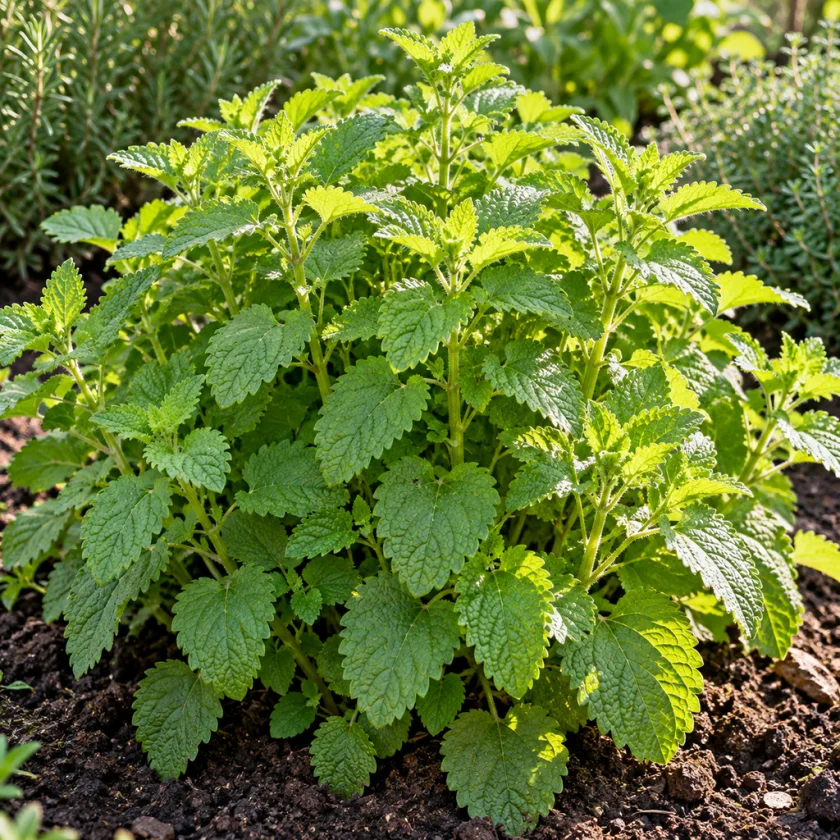
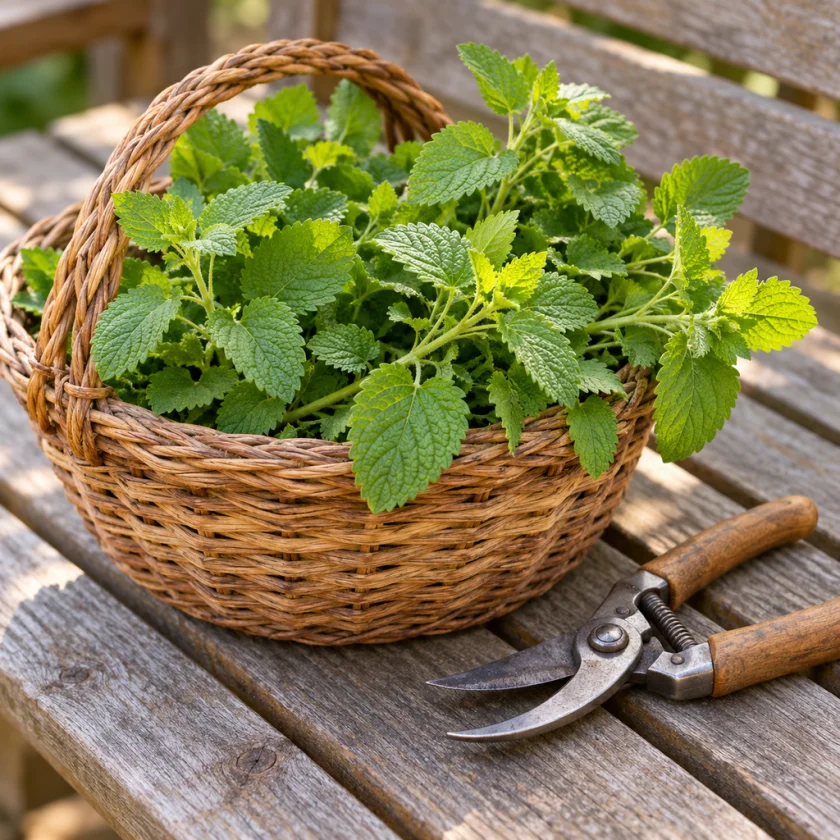
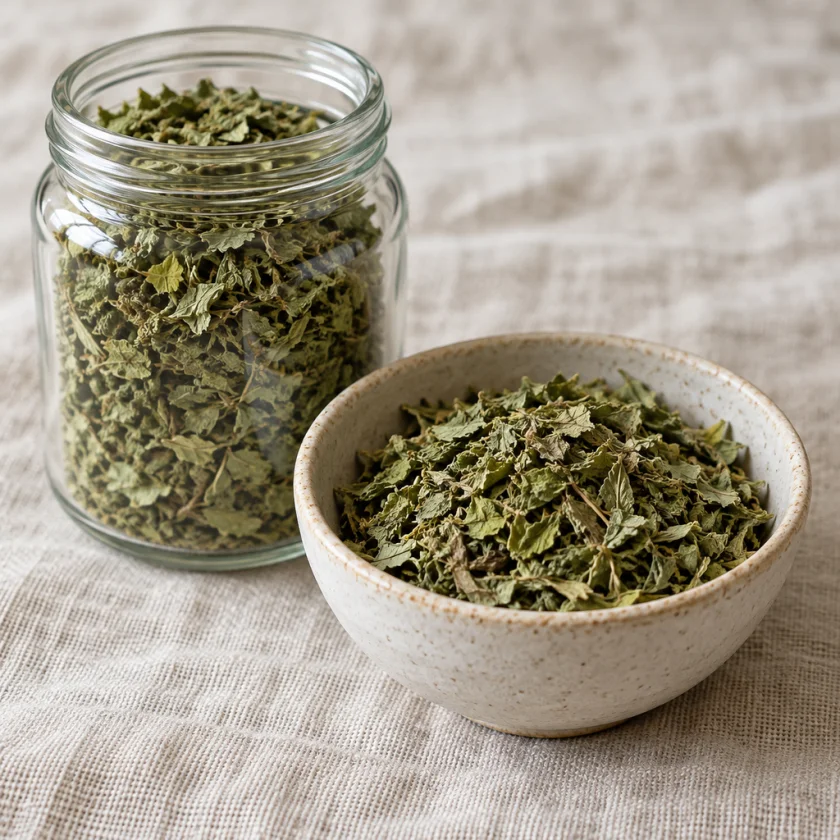
Lemon balm (Melissa officinalis) is a gentle nervine and cognitive enhancer in the mint family (Lamiaceae), used in European herbal medicine since at least the time of Paracelsus, who called it the "elixir of life." Its principal active compounds are rosmarinic acid (a phenolic antioxidant that inhibits gamma-aminobutyric acid-transaminase) and citral (the lemon-scented monoterpene aldehyde that also drives its topical antiviral activity). What makes lemon balm clinically unusual among the calming herbs is the combination of true anxiolytic and sleep-supportive effects with simultaneous cognitive enhancement — in the Northumbria cross-over trials, the highest dose of dried leaf (1,600 mg) improved memory and increased calmness (Kennedy 2003, 20 volunteers), and under laboratory stress 300 mg of a standardized extract sped up mathematical processing while 600 mg raised self-rated calmness (Kennedy 2004, 18 volunteers). This is the "calm focus" profile that separates lemon balm from sedating herbs like valerian or hop, and makes it useful as a daytime anxiolytic that does not impair driving, working memory, or task performance. The same trials also recorded drawbacks: lower doses of the dried leaf slowed timed memory tasks (Kennedy 2003), 600 mg lowered self-rated alertness (Kennedy 2004), and a lemon balm and valerian combination lowered scores on a Stroop attention task at all three doses tested (Kennedy 2006).
Deep-Dive Articles
Anxiety Relief
The Kennedy 2004 and 2006 Northumbria cross-over trials in healthy adults given standardized lemon balm (alone, or combined with valerian in 2006) under laboratory-induced psychological stress (DISS multi-tasking stressor), demonstrating reduced self-reported stress and improved calmness without sedation. Gamma-aminobutyric acid-transaminase inhibition as the leading proposed mechanism (mechanistically similar to valproate). The rosmarinic acid contribution. How lemon balm compares to lavender (an oral lavender oil preparation) and chamomile (Matricaria recutita) for generalized anxiety and acute situational anxiety.
Read the deep dive →Sleep Quality
The Cases 2011 open-label trial in 20 volunteers with mild-to-moderate anxiety disorders and sleep disturbance (a standardized lemon balm extract, 600 mg/day for 15 days), and the Müller 2006 open multicentre study of a valerian + lemon balm combination in 918 children under 12 with restlessness and dyssomnia. GABAergic mechanism shared with valerian, citral and rosmarinic acid as putative anxiolytic constituents, and dose timing (60-90 minutes before bed for sleep onset versus daytime split-dosing for anxiety).
Read the deep dive →Cognitive Function
The Kennedy 2003 and 2004 paradoxical "calm alert" profile — improved Cognitive Drug Research memory scores with greater calmness at 1,600 mg of dried leaf (2003), and faster mathematical processing at 300 mg of an extract under laboratory stress (2004). Binding to the brain's acetylcholine receptors (the leaf tested in 2003 bound nicotinic and muscarinic receptors but showed no inhibition of acetylcholinesterase, the enzyme that donepezil and rivastigmine block). The Akhondzadeh 2003 double-blind randomized controlled trial (RCT) of lemon balm vs placebo in mild-to-moderate Alzheimer's disease over 4 months — improvement on ADAS-cog and CDR scales.
Read the deep dive →Antiviral & HSV Cold Sores
The Wölbling 1994 studies (one open, one placebo-controlled) and the Koytchev 1999 randomized controlled trial of a 1% lemon balm extract cream for recurrent herpes labialis — faster healing, less spread, and some indication of longer gaps between outbreaks. Comparison to topical acyclovir cream. The polyphenol antiviral mechanism (rosmarinic acid and tannins blocking HSV-1 attachment to host cells). How topical lemon balm and antiviral drugs taken by mouth compare for recurrent cold sores.
Read the deep dive →Table of Contents
Why Lemon Balm Produces Effects Across So Many Systems
Most calming herbs act through a single mechanism — valerian binds gamma-aminobutyric acid-A allosterically, chamomile's apigenin partial-agonizes the benzodiazepine binding site, hop acids increase melatonin. Lemon balm is unusual because three distinct mechanisms operate in parallel, each mapping to a different category of clinical effect, and the combination produces the herb's signature "calm focus" rather than pure sedation.
- Gamma-aminobutyric acid-transaminase (gamma-aminobutyric acid-T) inhibition — lemon balm extracts inhibit the enzyme that catabolizes gamma-aminobutyric acid (GABA) in the synapse, raising endogenous gamma-aminobutyric acid tone without directly agonizing the gamma-aminobutyric acid-A receptor. This is mechanistically the same target hit by the anticonvulsant valproate (sodium valproate), though lemon balm's effect is far milder. The result is increased inhibitory tone in the central nervous system — the anxiolytic, sleep-supportive, and anticonvulsant signals all trace back to this mechanism. See Anxiety Relief and Sleep Quality.
- Acetylcholine (cholinergic) activity — lemon balm has measurable acetylcholinesterase (AChE) inhibitory activity in vitro, the same enzyme target as the prescription cholinesterase inhibitors donepezil, rivastigmine, and galantamine used for Alzheimer's disease. But AChE inhibition does not explain the cognitive gains Kennedy observed in 2003: the dried leaf used in that trial showed no cholinesterase inhibition at all. Instead it bound to nicotinic and muscarinic acetylcholine receptors taken from human brain tissue (half-maximal concentrations of 0.18 and 3.47 mg/ml), and Kennedy and Scholey's 2006 review notes that memory gains were seen only with an extract with high cholinergic binding. Akhondzadeh reported a modest clinical improvement in mild-to-moderate Alzheimer's disease in the same year. See Cognitive Function.
- Polyphenol antiviral activity — the rosmarinic acid and condensed tannins in lemon balm extracts directly bind glycoproteins on the herpes simplex virus envelope, blocking attachment to host cell heparan sulfate receptors before viral entry occurs. Clinical studies of a topical lemon balm cream for cold sores report a measurable clinical effect: Wölbling and Leonhardt (1994) ran an open study in 115 patients and a placebo-controlled double-blind study in 116 patients, and in Koytchev's 1999 randomized controlled trial (RCT) of a 1% cream in 66 patients, the combined symptom score on day 2 was 4.03 with the cream versus 4.94 with placebo. Faster healing and less spread are reported; on recurrence, Koytchev found only “some indication” of longer gaps between outbreaks. See Antiviral & HSV.
A fourth integrating role belongs to rosmarinic acid as a peripheral antioxidant. Rosmarinic acid is the dominant phenolic in lemon balm (typically 1-5% of the dried herb by weight, considerably higher in fresh leaves). It scavenges reactive oxygen species, chelates redox-active iron, and inhibits 5-lipoxygenase to dampen leukotriene-driven inflammation. The same molecule is responsible for much of the antioxidant capacity of rosemary, sage, oregano, and other Lamiaceae herbs — lemon balm fits coherently into that broader family of cognitively active Mediterranean culinary herbs (see also Rosemary, Sage).
The therapeutic implication of three parallel mechanisms is that lemon balm produces a different clinical profile than any single-mechanism herb. Valerian sedates. Chamomile relaxes. Donepezil enhances cognition but does nothing for anxiety. Acyclovir treats HSV but does nothing for the stress that triggers a cold sore outbreak. Lemon balm has been studied against all four targets, with modest effect sizes — daytime calming without sedation, sleep-onset support, a mild cognitive effect in early dementia, and a cold-sore cream sold without prescription. It is not the strongest agent for any single use; what sets it apart in the research is that it touches several of these targets at once.
A 2021 systematic review and meta-analysis of randomized trials (Ghazizadeh and colleagues) found that lemon balm improved anxiety scores (standardized mean difference, SMD −0.98; 95% CI −1.63 to −0.33) and depression scores (SMD −0.47; 95% CI −0.73 to −0.21) compared with placebo, without serious side effects. The authors noted high differences between the studies, a small number of trials, and the need for further high-quality studies.
Research Papers: Anxiety & Stress
- Kennedy DO, Little W, Haskell CF, Scholey AB (2006). Anxiolytic effects of a combination of Melissa officinalis and Valeriana officinalis during laboratory induced stress. Phytotherapy Research 20(2):96-102 — PubMed PMID: 16444660
- Kennedy DO, Little W, Scholey AB (2004). Attenuation of laboratory-induced stress in humans after acute administration of Melissa officinalis (lemon balm). Psychosomatic Medicine 66(4):607-613 — PubMed PMID: 15272110
- Cases J, Ibarra A, Feuillère N, Roller M, Sukkar SG (2011). Pilot trial of Melissa officinalis L. leaf extract in the treatment of volunteers suffering from mild-to-moderate anxiety disorders and sleep disturbances. Mediterranean Journal of Nutrition and Metabolism 4(3):211-218 — PubMed PMID: 22207903
- GABA-transaminase inhibition by Melissa officinalis extracts — PubMed: Lemon balm GABA-T
- Rosmarinic acid neuropharmacology and GABAergic mechanism — PubMed: Rosmarinic acid GABA
- Soulimani R, Fleurentin J, Mortier F, Misslin R, Derrieu G, Pelt JM (1991). Neurotropic action of the hydroalcoholic extract of Melissa officinalis in the mouse. Planta Medica 57(2):105-109 — PubMed PMID: 1891490
- Ghazizadeh J, Sadigh-Eteghad S, Marx W, Fakhari A, Hamedeyazdan S, Torbati M, Taheri-Tarighi S, Araj-Khodaei M, Mirghafourvand M (2021). The effects of lemon balm (Melissa officinalis L.) on depression and anxiety in clinical trials: a systematic review and meta-analysis. Phytotherapy Research 35(12):6690-6705 — PubMed PMID: 34449930
- Lemon balm vs oral lavender oil vs chamomile for generalized anxiety — PubMed: Comparative anxiolytic herbs
Research Papers: Sleep & Insomnia
- Cases J, Ibarra A, Feuillère N, Roller M, Sukkar SG (2011). Pilot trial of Melissa officinalis L. leaf extract in the treatment of volunteers suffering from mild-to-moderate anxiety disorders and sleep disturbances (open-label, 15 days, 20 volunteers, no placebo group; anxiety down 18% and insomnia down 42%). Mediterranean Journal of Nutrition and Metabolism 4(3):211-218 — PubMed PMID: 22207903
- Müller SF, Klement S (2006). A combination of valerian and lemon balm is effective in the treatment of restlessness and dyssomnia in children (open multicentre study, 918 children; sleep trouble improved in 80.9%). Phytomedicine 13(6):383-387 — PubMed PMID: 16487692
- Cerny A, Schmid K (1999). Tolerability and efficacy of valerian/lemon balm in healthy volunteers (a double-blind, placebo-controlled, multicentre study). Fitoterapia 70(3):221-228 — doi:10.1016/S0367-326X(99)00018-0
- GABA-A allosteric modulation by Lamiaceae monoterpenes — PubMed: Monoterpene GABA-A
Research Papers: Cognition & Alzheimer's
In the Akhondzadeh 2003 double-blind trial in Tehran, 42 people aged 65 to 80 with mild to moderate Alzheimer's disease took lemon balm extract (60 drops a day) or placebo for 4 months. The lemon balm group did significantly better on cognitive function, measured with the Alzheimer's Disease Assessment Scale cognitive subscale (ADAS-cog, p = 0.01) and the Clinical Dementia Rating (CDR, p < 0.0001). Side effects did not differ between the groups, except agitation, which was more common in the placebo group (p = 0.03).
- Kennedy DO, Wake G, Savelev S, Tildesley NT, Perry EK, Wesnes KA, Scholey AB (2003). Modulation of mood and cognitive performance following acute administration of single doses of Melissa officinalis (lemon balm) with human CNS nicotinic and muscarinic receptor-binding properties. Neuropsychopharmacology 28(10):1871-1881 — PubMed PMID: 12888775
- Akhondzadeh S, Noroozian M, Mohammadi M, Ohadinia S, Jamshidi AH, Khani M (2003). Melissa officinalis extract in the treatment of patients with mild to moderate Alzheimer's disease: a double blind, randomised, placebo controlled trial. Journal of Neurology, Neurosurgery and Psychiatry 74(7):863-866 — PubMed PMID: 12810768
- Wake G, Court J, Pickering A, Lewis R, Wilkins R, Perry E (2000). CNS acetylcholine receptor activity in European medicinal plants traditionally used to improve failing memory. Journal of Ethnopharmacology 69(2):105-114 — PubMed PMID: 10687867
- Acetylcholinesterase inhibition by Melissa officinalis — PubMed: Lemon balm AChE
- Kennedy DO, Scholey AB (2006). The psychopharmacology of European herbs with cognition-enhancing properties. Current Pharmaceutical Design 12(35):4613-4623 — PubMed PMID: 17168769
Research Papers: Antiviral & HSV
- Wölbling RH, Leonhardt K (1994). Local therapy of herpes simplex with dried extract from Melissa officinalis. Phytomedicine 1(1):25-31 — PubMed PMID: 23195812
- Koytchev R, Alken RG, Dundarov S (1999). Balm mint extract (Lo-701) for topical treatment of recurring herpes labialis. Phytomedicine 6(4):225-230 — PubMed PMID: 10589440
- Schnitzler P, Schuhmacher A, Astani A, Reichling J (2008). Melissa officinalis oil affects infectivity of enveloped herpesviruses. Phytomedicine 15(9):734-740 — PubMed PMID: 18693101
- Rosmarinic acid and HSV-1 attachment inhibition — PubMed: Rosmarinic acid HSV
- Polyphenol antiviral mechanism against enveloped viruses — PubMed: Polyphenol antiviral
External Authoritative Resources
- European Medicines Agency — Melissae folium (lemon balm leaf) monograph — the EMA HMPC traditional-use monograph, covering indications, posology, contraindications, and clinical evidence summary
- LiverTox — Lemon Balm (NIH NIDDK) — hepatic safety profile (very clean; no convincing reports of hepatotoxicity)
- ESCOP — European Scientific Cooperative on Phytotherapy Monographs — the authoritative European phytotherapy summary on Melissa officinalis
- U.S. National Center for Complementary and Integrative Health (NCCIH) — Lemon Balm (U.S. National Institutes of Health, NIH) — National Center for Complementary and Integrative Health summary
- PubMed — All research on Melissa officinalis / lemon balm
Connections
- All Herbs
- Lemon Balm (Main Page)
- Lemon Balm for Anxiety Relief
- Lemon Balm for Sleep Quality
- Lemon Balm for Cognitive Function
- Lemon Balm Antiviral & HSV
- Valerian
- Chamomile
- Lavender
- Passionflower
- Ashwagandha
- Holy Basil
- Rosemary
- Anxiety
- Insomnia
- Alzheimer's Disease
- Stress Management
- Sleep Hygiene
- Natural Anxiety Relief
- History