Marjoram — Benefits Deep Dive
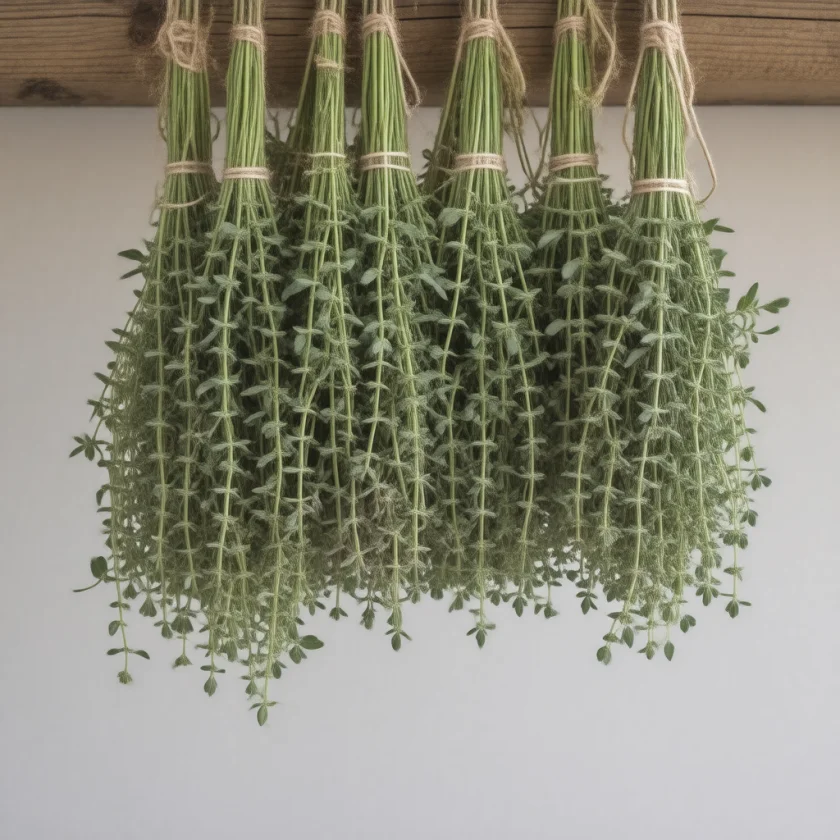
Sweet marjoram is Origanum majorana — a soft-leaved, sweet-smelling member of the mint family that most people meet in a spice jar rather than a pharmacy. The main page on this site covers what the plant is, how it differs from oregano, and how to cook with it. These four deep-dive articles do something narrower and, we hope, more useful: they take marjoram's four most-discussed health claims and ask, one at a time, what kind of evidence actually stands behind each one.
The short answer is that marjoram's evidence base is lopsided. Its antioxidant and antimicrobial activity has been measured over and over in glassware, so those are the best-documented findings and the least directly useful to you. The claim with the most genuine clinical interest is the smallest one: a single randomized crossover trial in which women with polycystic ovary syndrome drank marjoram tea for a month and showed improved insulin sensitivity and a drop in an adrenal androgen. That trial is real, it is properly randomized, and it is also tiny, short, and unreplicated. We spend a whole article on it precisely so it can be described accurately instead of being turned into a headline.
One warning before you read anything about this plant, here or elsewhere. Marjoram and oregano are constantly mixed up, including in the scientific literature. Sweet marjoram is Origanum majorana; common oregano is Origanum vulgare; and in older herbals and many folk texts, “wild marjoram” almost always means oregano, not marjoram. Their essential oils are chemically different — marjoram's is dominated by terpinen-4-ol and cis-sabinene hydrate, oregano's by carvacrol and thymol — so a study of one is not a study of the other. Every citation in these articles names the species the researchers actually used.
Marjoram for Digestive Health
The oldest use and the one with the most animal data: how a warm aromatic infusion may quiet gas, cramping and reflux, what rat gastric-ulcer models actually showed, and why “carminative” is a mechanism rather than a marketing word.
Read the deep dive →Marjoram for Hormonal Balance and PCOS
The one randomized human trial worth knowing, reported at its real size. What insulin sensitivity and DHEA-S are, what the tea moved and what it did not, and how to use a promising pilot without over-reading it.
Read the deep dive →Marjoram's Antimicrobial and Antioxidant Effects
Terpinen-4-ol, rosmarinic acid and the enormous gap between a petri dish and a person. Where the lab findings are strong, where food preservation is a legitimate application, and why none of it treats an infection.
Read the deep dive →Marjoram for Sleep, Mood and Pain
Marjoram is a fixture of “relaxing” aromatherapy blends, and two randomized massage trials that included it reported real pain relief. The catch: they tested blends, so the credit cannot be assigned to marjoram alone.
Read the deep dive →Table of Contents
- Which Plant Are We Talking About?
- What Marjoram Can and Cannot Do
- How We Grade the Evidence
- Key Research: Hormones, Insulin and PCOS
- Key Research: Digestion and the Gastric Lining
- Key Research: Antimicrobial Activity
- Key Research: Antioxidants and Phenolics
- Key Research: Relaxation, Blood Pressure and Pain
- Practical Forms and Amounts
- Safety, Pregnancy and Interactions
- External Resources
- Connections
- Featured Videos
Which Plant Are We Talking About?
Getting the botany right is not pedantry here — it changes what the evidence means. Three names circulate:
- Sweet marjoram, knotted marjoram — Origanum majorana. The subject of these pages. Older botanical literature also files it as Majorana hortensis. Mild, sweet, floral; oil rich in terpinen-4-ol and cis-sabinene hydrate.
- Oregano — Origanum vulgare, with the pungent Greek form being O. vulgare subsp. hirtum. Oil rich in carvacrol and thymol. In herbals from the eighteenth and nineteenth centuries, and in a great deal of folk usage since, “wild marjoram” means this plant. If a traditional source praises “wild marjoram” for coughs or infections, read it as an oregano claim.
- Pot marjoram is a market name rather than a species. It is usually Origanum onites or a hardy form of O. vulgare — not sweet marjoram.
And a fourth trap: “Mexican oregano” is not an Origanum at all, but Lippia graveolens in the verbena family. Its aroma is convergent, its chemistry and pharmacology are not comparable.
Because carvacrol is a far more aggressive antimicrobial than terpinen-4-ol, papers on oregano oil routinely report stronger kill curves than papers on marjoram oil. Blending the two literatures — which popular articles do constantly — inflates marjoram's apparent potency. It also inflates its apparent risk, since carvacrol is the more irritating compound.
What Marjoram Can and Cannot Do
Plainly, before any citations:
- Reliably true: marjoram is a flavourful, very safe culinary herb; it is unusually rich in phenolic antioxidants for a kitchen herb; its essential oil inhibits many bacteria and fungi in laboratory assays; a warm infusion is a pleasant, low-risk after-meal ritual.
- Preliminary but genuinely interesting: one randomized crossover trial suggests marjoram tea improves insulin sensitivity and lowers the adrenal androgen DHEA-S in PCOS; rat studies show the extract protects the stomach lining against several kinds of chemical injury; randomized massage trials using marjoram-containing oil blends reduced neck pain and menstrual pain.
- Traditional use only: marjoram tea for bloating, gas, indigestion, nerves and sleeplessness; steam inhalation for congestion; use as an emmenagogue to encourage menstruation.
- Not supported: marjoram as a treatment for any infection, as a hormone therapy, as a substitute for metformin or any prescribed drug, or as an internal use of the neat essential oil. Nobody has shown any of that, and the last one is unsafe.
How We Grade the Evidence
Every claim in these four articles carries one of four labels, and we try to use them in the same sentence as the claim rather than in a disclaimer at the bottom:
- Randomized clinical trial — humans, randomly allocated, with a control or crossover comparison. Marjoram has very few of these, and all are small.
- Other human data — uncontrolled or observational work in people.
- Preliminary — animal experiments and cell or test-tube (in vitro) work. This is the bulk of marjoram's literature. It establishes plausibility and mechanism, not benefit.
- Traditional use only — centuries of practice, no controlled test.
A note on citation style. Every reference below is a live PubMed search link, not a numeric identifier, and the paper's title, journal and year are stated in the text so you can confirm you have landed on the right study. This site previously carried numeric citations that pointed at the wrong papers, and we would rather send you to a search that finds the paper than to a number that may have drifted.
Key Research: Hormones, Insulin and PCOS
This is the most clinically interesting block, and the smallest.
- Randomized clinical trial. Haj-Husein, Tukan and Alkazaleh, The effect of marjoram (Origanum majorana) tea on the hormonal profile of women with polycystic ovary syndrome: a randomised controlled pilot study, Journal of Human Nutrition and Dietetics, 2016. Sweet marjoram tea twice daily for one month versus a placebo tea in a small group of women with PCOS; reported improved insulin sensitivity and reduced DHEA-S. Find on PubMed
- Review. Bina and Rahimi, Sweet Marjoram: A Review of Ethnobotany, Phytochemistry, and Pharmacology, Journal of Evidence-Based Complementary & Alternative Medicine, 2017 — the standard overview of O. majorana, and the place to see how thin the human column of the table really is. Find on PubMed
- Context, different plant. Grant, Spearmint herbal tea has significant anti-androgen effects in polycystic ovarian syndrome. A randomized controlled trial, Phytotherapy Research, 2010, and Akdoğan and colleagues, Effect of spearmint (Mentha spicata Labiatae) teas on androgen levels in women with hirsutism, Phytotherapy Research, 2007. Mentha spicata is a mint-family cousin, not marjoram, but these trials are why a tea-and-androgens hypothesis was taken seriously at all. Find on PubMed
- Open topic search. Everything indexed at the intersection of marjoram and endocrine outcomes: marjoram, insulin and androgens.
The full discussion, including what the trial did not show, is in Marjoram for Hormonal Balance and PCOS.
Key Research: Digestion and the Gastric Lining
- Preliminary (animal). Al-Howiriny and colleagues, Protective Effect of Origanum majorana L. ‘Marjoram’ on Various Models of Gastric Mucosal Injury in Rats, The American Journal of Chinese Medicine, 2009 — the single most-cited experimental support for the traditional stomach use. Find on PubMed
- Preliminary (chemistry). Vera and Chane-Ming, Chemical composition of the essential oil of marjoram (Origanum majorana L.) from Reunion Island, Food Chemistry, 1999 — documents the terpinen-4-ol and sabinene-hydrate profile that underlies the smooth-muscle and carminative hypotheses. Find on PubMed
- Open topic searches. Marjoram and gut smooth muscle; carminative herbal teas in functional dyspepsia.
Full article: Marjoram for Digestive Health.
Key Research: Antimicrobial Activity
- Preliminary (in vitro). Deans and Svoboda, The antimicrobial properties of marjoram (Origanum majorana L.) volatile oil, Flavour and Fragrance Journal, 1990 — the early benchmark study. Find on PubMed
- Preliminary (in vitro). Vági and colleagues, Essential oil composition and antimicrobial activity of Origanum majorana L. extracts obtained with ethyl alcohol and supercritical carbon dioxide, Food Research International, 2005 — links extraction method to both chemistry and kill spectrum. Find on PubMed
- Preliminary (food application). Busatta and colleagues on the application of O. majorana essential oil as an antimicrobial in sausage, Food Microbiology, 2008 — a real-world use that does not require any claim about human disease. Find on PubMed
- Open topic search. Marjoram oil and Candida.
Key Research: Antioxidants and Phenolics
- Preliminary (in vitro). Roby and colleagues, Evaluation of antioxidant activity, total phenols and phenolic compounds in thyme (Thymus vulgaris L.), sage (Salvia officinalis L.), and marjoram (Origanum majorana L.) extracts, Industrial Crops and Products, 2013 — puts marjoram side by side with its cousins on the same assays. Find on PubMed
- Preliminary (in vitro). Erenler and colleagues, Isolation and identification of chemical constituents from Origanum majorana and investigation of antiproliferative and antioxidant activities, Journal of the Science of Food and Agriculture, 2016. Find on PubMed
- Preliminary (processing). Hossain and colleagues, Effect of drying method on the antioxidant capacity of six Lamiaceae herbs, Food Chemistry, 2010 — the reason a jar of dried marjoram is not interchangeable with a fresh sprig. Find on PubMed
- Preliminary (in vitro / animal). Mossa and Nawwar, Free radical scavenging and antiacetylcholinesterase activities of Origanum majorana L. essential oil, Human & Experimental Toxicology, 2011. Find on PubMed
Both blocks above are unpacked in Marjoram's Antimicrobial and Antioxidant Effects.
Key Research: Relaxation, Blood Pressure and Pain
- Randomized clinical trial, blend. Ou and colleagues, The effectiveness of essential oils for patients with neck pain: a randomized controlled study, Journal of Alternative and Complementary Medicine, 2014 — a topical cream containing marjoram, black pepper, lavender and peppermint oils, applied to chronic neck pain. Find on PubMed
- Randomized clinical trial, blend. Ou and colleagues, Pain relief assessment by aromatic essential oil massage on outpatients with primary dysmenorrhea: a randomized, double-blind clinical trial, Journal of Obstetrics and Gynaecology Research, 2012 — lavender, clary sage and marjoram in a carrier oil, massaged on the lower abdomen. Find on PubMed
- Clinical trial, blend. Kim and colleagues, Essential Oil Inhalation on Blood Pressure and Salivary Cortisol Levels in Prehypertensive and Hypertensive Subjects, Evidence-Based Complementary and Alternative Medicine, 2012 — an inhaled blend that included marjoram; reported small reductions in blood pressure and salivary cortisol. Find on PubMed
- Open topic search. Marjoram, sedation and sleep.
Note the recurring limitation: in all three trials marjoram arrived inside a blend. A positive blend result cannot be attributed to any one of its oils. Full discussion in Marjoram for Sleep, Mood and Pain.
Practical Forms and Amounts
- Culinary, fresh: add near the end of cooking. The aroma lives in volatile oils that boil away.
- Culinary, dried: roughly one third the volume of fresh. Dried marjoram holds its character better than most soft herbs.
- Infusion (tea): about a teaspoon of dried herb, or a few fresh sprigs, in a covered cup of just-boiled water for five to ten minutes, then strain. Covering matters — uncovered, the aromatics leave with the steam. The PCOS trial used twice-daily tea, which is a reasonable model for anyone using it deliberately.
- Essential oil: aromatherapy and diluted topical use only. Typical dilution for skin is on the order of one to three percent in a carrier oil, and a patch test first is sensible. Do not swallow essential oil.
- Standardised extracts: not established. There is no validated therapeutic dose of a marjoram extract for any condition, and any product implying otherwise is ahead of the evidence.
Safety, Pregnancy and Interactions
As food and as tea, marjoram has an excellent safety record and centuries of ordinary use. The cautions below apply to concentrated preparations and deliberate therapeutic dosing, not to seasoning dinner.
- Pregnancy — avoid medicinal doses. Culinary amounts are considered fine. Strong teas, extracts and the essential oil should be avoided, because marjoram carries a traditional emmenagogue reputation, meaning it was historically used to bring on menstruation. The traditional claim has not been tested either way, which is exactly why caution rather than reassurance is the right default in pregnancy. Discuss it with your obstetric provider.
- Anticoagulants — theoretical interaction. Marjoram, like other aromatic Lamiaceae herbs, contains constituents that can affect platelet behaviour in laboratory conditions, and the herb also contributes vitamin K. If you take warfarin, a direct oral anticoagulant, or antiplatelet therapy, keep your intake of concentrated marjoram preparations steady and predictable rather than swinging up and down, and mention it to whoever manages your dosing. This is a theoretical concern extrapolated from chemistry, not a documented series of bleeding events.
- Blood-sugar and blood-pressure medicines. If the insulin-sensitivity signal from the PCOS pilot is real, concentrated marjoram could in principle add to the effect of glucose-lowering drugs; the aromatherapy blood-pressure work raises the same theoretical possibility for antihypertensives. Additive effects would be mild, but monitoring is easy and worth doing if you start taking marjoram tea daily.
- Sedatives. Traditional use as a calming tea implies a theoretical additive effect with sedatives or sleep medication. No clinical reports establish this.
- Allergy. Rare. Anyone with a known mint-family (Lamiaceae) sensitivity should be careful.
- Children and pets. Culinary marjoram is fine for children. Essential oils are not; keep them out of reach, and never apply undiluted oil to a child's skin.
External Resources
- PubMed — all indexed research on Origanum majorana — the whole literature, in one search. Skim the study types and you will see the shape of the problem: overwhelmingly in vitro.
- PubMed — marjoram clinical trials only — a deliberately short list.
- PubMed Central — free full-text marjoram papers.
- USDA FoodData Central — nutrient composition of dried marjoram as a spice, including its notable vitamin K and mineral content by weight (remember that a teaspoon weighs almost nothing).
- World Flora Online — authoritative check on Origanum names and synonyms when a label or paper looks ambiguous.
- NIH Office of Dietary Supplements — general guidance on evaluating botanical supplement claims.
Connections
- All Herbs
- Marjoram — the main page: botany, culinary use, and the oregano comparison.
- Marjoram for Digestive Health — the carminative tradition and the rat gastric-protection data.
- Marjoram for Hormonal Balance and PCOS — the randomized crossover trial, reported at its real size.
- Antimicrobial and Antioxidant Effects — terpinen-4-ol, rosmarinic acid, and the petri-dish gap.
- Marjoram for Sleep, Mood and Pain — aromatherapy blends and what blend trials can prove.
- Oregano — Origanum vulgare, the carvacrol-rich cousin constantly confused with marjoram.
- Oregano Benefits — the parallel evidence review for the sharper sibling.
- Thyme — thymol-rich Lamiaceae herb, tested alongside marjoram in antioxidant panels.
- Rosemary — the other great rosmarinic-acid herb of the mint family.
- Sage — third member of the thyme–sage–marjoram antioxidant comparison.
- Chamomile — the archetypal calming, digestive evening infusion.
- Lemon Balm — mint-family nervine with better human sleep data than marjoram.
- Lavender — marjoram's usual partner in relaxation blends, and the oil with the most trial evidence.
- Peppermint — the carminative with genuine randomized trial support in IBS.
- Fennel — traditional carminative seed for gas and bloating.
- Luteolin — flavone found in marjoram's phenolic fraction.
- Apigenin — the other major flavone of aromatic Lamiaceae herbs.
- PCOS — the condition studied in the marjoram tea trial.
- Insulin Resistance — the mechanism the trial's headline finding touches.
- IBS — where carminative herbs are most often reached for.
- Insomnia — the traditional bedtime-tea use, and the standard of evidence it would need to meet.
Disclaimer. This page is educational and is not medical advice. Marjoram is a food and a traditional herbal tea, not a treatment for any disease; nothing here should be used to replace prescribed medication or a clinician's assessment. If you are pregnant or breastfeeding, take anticoagulants, blood-pressure or diabetes medication, or are managing PCOS or a gastrointestinal condition, discuss any deliberate herbal use with your doctor or pharmacist first.