Chanca Piedra Forms, Dosing, and Standardization: Practical Use Guide
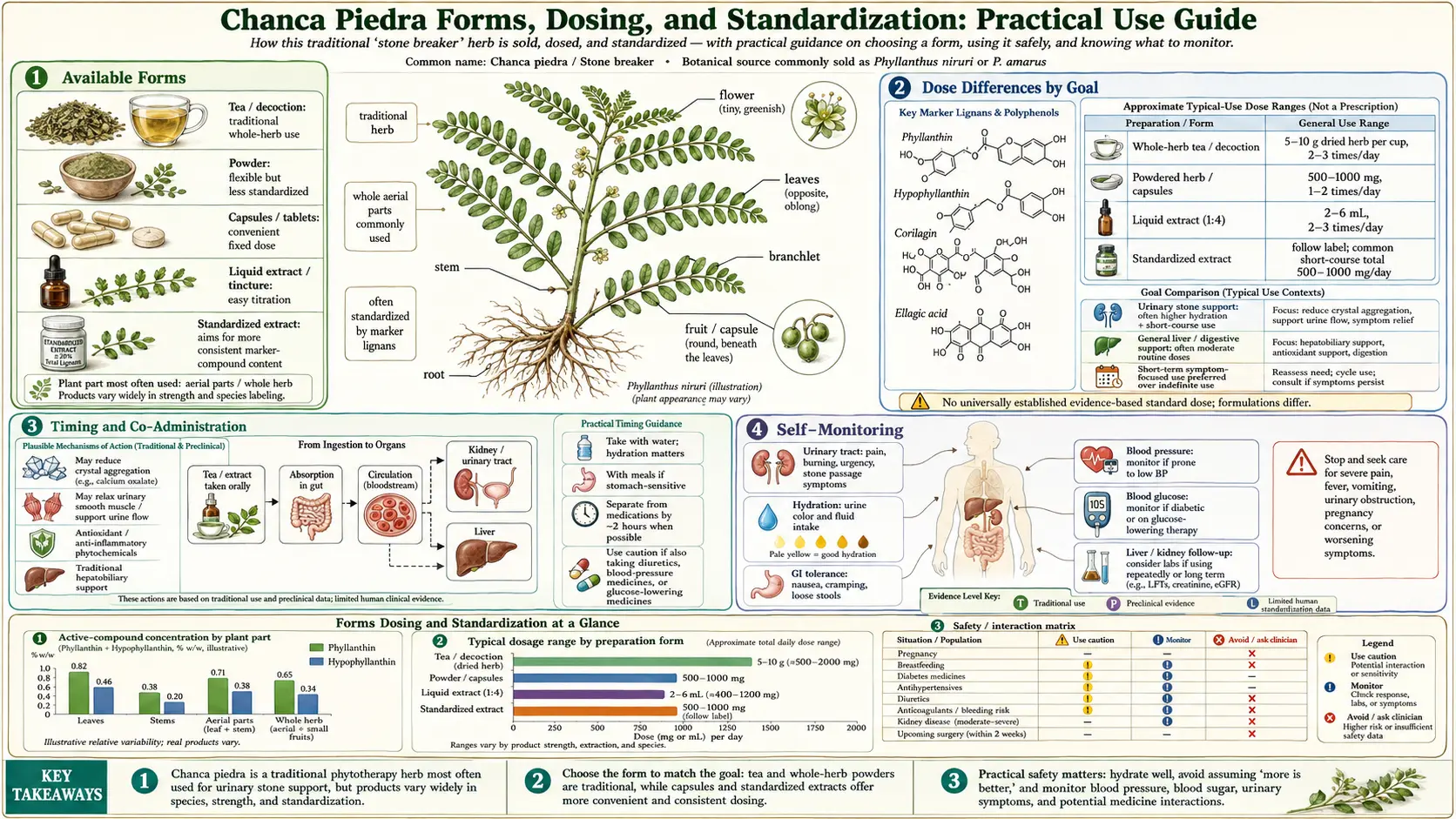
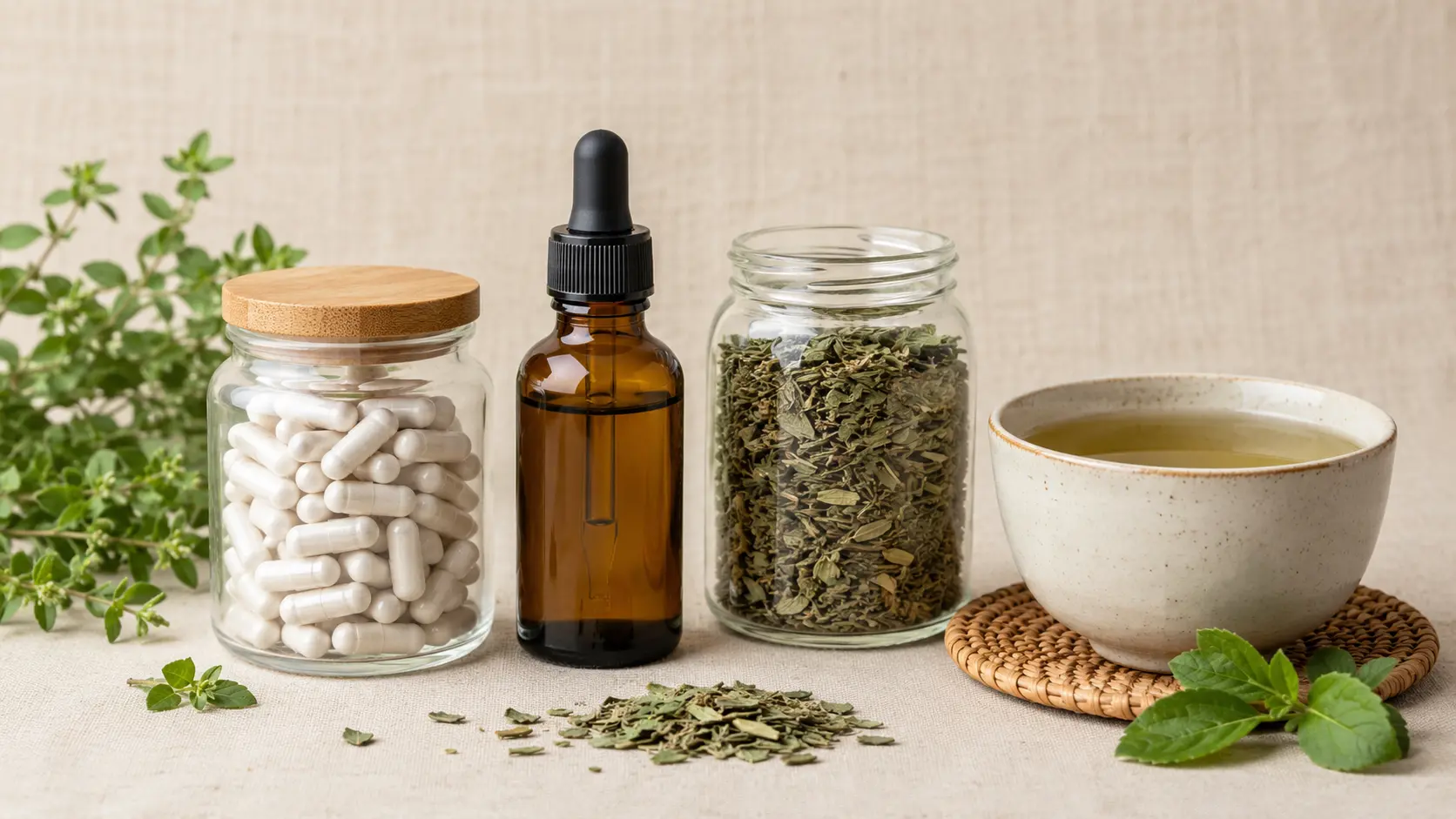
Chanca Piedra is sold in five different forms with widely different bioactive concentrations and a confusing standardization landscape. The right form depends on what you're treating, the right dose depends on the form, and the right product depends on third-party verification that the bottle actually contains what the label says. This page is the practical "what to buy and how to take it" guide.
Table of Contents
- Available Forms
- Standardization Markers
- Typical Dosing by Form
- Dose Differences by Goal
- Cycling and Duration
- Timing and Co-Administration
- Quality Issues and Adulteration
- Certification & Quality Criteria
- Self-Monitoring
- Research Papers and References
- Connections
- Featured Videos
Available Forms
- Whole-herb capsules (500–800 mg) — the most common retail form. Predictable dose, no taste, but lower bioactive concentration than extracts. Reasonable for general prevention or maintenance.
- Standardized extracts — concentrated to a phyllanthin or lignan marker. More potent per mg; the form used in most clinical trials. Best for kidney stone protocols and liver-support indications.
- Tinctures (1:5 or 1:3, 30–60% alcohol) — fast absorption, easy to titrate. Avoid if alcohol-sensitive, pregnant, on naltrexone or disulfiram, or attempting alcohol abstinence.
- Tea / decoction — the traditional Amazonian preparation. Highly variable potency depending on plant batch and steep time; less clinically reliable but still effective for traditional indications.
- Loose dried herb — cheapest; requires accurate scale and consistent preparation. Mostly used by herbalists or traditional preparers.
Standardization Markers
Reputable products specify one of:
- Phyllanthin 3–5% — most common
- Total lignans ≥5% (phyllanthin + hypophyllanthin combined) — alternative
- 10:1 full-spectrum extract — concentration ratio rather than marker compound
- Total polyphenols / tannins percentage — less common but useful for stone-prevention indications
Red flags: bottles that list only "Phyllanthus" or "Chanca Piedra extract" with no marker compound, no extract ratio, and no third-party testing.
Typical Dosing by Form
| Form | Daily Dose | Schedule |
|---|---|---|
| Whole-herb capsule (500 mg) | 1,000–1,600 mg/day | Split 2–3× daily |
| Standardized extract (4–5% phyllanthin) | 400–900 mg/day (up to 3,000 mg/day in liver trials) | Split 2–3× daily with meals |
| Tincture (1:5) | 30–50 drops in water, 2–4×/day | Between meals |
| Tea | 1–2 tsp dried herb per cup, 1–2 cups/day | Anytime |
| Loose dried herb (decoction) | 5–10 g/day | Simmered, sipped through the day |
Dose Differences by Goal
- Kidney stones (active prevention or recurrence reduction): 450 mg standardized extract three times daily for 3 months (the validated Brazilian Nishiura protocol). Or 2 g/day total dried herb for 3 months post-SWL (the Micali protocol). Pair with at least 2.5 L water per day.
- Liver support / NAFLD / persistent ALT elevation: Higher end — 500–1,500 mg standardized extract twice daily, with one trial extending to 3,000 mg/day for 12 months.
- Hepatitis B (adjunct only): 500–1,000 mg P. amarus-specific extract three times daily for 3–6 months. Always alongside, never replacing, prescribed antivirals.
- Blood-sugar adjunct: Lower end — 500–1,000 mg/day, with glucose monitoring.
- Uric acid / mild hypertension adjunct: 500 mg standardized extract twice daily.
- General prevention: 500 mg/day or 1 cup tea daily.
Cycling and Duration
Traditional protocols typically use one of:
- 2–4 weeks on, 1 week off — for general prevention or mineral conservation
- 12 weeks on, 12 weeks washout — for prevention and stone protocols (matches the Nishiura trial duration)
- Continuous — for active hepatitis B or liver support, with periodic monitoring
The rationale for cycling: prevent any tolerance development, give the kidneys and liver a periodic rest, and limit cumulative effects on minerals (Phyllanthus mildly increases urinary magnesium and potassium excretion). Continuous use beyond 6 months has limited published human safety data — periodic breaks are prudent.
Timing and Co-Administration
- With or after food — reduces GI upset; modestly reduces absorption rate but not total bioavailability
- Avoid concurrent administration with prescription medications — space dosing by 2 hours due to CYP3A4 / P-glycoprotein effects
- With water — especially important for kidney-stone protocols; aim for 2.5–3 L/day total fluid intake
- Avoid evening dosing of high doses — mild diuretic effect can disturb sleep
Quality Issues and Adulteration
Common problems with commercial Chanca Piedra:
- Species substitution — products labeled "P. niruri" may contain P. amarus, P. urinaria, or related species without disclosure. The chemotype matters for therapeutic effect (see Species Comparison).
- Microbial contamination — from poor drying or inadequate sanitation in source-country processing
- Heavy metal contamination — lead and cadmium from contaminated growing soil; tested products show acceptable levels but untested ones can be problematic
- Pesticide residues — less common in wild-harvested herbs but possible in cultivated crops
- Subtherapeutic dosing — some products contain so little Phyllanthus per capsule that the labeled dose can't deliver an effective amount
- Adulteration with non-herbal ingredients — rare but documented in low-quality online supplements
Certification & Quality Criteria
Look for products with at least one of these:
- USP Verified Mark — pharmaceutical-grade quality verification
- NSF Certified for Sport or general NSF certification
- ConsumerLab.com testing — independent supplement testing organization
- Current third-party Certificate of Analysis (CoA) showing identity (HPLC), heavy-metal testing, and microbial testing
- Standardization to phyllanthin percentage stated on the label, with HPLC verification
- GMP-certified manufacturer (Good Manufacturing Practices)
- cGMP compliance for pharmaceutical-grade extracts
Reputable brands typically run $20–$45 for a 60–120 capsule bottle. Anything dramatically cheaper than this from unfamiliar brands warrants skepticism.
Self-Monitoring
What to track during use:
- Blood pressure daily for the first 2 weeks if you're on antihypertensives or have baseline low BP
- Fasting glucose if you're diabetic, especially if on insulin or sulfonylureas (additive hypoglycemia risk)
- INR weekly × 3 if you're on warfarin (CYP2C9 inhibition can raise INR)
- Stone size via ultrasound or low-dose CT at 6–12 weeks for kidney-stone protocols
- Liver enzymes (ALT, AST, GGT) at baseline and 3 months for liver-support protocols
- HBV-DNA at baseline, 3 months, 6 months for HBV protocols (always alongside prescribed antivirals)
Stop and consult your clinician for new bruising, dizziness, hypoglycemia symptoms, or worsening liver function.
Research Papers and References
- Standardized extract trials — PubMed
- Oral PK and bioavailability — PubMed
- Quality and adulteration — PubMed
- Long-term safety — PubMed
External Authoritative Resources
- ConsumerLab.com — Independent Supplement Testing
- United States Pharmacopeia
- NIH Office of Dietary Supplements
Connections
- All Herbs
- Chanca Piedra Overview
- Phyllanthus Species Comparison
- Safety and Drug Interactions
- Active Compounds
- Kidney Stone Protocol
- Liver Protection and Hepatitis B
- Uric Acid, Gout and Hypertension
- Blood Sugar and Metabolic Effects
- History and Traditional Use
- Kidney Stones
- Hepatitis B
- Uric Acid
- Magnesium
- Potassium
- Liver Cleansing