⚠ Evidence warning: Clinical trials or other evidence do not support the claims that passionflower is among the most promising natural anxiolytic herbs, keeps mental sharpness for work and driving, lowers heart rate and systolic blood pressure under acute stress, and improves irritable bowel syndrome symptoms. This page keeps it as a report of what people, websites or other media say.
Passionflower (Passiflora incarnata)
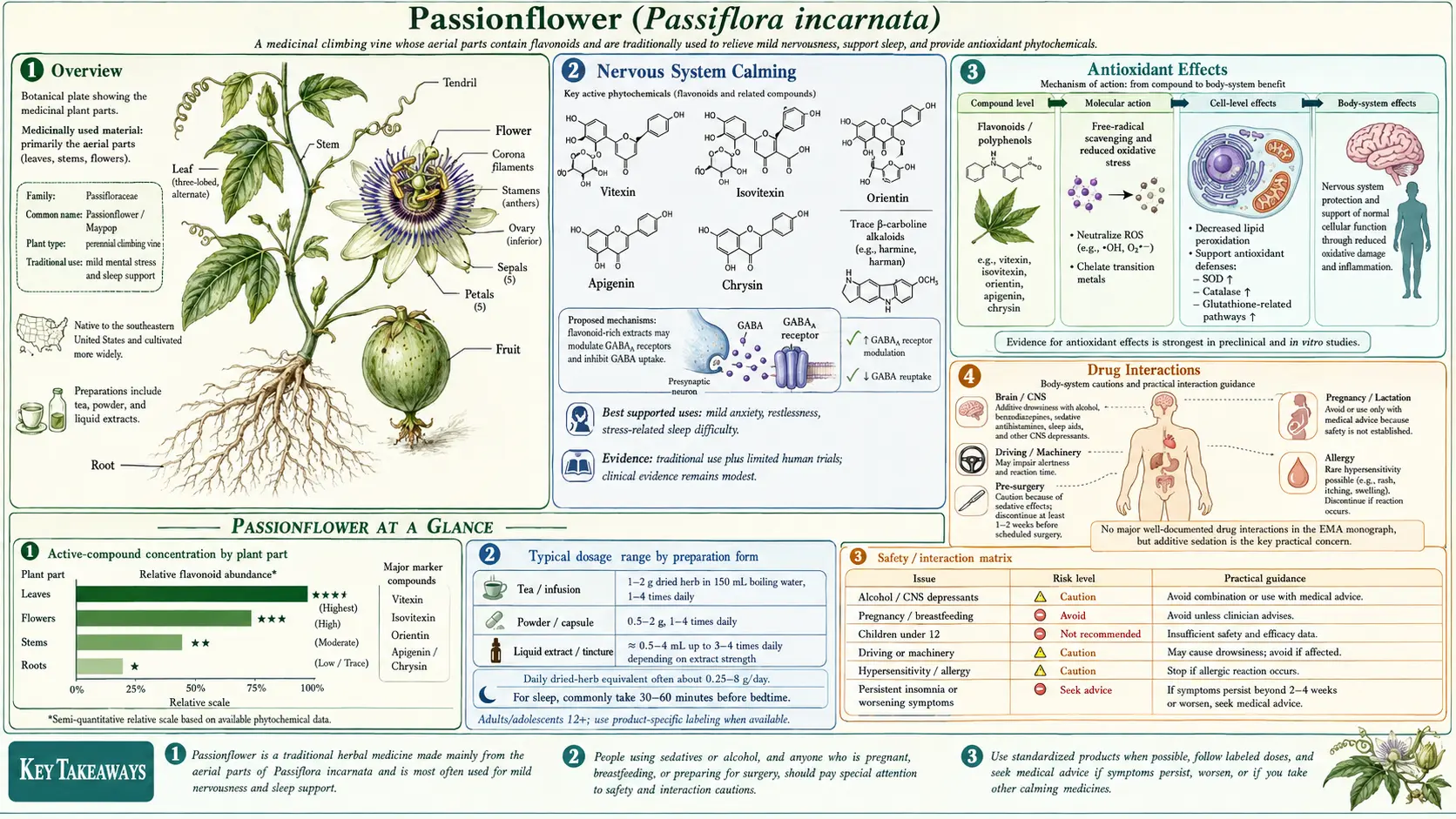
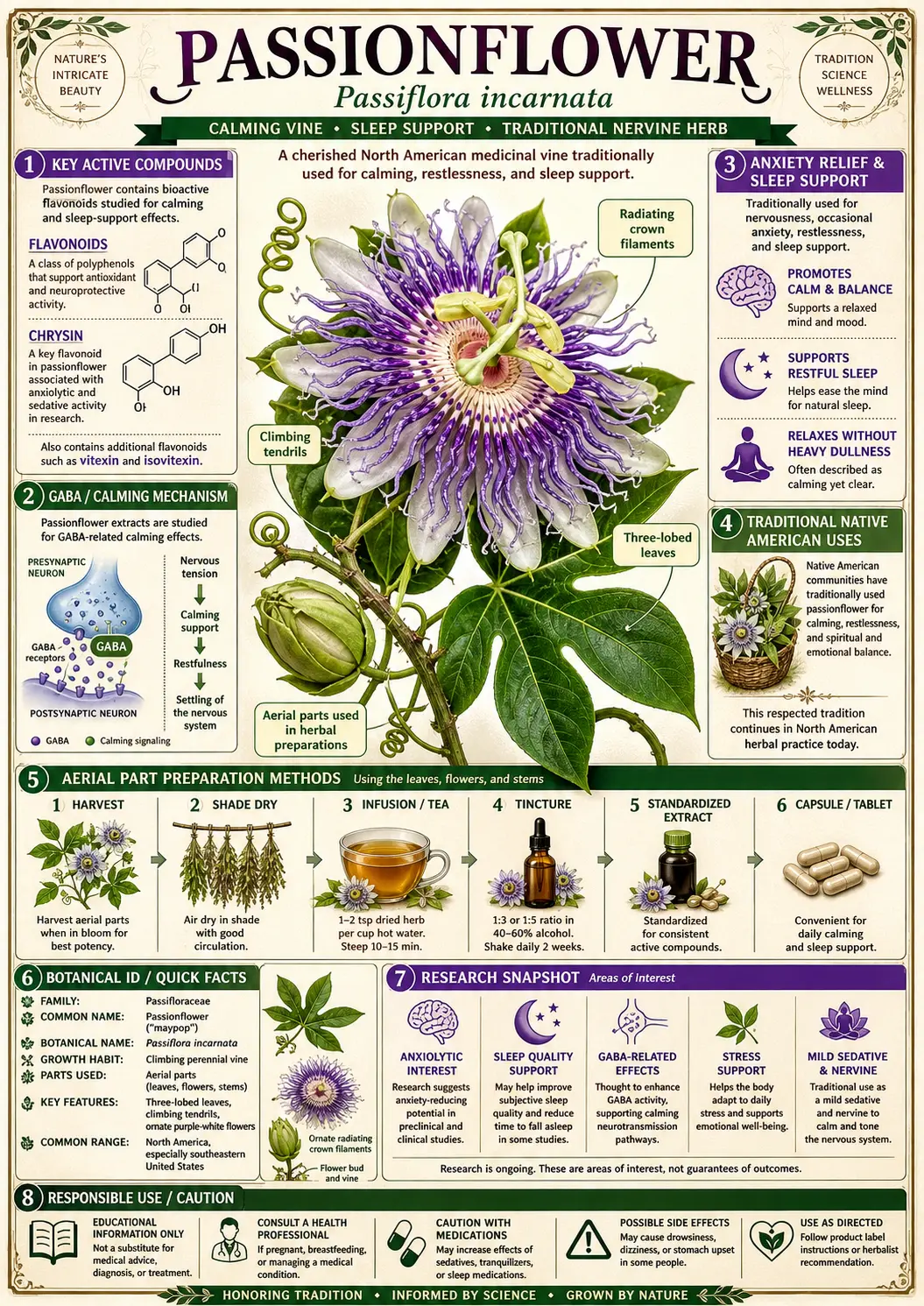
Table of Contents
- Overview
- History and Traditional Use
- Botanical Description
- Active Compounds
- Anxiety Relief
- Sleep and Insomnia
- Nervous System Calming
- Blood Pressure Regulation
- Pain Relief
- Menopausal Symptoms
- Attention-Deficit/Hyperactivity Disorder Support
- Opioid Withdrawal Aid
- Anti-Inflammatory Properties
- Antioxidant Effects
- Digestive Health
- Skin Health
- Preparation Methods
- Dosage Guidelines
- Safety and Side Effects
- Drug Interactions
- Key Research Papers
- Featured Videos
Overview
Passionflower, known botanically as Passiflora incarnata, is one of the most extensively studied and widely respected calming herbs in the world. Native to the southeastern United States, Central America, and parts of South America, this perennial climbing vine has earned a prominent place in both traditional and modern herbal medicine for its remarkable ability to soothe anxiety, promote restful sleep, and quiet an overactive nervous system. Among the approximately 500 species in the Passiflora genus, P. incarnata stands out as the species most thoroughly validated by clinical research for its medicinal properties.
The therapeutic value of passionflower lies in its complex mixture of bioactive compounds, including flavonoids, alkaloids, and amino acids, that work synergistically to modulate gamma-aminobutyric acid (GABA) activity in the brain. Unlike many pharmaceutical sedatives that carry significant risks of dependence and cognitive impairment, passionflower offers a gentler approach to calming the mind and body. It has been recognized by the European Medicines Agency as a traditional herbal medicine for the relief of mild symptoms of mental stress and as a sleep aid, and it is approved by the German Commission E for the treatment of nervous restlessness.
A 2007 Cochrane review found two small trials (198 people in all) that compared passionflower with benzodiazepine drugs. One found no difference in effect on anxiety between passionflower and the drug. Passionflower showed less drowsiness in one trial and fewer job-performance problems in the other, but neither difference reached statistical significance, and the reviewers judged the trials too few in number to permit any conclusions. Passionflower remains one of the best-known traditional calming herbs, backed by a long history of use and a growing body of research. As interest in evidence-based herbal medicine continues to grow, passionflower has emerged as one of the most promising natural anxiolytic and sedative herbs available, backed by a rich history of traditional use and an expanding body of scientific evidence.
History and Traditional Use
Passionflower's story spans two worlds. Native peoples of the American Southeast, including the Cherokee, ate its maypop fruit and used the plant medicinally for thousands of years, while sixteenth-century Spanish missionaries read the crucifixion into its extraordinary bloom and gave it the name “passion flower.” The vine traveled from Indigenous fields to European gardens and into the United States National Formulary as a recognized sedative — the fuller story is told in the dedicated History & Traditional Use article.
Botanical Description
Passiflora incarnata is a vigorous, fast-growing perennial vine belonging to the family Passifloraceae. It is native to the southeastern United States, ranging from Virginia south to Florida and west to Texas and Oklahoma, as well as parts of Central and South America. The plant thrives in a variety of habitats including open fields, roadsides, woodland edges, and disturbed areas, and it is remarkably adaptable, tolerating both full sun and partial shade. In warm climates, the vine is woody and evergreen, while in cooler regions it dies back to the ground each winter and regenerates vigorously from its extensive root system in spring.
The vine climbs by means of axillary tendrils that coil around any available support structure, allowing it to reach heights of six to nine meters (20 to 30 feet) or more when given adequate support. The leaves are alternate, palmately divided into three to five deeply cut lobes, measuring 6 to 15 centimeters across. They are dark green on the upper surface and pale, whitish-green beneath. A distinctive feature is the pair of nectar-producing glands located at the base of each leaf blade on the petiole, which attract ants and other beneficial insects that help protect the plant from herbivores.
The flowers of P. incarnata are among the most striking and complex in the plant kingdom, measuring approximately 7 to 8 centimeters (about 3 inches) across. Each bloom features five whitish petals and five sepals arranged in a flat, star-like pattern, surmounted by a spectacular corona of wavy, hair-like filaments (the fringed corona) that are typically lavender, purple, or white with banded coloring. Above the corona rise five prominent stamens and a three-branched pistil with a conspicuous ovary. The flowers are short-lived, typically lasting only one day, but the plant produces them in abundance throughout the summer months from June through September.
The fruit, commonly known as a maypop, is a large, oval or spherical berry measuring up to 5 centimeters (2 inches) in length. It is green when immature and turns orange-yellow at maturity. The interior contains numerous dark seeds surrounded by a sweet, aromatic pulp that is edible and has a flavor reminiscent of tropical citrus and guava. The name "maypop" derives from the fact that the hollow fruits ripen in May in southern climates and produce a popping sound when stepped on. All aerial parts of the plant, including the leaves, stems, and flowers, are used medicinally, and they are typically harvested during the flowering period when the concentration of bioactive compounds is at its peak.
Active Compounds
The therapeutic effects of passionflower arise from a remarkably complex phytochemical profile. Rather than depending on a single active ingredient, passionflower derives its calming, anxiolytic, and sedative properties from the synergistic interaction of multiple classes of bioactive compounds. Scientific analysis has identified dozens of individual chemicals in Passiflora incarnata, and ongoing research continues to clarify how these compounds work together to produce the plant's characteristic effects on the nervous system.
The major classes of active compounds in passionflower include:
- Chrysin: A flavone that has been shown to bind to benzodiazepine receptors in the brain, producing anxiolytic effects. Chrysin modulates gamma-aminobutyric acid-A receptor activity, enhancing the calming influence of the neurotransmitter gamma-aminobutyric acid without the heavy sedation or dependence risk associated with pharmaceutical benzodiazepines
- Vitexin and isovitexin: C-glycosyl flavones that are now considered among the primary active constituents responsible for passionflower's calming effects. These compounds are characterized by a carbon-carbon bond to a sugar molecule, making them more chemically stable than O-glycoside flavonoids. Research demonstrates that they provide neuroprotective effects by directly restraining excessive glutamatergic (excitatory) activity in the brain
- Apigenin: A widely studied flavone found in passionflower that interacts with gamma-aminobutyric acid-A receptors. Apigenin contributes to the overall anxiolytic and mildly sedative profile of the plant and also exhibits anti-inflammatory properties
- Harman alkaloids: Beta-carboline alkaloids including harman, harmine, harmaline, and harmol are present in passionflower, though in very low concentrations in standard preparations. These indole-derived alkaloids are known to inhibit monoamine oxidase (MAO) and may contribute to mood-regulating effects, though their low concentration means they play a secondary role compared to the flavonoids
- gamma-aminobutyric acid (GABA): Passionflower contains measurable quantities of the neurotransmitter gamma-aminobutyric acid itself, which may cross the blood-brain barrier and contribute directly to the plant's calming effects. The presence of endogenous gamma-aminobutyric acid, combined with compounds that enhance gamma-aminobutyric acid receptor function, creates a multi-pronged approach to nervous system calming
- Orientin and isoorientin: Additional C-glycosyl flavones that contribute to the overall antioxidant and neuroprotective activity of the plant
- Maltol and ethyl maltol: Compounds identified in passionflower extracts that have demonstrated sedative and muscle-relaxant properties in preclinical studies
- Oleamide: A fatty acid amide with affinity for CB1 cannabinoid receptors, suggesting a potential contribution of cannabimimetic pathways to passionflower's analgesic and sedative actions
Research published in the journal Current Neuropharmacology has demonstrated that passionflower's mechanism of action extends well beyond simple gamma-aminobutyric acid modulation. The plant also influences dopaminergic, serotonergic, and noradrenergic neurotransmitter systems. Prolonged treatment with P. incarnata has been shown to increase spinal dopamine, decrease cerebellar norepinephrine, and accelerate serotonin turnover, all of which parallel its anxiolytic and antidepressant-like behavioral effects observed in clinical settings.
Anxiety Relief
Passionflower has earned its strongest scientific validation as a natural treatment for anxiety. Multiple clinical trials have demonstrated that Passiflora incarnata extract can significantly reduce symptoms of generalized anxiety disorder, situational anxiety, and preoperative nervousness, often rivaling the effectiveness of prescription anxiolytic medications while producing fewer adverse effects. The anxiolytic action of passionflower is attributed primarily to its modulation of the gamma-aminobutyric acid-A receptor system, the same neurochemical pathway targeted by benzodiazepine drugs, but with a gentler and more balanced mechanism of action.
The most widely cited clinical evidence comes from a landmark double-blind randomized controlled trial published in the Journal of Clinical Pharmacy and Therapeutics in 2001 by Akhondzadeh and colleagues. This study compared passionflower extract (45 drops per day) with oxazepam (30 mg per day), a prescription benzodiazepine, in 36 outpatients diagnosed with generalized anxiety disorder using DSM-IV criteria over a four-week treatment period. The results showed that both treatments were equally effective in reducing anxiety symptoms, with no statistically significant difference between the two groups at the end of the trial. However, the trial reported significantly more problems with impaired job performance among those taking oxazepam than among those taking passionflower. (The trial measured job performance, not thinking or memory; the 2007 Cochrane review calls this a post-hoc outcome, and in its analysis the difference did not reach statistical significance.)
Additional clinical research has explored passionflower's effects on preoperative anxiety. A 2008 double-blind, placebo-controlled study in 60 ambulatory surgery patients found that 500 mg of oral Passiflora incarnata taken 90 minutes before surgery lowered anxiety compared with placebo without causing sedation, and recovery of psychomotor function (movement and reaction skills) was comparable to placebo. A 2017 study in 128 patients compared passionflower with the benzodiazepine oxazepam (10 mg): anxiety 90 minutes after the dose was lower with passionflower, and psychomotor impairment was similar in the two groups. These findings are particularly significant because preoperative anxiety is a well-documented clinical problem that can complicate surgical outcomes and recovery.
Passionflower has a long traditional use as a calming herb for anxiety, and the European Medicines Agency recognizes it as a traditional herbal medicine for the relief of mild symptoms of mental stress and to aid sleep. The 2007 Cochrane review, however, found randomized trials of passionflower for anxiety too few in number to permit any conclusions. The European Medicines Agency also notes that passionflower may impair the ability to drive and use machines.
Its favorable side-effect profile, absence of dependence risk, and preservation of cognitive function make it an especially attractive alternative for individuals who need anxiety relief but must maintain mental sharpness for work, driving, or other daily activities.
Sleep and Insomnia
Passionflower's long-standing reputation as a sleep aid has been increasingly validated by modern clinical research. The plant's ability to promote restful sleep without causing morning grogginess or disrupting normal sleep architecture makes it one of the most useful natural remedies for insomnia and disturbed sleep patterns. Its sleep-promoting effects are closely related to its anxiolytic properties, as the same gamma-aminobutyric acid-modulating mechanisms that calm anxiety also facilitate the transition from wakefulness to sleep.
A pivotal double-blind, placebo-controlled investigation published in the journal Phytotherapy Research examined the effects of passionflower herbal tea on subjective sleep quality in 41 healthy adult participants aged 18 to 35. Participants consumed a cup of passionflower tea or placebo daily for one week, with sleep quality assessed through sleep diaries validated by polysomnography. The results showed that sleep quality was rated significantly higher in the passionflower group compared to placebo, demonstrating that even a low dose of passionflower in the form of tea can yield meaningful short-term sleep benefits for adults with mild fluctuations in sleep quality.
More robust evidence came from a double-blind randomized placebo-controlled study published in International Clinical Psychopharmacology in 2020, which used objective polysomnographic measurements in 110 adult participants diagnosed with insomnia disorder. After two weeks of treatment with passionflower extract, total sleep time was significantly increased in the passionflower group compared to placebo by an average of 23 minutes. Sleep efficiency and wake after sleep onset also improved significantly within the passionflower group over the treatment period. These objective polysomnographic findings provide stronger evidence than subjective reports alone.
Passionflower is particularly well-suited for individuals whose insomnia is driven by anxiety, racing thoughts, or an inability to mentally unwind at bedtime. Unlike pharmaceutical sleep aids such as benzodiazepines and Z-drugs, passionflower does not suppress REM sleep, does not typically produce rebound insomnia upon discontinuation, and carries no established risk of physical dependence. These qualities make it a valuable option for long-term sleep support and for individuals who wish to reduce their reliance on prescription sleep medications under professional guidance.
Nervous System Calming
Beyond its specific applications for anxiety and insomnia, passionflower exerts a broad calming influence on the central and peripheral nervous system that benefits individuals experiencing various forms of nervous tension, restlessness, and hyperarousal. This general nervine action reflects the plant's ability to modulate multiple neurotransmitter systems simultaneously, producing a state of calm relaxation without significant sedation when used at moderate doses.
Passionflower's nervous system calming effects operate through several complementary mechanisms. At the gamma-aminobutyric acid-A receptor, flavonoids such as chrysin and apigenin enhance inhibitory neurotransmission, reducing neuronal excitability throughout the brain. Simultaneously, the C-glycosyl flavones vitexin and isovitexin restrain excessive glutamatergic activity, addressing the excitatory side of the neurochemical balance. This dual approach, enhancing inhibition while dampening excitation, produces a more balanced calming effect than drugs that act on only one system.
Research has also demonstrated that passionflower influences the monoaminergic neurotransmitter systems that regulate mood, arousal, and stress responses. Studies in animal models show that prolonged passionflower treatment increases dopamine levels in the spinal cord, decreases norepinephrine in the cerebellum, and accelerates serotonin turnover throughout the brain. These changes parallel the behavioral observations of reduced anxiety, improved mood stability, and enhanced stress resilience seen in both animal studies and human clinical trials.
In traditional herbal medicine, passionflower is classified as a nervine relaxant, a category of herbs that specifically tone and restore the nervous system. Herbalists recommend it for individuals who exhibit signs of chronic nervous system overactivation, including persistent muscle tension, heart palpitations, nervous digestive complaints, stress-related headaches, and an exaggerated startle response. Regular use of passionflower as a daily tonic can help rebuild nervous system resilience over time, making the individual less reactive to everyday stressors.
Blood Pressure Regulation
Emerging research suggests that passionflower may offer meaningful support for blood pressure regulation, particularly in the context of stress-induced hypertension. While the evidence is still developing and passionflower is not an established replacement for prescribed antihypertensive medications, the plant's multi-faceted effects on the nervous system and vascular function point to a legitimate role as a complementary therapy for cardiovascular health.
The blood pressure-lowering potential of passionflower appears to involve multiple mechanisms. First, the plant contains measurable amounts of gamma-aminobutyric acid, a neurotransmitter that has been independently documented as having antihypertensive properties. Second, the polyphenolic compounds in passionflower, including flavonoids and other antioxidants, may exert vasodilatory effects on blood vessels, helping to reduce peripheral resistance. Third, and perhaps most importantly, passionflower's well-documented ability to reduce anxiety and promote nervous system calming directly addresses stress-induced elevations in blood pressure and heart rate.
Animal studies have provided supporting evidence for these effects. Research on spontaneously hypertensive rats has demonstrated that passion fruit extracts can significantly reduce systolic blood pressure, with specific bioactive components including edulilic acid and anthocyanins identified as contributing factors. Participants who took passionflower extract experienced significant reductions in both heart rate and systolic blood pressure during a public speaking stress test compared to those receiving a placebo, suggesting that passionflower may be particularly effective at blunting the cardiovascular effects of acute psychological stress.
While large-scale clinical trials specifically targeting hypertension are still needed, passionflower is traditionally used as a gentle cardiovascular tonic, especially for individuals whose elevated blood pressure is linked to chronic stress, anxiety, or nervous tension. Its calming effects on the autonomic nervous system help shift the body from sympathetic dominance (the fight-or-flight state that raises blood pressure) toward parasympathetic activation (the rest-and-digest state that lowers it).
Pain Relief
Passionflower has demonstrated significant analgesic properties in preclinical research, with growing evidence suggesting it may be useful for managing certain types of pain, particularly neuropathic pain and pain conditions involving nervous system sensitization. The plant's pain-relieving effects are distinct from those of conventional analgesics and appear to involve multiple receptor systems working in concert.
Research published in BMC Complementary and Alternative Medicine has revealed that Passiflora incarnata modulates the opioidergic system, a finding demonstrated by the reversal of its pain-relieving effects following administration of the opioid receptor antagonist naloxone. This suggests that passionflower engages the body's endogenous opioid pathways, the same system targeted by morphine and related painkillers, but through a natural, gentle modulation rather than the powerful direct activation produced by opioid drugs. Additionally, the identification of oleamide in passionflower extracts, a fatty acid amide with affinity for CB1 cannabinoid receptors, points to a potential contribution from cannabimimetic pathways to the plant's analgesic effects.
A 2016 study in animal models of neuropathic pain found that Passiflora incarnata extract significantly attenuated allodynia (pain from normally non-painful stimuli) and vulvodynia through underlying GABAergic and opioidergic mechanisms. Leaf extracts have also demonstrated analgesic, anti-inflammatory, and antipyretic (fever-reducing) properties in standardized pain models, with effects comparable to conventional analgesics in some studies. Traditional herbalists have long recommended passionflower for neuralgia-type pain, tension headaches, and pain conditions exacerbated by stress and anxiety.
The multi-target analgesic profile of passionflower, engaging gamma-aminobutyric acid, opioid, and potentially cannabinoid receptor systems simultaneously, represents a fundamentally different approach to pain management than single-target pharmaceutical analgesics. While further clinical trials in human subjects are needed to fully establish optimal dosing and efficacy for specific pain conditions, the preclinical evidence is compelling and aligns with centuries of traditional use for pain relief.
Menopausal Symptoms
Passionflower has shown promise as a natural supportive remedy for women experiencing the often disruptive symptoms of menopause. Hot flashes, night sweats, insomnia, mood swings, anxiety, and irritability are among the most common menopausal complaints, and passionflower's broad spectrum of calming, sleep-promoting, and mood-stabilizing effects makes it particularly well-suited to address this cluster of symptoms.
Clinical research has directly examined passionflower's effects on menopausal symptoms. A 2010 clinical trial at Isfahan city health care centers in Iran studied 59 menopausal women, randomly split into a St. John's wort group (30 women) and a passionflower group (29 women) for six weeks. Passionflower was given as drops: 10 drops three times a day and 30 drops before sleep. Menopause symptom scores fell significantly in both groups by the third and sixth weeks, with no significant difference between the two herbs; the authors describe effects on vasomotor signs such as hot flashes, insomnia, depression, anger and headache.
The mechanisms by which passionflower alleviates menopausal symptoms are likely multifactorial. Its GABAergic activity directly addresses the anxiety, irritability, and sleep disruption that are hallmarks of the menopausal transition. Emerging research also suggests that passionflower's active compounds may help regulate the autonomic nervous system, which plays a central role in temperature regulation and the occurrence of hot flashes. The plant's influence on serotonin metabolism may further contribute to mood stabilization, as serotonin pathways are known to be involved in both mood regulation and thermoregulatory control.
While further large-scale clinical trials are needed to establish definitive dosing recommendations and efficacy parameters, passionflower represents a valuable addition to the natural toolkit for managing menopausal symptoms. It is particularly appealing for women who cannot or prefer not to use hormone replacement therapy and who seek a gentle, non-hormonal approach to symptom relief.
Attention-Deficit/Hyperactivity Disorder Support
Attention-deficit/hyperactivity disorder (ADHD) is a neurodevelopmental condition characterized by persistent patterns of inattention, hyperactivity, and impulsivity. While conventional treatment typically involves stimulant medications such as methylphenidate, these drugs can produce side effects including appetite suppression, insomnia, and anxiety. Passionflower has been investigated as a potential alternative or complementary treatment that may offer symptom improvement with a more tolerable side-effect profile.
The most significant clinical evidence comes from an eight-week randomized controlled trial that compared passionflower tablets (0.04 mg/kg/day) with methylphenidate (1 mg/kg/day) in 34 children diagnosed with attention-deficit/hyperactivity disorder. The results were noteworthy: no statistically significant differences were observed between the two treatment groups on Parent and Teacher Rating Scale scores, indicating that passionflower produced comparable clinical improvement to the standard pharmaceutical treatment over the study period. Both groups demonstrated significant clinical benefit relative to baseline measures.
Importantly, the side-effect profiles differed markedly between the two treatments. Decreased appetite and increased anxiety and nervousness were observed significantly more often in the methylphenidate group compared to the passionflower group. This suggests that passionflower may offer a meaningful advantage in terms of tolerability, particularly for children who are sensitive to the appetite-suppressing and anxiety-inducing effects of stimulant medications.
This study was relatively small, had a short follow-up period, and lacked a placebo control group. The researchers themselves acknowledged that larger-scale studies are needed to confirm their findings. Nevertheless, the results are encouraging and suggest that passionflower deserves further investigation as a potential treatment for attention-deficit/hyperactivity disorder, particularly for patients who experience intolerable side effects from conventional stimulant medications or whose families prefer to explore natural treatment options.
Opioid Withdrawal Aid
One of the most clinically significant applications of passionflower is as an adjuvant therapy in the management of opioid withdrawal symptoms. The opioid crisis has created an urgent need for effective, accessible treatments that can ease the difficult process of detoxification, and research suggests that passionflower may fill an important complementary role alongside conventional medical management.
A landmark double-blind randomized controlled trial published in the Journal of Clinical Pharmacy and Therapeutics in 2001 by Akhondzadeh and colleagues investigated the use of passionflower as an adjunct to clonidine, a standard medication for managing opioid withdrawal symptoms, in 65 opioid-dependent patients undergoing outpatient detoxification. Patients were randomized to receive either clonidine plus passionflower extract (60 drops daily) or clonidine plus placebo over a 14-day detoxification period. The maximum daily clonidine dose was 0.8 mg in three divided doses for both groups.
The results demonstrated that both treatment protocols were equally effective in managing the physical symptoms of opioid withdrawal, including body aches, cramping, sweating, and gastrointestinal distress. However, the passionflower-plus-clonidine group showed a statistically significant superiority over clonidine alone in the management of mental and psychological withdrawal symptoms, including anxiety, irritability, agitation, and insomnia. This is a critically important finding because the psychological symptoms of opioid withdrawal are often the most distressing for patients and are a major driver of relapse.
The mechanism underlying passionflower's benefit in opioid withdrawal likely involves its broad anxiolytic effects, including gamma-aminobutyric acid modulation, serotonin system influence, and general nervous system calming. By addressing the severe anxiety and psychological distress that characterize opioid withdrawal, passionflower helps patients endure the detoxification process more comfortably and may thereby reduce the risk of early relapse. In that trial passionflower was given only alongside clonidine, never on its own, so the research describes it as an add-on to the medical management of opioid withdrawal, not a replacement for it.
Anti-Inflammatory Properties
Chronic inflammation underlies many of the most common and debilitating diseases of the modern era, including cardiovascular disease, diabetes, neurodegenerative disorders, and autoimmune conditions. Passionflower has demonstrated significant anti-inflammatory activity in laboratory and animal studies, suggesting that its therapeutic benefits extend well beyond nervous system calming to include meaningful modulation of inflammatory processes throughout the body.
Research published in Current Pharmaceutical Design has established that the flavonoids in passionflower, particularly quercetin, apigenin, and vitexin, are potent anti-inflammatory agents. These compounds work by inhibiting key inflammatory mediators, including tumor necrosis factor-alpha, interleukin-1 beta (IL-1 beta), nitric oxide, and myeloperoxidase. Animal studies using carrageenan-induced inflammatory models have demonstrated that passionflower extracts significantly reduce leukocyte and neutrophil infiltration at sites of inflammation, directly suppressing the immune cell recruitment that drives tissue damage in inflammatory conditions.
The anti-inflammatory effects of passionflower have particular relevance for conditions involving neuroinflammation, the inflammatory processes within the brain and nervous system that are increasingly recognized as contributing to anxiety, depression, cognitive decline, and neurodegenerative diseases. By reducing neuroinflammation, passionflower may protect neural tissue from damage and support healthier brain function over the long term. A 2025 study demonstrated that Passiflora incarnata extract administered prior to stress exposure reduced anxiety-like behaviors and improved memory impairment in animal models, suggesting neuroprotective effects that may be mediated in part by anti-inflammatory mechanisms.
While human clinical trials specifically targeting inflammatory conditions with passionflower are still needed, the preclinical evidence strongly supports the plant's role as a natural anti-inflammatory agent. Its flavonoid-rich composition positions it alongside other well-established anti-inflammatory herbs such as turmeric, ginger, and boswellia, though with the added benefit of simultaneous nervous system support.
Antioxidant Effects
Oxidative stress, the imbalance between reactive oxygen species (free radicals) and the body's antioxidant defenses, plays a central role in the aging process and the development of chronic diseases including cancer, cardiovascular disease, and neurodegeneration. Passionflower is a rich source of antioxidant compounds that can help neutralize free radicals, protect cellular structures from oxidative damage, and support the body's endogenous antioxidant systems.
The antioxidant activity of passionflower is primarily attributed to its diverse array of polyphenolic compounds. Flavonoids including chrysin, vitexin, isovitexin, orientin, isoorientin, quercetin, and apigenin all contribute to the plant's free radical scavenging capacity. These compounds donate electrons to unstable free radicals, neutralizing them before they can damage DNA, cell membranes, proteins, and other critical biological structures. In standardized antioxidant assays, passionflower extracts have demonstrated significant radical scavenging activity against multiple types of reactive oxygen species.
Animal studies have provided evidence that passionflower's antioxidant effects translate into measurable biological benefits. Research has shown that passionflower extract improves overall antioxidant status and decreases lipid peroxidation, a key marker of oxidative damage, in serum, liver, and colon tissue. These findings suggest that regular consumption of passionflower may help protect vital organs from the cumulative effects of oxidative stress. The combination of antioxidant and anti-inflammatory effects creates a synergistic protective mechanism, as oxidative stress and inflammation are closely interlinked processes that tend to amplify each other in a destructive cycle.
The neuroprotective implications of passionflower's antioxidant effects are particularly significant. The brain is exceptionally vulnerable to oxidative damage due to its high metabolic rate, high lipid content, and relatively limited antioxidant defenses. By delivering potent antioxidant compounds that can cross biological barriers and neutralize free radicals within neural tissue, passionflower may help protect against age-related cognitive decline and support long-term brain health.
Digestive Health
The connection between the nervous system and digestive function is profound and bidirectional, and passionflower's calming effects on the nervous system translate directly into benefits for gastrointestinal health. In traditional herbal medicine across the Americas and Europe, passionflower has been used for centuries to treat digestive complaints including stomach cramps, nervous indigestion, and intestinal discomfort. Modern research is beginning to provide scientific validation for these traditional uses.
Passionflower's benefits for digestive health operate through several mechanisms. In herbal tradition, its antispasmodic action is used to relax smooth muscle in the gastrointestinal tract and ease cramps, spasms, and the discomfort associated with conditions like irritable bowel syndrome (IBS). Irritable bowel syndrome patients treated with a preparation containing dry extract of Passiflora incarnata showed improvement in both stool quality and visceral pain sensation. Irritable bowel syndrome patients who received a natural product combination including passionflower had a marked reduction of symptoms including abdominal pain, abdominal distention, and changes in stool habits.
Traditional South American herbal medicine systems have long employed various Passiflora species for gastrointestinal pathologies. The leaves have been used against dysentery, the aerial parts as an antispasmodic agent, and the fruit as a eupeptic agent to promote healthy digestion. Animal research on Passiflora caerulea, a closely related species, has demonstrated protective effects against experimental colitis, suggesting that passionflower compounds may help maintain the integrity of the intestinal lining and modulate the gut immune response.
Additionally, the gastroprotective effects of passionflower have been investigated. Research on soluble dietary fiber from passion fruit peel showed significant protection against experimentally induced gastric ulcers in animal models, with oral pre-treatment reducing ulcer lesions by up to 87 percent. While these studies used fiber from the fruit rather than the aerial parts typically used medicinally, they point to a broader gastroprotective potential across the plant. For individuals whose digestive symptoms are driven or worsened by stress and anxiety, passionflower addresses both the psychological trigger and the physical manifestation, making it an especially holistic remedy for stress-related digestive disorders.
Skin Health
Passionflower's benefits extend to topical applications for skin health, where its rich content of antioxidants, essential fatty acids, and anti-inflammatory compounds can support skin barrier function, reduce inflammation, and promote healing. While the research on topical passionflower applications is less extensive than the evidence for its internal use, traditional practices and preliminary scientific findings point to meaningful dermatological potential.
Passionflower extract is rich in linoleic acid, an essential omega-6 fatty acid that plays a critical role in maintaining the skin's natural lipid barrier. A healthy lipid barrier is essential for retaining moisture, preventing transepidermal water loss, and protecting against environmental irritants and pathogens. The extract also contains vitamins A and C, both of which are well-established in dermatology for their roles in supporting collagen synthesis, promoting cell turnover, and protecting against ultraviolet radiation damage. Preliminary research suggests that passionflower extract may stimulate collagen production, potentially helping to diminish the appearance of fine lines and wrinkles.
The anti-inflammatory flavonoids in passionflower, including chrysin, vitexin, and apigenin, can modulate immune responses in the skin by altering the release of inflammatory mediators. This makes passionflower extract potentially useful for calming irritated, inflamed, or sensitive skin conditions. Some skincare formulations incorporate passionflower extract specifically for use after dermatological procedures to soothe treated skin and accelerate the healing process.
It is important to note that rigorous clinical trials specifically evaluating topical passionflower preparations for skin conditions are still limited. While the biochemical rationale is sound and traditional use supports topical application, patch-testing any new topical preparation is a common precaution for people with skin conditions. The antioxidant and anti-inflammatory properties documented in internal use studies provide a promising foundation for future dermatological research on this versatile plant.
Preparation Methods
Passionflower can be prepared and consumed in several different forms, each with distinct characteristics regarding convenience, potency, onset of action, and suitability for different therapeutic purposes. The aerial parts of the plant, including the leaves, stems, and flowers, are the portions used medicinally. Understanding the differences between preparation methods helps ensure that the chosen form best matches the individual's needs and preferences.
- Herbal tea (infusion): One of the most traditional and gentle preparation methods. To prepare passionflower tea, steep 1 to 2 teaspoons (approximately 2 to 4 grams) of dried passionflower herb in one cup (240 ml) of freshly boiled water for 10 to 15 minutes, then strain. The tea has a mild, slightly grassy flavor that many find pleasant. This method is ideal for promoting relaxation before bedtime and is the form most commonly used in clinical sleep studies. Drinking passionflower tea can itself become a calming bedtime ritual that signals the body to prepare for sleep
- Tincture (liquid extract): Tinctures are concentrated liquid preparations made by soaking passionflower herb in a mixture of alcohol and water for several weeks to extract the bioactive compounds. They offer the advantage of rapid absorption, precise dosing, and long shelf life. A typical dose is 0.5 to 2 ml (approximately 10 to 40 drops) taken two to three times daily, or as directed by a healthcare practitioner. Tinctures can be taken directly under the tongue for fastest absorption or added to a small amount of water or juice
- Capsules and tablets: Standardized passionflower extract in capsule or tablet form offers the most convenient and consistent dosing option. Most commercial products provide between 250 and 900 mg of extract per capsule, and many are standardized to a specific percentage of total flavonoids to ensure batch-to-batch consistency. Capsules are preferred by individuals who dislike the taste of herbal teas or tinctures and by those who need a portable option for daytime use
- Powdered herb: Dried passionflower can be ground into a fine powder and added to smoothies, mixed with honey, or encapsulated at home. This provides a whole-plant preparation that retains the full spectrum of bioactive compounds, though dosing may be less precise than with standardized extracts
- Combination formulations: Passionflower is frequently combined with other calming herbs in commercial preparations. Common partner herbs include valerian, lemon balm, hops, chamomile, and lavender. These combination products can leverage the complementary mechanisms of different herbs to produce a more comprehensive calming effect
Whatever the preparation method, third-party testing of a product checks its purity, potency, and absence of contaminants. Passiflora incarnata is the species with the strongest clinical evidence for medicinal use, and some product labels name the species while others do not.
Dosage Guidelines
Establishing a precise universal dosage for passionflower is challenging because the optimal amount depends on the form of preparation, the concentration of the extract, the individual's body weight and sensitivity, and the specific condition being addressed. However, clinical research and established herbal medicine guidelines provide useful ranges that can serve as a starting point. A common practice with herbal supplements is to begin at the lower end of the range and increase gradually.
The following dosages are commonly cited in clinical literature and herbal pharmacopeias:
- Dried herb (for tea): 1 to 2 grams of the cut herb steeped in hot water, up to three to four times daily (the European Medicines Agency figure; its 0.5 to 2 grams is for the powdered herb). For sleep support, a single cup taken 30 to 60 minutes before bedtime is the common practice
- Tincture (1:5 ratio in 45% alcohol): 0.5 to 2 ml taken two to three times daily
- Standardized extract (capsules or tablets): 250 to 900 mg per day, typically divided into two to three doses. Many clinical trials have used doses in the range of 400 to 800 mg daily with positive results
- Liquid extract (1:1): 0.5 to 1 ml taken two to three times daily
- For preoperative or situational anxiety: A single dose of 500 to 700 mg of standardized extract taken 30 to 90 minutes before the anticipated stressor
The European Medicines Agency's 2014 monograph, for adolescents and adults, gives the herbal tea as 1 to 2 grams of the cut dried herb in 150 ml of boiling water, one to four times daily, and the powdered herb as 0.5 to 2 grams, one to four times daily; it gives no separate bedtime dose. It does not recommend use in children under 12, notes that passionflower may impair the ability to drive and use machines, and lists symptoms that last longer than two weeks during use as a reason to see a doctor or qualified health practitioner. The daily use of passionflower extract appears to be safe for up to eight weeks based on the available clinical trial data; safety data beyond that is limited.
It is important to recognize that standardized extracts and whole-herb preparations may differ in their potency and the balance of active compounds they deliver. Products standardized to a specific percentage of total flavonoids (typically 3.5 to 4 percent) offer the most predictable dosing. Herbalists and integrative medicine practitioners describe choosing the form and dose to suit the person and the condition being addressed.
Safety and Side Effects
Passionflower has a generally favorable safety profile. The United States Food and Drug Administration lists passion flower (Passiflora incarnata) among the natural flavoring substances that may be safely used in food (21 CFR 172.510); it is not among the spices, flavorings and natural extracts the FDA lists as Generally Recognized as Safe (GRAS) in 21 CFR 182.10 and 182.20. It is considered possibly safe when taken as a medicine for up to eight weeks or as a tea for up to seven consecutive nights, based on the available clinical trial data. Serious adverse events are rare in the published literature, but as with any bioactive substance, awareness of potential side effects and precautions is important.
The most commonly reported side effects of passionflower are mild and related to its primary pharmacological action as a nervous system depressant. These include drowsiness, dizziness, and occasionally confusion, particularly at higher doses. Some individuals have reported nausea, vomiting, or mild gastrointestinal discomfort. Rare case reports have described more serious effects including rapid heart rhythm and altered consciousness, though these have typically involved very high doses or products of uncertain composition and purity.
What is known for specific groups:
- Pregnant women: The European Medicines Agency states that safety during pregnancy has not been established and, in the absence of sufficient data, does not recommend use during pregnancy. Certain compounds in the plant, including the harmala alkaloids, have been shown to stimulate uterine contractions in animal studies, raising concerns about potential effects on pregnancy
- Breastfeeding women: Safety during breastfeeding has not been established; in the absence of sufficient data, the European Medicines Agency does not recommend use while breastfeeding
- Children: While one clinical trial demonstrated safety in children with attention-deficit/hyperactivity disorder over an eight-week period, general dosing guidelines for children are not well established. The European Medicines Agency does not recommend use in children under 12 years of age, because use at that age has not been established for lack of adequate data
- Individuals scheduled for surgery: A common precaution is to stop passionflower at least two weeks before any scheduled surgical procedure, because of its sedative effects and potential interactions with anesthesia
- People with low blood pressure: Because passionflower may lower blood pressure, the concern applies to people with low blood pressure (hypotension) and to those taking blood-pressure medicines
Long-term safety data beyond eight weeks of continuous use is limited. Choosing high-quality products from reputable manufacturers that provide third-party testing helps minimize the risk of adverse effects from contaminants or inaccurately labeled products.
Drug Interactions
Because passionflower contains pharmacologically active compounds that affect the central nervous system and potentially other physiological systems, it has the potential to interact with a range of prescription and over-the-counter medications. Understanding these interactions is essential for safe use, particularly for individuals who take multiple medications or have complex health conditions.
The most significant drug interactions involve the following categories:
- Sedative medications (central nervous system (CNS) depressants): Passionflower enhances GABAergic neurotransmission, and combining it with other substances that depress the central nervous system can produce additive or synergistic sedation. Medicines in this group include benzodiazepines (such as lorazepam, clonazepam, and diazepam), barbiturates (such as phenobarbital and pentobarbital), sleep aids (such as zolpidem and eszopiclone), and other sedative-hypnotic drugs. The combination can result in excessive drowsiness, impaired coordination, slowed breathing, and potentially dangerous over-sedation. The European Medicines Agency notes that passionflower on its own may impair the ability to drive and use machines; its monograph lists interactions with other medicines as "None reported"
- Anticoagulant and antiplatelet medications (blood thinners): Compounds identified in passionflower extracts have exhibited anticoagulant activity in laboratory studies. While clinical case reports of bleeding events are lacking, there is a theoretical risk that concurrent use of passionflower with anticoagulants such as warfarin, heparin, or direct oral anticoagulants (such as rivaroxaban and apixaban), or with antiplatelet agents such as clopidogrel and aspirin, could increase the risk of bleeding. The European Medicines Agency monograph lists no reported interactions
- Antihypertensive medications: Given passionflower's potential to lower blood pressure, combining it with prescribed antihypertensive drugs could lead to an excessive reduction in blood pressure (hypotension), resulting in dizziness, lightheadedness, or fainting
- MAO inhibitors: The harmala alkaloids present in passionflower (harman, harmine, harmaline) are known to inhibit monoamine oxidase. Although these alkaloids are present in very low concentrations in standard passionflower preparations, theoretical concerns exist about interactions with MAO inhibitor medications used for depression, potentially leading to serotonin syndrome or hypertensive crisis
- Antihistamines and alcohol: The sedative effects of passionflower may be amplified when combined with sedating antihistamines (such as diphenhydramine) or alcohol, increasing the risk of excessive drowsiness and impaired cognitive and motor function
- Antidepressants: Caution is warranted when combining passionflower with antidepressant medications, particularly selective serotonin reuptake inhibitors (SSRIs) and serotonin-norepinephrine reuptake inhibitors (SNRIs), due to the plant's effects on serotonin metabolism. While significant interactions have not been well documented in clinical settings, the theoretical potential for serotonin-related effects merits awareness
These interaction concerns matter most for people taking several medicines, people with chronic health conditions, and those scheduled for medical procedures.
Key Research Papers
- Akhondzadeh, S., Naghavi, H.R., Vazirian, M., et al. (2001). Passionflower in the treatment of generalized anxiety: a pilot double-blind randomized controlled trial with oxazepam. Journal of Clinical Pharmacy and Therapeutics 26(5), 363–367. — doi:10.1046/j.1365-2710.2001.00367.x
- Akhondzadeh, S., Kashani, L., Mobaseri, M., et al. (2001). Passionflower in the treatment of opiates withdrawal: a double-blind randomized controlled trial. Journal of Clinical Pharmacy and Therapeutics 26(5), 369–373. — doi:10.1046/j.1365-2710.2001.00366.x
- Ngan, A. and Conduit, R. (2011). A double-blind, placebo-controlled investigation of the effects of Passiflora incarnata (passionflower) herbal tea on subjective sleep quality. Phytotherapy Research, 25(8), 1153– 1159. — doi:10.1002/ptr.3400
- Lee, J., Jung, H.Y., Lee, S.I., et al. (2020). Effects of Passiflora incarnata Linnaeus on polysomnographic sleep parameters in subjects with insomnia disorder: a double-blind randomized placebo-controlled study. International Clinical Psychopharmacology 35(1), 29–35. — doi:10.1097/YIC.0000000000000291
- Akhondzadeh, S., Mohammadi, M.R., and Momeni, F. (2005). Passiflora incarnata in the treatment of attention-deficit hyperactivity disorder in children and adolescents. Therapy 2(4), 609–614. — doi:10.2217/14750708.2.4.609
- Miroddi, M., Calapai, G., Navarra, M., et al. (2013). Passiflora incarnata L.: ethnopharmacology, clinical application, safety and evaluation of clinical trials. Journal of Ethnopharmacology 150(3), 791–804. — doi:10.1016/j.jep.2013.09.047
- Appel, K., Rose, T., Fiebich, B., et al. (2011). Modulation of the gamma-aminobutyric acid (GABA) system by Passiflora incarnata L. Phytotherapy Research 25(6), 838–843. — doi:10.1002/ptr.3352
- Janda, K., Wojtkowska, K., Jakubczyk, K., et al. (2020). Passiflora incarnata in neuropsychiatric disorders: a systematic review. Nutrients, 12(12), 3894. — doi:10.3390/nu12123894
- Wasowski, C. and Marder, M. Flavonoids as GABA-A receptor ligands: the whole story? Journal of Experimental Pharmacology. 2012;4:9–24. — doi:10.2147/jep.s23105
- da Silva, J.K., Cazarin, C.B.B., Colomeu, T.C., et al. (2013). Antioxidant activity of aqueous extract of passion fruit (Passiflora edulis) leaves: in vitro and in vivo study. Food Research International 53(2), 882–890. — doi:10.1016/j.foodres.2012.12.043
- European Medicines Agency. (2014). Assessment report on Passiflora incarnata L., herba. EMA/HMPC/669738/2013.
- Azimaraghi, O., Yousefshahi, F., Khatavi, F., Zamani, M.M., and Movafegh, A. (2017). Both oral Passiflora incarnata and oxazepam can reduce pre-operative anxiety in ambulatory surgery patients: a double-blind, placebo-controlled study. Asian Journal of Pharmaceutical and Clinical Research 10(8), 331. — doi:10.22159/ajpcr.2017.v10i8.18852
- Movafegh, A., Alizadeh, R., Hajimohamadi, F., Esfehani, F., and Nejatfar, M. (2008). Preoperative oral Passiflora incarnata reduces anxiety in ambulatory surgery patients: a double-blind, placebo-controlled study. Anesthesia and Analgesia 106(6), 1728–1732. — PubMed PMID: 18499602
- Miyasaka, L.S., Atallah, A.N., and Soares, B.G. (2007). Passiflora for anxiety disorder. Cochrane Database of Systematic Reviews 2007(1), CD004518. — PubMed PMID: 17253512
- Gupta, R.K., Kumar, D., Chaudhary, A.K., et al. (2012). Antidiabetic activity of Passiflora incarnata Linn. in streptozotocin-induced diabetes in mice. Journal of Ethnopharmacology 139(3), 801–806. — doi:10.1016/j.jep.2011.12.021
- Nassiri-Asl, M., Shariati-Rad, S., and Zamansoltani, F. Anticonvulsant effects of aerial parts of Passiflora incarnata extract in mice: involvement of benzodiazepine and opioid receptors. BMC Complementary and Alternative Medicine. 2007;7(1):26. — doi:10.1186/1472-6882-7-26
- Fahami, F., Asali, Z., Aslani, A., and Fathizadeh, N. (2010). A comparative study on the effects of Hypericum perforatum and passion flower on the menopausal symptoms of women referring to Isfahan city health care centers. Iranian Journal of Nursing and Midwifery Research, 15(4), 202–207. — PubMed PMID: 22049281
- European Medicines Agency, Committee on Herbal Medicinal Products. (2014). Community herbal monograph on Passiflora incarnata L., herba. — EMA/HMPC/669740/2013
PubMed Topic Searches
The following PubMed topic searches aggregate the peer-reviewed literature underpinning the claims above. Each link opens a live PubMed query so the result set stays current as new research is published.
- PubMed: Anxiety randomized controlled trial
- PubMed: Generalized anxiety disorder
- PubMed: Sleep quality
- PubMed: GABA receptor modulation
- PubMed: Preoperative anxiety vs oxazepam
- PubMed: Opioid withdrawal adjuvant
- PubMed: Menopausal symptoms
- PubMed: ADHD
- PubMed: Vitexin and isovitexin
- PubMed: Systematic review and meta-analysis
- PubMed: Safety and pharmacology
Connections
- All Herbs
- Passionflower Benefits Deep Dive
- Anxiety
- Depression
- Lavender
- Valerian
- Lemon Balm
- Chamomile
- Magnesium
- Stress Management
- Sleep Hygiene
- Kava
- Insomnia
- Attention-Deficit/Hyperactivity Disorder
- Heart Palpitations
- Hypertension
- Quercetin
- Natural Anxiety Relief
- Hawthorn