⚠ Evidence warning: Clinical trials or other evidence do not support the claims that bee pollen alone sustains mice and rats across generations, that it is plausibly the most complete single food on the planet, that it gives broad micronutrient insurance, and that its protein matches whey, casein or egg. This page keeps it as a report of what people, websites or other media say.
Bee Pollen Nutrient Density Profile
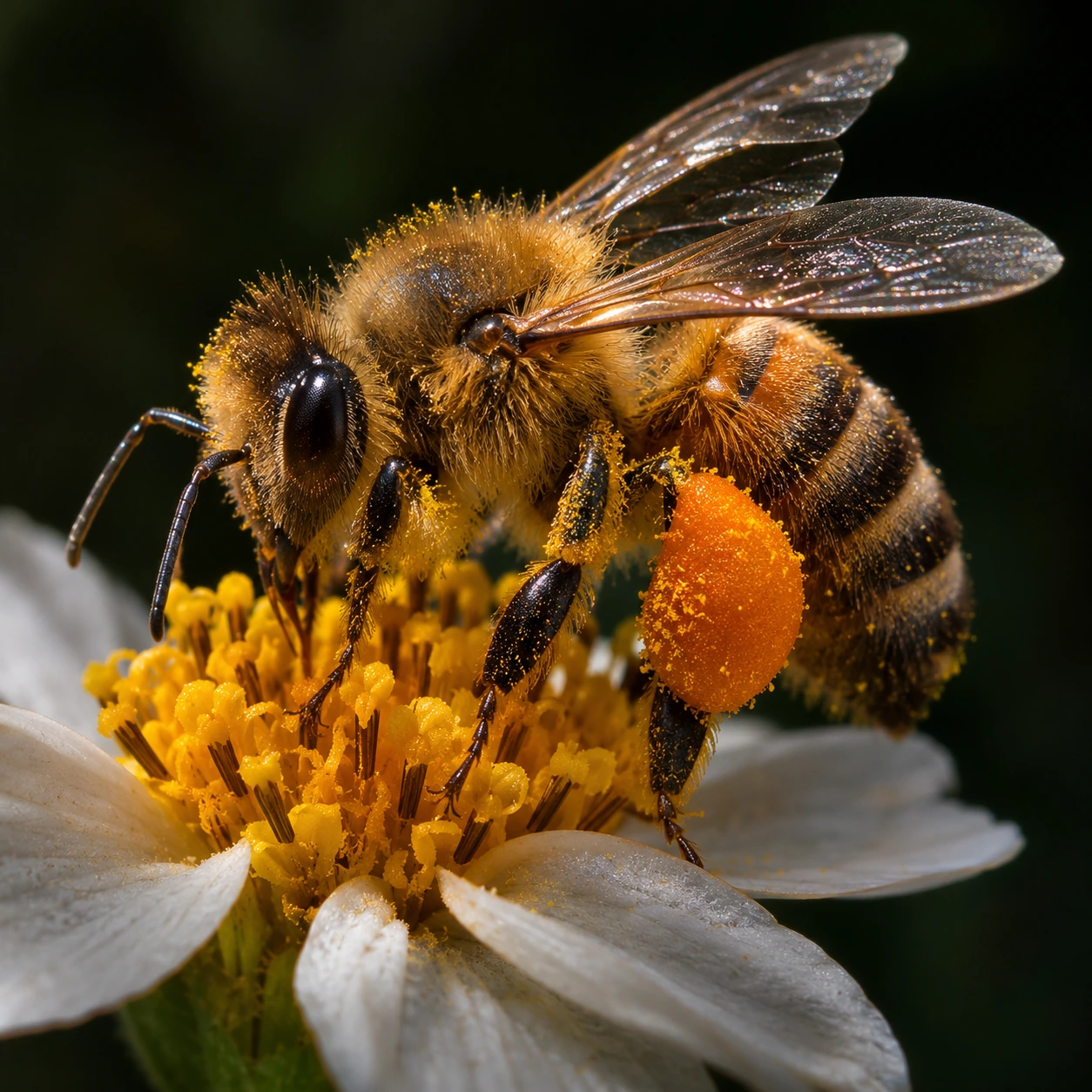
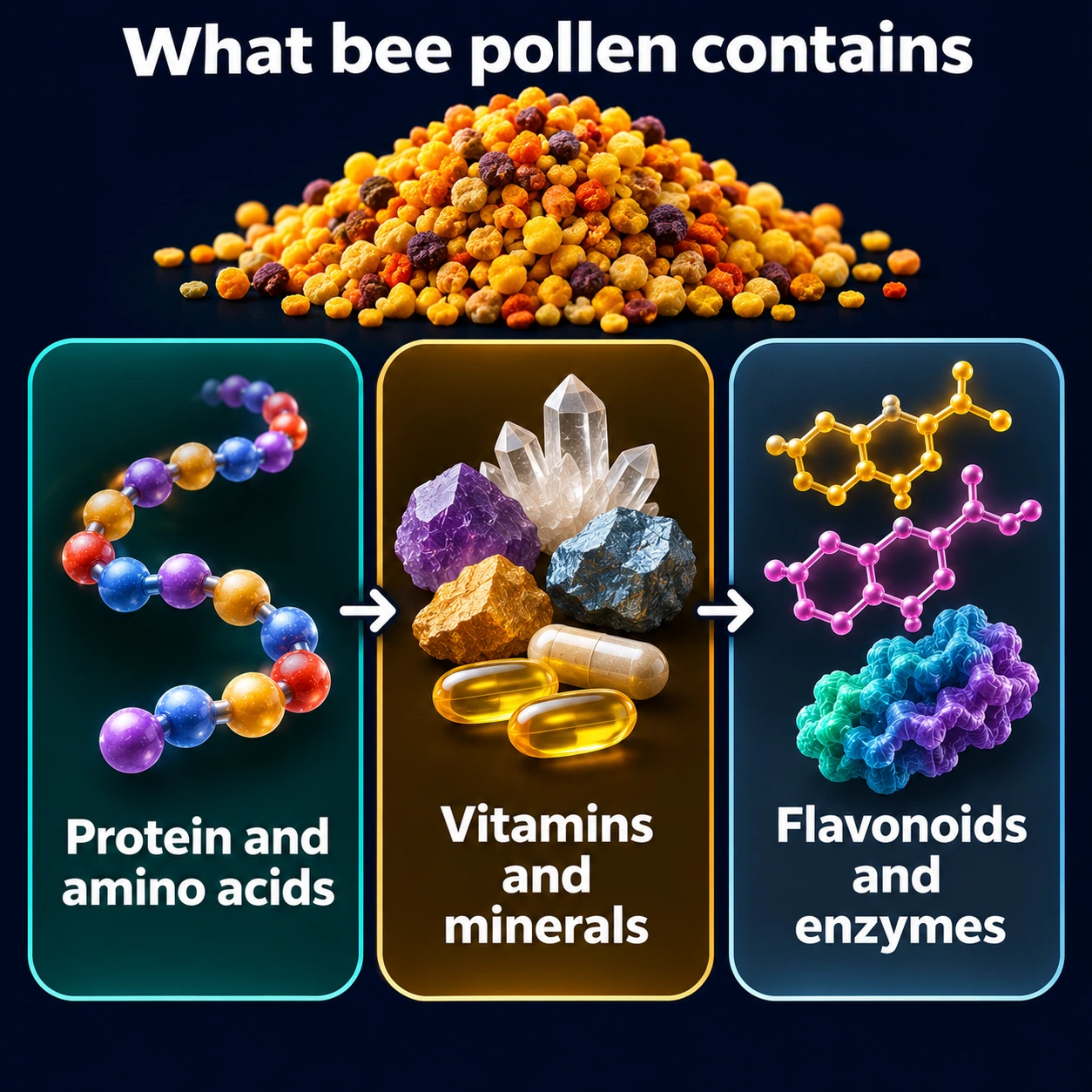
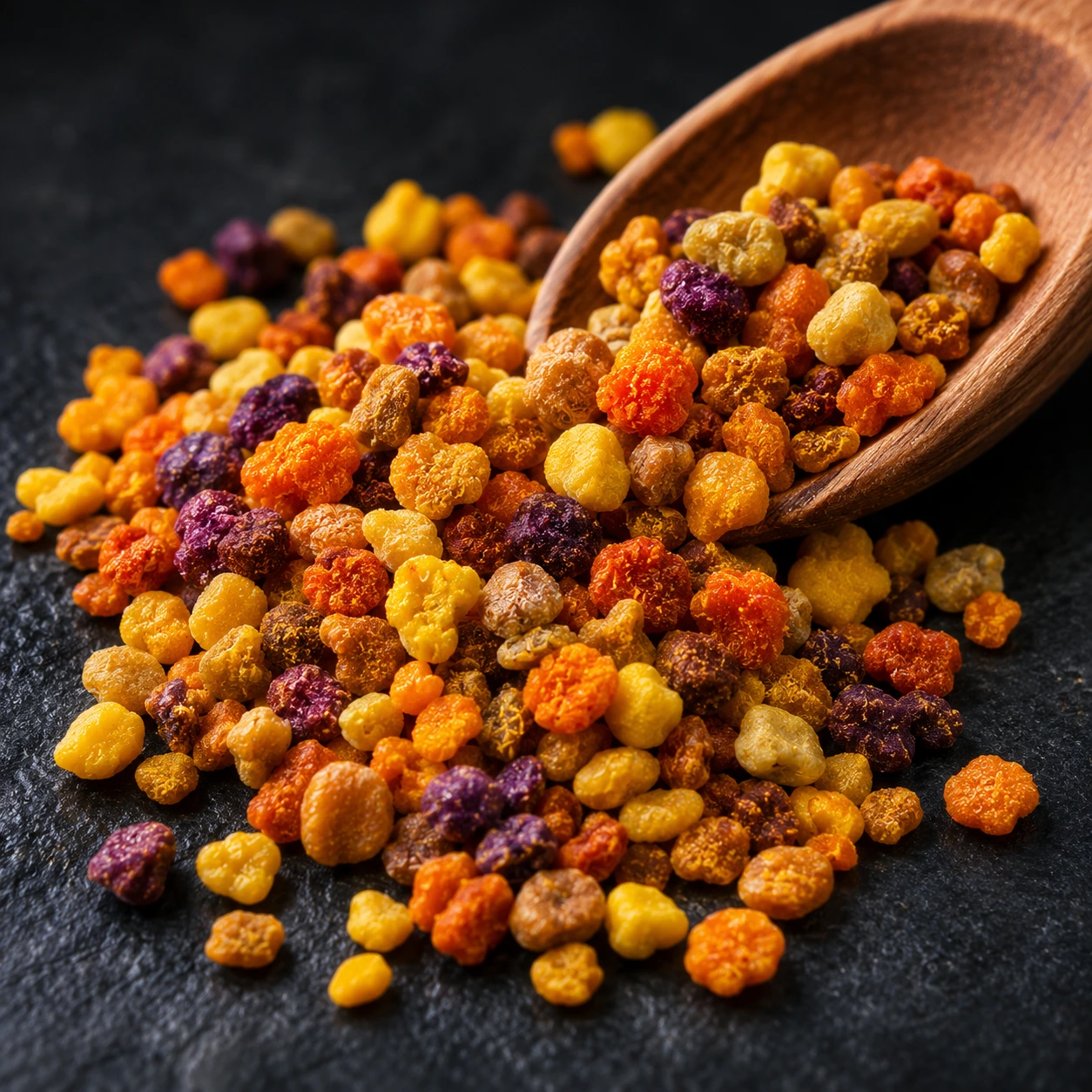
Bee pollen is widely described as containing "250+ nutrients" and sometimes called "the only complete food in nature." The 250+ count is real if you enumerate every micronutrient, amino acid, individual flavonoid, phenolic acid, fatty acid, enzyme, and trace element separately — published chemical analyses identify 22 amino acids (all nine essential), the complete water-soluble B-complex with notable amounts of B5 and B7, fat-soluble vitamins A (as carotenoid precursors) and E, more than two dozen minerals including iron, zinc, magnesium, selenium, potassium and calcium, more than 100 flavonoids and phenolic acids, more than a dozen live enzymes, unsaturated fatty acids including alpha-linolenic acid, sterols, and trace lipid bioactives. The "complete food" claim — that bee pollen alone could sustain mammalian life — rests on accounts of rodent feeding studies reporting that mice and rats can survive, grow, and even reproduce across multiple generations when bee pollen is their sole nutritional input. The same has never been formally tested in humans, and such a test would raise an ethical problem. This deep-dive walks through the chemistry rigorously, separates the validated chemistry from the marketing claims, and translates "nutrient-dense" into honest per-serving nutritional contribution for the contemporary diet.
Table of Contents
- Proximate Composition (Protein, Carbohydrate, Fat, Ash)
- 22 Amino Acids — All Nine Essential
- The Complete B-Complex Vitamin Spectrum
- Fat-Soluble Vitamins (A as Carotenoids, E)
- Mineral Profile (Iron, Zinc, Magnesium, Selenium, Potassium, Calcium)
- Flavonoids and Phenolic Acids (100+ Identified)
- Live Enzymes (Amylase, Invertase, Phosphatase)
- Fatty Acids and Sterols
- The "Complete Food" Claim — Honest Evidence
- Per-Serving Translation for the Modern Diet
- Allergic Reactions and a Warfarin Interaction in Case Reports
- Geographic and Botanical Variability
- Key Research Papers
- Connections
- Featured Videos
Proximate Composition (Protein, Carbohydrate, Fat, Ash)
Dry-weight proximate composition of bee pollen, averaged across published analyses of multifloral pollen from temperate climates:
- Protein: 20-30% (range 7-40% depending on source; pollens from leguminous flowers tend higher, conifer pollens lower; Mutlu et al. 2025 give 10-40%)
- Carbohydrate: 13-55% (Mutlu et al. 2025). A 2015 review gives digestible carbohydrate averaging 30.8%, with reducing sugars, mainly fructose and glucose, at about 25.7%, and 40.7% reducing sugars in air-dried pollen; there are smaller amounts of sucrose and trace starches
- Lipid: 1-15% (highly variable by source; sunflower pollen is high-lipid, leguminous pollen lower; Mutlu et al. 2025 give 1-12%)
- Ash (mineral residue): 2-4%
- Fiber: 0.3-20% (mostly from the exine, the outer pollen wall composed of sporopollenin and cellulose)
- Water: typically 10-15% in fresh raw pollen, 4-10% in dried product
For comparison, a teaspoon (5 grams) of typical multifloral bee pollen contributes approximately 25 kcal, 1.25 g protein, up to about 2.75 g carbohydrate, and 0.3 g lipid — in macronutrient terms, comparable to a small bite of bread. The headline nutrient-density story is therefore not about calories or macros but about the micronutrient and bioactive density packed into those few grams.
22 Amino Acids — All Nine Essential
Published amino acid analyses of bee pollen consistently identify 22 amino acids, including all nine essential amino acids and many of the non-protein amino acids (citrulline, ornithine, taurine). The essential amino acid profile is generally excellent, approximating the FAO/WHO reference protein for human nutrition. Typical amino acid scores per gram of bee pollen protein:
- Leucine — one of the more abundant essential amino acids, the primary trigger for muscle protein synthesis via mechanistic target of rapamycin (mTOR)
- Lysine — bee pollen contains lysine in adequate amounts, addressing the common limiting amino acid in cereal-based diets
- Methionine — usually present but is the limiting amino acid in some pollen samples (similar to most plant proteins)
- Tryptophan — present in adequate amounts, the precursor for serotonin and melatonin biosynthesis
- Threonine, Valine, Isoleucine, Phenylalanine, Histidine — all present in nutritionally meaningful amounts
- Non-essentials: Glutamic acid (and glutamine), Aspartic acid, Glycine, Alanine, Serine, Proline, Tyrosine, Cysteine, Arginine
- Non-protein amino acids: Taurine, Citrulline, Ornithine, gamma-aminobutyric acid (GABA) — present in trace amounts, contributing to bee pollen's broader bioactive profile
The honest size of the contribution: a teaspoon of bee pollen delivers approximately 1.25 g of high-quality protein, or roughly 2% of a 70-kg adult's daily protein allowance (0.8 g per kg, or 56 g a day). The protein quality is described in bee pollen writing as excellent — comparable to whey, casein, or egg by Protein Digestibility-Corrected Amino Acid Score (PDCAAS) — but the absolute mass per serving is small. Bee pollen is therefore a high-quality but low-quantity protein source.
For deeper coverage of individual amino acids, see our Amino Acids landing page and individual amino acid pages including Leucine, Lysine, Tryptophan, and Taurine.
The Complete B-Complex Vitamin Spectrum
Bee pollen contains the full water-soluble B-complex in nutritionally meaningful amounts. The entries most often singled out are pantothenic acid (B5) and biotin (B7), which bee pollen writing describes as among the most concentrated dietary sources. On the figures below, a teaspoon (5 grams) holds about 0.025-0.1 mg of pantothenic acid and 0.25-1.25 mcg of biotin. Typical per-100-gram dry bee pollen content:
- Thiamine (B1) — 0.6-2 mg per 100 g (~50%-170% Recommended Dietary Allowance (RDA) per 100 g)
- Riboflavin (B2) — 0.5-2 mg per 100 g
- Niacin (B3) — 7-21 mg per 100 g
- Pantothenic acid (B5) — 0.5-2 mg per 100 g (a notable source given that pantothenic acid is widely distributed but rarely concentrated)
- Pyridoxine (B6) — 0.3-0.9 mg per 100 g
- Biotin (B7) — 0.005-0.025 mg per 100 g
- Folate (B9) — 0.3-1 mg per 100 g
- B12 analogs — bee pollen contains corrinoid compounds chemically related to B12, but their bioactivity in humans is unclear. Some are pseudo-B12 (corrinoids without bioactivity in humans), and bee pollen is not a dependable B12 source for vegans or other at-risk populations
A teaspoon (5 grams) of bee pollen contributes roughly 5-10% of the daily B-vitamin RDAs — a meaningful incremental contribution rather than a replacement for B-complex from diverse dietary sources. The B12-analog issue is particularly important: vegan athletes sometimes use bee pollen on the assumption that it provides B12, but this is unreliable and dangerous. Dedicated supplements of methylcobalamin or cyanocobalamin are the products that contain active B12.
Fat-Soluble Vitamins (A as Carotenoids, E)
Bee pollen contains the fat-soluble vitamins primarily as carotenoid precursors of Vitamin A and as tocopherols (Vitamin E):
- Vitamin A precursors — bee pollen contains beta-carotene and other carotenoids (lutein, zeaxanthin, cryptoxanthin) in moderate amounts. The yellow-to-orange color of pollen reflects this carotenoid content. Conversion to retinol depends on individual BCMO1 enzyme activity, as discussed in our Beta-Carotene vs Preformed Retinol page
- Vitamin E (tocopherols) — bee pollen typically contains 10-20 mg alpha-tocopherol equivalents per 100 g, with smaller amounts of gamma- and delta-tocopherols and tocotrienols. This is a meaningful E contribution
- Vitamin K — trace amounts; bee pollen is not a notable K source
- Vitamin D — trace to non-detectable; bee pollen is not a meaningful D source. D needs are met by sun exposure and dedicated supplementation (see our Vitamin D3 page)
Combined with bee pollen's natural lipid content (1-15%), the carotenoids and tocopherols are co-ingested with the fat needed for absorption — an example of the food-matrix advantage of bee pollen over isolated supplement forms.
Mineral Profile (Iron, Zinc, Magnesium, Selenium, Potassium, Calcium)
The mineral profile of bee pollen is diverse. Published per-100-gram figures, including the seven samples measured by Mutlu et al. 2025 and the earlier results that paper quotes:
- Iron — 2.4-17.8 mg/100 g in the seven samples, with 15.2 and 14.1 mg/100 g quoted for chestnut and sunflower pollen (in plant-matrix non-heme form, with bioavailability of 2-15% depending on co-ingested factors)
- Zinc — 3-12 mg/100 g (~25-100% Recommended Dietary Allowance)
- Magnesium — 50-300 mg/100 g
- Selenium — trace amounts, typically 0.005-0.1 mg/100 g (highly variable by soil selenium in the forage region)
- Potassium — 400-1,100 mg/100 g (242-685 mg/100 g in the seven samples)
- Calcium — 9.6-83.5 mg/100 g in the seven samples, averaging 47.5, with 119-149 mg/100 g quoted from earlier studies (variable; not as bioavailable as dairy calcium)
- Phosphorus — 200-700 mg/100 g
- Copper — 0.6-1.2 mg/100 g in the seven samples, with 0.06-1.3 mg/100 g quoted from earlier studies (relevant for the Morley Robbins copper-restoration framework discussed in our Whole Food Copper Sources page)
- Manganese — 1-12 mg/100 g
- Trace elements — chromium, cobalt, molybdenum, nickel, silicon, sulfur, vanadium, all in small but detectable amounts
Mutlu et al. 2025 worked out what stays available after simulated digestion at 40 g of bee pollen a day, which is eight 5-gram teaspoons. As a share of the daily Recommended Dietary Allowance for women and men: iron 0.6% and 1.4%, zinc 3.9% and 2.8%, magnesium 7.4% and 5.7%, potassium 9.6% and 7.4%, manganese 16% and 12.5%, copper 8.3%, calcium 0.4%. A single teaspoon is one eighth of that amount, so its share is a small fraction of these figures, and it does not replace diverse food-source minerals. Those authors name potassium and copper as the minerals bee pollen may help supply, which is the context for Morley Robbins' framework that emphasizes whole-food copper restoration over isolated copper supplements.
The same laboratory digestion study found the minerals are released unevenly. After simulated digestion, iron and zinc levels fell about 18-fold and 15-fold, and only about 25% of the calcium stayed available, while potassium and magnesium stayed available (magnesium averaged 624 mg/kg before digestion and 595 mg/kg after). The authors point to the tough outer pollen wall and to compounds such as phytic acid that bind minerals. Under the European Union rule that a food must supply at least 15% of the reference value per serving to be labeled a “source of” a nutrient, none of these minerals reached the mark except manganese for women. Their risk assessment found no appreciable risk from these trace elements at 40 g a day. This was a test-tube digestion model, not a study in people.
For individual mineral pages, see Iron, Zinc, Magnesium, Selenium, and the broader Minerals landing page.
Flavonoids and Phenolic Acids (100+ Identified)
Beyond the conventional nutrients, bee pollen is one of the densest dietary sources of plant secondary metabolites — more than 100 distinct flavonoids and phenolic acids have been identified in different bee pollen samples. The composition varies dramatically by floral source. The most consistently abundant entries:
- Quercetin — the most abundant flavonol; mast cell stabilizer, antioxidant, anti-inflammatory. See our Quercetin page
- Rutin — quercetin-3-O-rutinoside; supports capillary integrity, antioxidant
- Kaempferol — flavonol related to quercetin; antioxidant, anti-inflammatory, modest anticancer activity in cell models
- Myricetin — flavonol; antioxidant, glucose metabolism effects in cell and animal models
- Isorhamnetin — quercetin methylated derivative; antioxidant
- Naringenin — flavanone; antioxidant, modest cholesterol-lowering effect in trials
- Chlorogenic acid — phenolic acid; the same compound responsible for coffee's polyphenol load; antioxidant, modest glucose metabolism effect
- Caffeic acid — phenolic acid; antioxidant precursor
- Ferulic acid, p-coumaric acid, p-hydroxybenzoic acid — phenolic acids contributing to the total oxygen radical absorbance capacity (ORAC) value
- Anthocyanins — present in pollens from red/blue/purple-flowered species
This flavonoid load is the mechanistic basis for bee pollen's antioxidant and anti-inflammatory effects, covered in detail in our Antioxidant & Anti-Inflammatory page. The honest caveat is that flavonoid bioavailability varies dramatically by compound and food matrix — quercetin from bee pollen is absorbed at perhaps 1-10% of ingested dose, with most of it metabolized in the gut to phenolic acid metabolites that may or may not retain bioactivity.
Live Enzymes (Amylase, Invertase, Phosphatase)
Raw fresh bee pollen contains a measurable suite of live enzymes contributed by the bee's salivary glands and by the pollen grain itself:
- Alpha- and beta-amylase — hydrolyze starches to maltose and glucose
- Invertase (sucrase) — hydrolyzes sucrose to glucose and fructose
- Diastase — the standard quality marker for fresh raw honey, also present in fresh raw bee pollen
- Acid and alkaline phosphatase — hydrolyze phosphate esters
- Catalase — converts hydrogen peroxide to water and oxygen (the antioxidant enzyme)
- Glucose oxidase — the enzyme responsible for the antimicrobial activity of honey (and trace activity in pollen)
- Lipase, protease, pectinase, cellulase — digestive enzymes from the pollen grain
The "live enzyme" claim is sometimes exaggerated. Most ingested protein enzymes are denatured in the stomach's acidic environment and digested as protein in the small intestine. The contribution of pollen-derived enzymes to human digestive function is minimal — the body produces its own much larger quantities of these enzymes endogenously. The live-enzyme content is mainly a marker of freshness and minimal heat processing: bee pollen that has been pasteurized or heat-dried has reduced enzyme activity, and the loss of enzyme activity correlates with reductions in flavonoid integrity and amino acid quality. So "live enzymes" matters indirectly — not because the enzymes themselves are nutritionally important, but because their presence indicates the rest of the bioactive content has also been preserved.
Fatty Acids and Sterols
Bee pollen lipid content (1-15% by dry weight) is dominated by unsaturated fatty acids:
- Alpha-linolenic acid (omega-3) — typically 20-40% of total lipid; the plant precursor to eicosapentaenoic acid (EPA) and docosahexaenoic acid (DHA)
- Linoleic acid (omega-6) — 15-30% of total lipid
- Oleic acid (omega-9, monounsaturated) — 10-20% of total lipid; the Mediterranean diet's signature fatty acid
- Saturated fatty acids (palmitic, stearic) — remainder, varying by pollen source
- Sterols — beta-sitosterol, stigmasterol, campesterol, all present in trace amounts; the same plant sterols that have modest low-density lipoprotein-lowering effects when concentrated and supplemented
- Phospholipids — phosphatidylcholine, phosphatidylethanolamine, in trace amounts
The omega-3/omega-6 ratio of bee pollen is generally favorable (roughly 1:1 to 1:2), reflecting the natural composition of plant pollen as a reproductive tissue. For modern Western diets that have skewed to omega-6/omega-3 ratios of 15:1 or higher, the small contribution from bee pollen is more nutritionally helpful than a typical processed food fat profile, though the absolute amount per serving is small.
The "Complete Food" Claim — Honest Evidence
The most aggressive marketing claim made for bee pollen is that it is a "complete food" capable of sustaining mammalian life as the sole nutritional input. The evidence offered for it reaches readers second-hand.
The basis usually given: popular accounts say that in the 1940s through 1970s, several Soviet and Eastern European laboratories conducted multi-generational rodent feeding studies in which mice or rats were maintained on diets of only bee pollen and water. The animals reportedly survived, grew, reproduced, and raised offspring across at least three generations, with no obvious deficiency syndromes. The name most often attached to this work is the Russian researcher N. Tsitsin, said to have fed mice on bee pollen and water in the 1940s-60s and to have reported normal life span, fertility, and growth.
What can and cannot be traced: searches of Europe PMC and Crossref did not turn up a paper by Tsitsin on this or any sole-diet, multi-generation rodent study, though Soviet-era papers may not be indexed there. A 2015 review (Komosinska-Vassev et al.) describes different animal work: mice and rats fed pollen had more vitamin C and magnesium in the thymus, heart muscle, and skeletal muscle, and more hemoglobin and red blood cells, than animals given standard feed, and pollen lengthened the life span of experimental animals. It does not describe pollen as a sole diet across generations.
The caveats: as described, these studies were small, the methodological reporting is sparse by modern standards, and the rodent results do not directly translate to humans for several reasons. Rodent nutritional requirements differ from human requirements (rodents can synthesize ascorbate from glucose, for example, so they don't need dietary Vitamin C; humans cannot and do). Rodents have different gut microflora than humans and different B12 production by gut bacteria. The complete-food claim has never been tested in humans and ethically cannot be — it would require feeding humans only bee pollen and water for multiple months while monitoring for deficiency syndromes.
The honest read: bee pollen is one of the most chemically complete single foods known, containing meaningful amounts of every macronutrient class, all essential amino acids, the complete water-soluble B-complex, the fat-soluble vitamins A (as carotenoid) and E, the full mineral spectrum, polyphenols, and bioactive lipids. It is plausibly the most complete single food on the planet by chemical inventory. Whether it is genuinely "complete" for human nutrition in the strong sense of being sufficient as a sole food source is unproven. Bee pollen is commonly taken as a daily teaspoon-to-tablespoon dietary supplement, not as a meal replacement.
Per-Serving Translation for the Modern Diet
For a typical 5-gram (one teaspoon) serving of multifloral bee pollen, the daily contribution to a 2,000 kcal adult diet:
- 25 kcal (1.25% of daily energy)
- 1.25 g protein (~1% of typical 100-g/day intake; about 2% of the 56-g daily allowance at 70 kg)
- ~5% of B-vitamin RDAs across the B-complex
- ~10% of Vitamin E Recommended Dietary Allowance
- A small fraction of mineral RDAs: the 40-gram digestion figures in the mineral section above range from 0.4% to 16%, and a teaspoon is one eighth of that amount (selenium was not measured)
- ~100-300 mg of total flavonoid and phenolic load (comparable to a small serving of berries or dark chocolate)
- Trace amounts of live enzymes, fatty acids, sterols, and bioactive lipids
This is a meaningful supplementary contribution to an already-varied diet but not a replacement for whole-food micronutrient sources. The "250+ nutrients" headline number is real but each individual contribution is small. A common use is as a daily multinutrient-dense food added to yogurt, smoothies, or oatmeal, described by sellers as broad micronutrient insurance for under $1 per serving.
A tablespoon (15 g) increases all of these by threefold and is a more meaningful contribution — ~3-4 grams of high-quality protein, 15-30% of daily B-vitamin needs, three eighths of the 40-gram amount behind the mineral figures above, and 300-900 mg of polyphenol load. Two tablespoons per day is described in bee pollen writing as approaching a Soviet-era athletic dose and provides incrementally larger nutritional contribution at the cost of higher allergen exposure.
Allergic Reactions and a Warfarin Interaction in Case Reports
A 2026 case report describes a 26-year-old woman with seasonal allergic rhinitis who came to an emergency department with lip and tongue swelling, trouble breathing, nausea, abdominal pain, and itching 4 hours after taking bee pollen. She was treated for anaphylaxis. A month later, at peak fall pollen levels, wheezing began and she was diagnosed with allergic asthma, which the authors attribute to the bee pollen. They call anaphylaxis to bee pollen rare but increasingly reported.
A 2010 case report rated a probable interaction with warfarin. A 71-year-old man on a stable warfarin dose started one teaspoon of bee pollen granules twice daily, and a month later his International Normalized Ratio (INR, the blood-thinning test) was 7.1 against a target range of 2.0-3.0. Warfarin was held, then restarted with the weekly dose cut by 11%. He kept taking bee pollen, and his INR stayed within or near range for the next seven months.
Geographic and Botanical Variability
One of the under-emphasized facts about bee pollen is that its nutritional composition varies enormously depending on the floral sources the bees forage from. A multifloral pollen from a temperate mixed-meadow ecosystem will differ chemically from a monofloral pollen from a single crop (sunflower, canola, almond), and both will differ from a tropical multifloral pollen.
Specific variability:
- Protein content ranges from 7% (some pine pollens) to 40% (some legume and brassica pollens)
- Lipid content ranges from 1% (some grass pollens) to 15% (sunflower pollen)
- Carotenoid content tracks the color of the pollen — yellow-orange pollens are carotenoid-rich, white pollens are low-carotenoid
- Flavonoid profile reflects the botanical source; cistus pollen is particularly rich in flavonoids and used in Mediterranean apitherapy traditions
- Mineral content reflects the soil mineralogy of the forage region; selenium content varies an order of magnitude
- Pollen pesticide content reflects regional agricultural practices — commercial bee pollen from intensive-agriculture regions can contain detectable neonicotinoid residues
Pollen can also carry plant poisons called pyrrolizidine alkaloids, which harm the liver. In pollen trapped at 57 locations in Southern Germany in July 2019, 52 samples contained them, at up to 48,000 ng per gram (Friedle et al. 2022). Looking at the pollen under a microscope found pollen from plants that make these alkaloids in only 33 samples, and the authors conclude that this check is not sufficient. Working from German risk guidance for 10 g of bee pollen a day in a 75-kg adult, they set a limit of 180 ng per gram; only 33 of the 57 samples were below it. These samples came from hive pollen traps in a single month.
The practical implication: any specific nutritional claim about bee pollen is necessarily approximate. The "250+ nutrients" inventory captures qualitative completeness but the quantitative amount of each varies. Bee pollen writers rate multifloral pollen from a wild-flower forage area in a low-pesticide region as the highest quality, and monofloral pollens from single-crop agricultural fields as the lowest quality, both nutritionally and from a contamination perspective.
Key Research Papers
- Komosinska-Vassev K et al. (2015). Bee pollen: chemical composition and therapeutic application. Evidence-Based Complementary and Alternative Medicine. — PubMed PMID: 25861358
- Campos MG et al. (2008). Pollen composition and standardisation of analytical methods. Journal of Apicultural Research. — doi:10.1080/00218839.2008.11101443
- Krell R (1996). Value-Added Products from Beekeeping. FAO Agricultural Services Bulletin 124, Chapter on Pollen. — PubMed
- Almeida-Muradian LB et al. (2005). Chemical composition and botanical evaluation of dried bee pollen pellets. Journal of Food Composition and Analysis. — doi:10.1016/j.jfca.2003.10.008
- Bogdanov S (2014). Pollen: Production, Nutrition, and Health: A Review. Bee Product Science Review. — PubMed
- Szczesna T (2006). Protein content and amino acid composition of bee-collected pollen from selected botanical origins. Journal of Apicultural Science. — PubMed
- Roulston TH, Cane JH (2000). Pollen nutritional content and digestibility for animals. Plant Systematics and Evolution. — doi:10.1007/bf00984102
- Carpes ST et al. (2009). Chemical composition and free radical scavenging activity of Apis mellifera bee pollen from Southern Brazil. Brazilian Journal of Food Technology. — doi:10.4260/bjft2009800900016
- De-Melo AAM, de Almeida-Muradian LB (2017). Chemical Composition of Bee Pollen. In: Bee Products - Chemical and Biological Properties, Springer. — doi:10.1007/978-3-319-59689-1_11
- Mutsaers M et al. (2005). Bee Products: Properties, Processing, and Marketing. Agromisa Foundation. — PubMed
- Estevinho L et al. (2008). Antioxidant and antimicrobial effects of phenolic compounds extracts of Northeast Portugal honey. Food and Chemical Toxicology. — doi:10.1016/j.fct.2008.09.062
- Estevinho LM, Rodrigues S, Pereira AP, Feás X (2011). Portuguese bee pollen: palynological study, nutritional and microbiological evaluation. International Journal of Food Science & Technology. — doi:10.1111/j.1365-2621.2011.02859.x
- Joint WHO/FAO/UNU Expert Consultation (2007). Protein and amino acid requirements in human nutrition. WHO Technical Report Series 935. — PubMed PMID: 18330140
- Mutlu C, Aylanc V, Vilas-Boas M (2025). Bee Pollen as a Dietary Mineral Source: In Vitro Bioaccessibility and Health Risk Evaluation. Molecules. — PubMed PMID: 40649263
- Eickholt E, Norelli V, Martin K, Diioia M (2026). Supplemental Bee Pollen Ingestion With Resultant Anaphylaxis and Allergic Asthma: Case Report. Case Reports in Immunology. — PubMed PMID: 42368776
- Hurren KM, Lewis CL (2010). Probable interaction between warfarin and bee pollen. American Journal of Health-System Pharmacy. — PubMed PMID: 21098375
- Friedle C, Kapp T, Wallner K, Alkattea R, Vetter W (2022). High abundance of pyrrolizidine alkaloids in bee pollen collected in July 2019 from Southern Germany. Environmental Monitoring and Assessment. — PubMed PMID: 35249161
PubMed Topic Searches
Connections
- All Food
- Bee Pollen Overview
- Bee Pollen Benefits Hub
- Bee Pollen for Allergy Desensitization
- Bee Pollen for Athletic Performance
- Bee Pollen Antioxidant & Anti-Inflammatory
- Amino Acids
- Beta-Carotene vs Preformed Retinol
- Iron
- Zinc
- Magnesium
- Selenium
- Quercetin
- Whole Food Copper Sources
- Honey
- Spirulina
- History
- Nutrients