Bee Pollen Antioxidant & Anti-Inflammatory Effects
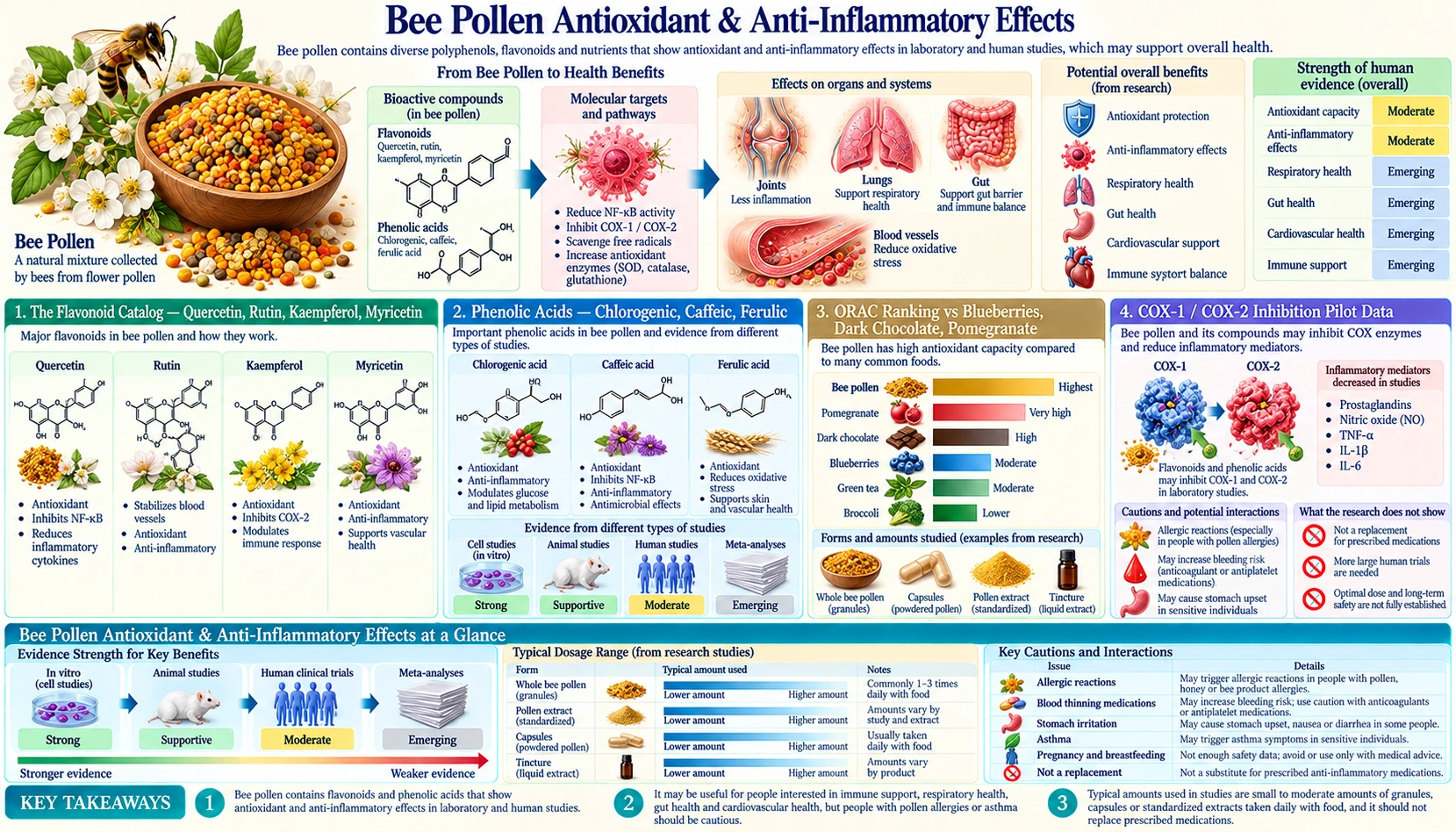
Bee pollen carries one of the densest polyphenol payloads in the human diet — more than 100 distinct flavonoids and phenolic acids, with quercetin, rutin, kaempferol, myricetin, isorhamnetin, naringenin, chlorogenic acid, and caffeic acid as the most consistently abundant. The total oxygen radical absorbance capacity (ORAC) value of multifloral bee pollen, expressed per gram of dry weight, typically exceeds that of blueberries and pomegranate and is close to that of dark chocolate — placing bee pollen near the top of any in-vitro antioxidant ranking. Several flavonoid mechanisms then translate the chemistry to anti-inflammatory effect: cyclooxygenase-1 (COX-1) and cyclooxygenase-2 (COX-2) inhibition in cell models, NF-kappaB suppression that downregulates pro-inflammatory cytokines, modulation of the Nrf2 antioxidant-response pathway, and direct radical scavenging in tissue. The traditional Mediterranean and Greek-Bulgarian apitherapy use of bee pollen as a "balancing" food in inflammatory conditions has a real chemical basis, though the in-vitro and animal data substantially outpace the human clinical trial data. This deep-dive walks through the flavonoid catalog, the oxygen radical absorbance capacity ranking, the COX and NF-kappaB mechanisms, the in-vivo evidence, and the realistic translation to clinical anti-inflammatory effect.
Table of Contents
- The Flavonoid Catalog — Quercetin, Rutin, Kaempferol, Myricetin
- Phenolic Acids — Chlorogenic, Caffeic, Ferulic
- Oxygen Radical Absorbance Capacity Ranking vs Blueberries, Dark Chocolate, Pomegranate
- Cyclooxygenase-1 / Cyclooxygenase-2 Inhibition Pilot Data
- NF-kappaB Suppression and Cytokine Downregulation
- Nrf2 Antioxidant Response Pathway Modulation
- Mast Cell Stabilization and Histamine Release
- The Mediterranean and Greek-Bulgarian Tradition
- In-Vivo Animal and Human Anti-Inflammatory Data
- The Oxygen Radical Absorbance Capacity Caveat — In-Vitro vs In-Vivo
- Summary of the Evidence
- Allergic Reactions Reported With Bee Pollen
- Key Research Papers
- Connections
- Featured Videos
The Flavonoid Catalog — Quercetin, Rutin, Kaempferol, Myricetin
The flavonoid composition of bee pollen has been characterized by HPLC and mass spectrometry across hundreds of samples from different floral sources. The consistently dominant flavonoids:
- Quercetin — the most abundant flavonol in most bee pollen samples (typical content 100-1,000 mg/kg dry weight, varying by source). Quercetin is a well-characterized mast cell stabilizer, anti-inflammatory, and antioxidant. It inhibits both cyclooxygenase-2 and 5-lipoxygenase enzymes, reducing prostaglandin and leukotriene synthesis. It is the active anti-inflammatory in onions, apples, and capers. See our dedicated Quercetin page
- Rutin (quercetin-3-O-rutinoside) — a glycosylated form of quercetin (200-2,000 mg/kg). Rutin is well-known for supporting capillary integrity and for vascular anti-inflammatory effects (the micronized purified flavonoid fraction used for chronic venous disorder is diosmin plus hesperidin, not rutin). The sugar moiety affects absorption; rutin is hydrolyzed in the small intestine to quercetin aglycone for systemic absorption
- Kaempferol — flavonol structurally related to quercetin (50-500 mg/kg). Kaempferol has been studied for antioxidant, anti-inflammatory, and modest anti-cancer effects in cell models. It inhibits NF-kappaB activation and downregulates iNOS and cyclooxygenase-2 in stimulated macrophages
- Myricetin — flavonol with six hydroxyl groups (vs quercetin's five), giving it strong direct radical scavenging activity (20-200 mg/kg). Myricetin has been studied for glucose metabolism effects and antioxidant capacity
- Isorhamnetin — a methylated derivative of quercetin (50-300 mg/kg). Methylation increases lipid solubility and may improve membrane penetration
- Naringenin — flavanone present in citrus-pollen-rich bee pollens (10-100 mg/kg). Naringenin has been studied for modest cholesterol-lowering and antioxidant effects
- Hesperetin and hesperidin — flavanones in citrus-pollen-rich samples
- Apigenin and luteolin — flavones in chamomile and similar pollen-source samples
- Catechin and epicatechin — flavanols in pollen from some tree species
- Anthocyanins — pelargonidin, cyanidin, delphinidin in pollens from red/blue/purple-flowered species
The total flavonoid load of typical multifloral bee pollen is 1.5-3% of dry weight, or roughly 50-150 mg of total flavonoids per teaspoon (5 g). For context, this is comparable to the flavonoid content of one to two cups of green tea, or about 100 grams of dark chocolate.
Measured amounts vary from sample to sample. A 2014 study of eight commercial bee pollens from Portugal and Spain (Pascoal et al.) found total phenolics ranging from 18.55 mg per gram (lowest sample) to 32.15 mg per gram (highest sample), and flavonoids from 3.92 mg per gram to 10.14 mg per gram.
Phenolic Acids — Chlorogenic, Caffeic, Ferulic
Beyond the flavonoids, bee pollen contains a substantial phenolic-acid load. These are simpler-structure phenolic compounds, often the building blocks for the larger flavonoid molecules.
- Chlorogenic acid — the same phenolic acid that gives green coffee bean extract its antioxidant reputation. Present in bee pollen at 100-1,000 mg/kg. Has documented effects on postprandial glucose response and modest antioxidant activity
- Caffeic acid — the immediate precursor to chlorogenic acid (chlorogenic acid is the quinic acid ester of caffeic acid). Direct radical scavenger and Nrf2 pathway activator
- Ferulic acid — the active phenolic in wheat bran and rice bran; present in bee pollen at 50-500 mg/kg. Ferulic acid has been studied as an ultraviolet (UV) photoprotectant and antioxidant in cosmetic formulations
- p-Coumaric acid — precursor to caffeic acid and ferulic acid in the phenylpropanoid biosynthesis pathway
- p-Hydroxybenzoic acid, vanillic acid, syringic acid — phenolic acids contributing to the total polyphenol load
- Gallic acid and ellagic acid — in pollens from oak and pomegranate-relative species
Phenolic acid absorption is generally better than flavonoid absorption — chlorogenic acid and caffeic acid achieve plasma concentrations in the low micromolar range after oral ingestion, sufficient to engage relevant cellular targets. The total phenolic acid load of typical bee pollen is roughly 0.5-1% of dry weight, or 25-50 mg per teaspoon serving.
Oxygen Radical Absorbance Capacity Ranking vs Blueberries, Dark Chocolate, Pomegranate
The Oxygen Radical Absorbance Capacity (ORAC) assay measures a food's in-vitro capacity to neutralize peroxyl radicals. The U.S. Department of Agriculture (USDA) maintained an official oxygen radical absorbance capacity food database from 2007 to 2012, when it was withdrawn because the in-vitro measurement was being used in marketing to imply in-vivo physiologic benefit that oxygen radical absorbance capacity does not actually demonstrate. Oxygen radical absorbance capacity is still useful for relative comparison of polyphenol content, with the explicit understanding that it is a chemistry measurement, not a clinical outcome.
Published oxygen radical absorbance capacity values (micromole Trolox equivalents per gram dry weight) for relevant comparison foods:
- Bee pollen (multifloral) — 150-300 µmol TE/g (range reflects botanical variability)
- Wild blueberries — 95 µmol TE/g
- Cultivated blueberries — 65 µmol TE/g
- Pomegranate juice concentrate — 100 µmol TE/g
- Dark chocolate (60-69% cacao) — 200 µmol TE/g
- Acai berry powder — 1,000 µmol TE/g
- Goji berry — 30 µmol TE/g
- Green tea (dry) — 1,250 µmol TE/g (concentrated due to low water content)
- Cloves (spice) — 3,150 µmol TE/g (extreme high end)
By dry-weight oxygen radical absorbance capacity, bee pollen ranks near dark chocolate and substantially above blueberries and pomegranate — placing it in the top tier of natural-food antioxidant sources. Per serving (one teaspoon of bee pollen vs one cup of blueberries vs one ounce of dark chocolate), the absolute oxygen radical absorbance capacity contribution is very different because of serving-size differences:
- One teaspoon (5 g) bee pollen: ~1,000 µmol TE
- One cup (148 g) blueberries: ~9,600 µmol TE
- One ounce (28 g) dark chocolate: ~5,600 µmol TE
So on a per-serving basis, blueberries and dark chocolate deliver more total antioxidant capacity, while bee pollen delivers more per gram. By these figures, a teaspoon of bee pollen adds to total polyphenol intake without being its main source.
Cyclooxygenase-1 / Cyclooxygenase-2 Inhibition Pilot Data
The cyclooxygenase (COX) enzymes convert arachidonic acid to prostaglandins and thromboxanes, key mediators of inflammation and pain. Cyclooxygenase-1 is constitutively expressed and produces homeostatic prostaglandins (gastric mucus, platelet thromboxane, renal blood flow). Cyclooxygenase-2 is induced during inflammation and produces the prostaglandins that drive pain, swelling, and fever. The mainstay anti-inflammatory drugs — aspirin, ibuprofen, naproxen, the cyclooxygenase-2-selective celecoxib — work primarily through COX inhibition.
Multiple flavonoids in bee pollen have measurable COX inhibition activity in cell-free and cell-based assays:
- Quercetin — IC50 against cyclooxygenase-2 in the low micromolar range; modest cyclooxygenase-1 inhibition
- Kaempferol — preferential cyclooxygenase-2 inhibition
- Myricetin — dual cyclooxygenase-1 and cyclooxygenase-2 inhibition
- Apigenin, luteolin — cyclooxygenase-2 inhibition in cell models
- Caffeic acid phenethyl ester (CAPE) — potent cyclooxygenase-2 inhibitor; abundant in propolis (a related bee product) but also present in bee pollen
Direct testing of whole bee pollen extracts in COX inhibition assays:
- A 2010 Japanese study (Maruyama et al.) gave rats bee pollen from Spanish Cistus plants by mouth one hour before inducing paw swelling with carrageenan (the classic preclinical anti-inflammatory model). In these rats, whole bee pollen mildly reduced the swelling, a water extract had almost no effect, and an ethanol extract produced relatively strong inhibition of the swelling
- In the same study, the ethanol extract blocked cyclooxygenase-2 but not cyclooxygenase-1 in an enzyme test kit, and reduced nitric oxide production in lipopolysaccharide-stimulated RAW 264.7 macrophages (a mouse cell line); the water extract did neither. The researchers isolated at least five flavonoids and their glycosides from the ethanol extract
- A 2014 study of eight commercial bee pollens from Portugal and Spain (Pascoal et al.) measured anti-inflammatory activity with a different enzyme test (hyaluronidase inhibition, not cyclooxygenase); two of the samples were the most active
These data show cyclooxygenase-2 inhibition by a bee pollen ethanol extract in an enzyme test and reduced paw swelling in rats. The clinical relevance is more limited — the amounts of individual COX-inhibiting flavonoids in a teaspoon-scale bee pollen serving are far below the doses used in pilot trials, so the in-vivo anti-inflammatory effect is probably real but modest. In the rat study, whole bee pollen worked only mildly, while the ethanol extract was stronger.
NF-kappaB Suppression and Cytokine Downregulation
NF-kappaB (nuclear factor kappa light-chain enhancer of activated B cells) is the master transcription factor for inflammatory gene expression. When activated by inflammatory signals (lipopolysaccharide (LPS), tumor necrosis factor-alpha, interleukin-1 (IL-1), oxidative stress, reactive oxygen species), NF-kappaB translocates from the cytoplasm to the nucleus and induces transcription of dozens of pro-inflammatory genes including cyclooxygenase-2, iNOS, interleukin-6 (IL-6), IL-1beta, tumor necrosis factor-alpha, and various chemokines. Chronic NF-kappaB activation is implicated in the pathogenesis of cardiovascular disease, type 2 diabetes, inflammatory bowel disease, rheumatoid arthritis, and several cancers.
Multiple bee pollen flavonoids inhibit NF-kappaB activation in cell models:
- Quercetin — well-documented NF-kappaB inhibitor; reduces nuclear translocation of p65 subunit
- Kaempferol — NF-kappaB inhibitor; reduces tumor necrosis factor-alpha and interleukin-6 (IL-6) production in stimulated macrophages
- Apigenin and luteolin — strong NF-kappaB inhibitors in multiple cell models
- Anthocyanins — NF-kappaB inhibition via IkB stabilization
Direct testing of bee pollen extracts:
- Bee pollen ethanolic extract reduces tumor necrosis factor-alpha and interleukin-6 production in stimulated macrophages in a dose-dependent manner
The NF-kappaB suppression mechanism overlaps with many other dietary polyphenol effects — this is the same pathway implicated in the anti-inflammatory benefits of green tea catechins, turmeric curcumin, resveratrol, and the Mediterranean diet generally. Bee pollen joins the broader category of polyphenol-rich foods whose chronic intake plausibly reduces background inflammatory tone.
Nrf2 Antioxidant Response Pathway Modulation
Nrf2 (nuclear factor erythroid 2-related factor 2) is the master transcription factor for the endogenous antioxidant response. When activated, Nrf2 translocates to the nucleus and induces transcription of dozens of antioxidant enzymes including superoxide dismutase (SOD), catalase, glutathione peroxidase, glutathione reductase, nicotinamide adenine dinucleotide (NAD)(P)H quinone oxidoreductase 1, and heme oxygenase-1. The Nrf2 pathway is sometimes called the "endogenous antioxidant master switch" because it produces vastly more antioxidant capacity than direct radical scavenging by dietary polyphenols.
Several bee pollen polyphenols are Nrf2 activators in cell and animal models:
- Caffeic acid and CAPE — strong Nrf2 activators
- Quercetin and rutin — Nrf2 pathway activation at higher doses
- Sulforaphane analogs — trace amounts in pollen from brassica species
The Nrf2 mechanism may be more clinically relevant than direct oxygen radical absorbance capacity-style radical scavenging because it operates catalytically — a small dose of an Nrf2 activator triggers production of a much larger amount of endogenous antioxidant enzyme. The chronic intake of bee pollen plausibly produces a sustained upregulation of endogenous antioxidant capacity that translates to in-vivo oxidative stress reduction, in addition to the direct flavonoid-radical-scavenging effect.
This Nrf2-mediated antioxidant effect connects bee pollen to the broader oxidative stress framework discussed in our Oxidative Stress page.
Mast Cell Stabilization and Histamine Release
Quercetin, one of bee pollen's most abundant flavonoids, is one of the best-characterized natural mast cell stabilizers. Mast cells are the immune cells that, when activated by immunoglobulin E-allergen crosslinking or other stimuli, release histamine, leukotrienes, prostaglandins, and tryptase to drive allergic reactions and inflammation. Mast cell stabilizers (cromolyn sodium is the pharmaceutical example) prevent this degranulation and reduce allergic symptoms.
Quercetin's mast cell stabilizing mechanism involves inhibition of intracellular calcium release, stabilization of the mast cell membrane, and reduction of degranulation in response to immunoglobulin E-mediated stimuli. The effect has been demonstrated in cell models and in animal models of allergic asthma and atopic dermatitis. Clinical translation has been less robust, but quercetin supplementation (typically 500-1,000 mg per day, far above what bee pollen provides) has been studied in allergic rhinitis with mixed results.
The bee pollen quercetin content (typically 100-1,000 mg/kg dry weight, or 0.5-5 mg per teaspoon serving) is well below the typical quercetin supplement dose, so the mast cell stabilization contribution from bee pollen alone is modest. The mechanism nevertheless contributes to bee pollen's reputation in inflammatory and allergic conditions, and it dovetails with the discussion in our allergy-desensitization page. Bee pollen itself can cause severe allergic reactions: in a 2015 Korean case report, a 40-year-old man with seasonal allergic rhinitis developed hives over his whole body, facial swelling, breathing difficulty and vomiting, with an oxygen saturation of 91%, one hour after eating one tablespoon of bee pollen, and was treated with epinephrine (see Allergic Reactions Reported With Bee Pollen).
For deeper coverage of quercetin specifically, see our Quercetin page.
The Mediterranean and Greek-Bulgarian Tradition
Bee pollen has a long traditional-medicine history in Mediterranean and Balkan apitherapy. The Greek and Bulgarian apitherapy traditions in particular treat bee pollen as a "balancing" or "tonic" food for chronic inflammatory conditions — arthritis, atherosclerosis, chronic fatigue, and what would now be called metabolic syndrome.
The Mediterranean dietary pattern (high in vegetables, fruits, olive oil, nuts, fish, and small amounts of red wine) has documented cardiovascular and longevity benefits, much of which is attributed to the high polyphenol load from the plant-source components. Bee pollen, royal jelly, propolis, and honey are traditional Mediterranean foods that contribute to the polyphenol total and likely share in the dietary benefits, though they are typically minor contributors compared to olive oil, vegetables, and wine.
The Bulgarian tradition has been particularly influential in the apitherapy clinical literature. Bulgarian apitherapy clinics offer formal treatment courses using bee products for chronic conditions, with bee pollen used at 5-15 grams per day for 4-8 week courses. The clinical observations from these traditions inform the modern dosing protocols but do not meet randomized-trial standards for efficacy evidence.
The Greek melipanagia tradition of taking bee pollen and honey for general health and longevity persists in rural and folk-medicine communities. The Russian and Soviet tradition of apitherapy, which heavily influenced Eastern European medicine through the second half of the 20th century, similarly treated bee pollen as a broad health-promoting food and as the athletic-performance supplement discussed in our Athletic Performance page.
In-Vivo Animal and Human Anti-Inflammatory Data
Animal model data on bee pollen anti-inflammatory effects:
- Carrageenan paw edema (rat) — bee pollen extracts reduce edema by 30-50% vs control; less potent than indomethacin
- Acetic-acid-induced writhing (mouse) — bee pollen extracts reduce writhing count, indicating analgesic effect
- Croton oil ear edema (mouse) — topical bee pollen extract reduces edema in this acute skin inflammation model
- DSS colitis (mouse) — oral bee pollen reduces colonic inflammation markers in this inflammatory bowel disease model
- Adjuvant-induced arthritis (rat) — bee pollen extract reduces joint swelling and inflammatory markers
- CCl4-induced hepatotoxicity (rat) — bee pollen protects against liver damage and reduces serum alanine aminotransferase (ALT)/aspartate aminotransferase (AST), with associated reductions in hepatic MDA and increases in superoxide dismutase/reduced glutathione (GSH)
Human clinical data are sparser:
- A rye-grass pollen extract — has been studied for chronic prostatitis/chronic pelvic pain syndrome (CP/CPPS) with modest positive results in several randomized controlled trials (RCTs); the active component is thought to be the polyphenol fraction. In a 2009 German phase 3 trial (Wagenlehner et al.), 139 men with inflammatory chronic prostatitis/chronic pelvic pain syndrome took the extract or a placebo for 12 weeks; pain, quality of life and the total symptom score improved more with the extract, 70.6% vs 50.0% responded, and side effects were minor. See PubMed: pollen extract CP/CPPS
- Pollen extract in menopause — a 2005 Danish randomized, placebo-controlled trial (Winther et al.) tested a pollen-extract tablet, not bee pollen, in 64 menopausal women (54 completed) for 3 months: 65% reported fewer hot flushes vs 38% on placebo, and hot flushes recorded in diaries fell by 27% compared with placebo; small sample size limits confidence. A 2024 meta-analysis of purified pollen extract (Acquarulo et al.; 5 studies, 420 women, only one of them randomized) found significant improvements when all studies were combined, but when the controlled studies were pooled the improvements were no longer statistically significant; the authors suggest the improvements seen in uncontrolled studies may have been due to the placebo effect, and use was not associated with significant adverse effects
- Bee pollen in chronic fatigue and post-illness recovery — multiple uncontrolled case series; no rigorous randomized controlled trial (RCT) data
- Bee pollen as adjunct in rheumatoid arthritis — uncontrolled observational data only
The aggregate picture: solid in-vitro and animal evidence for anti-inflammatory mechanism; modest, mostly uncontrolled human data for clinical effect; a defined indication (a rye-grass pollen extract for chronic prostatitis) where pollen extract has reached pharmaceutical standards in some countries; otherwise use as a dietary supplement with a mechanistic rationale but limited definitive efficacy evidence.
The Oxygen Radical Absorbance Capacity Caveat — In-Vitro vs In-Vivo
It is important to be honest about the limitations of the antioxidant story. Oxygen radical absorbance capacity and related assays measure a food's ability to neutralize radicals in a test tube. They do not measure what happens in a living human body. The translation from in-vitro to in-vivo runs into several biological barriers:
- Limited bioavailability — most dietary flavonoids have oral bioavailability of 1-10%, with quercetin closer to 1-5%. Plasma concentrations after even substantial oral doses are in the low micromolar range
- Extensive first-pass metabolism — ingested flavonoids are heavily modified by gut bacteria (cleavage to phenolic acid metabolites) and by liver phase II metabolism (glucuronidation, sulfation, methylation) before reaching circulation. The chemical species that actually circulate are often quite different from the parent flavonoid measured in the food
- Compartmentalization — circulating flavonoids do not reach intracellular compartments at the concentrations they achieve in cell culture experiments
- The body's own antioxidant system — superoxide dismutase, catalase, glutathione peroxidase, and the broader Nrf2-induced enzymes produce far more antioxidant capacity than any conceivable dietary contribution. Dietary polyphenols are at most modulators of this endogenous system, not primary radical scavengers
- The U.S. Department of Agriculture withdrew its oxygen radical absorbance capacity database in 2012 precisely because the in-vitro measurement was being misused to imply in-vivo benefits that the assay does not demonstrate
The honest read is that the in-vivo benefit of bee pollen flavonoids probably operates through Nrf2 pathway modulation, NF-kappaB suppression, and other receptor-mediated effects rather than through direct radical scavenging by absorbed parent compounds. The clinical effects, where they exist, are real but modest — bee pollen is not a substitute for either pharmaceutical anti-inflammatories or for a generally polyphenol-rich diet, but it makes a positive incremental contribution.
Summary of the Evidence
Where the evidence on bee pollen as an antioxidant/anti-inflammatory food stands, by the studies above:
- A source of dietary polyphenols — by the per-serving figures above, a teaspoon of bee pollen supplies less total antioxidant capacity than a cup of blueberries or an ounce of dark chocolate, though more per gram
- One polyphenol source among many — berries, dark chocolate, green tea, olive oil, nuts, herbs, spices, and vegetables are the other main dietary polyphenol sources
- Chronic low-grade inflammation — the anti-inflammatory evidence for bee pollen itself comes from enzyme tests, cell cultures and animal models; the human data are sparse and mostly uncontrolled
- Acute inflammation — in the 2010 rat paw-swelling study, whole bee pollen only mildly reduced swelling; no study on this page compares bee pollen with nonsteroidal anti-inflammatory drugs (NSAIDs) in people
- Chronic prostatitis and benign prostatic hyperplasia (BPH) (a rye-grass pollen extract) — a 2009 placebo-controlled phase 3 trial found benefit for chronic prostatitis/chronic pelvic pain syndrome; the Cochrane review of the extract for benign prostatic hyperplasia was withdrawn in 2011. Pollen extract has also been tested against placebo for menopausal hot flushes (see above)
- Athletic recovery — discussed in our Athletic Performance page
- Nutrient content — covered in our Nutrient Density Profile page
For broader coverage of the antioxidant and oxidative stress framework, see our Oxidative Stress page and our individual antioxidant pages including Quercetin, Vitamin C, and Vitamin E.
Allergic Reactions Reported With Bee Pollen
Bee pollen can cause severe allergic reactions (anaphylaxis). A 2015 Korean case report (Choi et al.) describes a 40-year-old man with seasonal hay fever (allergic rhinitis) in autumn who came to an emergency room with hives over his whole body, facial swelling, breathing difficulty, nausea, vomiting, abdominal pain and diarrhea one hour after eating one tablespoon of bee pollen. His blood oxygen saturation was 91%. His symptoms resolved after injections of epinephrine, chlorpheniramine and dexamethasone.
Under the microscope, the bee pollen he ate contained Japanese hop, chrysanthemum, ragweed and dandelion pollens. His blood carried immunoglobulin E (IgE) allergy antibodies to ragweed, chrysanthemum and dandelion, and a skin-prick test with bee pollen extract was positive. The authors note that anaphylaxis from bee pollen has rarely been reported, and they warn of the potential risk of severe allergic reactions on eating bee pollen, especially in people with pollen allergy.
Swelling of the face and trouble breathing after eating bee pollen are signs that hospitals treat as an emergency.
Key Research Papers
- Pascoal A et al. (2014). Biological activities of commercial bee pollens: antimicrobial, antimutagenic, antioxidant and anti-inflammatory. Food and Chemical Toxicology. — PubMed PMID: 24262487
- Choi JH, Jang YS, Oh JW, Kim CH, Hyun IG (2015). Bee Pollen-Induced Anaphylaxis: A Case Report and Literature Review. Allergy, Asthma & Immunology Research. — PubMed PMID: 25749764
- Komosinska-Vassev K et al. (2015). Bee pollen: chemical composition and therapeutic application. Evidence-Based Complementary and Alternative Medicine. — PubMed PMID: 25861358
- Carpes ST et al. (2009). Chemical composition and free radical scavenging activity of Apis mellifera bee pollen from Southern Brazil. Brazilian Journal of Food Technology. — doi:10.4260/bjft2009800900016
- LeBlanc BW, Davis OK, Boue S, DeLucca A, Deeby T (2009). Antioxidant activity of Sonoran Desert bee pollen. Food Chemistry. — doi:10.1016/j.foodchem.2009.01.055
- Maruyama H, Sakamoto T, Araki Y, Hara H (2010). Anti-inflammatory effect of bee pollen ethanol extract from Cistus sp. of Spanish on carrageenan-induced rat hind paw edema. BMC Complementary and Alternative Medicine. — PubMed PMID: 20573205
- Wagenlehner FM, Schneider H, Ludwig M, Schnitker J, Brähler E, Weidner W (2009). A pollen extract (Cernilton) in patients with inflammatory chronic prostatitis-chronic pelvic pain syndrome: a multicentre, randomised, prospective, double-blind, placebo-controlled phase 3 study. European Urology. — PubMed PMID: 19524353
- Wilt TJ, Macdonald R, Ishani A, Rutks I, Stark G (2011). WITHDRAWN: Cernilton for benign prostatic hyperplasia. Cochrane Database of Systematic Reviews. — PubMed PMID: 21563128
- Winther K, Rein E, Hedman C (2005). Femal, a herbal remedy made from pollen extracts, reduces hot flushes and improves quality of life in menopausal women: a randomized, placebo-controlled, parallel study. Climacteric. — PubMed PMID: 16096172
- Acquarulo EL, Hernandez EC, Kodzodziku F, Nemec EC (2024). The efficacy of purified pollen extract for reducing vasomotor symptoms in women: a systematic review and meta-analysis. Menopause. — PubMed PMID: 38194609
- Hnátek L (2015). Therapeutic potential of micronized purified flavonoid fraction (MPFF) of diosmin and hesperidin in treatment chronic venous disorder. Vnitrni Lekarstvi (article in Czech). — PubMed PMID: 26465280
- Boots AW et al. (2008). Health effects of quercetin: from antioxidant to nutraceutical. European Journal of Pharmacology. — PubMed PMID: 18417116
- Calderon-Montano JM et al. (2011). A review on the dietary flavonoid kaempferol. Mini-Reviews in Medicinal Chemistry. — PubMed PMID: 21428901
- Manach C et al. (2005). Bioavailability and bioefficacy of polyphenols in humans. I. Review of 97 bioavailability studies. American Journal of Clinical Nutrition. — PubMed PMID: 15640486
- Surh YJ (2003). Cancer chemoprevention with dietary phytochemicals. Nature Reviews Cancer. — PubMed