Arthritis
What is Arthritis?
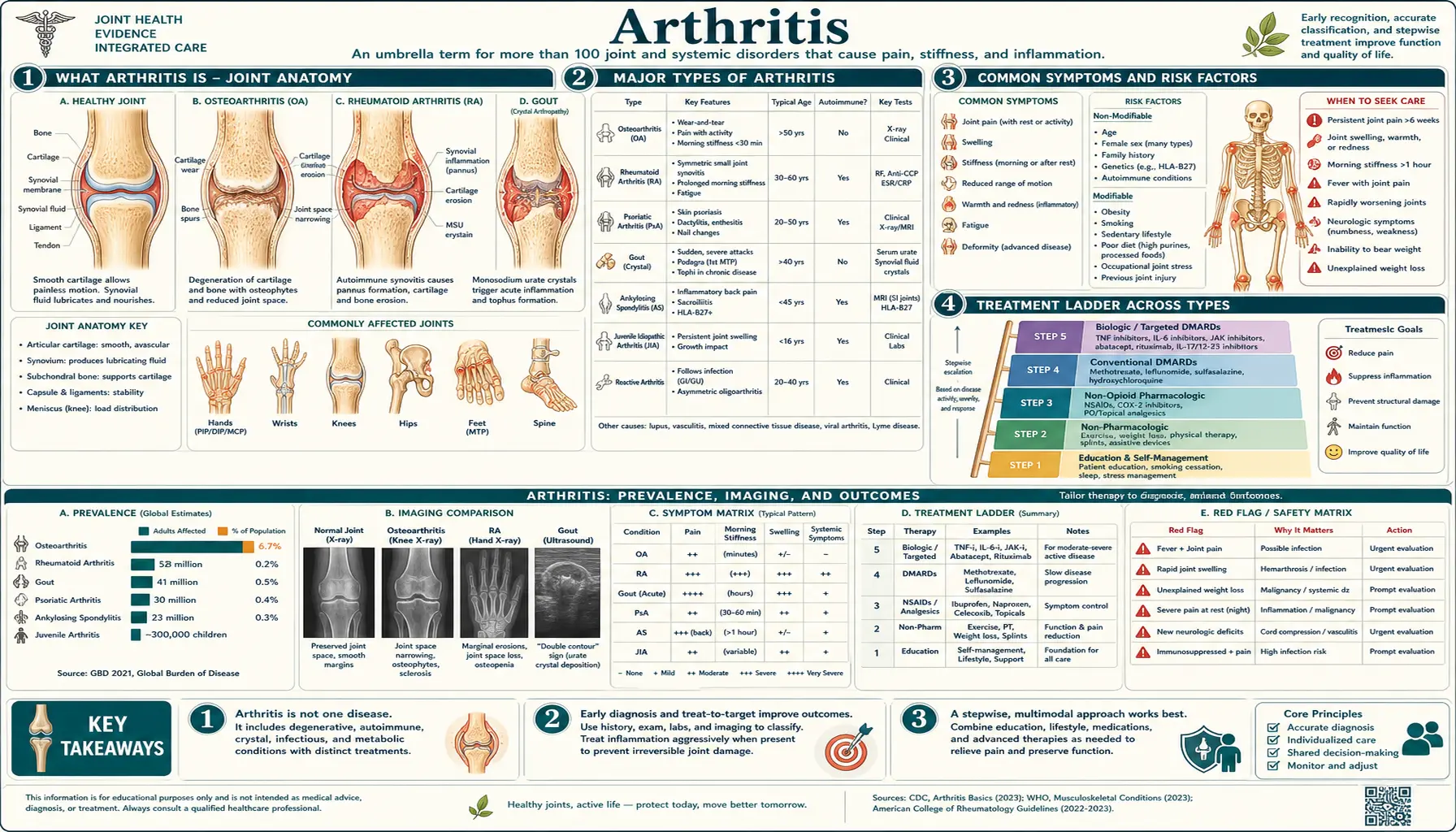
Arthritis is a term used to describe a group of conditions that cause inflammation and pain in the joints. It can affect one or multiple joints and may lead to reduced mobility and quality of life.
An umbrella term, not a diagnosis
"Arthritis" simply means joint inflammation, and it covers more than a hundred distinct conditions with different causes, different treatments and very different outlooks. Being told you have arthritis is like being told you have a rash — it names the region, not the problem. The useful question is always which arthritis, because the answer decides whether you need a knee-strengthening programme, a lifelong immune-suppressing drug, or a urate-lowering tablet.
What a joint is, and the two ways it fails
A joint is two bone ends capped with cartilage — a slippery, water-rich surface with a friction coefficient lower than ice on ice — sealed inside a capsule lined with the synovium, a thin membrane that produces lubricating fluid. Ligaments hold the whole thing together and muscles move and stabilise it.
Almost all arthritis is a failure of one of two structures:
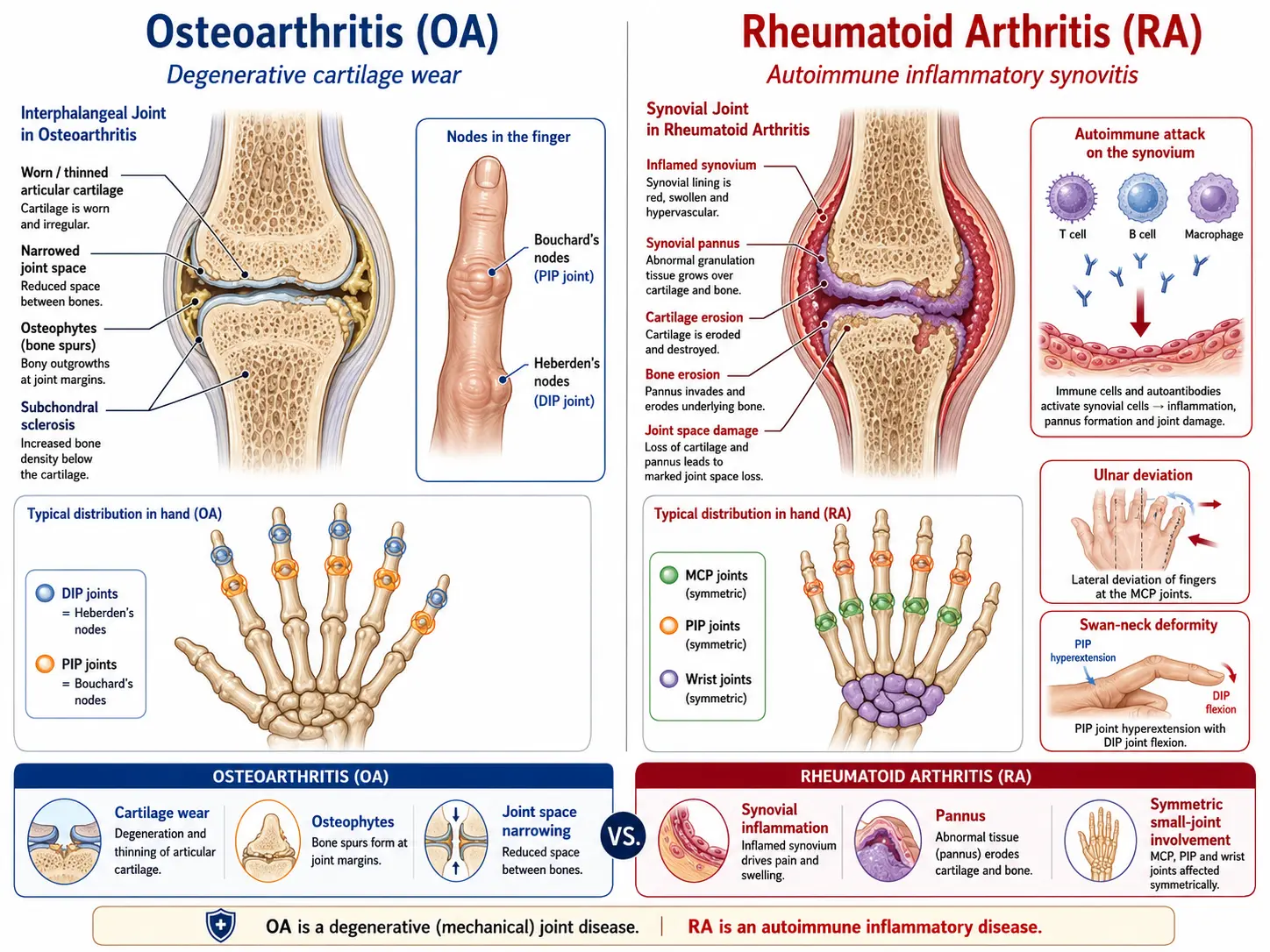
- The cartilage wears out — the mechanical group, of which osteoarthritis is by far the largest. Think of the tread wearing off a tyre. It is not purely "wear and tear", though: the joint actively remodels, the bone underneath thickens and grows spurs, and the synovium becomes mildly inflamed too. But the driving event is cartilage breakdown.
- The synovium becomes the attacker — the inflammatory group, of which rheumatoid arthritis is the archetype. Here the immune system targets the joint lining, which thickens into an aggressive tissue that erodes cartilage and bone from the inside. Think of the lining of the joint turning into something like scar tissue that eats what it touches.
That distinction matters enormously in practice, because the second group causes permanent damage that accumulates while you wait. In osteoarthritis, taking six months to see someone costs you six months of discomfort. In rheumatoid arthritis, six months of untreated inflammation can cost you joint erosions that never come back.
A third group sits apart: crystal arthritis, where sharp crystals form inside the joint and set off a ferocious but short-lived inflammatory attack — uric acid in gout, calcium pyrophosphate in pseudogout.
Types of Arthritis
1. Osteoarthritis (OA)
- Most common type: Often associated with aging and wear-and-tear of joint cartilage.
- Commonly affects: Knees, hips, hands, and spine.
- Characteristics: Joint pain, stiffness, and loss of flexibility.
- The pattern that identifies it: pain that is worse with use and better with rest; morning stiffness that eases within about 30 minutes; hard bony swelling rather than soft puffiness; and involvement of the joints nearest the fingertips, the thumb base, the knees, the hips and the spine.
- Not simply ageing. Cartilage does not passively erode with time — the joint responds to loading and injury with active remodelling, and there is a genuine, if low-grade, inflammatory component. This is why weight and muscle strength change the course, and why an old injury matters decades later. See Osteoarthritis.
2. Rheumatoid Arthritis (RA)
- Autoimmune disorder: The immune system mistakenly attacks the joint lining (synovium).
- Can affect multiple joints symmetrically.
- Common symptoms: Swollen, warm, and painful joints, fatigue, and fever.
- The pattern that identifies it: morning stiffness lasting more than an hour; small joints of the hands and feet on both sides; soft, boggy swelling; and pain that improves with movement rather than worsening with it. Importantly it spares the joints nearest the fingertips, which is one of the quickest ways to distinguish it from osteoarthritis of the hand.
- It is a whole-body disease. RA raises cardiovascular risk independently, and can affect the lungs and eyes. See Rheumatoid Arthritis and Cardiovascular Disease.
3. Psoriatic Arthritis
- Associated with psoriasis: A skin condition that causes red, scaly patches.
- Characteristics: Joint pain and swelling, often affecting fingers and toes.
- Distinctive features: a whole finger or toe swelling like a sausage (dactylitis), pain where tendons attach to bone (enthesitis — classically the Achilles or the sole of the foot), and pitting or lifting of the nails. It can appear years before the skin disease, or with skin disease so minor it has never been noticed — behind the ears, in the navel, or in the scalp. See Psoriatic Arthritis.
4. Gout
- Caused by uric acid buildup: Leads to the formation of crystals in the joints.
- Commonly affects: The big toe but can impact other joints.
- Symptoms: Sudden, severe pain, redness, and swelling in the affected joint.
- The pattern that identifies it: onset over hours, often waking you in the night, with the joint so tender that a bedsheet is unbearable, and the skin red and shiny. Untreated attacks settle over one to two weeks, which is why so many people conclude it has gone away and stop there. See Gout.
- The most curable arthritis on this list, and one of the worst-managed. Lowering uric acid below its solubility threshold dissolves the crystal stores; treating only the attacks leaves the deposits growing silently.
5. Juvenile Arthritis
- Occurs in children: An umbrella term for various types of arthritis affecting children under 16.
- Symptoms: Joint pain, swelling, and reduced movement.
- Watch for the non-joint clues: a child who limps in the morning and improves through the day, or who stops using an arm, may not complain of pain at all. Some forms carry a risk of silent eye inflammation, which is why regular ophthalmology screening is part of care even when the eyes feel normal.
6. Axial spondyloarthritis and ankylosing spondylitis
- Inflammation of the spine and pelvis, typically starting before 45.
- The pattern that identifies it — and it is the opposite of ordinary back pain: back pain that is worse with rest and better with exercise, wakes you in the second half of the night, and comes with morning stiffness lasting over 30 minutes. Mechanical back pain does the reverse. Delays to diagnosis here are notoriously long, and this single distinction is the reason. See Axial Spondyloarthritis and Ankylosing Spondylitis.
7. Reactive and infection-related arthritis
- Reactive arthritis follows a gut or genital infection by one to four weeks and typically hits a few large joints in the lower limbs. See Reactive Arthritis.
- Septic arthritis is infection inside the joint and is a surgical emergency — see the red flags below.
Which Type Do I Have? Telling Them Apart
Most of the diagnosis is made from the story rather than the tests, and four questions do most of the work.
- How long is the morning stiffness? Under 30 minutes points to osteoarthritis. Over an hour points to an inflammatory arthritis. This is probably the single most discriminating question there is, and it is easy to answer at home.
- Does movement help or hurt? Inflammatory joints loosen with use and stiffen with rest — people describe being worst after sitting through a film. Osteoarthritic joints hurt more the more you use them and settle with rest.
- Which joints, and is it symmetrical? Small hand joints on both sides, sparing the fingertip joints, suggests rheumatoid. Fingertip joints and thumb base suggests osteoarthritis. One hot big toe suggests gout. A sausage-shaped finger suggests psoriatic. Spine and pelvis in a young adult suggests axial spondyloarthritis.
- How fast did it come on? Hours suggests crystal or infection. Weeks to months suggests inflammatory. Years suggests osteoarthritis.
Two additional clues worth volunteering to a doctor, because they are rarely asked about: any psoriasis anywhere, including scalp, navel and nail pitting; and any family history of psoriasis, inflammatory bowel disease, or iritis.
Common Symptoms of Arthritis
- Joint pain
- Stiffness
- Swelling
- Reduced range of motion
- Redness and warmth around the affected joint
- Fatigue (common in autoimmune types like RA)
On fatigue: in the inflammatory arthritides this is not ordinary tiredness and it is not laziness. It is a systemic effect of the inflammatory signalling molecules circulating in your blood, it does not resolve with a good night's sleep, and patients consistently rank it among the worst parts of the disease while it is consistently under-asked-about in clinic. Say it out loud at appointments; it changes treatment decisions.
What varies between people: pain intensity correlates surprisingly poorly with what appears on an X-ray, in both directions — severe-looking knee osteoarthritis can be nearly painless, and a normal-looking X-ray does not mean the pain is imagined. Sleep quality, mood, muscle strength and central pain sensitivity all modulate how much a given amount of joint damage hurts. That is a reason to treat sleep and strength as part of arthritis care, not a reason to doubt the pain.
Diagnosis: The Tests and What They Mean
Blood tests, and their traps
- ESR and CRP — general inflammation markers. Usually raised in active inflammatory arthritis, and typically normal in osteoarthritis. But a normal CRP does not exclude inflammatory arthritis, particularly early or in a single joint.
- Rheumatoid factor — the trap. It is positive in only about 70–80% of rheumatoid arthritis, and it is also positive in perhaps 5% of healthy people, more with age, and in hepatitis C, Sjögren's and other conditions. A positive rheumatoid factor in someone without joint swelling usually means nothing at all, and it causes a great deal of unnecessary alarm.
- Anti-CCP antibodies — far more specific for rheumatoid arthritis than rheumatoid factor, and can appear years before symptoms. A positive anti-CCP with joint swelling is a strong result. See Anti-CCP.
- Uric acid — useful, but beware: it is often normal or low during an acute gout attack, because the urate is precipitating into the joint. A normal level during an attack does not exclude gout; recheck a few weeks later.
- ANA — the most over-ordered test in this area. It is positive in a substantial minority of healthy people. It is helpful when lupus is genuinely suspected and unhelpful as a screening test for joint pain.
Joint fluid: the test that settles arguments
Drawing fluid from a swollen joint with a needle answers three questions at once: is there infection (an emergency), are there crystals (gout or pseudogout, seen directly under polarised light), or is it simply inflammatory fluid. In a single hot swollen joint it is the definitive test and should not be skipped in favour of guessing.
Imaging
X-rays show joint space narrowing and bone spurs in osteoarthritis, and erosions in established rheumatoid arthritis — but erosions take time to appear, so a normal X-ray early on is meaningless. Ultrasound detects synovial thickening and increased blood flow, and can find inflammation that examination misses. MRI is the most sensitive for early inflammation and for the sacroiliac joints in suspected axial spondyloarthritis, where it can be diagnostic years before an X-ray changes.
Ask about a rheumatology referral if you have joint swelling lasting more than six weeks, morning stiffness over an hour, or small joints of the hands and feet involved on both sides. The window in which treatment prevents permanent damage is measured in months.
Risk Factors
- Age: Risk increases with age.
- Gender: Some types of arthritis, such as RA, are more common in women, while gout is more common in men.
- Genetics: Family history can increase the likelihood of developing certain types of arthritis.
- Obesity: Extra weight puts more pressure on joints, especially knees and hips. It also raises risk in the hands, which bear no weight at all — evidence that fat tissue contributes through inflammatory signalling, not just load.
- Joint injuries: Previous injuries can increase the risk of developing osteoarthritis. A torn cruciate ligament or meniscus substantially raises the chance of knee osteoarthritis within one to two decades, at any age.
- Smoking: A strong and specific risk factor for rheumatoid arthritis, particularly the anti-CCP-positive form, and it makes treatment work less well. Of everything on this list it is the one most worth acting on.
- Occupational and sporting loading: Repeated heavy kneeling, squatting and lifting raise knee and hip osteoarthritis risk. Ordinary recreational running does not — a persistent myth that keeps people from an activity that helps them.
- Metabolic factors: Diabetes and metabolic syndrome are associated with osteoarthritis independently of weight. For gout specifically, the drivers are alcohol (especially beer), fructose-sweetened drinks, and diuretics.
Prevention and Management Strategies
- Maintain a healthy weight: Reduces stress on weight-bearing joints.
- Regular physical activity: Low-impact exercises such as swimming and cycling can help maintain joint function.
- Balanced diet: Emphasize whole, anti-inflammatory foods — vegetables, fruit, legumes, oily fish, nuts and olive oil.
- Avoid joint injuries: Protect joints during activities and sports.
- Stay hydrated: Helps maintain joint lubrication.
Exercise is the best-evidenced treatment for knee osteoarthritis
This is worth stating flatly, because the instinct to rest a painful joint is strong and wrong. A Cochrane review of 54 trials found high-quality evidence that exercise reduced knee osteoarthritis pain by the equivalent of about 12 points on a 100-point scale, and moderate-quality evidence that it improved physical function by about 10 points, with quality of life improving too [1]. Those effect sizes are comparable to what oral anti-inflammatory drugs deliver, without the stomach, kidney and cardiovascular risks.
What kind: a mix of strengthening (especially quadriceps for the knee, and hip abductors), range-of-motion work, and aerobic activity. Consistency matters more than intensity, and the effect fades if you stop — this is maintenance, not a course of treatment. Expect some discomfort during and shortly after; pain that is worse the next morning means you went too hard, not that exercise is wrong.
Weight loss, and how much is needed
The IDEA trial randomized 454 overweight and obese adults with knee osteoarthritis to diet, exercise, or both, over 18 months. Diet plus exercise achieved a mean loss of 10.6 kg (11.4% of body weight) and produced less pain and better function than either alone, along with lower inflammatory markers; diet alone produced the largest reduction in the compressive force through the knee [2].
The practical figure: aiming for around 10% of body weight, combined with exercise, is what the strong evidence supports — substantially more than the 5% often quoted. And the combination beat either component alone, which argues against choosing between them.
Treatment Options
- Medications:
- Analgesics: Pain relievers such as acetaminophen.
- NSAIDs: Nonsteroidal anti-inflammatory drugs like ibuprofen.
- DMARDs: Disease-modifying antirheumatic drugs for RA.
- Biologic response modifiers: Target specific parts of the immune system in RA.
- Corticosteroids: Reduce inflammation and suppress the immune system.
- Physical therapy: Helps improve strength and flexibility.
- Assistive devices: Such as braces or canes to reduce joint stress.
- Joint injections: Corticosteroid or hyaluronic acid injections for temporary pain relief.
- Surgery:
- Joint repair: Removes or reshapes damaged joint tissue.
- Joint replacement: Replaces the damaged joint with an artificial one (e.g., knee or hip replacement).
- Joint fusion: Fuses two or more bones together, often used for smaller joints.
For osteoarthritis: what to try, in order
The 2019 ACR/Arthritis Foundation guideline puts exercise, weight loss and self-management education at the top of the list, ahead of drugs [3]. Then:
- Topical NSAIDs for the knee and hand — strongly recommended, and consistently under-used. They deliver the drug to the joint with a fraction of the systemic exposure, so the stomach and kidney risks are much lower. For a knee, this should usually be tried before swallowing anything.
- Oral NSAIDs — effective, but with real risks that rise with age: stomach bleeding, kidney injury, raised blood pressure and cardiovascular events. Use the lowest dose for the shortest period; add stomach protection if you are older or on aspirin.
- Acetaminophen/paracetamol — safer, but the honest position is that its effect in osteoarthritis is small. Guidelines have downgraded it considerably.
- Steroid injections — useful for short-term relief of a flare. But repeated injections are not benign: over two years, patients receiving three-monthly triamcinolone injections into the knee lost significantly more cartilage than those receiving saline (mean cartilage thickness change −0.21 mm versus −0.10 mm) with no significant difference in pain [4]. A single injection to break a bad flare is reasonable; a standing quarterly appointment is not.
- Hyaluronic acid injections — the evidence is weak and inconsistent, and the ACR guideline recommends against them for the knee and hip.
- Joint replacement — when pain limits your life despite everything above, hip and knee replacement are among the most reliably successful operations in medicine. The main reason to do the exercise programme first is that stronger muscles going in produce a better result coming out.
For rheumatoid and the other inflammatory arthritides: treat early, treat to target
The strategy here differs completely from osteoarthritis. Current European recommendations are to start a disease-modifying drug — methotrexate first, unless contraindicated — as soon as the diagnosis is made, and then to adjust treatment every one to three months against a measured disease-activity score until remission or low disease activity is achieved [5]. If the target is not met, the drug is changed rather than accepted.
Practical points about methotrexate, since it is the drug most people will be offered and most worry about: it is taken once a week, never daily — daily dosing is a recognised and serious medication error. Folic acid is prescribed alongside it and substantially reduces nausea and mouth ulcers. Blood tests monitor the liver and blood count. Alcohol should be limited. It must not be taken in pregnancy, and men and women should discuss timing before conceiving.
If methotrexate is not enough, biologic drugs (TNF inhibitors, IL-6 blockers, rituximab, abatacept) or targeted synthetic drugs (JAK inhibitors) are added. All of them increase infection risk, which means vaccinations before starting, and a low threshold for seeking help with fever. Biosimilars have reduced the cost of biologics substantially in recent years, which matters where access has been a barrier.
Steroids are used as a bridge while a disease-modifying drug takes effect — weeks, not years. Long-term steroids cause bone loss, diabetes, cataracts and skin fragility, and drifting into indefinite low-dose prednisone is a common and avoidable outcome.
For gout: treat the cause, not just the attack
The acute attack is treated with an NSAID, colchicine or steroids. But the disease is the crystal store, and it only shrinks when uric acid is held below its solubility point — generally under 6 mg/dL, and lower where there are visible tophi. Allopurinol is the usual first choice, started low and increased against repeat blood tests.
The two mistakes that keep gout going: stopping urate-lowering treatment because the attacks stopped — the crystals are still dissolving and stopping regrows them; and stopping it because an attack occurs shortly after starting — attacks are expected in the first months as deposits mobilise, which is why prophylactic colchicine is given alongside. Neither is a reason to abandon the treatment that actually cures the disease.
Supplements and Diet: Honest Evidence Tiers
This is the most heavily marketed corner of arthritis, so each item below is labelled with what the evidence actually shows.
Glucosamine and chondroitin — weak; the largest trial was negative
The GAIT trial randomized 1,583 people with knee osteoarthritis to glucosamine, chondroitin, both, celecoxib, or placebo. Overall, neither supplement nor the combination beat placebo — the response rate was 60.1% on placebo, and glucosamine added 3.9 percentage points (not significant), chondroitin 5.3 (not significant), and the combination 6.5 (not significant), while celecoxib added a significant 10.0 [6]. An exploratory subgroup with moderate-to-severe pain did better on the combination (79.2% versus 54.3%), but that was one subgroup among many and is hypothesis-generating, not proof.
The fair summary: these are safe and inexpensive, most people will get nothing from them, and the money is better spent on a gym membership or physiotherapy sessions. If you try them, give it three months and stop if nothing has changed.
Turmeric and curcumin — modest but real for knee osteoarthritis
A systematic review and meta-analysis of randomized trials of turmeric extracts in knee osteoarthritis found improvements in pain and function compared with placebo, with a safety profile similar to placebo [7]. The trials were mostly small and short, which is the honest caveat, but this sits a clear tier above glucosamine.
Practical points: curcumin is poorly absorbed on its own, which is why formulations combine it with piperine (black pepper extract) or use phospholipid preparations. It has a mild antiplatelet effect, so raise it with your doctor if you take an anticoagulant, and it can cause gallbladder discomfort with gallstones. See Turmeric.
Omega-3 — genuine for inflammatory arthritis, not for osteoarthritis
In rheumatoid arthritis, omega-3 fatty acids at adequate doses improve symptoms — joint tenderness and morning stiffness — and can reduce NSAID requirements. What they do not do is slow the bone erosion, which is the job of disease-modifying drugs. They are an add-on, not a replacement. The doses used in trials are substantially higher than a standard capsule provides. See Omega-3 and Fish Oil for Rheumatoid Arthritis and Omega-3 Fatty Acids. For osteoarthritis specifically the evidence is much weaker.
Food, plainly
No diet cures arthritis, and any source promising one is selling something. What is reasonable: a whole-food, Mediterranean-style pattern — vegetables and fruit at most meals, oily fish twice a week (salmon, sardines, mackerel), legumes such as lentils and black beans, extra-virgin olive oil, nuts, and whole grains including oats, barley and brown rice, with much less ultra-processed food and sugary drink. It is good for the cardiovascular risk that comes with inflammatory arthritis even where its direct joint effect is modest.
For gout specifically, the diet advice has changed and the old lists were partly wrong. Purine-rich vegetables — spinach, asparagus, mushrooms, peas — do not meaningfully raise gout risk and should not be avoided. What does matter: beer and spirits, fructose-sweetened drinks, and large amounts of red meat and shellfish. Cherries have modest observational support and are harmless. Vitamin C lowers urate slightly but not enough to treat gout. Adequate water intake helps.
Vitamin D is worth having at a sufficient level for bone health, particularly on steroids, but supplementing it has not been shown to improve osteoarthritis pain or progression. Collagen supplements have some small positive trials of generally low quality; the mechanism claimed — that eaten collagen reaches your cartilage intact — is not how digestion works, and the honest tier is "unproven".
Red Flags: When Joint Pain Is Urgent
Seek care the same day — this can destroy a joint in 24 to 48 hours:
- A single joint that is hot, red, severely painful and swollen, especially with fever or feeling generally unwell. This is septic arthritis until proven otherwise. It needs the joint aspirated and antibiotics started urgently. It is more likely if you have a prosthetic joint, are on immune-suppressing treatment, have diabetes, or inject drugs. Gout can look identical, which is exactly why the fluid must be examined rather than guessed at.
Seek urgent assessment for:
- Joint swelling with fever, weight loss or night sweats.
- New back pain with bladder or bowel changes, saddle numbness, or leg weakness — a spinal emergency regardless of any arthritis diagnosis.
- Sudden painful red eye, or new visual loss, in someone with inflammatory arthritis.
- Breathlessness or a new persistent cough on methotrexate or a biologic.
- Any fever while on immune-suppressing treatment — the usual signs of infection are blunted by the drugs.
Interactions and cautions
- NSAIDs — the most common source of avoidable harm here. They raise blood pressure, can injure kidneys, cause stomach bleeding, and worsen heart failure. Combining two, including over-the-counter ones, roughly compounds the risk.
- Methotrexate — never daily; avoid trimethoprim and high-dose NSAIDs alongside it without advice; limit alcohol; not in pregnancy.
- Allopurinol with azathioprine — a dangerous combination that requires dose adjustment.
- Turmeric, high-dose fish oil and ginger all have mild blood-thinning effects; mention them if you take an anticoagulant or are due surgery.
- Live vaccines are generally avoided on biologics and other strong immune suppressants. Plan vaccinations before starting.
- Long-term steroids — ask specifically about bone protection. Steroid-induced osteoporosis is preventable and routinely overlooked. See Osteoporosis.
Complications of Arthritis
- Chronic pain: Can affect daily activities and quality of life.
- Reduced mobility: Joint stiffness and damage can lead to decreased movement.
- Joint deformities: Especially in advanced cases of RA or untreated arthritis.
- Emotional impact: Living with chronic pain and reduced mobility can lead to depression and anxiety.
- Other health issues: Certain types of arthritis, like RA, can increase the risk of cardiovascular disease.
Three of these deserve expansion. Cardiovascular risk in rheumatoid arthritis is raised roughly to the degree diabetes raises it, driven by chronic inflammation rather than by the joints — which means blood pressure, lipids and smoking deserve the same attention as the joints do. Bone loss comes from three directions at once: the inflammation itself, reduced activity, and steroid treatment. And muscle loss around an affected joint happens fast and quietly, which is why strengthening work is not optional extra credit — weak quadriceps make a knee hurt more and wear faster.
Finally, on outlook: this is the most improved area in the whole of rheumatology. The severe joint deformities that once defined rheumatoid arthritis are now uncommon in people treated early and to target. Gout is genuinely curable. Osteoarthritis remains chronic, but exercise, weight management and, when needed, joint replacement mean it very rarely has to end mobility. The main thing that turns any of these into a bad outcome is delay.
Table of Contents
- What is Arthritis?
- Types of Arthritis
- Which Type Do I Have? Telling Them Apart
- Common Symptoms of Arthritis
- Diagnosis: The Tests and What They Mean
- Risk Factors
- Prevention and Management Strategies
- Treatment Options
- Supplements and Diet: Honest Evidence Tiers
- Red Flags: When Joint Pain Is Urgent
- Complications of Arthritis
- Key Research Papers
- Connections
- Featured Videos
Key Research Papers
Curated PubMed topic searches on Arthritis. Each link opens a live PubMed query so the result set stays current as new studies are indexed.
Key Research Papers
Every citation below was verified against its PubMed record before publication — author list, journal, year and title all checked against the source.
- Fransen M, McConnell S, Harmer AR, et al. Exercise for osteoarthritis of the knee. Cochrane Database Syst Rev. 2015;1(1):CD004376 — PubMed PMID: 25569281 · doi:10.1002/14651858.CD004376.pub3
- Messier SP, Mihalko SL, Legault C, et al. Effects of intensive diet and exercise on knee joint loads, inflammation, and clinical outcomes among overweight and obese adults with knee osteoarthritis: the IDEA randomized clinical trial. JAMA. 2013;310(12):1263-73 — PubMed PMID: 24065013 · doi:10.1001/jama.2013.277669
- Kolasinski SL, Neogi T, Hochberg MC, et al. 2019 American College of Rheumatology/Arthritis Foundation Guideline for the Management of Osteoarthritis of the Hand, Hip, and Knee. Arthritis Care Res (Hoboken). 2020;72(2):149-162 — PubMed PMID: 31908149 · doi:10.1002/acr.24131
- McAlindon TE, LaValley MP, Harvey WF, et al. Effect of Intra-articular Triamcinolone vs Saline on Knee Cartilage Volume and Pain in Patients With Knee Osteoarthritis: A Randomized Clinical Trial. JAMA. 2017;317(19):1967-1975 — PubMed PMID: 28510679 · doi:10.1001/jama.2017.5283
- Smolen JS, Landewé RBM, Bergstra SA, et al. EULAR recommendations for the management of rheumatoid arthritis with synthetic and biological disease-modifying antirheumatic drugs: 2022 update. Ann Rheum Dis. 2023;82(1):3-18 — PubMed PMID: 36357155 · doi:10.1136/ard-2022-223356
- Clegg DO, Reda DJ, Harris CL, et al. Glucosamine, chondroitin sulfate, and the two in combination for painful knee osteoarthritis. N Engl J Med. 2006;354(8):795-808 — PubMed PMID: 16495392 · doi:10.1056/NEJMoa052771
- Wang Z, Singh A, Jones G, et al. Efficacy and Safety of Turmeric Extracts for the Treatment of Knee Osteoarthritis: a Systematic Review and Meta-analysis of Randomised Controlled Trials. Curr Rheumatol Rep. 2021;23(2):11 — PubMed PMID: 33511486 · doi:10.1007/s11926-020-00975-8
PubMed Topic Searches
- PubMed: Topic search: Rheumatoid arthritis review
- PubMed: Topic search: Osteoarthritis review
- PubMed: Topic search: ACR rheumatoid arthritis classification
- PubMed: Topic search: Methotrexate rheumatoid arthritis
- PubMed: Topic search: TNF inhibitor rheumatoid arthritis trial
- PubMed: Topic search: JAK inhibitor rheumatoid arthritis
- PubMed: Topic search: Rituximab rheumatoid arthritis
- PubMed: Topic search: Anti-CCP antibody diagnosis
- PubMed: Topic search: Knee osteoarthritis guideline
- PubMed: Topic search: Psoriatic arthritis review
- PubMed: Topic search: Juvenile idiopathic arthritis
- PubMed: Topic search: Turmeric curcumin arthritis trial
Connections
- Rheumatology
- Rheumatoid Arthritis in the Shoulder
- Omega-3 and Fish Oil for Rheumatoid Arthritis
- Gout
- Lupus
- Sjogren's Syndrome
- Osteoporosis
- Raynaud's Disease
- Ankylosing Spondylitis
- Biologics Guide
- NSAID Strategy
- HLA-B27 Explained
- Ehlers-Danlos Syndrome
- Chronic Pain
- Joint Pain
- Turmeric
- Ginger
- Tart Cherry
- Vitamin D3
- Magnesium
- Anti Inflammatory Diet
- Osteoarthritis
- Rheumatoid Arthritis
- Septic Arthritis
- Juvenile Idiopathic Arthritis (JIA)
- Chikungunya
- Palindromic Rheumatism
- Anti-Synthetase Syndrome — non-erosive arthritis with myositis and lung disease.
- Anti-CCP (Rheumatoid Arthritis Antibody) — the antibody test that separates rheumatoid arthritis from other joint disease.
- Whipple's Disease — a rare bacterial infection whose seronegative, non-erosive joint disease can precede gut symptoms by years.
- Pyoderma Gangrenosum — an ulcerating neutrophilic skin disease in which inflammatory joint disease is one of the three commonest systemic associations.
- Mixed Connective Tissue Disease — an anti-U1-RNP overlap syndrome whose non-erosive polyarthritis is often mistaken for rheumatoid disease.
- Herbs covered on this site that discuss this condition: Andrographis (Andrographis paniculata) · Cat's Claw (Uncaria tomentosa) · Willow Bark (Salix alba) · Black Seed (Nigella sativa) · Carum / Ajwain (Trachyspermum ammi) · Meadowsweet
- Discussed in depth on these pages: Zedoary for Inflammation and Arthritis: What the Sesquiterpenoid Resea · Salmonella Gastroenteritis: Food Poisoning Symptoms and Course · Nutmeg for Pain and Inflammation · Rheumatoid Factor (RF) Test — Autoimmune Screening
- Psoriatic Arthritis — sausage digits, nail pitting, and skin disease that may be nearly invisible
- Axial Spondyloarthritis — back pain that is worse with rest and better with exercise
- Reactive Arthritis — joints that flare one to four weeks after a gut or genital infection
- Anti-CCP — far more specific for rheumatoid arthritis than rheumatoid factor
- Collagen
- Bone Broth
- Inflammatory Markers