Ankylosing Spondylitis: History and Discovery
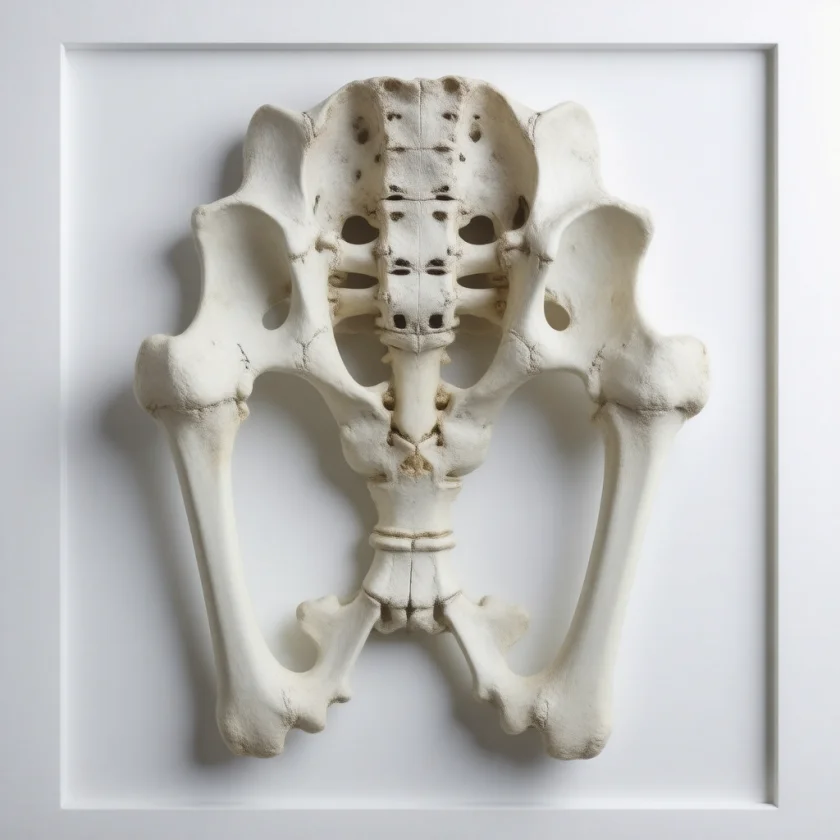
Ankylosing spondylitis (AS) leaves an unmistakable signature on the skeleton: a spine whose vertebrae have fused into a single rigid column, smoothed over by bridging bone into the shape clinicians call a “bamboo spine.” Because that fusion survives in dry bone, the history of ankylosing spondylitis can be read partly from skeletons themselves — though, as we will see, telling true ankylosing spondylitis apart from a look-alike condition in ancient remains has proven surprisingly hard. The written story runs from a fused skeleton dissected by the Irish physician Bernard Connor in the 1690s, through three near-simultaneous European clinical descriptions in the 1890s that gave the disease its eponyms, to a 1973 genetic discovery — the human leukocyte antigen-B27 association — that remains one of the strongest links ever found between a single gene and a common disease, and finally to the targeted biologic drugs that transformed treatment in the 2000s.
Table of Contents
- The Bamboo Spine: A Disease Written in Bone
- Antiquity and the Egyptian-Pharaoh Question
- Bernard Connor and the Fused Skeleton (1695)
- The 1890s: Bekhterev, Strümpell, and Marie
- From Eponyms to “Ankylosing Spondylitis”
- The Human Leukocyte Antigen-B27 Discovery of 1973
- The Spondyloarthritis Family Concept
- The Biologic Era: Tumor Necrosis Factor Inhibitors and Beyond
- Key Research Papers
- Connections
- Featured Videos
The Bamboo Spine: A Disease Written in Bone
Ankylosing spondylitis is, at root, a chronic inflammatory disease of the spine and the sacroiliac joints — the joints where the base of the spine meets the pelvis. Over years of inflammation, the body responds by laying down new bone at the edges of the vertebrae. Thin vertical bridges of bone called syndesmophytes grow up the outside of the spinal column and eventually link one vertebra to the next, until a flexible stack of bones becomes a single fused rod. On an X-ray this produces the classic “bamboo spine” — a continuous, segmented-looking shaft — together with squaring of the vertebral bodies and fusion of the sacroiliac joints.
This is why ankylosing spondylitis occupies an unusual place in medical history. Most diseases vanish with the soft tissue when a person dies, leaving the historian only written records to work from. Ankylosing spondylitis, by contrast, permanently remodels the skeleton, so its traces can in principle be recognized in archaeological and museum specimens centuries or millennia later. A fused spine and fused sacroiliac joints in old bones are a tempting invitation to diagnose ankylosing spondylitis retrospectively.
That same power, however, is the source of a recurring trap. Several unrelated conditions can also fuse a spine — most importantly diffuse idiopathic skeletal hyperostosis (DISH), a non-inflammatory condition of older adults in which flowing bone forms along the front of the spine while the sacroiliac joints are spared. Distinguishing true inflammatory ankylosing spondylitis (which erodes and then fuses the sacroiliac joints and small facet joints) from DISH and other forms of spinal ankylosis is the central difficulty in every attempt to read ankylosing spondylitis out of ancient bone, and it shapes the debates that follow.
Antiquity and the Egyptian-Pharaoh Question
Skeletons with fused spines have been recovered from many ancient and prehistoric contexts, and ankylosing spondylitis is sometimes described as one of the older recognizable diseases in the paleopathological record. Among the most famous — and most contested — claims is that certain Egyptian pharaohs suffered from ankylosing spondylitis. Twentieth-century studies based on plain X-rays of royal mummies reported ankylosing spondylitis-like spinal fusion in figures including Amenhotep II, Ramesses II, and his son Merenptah, and these attributions were repeated for decades in textbooks and popular accounts.
That picture has since been seriously challenged, and the honest position today is one of caution. Plain X-rays show only a flattened, two-dimensional shadow of the spine and cannot reliably reveal whether the sacroiliac and facet joints are eroded and fused (the hallmark of ankylosing spondylitis) or spared (pointing instead to DISH). A 2014 study in Arthritis & Rheumatology by Sahar Saleem and Zahi Hawass re-examined the royal mummies of the 18th–20th dynasties using modern computed tomography (CT), which produces true three-dimensional images. The computed tomography findings excluded ankylosing spondylitis — there were no sacroiliac joint erosions or facet-joint fusions — and instead met the criteria for DISH in four kings: Amenhotep III, Ramesses II, Merenptah, and Ramesses III.
So the popular story that Ramesses II had ankylosing spondylitis should be treated as a debunked or at least strongly disputed retro-diagnosis, not an established fact; the current best evidence reclassifies his spinal disease as DISH. This is presented here cautiously and as a cautionary tale: it shows both how readily a fused ancient spine invites an ankylosing spondylitis label and how easily that label can be wrong without modern imaging. Genuinely ankylosing-spondylitis-compatible skeletons do appear in the archaeological literature, but each such case has to be argued carefully on the specific joint findings rather than assumed from spinal fusion alone.
Bernard Connor and the Fused Skeleton (1695)
The first clear, anatomically described case of an ankylosing-spondylitis-like skeleton in the medical literature is usually credited to Bernard Connor (also spelled O’Connor; c. 1666–1698), an Irish physician, anatomist, and historian who trained on the Continent — he took his M.D. at Reims — before settling in London in the mid-1690s. Connor examined a skeleton in which the vertebrae, ribs, and pelvis were so completely fused that large portions of the trunk formed a single continuous bony mass. He described this remarkable specimen in a thesis presented in the early 1690s and in a published account dated to 1695, marveling at how the bones had grown together into one piece.
What makes Connor’s account historically important is not a theory of cause — the inflammatory nature of the disease was entirely beyond seventeenth-century medicine — but the precise anatomical observation itself. He recognized and recorded that an entire human spine and adjoining bones could fuse into a rigid whole, the exact end-state we now associate with advanced ankylosing spondylitis. His description predates the modern clinical accounts by roughly two centuries, which is why nearly every history of ankylosing spondylitis opens with him.
A note of caution belongs here too: because Connor worked only from dry bone and could not assess living symptoms, inflammation, or the fine joint detail visible on modern imaging, his case cannot be diagnosed with certainty as ankylosing spondylitis rather than another fusing condition. He is best understood as the first to document the fused-spine phenomenon in the Western medical record, and the recognized starting point of the disease’s written history, rather than as the person who “discovered ankylosing spondylitis” as a defined illness.
The 1890s: Bekhterev, Strümpell, and Marie
Ankylosing spondylitis became a recognized clinical entity — a disease defined by its symptoms in living patients, not just a curiosity of dry bone — in a remarkable cluster of work during the 1890s, contributed independently by three physicians in three countries. The first was the eminent Russian neurologist Vladimir Bekhterev (often Latinized as Bechterew), who in 1893 described a stiffening, inflammatory disease of the spine as a distinct condition, emphasizing the rigid, inflexible posture, the spinal inflammation, and the curvature that set it apart from ordinary rheumatism. His work is why the disease is still widely known in Europe and Russia as Bechterew’s disease.
In Germany, the internist Adolf Strümpell described the condition in 1897, characterizing the progressive ankylosis (fusion) of the spine and the hip joints. The following year, in 1898, the French neurologist Pierre Marie published an influential account, describing the pattern of involvement and helping to define the disease’s clinical picture; Marie is associated with the term spondylose rhizomélique, drawing attention to involvement of the “root” (hip and shoulder girdle) joints. From the combined contributions of these two came the other long-used eponym, Marie–Strümpell disease.
These three descriptions, arriving within five years of one another and from separate national traditions, are why ankylosing spondylitis carries a tangle of eponyms — Bechterew’s disease, Marie–Strümpell disease, and the combined Bekhterev–Strümpell–Marie disease. It is worth stressing that none of these men “discovered” the disease in the sense of being first to see it — Connor’s skeleton and scattered earlier reports preceded them by generations — but they were the first to define it clinically as a recognizable, nameable illness in living patients, which is what allowed it to enter mainstream medicine.
From Eponyms to “Ankylosing Spondylitis”
The modern descriptive name eventually displaced the eponyms because it says plainly what the disease does. “Spondylitis” means inflammation of the vertebrae (from the Greek spondylos, vertebra), and “ankylosing” means tending toward ankylosis — the stiffening and fusion of joints (from the Greek ankylos, bent or stiff). Put together, ankylosing spondylitis is literally “the spinal inflammation that fuses,” a compact and accurate summary of the whole disease course from early inflammatory back pain to a fused bamboo spine.
Through the first half of the twentieth century, the eponymous and descriptive names coexisted, and the older labels — especially Bechterew’s disease in Europe — remained in common use. A major practical advance of the era was the recognition that sacroiliac joint inflammation (sacroiliitis), visible on X-ray, is the diagnostic cornerstone of ankylosing spondylitis; the disease begins at the sacroiliac joints far more reliably than it begins higher in the spine, and X-ray evidence of sacroiliitis became central to diagnostic criteria such as the widely used Rome (1961) and New York (1966, modified 1984) criteria.
Today, “ankylosing spondylitis” is the standard term, increasingly nested within the broader concept of axial spondyloarthritis (discussed below), which also recognizes patients with the same inflammatory disease before any X-ray changes have appeared — so-called non-radiographic axial spondyloarthritis, identifiable by magnetic resonance imaging (MRI). The shift in vocabulary mirrors a deeper shift in understanding: from a late, bone-fused endpoint visible on plain film toward an early, treatable inflammatory process.
The Human Leukocyte Antigen-B27 Discovery of 1973
The single most consequential discovery in the history of ankylosing spondylitis came in 1973, when two research groups working independently — one in London, one in Los Angeles — reported that the disease is very strongly associated with a specific tissue-type genetic marker called human leukocyte antigen-B27. human leukocyte antigen (HLA) molecules sit on the surface of cells and are central to how the immune system distinguishes self from non-self; human leukocyte antigen-B27 is one particular variant. The two landmark papers appeared within weeks of each other in the world’s leading medical journals.
In Los Angeles, Lee Schlosstein, Paul Terasaki, Rodney Bluestone, and Carin Pearson at UCLA published “High association of an HL-A antigen, W27, with ankylosing spondylitis” in the New England Journal of Medicine in early April 1973. In London, Derrick Brewerton and colleagues (including F. D. Hart, A. Nicholls, M. Caffrey, D. C. James, and R. D. Sturrock) published “Ankylosing spondylitis and HL-A 27” in The Lancet later the same month. A frequently retold detail is that the UCLA group had originally expected B27 to track with gout and used ankylosing spondylitis patients almost as a comparison group — only to find the dramatic association with ankylosing spondylitis instead.
The strength of the link is what made it historic. Whereas most genes raise disease risk only modestly, the great majority of people with ankylosing spondylitis carry human leukocyte antigen-B27, and carrying it raises risk by something on the order of tens to over a hundred times compared with non-carriers — one of the strongest associations between a common genetic variant and any human disease. The discovery instantly reframed ankylosing spondylitis as a disease with a powerful inherited, immunological basis, opened the modern field of immunogenetics in rheumatology, gave clinicians a useful (though not by itself diagnostic) blood test, and set off a fifty-year research effort — still ongoing — to explain exactly how human leukocyte antigen-B27 drives the disease.
One caution worth stating plainly: human leukocyte antigen-B27 is a risk marker, not a diagnosis. Most people who carry human leukocyte antigen-B27 never develop ankylosing spondylitis, and a minority of ankylosing spondylitis patients lack it, so the gene is best understood as a major susceptibility factor interacting with other genes and environmental triggers rather than a deterministic cause. The detailed clinical use of the marker is covered in the companion deep-dive article human leukocyte antigen-B27 Explained.
The Spondyloarthritis Family Concept
The human leukocyte antigen-B27 finding did more than illuminate ankylosing spondylitis in isolation; it helped knit together a whole family of related diseases. In 1974, the British rheumatologists John Moll and Verna Wright (with colleagues) articulated the influential concept of the seronegative spondyloarthropathies — a group of conditions that share clinical and genetic features but, unlike rheumatoid arthritis, lack rheumatoid factor in the blood (hence “seronegative”). Ankylosing spondylitis is the prototype of this family.
The grouping brought together ankylosing spondylitis, reactive arthritis (formerly Reiter’s syndrome), psoriatic arthritis, the arthritis associated with inflammatory bowel disease (Crohn’s disease and ulcerative colitis), and juvenile-onset forms. What unites them is a recognizable shared signature: inflammation of the spine and sacroiliac joints, inflammation where tendons and ligaments attach to bone (enthesitis), a tendency to involve the eye (acute anterior uveitis), overlap with skin and gut inflammation, the absence of rheumatoid factor, and an over-representation of human leukocyte antigen-B27. Recognizing these shared threads explained why, for example, a person with inflammatory bowel disease might also develop spinal inflammation, or why the same family of conditions clusters in relatives.
This framework has since evolved into the modern umbrella term spondyloarthritis, usually divided by where symptoms predominate into axial spondyloarthritis (mainly spine and sacroiliac joints, with ankylosing spondylitis as the classic radiographic form) and peripheral spondyloarthritis (mainly limb joints, enthuses, and digits). The conceptual move from a list of separate eponymous diseases toward a unified, mechanism-based family is one of the defining intellectual achievements of late-twentieth-century rheumatology, and it directly enabled the targeted treatments described next. Several members of this family are covered on this site, including Crohn’s disease, ulcerative colitis, and the eye complication discussed in Uveitis and Eye Involvement.
The Biologic Era: Tumor Necrosis Factor Inhibitors and Beyond
For most of the twentieth century, treatment of ankylosing spondylitis rested on two pillars: nonsteroidal anti-inflammatory drugs (NSAIDs) to control pain and inflammation, and exercise and physical therapy to preserve posture and mobility as the spine stiffened. These remain genuinely important — consistent movement and good posture meaningfully affect long-term function — but neither could halt the underlying inflammatory process, and the disease-modifying drugs that worked for rheumatoid arthritis (such as methotrexate) largely failed to control the axial spinal disease of ankylosing spondylitis.
The turning point came from the discovery that an inflammatory signaling molecule, tumor necrosis factor (TNF), plays a central role in the disease. Biologic drugs engineered to block tumor necrosis factor — the tumor necrosis factor inhibitors — produced rapid, often dramatic reductions in pain, stiffness, and inflammation in many patients, the first treatments to do so for the spinal disease itself. Etanercept became the first biologic approved by the U.S. Food and Drug Administration (FDA) for ankylosing spondylitis, in July 2003, and infliximab followed for ankylosing spondylitis in 2004; adalimumab, golimumab, and certolizumab were later added to the class.
The biologic era has continued to broaden. A second class of biologics targeting the interleukin-17 (IL-17) pathway (such as secukinumab and ixekizumab) and, more recently, oral JAK inhibitors have given clinicians additional options for patients who do not respond to or cannot tolerate tumor necrosis factor blockers. Together these drugs reframed ankylosing spondylitis from a condition that could only be palliated as it slowly fused into one whose inflammation can often be substantially suppressed — especially when treatment begins early, before extensive bony fusion has occurred. The practical detail of these therapies is covered in the companion articles Biologics Guide and nonsteroidal anti-inflammatory drug (NSAID) Strategy.
Seen as a whole, the arc of ankylosing spondylitis history is a model of how medicine advances: a fused skeleton observed and recorded in 1695; three independent clinical descriptions in the 1890s that named the disease; a 1973 genetic discovery that revealed a powerful immunological basis and bound ankylosing spondylitis into a wider family of related conditions; and, three decades later, targeted drugs aimed at the very inflammatory pathways that genetics and immunology had brought to light. Observation, definition, mechanism, and treatment — arriving in that order, across more than three centuries.
Key Research Papers
The references below combine peer-reviewed historical and scientific reviews with curated PubMed topic-search links into the primary literature. Where a digital object identifier (DOI) or PubMed identifier (PMID) is given with confidence it is linked directly; the remaining entries are PubMed topic searches. Each link opens in a new tab at the National Library of Medicine or the publisher. Historical primary descriptions (Connor’s 1695 account; Bekhterev 1893; Strümpell 1897; Marie 1898) are named in the article as historical sources.
- Saleem SN, Hawass Z. Ankylosing spondylitis or diffuse idiopathic skeletal hyperostosis in royal Egyptian mummies of the 18th–20th dynasties? CT and archaeology studies. Arthritis & Rheumatology. 2014;66(12):3311-3316. — doi:10.1002/art.38864
- Feldtkeller E, Lemmel EM, Russell AS. Ankylosing spondylitis in the pharaohs of ancient Egypt. Rheumatology International. 2003;23(1):1-5. — PubMed PMID: 12548434
- Khan MA. Ankylosing spondylitis: history, epidemiology, and HLA-B27. International Journal of Rheumatic Diseases. 2023. — doi:10.1111/1756-185X.14547
- A brief human history of ankylosing spondylitis: a scoping review of pathogenesis, diagnosis, and treatment. (Open-access review, U.S. National Library of Medicine.) — PMC: A brief human history of ankylosing spondylitis
- Schlosstein L, Terasaki PI, Bluestone R, Pearson CM. High association of an HL-A antigen, W27, with ankylosing spondylitis. New England Journal of Medicine. 1973;288(14):704-706. — doi:10.1056/NEJM197304052881403
- Brewerton DA, Hart FD, Nicholls A, Caffrey M, James DC, Sturrock RD. Ankylosing spondylitis and HL-A 27. The Lancet. 1973;301(7809):904-907. — doi:10.1016/S0140-6736(73)91360-3
- Fifty years after the discovery of the association of HLA-B27 with ankylosing spondylitis. — PubMed PMID: 37652557 (Anniversary review, 2023.)
- HLA-B*27 and ankylosing spondylitis: 50 years of insights and discoveries. Current Rheumatology Reports. 2023. — doi:10.1007/s11926-023-01118-5
- Moll JM, Wright V (and colleagues). The seronegative spondyloarthropathies / spondarthritis concept (1974). — PubMed: Moll and Wright seronegative spondarthritis
- Bernard Connor (O’Connor) and the first anatomical description of ankylosing spondylitis (1695). — PubMed: Bernard Connor and the history of ankylosing spondylitis. — Search PubMed
- History of the eponyms Bechterew’s disease and Marie-Strümpell disease (Bekhterev 1893; Strümpell 1897; Marie 1898). — PubMed: Bechterew, Marie, and Strümpell eponym history
- Etanercept and TNF inhibition in ankylosing spondylitis — the first biologic therapy. — PubMed: etanercept and TNF inhibition in AS
- Infliximab and the introduction of anti-TNF therapy for ankylosing spondylitis. — PubMed: infliximab anti-TNF therapy for AS
- Paleopathology of ankylosing spondylitis versus DISH in ancient skeletal remains. — PubMed: paleopathology of AS versus DISH
External Authoritative Resources
Connections
- Rheumatology
- Ankylosing Spondylitis (Hub)
- Human Leukocyte Antigen-B27 Explained
- Biologics Guide (Tumor Necrosis Factor & IL-17 Inhibitors)
- Uveitis and Eye Involvement
- Arthritis
- Lupus
- Osteoporosis
- Crohn’s Disease
- All Conditions