Hormonal Therapy Options for Endometriosis
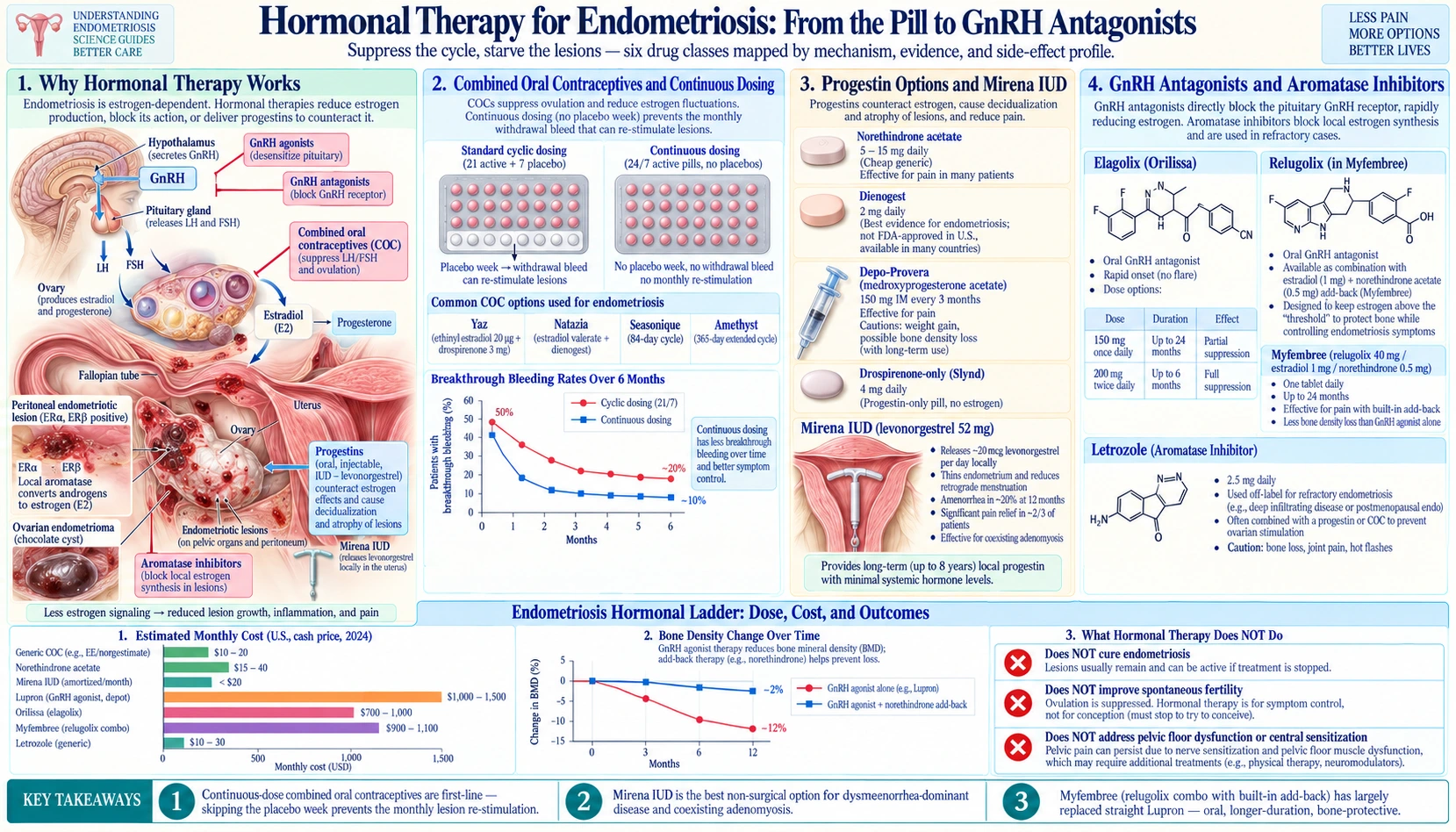
Table of Contents
- Why Hormonal Therapy
- Combined Oral Contraceptives (COCs)
- Continuous vs. Cyclic Dosing
- Progestin-Only Options
- Levonorgestrel Intrauterine Device (IUD)
- GnRH Agonists (Leuprolide, Goserelin, Nafarelin)
- GnRH Antagonists (Elagolix, Relugolix Combination)
- Aromatase Inhibitors
- Danazol
- How the Options Compare
- Cost Comparisons
- Bone Density Monitoring
- Mental Health and Mood
- What Hormonal Therapy Does NOT Do
- Key Research Papers
- Connections
- Featured Videos
Why Hormonal Therapy
Endometriosis lesions are estrogen-hungry. The ectopic tissue that implants on your ovaries, peritoneum, uterosacral ligaments, bowel, or bladder responds to the monthly estrogen surge the same way the lining of your uterus does: it thickens, becomes inflamed, bleeds, and releases prostaglandins and cytokines that scream pain into the surrounding nerves. Every menstrual cycle, the lesions get another push. Over years, that cycling drives scar tissue, adhesions, and central sensitization of the nervous system.
Hormonal therapy is the single most effective non-surgical way to interrupt that loop. The strategy is simple to describe and easy to misunderstand: suppress ovarian estrogen cycling, so lesions stop getting monthly stimulation, so inflammation and pain settle. Different drugs do this in different ways — some by overriding your natural cycle with a steady hormone background (the pill, progestins, IUDs), some by shutting the ovaries down entirely (gonadotropin-releasing hormone (GnRH) drugs), and some by blocking the local enzyme that makes estrogen inside lesions themselves (aromatase inhibitors).
What hormonal therapy is not: a cure. It is disease-suppressive, which means it controls symptoms and may slow progression, but the lesions remain. When the medication stops, pain returns within one to three cycles for most people. Endometriosis is managed as a chronic inflammatory disease, not cured like an infection.
Combined Oral Contraceptives (COCs)
Combined oral contraceptives — the familiar "birth control pill" containing both estrogen (usually ethinyl estradiol, sometimes estradiol valerate) and a progestin — are the first-line hormonal treatment for endometriosis pain. They are cheap, widely available, reversible, and work reasonably well for mild to moderate disease. Major guidelines from the European Society of Human Reproduction and Embryology (ESHRE), the American College of Obstetricians and Gynecologists (ACOG), and the American Society for Reproductive Medicine all list COCs as starting therapy when there are no contraindications.
How they work: the steady daily hormone dose shuts down your brain's signal to the ovaries (via suppression of luteinizing hormone (LH) and follicle-stimulating hormone (FSH)), so you stop ovulating. Without ovulation, there is no luteal-phase estrogen surge, no progesterone withdrawal, and therefore no natural menstruation. The endometrial lining (both in the uterus and the lesions) stays thin and quiet.
Common pill types used for endometriosis pain:
- Low-dose ethinyl estradiol pills (20–30 mcg) combined with levonorgestrel — classic, cheap, well-tolerated.
- Drospirenone-ethinyl estradiol pills — drospirenone is a progestin with mild anti-mineralocorticoid (water-balance hormone blocking) activity, often used in patients with bloating, premenstrual-syndrome-like mood symptoms, or mild fluid retention.
- Estradiol valerate-dienogest pills — uses body-identical estradiol and dienogest, the progestin most studied for endometriosis; used when standard pills have not helped, before moving to GnRH drugs.
Judging whether a pill is working usually takes three to twelve months. Hormonal therapy for endometriosis brings slow improvement, not an immediate one. In common practice a pill that has clearly helped by three months is continued, and a different drug class is tried if pain is unchanged at six months.
Contraindications to estrogen-containing pills include: smoker over age 35, history of venous thromboembolism (deep vein thrombosis (DVT) or pulmonary embolism) or a known clotting disorder, migraine with aura (stroke risk), uncontrolled hypertension, active liver disease, and a personal history of estrogen-sensitive cancer (breast, certain endometrial). When any of these applies, progestin-only options are the usual alternative.
Continuous vs. Cyclic Dosing
This is a change many patients have never been told about. Standard birth-control packs contain 21 hormone pills and 7 placebo pills, engineered in the 1960s to produce a monthly "period" the Catholic Church would recognize. For contraception, that placebo week is arbitrary. For endometriosis, practitioners describe it as counterproductive: every placebo week, estrogen and progestin drop, the uterine lining sheds, and lesions get a miniature monthly re-stimulation.
Continuous dosing — taking an active pill every day, skipping the placebo week entirely — is the regimen widely used for endometriosis. A new pack is opened when the 21 active pills are finished. No withdrawal bleed, no lesion re-stimulation, and, practitioners report, much less cyclical pain. Extended-cycle levonorgestrel-ethinyl estradiol packs (84 active / 7 placebo pills, or 365 active pills with no placebo) package this, but any monophasic pill can be used continuously by skipping the placebos.
Breakthrough bleeding is common in the first three to six months of continuous use. It is not a sign the pill is failing — it is the uterine lining adjusting. Most women settle into complete amenorrhea by month six. When breakthrough bleeding persists, a short planned 4-day break every three months is a common way to reset it.
Progestin-Only Options
When estrogen is contraindicated, or when COCs have not relieved pain, progestin-only therapy is the usual next option. Progestins suppress ovulation, thin the uterine lining, and directly down-regulate estrogen receptors on endometriotic lesions. Four options dominate:
Norethindrone acetate. 5–15 mg by mouth daily, raised step by step to the dose that controls symptoms without unacceptable bleeding. Cheap (often under $20/month generic), decades of track record, effective in the majority of patients. The main downside is breakthrough bleeding, which can be frequent and unpredictable in the first six months. Many patients tolerate it; others find it intolerable.
Dienogest. 2 mg daily. The most rigorously studied progestin for endometriosis worldwide. In a 24-week head-to-head trial of 252 women (Strowitzki 2010), dienogest 2 mg by mouth daily relieved pelvic pain as well as leuprolide injections every 4 weeks: pain scores fell by 47.5 mm with dienogest and 46.0 mm with leuprolide on the trial’s visual pain scale. Hot flushes were reported less often with dienogest, but bleeding episodes were suppressed less than with leuprolide. Lower-spine bone density changed by +0.25% with dienogest and −4.04% with leuprolide, and blood markers of bone breakdown rose with leuprolide but not with dienogest. Dienogest is not U.S. Food and Drug Administration-approved as a standalone drug in the United States (it is available only as a component of an estradiol valerate-dienogest pill), so some U.S. patients obtain dienogest alone from pharmacies in Canada, the UK, or Germany, at variable cost. Cost ranges roughly $60–$200 per month depending on source.
Medroxyprogesterone acetate (oral tablets, or the depot medroxyprogesterone acetate (DMPA) injection). Oral medroxyprogesterone acetate 10–30 mg daily or DMPA 150 mg injected into a muscle every three months. Effective and cheap, but two real problems: weight gain (the injection’s label reports an average gain of 5.4 lb, about 2.5 kg, after one year and 8.1 lb after two years) and significant bone density loss during prolonged DMPA use. The U.S. Food and Drug Administration (FDA) boxed warning states that users “may lose significant bone mineral density,” that bone loss “is greater with increasing duration of use and may not be completely reversible,” and that the injection “is not recommended as a long-term (i.e., longer than 2 years) birth control method unless other options are considered inadequate.” The December 2025 label revision added a meningioma warning (a meningioma is a tumor of the brain’s lining, usually benign): “Cases of meningiomas have been reported following repeated administration of medroxyprogesterone acetate, primarily with long term use.” A French national case-control study of 18,061 women who had surgery for meningioma (Roland 2024) found 5.55 times higher odds of meningioma with injectable medroxyprogesterone acetate (based on 9 exposed women among the cases), an excess driven by use for a year or more; it found no excess risk with levonorgestrel intrauterine systems. Practitioners describe DMPA as a short-to-medium-term option for endometriosis, not a long-term plan.
Drospirenone-only pill. 4 mg daily. A newer progestin-only pill approved in the U.S. in 2019. Allows a 4-day pill-free interval without losing contraceptive effect, and has less breakthrough bleeding than norethindrone in most users. Less endometriosis-specific research exists, but it works like other progestins and is used in patients who cannot tolerate norethindrone.
Levonorgestrel Intrauterine Device (IUD)
The 52 mg levonorgestrel-releasing intrauterine device (IUD) delivers progestin directly into the uterine cavity. Current FDA labels for both 52 mg devices allow use for up to 8 years for contraception (up to 5 years for heavy menstrual bleeding). One label gives a release rate of 21 mcg/day after 24 days, falling to about 11 mcg/day after 5 years and 7 mcg/day after 8 years; the other gives about 20 mcg/day at first, falling to about 6.5 mcg/day after 8 years. Because the delivery is local, systemic progestin levels stay low, which often means fewer systemic side effects (mood, weight, bloating) than oral progestins.
For endometriosis, the levonorgestrel IUD is described as particularly useful when the pain picture is dysmenorrhea-dominant (severe cramping, heavy bleeding) or when adenomyosis (endometrial tissue embedded in the uterine muscle) coexists with endometriosis — a combination that is common and frequently missed. Many gynecologists regard the levonorgestrel IUD as a leading non-surgical treatment for adenomyosis.
The 52 mg label reports that about 20% of users have no periods (amenorrhea) by one year, and most of the rest have very light spotting. Pain relief is substantial in two-thirds of endometriosis patients over 12 months. Cost is typically covered by insurance at no out-of-pocket under the Affordable Care Act (ACA) contraceptive rules in the U.S.; without insurance, the device itself runs about $800 plus a $200–$400 insertion fee — spread over its years of use (up to 8 years for contraception), cheaper per year than almost any oral option.
Two caveats. Insertion can be painful, especially in patients who have never been pregnant or who already have pelvic hypersensitivity from endometriosis. Ways used to reduce insertion pain include a paracervical block (a local anesthetic injection beside the cervix), ibuprofen 600–800 mg taken an hour beforehand, and oral or intravenous (IV) sedation for anxious patients. Expulsion risk is about 4% overall and a bit higher in the first three months and in patients with fibroids or severe dysmenorrhea. The label notes that expulsion may cause bleeding or pain, or go unnoticed; a change in the character of cramping or a sudden increase in bleeding is a reason clinicians check the strings.
GnRH Agonists (Leuprolide, Goserelin, Nafarelin)
Gonadotropin-releasing hormone agonists — leuprolide (depot injection), goserelin, nafarelin (nasal spray) — induce a chemical pseudomenopause. Paradoxically, they work by overstimulating the pituitary so aggressively that it desensitizes and stops releasing luteinizing hormone and follicle-stimulating hormone entirely. With no pituitary signal, the ovaries shut down. Estrogen drops to postmenopausal levels within two weeks, and endometriotic lesions starve.
Typical course is 3 to 6 months, given as monthly (leuprolide 3.75 mg into a muscle) or three-monthly (leuprolide 11.25 mg into a muscle) depot injections. The first one to two weeks produce a flare — the initial pituitary overstimulation transiently raises estrogen, and pain can worsen sharply before improving. Clinicians often bridge this by continuing a COC or progestin for the first 10 days.
Side effects are the side effects of menopause arriving abruptly at age 30: hot flashes, night sweats, vaginal dryness, sleep disruption, mood changes, and bone density loss averaging 4–6% over six months. Because of the bone loss, straight GnRH agonist courses are typically limited to six months lifetime without add-back therapy.
Add-back — a small dose of norethindrone acetate 5 mg daily, or low-dose estradiol 0.5 mg plus norethindrone 0.1 mg — restores enough estrogen to protect bone and soften hot flashes without giving lesions enough to re-grow. With add-back, GnRH agonist courses are extended to 12 months — the leuprolide label limits total treatment with add-back to 12 months because of bone-density concerns, though some specialists report going longer — and most patients tolerate them far better. Add-back therapy is the standard regimen described in guidelines and in the leuprolide label for endometriosis (leuprolide “in combination with a norethindrone acetate”), and leuprolide is rarely used without it.
GnRH Antagonists (Elagolix, Relugolix Combination)
GnRH antagonists are a newer drug class than GnRH agonists. Instead of overstimulating and desensitizing the pituitary, they directly block the GnRH receptor. This gives three big advantages: they are oral (no injections), they work immediately (no flare), and the degree of suppression is dose-dependent — partial or nearly full ovarian shutdown, depending on the dose.
Elagolix. U.S. Food and Drug Administration-approved for endometriosis pain in 2018. Two doses: 150 mg once daily for up to 24 months produces partial estrogen suppression (estradiol around 40 pg/mL, like early follicular phase) — less bone loss, pain relief good for most patients. 200 mg twice daily for up to 6 months produces nearly full suppression — stronger pain relief, but hot flashes and bone loss closer to full menopause. The dose is usually chosen by pain severity. In the two 6-month phase 3 trials (Taylor 2017; 872 and 817 women), a meaningful drop in period pain at 3 months was seen in 46.4% and 43.4% of women on 150 mg once daily and 75.8% and 72.4% on 200 mg twice daily, compared with 19.6% and 22.7% on placebo; for pelvic pain between periods the figures were 50.4% and 49.8% (150 mg) and 54.5% and 57.8% (200 mg twice daily), compared with 36.5% on placebo. Women on elagolix had more hot flushes (mostly mild or moderate), higher blood lipids and greater bone density loss than women on placebo. Other side effects: headache, nausea, mood changes, with bone density decline especially at the higher dose.
Relugolix combination therapy. U.S. Food and Drug Administration-approved for endometriosis pain in 2022. One pill daily that contains relugolix 40 mg plus built-in add-back (estradiol 1 mg + norethindrone acetate 0.5 mg). The add-back is integrated precisely to the "estrogen threshold" — the sweet spot where lesions stay starved but bones and vasomotor symptoms are protected. Practitioners report that most patients tolerate relugolix combination therapy much better than straight GnRH antagonist or agonist therapy, and the drug is approved for up to 24 months of continuous use. Bleeding, headache, and mood changes are the commonest side effects; bone loss is modest.
In the 2-year open-label SPIRIT extension study (Becker 2024; 802 women enrolled, 501 completed 104 weeks), among the 277 women who had started on relugolix combination therapy, 84.8% met the study’s threshold for a meaningful drop in period pain and 75.8% for pelvic pain between periods at week 104; 91% were not using opioid painkillers and 75% were using no painkillers at all. After an average bone-density fall of less than 1% by week 24, bone density levelled off at week 36 and stayed stable to week 104. The extension had no comparison group, 37.4% of participants stopped early, and the authors note there are no comparative data against other hormonal medicines.
Compared with leuprolide, relugolix combination therapy is oral, has built-in add-back, and is approved for longer continuous use. The major barriers are cost (see below) and insurance prior authorization.
Aromatase Inhibitors
Aromatase is the enzyme that converts androgens into estrogens. Endometriotic lesions express aromatase locally, meaning they can manufacture small amounts of estrogen themselves, independent of the ovaries. This is why some patients continue to have pain on GnRH therapy or even after menopause.
Letrozole 2.5 mg daily (occasionally anastrozole 1 mg daily) is used off-label in endometriosis, almost always combined with a progestin or continuous COC to prevent compensatory ovulation. It is particularly useful in refractory endometriosis that has failed GnRH therapy, in deep infiltrating endometriosis, and in postmenopausal endometriosis where residual lesions continue to cause pain years after ovarian function has ended.
Side effects: hot flashes, joint stiffness and pain (the "letrozole aches," which can be substantial), bone density loss, and mood effects. It is generally used only after simpler options have failed; most patients never need it.
Danazol
Danazol is a synthetic androgen that was widely used in the 1980s. It is genuinely effective for endometriosis pain, but the side effects — weight gain, voice deepening (sometimes permanent), acne, hirsutism, lipid derangement, mood changes — pushed it out of mainstream practice once better options arrived. Modern use is limited to occasional specialist cases and to vaginal-ring or IUD formulations under investigation. Oral danazol is rarely chosen today when another option is suitable.
How the Options Compare
What the trials, labels and guidelines described on this page report for each option, from the simplest to the most specialised:
- Continuous combined oral contraceptive: listed as starting therapy by ESHRE, ACOG and the American Society for Reproductive Medicine when estrogen is not contraindicated. Cheap, reversible, widely available, and also a contraceptive.
- Progestin-only pills: usable when estrogen is contraindicated. Dienogest matched leuprolide for pain relief in a 24-week trial with spine bone density unchanged (not approved alone in the U.S.); norethindrone acetate is cheap, with frequent early breakthrough bleeding.
- Levonorgestrel IUD: local delivery, FDA-labelled for up to 8 years of contraception; described as particularly useful when period pain, heavy bleeding or adenomyosis dominate.
- Relugolix combination therapy: oral, with built-in add-back, approved for 24 months; in its 2-year study 84.8% met the period-pain response threshold and bone density was stable after an initial fall of under 1%.
- GnRH agonist (leuprolide or goserelin) with add-back: injections, an initial flare, and courses of 6–12 months.
- Letrozole plus a progestin: off-label, used for refractory or deep infiltrating disease and postmenopausal recurrence, typically at a specialist center.
In common practice each option is tried for 3–6 months and reassessed every three to six months, with a change of drug class when pain is not clearly better. Practitioners report that most patients do not need to go beyond the progestins and the IUD, and they describe two common sources of frustration: staying on a pill that clearly is not working for two years, and moving straight to leuprolide before progestins have been tried.
Cost Comparisons
Out-of-pocket U.S. pricing, approximate, for patients paying cash (insurance coverage varies):
- Generic combined oral contraceptive: $10–$20 per month; often free with ACA-compliant insurance.
- Norethindrone acetate (generic): $15–$40 per month.
- Dienogest (imported): $60–$200 per month depending on source.
- DMPA injection: $50–$150 per injection every three months.
- Drospirenone-only pill: $200–$300 per month without insurance; often covered with contraceptive benefit.
- 52 mg levonorgestrel IUD: $0 with insurance under the ACA; $800–$1,200 cash for device plus $200–$400 insertion — spread over its years of use this is the cheapest option.
- Leuprolide depot: $1,000–$1,500 per monthly injection; $2,500–$3,500 per three-month depot. Often covered with prior authorization.
- Elagolix: $700–$1,000 per month retail; patient assistance programs available.
- Relugolix combination therapy: $900–$1,100 per month retail; patient assistance programs available.
- Letrozole (generic): $10–$30 per month — the one cheap specialist drug on this list.
Manufacturer patient-assistance programs exist for elagolix, relugolix combination therapy, and leuprolide, and can reduce out-of-pocket cost substantially for uninsured or underinsured patients. Prescribers’ offices routinely help patients apply.
Bone Density Monitoring
Bone loss is the main long-term safety issue with any therapy that lowers estrogen: GnRH agonists and antagonists, DMPA, and high-dose aromatase inhibitors. Bone density drops fastest in the first six months of low-estrogen therapy, then stabilizes. Most loss is recoverable within 12–24 months after stopping, but not all of it.
Monitoring commonly described for patients on GnRH therapy or more than two years of DMPA, with the bone-protection measures usually listed beside it:
- A baseline bone scan (dual-energy X-ray absorptiometry, DEXA) of the lower spine and hip before starting.
- A repeat DEXA scan yearly on therapy, sooner if symptoms appear.
- Calcium 1,200 mg daily (from food first; supplements when dietary intake is low).
- Vitamin D 1,000–2,000 international units (IU) daily, with a baseline 25-hydroxyvitamin D blood level and a target of at least 30 ng/mL. See the Vitamin D page.
- Weight-bearing exercise 30 minutes most days — walking, jogging, resistance training.
- No smoking, and alcohol kept to fewer than two drinks per day.
Mental Health and Mood
Hormonal fluctuations — up or down, starting or stopping — can destabilize mood in patients with underlying depression, anxiety, or premenstrual dysphoric disorder (PMDD, a severe form of premenstrual mood change). Dienogest, progestin-only pills, and GnRH agents are the ones most commonly associated with mood effects in clinical practice, though anyone on any hormonal therapy can experience it.
Practical steps people describe: telling a partner and close people before starting, so they can notice shifts the patient misses; tracking mood weekly for the first three months — a simple 1–10 daily score in a notes app is enough; where possible, waiting until an active depressive episode has settled before starting hormonal therapy; and reporting promptly to the prescriber any new suicidal thoughts, severe anxiety, or crushing low mood — these are recognised reasons to change drug class, not something to power through. Switching from a progestin-dominant regimen to an estrogen-containing regimen (or vice versa) often resolves mood-related side effects that the specific hormone was driving.
What Hormonal Therapy Does NOT Do
Three limits of hormonal therapy:
It does not cure endometriosis. The lesions are still there. When the medication stops, pain returns within one to three cycles for most people. This is why many patients end up on hormonal therapy for decades, or cycle between hormonal therapy and surgery over a lifetime.
It does not reliably improve fertility. Suppressing ovulation while trying to get pregnant is obviously counterproductive. Some protocols use hormonal courses before in vitro fertilisation (IVF) — particularly "ultra-long" protocols of a GnRH agonist for three months or more before the IVF cycle. A 2019 Cochrane review (8 randomised trials, 640 women, very low to low quality evidence) concluded that, contrary to earlier findings, it is uncertain whether this long-term GnRH agonist treatment changes the live birth rate or the complication rate compared with standard IVF. For spontaneous conception, hormonal therapy has to be stopped. See Fertility and Endometriosis for the full discussion.
It does not address pelvic-floor dysfunction or central sensitization. Once endometriosis pain has been present for years, the pelvic floor muscles and the central nervous system often develop their own independent pain patterns that hormonal therapy will not touch. Shutting off the lesions reveals these — and they need their own treatment. See Pelvic Floor Therapy and Central Sensitization.
Specialists describe hormonal therapy as working best with clear expectations and combined with the other levers — surgery, physiotherapy, diet, mental health care — rather than as one drug doing the whole job.
Key Research Papers
- Strowitzki T, Marr J, Gerlinger C, Faustmann T, Seitz C. Dienogest is as effective as leuprolide acetate in treating the painful symptoms of endometriosis: a 24-week, randomized, multicentre, open-label trial. Hum Reprod. 2010;25(3):633–641. — doi:10.1093/humrep/dep469
- Taylor HS, Giudice LC, Lessey BA, et al. Treatment of endometriosis-associated pain with elagolix, an oral GnRH antagonist. N Engl J Med. 2017;377(1):28–40. — doi:10.1056/NEJMoa1700089
- Giudice LC, As-Sanie S, Arjona Ferreira JC, et al. Once daily oral relugolix combination therapy versus placebo in patients with endometriosis-associated pain: two replicate phase 3, randomised, double-blind, studies (SPIRIT 1 and SPIRIT 2). Lancet. 2022;399(10343):2267–2279. — doi:10.1016/S0140-6736(22)00622-5
- Becker CM, Bokor A, Heikinheimo O, et al.; ESHRE Endometriosis Guideline Group. ESHRE guideline: endometriosis. Hum Reprod Open. 2022;2022(2):hoac009. — doi:10.1093/hropen/hoac009
- Becker CM, Johnson NP, As-Sanie S, et al. Two-year efficacy and safety of relugolix combination therapy in women with endometriosis-associated pain: SPIRIT open-label extension study. Hum Reprod. 2024;39(3):526–537. — PubMed PMID: 38243752
- Roland N, Neumann A, Hoisnard L, et al. Use of progestogens and the risk of intracranial meningioma: national case-control study. BMJ. 2024;384:e078078. — PubMed PMID: 38537944
- Georgiou EX, Melo P, Baker PE, et al. Long-term GnRH agonist therapy before in vitro fertilisation (IVF) for improving fertility outcomes in women with endometriosis. Cochrane Database Syst Rev. 2019;2019(11):CD013240. — PubMed PMID: 31747470
- U.S. Food and Drug Administration prescribing information: levonorgestrel-releasing intrauterine system 52 mg (two labels) medroxyprogesterone acetate injectable suspension 150 mg/mL (revised December 2025), and leuprolide acetate depot 3.75 mg for endometriosis, via DailyMed. — DailyMed label 1, DailyMed label 2, DailyMed label 3, DailyMed label 4
PubMed Topic Searches
For further reading, the following PubMed topic searches return current peer-reviewed work on hormonal therapy for endometriosis:
- PubMed: Dienogest for endometriosis
- PubMed: Elagolix endometriosis clinical trials
- PubMed: Relugolix combination therapy for endometriosis
- PubMed: Levonorgestrel IUD and endometriosis pain
- PubMed: Continuous oral contraceptive dosing in endometriosis
- PubMed: GnRH agonist add-back therapy for endometriosis
- PubMed: Aromatase inhibitors and letrozole in endometriosis
- PubMed: Norethindrone acetate for endometriosis pain
Connections
- Reproductive Medicine
- Fertility and Endometriosis
- Pelvic Floor Therapy and Central Sensitization
- Vitamin D3
- Endometriosis
- Laparoscopy: Excision vs Ablation
- Diagnosis Delay and Imaging
- Endo Belly and Gut Connection
- Diet and Lifestyle
- Adenomyosis Overlap
- Bladder and Bowel Endometriosis
- Infertility
- Perimenopause
- Menopause and Hormone Replacement Therapy
- Polycystic Ovary Syndrome
- Uterine Fibroids
- Ovarian Cysts
- Depression
- Stroke