Trichomonas vaginalis: The World's Most Common Non-Viral Sexually Transmitted Infection


Symptoms Overview
Most infections (70–85%) cause minimal or no symptoms. When symptoms occur: discharge, itching and vulvar irritation in women; urethritis in men.
Read the deep dive →Vaginal & Urethral Symptoms
Discharge, dysuria, painful intercourse and the "strawberry cervix" — plus how infection differs in men.
Read the deep dive →Complications & Pregnancy Risks
About 1.5-fold higher risk of HIV acquisition, preterm birth, small-for-gestational-age infants, BV co-infection, and effects in men.
Read the deep dive →Diagnosis: Wet Mount & NAAT
Wet mount (44–68% sensitive), NAATs (about 95–100%), rapid antigen tests, and which specimens are used.
Read the deep dive →Treatment Overview
Nitroimidazoles are the only class with clinically demonstrated efficacy. CDC 2021: 7-day metronidazole for women, single-dose metronidazole for men, tinidazole as the alternative.
Read the deep dive →Metronidazole & Tinidazole
Mechanism, CDC 2021 regimens, the alcohol label warnings, pregnancy and breastfeeding, and resistance.
Read the deep dive →Partner Treatment & Reinfection
Expedited partner therapy (EPT), concurrent partner treatment, retesting at about 3 months, and repeat infection.
Read the deep dive →Prevention & Screening
Condoms, screening guidance, health disparities, and what PrEP does not prevent.
Read the deep dive →Trichomonas vaginalis caused an estimated 156 million new infections worldwide in 2016 among people aged 15–49, according to World Health Organization estimates — more than chlamydia (127.2 million), gonorrhoea (86.9 million) or syphilis (6.3 million), the other three curable sexually transmitted infections in the estimate (Rowley 2019, PubMed PMID: 31384073). The CDC describes it as the most prevalent nonviral sexually transmitted infection worldwide. Most infected people have minimal or no genital symptoms; infection is associated with a higher risk of HIV acquisition and with adverse pregnancy outcomes. It is not a reportable disease, and no recommendations are available for general screening (CDC 2021, PubMed PMID: 34292926).
Table of Contents
1. What T. vaginalis Is
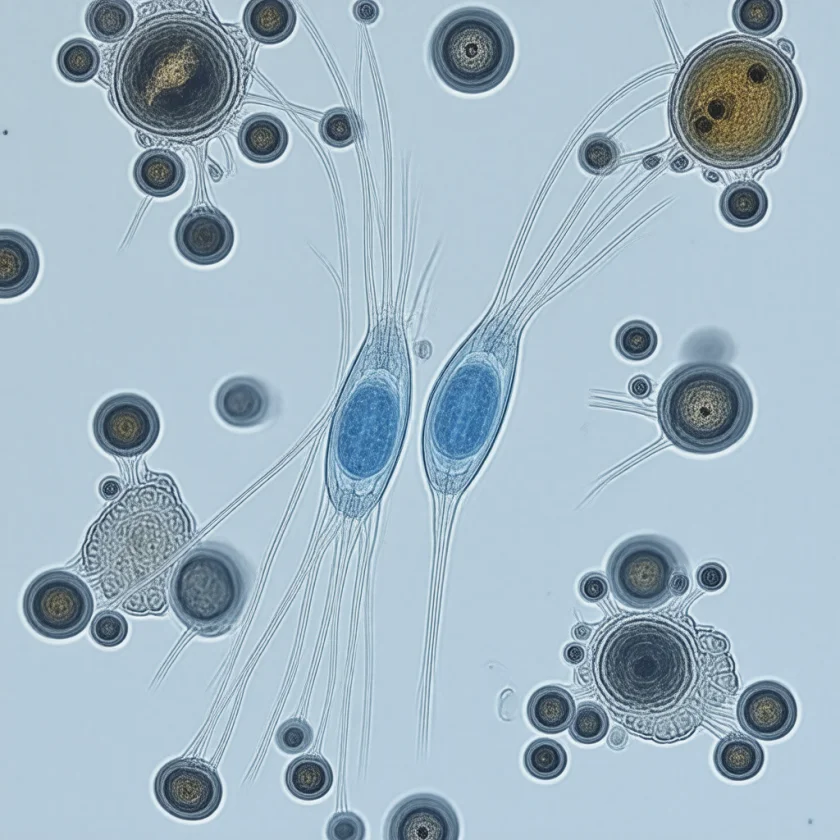
Trichomonas vaginalis is a flagellated parasitic protozoan, typically pear-shaped (pyriform) but occasionally amoeboid, that lives outside the cells of the genitourinary epithelium with a primarily anaerobic lifestyle. Humans are its only known host, and it is transmitted primarily by sexual intercourse. It does not appear to have a cyst form and does not survive well in the external environment, although it can survive outside the human body in a wet environment for more than three hours (Kissinger 2015, PubMed PMID: 26242185).
The individual organism is 10–20 μm long and 2–14 μm wide. Four flagella project from the front of the cell, and one more extends backwards to the middle of the organism, forming an undulating membrane. T. vaginalis primarily infects the squamous epithelium of the genital tract: it resides in the female lower genital tract and in the male urethra and prostate, where it replicates by binary fission. Incubation time is generally between 4 and 28 days (Kissinger 2015, PubMed PMID: 26242185).
The World Health Organization's 2016 estimates put global prevalence at 5.3% in women and 0.6% in men, with 156.0 million incident cases (95% uncertainty interval 103.4–231.2 million) (Rowley 2019, PubMed PMID: 31384073). In the United States, the 2021 CDC guideline, as corrected by its 2023 erratum, cites approximately 2.6 million infected persons; population-based prevalence is 2.1% among females and 0.5% among males, highest among Black females (9.6%) and Black males (3.6%) (CDC 2021, PubMed PMID: 34292926).
2. Why It Is So Widespread
Several factors described in the guideline and reviews help explain how common T. vaginalis is:
- Few or no symptoms: The CDC guideline states that the majority of persons with trichomoniasis (70%–85%) have minimal or no genital symptoms, and that untreated infections might last from months to years (CDC 2021, PubMed PMID: 34292926). A review gives 85% of infected women and 77% of infected men as asymptomatic, and notes that infection may persist for months or even years in women but generally lasts less than 10 days in men (Kissinger 2015, PubMed PMID: 26242185).
- Repeat infections: Repeat infections are common, at 5–31% in the studies one review cites; possible sources are reinfection from an untreated partner, infection from a new partner, or treatment failure (Kissinger 2015, PubMed PMID: 26242185).
- Non-sexual transmission: This is thought to be rare, but the same review describes evidence of non-sexual transmission via fomites and possibly water (Kissinger 2015, PubMed PMID: 26242185). The guideline notes transmission through infected vaginal fluids or fomites among women who have sex with women (CDC 2021, PubMed PMID: 34292926).
- Not reportable, no general screening: Trichomoniasis is not a reportable disease, and no recommendations are available for general screening, so its epidemiology comes largely from surveillance studies (CDC 2021, PubMed PMID: 34292926).
- Risk factors: The guideline lists having two or more sex partners during the previous year, having less than a high school education, and living below the national poverty level; women with bacterial vaginosis are at higher risk, and rates among incarcerated women range from 9% to 32% (CDC 2021, PubMed PMID: 34292926).
3. Symptoms in Women
Most infected women have minimal or no symptoms (see above); a review notes that one third of asymptomatic women become symptomatic within 6 months (Kissinger 2015, PubMed PMID: 26242185). Symptoms described in the guideline and the review include:
- Vaginal discharge: The guideline describes discharge that can be diffuse, malodorous, or yellow-green, with or without vulvar irritation (CDC 2021, PubMed PMID: 34292926).
- Itching and vulvar irritation (Kissinger 2015, PubMed PMID: 26242185).
- Dysuria: burning or pain during urination (Kissinger 2015, PubMed PMID: 26242185).
- Abdominal pain (Kissinger 2015, PubMed PMID: 26242185).
The review gives normal vaginal pH as 4.5 and states that with infection it increases markedly, often to above 5. Colpitis macularis, the “strawberry cervix”, is seen in about 5% of women, rising to nearly 50% with colposcopy. Infection can also involve the adnexa, endometrium, and Skene and Bartholin glands (Kissinger 2015, PubMed PMID: 26242185).
4. Symptoms (or Lack Thereof) in Men
A review gives 77% of infected men as asymptomatic; in those with symptoms, they include urethral discharge and dysuria (Kissinger 2015, PubMed PMID: 26242185). The CDC guideline states that men with trichomoniasis sometimes have symptoms of urethritis, epididymitis or prostatitis (CDC 2021, PubMed PMID: 34292926), and the review adds decreased sperm cell motility (Kissinger 2015, PubMed PMID: 26242185).
The guideline states that male partners of women with trichomoniasis are likely to have infection, while prevalence among men who have sex with men is low (CDC 2021, PubMed PMID: 34292926). Reinfection from an untreated partner is one of the possible sources of a repeat positive test after treatment, alongside a new partner and treatment failure (Kissinger 2015, PubMed PMID: 26242185).
5. Complications — HIV Risk and Preterm Birth
- HIV acquisition and shedding: The 2021 CDC guideline states that T. vaginalis infection is associated with a 1.5-fold increased risk of HIV acquisition and with increased HIV vaginal shedding, which is reduced with treatment among women without viral suppression (CDC 2021, PubMed PMID: 34292926). In a prospective study of 1,335 HIV-negative women in Mombasa, Kenya, trichomoniasis was associated with a 1.52-fold (95% CI 1.04–2.24) increased risk of HIV-1 acquisition after adjustment for confounding factors (McClelland 2007, PubMed PMID: 17262712). In a New Orleans clinic study of women with HIV, those effectively treated for T. vaginalis were less likely to shed HIV vaginally 3 months after treatment than at baseline (relative risk 0.34) (Kissinger 2009, PubMed PMID: 19008776).
- Pregnancy outcomes: A 2014 meta-analysis of 11 studies associated infection in pregnancy with preterm birth (relative risk 1.42; 9 studies, 81,101 women), preterm premature rupture of membranes (1.41) and small-for-gestational-age infants (1.51) (Silver 2014, PubMed PMID: 24825333). Whether treatment changes these outcomes is less clear. In a randomized trial of 617 pregnant women with asymptomatic trichomoniasis, two 2 g doses of metronidazole 48 hours apart at 16–23 weeks, repeated at 24–29 weeks, cleared infection in 92.6% versus 35.4% with placebo, but delivery before 37 weeks occurred in 19.0% versus 10.7% (relative risk 1.8); the authors concluded that treating asymptomatic pregnant women does not prevent preterm delivery (Klebanoff 2001, PubMed PMID: 11519502). The CDC guideline notes that trial's limitations, including an atypical metronidazole regimen, and states that symptomatic pregnant women, regardless of pregnancy stage, should be tested and treated (CDC 2021, PubMed PMID: 34292926).
- Cancer associations: The guideline cites a meta-analysis associating T. vaginalis with a 2.1-fold increased risk of cervical cancer, and another meta-analysis of six studies that found a slightly elevated but not statistically significant association with prostate cancer (CDC 2021, PubMed PMID: 34292926).
6. Diagnosis
The 2021 CDC guideline states that diagnostic testing for T. vaginalis should be performed for women seeking care for vaginal discharge, and describes these options (CDC 2021, PubMed PMID: 34292926):
- Nucleic acid amplification tests (NAATs): NAATs detect more infections than wet-mount microscopy among women. The guideline gives sensitivities of 95.3%–100% and specificities of 95.2%–100% for one FDA-cleared transcription-mediated amplification assay, and similar figures for other cleared molecular assays; several are cleared only for specimens from women. It states that these more sensitive molecular tests should be used in conjunction with a negative wet mount when possible (CDC 2021, PubMed PMID: 34292926).
- Wet-mount microscopy: Inexpensive and done at the point of care, but with low sensitivity (44%–68%) compared with culture; sensitivity falls to 20% within 1 hour after collection (CDC 2021, PubMed PMID: 34292926).
- Rapid antigen tests: One point-of-care antigen-detection test on clinician-obtained vaginal specimens gives results in about 10–15 minutes, with sensitivities of 82%–95% and specificity of 97%–100%; the guideline states it should not be used with men because of low sensitivity (38%) (CDC 2021, PubMed PMID: 34292926). In a study of 330 adolescent women, the rapid antigen test detected 82% of infections against a composite reference standard, compared with 50.8% for wet mount and 98.4% for transcription-mediated amplification (Huppert 2007, PubMed PMID: 17578778).
- Culture: Considered the most sensitive method before molecular tests became available; the guideline gives sensitivity of 44%–75%. Culture is necessary for drug-susceptibility testing (CDC 2021, PubMed PMID: 34292926).
- Pap smear: The guideline states that neither conventional nor liquid-based Pap smears are considered diagnostic tests for trichomoniasis, and that women with T. vaginalis identified on a Pap smear should be retested with sensitive diagnostic tests and treated if infection is confirmed (CDC 2021, PubMed PMID: 34292926).
7. Treatment (Metronidazole, Tinidazole)
The 2021 CDC guideline states that the nitroimidazoles are the only class of medications with clinically demonstrated efficacy against T. vaginalis, and lists these regimens (CDC 2021, PubMed PMID: 34292926):
- Women — recommended: metronidazole 500 mg orally twice daily for 7 days
- Men — recommended: metronidazole 2 g orally in a single dose
- Women and men — alternative: tinidazole 2 g orally in a single dose
The 7-day regimen for women rests on a multicentre randomized trial in 623 HIV-uninfected, non-pregnant women at three US sexual health clinics: 11% (34 of 312) in the 7-day group were T. vaginalis positive at the test-of-cure visit 4 weeks after treatment, compared with 19% (58 of 311) after a single 2 g dose (relative risk 0.55) (Kissinger 2018, PubMed PMID: 30297322). The guideline states that no published randomized trials compare these doses among men (CDC 2021, PubMed PMID: 34292926).
The guideline describes tinidazole as usually more expensive than metronidazole, reaching higher levels in serum and the genitourinary tract, with a longer half-life (12.5 versus 7.3 hours) and fewer gastrointestinal side effects. Recommended metronidazole regimens have produced cure rates of approximately 84%–98% and the tinidazole regimen approximately 92%–100%, and randomized trials comparing single 2 g doses found tinidazole equivalent or superior to metronidazole. Metronidazole gel does not reach therapeutic levels in the urethra and perivaginal glands and, being less efficacious than oral metronidazole, is not recommended (CDC 2021, PubMed PMID: 34292926).
Both drugs are 5-nitroimidazoles. T. vaginalis has hydrogenosomes in place of mitochondria, and the hydrogenosomal pathway linked to ferredoxin-mediated electron transport is responsible for activating these drugs inside the parasite (Kulda 1999, PubMed PMID: 10221623).
Both US labels carry an alcohol warning: the metronidazole label describes a disulfiram-like reaction (abdominal cramps, nausea, vomiting, headaches and flushing) and lists stopping alcohol and products containing propylene glycol during and for at least three days after therapy, and the tinidazole label gives the same three-day window. A 2020 systematic review concluded that the disulfiram-like reaction, though classically associated with metronidazole, occurs with uncertain frequency and varied severity (Mergenhagen 2020, PubMed PMID: 31871085). The guideline states that persons with trichomoniasis should be advised to abstain from sex until they and their sex partners are treated and any symptoms have resolved (CDC 2021, PubMed PMID: 34292926).
The guideline states that metronidazole resistance occurs in 4%–10% of cases of vaginal trichomoniasis, that tinidazole resistance is less well studied but was present in 1% of infections in one study, and that more isolates have shown susceptibility to tinidazole than to metronidazole (CDC 2021, PubMed PMID: 34292926). A review gives in vitro resistance of 2–5% and treatment failure of 7–10%, higher among women with HIV (Kissinger 2015, PubMed PMID: 26242185). The guideline's regimens for persistent infection and CDC drug-resistance testing are described on the Metronidazole and Tinidazole page.
8. Partner Treatment and Reinfection
The CDC guideline states that concurrent treatment of all sex partners is vital for preventing reinfections and that current partners should be referred for presumptive therapy (CDC 2021, PubMed PMID: 34292926).
Expedited partner therapy (EPT) means giving the patient medication or a prescription to pass to a partner without the partner being examined. For trichomoniasis, the guideline states that EPT might have a role and can be used in states where permissible by law, and that no partner management intervention has been demonstrated to be superior in reducing reinfection rates (CDC 2021, PubMed PMID: 34292926). A review describes one randomized trial in which partner treatment with 2 g tinidazole gave a more than 4-fold reduction in repeat infections among infected women, while two studies using 2 g metronidazole for male partners found no effect or a borderline effect (Kissinger 2015, PubMed PMID: 26242185).
Because of the high rate of reinfection among women, the guideline recommends retesting all sexually active women approximately 3 months after initial treatment (wording as corrected by the 2023 erratum), regardless of whether they believe their sex partners were treated, or whenever they next seek care within 12 months if retesting at 3 months is not possible. It states that data are insufficient to support retesting men after treatment (CDC 2021, PubMed PMID: 34292926).
Key Research Papers
Studies, reviews and the guideline cited on this page.
- Workowski KA, Bachmann LH, Chan PA, et al. Sexually Transmitted Infections Treatment Guidelines, 2021. MMWR Recommendations and Reports. 2021;70(4):1–187. — doi:10.15585/mmwr.rr7004a1
- Kissinger P. Trichomonas vaginalis: a review of epidemiologic, clinical and treatment issues. BMC Infectious Diseases. 2015;15:307. — PubMed PMID: 26242185
- McClelland RS, Sangare L, Hassan WM, et al. Infection with Trichomonas vaginalis increases the risk of HIV-1 acquisition. Journal of Infectious Diseases. 2007;195(5):698–702. — PubMed PMID: 17262712
- Schwebke JR, Burgess D. Trichomoniasis. Clinical Microbiology Reviews. 2004;17(4):794–803. — PubMed PMID: 15489349
- Muzny CA, Schwebke JR. The clinical spectrum of Trichomonas vaginalis infection and challenges to management. Sexually Transmitted Infections. 2013;89(6):423–425. — PubMed PMID: 23543252
- Rowley J, Vander Hoorn S, Korenromp E, et al. Chlamydia, gonorrhoea, trichomoniasis and syphilis: global prevalence and incidence estimates, 2016. Bulletin of the World Health Organization. 2019;97(8):548–562P. — PubMed PMID: 31384073
- Silver BJ, Guy RJ, Kaldor JM, Jamil MS, Rumbold AR. Trichomonas vaginalis as a cause of perinatal morbidity: a systematic review and meta-analysis. Sexually Transmitted Diseases. 2014;41(6):369–376. — PubMed PMID: 24825333
- Klebanoff MA, Carey JC, Hauth JC, et al. Failure of metronidazole to prevent preterm delivery among pregnant women with asymptomatic Trichomonas vaginalis infection. New England Journal of Medicine. 2001;345(7):487–493. — PubMed PMID: 11519502
- Kissinger P, Muzny CA, Mena LA, et al. Single-dose versus 7-day-dose metronidazole for the treatment of trichomoniasis in women: an open-label, randomised controlled trial. Lancet Infectious Diseases. 2018;18(11):1251–1259. — PubMed PMID: 30297322
- Kissinger P, Amedee A, Clark RA, et al. Trichomonas vaginalis treatment reduces vaginal HIV-1 shedding. Sexually Transmitted Diseases. 2009;36(1):11–16. — PubMed PMID: 19008776
- Huppert JS, Mortensen JE, Reed JL, et al. Rapid antigen testing compares favorably with transcription-mediated amplification assay for the detection of Trichomonas vaginalis in young women. Clinical Infectious Diseases. 2007;45(2):194–198. — PubMed PMID: 17578778
- Kulda J. Trichomonads, hydrogenosomes and drug resistance. International Journal for Parasitology. 1999;29(2):199–212. — PubMed PMID: 10221623
- Mergenhagen KA, Wattengel BA, Skelly MK, Clark CM, Russo TA. Fact versus fiction: a review of the evidence behind alcohol and antibiotic interactions. Antimicrobial Agents and Chemotherapy. 2020;64(3):e02167-19. — PubMed PMID: 31871085