Diphyllobothrium (Fish Tapeworm)
Diphyllobothrium is the broad fish tapeworm — and it holds a startling record: it is the largest tapeworm that infects humans, a flat, ribbon-like worm that can grow to 10 metres (about 30 feet) long, and occasionally longer, coiled inside the small intestine. People catch it in one specific way: by eating raw or undercooked freshwater fish, or fish that swim between the sea and freshwater to spawn (salmon and trout among them). The illness it causes is called diphyllobothriasis. The surprising truth is that most people who carry this enormous worm feel little or nothing — but a minority develop a very specific problem, because the worm quietly steals their vitamin B12. This page explains what the fish tapeworm is, how it travels from a lake into a person, what it does (and mostly does not do) to the body, the classic B12 connection, and how a single dose of medicine and simple food safety put an end to it.
Table of Contents
1. What Is Diphyllobothrium?
Diphyllobothrium is a genus of large flatworms — tapeworms — whose adults live in the intestines of fish-eating mammals, including humans. The best-known species, Diphyllobothrium latum, is often simply called the broad fish tapeworm or the broad tapeworm, and it is the parasite behind most classic descriptions of the disease. Several close relatives infect people too, including Diphyllobothrium nihonkaiense (linked to Pacific salmon), Diphyllobothrium dendriticum, and the marine species now usually called Adenocephalus pacificus, formerly Diphyllobothrium pacificum.
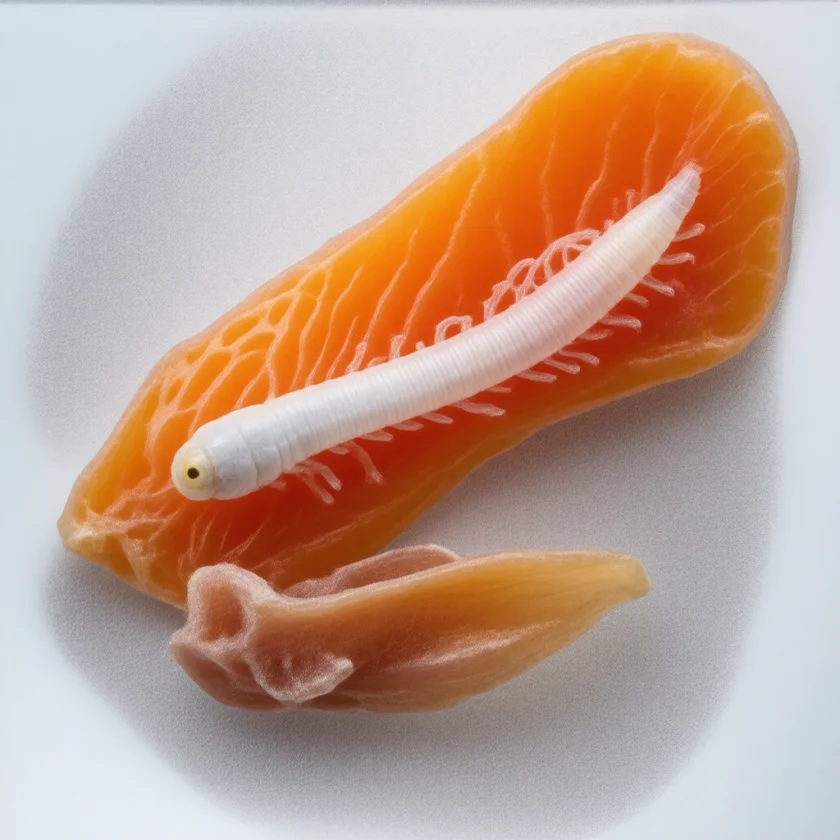
What sets this worm apart is sheer size. Diphyllobothrium latum is the longest tapeworm known to infect humans, routinely reaching several metres and capable of growing to 10 metres or more. Its body is a long chain of thousands of segments, called proglottids — a single worm may carry three thousand or more — each of which matures, fills with eggs, and helps shed millions of eggs a day into the host's gut. At the front end is a small, slender head, the scolex, that does not grip with hooks or round suckers. Instead it has two long, slit-like grooves called bothria that clamp onto the intestinal lining like a pair of pincers. That two-grooved head is exactly what the name means: di-phyllo-bothrium, "two-leaf groove."
Despite its intimidating length, the fish tapeworm is not a flesh-eater and does not burrow into organs. It is a passive resident of the small intestine, bathing in the partly digested food flowing past and absorbing nutrients directly through its skin. For that reason a single worm — and most infections involve just one — often causes remarkably little trouble. The important exceptions, covered below, come from its size, from the segments it sheds, and from one nutrient it is unusually good at absorbing.
2. Life Cycle
The fish tapeworm has one of the more elaborate journeys in human parasitology, passing through water and two different animal hosts before it can reach a person. Understanding that chain is the key to understanding both how people get infected and how to stop it.
It begins with eggs. An adult worm in a person's (or a bear's, or a dog's) intestine sheds eggs that leave the body in stool. To continue, those eggs must reach fresh water — a lake or slow river. In the water, over a couple of weeks, each egg develops and hatches into a tiny, ciliated swimming larva called a coracidium.
That swimming larva must then be eaten by the first intermediate host: a copepod, one of the microscopic crustaceans that drift through lake water as part of the plankton. Inside the copepod, the larva grows into the next stage, the procercoid. The chain continues when a small fish — a minnow, perch, or young whitefish — swallows the infected copepod. In the fish, the parasite matures into the plerocercoid, the stage that is actually infective to humans, burrowing into the fish's muscle and organs.
Here the story often lengthens. When a larger predatory fish — a pike, a big perch, a burbot, a salmon, or a trout — eats the smaller infected fish, the plerocercoid larvae simply move into the predator and wait, concentrating in the flesh of the fish that people are most likely to catch and eat. The final step closes the loop: a human eats that raw or undercooked fish. The plerocercoid survives the stomach, reaches the small intestine, anchors its two-grooved head to the wall, and begins adding segments. Within about three to six weeks the worm is mature and shedding eggs of its own, ready to start the cycle again if those eggs find their way back to a lake.
3. How People Get It
There is only one way to catch the fish tapeworm: by eating the raw or undercooked flesh of an infected fish. It does not spread from person to person, it is not caught from water you drink, and you cannot get it from touching someone who has it. Every human case traces back to a plerocercoid larva living in fish muscle that was never heated or frozen enough to kill it.
The fish involved are freshwater and anadromous species — the anadromous ones being fish such as salmon that hatch in freshwater, live in the sea, and return upriver to spawn, picking up the parasite during their freshwater life. Classic culprits include pike, perch, burbot, whitefish, salmon, and trout. The plerocercoid is a small, whitish larva in the flesh, easily missed by anyone filleting a fish.
What turns an infected fish into an infected person is a dish that skips real cooking. Around the world the parasite rides in on:
- Sushi and sashimi made with freshwater or salmon-family fish.
- Ceviche and other "cooked-in-acid" dishes — the lime or vinegar changes texture but does not reliably kill the larva.
- Gefilte fish in the traditional style, where the cook tastes the raw fish mixture while seasoning it — a route so recognized it earned the old nickname "Jewish housewife's disease."
- Cold-smoked, lightly salted, or marinated fish such as gravlax and some smoked salmon, when the process never brings the flesh to a killing temperature.
- Home-caught fish eaten raw or barely seared by anglers, and undercooked fish liver or roe.
Because raw-fish cuisine has spread far beyond the regions where it began, cases now appear in cities and countries that historically never saw the parasite. The worm has not become more common in the wild so much as the global appetite for raw fish has given it more chances to reach a human plate.
4. Symptoms & Disease
The most honest thing to say about diphyllobothriasis is that it is usually mild or completely silent. Many people carry a large worm for years and never suspect it. When symptoms do occur, they tend to be vague and easy to blame on ordinary indigestion:
- Abdominal discomfort, cramping, or a bloated, full feeling.
- Mild diarrhea or irregular bowel habits.
- Nausea, reduced appetite, or unexplained tiredness.
- Sometimes weight loss despite a normal diet.
For many people the first real clue is not a symptom at all but a sight: passing pale, ribbon-like segments in the stool. Because Diphyllobothrium sheds chains of proglottids rather than single segments, what appears can look like a length of flat, cream-colored tape — alarming, but not dangerous in itself. Finding it is often what finally sends a person to the doctor and to the correct diagnosis.
Serious complications are uncommon and generally tied to a very heavy or very long worm. In rare cases the sheer bulk of the tapeworm, or a tangle of shed segments, can contribute to intestinal obstruction, and there are rare reports of segments migrating into the biliary tract. The single most important consequence, however, is not obstruction but a nutritional one — the vitamin B12 problem described in the next section — and even that develops in only a minority of those infected.
5. The Vitamin B12 Connection
This is the fact the fish tapeworm is famous for, and the reason it appears in every medical textbook: Diphyllobothrium latum can cause vitamin B12 deficiency. It is the classic, almost unique example of a parasite that gives its host a nutrient deficiency by simply eating the nutrient first.
Here is how it works. Vitamin B12 is essential for making healthy red blood cells and for the nervous system, and the body can only absorb it after it binds to a helper protein called intrinsic factor in the stomach and gut. The fish tapeworm sits high in the small intestine — exactly where that B12 would normally be absorbed — and it is extraordinarily efficient at taking up B12 for its own use. A large worm can compete for so much of the vitamin, and even strip it away from intrinsic factor, that little is left for the person hosting it.
In a minority of infected people — especially those with a heavy, long-standing worm or an already-marginal B12 intake — this competition drains the body's B12 stores enough to cause a megaloblastic anemia, in which the bone marrow produces large, abnormal, poorly functioning red blood cells. Because the anemia looks identical to the classic pernicious anemia of autoimmune B12 deficiency, it earned the name "tapeworm pernicious anemia." When it is severe, the same B12 shortage can produce the neurological signs of deficiency — numbness, tingling, balance problems, and difficulty concentrating.
It is important to keep this in perspective. Most people with the fish tapeworm never become anemic. Overt tapeworm pernicious anemia was most often documented decades ago in heavily affected populations, notably in Finland, where the physician Bertel von Bonsdorff studied it in detail. Today it is uncommon, but the mechanism remains a genuine risk, which is why doctors who diagnose diphyllobothriasis will often check a B12 level and a blood count — and why treating the worm, plus replacing B12 when it is low, fully reverses the problem.
6. Who's at Risk & Geography
The map of the fish tapeworm is really a map of where people eat raw or lightly prepared freshwater and salmon-family fish. Wherever that habit meets lakes and rivers carrying the parasite, human cases follow. Historically and today, the main regions include:
- Scandinavia and the Baltic — Finland, the Baltic states, and their lake districts, the heartland of the classic Diphyllobothrium latum and of the old B12-anemia studies.
- Russia and Siberia — vast lake and river systems where infection has long been common.
- The subalpine lakes of Europe — the large lakes of northern Italy, Switzerland, and France, where the parasite has notably re-emerged in recent decades alongside raw-perch and carpaccio dishes.
- Japan and the Pacific — where Diphyllobothrium nihonkaiense, carried by wild Pacific salmon, is a frequent cause of infection in a culture built around sushi and sashimi.
- North America — the Great Lakes region, plus lakes and rivers of Alaska and Canada, especially among communities that eat locally caught freshwater fish or salmon raw.
- The Andean lakes of South America — highland lakes of Chile, Peru, and Argentina; along the Pacific coast, the marine species Adenocephalus pacificus is linked to ceviche.
Two modern forces are reshaping this picture. First, the worldwide popularity of raw-fish cuisine means cases now turn up far from any endemic lake, carried in imported fish. Second, better molecular testing has shown that several distinct species — not just one — infect humans in different regions, which is changing how the disease is tracked and named.
7. Diagnosis
Diagnosing the fish tapeworm is usually straightforward once someone thinks to look, and it rests on examining the stool. There are two main findings.
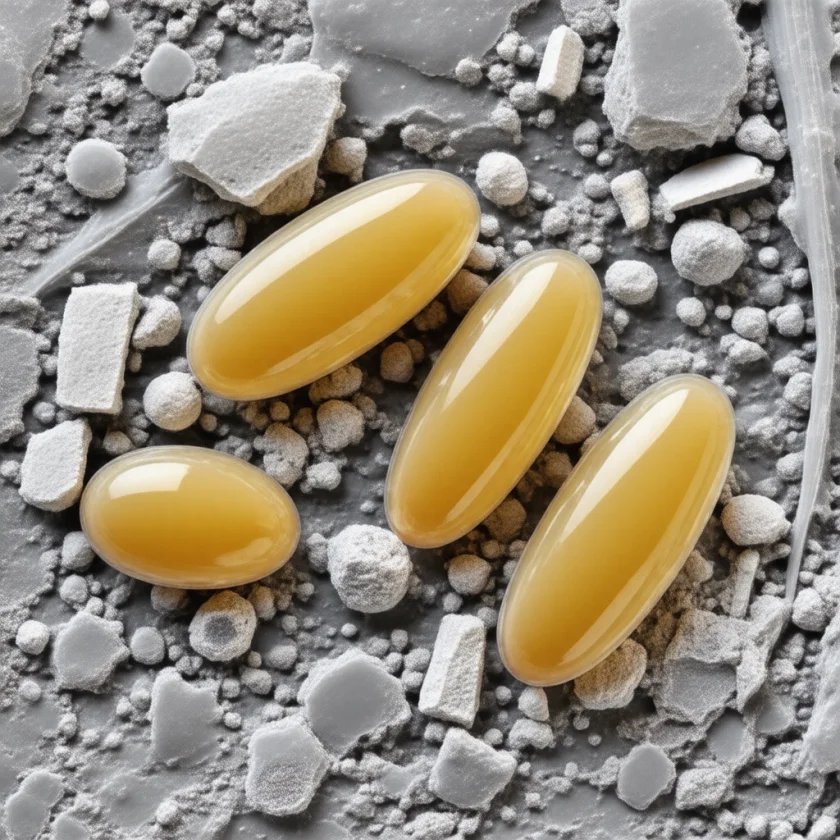
The most common is the egg. A stool ova-and-parasite (O&P) examination under the microscope reveals the characteristic Diphyllobothrium egg: yellow-brown, oval, and operculate — that is, fitted with a tiny lid at one end, and often with a small knob at the other. Because a mature worm sheds eggs in enormous numbers, they are usually easy to find on a single sample, unlike some parasites that require repeated testing.
The second is the proglottid segment itself. When a person passes a length of ribbon-like tape, the lab can identify it: Diphyllobothrium segments are typically wider than they are long and contain a distinctive central, rosette-shaped uterus, which distinguishes them from the beef and pork tapeworms.
Because several look-alike species infect humans, reference laboratories increasingly use molecular (PCR) testing to identify the exact species from an egg or segment — useful for tracking the source and for research. Finally, when the diagnosis is made, a doctor will often order a blood count and a vitamin B12 level to check for the megaloblastic anemia the worm can cause, since finding and correcting it is part of complete care.
8. Treatment
The good news is that the fish tapeworm, for all its size, is easy to cure. Treatment should be directed by a clinician, but the standard approach is simple and highly effective.
The first-line drug is praziquantel, usually given as a single oral dose. It works by paralysing the worm and disrupting its skin, so that it loses its grip and is passed out of the body. A single dose clears the great majority of infections. Where praziquantel is not the chosen agent, niclosamide is a well-established alternative, also taken as a single dose that acts on the worm within the gut and is barely absorbed into the body.
Because a single worm is the rule, one treatment is usually all it takes. Doctors typically confirm the cure by re-checking the stool a few weeks later, since eggs should stop appearing once the worm is gone. If B12 deficiency and anemia are present, they are treated in parallel with vitamin B12 replacement — often by injection at first — and, importantly, removing the worm stops the ongoing drain, so B12 levels recover and the anemia resolves. There is no need for harsh purging or any special preparation; clearing this enormous parasite is genuinely one of the simpler treatments in parasitology.
9. Prevention
Preventing the fish tapeworm comes down to a single principle: make sure the fish is either properly cooked or properly frozen before it is eaten. The plerocercoid larva living in the flesh cannot survive real heat or deep freezing, so either one breaks the chain completely.
- Cook fish thoroughly. Heating fish to an internal temperature of 63 °C (145 °F) reliably kills the larvae. Fish that flakes and is opaque throughout is cooked; a lightly seared or still-translucent center is not.
- Freeze fish that will be eaten raw. This is the same "sushi-grade" freezing standard used to make fish safe from Anisakis: freezing at −20 °C (−4 °F) for about 7 days, or at a colder −35 °C (−31 °F) for around 15 hours, kills the parasite in the flesh. Reputable sushi restaurants freeze their fish to this standard for exactly this reason.
Just as important is knowing what does not work. Salting, marinating, cold-smoking, and "cooking" in citrus or vinegar are not reliable — they change the flavor and texture of the fish long before they kill the larva inside it. Many infections come precisely from foods people assumed were safe because they tasted "done."
On the community scale, prevention also means keeping human and animal sewage out of lakes and rivers, since the whole cycle depends on eggs reaching fresh water. Good sanitation and wastewater treatment quietly protect the fish, and therefore the people, downstream. For an individual, though, the rule is easy to remember: cook it, or freeze it — and never taste raw freshwater fish.
Key Research Papers
Peer-reviewed reviews, clinical studies, and classic reports on Diphyllobothrium and diphyllobothriasis — covering the biology of the broad tapeworm, its re-emergence with global raw-fish cuisine, how it is diagnosed and treated, and the vitamin B12 deficiency it can cause. Journal names appear as plain text; the year/volume/pages link opens the full citation via DOI.
- Scholz T, Garcia HH, Kuchta R, Wicht B. Update on the Human Broad Tapeworm (Genus Diphyllobothrium), Including Clinical Relevance. Clinical Microbiology Reviews. 2009;22(1):146–160. — the definitive modern review of the parasite, its species, and human disease. — doi:10.1128/CMR.00033-08
- Kuchta R, Serrano-Martínez ME, Scholz T. Pacific Broad Tapeworm Adenocephalus pacificus as a Causative Agent of Globally Reemerging Diphyllobothriosis. Emerging Infectious Diseases. 2015;21(10):1697–1703. — documents the marine, ceviche-linked species spreading worldwide. — doi:10.3201/eid2110.150516
- Scholz T, Kuchta R. Fish-borne, Zoonotic Cestodes (Diphyllobothrium and Relatives) in Cold Climates: A Never-Ending Story of Neglected and (Re)-Emergent Parasites. Food and Waterborne Parasitology. 2016;4:23–38. — reviews why the fish tapeworm is resurging with raw-fish diets. — doi:10.1016/j.fawpar.2016.07.002
- Kuchta R, Brabec J, Kubáčková P, Scholz T. Tapeworm Diphyllobothrium dendriticum (Cestoda) — Neglected or Emerging Human Parasite? PLoS Neglected Tropical Diseases. 2013;7(12):e2535. — on a salmonid-linked species increasingly found in people. — doi:10.1371/journal.pntd.0002535
- Craig P, Ito A. Intestinal Cestodes. Current Opinion in Infectious Diseases. 2007;20(5):524–532. — clinical overview of tapeworm infections including diphyllobothriasis. — doi:10.1097/QCO.0b013e3282ef579e
- Wicht B, Yanagida T, Scholz T, Ito A, Jiménez JA, Brabec J. Multiplex PCR for Differential Identification of Broad Tapeworms (Cestoda: Diphyllobothrium) Infecting Humans. Journal of Clinical Microbiology. 2010;48(9):3111–3116. — the molecular method now used to tell the human-infecting species apart. — doi:10.1128/JCM.00445-10
- Arizono N, Yamada M, Nakamura-Uchiyama F, Ohnishi K. Diphyllobothriasis Associated with Eating Raw Pacific Salmon. Emerging Infectious Diseases. 2009;15(6):866–870. — ties a cluster of infections directly to raw salmon. — doi:10.3201/eid1506.090132
- Dupouy-Camet J, Peduzzi R. Current Situation of Human Diphyllobothriasis in Europe. Euro Surveillance. 2004;9(5):31–35. — the re-emergence of infection around the European subalpine lakes. — doi:10.2807/esm.09.05.00467-en
- Galán-Puchades MT. Human Diphyllobothriasis. The Lancet. 2020;396(10251):755. — a concise modern clinical picture of the infection. — doi:10.1016/s0140-6736(20)31192-2
- von Bonsdorff B. Diphyllobothrium latum as a Cause of Pernicious Anemia. Experimental Parasitology. 1956;5(2):207–230. — the classic account of how the worm competes for vitamin B12. — doi:10.1016/0014-4894(56)90015-7
- von Bonsdorff B. Pernicious Anemia Caused by Diphyllobothrium latum, in the Light of Recent Investigations. Blood. 1948;3(1):91–102. — an early landmark linking the fish tapeworm to megaloblastic anemia. — doi:10.1182/blood.v3.1.91.91
PubMed Topic Searches
Each link opens a live PubMed query so results stay current as new papers are indexed.
- PubMed: Diphyllobothrium latum diphyllobothriasis
- PubMed: Diphyllobothrium and vitamin B12 anemia
- PubMed: Diphyllobothrium nihonkaiense and salmon
- PubMed: Adenocephalus pacificus diphyllobothriosis
- PubMed: Diphyllobothriasis praziquantel treatment
- PubMed: Diphyllobothrium raw fish, sushi, ceviche
- PubMed: Diphyllobothrium re-emergence in Europe
- PubMed: Fish tapeworm freezing and prevention