Liver Cirrhosis
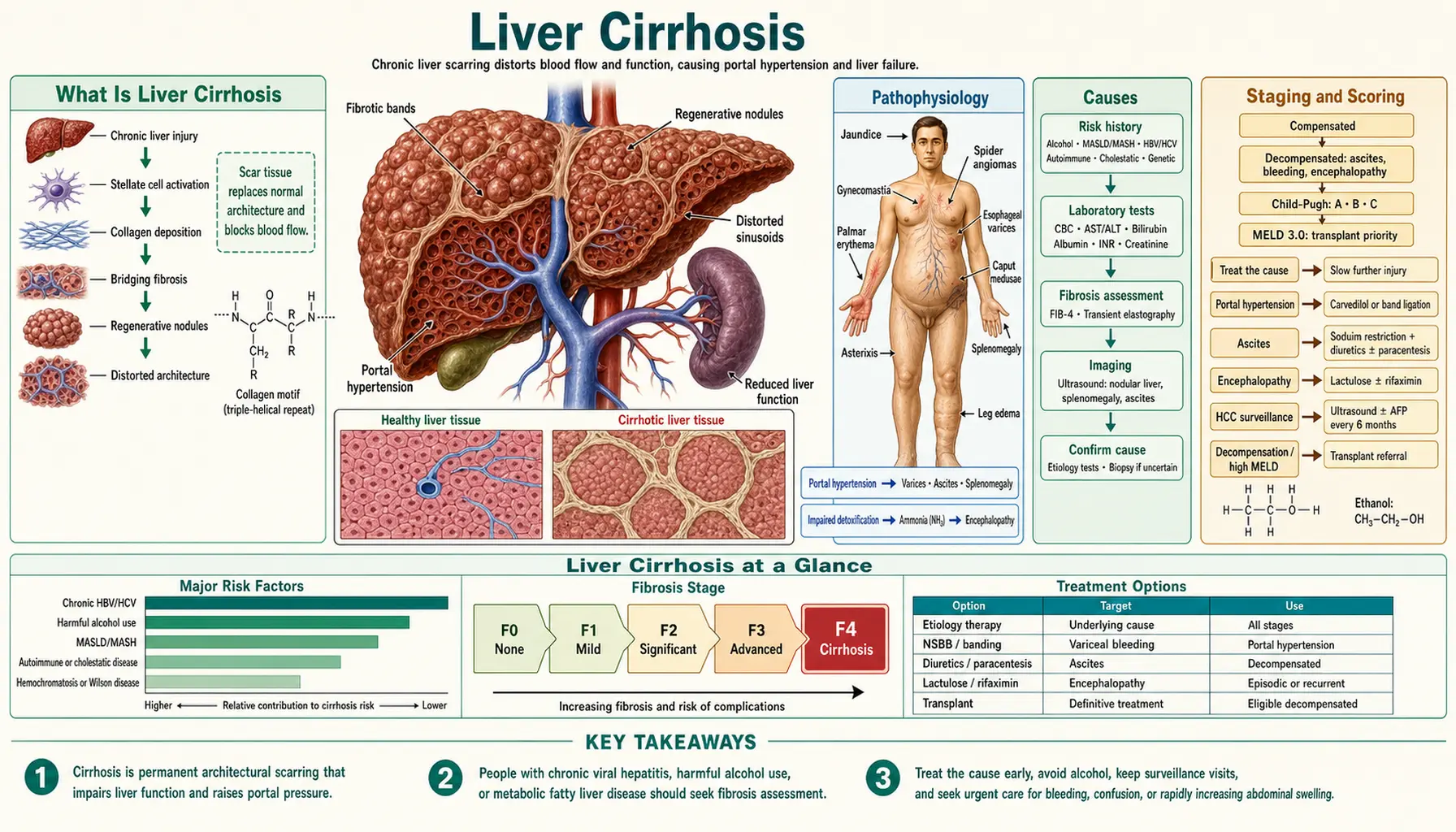
Table of Contents
- What Is Liver Cirrhosis
- Pathophysiology
- Causes
- Staging and Scoring
- Portal Hypertension and Complications
- Hepatocellular Carcinoma Risk
- Diagnosis
- Management of Compensated Cirrhosis
- Liver Transplantation
- Prognosis and Natural History
- Nutritional Support
- Research Papers
- Connections
- Featured Videos
What Is Liver Cirrhosis
Liver cirrhosis is the irreversible end-stage consequence of sustained chronic liver injury. Over months to decades, the normal liver parenchyma — composed of functional hepatocytes arranged in well-ordered lobular plates around central veins — is progressively replaced by dense collagen-rich scar tissue (fibrosis). This fibrotic remodeling distorts the hepatic architecture, encasing islands of regenerating hepatocytes into abnormal regenerative nodules.
The structural consequences are profound. Sinusoidal blood flow is obstructed, driving up pressure in the portal venous system. The loss of normal hepatocyte mass and sinusoidal exchange surface impairs virtually every function the liver performs: synthesis of proteins (albumin, clotting factors, complement), detoxification of ammonia and drugs, metabolism of bilirubin, regulation of glucose, and storage of glycogen and fat-soluble vitamins.
Cirrhosis is defined histologically by three features present simultaneously: bridging fibrosis (bands of scar connecting portal tracts to central veins or to one another), regenerative nodules, and distortion of the normal hepatic lobular architecture. Once established, fibrosis was long considered permanent; however, evidence now shows that with effective removal of the causative insult — particularly viral hepatitis treated with antiviral agents — early cirrhosis can partially regress.
Portal hypertension is the cardinal complication that drives the most dangerous clinical events. When the hepatic venous pressure gradient (HVPG) rises above 10 mmHg, clinically significant portal hypertension (CSPH) is present, and the cascade of ascites, varices, bacterial translocation, and organ failure becomes possible. Cirrhosis remains one of the top 15 leading causes of death worldwide, responsible for approximately 1.3 million deaths per year.
Pathophysiology
The cellular engine of cirrhosis is the hepatic stellate cell (HSC). In the healthy liver, HSCs reside in the space of Disse between hepatocytes and sinusoidal endothelial cells in a quiescent, lipid-droplet-storing state. When the liver is injured — by alcohol metabolites, viral proteins, lipotoxic free fatty acids, copper, iron, or bile acids — damaged hepatocytes and activated Kupffer cells (the liver's resident macrophages) release a cascade of pro-fibrotic mediators. Chief among these is transforming growth factor beta-1 (TGF-β1).
TGF-β1 activates HSCs, converting them into proliferating, contractile, alpha-smooth-muscle-actin-positive myofibroblasts. These activated HSCs are the dominant source of extracellular matrix proteins in the fibrotic liver, secreting excessive amounts of collagen type I and type III, fibronectin, and laminin. Platelet-derived growth factor (PDGF) further drives HSC proliferation, while tissue inhibitors of metalloproteinases (TIMPs) suppress the matrix metalloproteinases (MMPs) that would otherwise degrade this scar.
A key microvascular consequence is capillarization of the hepatic sinusoids. Normal sinusoidal endothelial cells are fenestrated (perforated with pores ~100–200 nm wide) that allow free bidirectional exchange of proteins, lipoproteins, and nutrients between sinusoidal blood and hepatocytes. In cirrhosis, activated HSCs deposit subendothelial collagen in the space of Disse, causing sinusoidal endothelial cells to lose their fenestrae and form a continuous basement membrane. This capillarization profoundly impairs the hepatocyte's ability to take up and process chylomicron remnants, HDL, oxygen, and drugs — even before substantial hepatocyte death has occurred.
As fibrosis progresses (Metavir F1 → F2 → F3 → F4/cirrhosis), intrahepatic vascular resistance rises. The HVPG — measured by wedging a catheter in the hepatic vein and subtracting free hepatic venous pressure from wedged hepatic venous pressure — reflects this resistance. Normal HVPG is less than 5 mmHg. Values above 6 mmHg indicate portal hypertension; above 10 mmHg defines CSPH; above 12 mmHg is the threshold at which esophageal varices are at risk of rupture; values above 20 mmHg predict failure to control acute variceal hemorrhage.
Systemic hemodynamic changes compound hepatic dysfunction. Splanchnic vasodilation — driven by nitric oxide, prostacyclin, and endocannabinoids released by the inflamed portal endothelium — lowers effective arterial blood volume. The kidneys respond with compensatory sodium and water retention via activation of the renin-angiotensin-aldosterone system (RAAS) and antidiuretic hormone (ADH), producing the sodium-avid, fluid-overloaded state that underlies ascites formation.
Causes
Many diseases can drive the chronic hepatocellular injury that culminates in cirrhosis. Identifying the underlying cause is essential because treating the cause can slow, halt, or partially reverse fibrosis progression — and prevents recurrence after transplantation.
- Alcohol-Related Liver Disease (ALD): The most common cause in Western countries. Risk thresholds are approximately 80 g/day of ethanol in men and 40 g/day in women over more than 10 years. Ethanol is converted to acetaldehyde by alcohol dehydrogenase; acetaldehyde forms protein adducts, generates reactive oxygen species, and directly activates HSCs via TGF-β1. Cytokine release from Kupffer cells (particularly TNF-alpha and IL-6) amplifies injury. Only 10–15% of heavy drinkers develop cirrhosis, implicating genetic polymorphisms (PNPLA3, TM6SF2) and nutritional factors.
- Nonalcoholic Fatty Liver Disease / Nonalcoholic Steatohepatitis (NAFLD/NASH): Now the fastest-growing cause globally, driven by the obesity and type 2 diabetes epidemic. Metabolic syndrome (central obesity, insulin resistance, dyslipidemia, hypertension) is the substrate. The "two-hit" and subsequent "multiple parallel hits" models implicate lipotoxicity, mitochondrial dysfunction, gut microbiome dysbiosis, and endoplasmic reticulum stress. Approximately 20% of NASH patients develop cirrhosis over 20 years.
- Chronic Hepatitis C (HCV): A single-stranded RNA flavivirus infecting approximately 58 million people worldwide. HCV is directly cytopathic and drives immune-mediated fibrosis. Without treatment, 20–30% of chronically infected individuals develop cirrhosis over 20–30 years. Direct-acting antivirals (DAAs; sofosbuvir, ledipasvir, velpatasvir, glecaprevir-pibrentasvir) achieve sustained virologic response (SVR) in >95% and can partially reverse early cirrhosis.
- Chronic Hepatitis B (HBV): A DNA hepadnavirus affecting 296 million people globally. HBV can cause cirrhosis and hepatocellular carcinoma even without established cirrhosis — a key distinction from HCV. Antiviral suppression with tenofovir alafenamide or entecavir reduces fibrosis progression and HCC risk.
- Autoimmune Hepatitis (AIH): Interface hepatitis driven by autoreactive T cells targeting hepatocyte antigens. Positive antinuclear antibody (ANA), anti-smooth-muscle antibody (ASMA), elevated IgG. Responds to immunosuppression with prednisone and azathioprine; untreated, progresses to cirrhosis in most patients.
- Primary Biliary Cholangitis (PBC): Chronic cholestatic disease with autoimmune destruction of small intrahepatic bile ducts. Female predominance; anti-mitochondrial antibody (AMA) positive in 95%. Ursodeoxycholic acid (UDCA) slows progression; obeticholic acid for UDCA non-responders.
- Primary Sclerosing Cholangitis (PSC): Fibro-obliterative inflammation of intrahepatic and extrahepatic bile ducts; strong association with inflammatory bowel disease (IBD). No proven medical therapy; inevitable progression toward cirrhosis and increased cholangiocarcinoma risk.
- Hereditary Hemochromatosis: HFE gene mutations (C282Y homozygosity) cause inappropriate iron absorption and deposition in hepatocytes, pancreas, heart, and joints. Iron promotes lipid peroxidation and HSC activation. Regular therapeutic phlebotomy prevents cirrhosis if begun before established fibrosis.
- Wilson's Disease: Autosomal recessive ATP7B gene mutation impairing biliary copper excretion; copper accumulates in liver, brain, and eyes (Kayser-Fleischer rings). Diagnosed by low ceruloplasmin, elevated 24-hour urine copper, and liver copper content on biopsy. Treated with D-penicillamine or trientine chelation; zinc for maintenance.
- Alpha-1-Antitrypsin Deficiency: PiZZ or PiSZ phenotype; misfolded Z-protein accumulates in hepatocytes (periodic acid-Schiff-positive globules) and triggers ER stress. Lung disease (emphysema) co-exists. No specific hepatic therapy beyond liver transplantation for advanced disease.
- Cardiac Cirrhosis (Congestive Hepatopathy): Chronically elevated central venous pressure from right heart failure, constrictive pericarditis, or tricuspid regurgitation causes sinusoidal congestion, centrilobular necrosis, and ultimately fibrosis with a characteristic "nutmeg liver" gross appearance. Treatment targets the underlying cardiac pathology.
Staging and Scoring
Cirrhosis is not a single state but a spectrum with dramatically different prognoses depending on the degree of hepatic decompensation and residual synthetic function. Two scoring systems dominate clinical practice.
Compensated vs. Decompensated Cirrhosis
The most clinically useful initial distinction is between compensated cirrhosis — in which synthetic function is relatively preserved and no major complication has occurred — and decompensated cirrhosis, defined by the occurrence of at least one of the four classical decompensating events: ascites, variceal hemorrhage, hepatic encephalopathy, or jaundice (bilirubin >2 mg/dL). Median survival in compensated cirrhosis exceeds 12 years; once decompensation occurs, median survival drops to approximately 2 years without transplantation.
Child-Pugh Score
Developed in 1964 by Child and Turcotte and modified by Pugh in 1973, the Child-Pugh score assigns 1–3 points to each of five parameters: serum bilirubin, serum albumin, prothrombin time (or INR), degree of ascites, and degree of hepatic encephalopathy. Total scores of 5–6 = Class A (well-compensated, 1-year survival ~100%), 7–9 = Class B (significant compromise, 1-year survival ~80%), 10–15 = Class C (decompensated, 1-year survival ~45%). The Child-Pugh score predicts perioperative mortality in cirrhotic patients and is used in drug prescribing guidelines but is limited by the subjectivity of its encephalopathy and ascites assessments.
MELD Score
The Model for End-Stage Liver Disease (MELD) score was developed by Malinchoc and colleagues at the Mayo Clinic in 2000 and validated in 2001 for liver transplant prioritization. The formula: MELD = 3.78 × ln[bilirubin mg/dL] + 11.2 × ln[INR] + 9.57 × ln[creatinine mg/dL] + 6.43 (with creatinine capped at 4.0 mg/dL). MELD predicts 90-day mortality without transplantation. A MELD of 6 predicts less than 2% 90-day mortality; MELD of 40 predicts approximately 71% 90-day mortality. UNOS uses MELD for organ allocation in the United States (since 2002), prioritizing the sickest patients.
MELD-Na
Hyponatremia is an independent predictor of mortality in cirrhosis beyond what MELD captures. MELD-Na incorporates serum sodium: MELD-Na = MELD + 1.32 × (137 − Na) − [0.24 × MELD × (137 − Na)]. UNOS adopted MELD-Na for allocation in January 2016. Values above 125 mEq/L are capped. MELD-Na has been replaced in some centers by MELD 3.0, which also incorporates sex (addressing the gap in transplant access for women) and creatinine capping changes.
Baveno VII Criteria
The 2021 Baveno VII consensus refines risk stratification in compensated cirrhosis by defining CSPH as HVPG ≥10 mmHg. Non-invasive tests (liver stiffness by FibroScan ≥25 kPa, or liver stiffness 20–25 kPa plus platelet count <150,000/mm³) can rule in CSPH with high accuracy, reducing the need for invasive HVPG measurement. The Baveno VII "safe to avoid endoscopy" criteria (liver stiffness <20 kPa AND platelets >150,000) identify patients with compensated cirrhosis at very low risk of high-risk varices who can be followed without immediate upper endoscopy.
Portal Hypertension and Complications
Portal hypertension is defined as an HVPG above 5 mmHg and is the central driver of nearly every major complication of cirrhosis. The four most clinically significant complications — ascites, variceal hemorrhage, hepatic encephalopathy, and spontaneous bacterial peritonitis — each arise from its hemodynamic and inflammatory consequences.
Ascites
Ascites is the most frequent decompensating event in cirrhosis, occurring in approximately 50% of patients within 10 years of diagnosis. The mechanism is sinusoidal hypertension plus splanchnic vasodilation: portal pressure forces fluid across capillaries into the peritoneal cavity, while RAAS and ADH activation causes renal sodium and water retention, sustaining the fluid accumulation. Initial management involves dietary sodium restriction (<2 g/day) and diuretics — typically spironolactone (to counteract aldosterone-driven sodium retention) combined with furosemide (to increase tubular sodium excretion). Refractory ascites — defined as ascites unresponsive to maximum diuretic doses or complicated by diuretic-induced complications — is managed with serial large-volume paracentesis (LVP), with intravenous albumin infusion at 6–8 g per liter of ascites removed to prevent post-paracentesis circulatory dysfunction. Transjugular intrahepatic portosystemic shunt (TIPS) reduces portal pressure and resolves ascites in 70–80% of refractory cases but risks precipitating hepatic encephalopathy.
Esophageal and Gastric Varices
As HVPG rises above 10–12 mmHg, portosystemic collateral vessels develop — most critically in the lower esophagus and gastric fundus, where dilated submucosal veins (varices) protrude into the lumen and are at risk of rupture. Acute variceal hemorrhage carries a 6-week mortality of 15–20% in contemporary cohorts. Management involves pharmacologic splanchnic vasoconstriction (terlipressin or somatostatin/octreotide) plus endoscopic variceal band ligation (EVL). Primary prophylaxis in patients with medium or large varices uses non-selective beta-blockers (NSBBs; propranolol, nadolol, or carvedilol) to reduce HVPG by decreasing cardiac output and splanchnic blood flow; carvedilol additionally blocks alpha-adrenergic vasodilation and may reduce HVPG more effectively than traditional NSBBs. TIPS is used for refractory or early-rebleed scenarios.
Hepatic Encephalopathy
Hepatic encephalopathy (HE) is a neuropsychiatric syndrome arising from the liver's failure to clear gut-derived toxins, principally ammonia (NH₃). Portal hypertension allows ammonia — generated by bacterial urease and intestinal glutaminase — to bypass the liver via portosystemic collaterals and reach the brain, where astrocytes metabolize it to glutamine, causing osmotic swelling and cerebral edema in severe cases. HE ranges from minimal HE (detectable only on psychometric testing) to overt HE (Grades I–IV by West Haven criteria) to acute liver failure with cerebral herniation. Treatment: lactulose (nonabsorbable disaccharide reduces colonic pH and ammonia production; titrated to 2–3 soft stools per day) is first-line; rifaximin (minimally absorbed antibiotic that reduces ammonia-producing bacteria) reduces risk of recurrent overt HE by 58% (Bass et al., NEJM 2010). NSBBs must be used cautiously in HE patients with low blood pressure (MAP <75 mmHg), as reducing cardiac output in already vasodilated cirrhotics can worsen organ perfusion.
Spontaneous Bacterial Peritonitis (SBP)
SBP is an infection of ascitic fluid without an intra-abdominal surgical source, arising from bacterial translocation across a compromised intestinal barrier. Diagnosis requires ascitic fluid polymorphonuclear leukocyte (PMN) count ≥250 cells/mm³ on diagnostic paracentesis, regardless of culture results (cultures are negative in up to 40% of cases). Common organisms are Escherichia coli, Klebsiella pneumoniae, and streptococcal species. Treatment: intravenous cefotaxime 2 g every 8 hours for 5–7 days (or oral fluoroquinolone in uncomplicated cases). Intravenous albumin (1.5 g/kg at diagnosis, 1.0 g/kg at 48 hours) reduces hepatorenal syndrome and in-hospital mortality. Long-term secondary prophylaxis with norfloxacin 400 mg/day or trimethoprim-sulfamethoxazole significantly reduces recurrence risk. Quinolone-resistant SBP is increasing as prophylaxis becomes widespread.
Hepatorenal Syndrome (HRS)
HRS is a form of functional acute kidney injury (AKI) in cirrhosis, arising from severe renal vasoconstriction in response to splanchnic vasodilation-induced reduction of effective arterial blood volume. HRS-AKI (formerly HRS Type 1) is defined as an AKI occurring in cirrhosis with ascites meeting International Club of Ascites (ICA) criteria, after exclusion of other causes (hypovolemia, nephrotoxins, parenchymal kidney disease). The CONFIRM trial (Wong et al., NEJM 2021) demonstrated that terlipressin (a vasopressin analog that vasoconstricts splanchnic circulation) combined with albumin significantly increased rates of HRS reversal (29.1% vs 15.8% with placebo; p<0.001) and reduced the need for renal replacement therapy, supporting its FDA approval in 2022 for HRS-AKI. Norepinephrine or midodrine-octreotide are alternatives where terlipressin is unavailable. TIPS can be considered in carefully selected HRS patients. Definitive treatment is liver transplantation.
Hepatopulmonary Syndrome (HPS)
HPS occurs in 5–32% of cirrhotic patients and is defined by the triad of liver disease, intrapulmonary vascular dilatation (IPVD), and arterial hypoxemia (PaO₂ <80 mmHg on room air). Intrapulmonary arteriovenous shunting causes ventilation-perfusion mismatch and diffusion impairment. A characteristic finding is orthodeoxia (worsening hypoxemia on standing, because gravity-dependent intrapulmonary shunts are more activated in the upright position) and platypnea (dyspnea worsening on standing). Diagnosis is confirmed by contrast-enhanced echocardiography (agitated saline microbubbles appearing in the left heart after 3–5 cardiac cycles). Patients with PaO₂ <60 mmHg receive automatic MELD exception points and priority listing for liver transplantation, which resolves HPS in 80–85% of cases.
Hepatocellular Carcinoma Risk
Cirrhosis is the dominant risk factor for hepatocellular carcinoma (HCC), conferring an annual incidence rate of 1–4% depending on the underlying etiology. HBV-related and HCV-related cirrhosis carry the highest HCC risk; NASH-related cirrhosis carries a lower but rapidly growing absolute burden given the prevalence of NAFLD. HCC can also arise in HBV-infected patients without established cirrhosis — a biological distinction from other etiologies.
HCC surveillance with liver ultrasound and serum alpha-fetoprotein (AFP) every 6 months is recommended for all cirrhotic patients by AASLD and EASL guidelines. Ultrasound sensitivity for early HCC is 47–84% (lower in obese patients with NASH); adding AFP improves sensitivity to approximately 63% with only modest reduction in specificity. For patients in whom ultrasound is inadequate (BMI >35, limited acoustic window), abbreviated MRI protocols are emerging as alternatives.
When a liver lesion is detected, multiphasic CT or gadolinium-enhanced MRI is used for characterization. The Liver Imaging Reporting and Data System (LI-RADS) standardizes HCC assessment: LR-1 (definitely benign) to LR-5 (definitely HCC). The hallmark imaging pattern of HCC is arterial phase hyperenhancement followed by portal venous or delayed phase washout and a capsule appearance — a pattern so specific (~95%) that biopsy is not required for diagnosis in cirrhotic patients.
Treatment selection follows the Barcelona Clinic Liver Cancer (BCLC) staging algorithm: early HCC (BCLC 0-A, solitary ≤5 cm or ≤3 nodules ≤3 cm — the Milan criteria) is amenable to curative therapies including surgical resection, liver transplantation, or radiofrequency ablation (RFA). Intermediate HCC (BCLC-B, large multifocal) is treated with transarterial chemoembolization (TACE). Advanced HCC with vascular invasion or extrahepatic spread (BCLC-C) is treated systemically: first-line options include sorafenib (multikinase inhibitor; SHARP trial), lenvatinib (REFLECT trial), or the combination of atezolizumab (anti-PD-L1) plus bevacizumab (anti-VEGF; IMbrave150 trial, OS benefit over sorafenib, now preferred first-line in appropriate candidates). The expanding role of immune checkpoint inhibitors has transformed advanced HCC management in the past five years.
Diagnosis
The diagnosis of cirrhosis integrates clinical findings, laboratory abnormalities, imaging, and when necessary, liver biopsy. No single test confirms cirrhosis; the picture emerges from the convergence of multiple signals.
Laboratory Tests
Routine liver function tests (LFTs) provide clues to both the presence and etiology of liver disease, though they are neither sensitive nor specific for cirrhosis alone. The AST:ALT ratio is particularly informative: a ratio greater than 2:1 suggests alcohol-related liver disease (alcohol impairs ALT synthesis relative to AST); a ratio less than 1:1 is more consistent with viral hepatitis or NAFLD. Elevated bilirubin and low albumin reflect impaired hepatic synthetic function. A prolonged prothrombin time (elevated INR) signals decreased factor synthesis. Thrombocytopenia — platelet count below 150,000/mm³ — suggests hypersplenism from portal hypertension-driven splenomegaly and is one of the earliest laboratory clues to cirrhosis. The FIB-4 index (age × AST / [platelet count × √ALT]) is a validated, inexpensive non-invasive fibrosis score: values below 1.3 have 90% negative predictive value for advanced fibrosis; values above 3.25 have high positive predictive value for cirrhosis (F3-F4).
Elastography
Vibration-controlled transient elastography (FibroScan; VCTE) measures liver stiffness in kilopascals (kPa) by propagating a shear wave through the liver and measuring its velocity — stiffer livers transmit the wave faster. A liver stiffness measurement (LSM) of ≥12.5 kPa is the widely used threshold for cirrhosis diagnosis, with sensitivity of ~87% and specificity of ~91% in chronic viral hepatitis cohorts. Values must be interpreted with awareness of confounders: recent food intake, acute hepatitis, right heart failure, and extrahepatic cholestasis can all falsely elevate LSM. Acoustic radiation force impulse (ARFI) imaging and point shear-wave elastography (pSWE) are alternative ultrasound-based methods. MR elastography (MRE) offers the highest accuracy across all body habitus groups and is particularly valuable in NAFLD/NASH where VCTE has lower success rates due to obesity.
Liver Biopsy
Percutaneous or transjugular liver biopsy remains the definitive diagnostic reference standard and the only test that simultaneously stages fibrosis, grades necroinflammatory activity, and identifies the specific histologic pattern of liver disease. The Metavir scoring system grades fibrosis F0 (none) to F4 (cirrhosis) and necroinflammatory activity A0–A3. The Ishak score uses a 0–6 scale with greater granularity in the F3–F4 range. Biopsy is indicated when non-invasive tests are discordant or when specific histologic diagnosis changes management (e.g., distinguishing AIH from NASH, or evaluating for overlap syndromes). Risks include bleeding (~1 in 1,000 requiring intervention) and sampling error (cirrhosis may be missed if the biopsy core is short, fragmented, or from a less-affected region).
Upper Endoscopy
Esophagogastroduodenoscopy (EGD) is used for variceal screening. AASLD guidelines recommend EGD at the time of cirrhosis diagnosis and at 2–3 year intervals in patients with no or small varices on index scope, or annually if cirrhosis is decompensating or if liver stiffness is rising. The Baveno VII criteria allow surveillance endoscopy to be safely deferred in patients with liver stiffness below 20 kPa and platelets above 150,000/mm³, who have very low probability of high-risk varices.
Management of Compensated Cirrhosis
Managing compensated cirrhosis is fundamentally about preventing decompensation. The single most impactful intervention is eliminating or controlling the causative injury — the underlying etiology drives fibrosis progression and without its removal, all other measures are partially effective at best.
Treat the Underlying Cause
- Alcohol abstinence is the cornerstone of ALD management. Even in established cirrhosis, abstinence can reverse early fibrosis (particularly in Child-Pugh Class A–B patients), reduce portal pressure, and significantly improve survival. Pharmacologic support: naltrexone, acamprosate, and baclofen (especially in Child-Pugh A/B) aid abstinence maintenance.
- HCV eradication with DAAs achieves SVR in more than 95% of patients regardless of genotype, and SVR is associated with fibrosis regression (demonstrated on paired biopsies), reduction in liver stiffness, decreased HCC incidence, and improved survival even in cirrhosis. SVR does not eliminate HCC risk in patients with established cirrhosis — surveillance must continue.
- HBV suppression with tenofovir alafenamide (TAF) or entecavir reduces fibrosis progression and HCC incidence with long-term therapy.
- Weight loss for NASH: 10% sustained body weight reduction is associated with histologic improvement including fibrosis regression in some patients. Bariatric surgery is increasingly recognized as effective in morbidly obese NASH patients with compensated cirrhosis. GLP-1 receptor agonists (semaglutide) show promise in NASH trials.
- UDCA for PBC, immunosuppression for AIH: disease-specific treatments must be continued indefinitely.
Non-Selective Beta-Blockers for Portal Hypertension
In patients with CSPH (HVPG ≥10 mmHg) confirmed by HVPG measurement or non-invasive criteria, non-selective beta-blockers (propranolol, nadolol, carvedilol) reduce portal pressure by decreasing cardiac output (beta-1 block) and splanchnic vasoconstriction (beta-2 block for non-cardioselective agents). The PREDESCI trial (2019, NEJM) demonstrated that carvedilol (or propranolol) in patients with CSPH and no varices significantly reduced the incidence of first decompensation and death. Carvedilol 6.25–12.5 mg/day is preferred where tolerated; it reduces HVPG by approximately 19% versus 12% for propranolol. NSBBs should be used cautiously or avoided in patients with refractory ascites (TIPS preferred), arterial hypotension (MAP <75 mmHg), severe hyponatremia, or grade 3–4 HE.
HCC Surveillance
Ultrasound ± AFP every 6 months for all cirrhotic patients. In high-risk patients (HBV with active replication, HCV with high-stage cirrhosis, NASH with cirrhosis) where ultrasound is inadequate, abbreviated gadolinium-enhanced MRI or CT may be substituted.
Vaccinations and Infection Prevention
Cirrhotic patients have impaired immune function (reduced complement, impaired neutrophil function, reduced Kupffer cell activity) and are at high risk for infection-related decompensation. All seronegative patients should receive HAV and HBV vaccinations (higher antigen-dose formulations for immunocompromised patients). Annual influenza vaccination, pneumococcal vaccine (PCV15 or PCV20 plus PPSV23), and COVID-19 vaccination are strongly recommended. Proton pump inhibitors should be minimized as they alter gut microbiome and increase risk of SBP and Clostridioides difficile infection.
Medications to Avoid
NSAIDs impair prostaglandin-mediated renal autoregulation and precipitate acute kidney injury and HRS — they are contraindicated in cirrhosis with ascites. Nephrotoxic antibiotics (aminoglycosides) should be avoided or used with close renal monitoring. Sedatives and opioids can precipitate HE. Metformin is contraindicated in decompensated cirrhosis (lactic acidosis risk). Herbal supplements and supplements marketed as weight-loss or muscle-building aids carry significant hepatotoxicity risk and must be avoided.
Liver Transplantation
Liver transplantation (LT) is the only definitive treatment for cirrhosis and its complications. It replaces the diseased liver with a healthy donor organ, eliminating the fibrotic architecture, restoring hepatic synthetic function, and resolving portal hypertension. One- and five-year post-transplant patient survival rates are approximately 90% and 70–80%, respectively, in experienced centers.
Indications and Listing Criteria
Patients with cirrhosis and a MELD score of 15 or above are generally considered for listing, as the benefit of transplantation (expected post-transplant survival) exceeds the risk (surgery, immunosuppression) at this threshold. Higher MELD scores confer greater survival benefit; patients with MELD ≥35 have comparable or better outcomes with transplantation than with maximal medical therapy. MELD exception points are granted for conditions underweighted by the MELD formula, including HCC within Milan criteria, hepatopulmonary syndrome (PaO₂ <60 mmHg), and other complications defined by regional review board criteria.
HCC and Milan Criteria
HCC within the Milan criteria (single tumor ≤5 cm or 2–3 tumors each ≤3 cm, no macrovascular invasion, no extrahepatic spread) represents an accepted indication for LT with post-transplant HCC recurrence rates below 15% and 5-year survival comparable to non-HCC indications. Extended criteria (University of California San Francisco criteria, Up-to-7 criteria) may offer comparable outcomes in selected patients. Patients are bridged with locoregional therapy (TACE, ablation) to prevent waitlist dropout from tumor progression.
Living Donor Liver Transplant (LDLT)
LDLT involves surgical removal of the right lobe (or, less commonly, left lobe or left lateral segment) of a living donor's liver for transplantation into the recipient. The donor liver regenerates to near-normal volume within 4–8 weeks. LDLT addresses the critical shortage of deceased-donor organs and is particularly important in Asia where deceased donation rates are low. Donor risk: mortality of approximately 0.1–0.5% for right hepatectomy; morbidity ~30%. LDLT is performed at high-volume centers with strict donor evaluation protocols.
Post-Transplant Immunosuppression
The goal of immunosuppression after LT is to prevent allograft rejection while minimizing infection, malignancy, and metabolic complications. Tacrolimus (a calcineurin inhibitor targeting IL-2 production by T cells) is the backbone of maintenance immunosuppression in virtually all programs. Mycophenolate mofetil (MMF) and low-dose corticosteroids are frequently added in the early post-transplant period. Long-term complications of immunosuppression include new-onset diabetes after transplantation (NODAT), chronic kidney disease, hypertension, dyslipidemia, and increased susceptibility to de novo malignancies (particularly skin cancer and lymphoma).
Recurrence of Underlying Disease
Recurrence of the original liver disease in the transplanted organ is a major long-term concern. HCV recurrence post-transplant (in the pre-DAA era) led to accelerated cirrhosis in the graft within 5–10 years and was a leading cause of graft failure; DAAs now cure recurrent HCV with excellent efficacy even in immunosuppressed recipients. NASH and its metabolic substrate frequently recur, particularly when patients gain weight post-transplant. Alcohol-related disease recurs in 15–25% of patients at 5 years; careful pretransplant psychosocial evaluation and post-transplant addiction counseling are essential. AIH can recur or occur de novo in a small proportion of recipients.
Prognosis and Natural History
The natural history of cirrhosis has been well characterized through large prospective cohort studies, most notably from Italy and Spain. Understanding prognosis at the individual patient level guides the timing of transplantation referral, the intensity of surveillance, and conversations about goals of care.
In the compensated phase, median survival exceeds 12 years. Annual decompensation rates of 5–7% are typical, though risk is not uniform: patients with HVPG below 10 mmHg have very low risk; those with HVPG 10–16 mmHg have intermediate risk; and those with HVPG above 16 mmHg have the highest risk of first decompensation. Once decompensation occurs, the prognosis deteriorates sharply — median survival in decompensated cirrhosis is approximately 2 years without transplantation.
Further decompensating events worsen prognosis in a roughly stepwise fashion. A patient who has had their first decompensating event (e.g., ascites) has one trajectory; a patient who has experienced recurrent decompensation or multiple simultaneous events (e.g., ascites plus HE) has a substantially worse outcome and should be expeditiously evaluated for transplantation. Acute-on-chronic liver failure (ACLF) — defined by rapid deterioration with organ failure(s) in a cirrhotic patient — carries 28-day mortality of 30–56% depending on the ACLF grade (ACLF-1, ACLF-2, ACLF-3 by European Association for the Study of the Liver criteria).
MELD score as a predictor of short-term mortality without transplantation: MELD <9 predicts <2% 90-day mortality; MELD 10–19 predicts 6%; MELD 20–29 predicts 20%; MELD 30–39 predicts 53%; MELD ≥40 predicts ~71%. These figures highlight the urgency of transplantation referral at MELD ≥30. Patients with MELD ≥35 spend an average of only 30–60 days on the waitlist before death or clinical deterioration in high-volume transplant programs — reinforcing the value of early listing.
Death in cirrhosis most commonly occurs from liver failure, variceal hemorrhage, HCC, or sepsis. Renal failure (HRS) is frequently the proximate cause in end-stage cirrhosis. A minority of cirrhotic patients die from extrahepatic causes (cardiovascular disease, other malignancies) — particularly in compensated cirrhosis where cardiac risk may outpace hepatic mortality.
Nutritional Support
Malnutrition — specifically protein-calorie malnutrition and sarcopenia (loss of skeletal muscle mass) — affects 50–90% of cirrhotic patients and is an independent predictor of mortality, complications, and poor post-transplant outcomes. Historically, patients were placed on protein-restricted diets to reduce ammonia generation and prevent hepatic encephalopathy; this practice is now recognized as harmful and is no longer recommended.
Caloric and Protein Requirements
The European Association for the Study of the Liver (EASL) recommends energy intake of 35–40 kcal/kg of dry body weight per day (adjusting for the weight of ascites fluid) and protein intake of 1.2–1.5 g/kg/day. In patients with overt hepatic encephalopathy, protein restriction should be temporary (if at all) and brief; the European guidelines explicitly advise against prolonged protein restriction, as muscle catabolism releases amino acids that are converted to ammonia — the opposite of the intended goal.
Branched-Chain Amino Acids (BCAAs)
BCAAs — leucine, isoleucine, and valine — are preferentially metabolized in skeletal muscle rather than the liver and serve both as fuel and as nitrogen substrates for muscle protein synthesis. Cirrhotics have a characteristic amino acid imbalance: elevated aromatic amino acids (phenylalanine, tyrosine, tryptophan) relative to BCAAs, which promotes synthesis of false neurotransmitters and worsens HE. BCAA supplementation (10–15 g/day, taken as a late-evening supplement) has been shown in randomized trials to reduce frequency of HE, improve nutritional status, and in some studies improve event-free survival. The late-evening snack (LES) concept — a carbohydrate-rich snack taken at bedtime — reduces the fasting interval and prevents the accelerated protein catabolism that cirrhotics experience overnight due to their limited glycogen reserves.
Micronutrients
Zinc deficiency is present in 30–60% of cirrhotic patients (reduced intake, increased urinary losses, competition with copper) and contributes to impaired immune function, poor wound healing, taste dysfunction, and HE (zinc is a cofactor in the urea cycle enzymes that detoxify ammonia). Zinc supplementation (50 mg elemental zinc/day) has shown benefit in small trials for HE management. Thiamine (Vitamin B1) deficiency is near-universal in alcohol-related cirrhosis and must be supplemented intravenously before any glucose administration to prevent precipitation of Wernicke's encephalopathy. Fat-soluble vitamin deficiencies (A, D, E, K) are common due to impaired bile acid secretion and reduced fat absorption; Vitamin K deficiency contributes to coagulopathy. Sodium restriction to less than 2 g/day remains a cornerstone of ascites management and reduces the rate of ascites accumulation by limiting renal sodium retention.
Research Papers
The following PubMed searches locate key clinical research on liver cirrhosis and its management:
- Child-Pugh and MELD scoring in cirrhosis prognosis
- Portal hypertension and HVPG measurement in cirrhosis
- Endoscopic band ligation for primary variceal prophylaxis
- Rifaximin for prevention of recurrent hepatic encephalopathy
- Terlipressin for hepatorenal syndrome — CONFIRM trial
- TIPS for refractory ascites in cirrhosis
- HCC surveillance with ultrasound and AFP in cirrhosis
- Liver stiffness elastography for cirrhosis diagnosis
- Natural history and progression of NASH to cirrhosis
- Alcohol-related cirrhosis abstinence and fibrosis reversal
- Liver transplant outcomes and MELD-based organ allocation
- Baveno VII non-invasive criteria for portal hypertension
Connections
- Gastroenterology
- Fatty Liver Disease
- Esophageal Varices
- Hepatic Encephalopathy
- Primary Sclerosing Cholangitis
- Primary Biliary Cholangitis
- Autoimmune Hepatitis
- Pancreatitis
- All Conditions
- Lab Test: Bilirubin
- Lab Test: Alkaline Phosphatase
- Lab Test: GGT
- Lab Test: Albumin
- Vitamin B1 (Thiamine)
- Vitamin K
- Zinc
- Cirrhosis — the general overview of end-stage liver scarring, covering all causes, staging, and complications.