Gastroesophageal Reflux Disease (GERD)
Interactive Visualization Stomach Acid & PPIs — run the proton pump Drive your stomach to pH 2, activate pepsin and free your B12 and iron — then take a PPI and watch the pH climb while the nutrients stop being released. Launch →
Table of Contents
- What is GERD?
- Why the Valve Fails
- Common Symptoms of GERD
- How It Varies Between People
- Causes and Risk Factors
- Diagnosis: The Tests and the Numbers
- Treatment Options
- Are PPIs Safe? An Honest Answer
- Surgery and Endoscopic Procedures
- What the Evidence Does Not Support
- When Treatment Is Not Working
- Prevention and Management Strategies
- Red Flags: When to Get Seen
- Complications of GERD
- Key Research Papers
- Connections
- Featured Videos
What is GERD?
Gastro-oesophageal reflux disease (GERD, or GORD) is defined by the 2006 Montreal consensus as the condition that develops when the reflux of stomach contents into the oesophagus causes troublesome symptoms or complications. Those three words carry the whole definition: everyone refluxes, and reflux only becomes a disease when it bothers you or damages something.
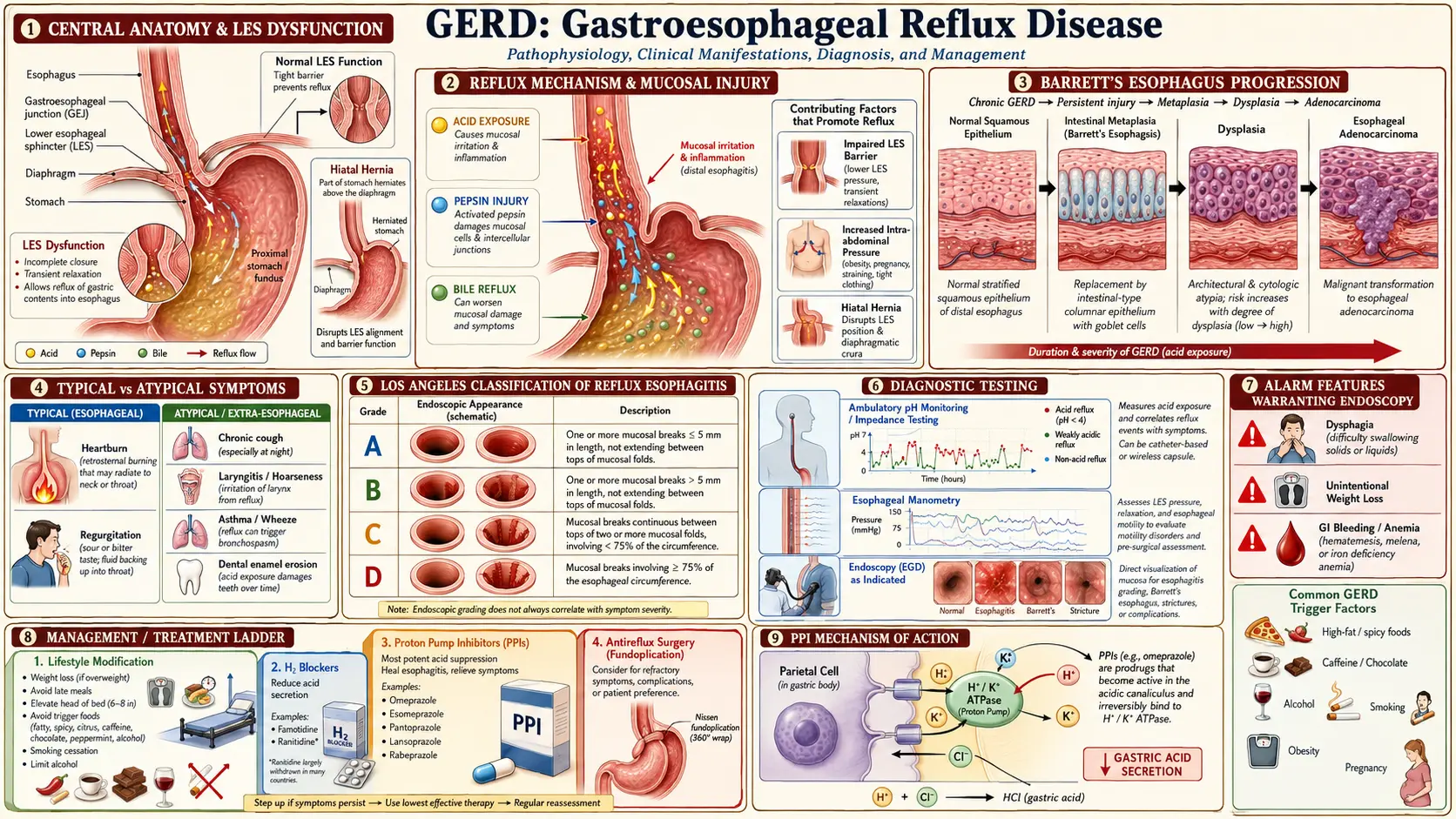
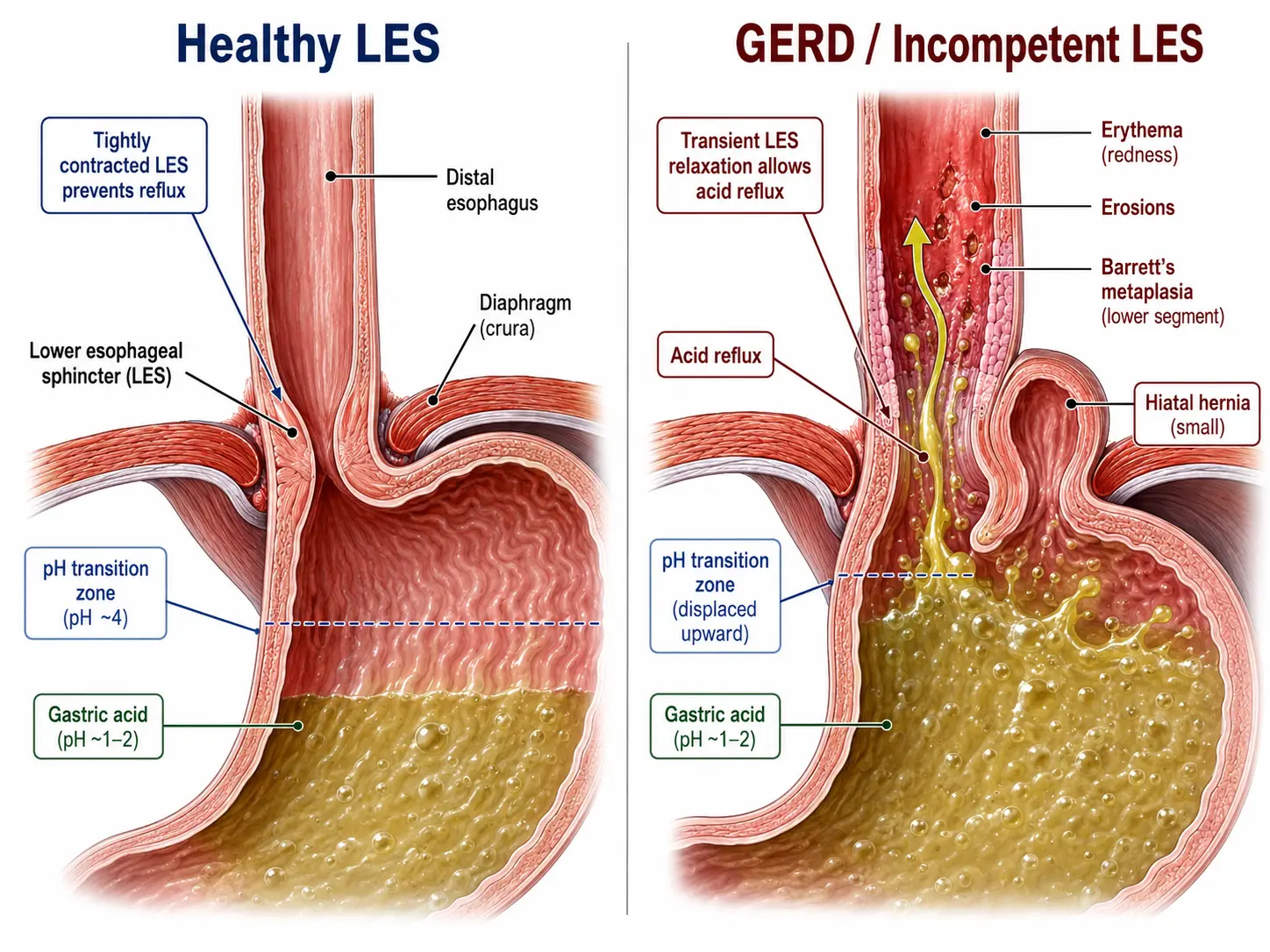
The anatomy is worth picturing. The oesophagus enters the stomach through a hole in the diaphragm, and at that junction sits the lower oesophageal sphincter — a ring of muscle that stays closed except when you swallow. The diaphragm itself wraps around the same point and acts as a second, external pincer. So the valve is really two valves working together, and it usually works well: pressure in the abdomen is higher than in the chest, so stomach contents are constantly being pushed upward against it.
The oesophagus, unlike the stomach, has no protective mucus layer against acid. Stomach lining is built to sit in acid at pH 1–2; oesophageal lining is not. When acid, pepsin and sometimes bile wash upward and stay there, they irritate and eventually damage the lining. Around 10–20% of adults in Western countries have GERD symptoms at least weekly, making it one of the most common conditions in general practice.
Why the Valve Fails
Three mechanisms account for most reflux, and knowing which one applies changes what helps.
- Transient lower oesophageal sphincter relaxations. The commonest mechanism by far, and the one people find most surprising. The sphincter is not simply weak — it opens, briefly and inappropriately, for 10–30 seconds at a time, triggered by stretch receptors in the upper stomach. This is a normal reflex whose job is belching; in GERD it happens too often and admits liquid as well as gas. It explains why reflux is worse after a large meal (more stretch) and why fizzy drinks make it worse.
- Hiatus hernia. Part of the stomach slides up through the diaphragm, separating the two components of the valve so they no longer act at the same point. It also creates a small pouch of acid sitting above the diaphragm, ready to reflux with the next swallow. Larger hernias correlate with more severe disease.
- A genuinely weak sphincter, from scleroderma, previous surgery, or long-standing disease.
Two further factors decide how much damage occurs. Clearance — how fast the oesophagus squeezes refluxed material back down and how well saliva neutralises what remains — is impaired at night, when swallowing and salivation almost stop. That is why nocturnal reflux causes disproportionate damage. And mucosal integrity: repeated acid exposure widens the spaces between the lining cells, letting acid reach nerve endings, which is why some people have severe symptoms with a normal-looking endoscopy.
The stomach also holds an acid pocket — an unbuffered layer of acid sitting on top of the meal near the junction — which is the immediate source of postprandial reflux and the reason lying down after eating is so reliably bad.
Common Symptoms of GERD
Typical
- Heartburn — a burning sensation rising behind the breastbone, classically 30–60 minutes after eating, worse on bending forward or lying flat.
- Regurgitation — sour or bitter fluid coming up into the throat or mouth without retching. This symptom responds least well to acid-suppressing drugs, because the drugs change what the fluid contains rather than whether it arrives.
- Dysphagia — food sticking. Mild and intermittent can reflect inflammation; persistent or progressive dysphagia is a red flag (see below).
- Chest pain that can be indistinguishable from cardiac pain. Reflux is a common cause of non-cardiac chest pain — but the heart must be excluded first, every time.
- Water brash — a sudden flood of saliva in response to acid in the oesophagus.
Extra-oesophageal
- Chronic cough — reflux is one of the three commonest causes of chronic cough, alongside asthma and upper airway cough syndrome.
- Hoarseness and throat clearing, worse in the morning.
- Globus — a persistent sensation of a lump in the throat without actual difficulty swallowing.
- Asthma that is difficult to control, and dental erosion of the inner surfaces of the teeth — dentists often spot reflux before doctors do.
A caveat that saves a lot of wasted treatment: extra-oesophageal symptoms alone, without heartburn or regurgitation, are a poor guide to reflux. Trials of acid suppression for isolated chronic cough, hoarseness or throat symptoms have been largely disappointing, and many such patients turn out to have something else. Objective testing before committing to long-term therapy is the right approach.
How It Varies Between People
- Symptom severity does not track damage. Around 60–70% of people with troublesome reflux symptoms have a completely normal endoscopy — so-called non-erosive reflux disease. Conversely, some people with severe oesophagitis, and a significant proportion with Barrett’s oesophagus, have few or no symptoms. You cannot infer the state of the oesophagus from how bad the heartburn is.
- Night-time reflux behaves differently — longer acid contact, more oesophagitis, more respiratory symptoms, and worse sleep. Someone whose reflux is mainly nocturnal needs different advice from someone whose reflux is postprandial.
- Obesity, and specifically visceral abdominal fat, is a strong driver — it raises abdominal pressure and promotes hiatus hernia. Weight distribution matters more than weight alone.
- Pregnancy causes reflux in a large proportion, from progesterone relaxing the sphincter plus rising abdominal pressure. It usually resolves after delivery.
- Trigger foods are highly individual. The traditional list — chocolate, coffee, mint, tomato, citrus, alcohol, fat, spice — comes from studies of sphincter pressure rather than of symptoms, and blanket avoidance has weak evidence. Keeping a two-week symptom diary and avoiding your triggers beats avoiding all of them.
- Anxiety and oesophageal hypersensitivity amplify symptoms genuinely, at the level of nerve signalling. Symptoms that persist despite proven acid control may reflect hypersensitivity (reflux hypersensitivity) or functional heartburn, which are treated with neuromodulators rather than more acid suppression.
Causes and Risk Factors
- Obesity, particularly central obesity.
- Hiatus hernia.
- Pregnancy.
- Smoking, which lowers sphincter pressure and reduces saliva production.
- Alcohol, which relaxes the sphincter and impairs clearance.
- Late or large meals, and lying down within three hours of eating.
- Drugs that relax the sphincter — calcium channel blockers, nitrates, anticholinergics, theophylline, benzodiazepines, tricyclic antidepressants, some asthma drugs.
- Drugs that directly injure the oesophagus — NSAIDs, aspirin, bisphosphonates, doxycycline, potassium chloride tablets. Taking these with too little water or lying down afterwards is a common and avoidable cause of oesophageal injury.
- Connective tissue disease, particularly systemic sclerosis, which paralyses the lower oesophagus.
- Delayed gastric emptying, including diabetic gastroparesis.
- Genetic factors — twin studies suggest a heritable component of around 30–40%.
Diagnosis: The Tests and the Numbers
In someone under 60 with typical heartburn and regurgitation, no alarm features and no risk factors, a diagnostic trial of a proton pump inhibitor is a reasonable first step — no test needed. Beyond that, the tests matter, and the 2018 Lyon Consensus set out how to interpret them.
Upper endoscopy
- Indicated for alarm features, failure to respond to treatment, long-standing symptoms in someone at risk of Barrett’s, or before considering surgery.
- Oesophagitis is graded by the Los Angeles classification: Grade A (breaks 5 mm or less), B (over 5 mm, not continuous between two folds), C (continuous between folds but under 75% of the circumference), D (75% or more of the circumference). Grades C and D are conclusive evidence of GERD; Grade A is common in healthy people and proves little.
- A normal endoscopy does not exclude GERD — most people with reflux disease have one.
- Biopsies should be taken to look for eosinophilic oesophagitis, which mimics reflux, is increasingly common, and needs entirely different treatment.
Ambulatory reflux monitoring
- 24-hour pH or 24–96-hour wireless capsule pH monitoring, performed off acid suppression when the question is whether reflux disease exists at all, and on treatment when the question is why it is not working.
- Acid exposure time (AET) is the key number — the percentage of the day with oesophageal pH below 4. Under 4% is normal; above 6% is abnormal and conclusive; 4–6% is inconclusive and needs supporting evidence.
- Impedance-pH monitoring also detects non-acid and weakly acidic reflux, which matters in people already on a PPI.
- Symptom association analysis — the symptom index and symptom association probability — asks whether your symptoms actually coincide with reflux events. This is what distinguishes true reflux from reflux hypersensitivity and functional heartburn.
Other tests
- High-resolution manometry — required before anti-reflux surgery, to exclude achalasia (which surgery would make catastrophically worse) and to assess peristalsis.
- Barium swallow — limited diagnostic value for reflux itself, but useful for defining a hiatus hernia or a stricture before surgery.
- Gastric emptying study where gastroparesis is suspected.
Treatment Options
Lifestyle measures — the ones with actual evidence
Kaltenbach and colleagues systematically reviewed the standard lifestyle advice and found that most of it had never been shown to improve symptoms. What survived scrutiny, and was confirmed by later work including Ness-Jensen and colleagues:
- Weight loss in those with overweight or obesity — the best-supported measure by a distance, with a clear dose–response.
- Elevating the head of the bed by 15–20 cm, using blocks under the bed legs or a wedge under the mattress. Extra pillows do not work — they bend you at the waist and raise abdominal pressure.
- Not eating within three hours of lying down.
- Stopping smoking, which has good evidence in people of normal weight.
- Sleeping on the left side, which places the gastro-oesophageal junction above the acid pocket rather than below it.
Blanket avoidance of chocolate, coffee, mint, citrus and spice does not have good evidence for symptom improvement, though individual triggers are real. Avoid what demonstrably affects you, and do not impoverish your diet on principle.
Drug treatment
- Antacids — calcium carbonate, magnesium and aluminium salts. Fast, short-lived, useful for occasional symptoms. Alginates (such as sodium alginate with potassium bicarbonate) work differently and better: they form a raft that floats on the stomach contents and physically covers the acid pocket, and they have reasonable evidence for postprandial symptoms.
- H2 receptor antagonists — famotidine, nizatidine. Less potent than PPIs but faster in onset, and useful added at night for breakthrough nocturnal symptoms. Tolerance develops within weeks of regular use, so they work best as needed.
- Proton pump inhibitors (PPIs) — omeprazole, esomeprazole, lansoprazole, pantoprazole, rabeprazole. The most effective acid suppressants and the mainstay of treatment.
- Timing is the most common error. PPIs must be taken 30–60 minutes before a meal, because they only inactivate proton pumps that are actively secreting. Taken on an empty stomach with no meal to follow, much of the dose is wasted. A large proportion of “PPI failure” is PPI mistiming.
- Standard is once daily before breakfast; twice daily (before breakfast and before the evening meal) for inadequate response, not two tablets together in the morning.
- Healing of erosive oesophagitis usually needs 8 weeks. Symptom relief may take 2–4 weeks; do not judge at day three.
- Step down after healing to the lowest effective dose, or to on-demand use, except in Barrett’s oesophagus, severe (LA grade C or D) oesophagitis, or stricture, where continuous treatment is appropriate.
- Taper rather than stop abruptly after long-term use — rebound acid hypersecretion for a few weeks is real and is frequently mistaken for the disease returning.
- Potassium-competitive acid blockers (P-CABs) — vonoprazan and related drugs. Faster onset, more sustained acid suppression, no meal timing requirement, and effective in people who do not respond to PPIs. Available in Japan and increasingly elsewhere.
- Baclofen — reduces transient sphincter relaxations, so it targets the actual mechanism rather than the acid. Useful in refractory reflux and in regurgitation-predominant disease; drowsiness limits it.
- Neuromodulators — low-dose tricyclics or SSRIs for reflux hypersensitivity and functional heartburn, where the oesophagus is normal but the nerves are over-reporting.
Are PPIs Safe? An Honest Answer
PPIs have been linked in observational studies to kidney disease, dementia, fractures, cardiovascular events, pneumonia, micronutrient deficiency and death. Those studies are prone to confounding by indication — people prescribed long-term PPIs are, on average, sicker — and the associations are mostly weak.
The best evidence available is a randomised trial. The COMPASS study randomised 17,598 participants to pantoprazole 40 mg daily or placebo and followed them for a median of three years (Moayyedi et al., Gastroenterology 2019). Across a wide range of prespecified outcomes — pneumonia, fracture, chronic kidney disease, dementia, gastrointestinal cancer, diabetes, cardiovascular events, death — there was no statistically significant increase. The one exception was enteric infections, which were modestly increased.
The reasonable position, therefore:
- PPIs are considerably safer than the alarming headlines suggest, and much safer than untreated severe reflux disease with its risk of stricture and adenocarcinoma.
- Enteric infection risk is real, including Clostridioides difficile; this matters most in older and hospitalised people.
- Long-term use may modestly affect absorption of vitamin B12, magnesium and iron; checking these periodically over years of use is sensible.
- Use the lowest effective dose for the shortest necessary period — not because PPIs are dangerous, but because that is good practice with any drug. Do not stop a PPI that is preventing a stricture or treating Barrett’s out of fear generated by an observational study.
Surgery and Endoscopic Procedures
- Laparoscopic fundoplication (Nissen or Toupet) — the top of the stomach is wrapped around the lower oesophagus to reinforce the valve, and any hiatus hernia is repaired. Best results come in people with proven acid reflux who respond to PPIs but do not want lifelong medication, and in regurgitation-predominant disease. Side effects include difficulty belching or vomiting (gas bloat), transient dysphagia, and increased flatulence; a proportion return to acid-suppressing drugs within a decade.
- Magnetic sphincter augmentation (LINX) — a ring of magnetic beads placed around the lower oesophagus that opens for a swallow and closes afterwards. Ganz and colleagues (NEJM 2013) reported normalisation of acid exposure or a halving of PPI use in the great majority at one year, with preserved ability to belch and vomit — a practical advantage over fundoplication.
- Bariatric surgery, specifically Roux-en-Y gastric bypass, is the preferred operation in people with obesity and GERD, because it treats both. Sleeve gastrectomy frequently makes reflux worse and is generally avoided where GERD is significant.
- Endoscopic options — radiofrequency treatment of the sphincter and transoral incisionless fundoplication — have a role in selected patients with smaller hernias, with more modest and less durable effect.
A crucial finding on selection: Spechler and colleagues (NEJM 2019) randomised patients with PPI-refractory heartburn and found that only a minority of those referred actually had reflux as the cause once systematically tested — and among those who did, surgery outperformed medical treatment. The lesson is that surgery works for proven reflux and fails for symptoms that were never reflux. Objective testing before an operation is not bureaucracy; it is what determines whether the operation can possibly work.
What the Evidence Does Not Support
- Blanket dietary elimination. Avoiding chocolate, mint, citrus, tomato, coffee and spice as a rule has not been shown to improve symptoms in controlled studies. Individual triggers exist; universal restriction does not help.
- Extra pillows for nocturnal reflux. They flex the abdomen and can worsen it. Raise the whole head of the bed instead.
- Acid suppression for isolated throat and voice symptoms without typical reflux symptoms or objective evidence. Trials have been largely negative, and prolonged empirical PPI treatment for “silent reflux” delays the real diagnosis.
- Apple cider vinegar and “low stomach acid” theories. There is no controlled evidence that adding acid relieves reflux, the premise is not supported by measurement, and in erosive disease it risks direct injury.
- Stopping a needed PPI because of observational safety headlines, given the randomised COMPASS data above.
- Routine surveillance endoscopy in everyone with reflux. Surveillance is for confirmed Barrett’s oesophagus, at intervals based on the presence and grade of dysplasia — not for heartburn.
- Sleeve gastrectomy as the weight-loss operation of choice when GERD is present, since it commonly worsens reflux.
When Treatment Is Not Working
Around 30–40% of people have persistent symptoms on a standard PPI dose. Work through this list in order before escalating:
- Is the timing right? 30–60 minutes before a meal. This alone fixes a large share of failures.
- Is it being taken every day? Adherence to PPIs is poor, and intermittent use of a drug that works by cumulative pump inactivation is close to useless.
- Has an adequate trial been given? Eight weeks, not two.
- Is it actually reflux? Eosinophilic oesophagitis, achalasia, gastroparesis, functional heartburn, reflux hypersensitivity, pill-induced injury, cardiac pain and infectious oesophagitis all mimic it.
- Is regurgitation the dominant symptom? Acid suppression does not stop the volume of reflux, only its acidity. Alginates, baclofen or surgery target the mechanism.
- Is a drug contributing? Review calcium channel blockers, nitrates, anticholinergics, bisphosphonates and NSAIDs.
- Then test objectively — endoscopy with biopsies, and impedance-pH monitoring on treatment — before considering surgery.
Prevention and Management Strategies
- Lose weight if overweight — the single most effective measure.
- Raise the head of the bed 15–20 cm for nocturnal symptoms.
- Leave three hours between the last meal and lying down.
- Eat smaller meals, since gastric distension is what triggers the reflex relaxations.
- Stop smoking and moderate alcohol.
- Take pills with a full glass of water while upright, and stay upright for 30 minutes afterwards — especially bisphosphonates, doxycycline and potassium tablets.
- Loosen tight waistbands, which measurably raise abdominal pressure.
- Keep a two-week symptom and food diary to identify your actual triggers rather than guessing.
- Eat a good general diet — vegetables, fruit, olive oil, fish, poultry, legumes, nuts and whole grains such as brown rice, oats and barley. Observational data associate a Mediterranean-style pattern and higher fibre intake with fewer reflux symptoms, and both support the weight goal that matters most.
- Chewing sugar-free gum after meals increases saliva and bicarbonate delivery, which measurably speeds oesophageal acid clearance. Cheap, harmless and modestly effective.
Red Flags: When to Get Seen
Any of these warrants prompt endoscopy rather than a longer trial of treatment.
- Difficulty swallowing (dysphagia), especially if progressive or with solids sticking. This is the most important single alarm symptom.
- Painful swallowing (odynophagia).
- Unintentional weight loss.
- Vomiting blood, or vomit that looks like coffee grounds.
- Black tarry stools, indicating upper gastrointestinal bleeding.
- Iron deficiency anaemia with reflux symptoms.
- A palpable mass, or persistent vomiting.
- New symptoms starting over the age of 60, or long-standing reflux (more than five to ten years) with risk factors for Barrett’s — male sex, white ethnicity, age over 50, central obesity, smoking, family history.
And separately: chest pain must not be assumed to be reflux. Pain with exertion, sweating, breathlessness, nausea, or radiation to the jaw or arm is a cardiac emergency until proven otherwise. Antacid relieving the pain does not exclude a heart attack — that is a folk belief, not a diagnostic test.
Complications of GERD
- Erosive oesophagitis, graded LA A–D.
- Peptic stricture — fibrous narrowing from chronic inflammation, causing progressive dysphagia to solids; treated with endoscopic dilation plus long-term acid suppression to prevent recurrence.
- Barrett’s oesophagus — the lining changes to an intestinal type as an adaptation to acid. Present in roughly 5–12% of people with chronic GERD. It is the precursor to oesophageal adenocarcinoma, though the annual progression rate for non-dysplastic Barrett’s is low, around 0.1–0.3%. Surveillance intervals depend on segment length and dysplasia; high-grade dysplasia is treated endoscopically with radiofrequency ablation or resection rather than being watched.
- Oesophageal adenocarcinoma — Lagergren and colleagues (NEJM 1999) showed the risk rises with the frequency, severity and duration of reflux symptoms, with the highest risk in those with long-standing severe symptoms. In absolute terms the risk for any individual with heartburn remains low, and it is important to present it that way rather than alarmingly.
- Dental erosion, particularly on the inner surfaces of the upper teeth.
- Chronic laryngitis, chronic cough and worsened asthma.
- Aspiration pneumonia, mainly in older people and those with impaired swallowing.
- Sleep disruption and the daytime consequences that follow it.
- Anaemia from chronic blood loss in severe oesophagitis.
Key Research Papers
Historical background
Heartburn has been described for as long as medicine has been written down, but the link to a specific anatomical failure is recent. Winkelstein coined the term “peptic esophagitis” in 1935; Norman Barrett described the columnar-lined oesophagus that bears his name in 1950 (initially misinterpreting it as a congenital short oesophagus); and Rudolph Nissen performed the first fundoplication in 1955. Treatment was surgical or antacid-based until cimetidine in 1976 and omeprazole in 1988 made effective acid suppression possible in a tablet. The 2006 Montreal consensus finally defined the disease by its effect on the patient rather than by endoscopic appearance, and the 2018 Lyon Consensus set the objective thresholds now used to confirm it.
Key research papers
Each citation below was checked against its PubMed record; the linked DOI resolves to the paper named.
- Vakil N, van Zanten SV, Kahrilas P, Dent J, Jones R. The Montreal definition and classification of gastroesophageal reflux disease: a global evidence-based consensus. Am J Gastroenterol. 2006;101(8):1900–1920. — doi:10.1111/j.1572-0241.2006.00630.x ( PubMed PMID: 16928254)
- Kahrilas PJ. Clinical practice. Gastroesophageal reflux disease. N Engl J Med. 2008;359(16):1700–1707. — doi:10.1056/NEJMcp0804684 ( PubMed PMID: 18923172)
- Katz PO, Dunbar KB, Schnoll-Sussman FH, et al. ACG clinical guideline for the diagnosis and management of gastroesophageal reflux disease. Am J Gastroenterol. 2022;117(1):27–56. — doi:10.14309/ajg.0000000000001538 ( PubMed PMID: 34807007)
- Gyawali CP, Kahrilas PJ, Savarino E, et al. Modern diagnosis of GERD: the Lyon Consensus. Gut. 2018;67(7):1351–1362. — doi:10.1136/gutjnl-2017-314722 ( PubMed PMID: 29437910)
- El-Serag HB, Sweet S, Winchester CC, Dent J. Update on the epidemiology of gastro-oesophageal reflux disease: a systematic review. Gut. 2014;63(6):871–880. — doi:10.1136/gutjnl-2012-304269 ( PubMed PMID: 23853213)
- Boeckxstaens G, El-Serag HB, Smout AJ, Kahrilas PJ. Symptomatic reflux disease: the present, the past and the future. Gut. 2014;63(7):1185–1193. — doi:10.1136/gutjnl-2013-306393 ( PubMed PMID: 24607936)
- Lagergren J, Bergström R, Lindgren A, Nyrén O. Symptomatic gastroesophageal reflux as a risk factor for esophageal adenocarcinoma. N Engl J Med. 1999;340(11):825–831. — doi:10.1056/NEJM199903183401101 ( PubMed PMID: 10080844)
- Shaheen NJ, Falk GW, Iyer PG, Gerson LB. ACG clinical guideline: diagnosis and management of Barrett’s esophagus. Am J Gastroenterol. 2016;111(1):30–50. — doi:10.1038/ajg.2015.322 ( PubMed PMID: 26526079)
- Kaltenbach T, Crockett S, Gerson LB. Are lifestyle measures effective in patients with gastroesophageal reflux disease? An evidence-based approach. Arch Intern Med. 2006;166(9):965–971. — doi:10.1001/archinte.166.9.965 · PubMed PMID: 16682569 — most standard lifestyle advice was not supported.
- Ness-Jensen E, Hveem K, El-Serag H, Lagergren J. Lifestyle intervention in gastroesophageal reflux disease. Clin Gastroenterol Hepatol. 2016;14(2):175–182. — doi:10.1016/j.cgh.2015.04.176 ( PubMed PMID: 25956834)
- Moayyedi P, Eikelboom JW, Bosch J, et al. Safety of proton pump inhibitors based on a large, multi-year, randomized trial of patients receiving rivaroxaban or aspirin. Gastroenterology. 2019;157(3):682–691.e2. — doi:10.1053/j.gastro.2019.05.056 · PubMed PMID: 31152740 — no significant harm found except enteric infections.
- Ganz RA, Peters JH, Horgan S, et al. Esophageal sphincter device for gastroesophageal reflux disease. N Engl J Med. 2013;368(8):719–727. — doi:10.1056/NEJMoa1205544 ( PubMed PMID: 23425164)
- Spechler SJ, Hunter JG, Jones KM, et al. Randomized trial of medical versus surgical treatment for refractory heartburn. N Engl J Med. 2019;381(16):1513–1523. — doi:10.1056/NEJMoa1811424 ( PubMed PMID: 31618539)
PubMed Topic Searches
The following PubMed topic searches surface the current peer-reviewed literature on GERD. Each link opens a live query; results update as new papers are indexed.
- PubMed: Search: gastroesophageal reflux disease
- PubMed: Search: Lyon consensus reflux
- PubMed: Search: proton pump inhibitor long term safety
- PubMed: Search: refractory GERD management
- PubMed: Search: Barrett esophagus surveillance
- PubMed: Search: eosinophilic esophagitis diagnosis
- PubMed: Search: laparoscopic fundoplication outcomes
- PubMed: Search: magnetic sphincter augmentation reflux
- PubMed: Search: vonoprazan potassium competitive acid blocker
- PubMed: Search: alginate acid pocket reflux
- PubMed: Search: functional heartburn reflux hypersensitivity
- PubMed: Search: laryngopharyngeal reflux evidence
- PubMed: Search: hiatal hernia reflux mechanism
- PubMed: Search: obesity weight loss reflux symptoms
Connections
- Gastroenterology
- Mastic Gum — traditional resin for the upper GI tract
- Stomach Acid, pH & the PPI Trade-off — interactive animation
- Hiatal Hernia
- Reflux
- Chronic Cough
- Chest Pain
- Gallbladder Disease
- Irritable Bowel Syndrome
- Peptic Ulcer Disease
- SIBO
- Gut Healing Protocol
- Bloating
- Licorice
- Magnesium
- Elimination Diet
- Ginger
- Asthma
- Obesity
- Celiac Disease
- Rifaximin Protocols
- Pancreatitis
- Stomach Cancer
- Esophageal Cancer
- Herbs covered on this site that discuss this condition: Slippery Elm · Black Pepper · Marshmallow Root · Aloe Vera · Blessed Thistle · Lemongrass