Takotsubo Syndrome
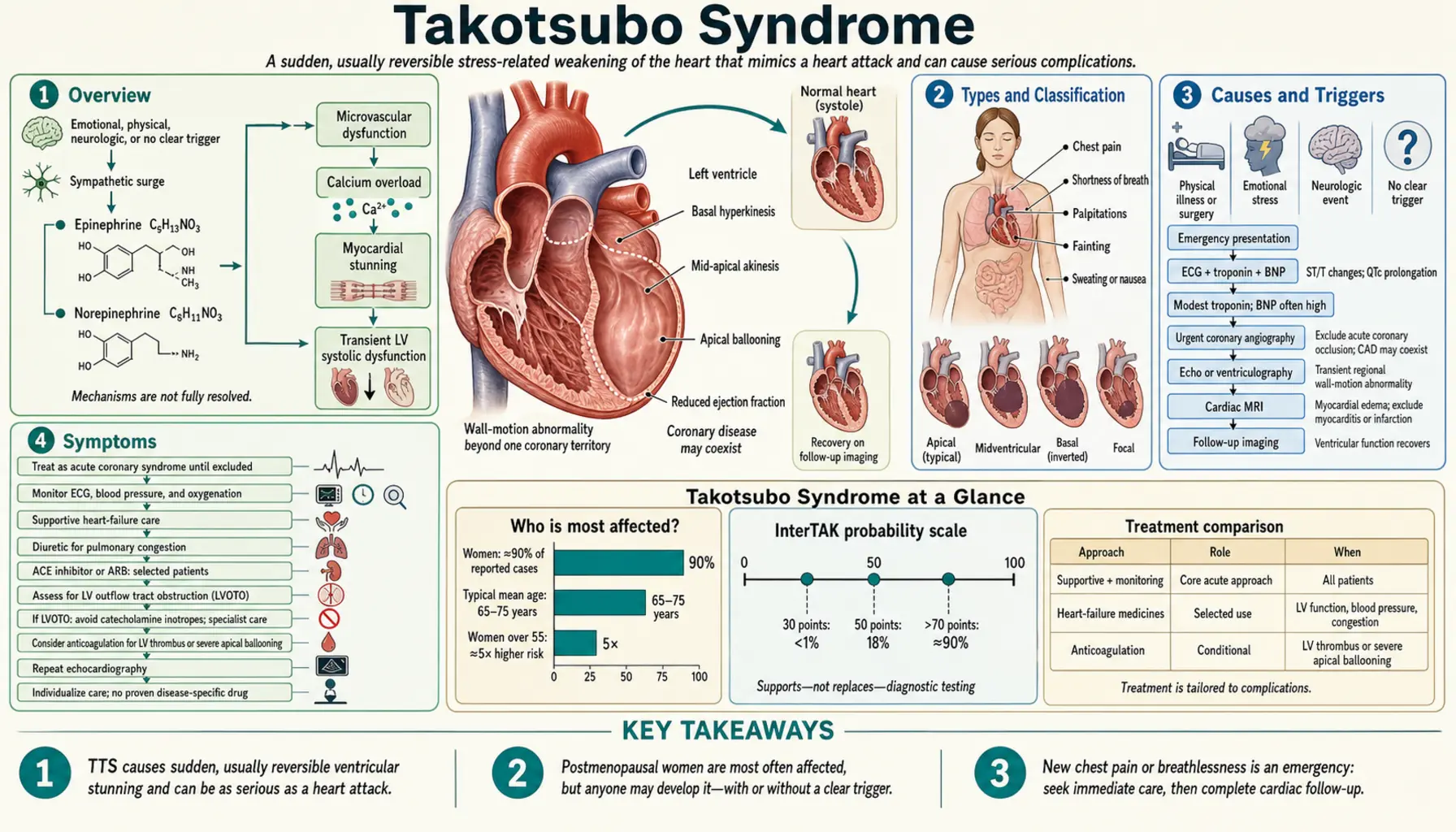
Table of Contents
- Overview
- Types and Classification
- Causes and Triggers
- Symptoms
- ECG and Diagnostic Findings
- Treatment
- Natural and Lifestyle Approaches
- Complications and Prognosis
- Symptoms Treated as an Emergency
- Key Research Papers
- Connections
- Featured Videos
1. Overview
Takotsubo syndrome (TTS) — also called stress cardiomyopathy, apical ballooning syndrome, or "broken heart syndrome" — is a form of acute, usually reversible heart muscle dysfunction, most often preceded by an intense emotional or physical stressor. It mimics an acute myocardial infarction in its presentation; the 2018 International Expert Consensus criteria state that coronary artery disease can coexist with it.
The term was introduced in 1990, when the Japanese cardiologist Hikaru Sato and colleagues reported five cases in a Japanese medical textbook (the first case was treated in 1983 at Hiroshima City Hospital), according to the 2018 International Expert Consensus Document (PubMed PMID: 29850871). The name comes from the Japanese word for an octopus trap (tako-tsubo), whose narrow neck and round bottom resemble the shape of the left ventricle at the end of systole. In 1991 Dote and colleagues described five patients with chest pain and heart-attack-like ECG changes but no coronary stenoses, whose left ventriculograms showed apical akinesis with basal hyperkinesis that resolved within 7 days (PubMed PMID: 1841907).
The "broken heart" name has a physiological basis: in a 2005 study of 19 patients whose heart dysfunction followed sudden emotional stress, plasma catecholamine levels at presentation were markedly higher than in patients with Killip class III myocardial infarction, and the authors concluded that exaggerated sympathetic stimulation is probably central to the syndrome (PubMed PMID: 15703419). Pleasant events can also precede it — a variant called "happy heart syndrome." In the International Takotsubo Registry, 485 of 1,750 patients had a definite emotional trigger; in 4.1% of these (20 patients) the trigger was a pleasant event, and their presentation and 1-year outcome were similar to those of patients with negative emotional triggers (PubMed PMID: 26935270).
Recovery is the usual course: in the 2005 series the median ejection fraction rose from 20% on admission to 60% at two to four weeks, and in a 256-patient cardiac MRI study left ventricular function had normalized in all patients at follow-up one to six months later. The acute phase still carries real risk: in the International Takotsubo Registry, rates of severe in-hospital complications including shock and death were similar to those of age- and sex-matched patients with an acute coronary syndrome (PubMed PMID: 26332547).
2. Types and Classification
By Morphological Pattern
Takotsubo syndrome is classified by the location of the wall motion abnormality on echocardiography, ventriculography, or cardiac MRI:
- Apical type (classic, most common): Apical and mid-ventricular ballooning with preserved basal contractility; the original "octopus pot" pattern. In the International Takotsubo Registry, 1,430 of 1,750 patients (81.7%) had the apical type (PubMed PMID: 27438117).
- Atypical types (18.3% in the same registry): mid-ventricular, basal, and focal patterns. Patients with atypical types were younger, more often had neurologic disorders and ST-segment depression, and had a less reduced ejection fraction; after adjustment for confounders, the type itself did not predict death.
- Mid-ventricular type: Mid-ventricular akinesis with preserved apical and basal function; 17% of patients in a cardiac MRI cohort of 256 (Search PubMed). It was more frequent after pleasant ("happy heart") triggers than after negative emotional triggers (35.0% vs 16.3%).
- Basal type (inverted Takotsubo): Basal akinesis with preserved apical function; 1% in the same MRI cohort. The 2018 consensus notes reports linking the basal type to pheochromocytoma.
- Focal type (rare): An isolated segment of abnormal wall motion.
- Biventricular involvement: Right ventricular involvement alongside the left ventricle, seen in 34% of the MRI cohort. The 2018 consensus describes right ventricular involvement as an independent predictor of acute heart failure and of a composite of adverse events including cardiogenic shock and in-hospital death.
InterTAK Diagnostic Score
The InterTAK Diagnostic Score was developed from the International Takotsubo Registry to estimate the probability of Takotsubo versus an acute coronary syndrome at presentation, without imaging. It assigns points for female sex (25), emotional trigger (24), physical trigger (13), absence of ST-segment depression except in lead aVR (12), psychiatric disorders (11), neurologic disorders (9) and QTc prolongation (6). In the derivation cohort a cut-off of 40 points gave 89% sensitivity and 91% specificity, and the score was validated in an independent cohort (area under the curve 0.901) (PubMed PMID: 27928880). The 2018 consensus states that, depending on disease prevalence, 30 points corresponds to a predicted probability below 1%, 50 points to 18%, and more than 70 points to about 90%; its diagnostic algorithm uses the score in patients without ST-segment elevation (PubMed PMID: 29850820).
Triggering Context
- Emotional Takotsubo (classic): Sudden grief, relationship breakdown, financial shock, interpersonal conflict, fear, natural disaster
- Physical Takotsubo: Acute medical illness triggering a catecholamine surge (sepsis, surgery, stroke, pheochromocytoma, brain injury)
- Happy heart syndrome: Pleasant emotional events; the 2018 consensus gives a surprise birthday party, winning a jackpot and a positive job interview as examples
- Iatrogenic Takotsubo: Exogenous catecholamines (dobutamine stress testing, norepinephrine infusion), beta-agonist overdose
In the International Takotsubo Registry, physical triggers (36.0%) were more common than emotional triggers (27.7%), and 28.5% of patients had no evident trigger.
3. Causes and Triggers
Catecholamine Surge Mechanism
The leading explanation is an overwhelming catecholamine (epinephrine and norepinephrine) surge from the adrenal medulla and cardiac sympathetic nerve terminals. Lines of evidence include:
- In the 2005 series, median plasma epinephrine at presentation was 1,264 pg/mL versus 376 pg/mL in Killip class III myocardial infarction, and norepinephrine 2,284 versus 1,100 pg/mL. The 2018 consensus notes that other groups could not replicate this finding, most likely because of methodological differences.
- A pheochromocytoma "catecholamine storm" can produce heart changes indistinguishable from Takotsubo
- The 2018 consensus describes ballooning patterns caused by intravenous administration of catecholamines and beta-agonists
- Neurological emergencies (subarachnoid hemorrhage, stroke, head trauma, seizures) are recognized triggers
Why the Apex May Be Vulnerable
One proposed explanation for the apical pattern comes from a 2012 rat study (PubMed PMID: 22732314):
- A high intravenous bolus of epinephrine, but not norepinephrine, produced reversible apical depression of contraction with basal hypercontractility in rats
- Beta-2 adrenergic receptor number and responses were greater in apical than in basal heart cells
- The authors proposed that at high concentrations epinephrine switches beta-2 receptor signaling from the stimulatory (Gs) to the inhibitory (Gi) pathway — the "epinephrine switch" hypothesis — and that this switch may protect heart cells from catecholamine toxicity
Coronary Microvascular Dysfunction and Myocardial Stunning
The 2018 consensus also reviews multivessel coronary spasm, coronary microvascular dysfunction (impaired microvascular endothelial function was observed in virtually all patients studied), and direct catecholamine toxicity to heart muscle cells as contributing mechanisms. Endomyocardial biopsies in the 2005 series showed mononuclear infiltrates and contraction-band necrosis, a pattern also seen with extreme catecholamine exposure such as pheochromocytoma or subarachnoid hemorrhage.
Common Emotional Triggers
- Death of a close relative or partner
- Unexpected and devastating news (cancer diagnosis, relationship ending)
- Physical confrontation or domestic violence
- Natural disasters, armed conflicts, or mass-casualty events
- Public speaking (severe performance anxiety)
- Startling surprises (both frightening and joyful)
Common Physical Triggers
- Acute medical illness: sepsis, respiratory failure, acute neurological events (stroke, subarachnoid hemorrhage, seizure), acute surgical procedures
- Pheochromocytoma crises (catecholamine tumor of the adrenal medulla)
- Asthma attack requiring bronchodilator treatment
- Thyroid storm
- Electroconvulsive therapy (ECT)
- Exogenous adrenergic agents
Who Is at Risk
Takotsubo is not equally distributed across the population:
- Postmenopausal women: In the International Takotsubo Registry, 89.8% of patients were women (mean age 66.8 years); in the 256-patient MRI cohort, 81% were postmenopausal women. The 2018 consensus suggests that declining estrogen after menopause may increase susceptibility, while noting that systematic data showing a clear link between estrogen levels and Takotsubo are lacking.
- Age: The 2018 consensus gives a mean age of 67–70 years, with about 80% of patients older than 50, and reports that women older than 55 have a five-fold greater risk than younger women and a ten-fold greater risk than men; men are diagnosed more often after a physical trigger
- Psychiatric and neurologic disorders: In the registry, neurologic or psychiatric disorders were present in 55.8% of Takotsubo patients versus 25.7% of matched patients with an acute coronary syndrome; the 2018 consensus names depression and anxiety as common
- Neurological disease: Prior stroke, epilepsy, brain tumors
4. Symptoms
Acute Presentation
The 2018 consensus describes acute chest pain, shortness of breath and fainting as the most common symptoms, indistinguishable from a heart attack at first glance; the InterTAK score paper states that the clinical presentation does not allow the two to be told apart:
- Chest pain: The most common presenting symptom; often described as pressure, tightness, or crushing, like heart attack pain. Among registry patients with an emotional trigger, about 90% had chest pain.
- Dyspnea: May reflect acute left ventricular dysfunction and pulmonary edema
- Syncope: From cardiogenic shock, severe LV outflow tract obstruction, or arrhythmia
- Palpitations: From ventricular arrhythmias or sinus tachycardia
Some cases are found incidentally, through new ECG changes or a sudden rise in cardiac biomarkers.
In Context
A triggering stressor is found in most patients, though patients may not connect an emotional experience to a cardiac event unless asked about it. In the International Takotsubo Registry, 28.5% of patients had no evident trigger.
Symptoms of Complications
- Progressive breathlessness and orthopnea (acute heart failure and pulmonary edema)
- Lightheadedness and collapse (cardiogenic shock)
- Sudden cardiac arrest (ventricular fibrillation or torsades de pointes from QT prolongation)
- Unilateral weakness or speech difficulty (stroke from left ventricular thrombus embolism)
5. ECG and Diagnostic Findings
Electrocardiography
ECG changes in Takotsubo closely resemble those of a heart attack. The 2018 consensus reports that in the International Takotsubo Registry ST-segment elevation was present in 44% of patients, ST-segment depression in 8%, T-wave inversion in 41%, and left bundle branch block in 5%:
- Acute phase: ST-segment elevation, most often in the precordial, lateral and apical leads that reflect the mid and apical segments — closely resembling an anterior STEMI from left anterior descending artery occlusion
- Over the following days: ST elevation resolves and is followed by progressive T-wave inversion and QT prolongation; the consensus describes the T-wave inversion as often more prominent and more broadly distributed than in an acute coronary syndrome
- QT prolongation: QTc prolongation at admission occurs in up to half of patients, and most malignant arrhythmic episodes are associated with a QTc above 500 ms. In a 93-patient cohort, 8.6% had ventricular fibrillation or torsades de pointes, and each 10 ms increase in QTc raised the odds of ventricular arrhythmia (odds ratio 1.28) (PubMed PMID: 21146632).
- Q waves: Anterior Q waves or poor R-wave progression may appear
- Resolution: T-wave inversion and QT prolongation resolve gradually over days to weeks, although T-wave inversion may persist for several months after the heart's contraction has recovered
Cardiac Biomarkers
- Troponin: Elevated in virtually all cases. The 2018 consensus reports admission troponin values usually similar to an acute coronary syndrome but substantially lower peak values, and describes the wall motion abnormality as generally far exceeding the biomarker rise — likely reflecting a large mass of stunned rather than dead heart muscle. High admission troponin predicts a worse in-hospital outcome.
- BNP/NT-proBNP: Frequently rises substantially, peaking about 24–48 hours after symptom onset and returning toward normal over the following few months
- Creatine kinase: Typically only slightly increased
Echocardiography — The Key Diagnostic Tool
Echocardiography reveals the characteristic wall motion abnormality pattern:
- Apical ballooning: Akinesis or dyskinesis of the apical and mid-ventricular segments in a circumferential pattern extending beyond the territory of any single coronary artery
- Hyperkinetic base: Preserved or hyperdynamic contractility of the basal segments
- LVEF: Mean 40.7% on admission in the International Takotsubo Registry, versus 51.5% in matched acute coronary syndrome patients
- Complications assessed: LVOTO (left ventricular outflow tract obstruction, which the 2018 consensus puts at about 20% of patients), mitral regurgitation (estimated at 14–25%), LV thrombus, pericardial effusion, right ventricular involvement
Coronary Angiography
In the 2018 consensus diagnostic algorithm, patients presenting with ST-segment elevation undergo urgent coronary angiography with left ventriculography to exclude an acute myocardial infarction. Unlike older criteria, the consensus criteria state that significant coronary artery disease does not rule out Takotsubo.
Cardiac MRI
In the 2018 consensus algorithm, cardiac MRI is used when there are "red flags" for acute infectious myocarditis. A 256-patient multicenter study proposed MRI criteria for diagnosis at presentation: a typical pattern of left ventricular dysfunction, myocardial edema, absence of significant necrosis or fibrosis (late gadolinium enhancement), and markers of inflammation; follow-up MRI showed complete normalization of ejection fraction and inflammatory markers without significant fibrosis in all patients. The consensus adds that subtle fibrosis may be present and is a sign of worse outcomes.
6. Treatment
The 2018 consensus states that its management recommendations rest on limited clinical trial data and expert experience. What it and the cited studies describe:
Acute Management
- Initial ACS treatment: Because Takotsubo cannot be told apart from an acute coronary syndrome at first presentation, the consensus describes initial guideline-based ACS treatment (in particular aspirin and heparin) with ECG monitoring
- Beta-blockers: The consensus describes them as seeming reasonable until full recovery of ejection fraction, while noting that supporting trials are lacking; they are described as contraindicated in acute severe heart failure with low ejection fraction, hypotension or bradycardia, and to be used cautiously with bradycardia and QTc above 500 ms because of pause-dependent torsades de pointes
- ACE inhibitors/ARBs: Described as possibly facilitating left ventricular recovery
- Diuretics: Described as indicated for pulmonary edema
- Nitroglycerin: Described as useful for reducing filling pressures in acute heart failure, but found to worsen the outflow gradient when LVOTO is present
LVOTO and Cardiogenic Shock
The 2018 consensus describes prompt evaluation for LVOTO in patients with cardiogenic shock, particularly those with apical ballooning. It reports a 20% mortality among Takotsubo patients treated with catecholamine drugs, while noting this may reflect selection bias; it describes the calcium sensitizer levosimendan as a suggested alternative inotrope, and notes that beta-blockers may improve LVOTO. In a 178-patient cohort, cardiogenic shock occurred in 12.4%; 86% of those patients received catecholamines and 59% early mechanical circulatory support, and their 28-day mortality was 28.6% versus 4.1% without shock (PubMed PMID: 26474843).
Arrhythmia Management
- The consensus describes ECG monitoring as essential and QT-prolonging drugs as requiring caution in the acute phase, because of the risk of torsades de pointes, ventricular tachycardia and fibrillation
- Life-threatening ventricular arrhythmias (torsades de pointes, VT or VF) occur in 3.0–8.6% of patients and most often on hospital days 2–4
- Because the heart dysfunction and ECG abnormalities are reversible, the consensus describes an implantable cardioverter-defibrillator as of uncertain value; a wearable defibrillator is described as an option with excessive QT prolongation or life-threatening arrhythmias
- A temporary transvenous pacemaker is described for hemodynamically significant bradycardia
Anticoagulation for LV Thrombus
In the International Takotsubo Registry, 56 of 1,676 patients (3.3%) developed an intraventricular thrombus and/or embolism, at a median of 2 days after diagnosis; the apical type, ejection fraction of 30% or less, previous vascular disease and a high white cell count were independent predictors (PubMed PMID: 31766870). The 2018 consensus states that, although evidence is lacking, heparin anticoagulation would appear appropriate for patients with severe dysfunction and extended apical ballooning, and that oral anticoagulation or antiplatelet therapy after discharge may be considered case by case.
Long-Term Treatment After Recovery
- The 2018 consensus reports that ACE inhibitor or ARB use was associated with improved survival at 1 year in registry data, even after propensity matching, while there was no evidence of a survival benefit from beta-blockers
- One-third of recurrences in registry data occurred during beta-blocker treatment; a 2014 meta-analysis found recurrence independent of beta-blocker prescription but inversely correlated with ACE inhibitor/ARB prescription (PubMed PMID: 24809923). The consensus describes the significance of the ACE inhibitor/ARB association as uncertain.
- The consensus notes that psychiatric disorders such as depression and anxiety are common and that such patients might benefit from combined psycho-cardiologic rehabilitation; whether antidepressants help is described as controversial
7. Natural and Lifestyle Approaches
Exercise Training and Cognitive Behavioral Therapy
In a randomized trial of 76 patients with acute Takotsubo (median age 66, 91% women), 12 weeks of physical exercise training or cognitive behavioral therapy, each compared with standard care, improved heart muscle energetics measured by 31P-magnetic resonance spectroscopy (the primary end point), peak oxygen consumption and 6-minute walk distance. Neither changed left ventricular global longitudinal strain or heart failure symptom scores (PubMed PMID: 41332388).
Stress and Psychological Support
Because the syndrome is closely tied to sympathetic activation and to emotional triggers, stress-reduction approaches are often discussed for Takotsubo. Beyond the trial above and the consensus remark on psycho-cardiologic rehabilitation, no trial has tested meditation, mindfulness-based stress reduction, yoga, tai chi or support groups as a way to prevent Takotsubo recurrence. Approaches discussed in this context include:
- Mindfulness-based stress reduction (MBSR): an 8-week structured program combining mindfulness meditation, body scan and gentle yoga
- Yoga and tai chi: gentle movement practices
- Psychotherapy: cognitive behavioral therapy and trauma-focused therapy for anxiety disorders, depression or grief reactions
- Social support: grief counseling, bereavement support groups, and social connection
Diet and Sleep
No trial has tested a diet, omega-3 fatty acids, magnesium, or caffeine or alcohol limits specifically in Takotsubo. The Mediterranean diet, omega-3-rich fish and magnesium-rich whole foods (leafy greens, nuts, seeds, legumes and whole grains) are studied for cardiovascular health in general, not for Takotsubo. Obstructive sleep apnea, common in older adults, is associated with nocturnal sympathetic activation and adverse cardiovascular outcomes in general; its role in Takotsubo has not been established.
8. Complications and Prognosis
In-Hospital Complications
The 2018 consensus states that contemporary data show rates of cardiogenic shock and death comparable to patients with an acute coronary syndrome treated according to guidelines. Physical triggers, acute neurologic or psychiatric disease, initial troponin above 10 times the upper reference limit, and admission ejection fraction below 45% predicted adverse in-hospital outcomes, and men had up to a three-fold higher rate of death and major adverse events.
- Cardiogenic shock: 12.4% of a 178-patient cohort; associated with 28.6% mortality at 28 days and 61.9% at 1 year, versus 4.1% and 7.4% without shock
- Ventricular arrhythmias: Life-threatening torsades de pointes, VT or VF in 3.0–8.6%, a frequent cause of death; most often on hospital days 2–4
- Acute heart failure and pulmonary edema: From acute left ventricular dysfunction
- LVOTO: About 20% of patients, complicating shock management
- Mitral regurgitation: Estimated at 14–25%; from systolic anterior motion of the mitral leaflet or from displacement or dysfunction of the papillary muscles
- LV thrombus or embolism: 3.3% of 1,676 registry patients; stroke can result from embolism
- Other arrhythmias: New-onset atrial fibrillation in 4.7%, sinus-node dysfunction in 1.3%, and AV block in 2.9%, according to the 2018 consensus
- In-hospital death: 4.3% with the apical type and 3.1% with atypical types in the International Takotsubo Registry (1,750 patients); 2% (3 of 136) in a Minneapolis cohort (Search PubMed)
Recovery and Resolution
The defining feature of Takotsubo, and its distinction from a heart attack, is its reversibility. In the 2005 series, ejection fraction recovered in all 19 patients (median 60% at two to four weeks); in the Minneapolis cohort of 136 patients, systolic function usually returned to normal rapidly, but recovery took longer than 2 months in 5%. The 2018 consensus notes that wall motion abnormalities may persist for a prolonged period in some patients.
Recurrence
A 2014 meta-analysis of 31 cohorts (1,664 patients) found a cumulative recurrence rate of about 5% at 6 years and an annual rate of about 1.5%; 14% of patients had recurrent chest pain and 11% shortness of breath without definite evidence of recurrent Takotsubo. The 2018 consensus puts the rate at 1.8% per patient-year, with second events in about 5% of survivors, mostly between 3 weeks and 3.8 years after the first. No drug has been proven in a trial to prevent recurrence; the consensus notes that the low recurrence rate makes such trials difficult.
Long-Term Prognosis
Long-term outcomes are less benign than historically believed. In the International Takotsubo Registry, the rate of major adverse cardiac and cerebrovascular events (MACCE) during follow-up was 9.9% per patient-year and the death rate 5.6% per patient-year. Among 1,613 registry patients, long-term mortality was comparable to that of age- and sex-matched patients with an acute coronary syndrome; patients whose Takotsubo followed a physical trigger had higher long-term mortality than the ACS patients, while those with an emotional trigger had better outcomes (PubMed PMID: 30115226).
9. Symptoms Treated as an Emergency
Takotsubo is a medical emergency. Because it cannot be told apart from an acute heart attack without hospital testing, these symptoms — particularly after an intense stressor — are handled by emergency services as a possible heart attack:
- Chest pain, pressure, or tightness — especially following emotional shock, grief, frightening news, or any intense emotional event
- Sudden shortness of breath
- Fainting or near-fainting
- Palpitations or racing heart
- Cold sweats, nausea, or vomiting accompanying chest discomfort
- Known Takotsubo history with chest symptoms — recurrence cannot be distinguished from a heart attack without investigation
In the acute phase, Takotsubo and STEMI look the same to the patient, and Takotsubo carries a real risk of life-threatening arrhythmias and shock that are managed in hospital. Decisions about care belong with emergency and cardiology clinicians.
Key Research Papers
The following peer-reviewed studies represent key evidence in Takotsubo syndrome research:
- Dote K, Sato H, Tateishi H, Uchida T, Ishihara M. [Myocardial stunning due to simultaneous multivessel coronary spasms: a review of 5 cases]. J Cardiol. 1991;21(2):203–214 — Early case series by Dote et al. (article in Japanese). — PubMed PMID: 1841907
- Templin C, et al. Clinical features and outcomes of Takotsubo (stress) cardiomyopathy. N Engl J Med. 2015;373(10):929–938 — International Takotsubo Registry (InterTAK), 1,750 patients: epidemiology, triggers, complications, and prognosis. — PubMed PMID: 26332547
- Ghadri JR, et al. Happy heart syndrome: role of positive emotional stress in Takotsubo syndrome. Eur Heart J. 2016;37(37):2823–2829. — PubMed PMID: 26935270
- Ghadri JR, et al. A novel clinical score (InterTAK Diagnostic Score) to differentiate takotsubo syndrome from acute coronary syndrome: results from the International Takotsubo Registry. Eur J Heart Fail. 2017;19(8):1036–1042. — PubMed PMID: 27928880
- Lyon AR, et al. Current state of knowledge on Takotsubo syndrome: a Position Statement from the Taskforce on Takotsubo Syndrome of the Heart Failure Association of the European Society of Cardiology. Eur J Heart Fail. 2016;18(1):8–27. — PubMed PMID: 26548803
- Sharkey SW, et al. Natural history and expansive clinical profile of stress (Tako-Tsubo) cardiomyopathy. J Am Coll Cardiol. 2010;55(4):333–341. — Search PubMed
- Paur H, et al. High levels of circulating epinephrine trigger apical cardiodepression in a β2-adrenergic receptor/Gi-dependent manner: a new model of Takotsubo cardiomyopathy. Circulation. 2012;126(6):697–706 — Rat model of the proposed epinephrine switch mechanism. — PubMed PMID: 22732314
- Eitel I, et al. Clinical characteristics and cardiovascular magnetic resonance findings in stress (Takotsubo) cardiomyopathy. JAMA. 2011;306(3):277–286. — Search PubMed
- Wittstein IS, et al. Neurohumoral features of myocardial stunning due to sudden emotional stress. N Engl J Med. 2005;352(6):539–548. — Median plasma epinephrine 1,264 vs 376 pg/mL in Killip class III myocardial infarction. — PubMed PMID: 15703419
- Scantlebury DC, Prasad A. Diagnosis of Takotsubo cardiomyopathy. Circ J. 2014;78(9):2129–2139. — PubMed PMID: 25131525
- Ghadri JR, et al. International Expert Consensus Document on Takotsubo Syndrome (Part I): Clinical Characteristics, Diagnostic Criteria, and Pathophysiology. Eur Heart J. 2018;39(22):2032–2046. — PubMed PMID: 29850871
- Ghadri JR, et al. International Expert Consensus Document on Takotsubo Syndrome (Part II): Diagnostic Workup, Outcome, and Management. Eur Heart J. 2018;39(22):2047–2062. — PubMed PMID: 29850820
- Ghadri JR, et al. Differences in the Clinical Profile and Outcomes of Typical and Atypical Takotsubo Syndrome: Data From the International Takotsubo Registry. JAMA Cardiol. 2016;1(3):335–340. — PubMed PMID: 27438117
- Ghadri JR, et al. Long-Term Prognosis of Patients With Takotsubo Syndrome. J Am Coll Cardiol. 2018;72(8):874–882. — PubMed PMID: 30115226
- Ding KJ, et al. Intraventricular Thrombus Formation and Embolism in Takotsubo Syndrome: Insights From the International Takotsubo Registry. Arterioscler Thromb Vasc Biol. 2020;40(1):279–287. — PubMed PMID: 31766870
- Stiermaier T, et al. Incidence, determinants and prognostic relevance of cardiogenic shock in patients with Takotsubo cardiomyopathy. Eur Heart J Acute Cardiovasc Care. 2016;5(6):489–496. — PubMed PMID: 26474843
- Madias C, et al. Acquired long QT syndrome from stress cardiomyopathy is associated with ventricular arrhythmias and torsades de pointes. Heart Rhythm. 2011;8(4):555–561. — PubMed PMID: 21146632
- Singh K, et al. Systematic review and meta-analysis of incidence and correlates of recurrence of takotsubo cardiomyopathy. Int J Cardiol. 2014;174(3):696–701. — PubMed PMID: 24809923
- Gamble DT, et al. Physical Exercise or Cognitive Behavioral Therapy for Takotsubo Cardiomyopathy: A Randomized Controlled Trial. Circ Heart Fail. 2026;19(3):e013229. — PubMed PMID: 41332388
PubMed searches for further reading: