Sickle Cell Disease
Interactive Visualization Inheritance: Dominant, Recessive and Punnett Squares Cross two parents and watch alleles sort into a Punnett square — flip dominance and carrier status to see why two unaffected parents can have an affected child. Launch → Interactive Visualization CRISPR: How Gene Editing Works Program a guide RNA, watch Cas9 find its match and cut both DNA strands — then let the cell repair it to knock a gene out or paste a healthy one in. Launch → Interactive Visualization Stem Cells: The Body's Blank Slates Take a blank stem cell and coax it into blood, nerve or muscle — the biology behind bone-marrow transplants and the difference between embryonic, adult and iPS cells. Launch →
Table of Contents
Overview
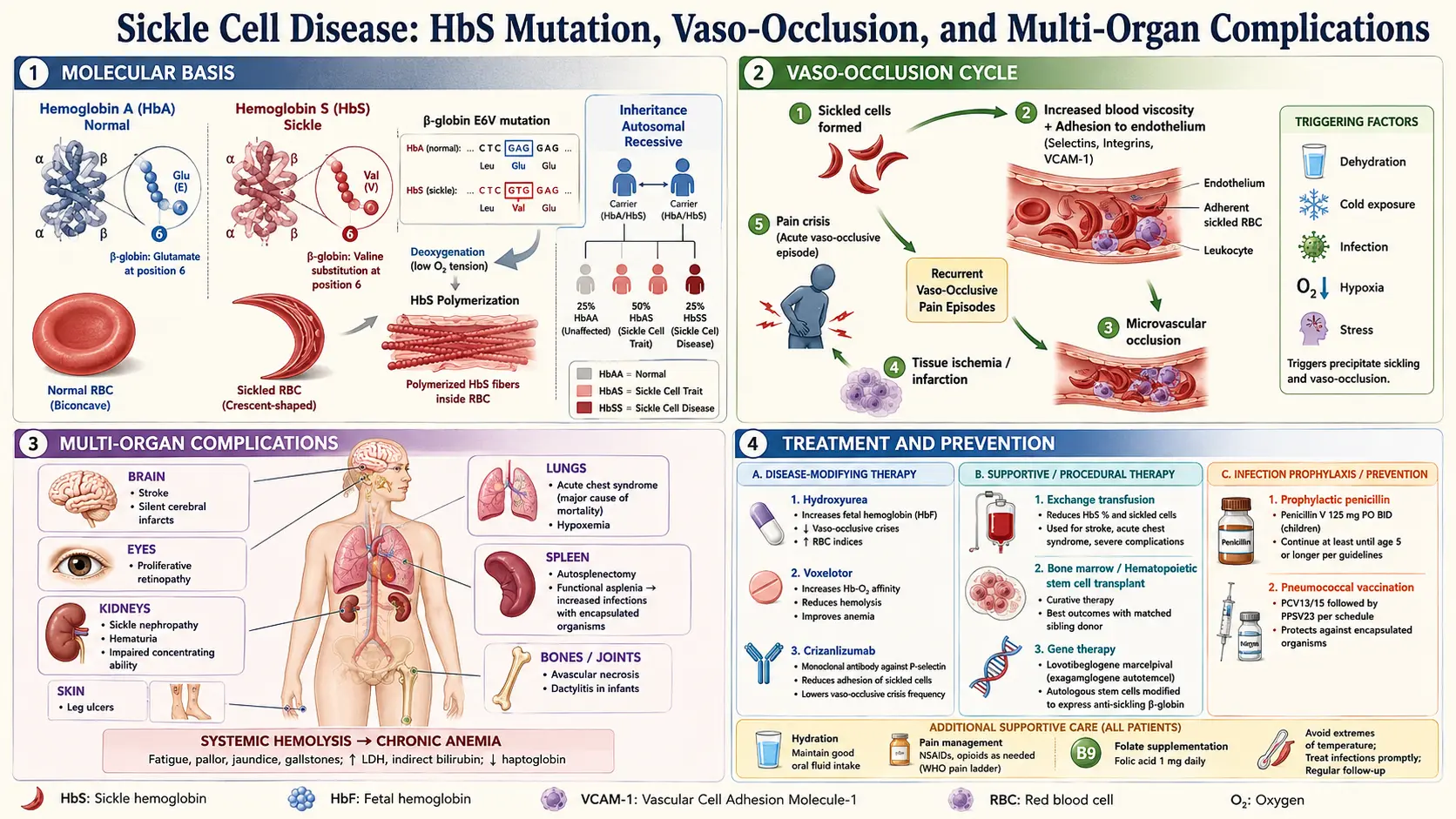
Sickle Cell Disease (SCD) is a group of inherited red blood cell disorders caused by mutations in HBB, the gene for the beta subunit of hemoglobin. A 2018 review estimated 300,000 to 400,000 affected newborns worldwide each year, the majority in sub-Saharan Africa (Kato 2018), and the FDA and the CDC put the number of people with SCD in the United States at about 100,000. The sickle mutation is a single-letter change in which valine takes the place of glutamic acid at the sixth amino acid of beta-globin — written as HBB Glu6Val or p.Glu7Val in modern HGVS nomenclature. The resulting abnormal hemoglobin, called hemoglobin S (HbS), behaves normally when oxygenated but polymerizes when deoxygenated, deforming red blood cells into the characteristic rigid sickle shape. These distorted cells obstruct small blood vessels, triggering cycles of ischemia, hemolysis, and inflammation that damage virtually every organ system over a lifetime.
SCD is not a single disease but an umbrella covering several genotypes, all sharing HbS-driven pathology. The most severe common form is homozygous HbSS (sickle cell anemia). In a US cohort of 3,764 patients reported in 1994, the median age at death with sickle cell anemia was 42 years for males and 48 years for females (Platt 1994); in 2017 the FDA cited an average US life expectancy of about 40 to 60 years (FDA, July 7, 2017). In a Dallas newborn cohort, 93.9% of children with sickle cell anemia now live to become adults, but young adults moving to adult care were at high risk of early death (Quinn 2010). Two gene therapies were approved by the FDA in December 2023 (FDA, December 8, 2023).
Genetics and Genotypes
SCD follows autosomal recessive inheritance. Both parents must carry at least one copy of the HbS allele (or a compatible beta-globin variant) for a child to be affected. Carriers — people with sickle cell trait (HbAS) — have one normal and one abnormal allele. A 2009 review found the average life span with sickle cell trait similar to that of the general population, but convincing evidence of associations with hematuria, renal papillary necrosis, splenic infarction, exertional rhabdomyolysis and exercise-related sudden death, and an exclusive association with rare but often fatal renal medullary cancer (Tsaras 2009).
Major Genotypes
- HbSS (sickle cell anemia): Two HbS alleles. A high fetal hemoglobin (HbF) level predicted better survival in the 1994 US cohort (Platt 1994), and raising HbF is the aim of hydroxyurea therapy (Charache 1995).
- HbSC disease: One HbS allele + one HbC allele (HBB Glu6Lys). Milder on average than HbSS — median age at death was 60 years for males and 68 for females in the 1994 US cohort (Platt 1994) — but osteonecrosis of the hip occurs at a rate similar to HbSS without alpha-thalassemia, tending to develop later in life (Milner 1991).
- HbSβ0-thalassemia: HbS + a beta-thalassemia null mutation (no normal HbA produced). Clinically similar to HbSS.
- HbSβ+-thalassemia: HbS + a partial-loss beta-thalassemia mutation (some HbA present). Generally milder than HbSS.
- HbSD, HbSE, HbSOArab: Rare compound heterozygous combinations; severity varies.
Population Distribution
Sickle cell trait occurs in about 300 million people worldwide, with the highest prevalence, about 30% to 40%, in sub-Saharan Africa (Tsaras 2009). The high frequency of the HbS gene in malaria-endemic regions is attributed to a carrier (HbAS) advantage against fatal malaria: a prospective study found that HbAS gave significant protection against all-cause mortality, severe malarial anemia and high-density parasitemia in young children (Aidoo 2002). In the US, the CDC reports SCD in about 1 in 365 Black or African American births and sickle cell trait in about 1 in 13 Black or African American babies.
Pathogenesis: How HbS Causes Disease
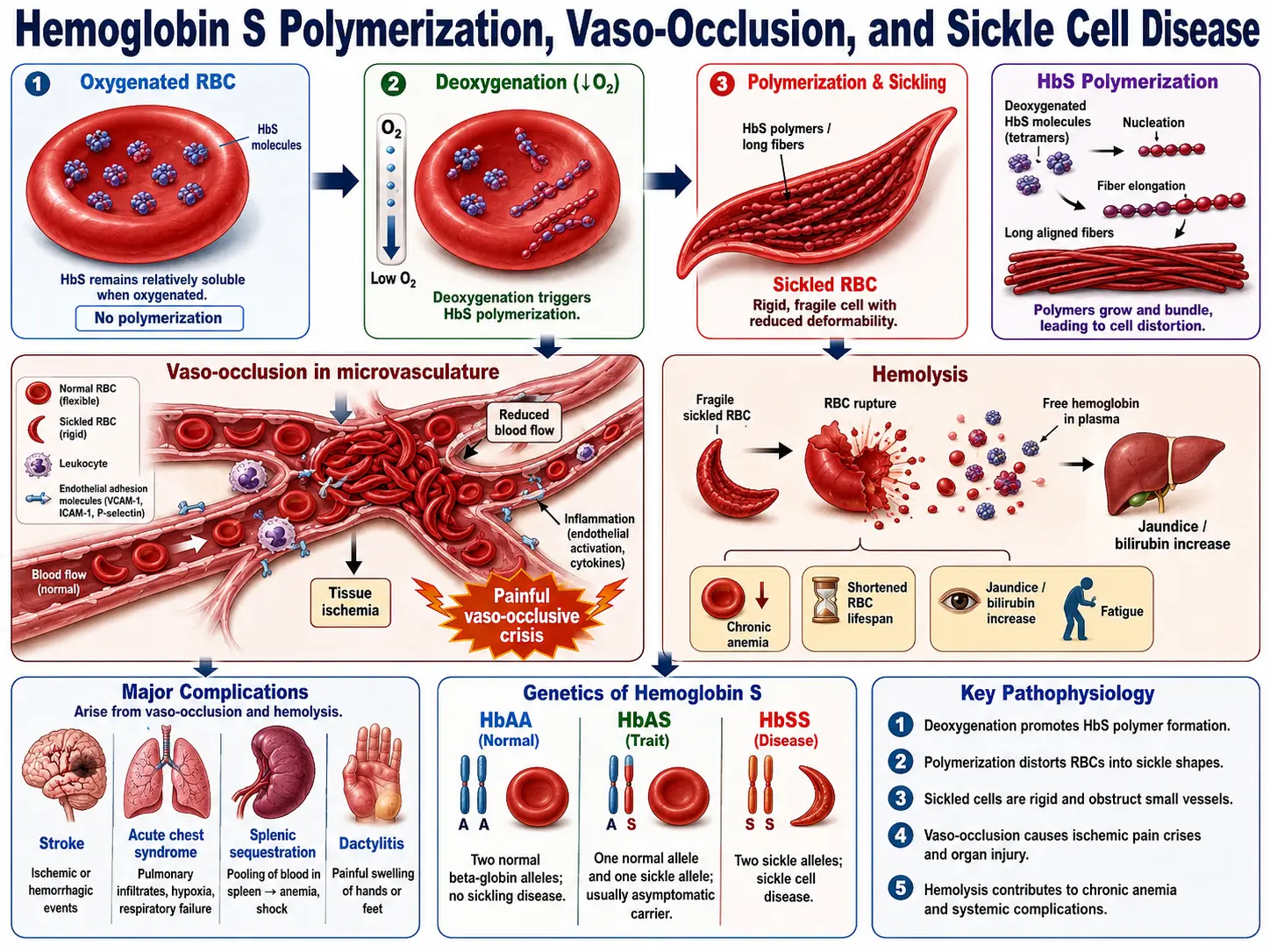
Normal adult hemoglobin (HbA, α2β2) stays soluble across physiological oxygen tensions. HbS tetramers, when deoxygenated, polymerize into long intracellular fibers through a nucleation-and-extension process driven by hydrophobic contacts between Val6 on one beta-chain and a hydrophobic pocket on an adjacent molecule. The critical determinant is the oxygen saturation of the red cell and the intracellular HbS concentration — cells with high MCHC (mean corpuscular hemoglobin concentration) and low oxygen tension polymerize fastest.
Vascular Occlusion
Sickled cells are rigid and express abnormal amounts of adhesion molecules (including α4β1 integrin, BCAM/Lutheran, and PS on the outer leaflet). They adhere to activated endothelium expressing E-selectin, VCAM-1, and P-selectin, leading to vaso-occlusion — blockade of post-capillary venules — rather than simple mechanical plugging. Neutrophils and platelets amplify this process. Vaso-occlusion deprives downstream tissue of oxygen, causing ischemic pain (vaso-occlusive crisis, VOC) and, with repeated insults, organ infarction.
Hemolysis
Dense, sickled cells are fragile and destroyed in the microcirculation and spleen. The resulting intravascular and extravascular hemolysis releases free hemoglobin and heme into plasma. Free hemoglobin scavenges nitric oxide (NO), the principal vasodilator and platelet inhibitor, creating a NO-deficient state that promotes vasoconstriction, platelet activation, and pulmonary hypertension. Hemolysis elevates unconjugated bilirubin (causing jaundice and gallstones), depletes haptoglobin, and raises LDH — the lab signature of active hemolysis.
Endothelial Inflammation
In sickle cell mice, free heme activated Toll-like receptor 4 (TLR4) signaling on endothelial cells within minutes, moving P-selectin and von Willebrand factor onto the vessel surface and activating NF-κB; blocking TLR4, or binding heme with hemopexin, prevented the resulting vaso-occlusion (Belcher 2014, an animal study). This links hemolysis to vaso-occlusion in a self-amplifying cycle: sickling → hemolysis → free heme → endothelial activation → adhesion → more vaso-occlusion.
Diagnosis and Newborn Screening
SCD complications begin in infancy. In the 1986 penicillin trial in children under three, three children given placebo died of pneumococcal septicemia and none given penicillin; the authors concluded that newborns should be screened so that penicillin can start by four months of age (Gaston 1986). That trial led to recommendations for universal newborn screening across the US (Shook 2026).
Newborn Screening
Newborn screening for SCD has been performed in the United States for decades and has substantially reduced infant illness and death; high-resource countries in Europe, the UK and Canada have since adopted it, and pilot programs have run in Africa, Brazil and India. A 2026 review lists the timing of testing, the populations targeted, laboratory methods and access to affordable testing as open problems (Shook 2026).
Diagnostic Workup in Older Patients
- HPLC or hemoglobin electrophoresis: Quantifies each hemoglobin fraction (HbS, HbA, HbF, HbC, etc.) — the definitive diagnostic test.
- Complete blood count: Anemia and a raised white-cell count are common; in adults with sickle cell anemia, a baseline white-cell count above 15,000 per cubic millimeter was associated with early death (Platt 1994).
- Hemolysis markers: Elevated LDH and indirect bilirubin, low haptoglobin, elevated reticulocyte count.
- Peripheral smear: Sickle cells, target cells, polychromasia, and Howell-Jolly bodies (reflecting functional asplenia).
- Transcranial Doppler (TCD): The 2014 NHLBI expert panel strongly recommends annual TCD examinations from ages 2 to 16 in sickle cell anemia (Yawn 2014); a time-averaged mean velocity of 200 cm/s or more in the internal carotid or middle cerebral artery was the entry threshold of the STOP trial (Adams 1998).
- Molecular/genetic testing: DNA analysis for HBB genotype, particularly to distinguish HbSβ0 from HbSβ+ thalassemia, or for atypical presentations.
Complications
SCD affects every organ system. A few complications dominate morbidity and mortality.
Vaso-Occlusive Crisis (VOC)
The most frequent acute complication. Severe pain — usually in the back, chest, extremities, or abdomen — caused by ischemia from microvascular occlusion. The 2014 NHLBI expert panel strongly recommends rapid initiation of opioids for severe pain from a vaso-occlusive crisis and incentive spirometry for patients hospitalized with one (Yawn 2014).
Acute Chest Syndrome (ACS)
Described by the National Acute Chest Syndrome Study Group as the leading cause of death among patients with SCD. In its 30-center study of 671 episodes in 538 patients, nearly half were first admitted for another reason, mainly pain; 13% of patients needed mechanical ventilation and 3% died. A specific cause was found in 38% of episodes, chiefly pulmonary fat embolism and 27 different infectious pathogens, and infection contributed to 56% of the deaths. Phenotypically matched transfusions improved oxygenation, and one fifth of patients treated with bronchodilators improved (Vichinsky 2000). Acute chest syndrome was also a risk factor for early death in the 1994 US cohort (Platt 1994).
Stroke
In the Cooperative Study of Sickle Cell Disease (4,082 patients), stroke prevalence (4.01%) and incidence (0.61 per 100 patient-years) were highest in sickle cell anemia. Infarctive stroke was least frequent at ages 20 to 29 and more frequent in children and older patients, while hemorrhagic stroke peaked at ages 20 to 29 and carried a 26% death rate in the following two weeks (Ohene-Frempong 1998). In the STOP trial, 130 children with TCD velocities of 200 cm/s or more were randomized: there were 10 cerebral infarctions and 1 intracerebral hematoma with standard care versus 1 infarction with transfusions, a 92% difference in stroke risk, and the trial was stopped early (Adams 1998). In TWiTCH, children who had received at least a year of transfusions and had no severe vasculopathy kept their TCD velocities as well on hydroxyurea as on continued transfusions (Ware 2016).
Splenic Sequestration
Acute massive enlargement of the spleen due to trapping of sickled red cells. Causes rapid anemia, thrombocytopenia, and circulatory collapse. Predominantly affects children (the spleen infarcts and atrophies by late childhood in HbSS — "autosplenectomy") and some HbSC patients who retain a functional spleen longer.
Aplastic Crisis
Transient red cell aplasia caused by parvovirus B19 infection. Among 633 children with SCD followed in Philadelphia from 1996 to 2001, 30% already showed past infection at first testing, and new infections occurred at 11.3 per 100 patient-years. The 68 episodes of transient red cell aplasia were accompanied by fever (89.7%), pain (61.8%), acute splenic sequestration (19.1%) and acute chest syndrome (11.8%) (Smith-Whitley 2004).
Functional Asplenia and Infection Risk
Repeated splenic infarction causes progressive loss of splenic function, leaving patients vulnerable to encapsulated organisms: Streptococcus pneumoniae, Haemophilus influenzae type b, and Neisseria meningitidis. The 2014 NHLBI expert panel strongly recommends daily oral penicillin prophylaxis up to age 5 (Yawn 2014); the trial behind it is described under Supportive Care below.
Priapism
Ischemic (low-flow) priapism — a painful, unwanted, prolonged erection — is a recognized complication of SCD; the SUSTAIN trial counted it, with acute chest syndrome and hepatic and splenic sequestration, separately from uncomplicated pain crises (Ataga 2017).
Avascular Necrosis (AVN)
Ischemic death of bone. In 2,590 patients followed for an average of 5.6 years, 9.8% had osteonecrosis of one or both femoral heads at entry, and new cases occurred at about 2 to 4.5 per 100 patient-years, highest in HbSS with alpha-thalassemia and in those with frequent painful crises; it was seen in children as young as five. Of 27 patients who had hip replacement, 10 were under 25 and 5 needed reoperation, and the authors described the results of hip arthroplasty as poor (Milner 1991). The 2014 NHLBI panel strongly recommends analgesics and physical therapy for avascular necrosis (Yawn 2014).
Chronic Organ Damage
Kidneys (glomerulopathy, papillary necrosis, renal failure), eyes (proliferative retinopathy → vitreous hemorrhage and retinal detachment, especially in HbSC), lungs (in 398 French adults, 27% had an elevated tricuspid regurgitant jet velocity on echocardiography but pulmonary hypertension was confirmed by right-heart catheterization in 6% (Parent 2011)), liver (congestive hepatopathy, intrahepatic cholestasis), and heart (cardiomegaly, diastolic dysfunction) all sustain cumulative injury over decades. In the 1994 US cohort, 18% of adult deaths occurred in patients with overt organ failure, predominantly renal (Platt 1994).
Treatment: Hydroxyurea and Established Drugs
Hydroxyurea (Hydroxycarbamide)
When the FDA approved L-glutamine in July 2017, it described it as the first SCD treatment approved in almost 20 years, with only one other drug approved before it (FDA, July 7, 2017). In December 2017 the FDA approved a hydroxyurea tablet for children 2 years and older with sickle cell anemia and recurrent moderate to severe painful crises (FDA approval letter, 12/21/2017). Hydroxyurea raises fetal hemoglobin (HbF), which inhibits sickling (Charache 1995). In the double-blind MSH trial of 299 adults with three or more painful crises a year, the median crisis rate was 2.5 per year with hydroxyurea versus 4.5 with placebo, and fewer patients had acute chest syndrome (25 vs. 51) or transfusions (48 vs. 73) (Charache 1995). In 17.5 years of follow-up of MSH participants, mortality was lower with long-term hydroxyurea exposure, though this follow-up was no longer randomized (Steinberg 2010); a 17-year Greek single-center study reported 10-year survival of 86% with hydroxyurea versus 65% without (Voskaridou 2010). In BABY HUG, 193 infants given hydroxyurea 20 mg/kg/day or placebo for 2 years showed no difference in the primary spleen and kidney endpoints, but hydroxyurea reduced pain and dactylitis and raised HbF (Wang 2011). The 2014 NHLBI expert panel strongly recommends hydroxyurea for adults with three or more severe vaso-occlusive crises in 12 months, pain or chronic anemia interfering with daily life, or severe or recurrent acute chest syndrome, and recommends (moderate strength) offering it to infants, children and adolescents regardless of symptoms (Yawn 2014). The pediatric tablet's 2017 label lists a starting dose of 20 mg/kg once daily, raised by 5 mg/kg/day every 8 weeks up to a maximum tolerated dose or 35 mg/kg/day, and carries a boxed warning for myelosuppression and malignancies.
L-Glutamine
Approved by the FDA on July 7, 2017 for patients 5 years and older with SCD, to reduce severe complications (FDA, July 7, 2017). Oral pharmaceutical-grade L-glutamine has been shown to increase the reduced form of nicotinamide adenine dinucleotides in sickle red cells, which probably reduces oxidative stress. In the phase 3 trial, 230 patients aged 5 to 58 with sickle cell anemia or HbSβ0-thalassemia received L-glutamine 0.3 g/kg twice daily or placebo for 48 weeks; median pain crises were 3.0 versus 4.0 and median hospitalizations 2.0 versus 3.0 (both P=0.005), and two thirds of patients in both groups also took hydroxyurea (Niihara 2018). The FDA also reported fewer days in hospital (median 6.5 vs. 11) and less acute chest syndrome (8.6% vs. 23.1%) with L-glutamine (FDA, July 7, 2017).
Crizanlizumab
Approved by the FDA in November 2019 to reduce the frequency of vaso-occlusive crises in patients 16 years and older (FDA label, 11/2019). An antibody against P-selectin, the adhesion molecule whose up-regulation on endothelial cells and platelets contributes to vaso-occlusion. In the phase 2 SUSTAIN trial (198 patients, with or without hydroxyurea), the median crisis rate was 1.63 per year with high-dose crizanlizumab (5.0 mg/kg) versus 2.98 with placebo, a 45.3% lower rate (Ataga 2017, PubMed PMID: 27959701). The label dose is 5 mg/kg intravenously at weeks 0 and 2, then every 4 weeks. In the phase 3 STAND trial (252 patients aged 12 and older), neither 5.0 nor 7.5 mg/kg reduced crises leading to a health-care visit compared with placebo (adjusted annual rates 2.49, 2.04 and 2.30), and grade 3 or higher adverse events were more frequent with 5.0 mg/kg (56%) than with placebo (32%) (Abboud 2025).
Voxelotor (withdrawn 2024)
Granted accelerated approval by the FDA in 2019 for patients 12 years and older, extended in 2021 to ages 4 to 11. An HbS polymerization inhibitor. In the phase 3 HOPE trial (274 participants), 51% of those given 1,500 mg once daily had a hemoglobin response (a rise of more than 1.0 g/dL at week 24) versus 7% with placebo, with greater falls in indirect bilirubin and reticulocytes (Vichinsky 2019). On September 26, 2024 the FDA announced that the manufacturer was voluntarily withdrawing voxelotor from the market: postmarketing trials showed a higher rate of vaso-occlusive crisis and more deaths with voxelotor than with placebo, two real-world registry studies also showed a higher crisis rate, and the manufacturer concluded that its benefit does not outweigh the risk (FDA alert, September 26, 2024).
Chronic Transfusion Therapy
Regular red cell transfusions dilute HbS with donor hemoglobin; in STOP and TWiTCH they were given to keep HbS at or below 30% (Adams 1998; Ware 2016). The 2014 NHLBI expert panel strongly recommends long-term transfusion to prevent stroke in children with TCD velocity of 200 cm/s or more, recommends (moderate strength) keeping HbS below 30% before the next transfusion, and strongly recommends transfusion to a hemoglobin of 10 g/dL before surgery in sickle cell anemia (Yawn 2014). Risks include iron overload — the panel strongly recommends assessing it, with chelation when indicated (Yawn 2014) — and alloimmunization: at one center, 58% of chronically and 15% of episodically transfused patients had red cell alloantibodies despite Rh-matched donors (Chou 2013).
Gene Therapy and CRISPR
On December 8, 2023 the FDA approved the first two cell-based gene therapies for SCD, both at that time for patients 12 years and older; in July 2026 the exagamglogene indication was extended to patients aged 2 years and older (see below). Both are made from the patient's own blood stem cells and given once, as part of a stem cell transplant, after myeloablative conditioning (high-dose chemotherapy) (FDA, December 8, 2023).
Lovotibeglogene Autotemcel (lovo-cel) — Lentiviral Gene Addition
Approved by the FDA on December 8, 2023 for patients 12 years and older with SCD and a history of vaso-occlusive events (FDA, December 8, 2023). The patient's stem cells are transduced with the BB305 lentiviral vector, which carries a modified beta-globin gene producing the antisickling hemoglobin HbAT87Q. In the pivotal group of the phase 1–2 HGB-206 study, 35 patients were infused; median total hemoglobin rose from 8.5 g/dL to 11 g/dL or more, and all 25 evaluable patients had resolution of severe vaso-occlusive events, compared with a median of 3.5 events per year before enrollment (Kanter 2022). In the FDA's review, 28 of 32 patients (88%) had complete resolution of vaso-occlusive events between 6 and 18 months after infusion. Hematologic malignancy has occurred in treated patients, and the label carries a boxed warning for it (FDA, December 8, 2023); one acute myeloid leukemia case, about 5.5 years after treatment in the study's first cohort, was judged unlikely to be caused by the vector insertion (Goyal 2022).
Exagamglogene Autotemcel (exa-cel) — CRISPR-Cas9 Gene Editing
Approved by the FDA on December 8, 2023 for patients 12 years and older with recurrent vaso-occlusive crises — the first FDA-approved therapy to use CRISPR/Cas9 genome editing (FDA, December 8, 2023). On July 1, 2026 the FDA approved an expansion of the indication to include sickle cell disease with recurrent vaso-occlusive crises and transfusion-dependent thalassemia in patients aged 2 to under 12 years (FDA approval letter, July 1, 2026); the current label covers patients aged 2 years and older with SCD with recurrent vaso-occlusive crises, states that it has not been studied in clinical trials in patients younger than 5, and supports its use from 2 to under 5 years by extrapolation from two trials (FDA label, exagamglogene autotemcel, revised 07/2026). The patient's CD34+ stem cells are edited at the erythroid-specific enhancer of BCL11A to reactivate fetal hemoglobin, which prevents sickling. In the phase 3 CLIMB SCD-121 study, 44 patients aged 12 to 35 with at least two severe crises in each of the two prior years were treated after busulfan conditioning; 29 of 30 evaluable patients (97%) were free of severe vaso-occlusive crises for at least 12 consecutive months, all 30 were free of hospitalization for them, and no cancers occurred (Frangoul 2024). The FDA's analysis counted 29 of 31 evaluable patients (93.5%) (FDA, December 8, 2023).
Allogeneic Hematopoietic Stem Cell Transplant (HSCT)
The long-established curative option, limited by the availability of an HLA-matched donor. In an international registry of 1,000 HLA-identical sibling transplants performed between 1986 and 2013 (median age 9), 5-year event-free survival was 91.4% and overall survival 92.9%; event-free survival was lower with older age at transplant and higher for transplants after 2006, and infection was the most common cause of the 70 deaths (Gluckman 2017).
Supportive Care and Infection Prevention
In the Dallas newborn cohort, better survival coincided with more timely first visits and preventive care for young children, and sepsis is no longer the leading cause of death in that cohort (Quinn 2010).
- Penicillin prophylaxis: In the 1986 randomized trial in children under three, 125 mg of penicillin V twice daily was followed by an 84% lower incidence of pneumococcal septicemia than placebo (2 of 105 vs. 13 of 110 children) (Gaston 1986). The 2014 NHLBI panel strongly recommends daily oral penicillin up to age 5 (Yawn 2014).
- Pain: The 2014 NHLBI panel strongly recommends rapid initiation of opioids for severe vaso-occlusive pain (Yawn 2014).
- Kidneys: The panel strongly recommends angiotensin-converting enzyme inhibitor therapy for microalbuminuria in adults with SCD (Yawn 2014).
- Eyes and heart: For proliferative sickle retinopathy, the panel strongly recommends referral to expert specialists for consideration of laser photocoagulation, and echocardiography to evaluate signs of pulmonary hypertension (Yawn 2014).
- Psychosocial support: Chronic pain, frequent hospitalizations, and functional limitations make depression and anxiety common comorbidities. Mental health support and social work coordination are part of comprehensive SCD care.
Key Research Papers
The following peer-reviewed publications represent landmark and recent research on sickle cell disease pathogenesis, treatment, and gene therapy.
- Charache S, Terrin ML, Moore RD, et al. (1995). Effect of hydroxyurea on the frequency of painful crises in sickle cell anemia (MSH trial). N Engl J Med 332:1317-22. — PubMed PMID: 7715639
- Niihara Y, Miller ST, Kanter J, et al. (2018). A phase 3 trial of l-glutamine in sickle cell disease. N Engl J Med 379:226-235. — PubMed PMID: 30021096
- Ataga KI, Kutlar A, Kanter J, et al. (2017). Crizanlizumab for the prevention of pain crises in sickle cell disease (SUSTAIN). N Engl J Med 376:429-439. — PubMed PMID: 27959701
- Vichinsky E, Hoppe CC, Ataga KI, et al. (2019). A phase 3 randomized trial of voxelotor in sickle cell disease (HOPE). N Engl J Med 381:509-519. — PubMed PMID: 31199090
- Kanter J, Walters MC, Krishnamurti L, et al. (2022). Biologic and clinical efficacy of LentiGlobin for sickle cell disease (HGB-206). N Engl J Med 386:617-628. — PubMed PMID: 34898139
- Frangoul H, Locatelli F, Sharma A, et al. (2024). Exagamglogene autotemcel for severe sickle cell disease (CLIMB SCD-121). N Engl J Med 390:1649-1662. — PubMed PMID: 38661449
- Gaston MH, Verter JI, Woods G, et al. (1986). Prophylaxis with oral penicillin in children with sickle cell anemia. A randomized trial. N Engl J Med 314:1593-9. — PubMed PMID: 3086721
- Adams RJ, McKie VC, Hsu L, et al. (1998). Prevention of a first stroke by transfusions in children with sickle cell anemia and abnormal results on transcranial Doppler ultrasonography (STOP). N Engl J Med 339:5-11. — PubMed PMID: 9647873
- Wang WC, Ware RE, Miller ST, et al. (2011). Hydroxycarbamide in very young children with sickle-cell anaemia: a multicentre, randomised, controlled trial (BABY HUG). Lancet 377:1663-72. — PubMed PMID: 21571150
- Platt OS, Brambilla DJ, Rosse WF, et al. (1994). Mortality in sickle cell disease. Life expectancy and risk factors for early death. N Engl J Med 330:1639-44. — PubMed PMID: 7993409
- Ware RE, Davis BR, Schultz WH, et al. (2016). Hydroxycarbamide versus chronic transfusion for maintenance of transcranial doppler flow velocities in children with sickle cell anaemia (TWiTCH): a multicentre, open-label, phase 3, non-inferiority trial. Lancet 387:661-670. — PubMed PMID: 26670617
- Abboud MR, Cançado RD, De Montalembert M, et al. (2025). Crizanlizumab with or without hydroxyurea in patients with sickle cell disease (STAND): primary analyses from a placebo-controlled, randomised, double-blind, phase 3 trial. Lancet Haematol 12:e248-e257. — PubMed PMID: 40088922
- Steinberg MH, McCarthy WF, Castro O, et al. (2010). The risks and benefits of long-term use of hydroxyurea in sickle cell anemia: a 17.5 year follow-up. Am J Hematol 85:403-8. — PubMed PMID: 20513116
- Voskaridou E, Christoulas D, Bilalis A, et al. (2010). The effect of prolonged administration of hydroxyurea on morbidity and mortality in adult patients with sickle cell syndromes: results of a 17-year, single-center trial (LaSHS). Blood 115:2354-63. — PubMed PMID: 19903897
- Goyal S, Tisdale J, Schmidt M, et al. (2022). Acute myeloid leukemia case after gene therapy for sickle cell disease. N Engl J Med 386:138-147. — PubMed PMID: 34898140
- Gluckman E, Cappelli B, Bernaudin F, et al. (2017). Sickle cell disease: an international survey of results of HLA-identical sibling hematopoietic stem cell transplantation. Blood 129:1548-1556. — PubMed PMID: 27965196
- Yawn BP, Buchanan GR, Afenyi-Annan AN, et al. (2014). Management of sickle cell disease: summary of the 2014 evidence-based report by expert panel members. JAMA 312:1033-48. — PubMed PMID: 25203083
- Kato GJ, Piel FB, Reid CD, et al. (2018). Sickle cell disease. Nat Rev Dis Primers 4:18010. — PubMed PMID: 29542687
- Ohene-Frempong K, Weiner SJ, Sleeper LA, et al. (1998). Cerebrovascular accidents in sickle cell disease: rates and risk factors. Blood 91:288-94. — PubMed PMID: 9414296
- Vichinsky EP, Neumayr LD, Earles AN, et al. (2000). Causes and outcomes of the acute chest syndrome in sickle cell disease. N Engl J Med 342:1855-65. — PubMed PMID: 10861320
- Belcher JD, Chen C, Nguyen J, et al. (2014). Heme triggers TLR4 signaling leading to endothelial cell activation and vaso-occlusion in murine sickle cell disease. Blood 123:377-90. — PubMed PMID: 24277079
- Smith-Whitley K, Zhao H, Hodinka RL, et al. (2004). Epidemiology of human parvovirus B19 in children with sickle cell disease. Blood 103:422-7. — PubMed PMID: 14525777
- Chou ST, Jackson T, Vege S, et al. (2013). High prevalence of red blood cell alloimmunization in sickle cell disease despite transfusion from Rh-matched minority donors. Blood 122:1062-71. — PubMed PMID: 23723452
- Parent F, Bachir D, Inamo J, et al. (2011). A hemodynamic study of pulmonary hypertension in sickle cell disease. N Engl J Med 365:44-53. — PubMed PMID: 21732836
- Milner PF, Kraus AP, Sebes JI, et al. (1991). Sickle cell disease as a cause of osteonecrosis of the femoral head. N Engl J Med 325:1476-81. — PubMed PMID: 1944426
- Tsaras G, Owusu-Ansah A, Boateng FO, Amoateng-Adjepong Y. (2009). Complications associated with sickle cell trait: a brief narrative review. Am J Med 122:507-12. — PubMed PMID: 19393983
- Aidoo M, Terlouw DJ, Kolczak MS, et al. (2002). Protective effects of the sickle cell gene against malaria morbidity and mortality. Lancet 359:1311-2. — PubMed PMID: 11965279
- Quinn CT, Rogers ZR, McCavit TL, Buchanan GR. (2010). Improved survival of children and adolescents with sickle cell disease. Blood 115:3447-52. — PubMed PMID: 20194891
- Shook LM, Ware RE. (2026). Advances and gaps in global newborn screening for sickle cell disease. Int J Neonatal Screen 12:4. — PubMed PMID: 41718418
PubMed Topic Searches
Connections
- Hematology
- Stem Cells: The Body's Blank Slates — interactive animation
- CRISPR: How Gene Editing Works — interactive animation
- Inheritance: Dominant, Recessive and Punnett Squares — interactive animation
- Anemia
- Thalassemia
- Stroke
- Hemophilia
- Thrombotic Thrombocytopenic Purpura
- Hemolytic Uremic Syndrome
- Iron
- Folate
- Complete Blood Count
- Heart Failure
- Fatigue
- Jaundice
- Pulmonary Hypertension
- Chest Pain
- Chronic Pain
- Thrombocytopenia
- Disseminated Intravascular Coagulation
- Kidney Stones