Methylene Blue: From 19th-Century Dye to Medicine and Mitochondrial Research
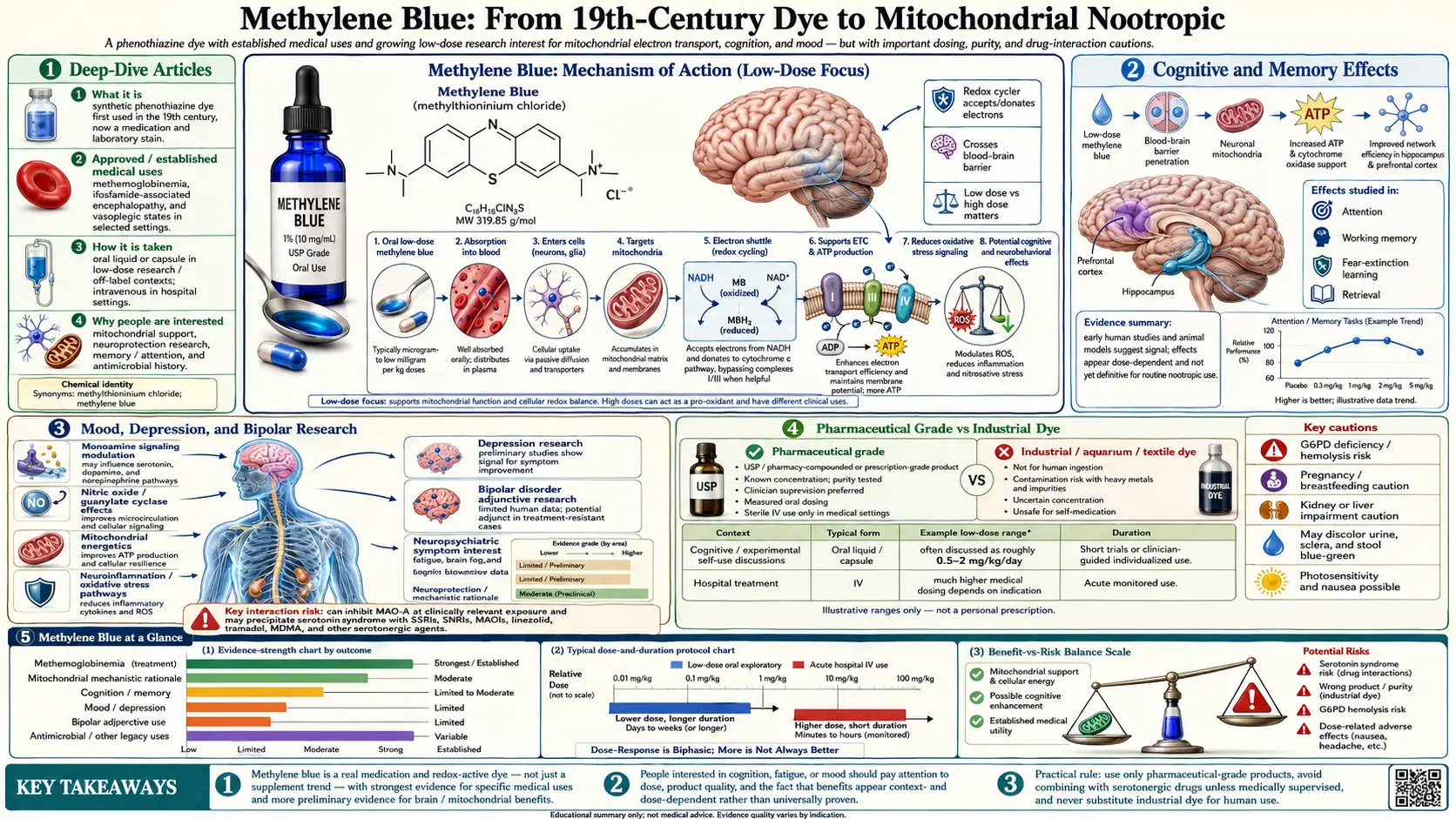
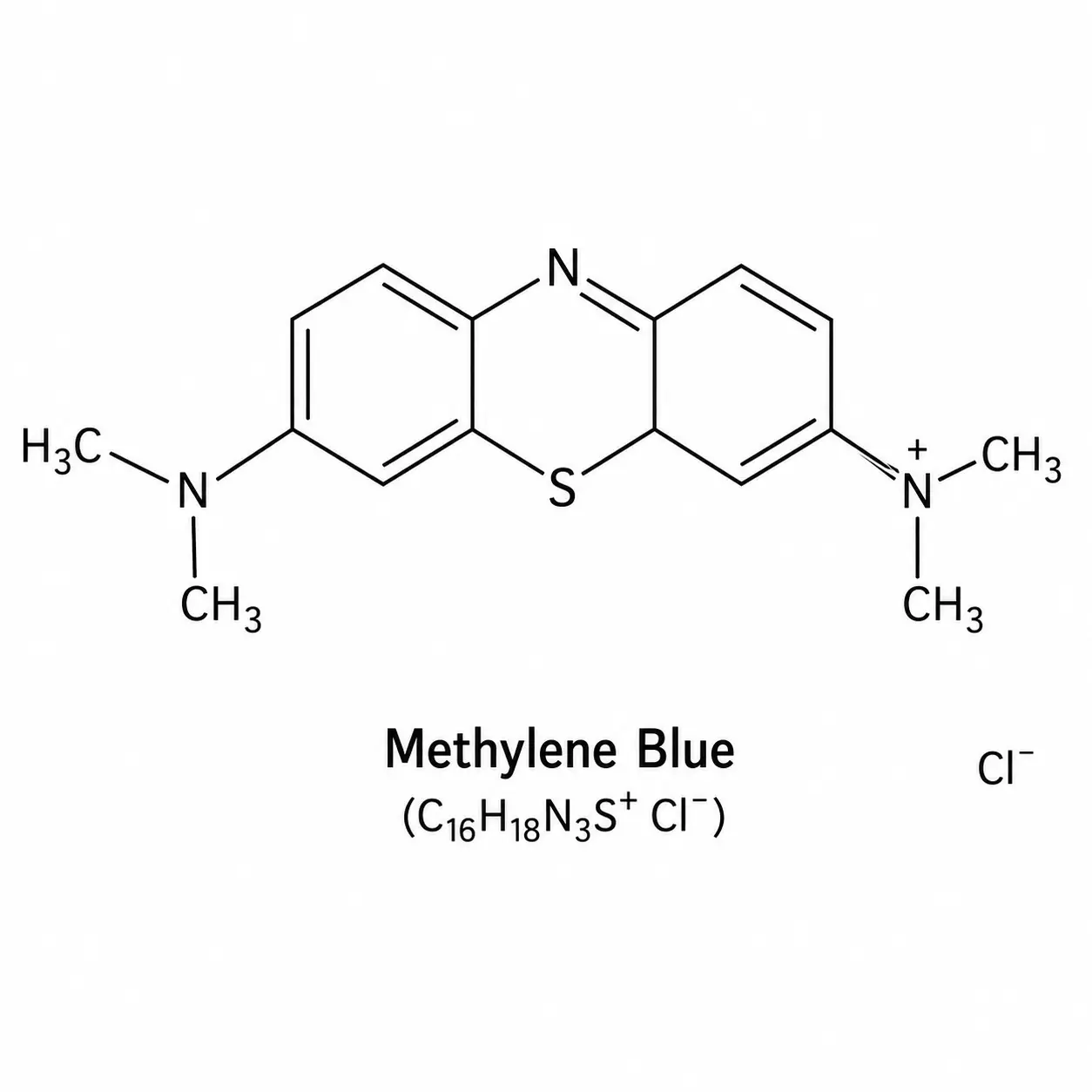
Methylene blue (methylthioninium chloride) is one of the oldest synthetic drugs still in medical use. It was first made as a textile dye in 1876 (Krafts 2011), and it belongs to the phenothiazine chemical family, which a 2011 review calls pharmacology’s first lead structure: phenothiazine derivatives later became antihistamines, sedatives and antipsychotics (Ohlow 2011). In the United States its only FDA-approved use is the treatment of acquired methemoglobinemia with methylene blue injection. Over the past two decades, researchers have also studied it, mostly at low doses, for effects on mitochondrial function, memory, mood and neurodegenerative disease; those uses are off-label and investigational. Pharmaceutical-grade methylene blue is made to the purity standards of a pharmacopoeia; the dye and laboratory grades sold under the same name are not made for human use.
This article summarizes the mechanisms, the research evidence, the label’s safety warnings and the difference between pharmaceutical and industrial grades, as reported in the sources cited below. It is educational and not a substitute for individualized medical advice.
Deep-Dive Articles
Methylene blue is unusual: a 19th-century textile dye that is widely described as the first fully synthetic drug, a member of the chemical family that later produced the phenothiazine medicines, the approved treatment for acquired methemoglobinemia, and now a subject of off-label research on cognition and ageing. The nine articles below take it apart by topic — the bioenergetics, the doses on the label and in trials, the off-label research, the label’s safety warnings, the medication interactions, and the difference between pharmaceutical-grade methylene blue and the industrial dye sold by chemical suppliers.
Mitochondrial Mechanism & Bioenergetics
How, in cell and animal studies, methylene blue accepts electrons from NADH and passes them to cytochrome c, bypassing blocked Complexes I and III; its actions on nitric oxide synthase, MAO-A and tau; the hormetic dose-response that reviews describe, with opposite effects at low and high doses; and what the phase 3 trials of the related compound LMTM reported.
Read the deep dive →Dosing Guide (mg/kg, Oral, Sublingual, IV)
The intravenous dosing on the US label for acquired methemoglobinemia, the low-dose range researchers describe in animal and human studies, oral vs intravenous pharmacokinetics, the vitamin C interaction, and the label’s record of what large doses have caused.
Read the deep dive →Cognitive Enhancement & ADHD
The Rodriguez 2016 functional MRI study in healthy adults, the animal memory studies, what the phase 2 and phase 3 Alzheimer’s trials reported, the bipolar-disorder trial, and what PubMed does and does not contain on methylene blue and ADHD.
Read the deep dive →Methylene Blue & Long COVID
The research linking post-viral fatigue and long COVID to mitochondrial dysfunction, the small studies and mechanistic reasoning behind interest in methylene blue, clinical-trial activity, and the unresolved questions.
Read the deep dive →Drug Interactions & Serotonin Syndrome
The label’s boxed warning on serotonin syndrome with SSRIs, SNRIs, MAOIs and opioids, the other serotonergic drugs the label lists, the MAO-A inhibition mechanism, the FDA’s 2011 Drug Safety Communication, and what serotonin syndrome looks like.
Read the deep dive →Methemoglobinemia & G6PD Deficiency
The paradox recorded on the label: methylene blue treats acquired methemoglobinemia, yet large cumulative intravenous doses have caused mild methemoglobinemia. Why the label contraindicates it in G6PD deficiency, where it can cause severe hemolysis, and what is known about G6PD testing.
Read the deep dive →Photodynamic Therapy & Cancer Research
Methylene blue + red light = singlet oxygen. Antimicrobial photodynamic therapy studied in dentistry, photodynamic work on skin lesions, methylene blue staining in Barrett’s esophagus surveillance, and what the oncology research does and does not show.
Read the deep dive →Pharmaceutical Grade vs Industrial Dye
How pharmaceutical (pharmacopoeial) grade differs from dye and laboratory grades, the impurities that purity standards are written to limit, the third-party testing question, and blue discoloration of the tongue and urine.
Read the deep dive →History: Ehrlich, Malaria, & the Phenothiazine Revolution
From a German textile dye in 1876 to Paul Ehrlich’s staining work and malaria experiments, and the phenothiazine chemistry that later produced chlorpromazine and related psychiatric drugs — a history a 2011 review calls the “seven lives” of pharmacology’s first lead structure.
Read the deep dive →Table of Contents
- Deep-Dive Articles
- History and Approved Uses
- Historical Medical Use (1926)
- Mechanism — The Electron-Transport Bypass
- Cognitive and Memory Effects
- Alzheimer’s and Neurodegenerative Research
- Mood, Depression, and Bipolar Research
- Doses on the Label and in Trials
- Risks and Drug Interactions
- Pharmaceutical Grade vs Industrial Dye
- Connections
- Featured Videos
History and Approved Uses
Methylene blue is widely described as the first fully synthetic drug used in medicine (Schirmer 2011): Heinrich Caro made it as a textile dye at a German chemical company in 1876 (Krafts 2011), and in 1891 Paul Guttmann and Paul Ehrlich reported its antimalarial action, the first report of a synthetic rather than natural antimalarial (Vennerstrom 1995).
Today the only indication on the US label is the treatment of acquired methemoglobinemia in children and adults, with methylene blue injection given intravenously; the FDA granted it under accelerated approval (FDA label, 2023). Other uses described in the medical literature are off-label:
- Ifosfamide-induced encephalopathy — a 2000 report of 12 cases and a literature review concluded that methylene blue was an effective treatment for this brain toxicity of the chemotherapy drug ifosfamide (Pelgrims 2000).
- Vasoplegic shock — a 2016 review found that improved blood pressure has consistently been shown in small trials and case reports, but better oxygen delivery or lower mortality has not been demonstrated (Hosseinian 2016).
- Diagnostic and surgical dye — methylene blue is commonly used in diagnostic procedures (Poteet 2012), a use reviewed alongside its other clinical applications by Wainwright and Crossley (2002).
The fuller story is told in the dedicated History & Discovery article.
Historical Medical Use (1926 U.S. Dispensatory)
By the time the United States Dispensatory (21st edition, 1926) was the standard American drug reference, methylene blue had already had a fifty-year career — remarkable for a compound that began life in 1876 as a synthetic textile dye. It is genuinely one of the first fully synthetic medicines, and its tricyclic phenothiazine core is a distinct chemical structure, not one of the simpler azo dyes that color most fabrics and foods. That structural backbone is the same one later built into chlorpromazine and the whole family of antipsychotic drugs, which is why methylene blue is often called the grandparent of modern psychiatric medicine.
The medical claims of that era, presented here strictly as history, were broad. Physicians experimented with methylene blue to try to shrink tumors, and used it for meningitis, bladder (urinary tract) infections, and gonorrhea — all in a pre-antibiotic world where a cheap dye that stained and was thought to be mildly antiseptic was one of the few tools available. A century later, methylene blue is again in the spotlight, this time for mitochondrial and neurological support, the focus of much of this page.
Each of those 1926 claims has to be read against what modern evidence shows. Methylene blue is not an approved cancer treatment, and none of the trials cited here shows that swallowing or injecting it treats or shrinks tumors. (The oncology research centres on photodynamic therapy, where methylene blue is activated by red light to generate singlet oxygen; a 2005 review describes clinical cases treated this way, including basal cell carcinoma and Kaposi’s sarcoma (Tardivo 2005); see the Photodynamic Therapy & Cancer Research article.) Meningitis, bladder infections and gonorrhea are bacterial infections that are treated with antibiotics today. The modern approved use is narrow: the US label’s only indication is acquired methemoglobinemia. Ifosfamide-induced encephalopathy, vasoplegic shock and diagnostic or surgical staining are off-label uses described in the literature (see History and Approved Uses above). The low-dose mitochondrial and neurocognitive uses behind the current interest remain investigational: most of that evidence comes from cell and animal studies and small human trials.
The label’s safety findings are detailed in the Risks and Drug Interactions section below. In laboratory assays methylene blue is a potent, reversible inhibitor of monoamine oxidase A (MAO-A) (Ramsay 2007), and the label carries a boxed warning that it may cause serious or fatal serotonin syndrome when combined with serotonergic drugs and opioids. The label contraindicates it in G6PD deficiency because of the risk of hemolytic anemia, and records that large cumulative intravenous doses have caused mild methemoglobinemia — the condition it is approved to treat. Methylene blue sold as an aquarium, textile or laboratory dye is not made to pharmaceutical standards or sold for human use.
Mechanism — The Electron-Transport Bypass
In cell and animal studies, methylene blue acts as an alternative electron carrier in the mitochondrial electron transport chain: Wen and colleagues (2011) reported that it “accepts electrons from NADH and transfers them to cytochrome c and bypasses complex I/III blockage,” increased oxygen use in cultured cells, and lessened damage in animal models of Parkinson’s disease and stroke. In cultured human fibroblasts, nanomolar methylene blue raised Complex IV activity and oxygen consumption and delayed cellular senescence (Atamna 2008). These are laboratory findings, not results in people. Reviews by Gonzalez-Lima’s group describe a hormetic dose-response, with “opposite effects at low and high doses” in the mostly animal and cell studies they reviewed (Rojas 2012; Bruchey and Gonzalez-Lima 2008).
Methylene blue also inhibits monoamine oxidase A (MAO-A): in assays on the purified human enzyme it was a potent, reversible inhibitor, and the authors concluded that MAO-A would be completely inhibited at the concentrations reported after intravenous use, which would be expected to account for serotonin toxicity in patients taking SSRIs (Ramsay 2007). It inhibits nitric oxide synthase directly and is a weaker inhibitor of guanylyl cyclase than had been assumed (Mayer 1993); blocking the nitric oxide pathway is the rationale for its off-label use in vasoplegic shock (Hosseinian 2016). The related compound LMTM inhibits aggregation of the tau protein implicated in Alzheimer’s disease in test-tube studies and in transgenic mice (Gauthier 2016). The full mechanism is on the Mitochondrial Mechanism page.
Cognitive and Memory Effects
In a randomized, double-blind, placebo-controlled functional-MRI study of 26 healthy adults aged 22 to 62, a single low oral dose of methylene blue increased MRI activity in the insular cortex during a sustained-attention task and in prefrontal, parietal and occipital regions during a short-term memory task, and was associated with a 7% increase in correct responses during memory retrieval, measured one hour after the dose (Rodriguez 2016). It measured a short-term effect in healthy volunteers. In rats, low doses given after training improved memory retention and increased brain oxygen consumption or cytochrome c oxidase activity (Callaway 2004; Riha 2005).
Alzheimer’s and Neurodegenerative Research
Methylene blue (methylthioninium chloride) and LMTM (leuco-methylthioninium, a stabilized reduced form of the same molecule, also called hydromethylthionine) have been tested in Alzheimer’s disease because they inhibit tau aggregation in laboratory studies. An exploratory phase 2 trial of methylthioninium chloride in 321 people reported benefits at the middle dose in some analyses (Wischik 2015). In the phase 3 trials of LMTM, no randomized comparison on the co-primary clinical outcomes showed a benefit: TRx-237-015 (891 people) was negative (Gauthier 2016); TRx-237-005 (800 people) replaced its randomized analysis, before unblinding, with non-randomized comparisons of people taking LMTM as their only Alzheimer’s medicine, and the authors stated that a further suitably randomized trial is required (Wilcock 2018); and LUCIDITY (598 people) could not show differences on the co-primary endpoints at 52 weeks (Wischik 2026). A 52-week phase 3 trial in 220 people with behavioural-variant frontotemporal dementia found no significant differences between the two doses as randomized (Shiells 2020). In animals, methylene blue lessened damage in a rotenone model of Parkinson’s disease (Wen 2011).
Mood, Depression, and Bipolar Research
In a 6-month double-blind crossover trial in 37 people with bipolar disorder taking lamotrigine, 195 mg of methylene blue improved residual symptoms of depression and anxiety compared with 15 mg (used as a placebo, since it colours the urine), with no significant effect on cognitive symptoms (Alda 2017). Its MAO-A inhibition and mitochondrial effects have been proposed as mechanisms. The label’s boxed warning covers SSRIs, SNRIs and MAOIs — the drug classes that include most standard antidepressants.
Doses on the Label and in Trials
The US label for methylene blue injection, for acquired methemoglobinemia, gives 1 mg/kg intravenously over 5–30 minutes, with a repeat dose of 1 mg/kg one hour later if the methemoglobin level remains above 30% or symptoms persist. The label’s overdosage section reports that cumulative intravenous doses of 7 mg/kg or more caused nausea, chest pain, shortness of breath, confusion and mild methemoglobinemia, and that a single dose of 20 mg/kg or more caused severe hemolysis and death. In its study of 82 healthy adults given 2 mg/kg, 74% had discolored urine (chromaturia) and 13% had skin discoloration. The research trials described on this page used a single low oral dose (Rodriguez 2016) and a 195 mg active dose against a 15 mg comparison dose (Alda 2017). No dose is approved for cognitive or anti-ageing use; trial and label doses are compared on the Dosing Guide page.
Risks and Drug Interactions
- Serotonin syndrome. The label’s boxed warning states that methylene blue may cause serious or fatal serotonin syndrome with SSRIs, SNRIs, MAOIs and opioids; its drug-interaction section also lists bupropion, buspirone, clomipramine, mirtazapine, linezolid and dextromethorphan. The FDA issued a Drug Safety Communication on these reactions in July 2011. Lisdexamfetamine’s label contraindicates it within 14 days of an MAOI, naming intravenous methylene blue, because of the risk of hypertensive crisis.
- G6PD deficiency. The label contraindicates methylene blue in glucose-6-phosphate dehydrogenase deficiency because of the risk of hemolytic anemia; treating these patients may cause severe hemolysis and severe anemia (Beutler 1994 reviews the deficiency).
- Pregnancy. The label states that methylene blue may cause fetal harm: injection into the amniotic fluid in the second trimester was associated with neonatal intestinal atresia and fetal death.
- Large doses. The label’s overdosage section records nausea, chest pain, confusion and mild methemoglobinemia after large cumulative intravenous doses, and severe hemolysis and death after a severe overdose.
- Blue discoloration. The label lists discolored urine and skin discoloration as common reactions, and notes that the dye can interfere with urine tests that rely on a blue indicator.
Pharmaceutical Grade vs Industrial Dye
Methylene blue is sold in several grades. USP-grade or other pharmacopoeia-grade material is made to the published purity standards for medicines, and the approved drug is methylene blue injection. Methylene blue sold for aquariums, textile dyeing and laboratory staining is not made or tested to those standards and is not sold for human use. The grades and the impurities in question are compared on the Pharmaceutical Grade vs Industrial Dye page.
Key Research Papers
Foundational and recent peer-reviewed publications on methylene blue, covering mitochondrial bioenergetics, cognitive enhancement, neurodegenerative disease, methemoglobinemia, and the MAO-A/serotonin-syndrome safety axis. Each citation links to its DOI or PubMed record.
- Atamna H, Nguyen A, Schultz C, et al. Methylene Blue Delays Cellular Senescence and Enhances Key Mitochondrial Biochemical Pathways. FASEB Journal. 2008;22(3):703–712. — doi:10.1096/fj.07-9610com
- Rojas JC, Bruchey AK, Gonzalez-Lima F. Neurometabolic Mechanisms for Memory Enhancement and Neuroprotection of Methylene Blue. Progress in Neurobiology. 2012;96(1):32–45. — doi:10.1016/j.pneurobio.2011.10.007
- Wainwright M, Crossley KB. Methylene Blue—A Therapeutic Dye for All Seasons? Journal of Chemotherapy. 2002;14(5):431–443. — doi:10.1179/joc.2002.14.5.431
- Oz M, Lorke DE, Petroianu GA. Methylene Blue and Alzheimer's Disease. Biochemical Pharmacology. 2009;78(8):927–932. (Reviews methylene blue’s actions on neurotransmitter systems and cellular targets relevant to Alzheimer’s disease.) — doi:10.1016/j.bcp.2009.04.034
- Schirmer RH, Adler H, Pickhardt M, Mandelkow E. "Lest We Forget You—Methylene Blue…". Neurobiology of Aging. 2011;32(12):2325.e7–2325.e16. — doi:10.1016/j.neurobiolaging.2010.12.012
- Bistas E, Sanghavi DK. Methylene Blue. StatPearls Publishing. Updated 2023.
- Wischik CM, Staff RT, Wischik DJ, et al. Tau Aggregation Inhibitor Therapy: An Exploratory Phase 2 Study in Mild or Moderate Alzheimer's Disease. Journal of Alzheimer's Disease. 2015;44(2):705–720. — doi:10.3233/JAD-142874
- Rodriguez P, Zhou W, Barrett DW, et al. Multimodal Randomized Functional MR Imaging of the Effects of Methylene Blue in the Human Brain. Radiology. 2016;281(2):516–526. — doi:10.1148/radiol.2016152893
- Ramsay RR, Dunford C, Gillman PK. Methylene Blue and Serotonin Toxicity: Inhibition of Monoamine Oxidase A (MAO A) Confirms a Theoretical Prediction. British Journal of Pharmacology. 2007;152(6):946–951. — doi:10.1038/sj.bjp.0707430
- Wendel WB. The Control of Methemoglobinemia with Methylene Blue. Journal of Clinical Investigation. 1939;18(2):179–185. — doi:10.1172/jci101033
- Beutler E. G6PD Deficiency. Blood. 1994;84(11):3613–3636. — doi:10.1182/blood.V84.11.3613.bloodjournal84113613
- Tucker D, Lu Y, Zhang Q. From Mitochondrial Function to Neuroprotection—An Emerging Role for Methylene Blue. Molecular Neurobiology. 2018;55(6):5137–5153. — doi:10.1007/s12035-017-0712-2
- Riha PD, Bruchey AK, Echevarria DJ, Gonzalez-Lima F. Memory Facilitation by Methylene Blue: Dose-Dependent Effect on Behavior and Brain Oxygen Consumption. European Journal of Pharmacology. 2005;511(2–3):151–158. — doi:10.1016/j.ejphar.2005.02.001
- Callaway NL, Riha PD, Bruchey AK, Munshi Z, Gonzalez-Lima F. Methylene Blue Improves Brain Oxidative Metabolism and Memory Retention in Rats. Pharmacology Biochemistry and Behavior. 2004;77(1):175–181. — doi:10.1016/j.pbb.2003.10.007
- Poteet E, Winters A, Yan LJ, et al. Neuroprotective Actions of Methylene Blue and Its Derivatives. PLoS ONE. 2012;7(10):e48279. — doi:10.1371/journal.pone.0048279
- Furian AF, Fighera MR, Oliveira MS, et al. Methylene Blue Prevents Methylmalonate-Induced Seizures and Oxidative Damage in Rat Striatum. Neurochemistry International. 2007;50(1):164–171. — doi:10.1016/j.neuint.2006.07.012
- Gillman PK. Methylene Blue Implicated in Potentially Fatal Serotonin Toxicity. Anaesthesia. 2006;61(10):1013–1014. — doi:10.1111/j.1365-2044.2006.04808.x
- U.S. Food and Drug Administration, Drugs@FDA. Methylene blue injection, 5 mg/mL, for intravenous use: prescribing information (NDA 204630), revised November 2023 — accessdata.fda.gov
- U.S. Food and Drug Administration (2011). FDA Drug Safety Communication: Serious CNS reactions possible when methylene blue is given to patients taking certain psychiatric medications. July 26, 2011 (archived copy) — web.archive.org
- Lisdexamfetamine dimesylate capsules: prescribing information, Contraindications (DailyMed, U.S. National Library of Medicine) — dailymed.nlm.nih.gov
- Krafts K, Hempelmann E, Oleksyn BJ. In Search of the Malarial Parasite: Biographical Sketches of the Blood Stain Contributors. Parasitology Research. 2011;109(3):521–529 (history review) — PubMed PMID: 21660627
- Vennerstrom JL, Makler MT, Angerhofer CK, et al. Antimalarial Dyes Revisited: Xanthenes, Azines, Oxazines, and Thiazines. Antimicrobial Agents and Chemotherapy. 1995;39(12):2671–2677 — PubMed PMID: 8593000
- Ohlow MJ, Moosmann B. Phenothiazine: The Seven Lives of Pharmacology’s First Lead Structure. Drug Discovery Today. 2011;16(3–4):119–131 (review) — PubMed PMID: 21237283
- Pelgrims J, De Vos F, Van den Brande J, et al. Methylene Blue in the Treatment and Prevention of Ifosfamide-Induced Encephalopathy: Report of 12 Cases and a Review of the Literature. British Journal of Cancer. 2000;82(2):291–294 — PubMed PMID: 10646879
- Hosseinian L, Weiner M, Levin MA, Fischer GW. Methylene Blue: Magic Bullet for Vasoplegia? Anesthesia & Analgesia. 2016;122(1):194–201 (review) — PubMed PMID: 26678471
- Tardivo JP, Del Giglio A, de Oliveira CS, et al. Methylene Blue in Photodynamic Therapy: From Basic Mechanisms to Clinical Applications. Photodiagnosis and Photodynamic Therapy. 2005;2(3):175–191 (review) — PubMed PMID: 25048768
- Wen Y, Li W, Poteet EC, et al. Alternative Mitochondrial Electron Transfer as a Novel Strategy for Neuroprotection. Journal of Biological Chemistry. 2011;286(18):16504–16515 (cell and animal study) — PubMed PMID: 21454572
- Bruchey AK, Gonzalez-Lima F. Behavioral, Physiological and Biochemical Hormetic Responses to the Autoxidizable Dye Methylene Blue. American Journal of Pharmacology and Toxicology. 2008;3(1):72–79 (review) — PubMed PMID: 20463863
- Mayer B, Brunner F, Schmidt K. Inhibition of Nitric Oxide Synthesis by Methylene Blue. Biochemical Pharmacology. 1993;45(2):367–374 (laboratory study) — PubMed PMID: 7679577
- Gauthier S, Feldman HH, Schneider LS, et al. Efficacy and Safety of Tau-Aggregation Inhibitor Therapy in Patients with Mild or Moderate Alzheimer’s Disease: A Randomised, Controlled, Double-Blind, Parallel-Arm, Phase 3 Trial. Lancet. 2016;388(10062):2873–2884 (TRx-237-015) — PubMed PMID: 27863809
- Wilcock GK, Gauthier S, Frisoni GB, et al. Potential of Low Dose Leuco-Methylthioninium Bis(Hydromethanesulphonate) (LMTM) Monotherapy for Treatment of Mild Alzheimer’s Disease: Cohort Analysis as Modified Primary Outcome in a Phase III Clinical Trial. Journal of Alzheimer’s Disease. 2018;61(1):435–457 (TRx-237-005) — PubMed PMID: 29154277
- Wischik CM, Stefanacci R, Bentham P, et al. Clinical, Imaging and Blood Biomarker Outcomes in a Phase 3 Clinical Trial of Tau Aggregation Inhibitor Hydromethylthionine Mesylate in Mild Cognitive Impairment and Mild to Moderate Dementia due to Alzheimer’s Disease. Journal of Prevention of Alzheimer’s Disease. 2026;13(3):100480 (LUCIDITY) — PubMed PMID: 41570392
- Shiells H, Schelter BO, Bentham P, et al. Concentration-Dependent Activity of Hydromethylthionine on Clinical Decline and Brain Atrophy in a Randomized Controlled Trial in Behavioral Variant Frontotemporal Dementia. Journal of Alzheimer’s Disease. 2020;75(2):501–519 — PubMed PMID: 32280089
- Alda M, McKinnon M, Blagdon R, et al. Methylene Blue Treatment for Residual Symptoms of Bipolar Disorder: Randomised Crossover Study. British Journal of Psychiatry. 2017;210(1):54–60 — PubMed PMID: 27284082
PubMed Topic Searches
Live PubMed queries that update as new papers are indexed.
- PubMed: methylene blue mitochondrial function
- PubMed: methylene blue cytochrome c oxidase
- PubMed: methylene blue Alzheimer's tau
- PubMed: methylene blue methemoglobinemia
- PubMed: methylene blue cerebral blood flow
- PubMed: methylene blue memory cognition
- PubMed: methylene blue antimicrobial
- PubMed: methylene blue ifosfamide encephalopathy
- PubMed: methylene blue serotonin syndrome
- PubMed: methylene blue photodynamic therapy
- PubMed: methylene blue G6PD deficiency
- PubMed: methylene blue vasoplegic shock
Connections
- Pharmaceutical Grade vs Industrial Dye
- Methylene Blue Dosing Guide
- Drug Interactions and Serotonin Syndrome
- History: Ehrlich and Phenothiazines
- Methylene Blue and Long COVID
- Methemoglobinemia and G6PD Deficiency
- Cognitive Enhancement and ADHD
- Mitochondrial Mechanism and Bioenergetics
- Photodynamic Therapy and Cancer Research
- Depression
- Dementia
- Alzheimer's Disease
- ADHD
- NAD+ and NMN
- Longevity Protocols
- Creatine
- Kidney Disease
- Malaria
- Conditions on this site that reference this page: Acute Kidney Injury · Concussion · Traumatic Brain Injury (TBI)