Alzheimer's Disease
Deep-Dive Articles
What is Alzheimer's Disease?
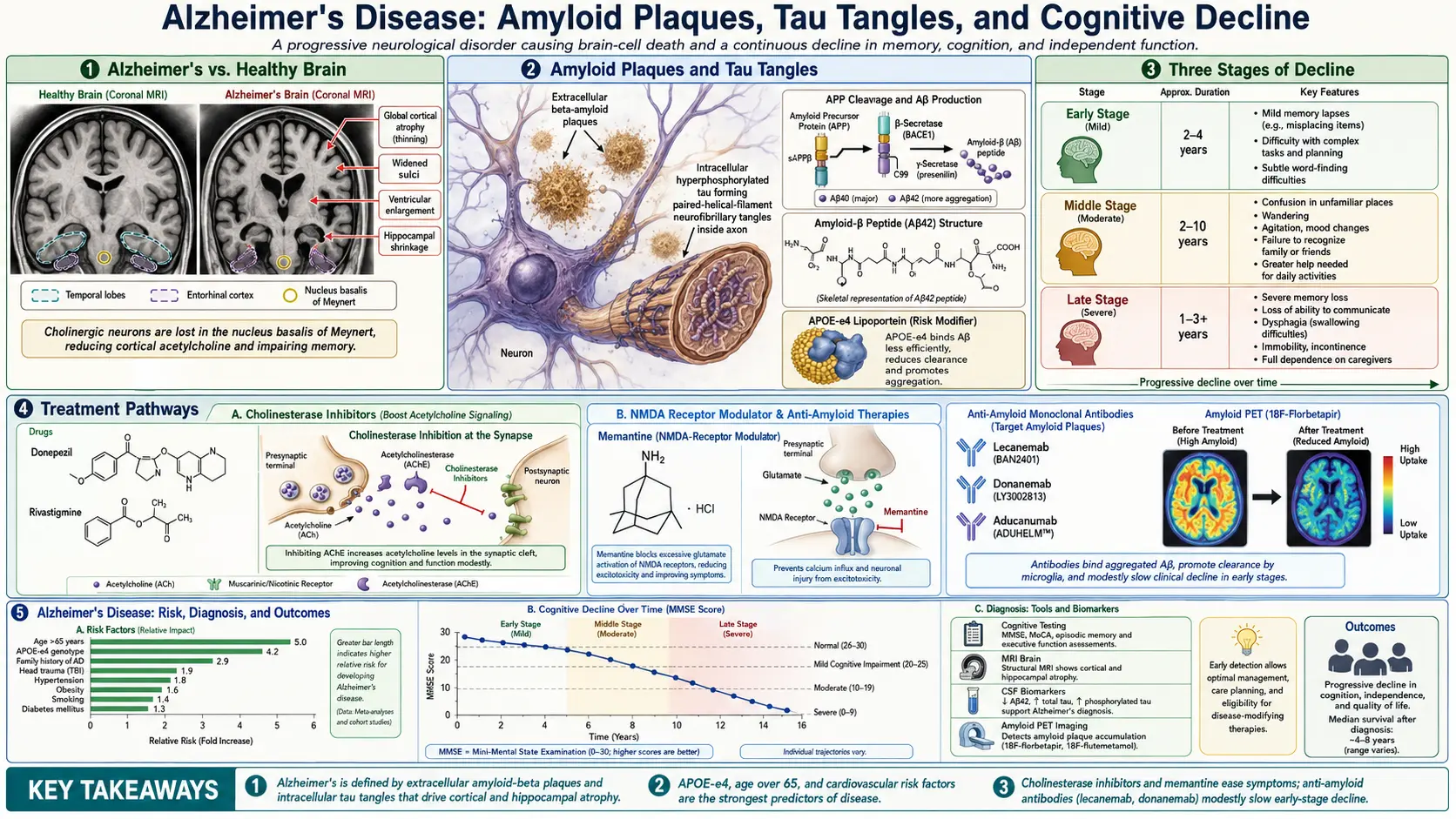
Alzheimer's disease is a progressive neurological disorder that causes brain cells to degenerate and die. It is the most common cause of dementia, leading to a continuous decline in cognitive, behavioral, and social skills, which affects a person's ability to function independently.
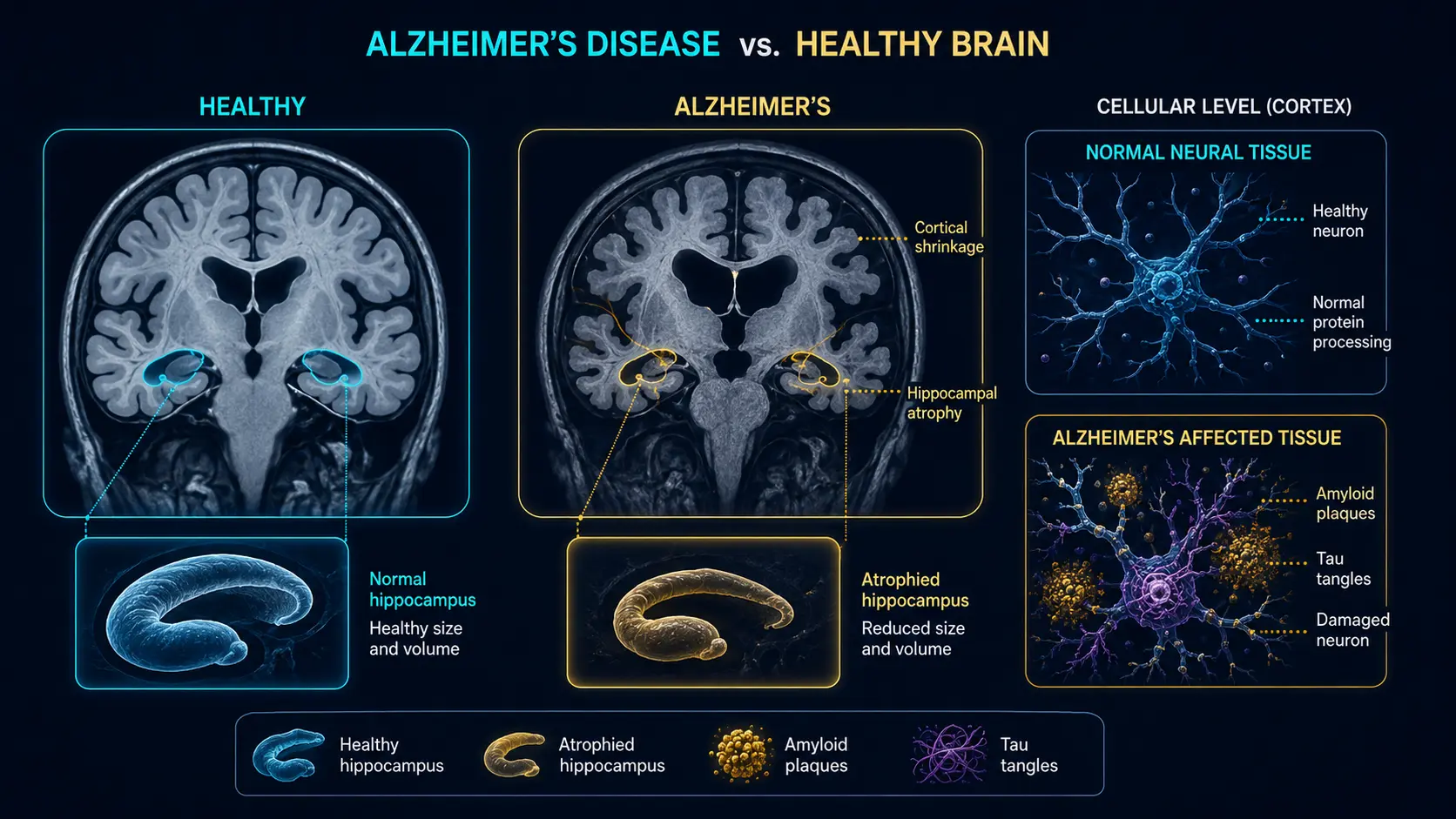
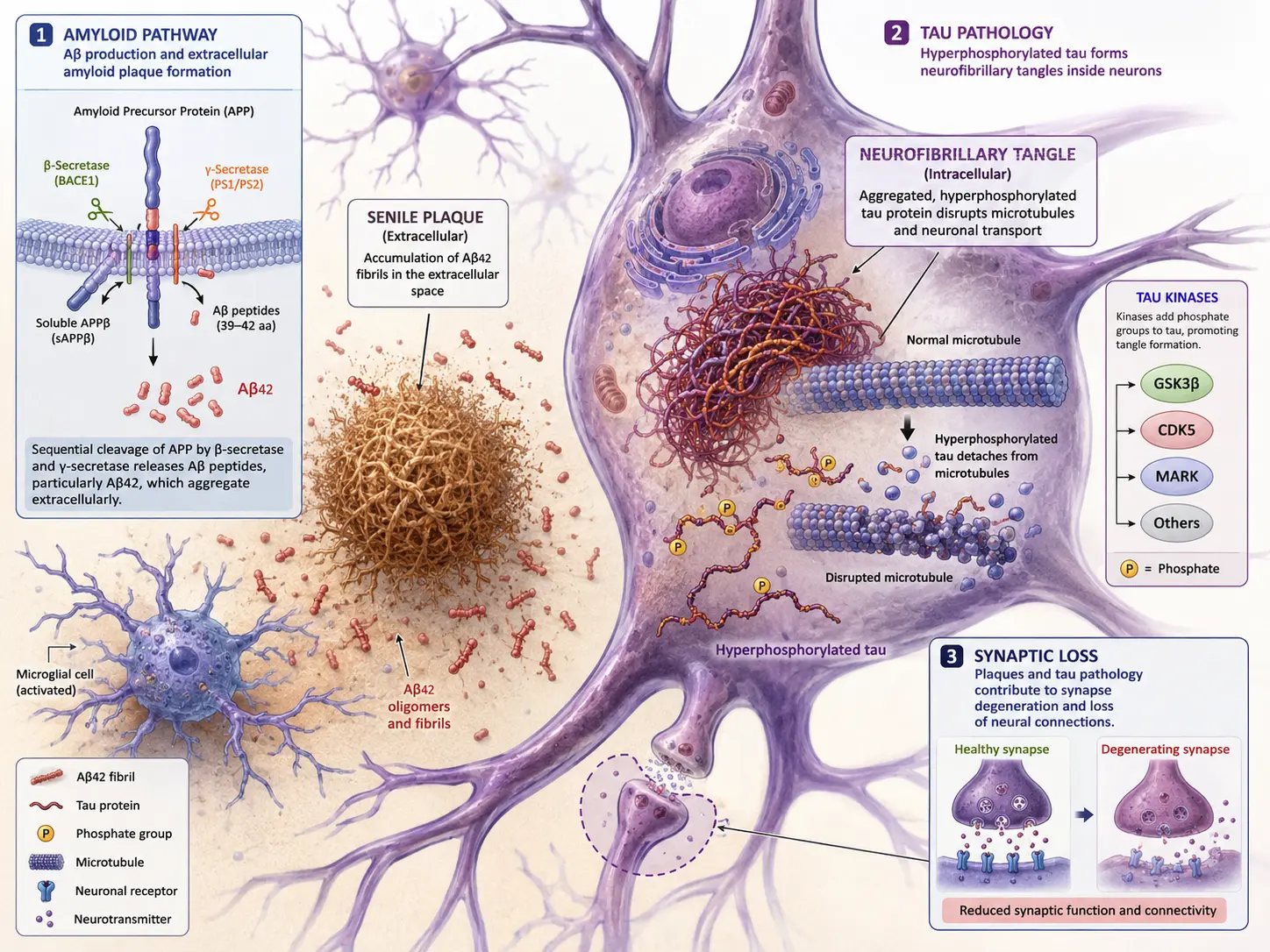
The Alzheimer's Association's 2024 report describes beta-amyloid build-up outside neurons and twisted strands of tau inside neurons as the disease's hallmarks, accompanied by the death of neurons and damage to brain tissue. It estimates that Alzheimer's accounts for 60% to 80% of dementia cases, notes that most people with it also have the brain changes of one or more other causes of dementia (mixed pathologies), and estimates that 6.9 million Americans aged 65 and older live with Alzheimer's dementia. Alzheimer's was the fifth-leading cause of death among Americans aged 65 and older in that report (PubMed PMID: 38689398).
Symptoms of Alzheimer's Disease
The signs below follow the warning signs listed in the Alzheimer's Association's 2024 report, which contrasts each with typical age-related changes (PubMed PMID: 38689398).
- Memory loss: One of the earliest and most common signs, especially forgetting recently learned information.
- Difficulty in planning or solving problems: Trouble following familiar recipes or managing bills.
- Confusion with time or place: Losing track of dates, seasons, or the passage of time.
- Challenges understanding visual images and spatial relationships: Issues with reading, judging distance, or recognizing objects.
- Problems with speaking or writing: Struggling with vocabulary, stopping in the middle of a conversation, or repeating oneself.
- Misplacing items and being unable to retrace steps to find them.
- Poor judgment: Decreased judgment or decision-making skills.
- Withdrawal from social activities: Avoiding social interactions or hobbies.
- Changes in mood or personality: Increased confusion, suspicion, depression, or anxiety.
Risk Factors
- Age: The greatest known risk factor, according to the Alzheimer's Association's 2024 report: 5.0% of people aged 65 to 74, 13.2% of those aged 75 to 84 and 33.4% of those aged 85 and older have Alzheimer's dementia. People younger than 65 can also develop it; the report cites an estimate of about 200,000 Americans aged 30 to 64 with younger-onset dementia (PubMed PMID: 38689398).
- Family history: People who have or had a parent or sibling (a first-degree relative) with Alzheimer's dementia are more likely to develop it, and more than one affected first-degree relative is linked to a higher risk still; a family history is not necessary to develop the disease (PubMed PMID: 38689398).
- Genetic predisposition: The e4 form of the APOE gene is the best-known genetic risk factor. A 1997 meta-analysis found, among white participants in clinic- or autopsy-based studies, odds ratios for Alzheimer's of 3.2 with one e4 copy (e3/e4) and 14.9 with two (e4/e4). The association was weaker among African American and Hispanic participants and stronger among Japanese participants (e4/e4 odds ratio 33.1) (PubMed PMID: 9343467). Rare mutations in the amyloid precursor protein, presenilin 1 and presenilin 2 genes cause an inherited form in which symptoms tend to begin before age 65 (PubMed PMID: 38689398).
- Head injuries: Traumatic brain injury is associated with an increased risk of dementia (PubMed PMID: 38689398).
- Modifiable risk factors for dementia: The 2024 Lancet Commission on dementia identified 14 modifiable risk factors for dementia as a whole (not Alzheimer's alone) (PubMed PMID: 39096926). A 2025 Norwegian study that applied the Commission's model lists them as less education in early life; hearing loss, high LDL cholesterol, depression, traumatic brain injury, physical inactivity, diabetes, smoking, high blood pressure, obesity and excessive alcohol use in midlife; and social isolation, air pollution and vision loss in later life. In that cohort of 9,745 people aged 70 and older, the 14 factors together had an estimated population attributable fraction of 50.9% (PubMed PMID: 41475703).
Stages of Alzheimer's Disease
1. Early Stage (Mild Alzheimer's)
- Symptoms: Minor memory lapses and difficulty with complex tasks.
- Independence: Individuals may still function independently but with occasional assistance.
2. Middle Stage (Moderate Alzheimer's)
- Symptoms: More pronounced memory loss, confusion, and difficulty recognizing family and friends.
- Behavioral changes: Personality and behavioral changes, including suspiciousness and agitation; incontinence at times. The 2024 Alzheimer's Association report describes this as often the longest stage.
- Assistance: Requires more significant support with daily activities.
3. Late Stage (Severe Alzheimer's)
- Symptoms: Severe memory loss, loss of communication abilities, and complete dependence on caregivers.
- Physical symptoms: Difficulty walking and swallowing; around-the-clock care is usually needed (PubMed PMID: 38689398).
Diagnosis
- Medical history: Reviewing medical and family history, along with changes in behavior.
- Cognitive tests: Assessing memory, problem-solving, attention, and language skills.
- Neurological exams: Evaluate balance, reflexes, and senses.
- Brain imaging: CT or MRI scans to rule out other conditions and identify brain atrophy.
- Biomarker tests: Spinal fluid (CSF) tests and PET scans can show where beta-amyloid and tau have accumulated in the brain (PubMed PMID: 38689398).
Management and Treatment
- Medications:
- Cholinesterase inhibitors (donepezil, rivastigmine, galantamine): treat symptoms by raising levels of neurotransmitters, the chemicals brain cells use to communicate; they do not slow or stop the underlying disease (PubMed PMID: 38689398). A 2018 Cochrane review (30 trials, 8,257 participants) found that donepezil 10 mg/day for 26 weeks was associated with a 2.67-point better score on the 70-point ADAS-Cog and a 1.05-point better score on the 30-point MMSE than placebo, which the authors describe as small benefits; more participants on donepezil withdrew (24% vs 20%) or had an adverse event (72% vs 65%) (PubMed PMID: 29923184).
- Memantine: protects the brain from excessive levels of the neurotransmitter glutamate (PubMed PMID: 38689398). A 2019 Cochrane review found a small clinical benefit in moderate-to-severe Alzheimer's (for example 3.11 points on the 100-point Severe Impairment Battery) and no benefit in mild Alzheimer's (PubMed PMID: 30891742).
- Anti-amyloid antibodies (for early Alzheimer's with confirmed amyloid):
- Lecanemab: in the 18-month CLARITY-AD trial (1,795 participants), the score on the 18-point CDR-SB worsened by 1.21 with lecanemab and 1.66 with placebo (difference −0.45). Amyloid-related imaging abnormalities with edema or effusions (ARIA-E) occurred in 12.6% of the lecanemab group and infusion-related reactions in 26.4%; the authors describe "moderately less decline" than placebo, with adverse events (PubMed PMID: 36449413).
- Donanemab: in TRAILBLAZER-ALZ 2 (1,736 participants, 76 weeks), the CDR-SB difference from placebo was −0.7 in the combined population. ARIA-E occurred in 24.0% of the donanemab group (52 people with symptoms) and 2.1% of the placebo group; three deaths in the donanemab group and one in the placebo group were considered treatment-related (PubMed PMID: 37459141).
- Aducanumab: of its two phase 3 trials, EMERGE met its primary endpoint (CDR-SB difference −0.39 at the high dose) and ENGAGE did not (difference 0.03) (PubMed PMID: 35542991). In the pooled safety data, ARIA-E occurred in 35.2% of the 10 mg/kg group (PubMed PMID: 34807243). The FDA granted it accelerated approval in June 2021, a decision described as controversial because it rested on an unvalidated surrogate measure, beta-amyloid (PubMed PMID: 37218658). Its development was discontinued in 2024 and it is no longer available for new treatment (PubMed PMID: 34424635); the manufacturer stated the reason was a reprioritization of resources, not safety or efficacy (PubMed PMID: 38689398).
- Medications for symptoms: To manage depression, anxiety, or behavioral issues.
- Therapies:
- Occupational therapy: in a 2006 trial of 135 people aged 65 or older with mild to moderate dementia, 10 home-based sessions over five weeks (training in aids that compensate for cognitive decline, and coping skills for caregivers) improved daily functioning and caregivers' sense of competence, with effects still present at 12 weeks (PubMed PMID: 17114212).
- Cognitive stimulation: a 2023 Cochrane review (37 trials, 2,766 participants) found moderate-quality evidence of a small benefit in cognition, including a 1.99-point MMSE difference from controls immediately after treatment (PubMed PMID: 39804128).
- Lifestyle programmes studied: the Finnish FINGER trial randomly assigned 1,260 at-risk older people to a two-year programme of diet, exercise, cognitive training and vascular-risk monitoring or to a control group. The between-group difference in the yearly change of a composite cognitive test score was 0.022 (p=0.030); adverse events, mostly musculoskeletal pain, occurred in 7% of the intervention group and 1% of controls (PubMed PMID: 25771249).
Complications of Alzheimer's Disease
- Inability to communicate: Leads to increased frustration and behavioral challenges.
- Reduced mobility: In the severe stage, loss of mobility increases vulnerability to blood clots, skin infections and sepsis (PubMed PMID: 38689398).
- Swallowing problems and malnutrition: Damage to brain areas that control swallowing makes eating and drinking difficult; severe dementia frequently causes swallowing disorders and malnutrition (PubMed PMID: 38689398).
- Pneumonia: Food can be swallowed into the windpipe and reach the lungs, causing aspiration pneumonia. Pneumonia is the most commonly identified immediate cause of death among older adults with Alzheimer's or other dementias (PubMed PMID: 38689398).
- Death: People aged 65 and older survive an average of four to eight years after a diagnosis of Alzheimer's dementia, though some live as long as 20 years (PubMed PMID: 38689398). In a Swedish autopsy series of 524 people with dementia, the two most common causes of death were bronchopneumonia (38.4%) and ischaemic heart disease (23.1%); among the Alzheimer patients, respiratory diseases accounted for 55.5% of deaths and circulatory diseases for 23.2% (PubMed PMID: 19170740).
Interactive Visualization Smell — light up a pattern across 400 receptors Send an odour at your ~400 receptor types and watch a unique pattern light up — how you smell a trillion things with a few hundred sensors, and why losing smell warns of Parkinson's. Launch → Interactive Visualization Apoptosis — trigger a cell's programmed self-destruct Watch a damaged cell trigger its own tidy self-destruct with caspases — then see cancer block the death switch so bad cells survive, or too much of it kill healthy neurons. Launch → Interactive Visualization Autophagy — clean out a cell by fasting Watch a cell wrap up its damaged parts, digest them in the lysosome and recycle the pieces — idle when you're fed, ramping up when you fast, failing when junk piles into disease. Launch → Interactive Visualization Protein Folding — fold it right, or watch it clump Watch a chaperone help a new protein fold into shape — then take it away and see it clump into the aggregates behind Alzheimer's and Huntington's, or a prion convert its neighbours. Launch →
Table of Contents
Key Research Papers
- Alzheimer's Association (2024). 2024 Alzheimer's disease facts and figures. Alzheimer's & Dementia — PubMed PMID: 38689398
- Farrer LA, Cupples LA, Haines JL, et al. (1997). Effects of age, sex, and ethnicity on the association between apolipoprotein E genotype and Alzheimer disease. A meta-analysis. JAMA — PubMed PMID: 9343467
- Livingston G, Huntley J, Liu KY, et al. (2024). Dementia prevention, intervention, and care: 2024 report of the Lancet standing Commission. The Lancet — PubMed PMID: 39096926
- Ellingjord-Dale M, Strand BH, Skirbekk V, et al. (2025). Potentially modifiable risk factors for dementia in Norway (HUNT4 70+): a retrospective cohort study. The Lancet Healthy Longevity — PubMed PMID: 41475703
- Birks JS, Harvey RJ (2018). Donepezil for dementia due to Alzheimer's disease. Cochrane Database of Systematic Reviews — PubMed PMID: 29923184
- McShane R, Westby MJ, Roberts E, et al. (2019). Memantine for dementia. Cochrane Database of Systematic Reviews — PubMed PMID: 30891742
- van Dyck CH, Swanson CJ, Aisen P, et al. (2023). Lecanemab in early Alzheimer's disease. New England Journal of Medicine — PubMed PMID: 36449413
- Sims JR, Zimmer JA, Evans CD, et al. (2023). Donanemab in early symptomatic Alzheimer disease: the TRAILBLAZER-ALZ 2 randomized clinical trial. JAMA — PubMed PMID: 37459141
- Budd Haeberlein S, Aisen PS, Barkhof F, et al. (2022). Two randomized phase 3 studies of aducanumab in early Alzheimer's disease. Journal of Prevention of Alzheimer's Disease — PubMed PMID: 35542991
- Salloway S, Chalkias S, Barkhof F, et al. (2022). Amyloid-related imaging abnormalities in 2 phase 3 studies evaluating aducanumab in patients with early Alzheimer disease. JAMA Neurology — PubMed PMID: 34807243
- Dhruva SS, Kesselheim AS, Woloshin S, et al. (2023). Physician perspectives on the Food and Drug Administration's decision to grant accelerated approval to aducanumab for Alzheimer's disease. Clinical Pharmacology & Therapeutics — PubMed PMID: 37218658
- Padda IS, Preuss CV, Parmar M (2026). Aducanumab. StatPearls (NCBI Bookshelf) — PubMed PMID: 34424635
- Graff MJ, Vernooij-Dassen MJ, Thijssen M, et al. (2006). Community based occupational therapy for patients with dementia and their care givers: randomised controlled trial. BMJ — PubMed PMID: 17114212
- Woods B, Rai HK, Elliott E, et al. (2023). Cognitive stimulation to improve cognitive functioning in people with dementia. Cochrane Database of Systematic Reviews — PubMed PMID: 39804128
- Ngandu T, Lehtisalo J, Solomon A, et al. (2015). A 2 year multidomain intervention of diet, exercise, cognitive training, and vascular risk monitoring versus control to prevent cognitive decline in at-risk elderly people (FINGER): a randomised controlled trial. The Lancet — PubMed PMID: 25771249
- Brunnström HR, Englund EM (2009). Cause of death in patients with dementia disorders. European Journal of Neurology — PubMed PMID: 19170740
- Karahan H, Hartigan K, Al-Amin MM, et al. (2025). Deletion of neuronal Idol ameliorates Alzheimer's disease-related pathologies via APOE receptors. Alzheimer's & Dementia — PubMed PMID: 41384508
PubMed Topic Searches
Each link opens a live PubMed query so the result set stays current as new studies are indexed.
- PubMed: Topic search: Alzheimer disease review
- PubMed: Topic search: Amyloid beta hypothesis Alzheimer
- PubMed: Topic search: Tau tangles Alzheimer disease
- PubMed: Topic search: APOE4 Alzheimer risk
- PubMed: Topic search: Lecanemab clinical trial
- PubMed: Topic search: Donanemab clinical trial
- PubMed: Topic search: Aducanumab amyloid plaque
- PubMed: Topic search: Cholinesterase inhibitor donepezil
- PubMed: Topic search: Memantine Alzheimer disease
- PubMed: Topic search: Lancet Commission dementia prevention
- PubMed: Topic search: MCI biomarkers diagnosis
- PubMed: Topic search: Alzheimer genome-wide association
Connections
- Neurology
- How Proteins Fold — and Misfold in Disease — interactive animation
- Autophagy: How Fasting Cleans Out Your Cells — interactive animation
- Apoptosis: Your Cells’ Programmed Self-Destruct — interactive animation
- Smell: How Your Nose Reads a Trillion Odours — interactive animation
- Deep Dives: IDOL Enzyme — A New Drug Target
- Dementia
- Parkinson's Disease
- Magnesium
- Vitamin B12
- Vitamin D3
- Ginkgo Biloba
- Lion's Mane Mushroom
- Sleep Hygiene
- Stress Management
- Depression
- Anxiety
- Diabetes
- Omega-3 Fatty Acids
- Bacopa Monnieri
- Multiple Sclerosis
- Epilepsy
- Turmeric
- Gut Brain Axis
- Hearing Loss
- Gum Disease
- O’Keefe & the Mosers: the brain’s map of place — why the entorhinal cortex, where Alzheimer’s damage begins, is also the brain’s coordinate system — and why getting lost in a familiar place differs from ordinary forgetfulness
- Herbs covered on this site that discuss this condition: Rosemary (Salvia rosmarinus) · He Shou Wu (Fo-Ti) (Polygonum multiflorum / Reynoutria multiflora) · Japanese Knotweed (Polygonum cuspidatum / Reynoutria japonica) · Lemon Balm (Melissa officinalis) · Sage (Salvia officinalis) · Crape Jasmine (Tabernaemontana divaricata)
- Dr. Bryan Ardis: Nicotine and Alzheimer’s Disease