Methylene Blue Mitochondrial Mechanism: How the Electron-Transport Bypass Works
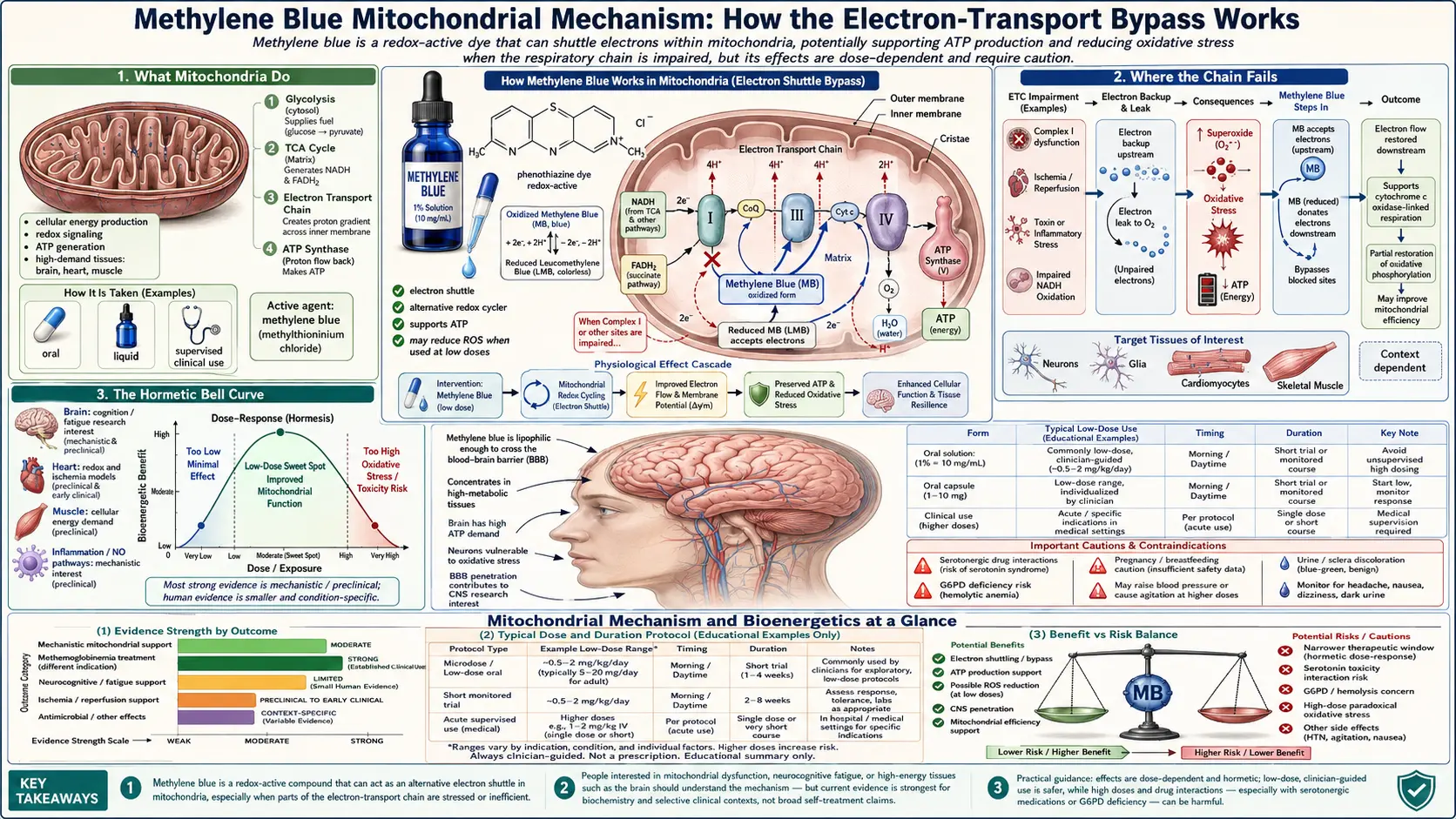
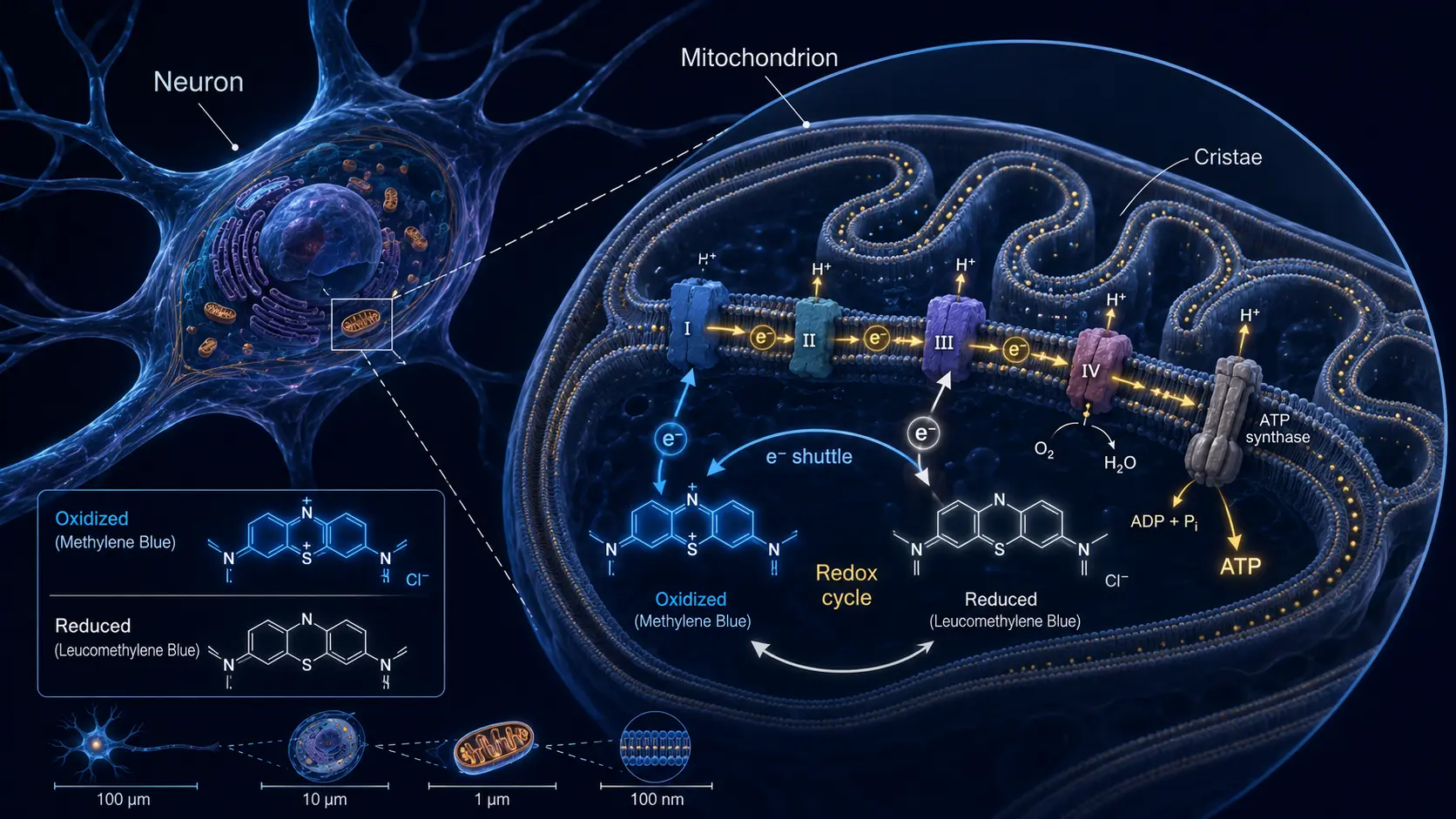
Much of the research interest in methylene blue rests on one property: in laboratory work it can act as an alternative electron carrier in the mitochondrial electron transport chain. This page covers the molecular-biology layer of that story — what mitochondria do, where the chain can fail, how the dye is proposed to carry electrons around a blocked step, and the other actions it has. Most of the mechanism described here comes from cell and animal studies; the human evidence is smaller and is described separately. The only use approved by the US Food and Drug Administration is the treatment of acquired methemoglobinemia with methylene blue injection.
Table of Contents
What Mitochondria Do
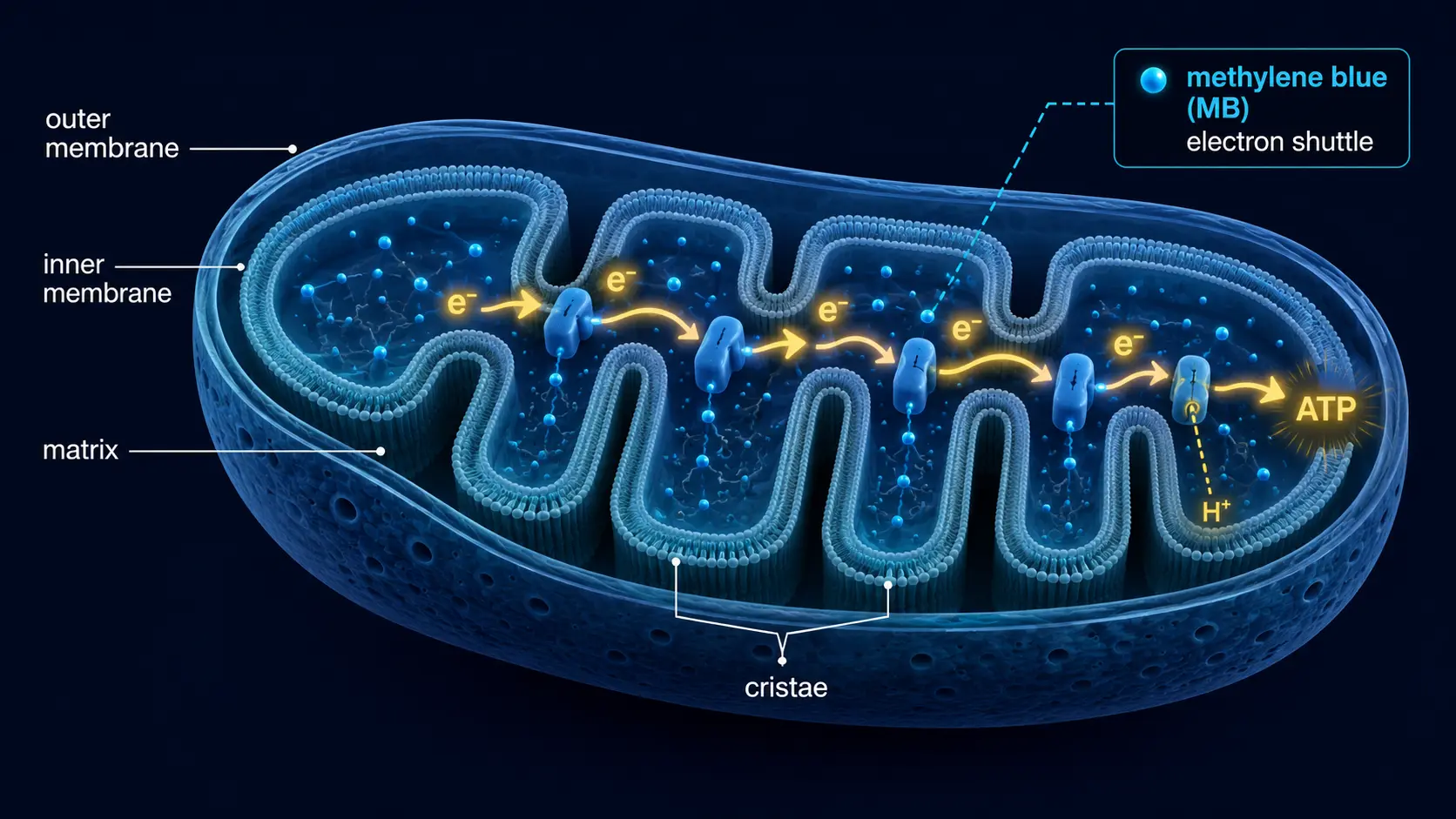
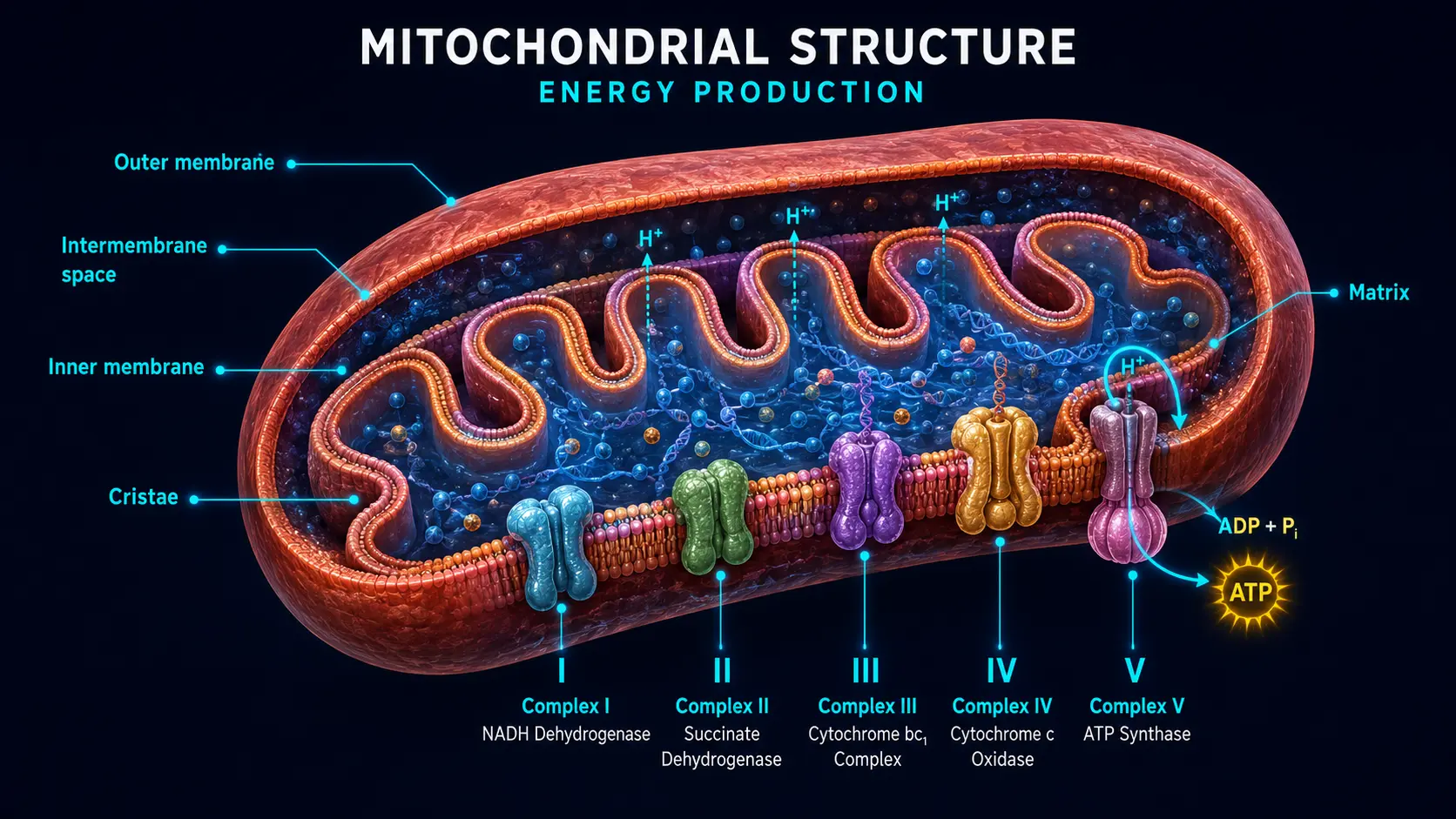
Mitochondria are the energy-producing organelles found in most of the body's cells. Their primary job is to convert the chemical energy stored in food (glucose, fatty acids, amino acids) into ATP — the cell's energy currency — through a sequence of oxidative reactions called cellular respiration. They also take part in heat production, programmed cell death (apoptosis), calcium handling, iron-sulfur cluster assembly and cell signaling, including signaling through small amounts of reactive oxygen species (ROS).
When the respiratory chain is impaired, ATP output falls and more electrons leak to oxygen as ROS. Mitochondrial dysfunction is studied as a possible contributor to many age-associated conditions, including heart failure and neurodegenerative disease; how much it causes, rather than accompanies, each condition is still debated.
The Electron Transport Chain
The final stage of cellular respiration is the electron transport chain (ETC), a series of protein complexes embedded in the inner mitochondrial membrane:
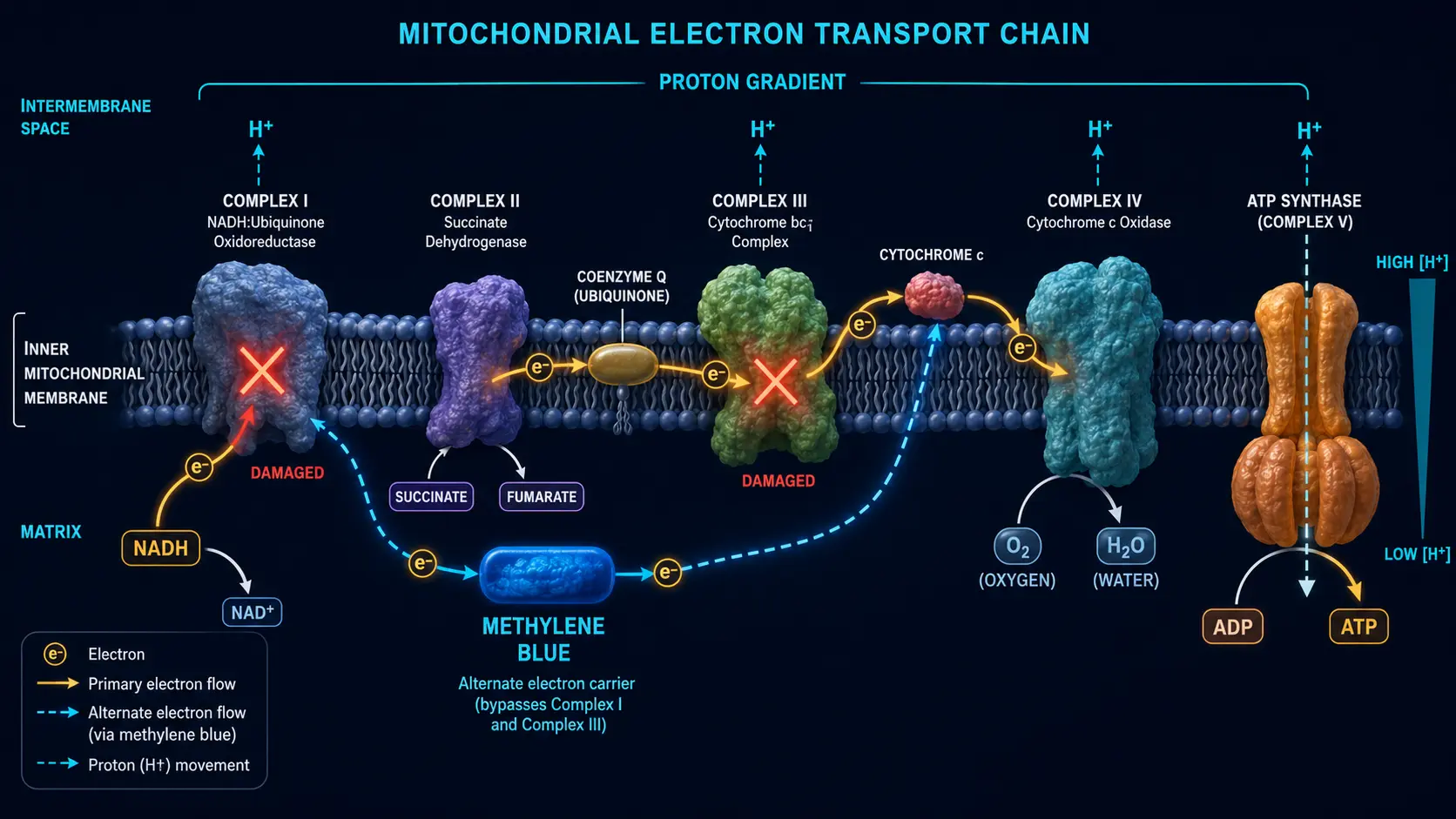
- Complex I (NADH dehydrogenase) — accepts electrons from NADH and pumps protons. It is the largest complex, and it is the target of the toxins rotenone and MPP+, which are used to model Parkinson's disease in animals.
- Complex II (succinate dehydrogenase) — accepts electrons from succinate (via FADH2) in the Krebs cycle. It does not pump protons and is the only ETC complex that is also a Krebs cycle enzyme.
- Complex III (cytochrome bc1) — transfers electrons from coenzyme Q (ubiquinone) to cytochrome c and pumps protons. It is inhibited by antimycin A and is a site of superoxide leak when impaired.
- Complex IV (cytochrome c oxidase) — the terminal step; transfers electrons from cytochrome c to molecular oxygen, forming water, and pumps protons. It is inhibited by cyanide and carbon monoxide.
- ATP synthase (Complex V) — uses the proton gradient built by Complexes I, III and IV to make ATP from ADP and phosphate.
Electrons flow "downhill" from NADH (electron-rich) to oxygen (electron-hungry). At three of the complexes some of that energy is used to pump protons across the inner membrane, and the resulting gradient powers ATP synthesis. A block anywhere in the chain slows the flow, lowers ATP production and increases electron leak.
Where the Chain Fails
The ETC fails in several well-studied ways:
- Complex I deficiency — a common inherited defect of the respiratory chain, and the step blocked by rotenone and MPP+ in animal models of Parkinson's disease.
- Complex III dysfunction — seen in some hereditary mitochondrial disorders, and a source of superoxide leak when the chain is partially blocked.
- Complex IV deficiency — one of the defects described in Leigh syndrome.
- Generalized dysfunction — the picture described in aging, where several complexes are partly impaired and mitochondrial DNA accumulates damage.
Recognized features of inherited mitochondrial disease include exercise intolerance, muscle weakness, lactic acidosis, cardiomyopathy and neurological problems. Whether, and how often, milder mitochondrial changes explain common complaints such as chronic fatigue is not settled.
Methylene Blue as an Electron Shuttle
Methylene blue (MB) is a redox-active dye: it can accept electrons and give them away again, switching between an oxidized blue form and a reduced colorless form. In laboratory studies this is what lets it act as an alternate electron carrier:
- Flavin-dependent enzymes use NAD(P)H to reduce MB to the colorless leuco-methylene blue (LMB) (as summarized by Atamna 2008).
- Cytochrome c, which sits between Complexes III and IV, takes the electrons from LMB and so returns it to the oxidized blue form (Atamna 2008).
- The oxidized MB can accept electrons again, so a small amount of dye can cycle repeatedly.
In a 2011 study in cultured neuronal cells and two animal models, Wen and colleagues reported that MB "accepts electrons from NADH and transfers them to cytochrome c and bypasses complex I/III blockage." A version of the molecule with its redox center disabled had no effect, and MB increased cellular oxygen use and reduced anaerobic glycolysis in the cells. In the animals, MB lessened damage in a rotenone model of Parkinson's disease and in a model of stroke followed by restored blood flow (Wen 2011). In cultured human fibroblasts, Atamna and colleagues (2008) reported that nanomolar MB raised Complex IV activity by 30% and oxygen consumption by 37–70% and delayed cellular senescence. These are cell and animal findings, not results in people.
The shuttle delivers electrons to cytochrome c, so it still depends on a working Complex IV (cytochrome c oxidase) to pass them on to oxygen.
The MB / Leuco-MB Redox Couple
The catalytic behavior of MB depends on its interconversion between the oxidized blue form and the reduced colorless leuco form. In cell studies it takes electrons from NADH and passes them to cytochrome c (Atamna 2008; Wen 2011). The same chemistry underlies the approved use: the drug label explains that methylene blue is first converted to leuco-methylene blue by an NADPH-dependent reductase, and that the leuco form reduces the ferric iron of methemoglobin back to the ferrous iron of normal hemoglobin.
Several other findings follow from the chemistry:
- Vitamin C — in solution, ascorbic acid reduces MB to its colorless leuco form (Suzuki 2024, a chemistry study). In cultured cells, MB's redox cycling can itself use up cellular ascorbate and glutathione at higher concentrations (May 2004, human red blood cells).
- Color in urine — after an intravenous or oral dose, both MB and its leuco form are excreted in the urine (Peter 2000), and the drug label notes that the blue dye passes freely into the urine and can interfere with urine tests.
- Light sensitivity — red light excites MB, which then generates singlet oxygen; a laboratory study used 660 nm laser light to do this and killed the bacterium Enterococcus faecalis (Komine 2013). This is the basis for photodynamic therapy (see Photodynamic Therapy).
The Hormetic Dose-Response
Reviews by Gonzalez-Lima's group describe methylene blue as showing a hormetic dose-response: "opposite effects at low and high doses" (Rojas 2012). In the behavioral, physiological and biochemical studies they reviewed — mostly in animals and cells — responses rose with increasing dose, then fell back to control levels at higher doses, and fell below control beyond that; one example was MB raising cytochrome oxidase activity at intermediate doses and lowering it at higher doses (Bruchey and Gonzalez-Lima 2008). At low doses, Rojas and colleagues describe MB as an electron cycler in the respiratory chain with antioxidant and respiration-enhancing properties.
The approved drug's label records the harms of large doses in people. Its overdosage section reports that large cumulative intravenous doses of methylene blue class products caused nausea, vomiting, chest pain, shortness of breath, rapid heart rate, confusion and mild methemoglobinemia, and that a severe overdose caused severe intravascular hemolysis and death. Other findings from the label:
- Approved use — methylene blue injection is indicated in the US for acquired methemoglobinemia in children and adults; this is the label's only indication.
- G6PD deficiency — the label contraindicates methylene blue in glucose-6-phosphate dehydrogenase deficiency because of the risk of hemolytic anemia, and states that treating these patients may cause severe hemolysis and severe anemia; it also notes the drug may not work in them.
- Serotonergic drugs — the label carries a boxed warning that methylene blue may cause serious or fatal serotonin syndrome when combined with serotonergic drugs and opioids (see the next section).
Doses used in trials and on the label are covered on the Dosing Guide page.
Beyond Bypass: NOS, MAO, and Tau
Methylene blue has several actions besides the electron-transport bypass.
Nitric oxide synthase (NOS) inhibition
MB has long been used in the laboratory as an inhibitor of soluble guanylyl cyclase, the enzyme that nitric oxide (NO) activates. Mayer and colleagues (1993) found that it acts mainly as a direct inhibitor of purified NO synthase and is a much weaker inhibitor of guanylyl cyclase than had been assumed. Blocking the NO pathway is the rationale for its off-label use in vasoplegic shock (severe low blood pressure that does not respond to the usual drugs, for example after cardiac surgery). A 2016 review found that improved blood pressure has consistently been shown in small trials and case reports, but better oxygen delivery or lower mortality has not been demonstrated, and that large randomized trials are still needed (Hosseinian 2016).
Monoamine oxidase A (MAO-A) inhibition
In assays on purified human enzyme, MB was a potent, reversible inhibitor of MAO-A, and much weaker against MAO-B; at concentrations reported after intravenous use, the authors concluded that MAO-A would be completely inhibited, which would be expected to account for serotonin toxicity in patients taking SSRIs (Ramsay 2007). In July 2011 the FDA issued a Drug Safety Communication on reports of serious central nervous system reactions when methylene blue was given to patients taking serotonergic psychiatric medicines, and the current label for methylene blue injection carries a boxed warning naming SSRIs, SNRIs, MAOIs and opioids. Details are on the Drug Interactions page.
Tau aggregation inhibition
Leuco-methylthioninium (LMTM, also called hydromethylthionine, HMTM) is a stabilized reduced form of the methylthioninium (methylene blue) molecule. It inhibits aggregation of the tau protein in test-tube studies and in transgenic mice (Gauthier 2016). The phase 3 trials in Alzheimer's disease reported:
- TRx-237-015 (891 people with mild to moderate Alzheimer's disease, 15 months): the prespecified primary analyses showed no benefit at either of the two higher doses on the co-primary cognitive (ADAS-Cog) and daily-living (ADCS-ADL) scales compared with a low-dose control; the authors concluded that the results "do not suggest benefit of LMTM as an add-on treatment" (Gauthier 2016).
- TRx-237-005 (800 people with mild Alzheimer's disease, 18 months): before unblinding, the statistical analysis plan was revised to compare non-randomized subgroups of people taking LMTM as their only Alzheimer's medicine; those revised analyses were statistically significant, and the authors stated that a further suitably randomized trial is required to test the hypothesis (Wilcock 2018).
- LUCIDITY, TRx-237-039 (598 amyloid-PET-positive people with mild cognitive impairment or mild to moderate Alzheimer's disease): it was not possible to show significant differences on the co-primary clinical endpoints at 52 weeks; the authors attribute this to activity in the low-dose control arm and report significant differences in cognitive decline in the mild cognitive impairment group between early- and delayed-start treatment at 78 and 104 weeks and a reduction in a blood marker of nerve damage (Wischik 2026). A separate 2026 analysis compared treated participants with matched placebo patients from external databases rather than a randomized control group (Schelter 2026).
In none of the three trials did a randomized comparison on the co-primary clinical outcomes show a benefit: the first was negative, the second replaced its originally intended randomized analysis with non-randomized cohort comparisons before unblinding, and the third could not show a difference at 52 weeks. The positive findings reported come from revised, subgroup, delayed-start or externally controlled analyses.
Antimicrobial photodynamic activity
Under red light, MB generates singlet oxygen that can kill bacteria (Komine 2013). This is the basis for antimicrobial photodynamic therapy (aPDT) studied in dentistry; a 2005 review also describes clinical cases treated with MB-based photodynamic therapy, including basal cell carcinoma, Kaposi's sarcoma, melanoma, and viral and fungal infections (Tardivo 2005).
Tissue Distribution and the Human Brain Studies
Methylene blue crosses the blood-brain barrier. In a pharmacokinetic study, seven volunteers received the drug intravenously and by mouth; oral dosing gave much lower blood levels, and in rats intravenous dosing produced higher concentrations in blood and brain while dosing into the gut produced higher concentrations in the intestinal wall and liver (Peter 2000). A review notes that MB accumulates in nervous tissue and concentrates in mitochondria (Rojas 2012).
Human brain studies are small. In a randomized, double-blind, placebo-controlled study of 26 healthy adults, a single low oral dose increased functional MRI activity in the insular cortex during a sustained-attention task and in prefrontal, parietal and occipital regions during a short-term memory task, and was associated with a 7% increase in correct responses during memory retrieval, measured one hour after the dose (Rodriguez 2016). A related study by the same group reported reduced blood flow in a task-related network and stronger resting-state connectivity after a single low dose (Rodriguez 2017). Both measured short-term effects in healthy volunteers, not treatment of any disease.
Methylene blue has also been studied for mood, neurodegeneration and ischemia–reperfusion injury, largely in animal models. Decisions about medicines belong with a clinician.
Key Research Papers
- U.S. Food and Drug Administration, Drugs@FDA. Methylene blue injection, 5 mg/mL, for intravenous use: prescribing information (NDA 204630), revised November 2023 — accessdata.fda.gov
- U.S. Food and Drug Administration (2011). FDA Drug Safety Communication: Serious CNS reactions possible when methylene blue is given to patients taking certain psychiatric medications. July 26, 2011 (archived copy) — web.archive.org
- Atamna H, Nguyen A, Schultz C, et al. (2008). Methylene blue delays cellular senescence and enhances key mitochondrial biochemical pathways. FASEB Journal 22(3):703–12 (cell study) — PubMed PMID: 17928358
- Wen Y, Li W, Poteet EC, et al. (2011). Alternative mitochondrial electron transfer as a novel strategy for neuroprotection. Journal of Biological Chemistry 286(18):16504–15 (cell and animal study) — PubMed PMID: 21454572
- Rojas JC, Bruchey AK, Gonzalez-Lima F (2012). Neurometabolic mechanisms for memory enhancement and neuroprotection of methylene blue. Progress in Neurobiology 96(1):32–45 (review) — PubMed PMID: 22067440
- Bruchey AK, Gonzalez-Lima F (2008). Behavioral, Physiological and Biochemical Hormetic Responses to the Autoxidizable Dye Methylene Blue. American Journal of Pharmacology and Toxicology 3(1):72–79 (review) — PubMed PMID: 20463863
- Peter C, Hongwan D, Küpfer A, Lauterburg BH (2000). Pharmacokinetics and organ distribution of intravenous and oral methylene blue. European Journal of Clinical Pharmacology 56(3):247–50 — PubMed PMID: 10952480
- May JM, Qu ZC, Cobb CE (2004). Reduction and uptake of methylene blue by human erythrocytes. American Journal of Physiology – Cell Physiology 286(6):C1390–8 (cell study) — PubMed PMID: 14973146
- Suzuki T, Nakamura F, Ie K, et al. (2024). Novel photochromic system using methylene blue reduction with l-ascorbic acid. RSC Advances 14(53):39708–39714 (chemistry study) — PubMed PMID: 39691228
- Komine C, Tsujimoto Y (2013). A small amount of singlet oxygen generated via excited methylene blue by photodynamic therapy induces the sterilization of Enterococcus faecalis. Journal of Endodontics 39(3):411–4 (laboratory study) — PubMed PMID: 23402518
- Tardivo JP, Del Giglio A, de Oliveira CS, et al. (2005). Methylene blue in photodynamic therapy: From basic mechanisms to clinical applications. Photodiagnosis and Photodynamic Therapy 2(3):175–91 (review) — PubMed PMID: 25048768
- Mayer B, Brunner F, Schmidt K (1993). Inhibition of nitric oxide synthesis by methylene blue. Biochemical Pharmacology 45(2):367–74 (laboratory study) — PubMed PMID: 7679577
- Hosseinian L, Weiner M, Levin MA, Fischer GW (2016). Methylene Blue: Magic Bullet for Vasoplegia? Anesthesia & Analgesia 122(1):194–201 (review) — PubMed PMID: 26678471
- Ramsay RR, Dunford C, Gillman PK (2007). Methylene blue and serotonin toxicity: inhibition of monoamine oxidase A (MAO A) confirms a theoretical prediction. British Journal of Pharmacology 152(6):946–51 — PubMed PMID: 17721552
- Gauthier S, Feldman HH, Schneider LS, et al. (2016). Efficacy and safety of tau-aggregation inhibitor therapy in patients with mild or moderate Alzheimer's disease: a randomised, controlled, double-blind, parallel-arm, phase 3 trial. Lancet 388(10062):2873–2884 (TRx-237-015) — PubMed PMID: 27863809
- Wilcock GK, Gauthier S, Frisoni GB, et al. (2018). Potential of Low Dose Leuco-Methylthioninium Bis(Hydromethanesulphonate) (LMTM) Monotherapy for Treatment of Mild Alzheimer's Disease: Cohort Analysis as Modified Primary Outcome in a Phase III Clinical Trial. Journal of Alzheimer’s Disease 61(1):435–457 (TRx-237-005) — PubMed PMID: 29154277
- Wischik CM, Stefanacci R, Bentham P, et al. (2026). Clinical, imaging and blood biomarker outcomes in a Phase 3 clinical trial of tau aggregation inhibitor hydromethylthionine mesylate in mild cognitive impairment and mild to moderate dementia due to Alzheimer's disease. Journal of Prevention of Alzheimer’s Disease 13(3):100480 (LUCIDITY, TRx-237-039) — PubMed PMID: 41570392
- Schelter BO, Shiells H, Lo S, et al. (2026). Assessment of clinical and neuroimaging efficacy of treatment targeting tau pathology in mild cognitive impairment and mild to moderate Alzheimer's disease with hydromethylthionine mesylate using external control data. Journal of Prevention of Alzheimer’s Disease 13(6):100560 (external-control analysis) — PubMed PMID: 42000569
- Rodriguez P, Zhou W, Barrett DW, et al. (2016). Multimodal Randomized Functional MR Imaging of the Effects of Methylene Blue in the Human Brain. Radiology 281(2):516–526 — PubMed PMID: 27351678
- Rodriguez P, Singh AP, Malloy KE, et al. (2017). Methylene blue modulates functional connectivity in the human brain. Brain Imaging and Behavior 11(3):640–648 — PubMed PMID: 26961091
PubMed Topic Searches
Connections
- Methylene Blue
- Methylene Blue Dosing Guide
- Photodynamic Therapy and Cancer Research
- Drug Interactions and Serotonin Syndrome
- Methylene Blue and Long COVID
- Methemoglobinemia and G6PD Deficiency
- Cognitive Enhancement and ADHD
- Pharmaceutical Grade vs Industrial Dye
- History: Ehrlich and Phenothiazines
- Dementia
- Depression
- NAD+ and NMN
- Oxidative Stress
- Creatine
- Longevity Protocols
- Fatigue
- Cardiomyopathy
- All Remedies