Vitamin K: Its Roles in Blood Clotting, Bone and Arteries
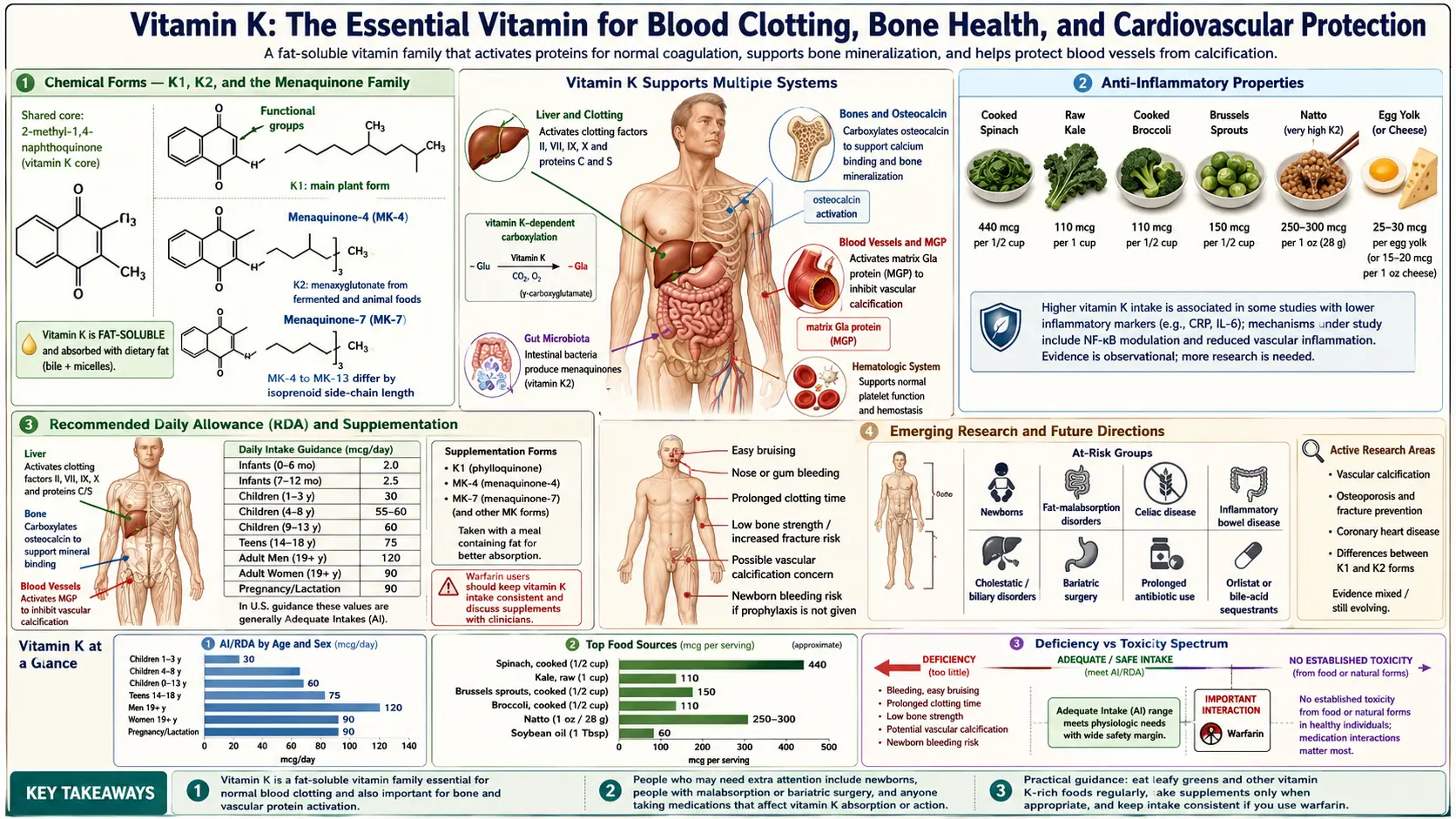
Vitamin K is a fat-soluble vitamin first identified for its role in blood clotting (Linus Pauling Institute). It was discovered through studies of cholesterol metabolism in chicks carried out in 1928–1930 at the University of Copenhagen by the Danish biochemist Henrik Dam: chicks kept on artificial, practically sterol-free diets developed hemorrhages and delayed blood clotting, and in 1935 the missing fat-soluble factor was named vitamin K, K being the first letter of the word “koagulation” in the Scandinavian and German spelling (Dam, Nobel lecture 1946). Dam shared the 1943 Nobel Prize in Physiology or Medicine with the American biochemist Edward Doisy, recognised “for his discovery of the chemical nature of vitamin K” (NobelPrize.org). Vitamin K is the cofactor for gamma-carboxylation, a modification that activates vitamin K-dependent proteins involved in blood coagulation, bone metabolism, the prevention of vessel mineralization and the regulation of various cellular functions (Linus Pauling Institute). Research into whether Vitamin K2 (menaquinones) has functions distinct from those of Vitamin K1 (phylloquinone) has widened the field well beyond clotting.
Interactive Visualization Calcium & PTH — defend the blood calcium level Watch four tiny parathyroid glands pull calcium from bone, kidney and gut with PTH and vitamin D — then drop your vitamin D and see PTH climb and quietly rob the skeleton. Launch → Interactive Visualization Vitamin K & Warfarin — recycle the clotting switch Watch vitamin K get recycled to switch on the clotting factors — then block the recycling enzyme with warfarin and see the factors go dark over days, or override it with a plate of greens. Launch →Table of Contents
- Chemical Forms — K1, K2, and the Menaquinone Family
- Gamma-Carboxylation — The Unique Biochemical Mechanism
- Blood Coagulation — The Classical Function
- Bone Health — Osteocalcin Activation and Calcium Direction
- Blood Vessels — Matrix Gla Protein and Arterial Calcification
- Brain — Early Research on the Nervous System
- Inflammation — Laboratory and Observational Findings
- Cancer Research — Preliminary Evidence
- Insulin Sensitivity and Metabolic Health
- Dietary Sources — K1 in Greens, K2 in Fermented Foods
- Deficiency, Drug Interactions, and Newborn Prophylaxis
- Intake Reference Values and Supplement Research
- Vitamin K and Dental Health
- Vitamin K in Specific Clinical Populations
- Historical Discovery and Nobel Prize Legacy
- Absorption, Bioavailability, and Tissue Distribution
- Vitamin K Status Assessment and Laboratory Testing
- Emerging Research and Future Directions
- Key Research Papers
- Connections
- Featured Videos
1. Chemical Forms — K1, K2, and the Menaquinone Family
Vitamin K exists in several naturally occurring forms with distinct sources, tissue distributions, biological half-lives, and health effects.
- Vitamin K1 (Phylloquinone): The predominant dietary form of Vitamin K, synthesized by plants. Its content in green vegetables depends on their chlorophyll content, and its absorption varies among plant sources and is increased when a fat source is added to the meal (Linus Pauling Institute). Dietary K1 is distributed preferentially to the liver, where it supports the carboxylation of the coagulation factors (McCann & Ames 2009).
- Vitamin K2 (Menaquinones): A family of compounds designated MK-n, where n is the number of 5-carbon units in the side chain (MK-2 to MK-13); most menaquinones are made by bacteria, including the human intestinal microbiota, and are found in fermented foods and animal products (Linus Pauling Institute). Structural differences in the side chain govern how the K vitamins are transported, taken up by tissues and excreted; after a meal the long-chain menaquinones travel mainly in low-density lipoproteins (Shearer & Newman 2008). The two most studied forms are MK-4 and MK-7.
- MK-4 (Menaquinone-4): A short-chain menaquinone and the only menaquinone not produced by bacteria: it is formed from menadione in animal feeds or converted in a tissue-specific way from other dietary forms of vitamin K (Linus Pauling Institute), and the human enzyme that makes it, UBIAD1, was identified in 2010 (Nakagawa 2010). MK-4 is found in dairy products and some meats (Linus Pauling Institute) and is present in particularly high concentrations in the brain, kidney and pancreas (Nakagawa 2010). Its circulating half-life is about 1–2 hours (Knapen 2007). In Japan, menatetrenone (MK-4) at 45 mg a day by mouth is listed among the osteoporosis drugs covered by public health insurance (Orimo 2012); in a Dutch trial the 45 mg daily dose was given as three 15 mg capsules spread over the day because of that short half-life (Knapen 2007).
- MK-7 (Menaquinone-7): A long-chain menaquinone produced by bacterial fermentation, most notably by Bacillus subtilis in the production of the Japanese fermented soybean food natto. Its researchers describe a circulating half-life of about 3 days, against about 1–2 hours for MK-4 (Knapen 2007). Compared directly with K1, MK-7's very long half-life gave much more stable serum levels and accumulation to 7- to 8-fold higher levels during prolonged intake (Schurgers 2007). Whether this translates into more benefit for bone and arteries is what the trials described below tested.
- MK-8 through MK-13: Longer-chain menaquinones produced by various bacteria, found in fermented cheeses and other fermented foods; in a Dutch analysis the cheeses carried mostly MK-9, with MK-4 and MK-8 (Vermeer 2018). They are less well studied than MK-4 and MK-7.
- Vitamin K3 (Menadione): A synthetic form of Vitamin K without a side chain. The Institute of Medicine's 2001 review notes that menadione has been associated with liver damage and is no longer used therapeutically; it is used in some animal feeds. A review describes menadione as an intermediate in the tissue conversion of phylloquinone to MK-4 (Shearer & Newman 2008).
2. Gamma-Carboxylation — The Unique Biochemical Mechanism
Vitamin K's biological function centers on its role as an essential cofactor for the enzyme gamma-glutamyl carboxylase, which catalyzes a unique post-translational modification of specific proteins.
- The Carboxylation Reaction: Gamma-glutamyl carboxylase converts specific glutamic acid (Glu) residues in vitamin K-dependent proteins to gamma-carboxyglutamic acid (Gla), and this carboxylation is critical for the proteins’ ability to bind calcium (Linus Pauling Institute). Gla was identified in 1974 as a previously unknown amino acid in the calcium-binding part of prothrombin; prothrombin made under the vitamin K antagonist dicoumarol lacked it and did not bind calcium (Stenflo 1974).
- Calcium Binding: Calcium binding is required for the activation of the vitamin K-dependent clotting factors; carboxylated osteocalcin binds calcium; and the calcium-binding activity of Matrix Gla Protein is regulated by the carboxylation of up to five Glu residues and by phosphorylation (Linus Pauling Institute).
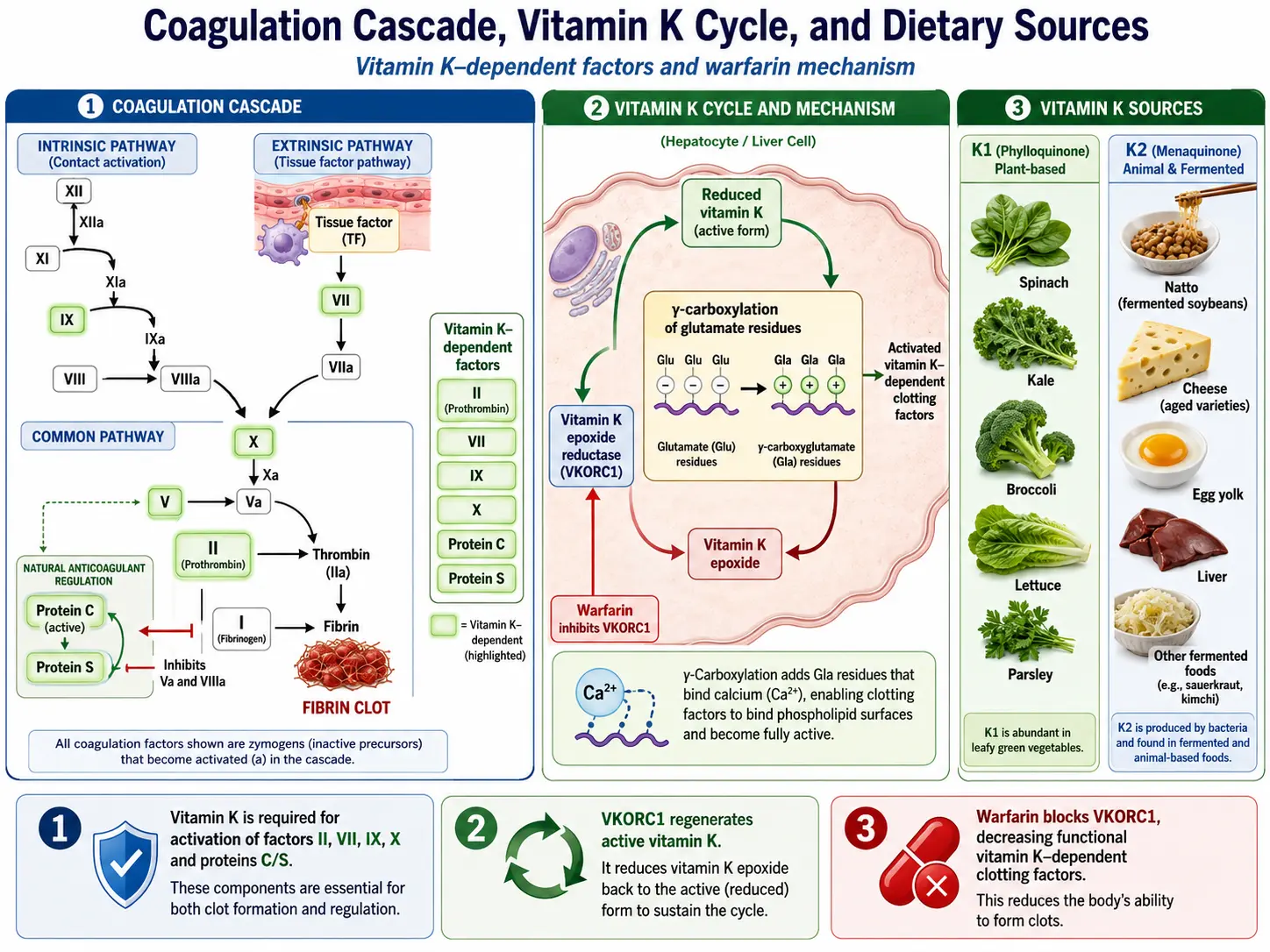
- The Vitamin K Cycle: During the carboxylation reaction, Vitamin K hydroquinone (the reduced, active form) is oxidized to Vitamin K epoxide. The enzyme Vitamin K epoxide reductase (VKORC1) then recycles Vitamin K epoxide back to the quinone form, and a second reductase converts the quinone to the active hydroquinone. This recycling — the Vitamin K cycle — lets a small pool of Vitamin K be reused for many rounds of carboxylation. Warfarin exerts its anticoagulant effect by inhibiting VKORC1, blocking this recycling and effectively creating a functional Vitamin K deficiency.
- Vitamin K-Dependent Proteins (VKDPs): A 2009 review counted 16 known vitamin K-dependent proteins (McCann & Ames 2009). These include coagulation factors (II, VII, IX, X), anticoagulant proteins (C, S, Z), bone proteins (osteocalcin, matrix Gla protein), the cell-signalling protein Gas6, and Gla-rich protein and periostin, whose roles are still unclear (Linus Pauling Institute).
3. Blood Coagulation — The Classical Function
Vitamin K's essential role in blood coagulation was its first discovered function and remains critically important for hemostasis.
- Procoagulant Factors: Factor II (prothrombin), Factor VII, Factor IX and Factor X make up the core of the coagulation cascade, and their calcium binding, which depends on vitamin K-dependent carboxylation, is required for their activation. These factors are made in the liver, so severe liver disease lowers their blood levels and raises the risk of uncontrolled bleeding (Linus Pauling Institute).
- Anticoagulant Proteins: Protein C and Protein S are vitamin K-dependent anticoagulant proteins that provide control and balance in the coagulation cascade; Protein Z appears to enhance the action of thrombin by promoting its association with phospholipids in cell membranes and also has an anticoagulatory function (Linus Pauling Institute). Vitamin K is therefore needed both for clot formation and for its control.
- Abnormal Clotting: According to the Linus Pauling Institute, abnormal clotting is not related to excessive vitamin K intake, and there is no known toxicity associated with vitamin K1 or K2 (Linus Pauling Institute).
- PIVKA (Proteins Induced by Vitamin K Absence or Antagonism): When Vitamin K is insufficient, biologically inactive, under-carboxylated forms of the vitamin K-dependent clotting factors are secreted into plasma; the prothrombin form is called PIVKA-II (IOM 2001). A 2018 review describes PIVKA-II measurement as more sensitive and specific for vitamin K deficiency than the conventional clotting-time methods (Dong 2018).
4. Bone Health — Osteocalcin Activation and Calcium Direction
In bone, vitamin K-dependent carboxylation is essential to several proteins, including osteocalcin, a protein made by bone-forming cells (Linus Pauling Institute).
- Osteocalcin Carboxylation: Osteocalcin is synthesized by osteoblasts (bone-building cells), and its calcium-binding capacity requires vitamin K-dependent gamma-carboxylation of three glutamic acid residues; although its function in bone mineralization is not fully understood, it is required for the growth and maturation of calcium hydroxyapatite crystals (Linus Pauling Institute).
- Undercarboxylated Osteocalcin (ucOC): Undercarboxylation of osteocalcin has been linked to poor Vitamin K status, and because the degree of carboxylation responds to vitamin K interventions it is used as a relative indicator of vitamin K status (Linus Pauling Institute). In the EPIDOS study of independently living French women over 75, women with ucOC in the highest quartile had an odds ratio of 1.9 (95% CI 1.2–3.0) for hip fracture, and 1.8 after adjustment for femoral neck bone density and gait speed; total osteocalcin was not associated with hip fracture (Vergnaud 1997). The ratio of ucOC to total osteocalcin (the ucOC/OC ratio) is used as a functional biomarker of Vitamin K status for bone health.
- Fracture Trials: The fracture data for vitamin K come mainly from Japanese trials of MK-4 at 45 mg/day. Cockayne and colleagues (2006) pooled the 7 trials that reported fracture data — all Japanese, all using menaquinone — and reported large reductions in vertebral, hip and nonvertebral fractures. In 2018 the journal published a notice that these conclusions were based on data from trials since indicated as problematic or retracted: 3 of the 7 articles with fracture data came from a single centre whose trial data have since been found to be problematic or retracted, and the authors asked readers to take into account only the sensitivity analysis that excluded them (Cockayne 2006, caution notice 2018). The original pooled seven-trial odds ratios are therefore not repeated here. The Yamaguchi Osteoporosis Prevention Study report was retracted in 2025 (Ishida 2004), and two menatetrenone fracture trials in elderly patients with Alzheimer’s disease (Sato 2005; Sato 2011) and two reviews of vitamin K2 for osteoporosis (Iwamoto 2004; Iwamoto 2013) from one Japanese author group have also been retracted. The same group’s 2019 update (36 studies of oral vitamin K), written after the integrity of some earlier evidence had been questioned, found no difference in vertebral fractures (OR 0.96, 0.83–1.11) and lower odds of any clinical fracture (OR 0.72, 0.55–0.95), which moved to 0.76 (0.58–1.01) when restricted to trials at low risk of bias; its authors concluded that for postmenopausal or osteoporotic patients there is no evidence that vitamin K affects bone mineral density or vertebral fractures, and that it may reduce clinical fractures but the evidence is insufficient to confirm this (Mott 2019). Following concerns about the integrity of the Yamaguchi study, a 2020 correction adjusted every estimate in that update that had included it (Mott 2020 correction). In a 3-year Dutch trial in 244 healthy postmenopausal women, 180 µg/day of MK-7 decreased the age-related decline in bone mineral content and density at the lumbar spine and femoral neck, but not at the total hip (Knapen 2013).
- Vitamin D, Vitamin K and Calcium: The active form of vitamin D (calcitriol) regulates the synthesis of osteocalcin, vitamin K carboxylates it, and calcium is the mineral that carboxylated osteocalcin binds (Linus Pauling Institute). This division of labour is a mechanistic rationale for considering the three together; it is not itself a trial result. In randomized trials described by the Linus Pauling Institute, vitamin D supplementation did not lower ucOC/OC ratios or add to the lowering produced by supplemental vitamin K (Linus Pauling Institute).
- K2 vs. K1 for Bone Health: Long-chain menaquinones travel in the blood mainly in LDL rather than in the triglyceride-rich lipoproteins that carry K1 (Shearer & Newman 2008), and in a direct comparison MK-7 induced more complete carboxylation of osteocalcin than K1 (Schurgers 2007). Cell studies describe effects of K2 on osteoblasts and osteoclasts that are independent of gamma-carboxylation (Yamaguchi & Weitzmann 2011). Fracture trials comparing K2 with K1 head to head are not among the studies cited here.
5. Blood Vessels — Matrix Gla Protein and Arterial Calcification
A major line of Vitamin K research concerns its role in inhibiting arterial calcification — a marker of cardiovascular risk.
- Matrix Gla Protein (MGP): MGP is a mineral-binding protein produced by vascular smooth muscle cells and chondrocytes; mice lacking it die within two months from arterial calcification (Luo 1997). A 2008 review describes MGP as generally accepted to be a potent inhibitor of arterial calcification, although its molecular mechanism is not completely understood, and notes that there seems to be no effective alternative mechanism for calcification inhibition in the vasculature (Schurgers 2008). MGP requires Vitamin K-dependent gamma-carboxylation to become active.
- The Calcium Paradox: The concept of the "calcium paradox" describes the clinical observation that calcium can simultaneously be deficient in bones (osteoporosis) and excessive in arteries (vascular calcification). Proponents of Vitamin K2 propose that it addresses this paradox by activating both osteocalcin in bone and Matrix Gla Protein in arteries. This is a mechanistic hypothesis; trials of K2 on arterial calcification have given mixed results (see Section 18).
- The Rotterdam Study: In this Dutch population cohort of 4,807 people with no history of myocardial infarction, followed from 1990–1993 to 2000, the highest third of dietary menaquinone (K2) intake, compared with the lowest, had a relative risk of 0.43 (95% CI 0.24–0.77) for coronary heart disease mortality, 0.74 (0.59–0.92) for all-cause mortality and an odds ratio of 0.48 (0.32–0.71) for severe aortic calcification. Phylloquinone (K1) intake was not related to any of the outcomes (Geleijnse 2004). This is an observational association, not a trial result.
- Dephospho-Uncarboxylated MGP (dp-ucMGP): Dp-ucMGP — the inactive form of MGP that is both uncarboxylated and unphosphorylated — is studied as a biomarker of vascular Vitamin K status. In a cohort of older adults, the risk of cardiovascular disease was two- to three-fold greater in the highest than in the lowest third of plasma dp-ucMGP, and in people with coronary artery disease or stroke, cardiovascular and all-cause mortality were nearly doubled in the highest quarter (Linus Pauling Institute). At baseline in a 3-year trial, dp-ucMGP was associated with carotid intima-media thickness and pulse wave velocity (Knapen 2015), and uncarboxylated MGP has been studied as a biomarker of cardiovascular calcification (Schurgers 2008). These are observational associations, and the marker is used mainly in research.
- Warfarin and Arterial Calcification: In a Dutch cross-sectional study, 19 people under 55 with no other cardiovascular risk factors who had taken coumarin anticoagulants for more than 10 years had an odds ratio of 8.5 (95% CI 2.01–35.95) for femoral arterial calcification compared with 18 matched controls; the authors suggest inhibition of MGP carboxylation as a possible mechanism (Rennenberg 2010). Whether high vitamin K intake can reverse warfarin-induced arterial calcification has been tested in rats (Schurgers 2007; see Section 18).
6. Brain — Early Research on the Nervous System
Laboratory research describes possible roles for Vitamin K in the nervous system; evidence in people is limited.
- Sphingolipid Synthesis: A role in the synthesis of sphingolipids, a class of lipids, is listed among vitamin K’s putative non-cofactor functions, alongside the suppression of inflammation and the prevention of brain oxidative damage (Shearer & Newman 2008).
- Gas6 Protein: Growth arrest-specific gene 6 protein (Gas6), a vitamin K-dependent protein identified in 1993, has been found throughout the nervous system as well as in the heart, lungs, stomach, kidneys and cartilage. A ligand of the TAM family of receptor tyrosine kinases, it has been involved in phagocytosis, cell adhesion, cell proliferation and protection against apoptosis, and it may play important roles in the developing and aging nervous system (Linus Pauling Institute).
- Anti-Inflammatory and Antioxidant Effects in the Brain: In cell studies, K1 and MK-4 protected developing oligodendrocytes and immature neurons from oxidative damage (Li 2009). Whether such laboratory effects matter for neurodegenerative disease in people is not established.
- MK-4 in the Brain: MK-4 is present in particularly high concentrations in the brain, kidney and pancreas, and the enzyme UBIAD1, identified in 2010, converts K1 to MK-4 in human cells (Nakagawa 2010). The Institute of Medicine’s 2001 review notes MK-4 at much higher concentrations than phylloquinone in tissues such as the pancreas, salivary gland, brain and sternum, and describes it as appearing to have a unique yet unidentified role (IOM 2001).
7. Inflammation — Laboratory and Observational Findings
Laboratory and observational studies describe anti-inflammatory effects of Vitamin K beyond its gamma-carboxylation function; trial evidence in people is limited.
- NF-kB Pathway Inhibition: In cell studies, Vitamin K2 has suppressed activation of the NF-kB inflammatory signaling pathway (Yamaguchi & Weitzmann 2011, in bone cells), an effect described as independent of gamma-carboxylation.
- Inflammatory Markers in People: In the Framingham Offspring Study (1,381 adults), higher plasma phylloquinone and phylloquinone intake were associated with lower circulating inflammatory markers (Shea 2008). In the 3-year trial of 180 µg/day MK-7 in 244 healthy postmenopausal women, MK-7 did not influence IL-6, high-sensitivity C-reactive protein or TNF-alpha (Knapen 2015).
- 12-Lipoxygenase: In cultured developing oligodendrocytes, K1 and MK-4 at nanomolar concentrations blocked the activation of 12-lipoxygenase and prevented oxidative cell death; vitamin K did not inhibit the purified enzyme directly (Li 2009). This was a cell study.
- Chronic Disease Inflammation: Researchers have asked whether anti-inflammatory effects of vitamin K contribute to any protective effect in age-related diseases; the Framingham authors concluded that a possible protective role for vitamin K in inflammation merits further investigation (Shea 2008). This is not established in people.
8. Cancer Research — Preliminary Evidence
Emerging research suggests potential anticancer properties of Vitamin K, particularly Vitamin K2, though this evidence is still in relatively early stages.
- Hepatocellular Carcinoma: Randomized trials tested Vitamin K2 (MK-4, menatetrenone) for preventing the recurrence of hepatocellular carcinoma (HCC) after curative treatment. A 2012 meta-analysis of five randomized trials did not find better recurrence-free survival at 1 year, found lower recurrence at 2 and 3 years that the authors said may reflect insufficient data, and found no overall survival benefit (Riaz 2012). In a double-blind trial of 548 patients given placebo, 45 mg or 90 mg a day, vitamin K2 did not prevent recurrence or death (hazard ratio 1.150, 95% CI 0.843–1.570) and the study was stopped at its second interim analysis (Yoshida 2011).
- Prostate Cancer: In the Heidelberg cohort of the European Prospective Investigation into Cancer and Nutrition (11,319 men, mean follow-up 8.6 years), the highest versus lowest quarter of menaquinone (K2) intake had a relative risk of 0.65 (95% CI 0.39–1.06) for total prostate cancer, which was not statistically significant, and 0.37 (0.16–0.88) for advanced prostate cancer; phylloquinone (K1) intake was unrelated (Nimptsch 2008).
- Overall Cancer and Lung Cancer: In the wider EPIC-Heidelberg cohort (24,340 adults, median follow-up over 10 years), menaquinone intake was nonsignificantly inversely associated with overall cancer incidence (HR 0.86, 95% CI 0.73–1.01) and more strongly with cancer mortality (HR 0.72, 0.53–0.98); the reduction was more pronounced in men, mainly driven by significant inverse associations with prostate and lung cancer (Nimptsch 2010). These are observational associations.
- Mechanisms: Anticarcinogenic and growth-inhibitory effects of vitamin K have been observed in animal studies and in a variety of cancer cell lines (Nimptsch 2010); how these relate to cancer in people is not established.
9. Insulin Sensitivity and Metabolic Health
Animal research and observational studies have linked Vitamin K and osteocalcin to glucose metabolism.
- Osteocalcin and Insulin Sensitivity: In mice, osteocalcin acted as a hormone: mice lacking it had decreased beta-cell proliferation, glucose intolerance and insulin resistance, and osteocalcin stimulated insulin expression in beta cells and adiponectin in fat cells (Lee 2007). How this mouse finding applies to people, and how vitamin K status (which affects the carboxylation state of osteocalcin) bears on it, has not been established.
- Diabetes Risk: In a Dutch cohort of 38,094 adults followed for 10.3 years, the highest versus lowest quarter of phylloquinone intake had a hazard ratio for type 2 diabetes of 0.81 (95% CI 0.66–0.99), and each 10 µg increment of menaquinone intake had a hazard ratio of 0.93 (0.87–1.00); the authors concluded that both intakes may be associated with a reduced risk (Beulens 2010). This is an observational association.
- Inflammatory Markers and Insulin Resistance: It has been proposed that anti-inflammatory effects of Vitamin K2 could improve insulin sensitivity, since chronic inflammation drives insulin resistance; the 3-year MK-7 trial described in Section 7 did not find changes in IL-6, CRP or TNF-alpha (Knapen 2015).
10. Dietary Sources — K1 in Greens, K2 in Fermented Foods
The dietary sources of Vitamin K1 and K2 are distinctly different, reflecting their different biological origins.
- Vitamin K1 Sources (Phylloquinone): Green leafy vegetables and some plant oils (soybean, canola, olive and cottonseed) are major contributors of dietary vitamin K; foods the Linus Pauling Institute lists as phylloquinone-rich include kale, chard, parsley, broccoli, spinach, watercress, cabbage and romaine lettuce. Phylloquinone is less bioavailable from green vegetables than from oil or supplements, and its absorption is increased by adding a fat source to the meal (Linus Pauling Institute). Per-serving figures are listed on the Vitamin K Sources page.
- Natto: The Japanese fermented soybean food natto is rich in Vitamin K2 as MK-7 (Linus Pauling Institute): a Japanese food analysis measured 939 µg of MK-7 per 100 g (Kamao 2007), and in a Dutch analysis natto was the only food tested with a higher menaquinone content than cheese (Vermeer 2018). Natto is eaten often in eastern Japan and seldom in western Japan; serum MK-7 was higher in Tokyo than in Hiroshima, and across Japanese prefectures natto consumption was inversely correlated with hip fracture incidence in women — an ecological association (Kaneki 2001).
- Fermented Cheeses: In a Dutch analysis, cheese and curd were the most important sources of long-chain menaquinones in the Western diet, and hard cheeses were generally richer than soft cheeses; the major forms in dairy products were MK-9, followed by MK-4 and MK-8. The content varied substantially with the type of cheese, ripening time, fat content and region of production (Vermeer 2018).
- Animal Products (MK-4): MK-4 is found in dairy products, including milk, and in some meats, and animal livers are a source of long-chain menaquinones (Linus Pauling Institute). In the Dutch analysis, meat contained almost exclusively MK-4, which the authors suggest probably originates from the synthetic menadione often added to animal food (Vermeer 2018).
- Fermented Vegetables: In the Dutch analysis, the only vegetables that contained vitamin K2 were the two fermented ones, natto and sauerkraut, and the total menaquinone content of sauerkraut was 200-fold lower than that of natto (Vermeer 2018).
- Gut Bacteria Synthesis: Bacteria in the large intestine synthesize menaquinones, and it was initially thought that up to half of the human vitamin K requirement might be met this way. However, vitamin K is absorbed in the small intestine by a mechanism requiring bile salts, while most menaquinone production takes place in the colon, and current research suggests that the bacterial contribution to vitamin K status is much less than previously thought, although the exact contribution remains unclear (Linus Pauling Institute).
11. Deficiency, Drug Interactions, and Newborn Prophylaxis
Vitamin K deficiency shows up first as a bleeding tendency — easy bruising, bleeding gums, nosebleeds, and a prolonged prothrombin time (PT/INR) — while in healthy adults whose clotting factors are essentially fully carboxylated, 10–40% of osteocalcin and MGP can remain undercarboxylated (Theuwissen 2012). Newborns are especially vulnerable (Vitamin K deficiency bleeding, VKDB): intramuscular vitamin K at birth has been a standard of care since the American Academy of Pediatrics recommended it in 1961, and the AAP's 2022 statement notes that VKDB incidence appears to be rising, attributed to parental refusal and to the lower efficacy of alternative methods of administration (Hand 2022). The AAP's 2003 statement describes late VKDB, with onset from 2 to 12 weeks of age, as most effectively prevented by parenteral vitamin K, and reports that an earlier concern about a link between injected vitamin K and childhood cancer has not been substantiated (AAP 2003). Adults at risk include people taking vitamin K antagonists, people with significant liver disease and people with fat-malabsorption disorders such as inflammatory bowel disease and cystic fibrosis (Linus Pauling Institute); case reports describe bleeding in antibiotic-treated patients, which the Institute of Medicine notes is complicated by general malnutrition in this population and by the antiplatelet action of many of the same drugs (IOM 2001). The Institute of Medicine (2001) set no Tolerable Upper Intake Level because no adverse effect has been reported for higher intakes, and the Linus Pauling Institute reports no known toxicity for high doses of K1 or K2, unlike the synthetic menadione (K3); the documented hazard is the interaction with vitamin K antagonist anticoagulants (Linus Pauling Institute).
For a full, patient-friendly guide to the symptoms, causes, and treatment, see Vitamin K Deficiency and Vitamin K Toxicity.
12. Intake Reference Values and Supplement Research
The official intake reference values for Vitamin K, and the doses that supplement trials have used.
- Adequate Intake (AI): The Institute of Medicine (2001) set no RDA for Vitamin K; its Adequate Intake (AI) is 120 mcg/day for adult men and 90 mcg/day for adult women, set from representative dietary intake data from healthy individuals because data were lacking to estimate an average requirement (IOM 2001).
- The Extrahepatic Question: In healthy Dutch adults, the clotting factors were essentially fully carboxylated while 10–40% of osteocalcin and MGP remained undercarboxylated (Theuwissen 2012), and McCann and Ames (2009) argue from triage theory that much of the population may not receive enough vitamin K for optimal function of these proteins. In setting the AI, the Food and Nutrition Board did not consider menaquinone intakes, for which data are limited (Linus Pauling Institute).
- No Established Upper Limit: The Institute of Medicine did not establish a Tolerable Upper Intake Level (UL) because no adverse effect has been reported for individuals consuming higher amounts of vitamin K (IOM 2001). The interaction with anticoagulants is a separate matter (below).
- MK-7 in Trials: In a dose-response trial, 42 healthy adults aged 18–45 received placebo or 10, 20, 45, 90, 180 or 360 mcg/day of MK-7; doses around the EU recommended daily allowance increased the carboxylation of circulating osteocalcin and MGP, with no adverse effect on thrombin generation (Theuwissen 2012). In the 3-year trial in postmenopausal women, 180 mcg/day decreased dp-ucMGP by 50% compared with placebo (Knapen 2015).
- MK-4 in Trials: MK-4 is used at milligram doses: in Japan menatetrenone at 45 mg/day by mouth is listed among the insured osteoporosis drugs (Orimo 2012), and in the Dutch trial the dose was given as three 15 mg capsules, the authors noting that at this dose “the vitamin is used as a drug rather than as a food supplement” (Knapen 2007). At nutritional doses, a single 420 mcg dose of MK-4 was not detectable in serum at any time point, and 60 mcg/day for 7 days did not raise serum MK-4, while the same doses of MK-7 did raise serum MK-7 (Sato 2012).
- Vitamin D3 + K2 Combination: Combinations of vitamin D and K2 rest on the reasoning that vitamin D regulates the synthesis of osteocalcin (Linus Pauling Institute) while K2 carboxylates it. In a randomized trial of 365 men with aortic valve calcification, 720 mcg of MK-7 plus 25 mcg of vitamin D daily for 2 years lowered dp-ucMGP but did not influence the progression of aortic valve calcification, and aortic and coronary calcification progression did not differ from placebo (Diederichsen 2022).
- Warfarin and Other Vitamin K Antagonists: The anticoagulant effect of vitamin K antagonists such as warfarin may be compromised by very high dietary or supplemental vitamin K intake, and experts now advise a reasonably constant dietary intake that meets the AI (90–120 µg/day) for patients taking these drugs (Linus Pauling Institute). Schurgers and colleagues (2007) concluded that preparations supplying 50 mcg/day or more of MK-7 may interfere with oral anticoagulant treatment in a clinically relevant way; in 18 healthy volunteers anticoagulated with acenocoumarol, 45 mcg/day of MK-7 lowered the group mean INR by about 40%, and 10 and 20 mcg/day were judged by two hematologists to cause a clinically relevant INR lowering in at least 40% and 60% of subjects, leading the authors to conclude that MK-7 supplements need to be avoided in patients receiving these drugs (Theuwissen 2013). In the other direction, in a double-blind trial in 70 warfarin patients with unstable control, 150 mcg/day of oral vitamin K for 6 months reduced INR variability and increased time in the target range compared with placebo (Sconce 2007). Decisions about vitamin K alongside an anticoagulant belong with the prescribing clinician.
13. Vitamin K and Dental Health
Proposals that Vitamin K2 affects tooth mineralization, the alveolar (jaw) bone that holds the teeth, or susceptibility to dental caries rest on its role in carboxylating osteocalcin and other calcium-binding proteins, and on laboratory work. No clinical trials of vitamin K with dental outcomes are among the studies cited on this page, and the clinical evidence in this area is preliminary. The early 20th-century dentist Weston Price described a dietary factor he called “Activator X”; the identification of Activator X as vitamin K2 is a later proposal by other writers, covered on the Fat-Soluble Activators page linked under Connections.
14. Vitamin K in Specific Clinical Populations
Groups in which researchers have studied Vitamin K status in particular.
- Chronic Kidney Disease (CKD): Hemodialysis patients have severe vascular calcification and poor vitamin K status (Westenfeld 2012). Smaller trials in kidney disease have reported no benefit of vitamin K2 on the progression of vascular calcification (Linus Pauling Institute).
- Hemodialysis Patients: In a randomized trial without a placebo group, 53 hemodialysis patients had 4.5-fold higher dp-ucMGP and 8.4-fold higher ucOC than healthy controls at baseline; MK-7 at 45, 135 or 360 mcg/day for 6 weeks produced dose- and time-dependent falls in dp-ucMGP, ucOC and PIVKA-II, with dp-ucMGP response rates of 77% and 93% at 135 and 360 mcg (Westenfeld 2012). These are biomarker changes, not clinical outcomes.
- Post-Menopausal Women: McCann and Ames link vitamin K inadequacy to bone fragility after estrogen loss and to arterial calcification (McCann & Ames 2009). In 3-year Dutch trials in healthy postmenopausal women, 180 mcg/day of MK-7 slowed bone loss at the lumbar spine and femoral neck (not the total hip) and improved arterial stiffness (Knapen 2013; Knapen 2015); the 2019 meta-analysis found no evidence that vitamin K affects bone density or vertebral fractures in postmenopausal or osteoporotic patients (Mott 2019).
- Liver Disease Patients: The vitamin K-dependent coagulation factors are made in the liver, so severe liver disease lowers their blood levels and raises the risk of bleeding, and people with significant liver disease are among the adults at risk for vitamin K deficiency (Linus Pauling Institute). A clotting abnormality in liver disease can therefore reflect impaired synthesis as well as a shortage of vitamin K.
- Patients on Antibiotic Therapy: There are numerous case reports of bleeding in antibiotic-treated patients, often ascribed to an acquired vitamin K deficiency from suppression of menaquinone-producing bacteria; the Institute of Medicine notes that these reports are complicated by the possibility of general malnutrition in this patient population and by the antiplatelet action of many of the same drugs (IOM 2001).
- Bariatric Surgery Patients: The 2016 update of the American Society for Metabolic and Bariatric Surgery nutritional guidelines includes vitamin K among the micronutrients for which it gives screening, supplementation and repletion recommendations after weight-loss surgery (Parrott 2017).
15. Historical Discovery and Nobel Prize Legacy
Vitamin K was discovered through the Danish biochemist Henrik Dam’s 1928–1930 studies of cholesterol metabolism in chicks at the University of Copenhagen, in which chicks on artificial, practically sterol-free diets developed hemorrhages and delayed clotting; in 1935 the factor was named vitamin K, K being the first letter of koagulation in the Scandinavian and German spelling (Dam, Nobel lecture 1946). Dam shared the 1943 Nobel Prize in Physiology or Medicine with the American biochemist Edward Adelbert Doisy, who in 1939 produced two variants of vitamin K in pure form, determined its structure and produced it artificially (NobelPrize.org). From there the trail runs through the sweet clover disease, a bleeding disorder of cattle whose causal agent, dicumarol, was identified from spoiled sweet clover hay in 1939 (Gómez-Outes 2012), and the 1974 identification of gamma-carboxyglutamic acid in prothrombin, which showed why prothrombin made under a vitamin K antagonist cannot bind calcium (Stenflo 1974), to later research on vitamin K2 in bone and arteries — the fuller story is told in the dedicated History & Discovery article.
16. Absorption, Bioavailability, and Tissue Distribution
The forms of Vitamin K differ in how they are absorbed, transported and distributed to tissues.
- K1 Absorption from Foods: Vitamin K1 in green leafy vegetables is bound to chloroplast membranes. The Institute of Medicine's 2001 review reports that phylloquinone from cooked spinach was 4 percent as bioavailable as phylloquinone from a supplement, and that absorption from spinach was five to six times lower than from a phylloquinone tablet (IOM 2001).
- K2 Absorption: K1 and natto-derived MK-7 were both absorbed well in healthy volunteers, with peak serum concentrations 4 hours after intake (Schurgers 2007). In Japanese women, a single 420 mcg dose of MK-7 taken with breakfast reached its maximal serum level at 6 hours and was detected up to 48 hours later, while the same dose of MK-4 was not detectable in serum (Sato 2012). Structural differences in the isoprenoid side chain govern how the K vitamins are transported, taken up by tissues and excreted (Shearer & Newman 2008).
- Lipoprotein Transport: Absorbed phylloquinone is secreted into lymph as a component of chylomicrons, and the liver rapidly accumulates ingested phylloquinone and contains its highest concentration (IOM 2001). After a meal, phylloquinone travels mainly in triglyceride-rich lipoproteins and the long-chain menaquinones mainly in LDL (Shearer & Newman 2008).
- Half-Life Comparison: Knapen and colleagues (2007) describe a circulating half-life of about 1–2 hours for MK-4 and about 3 days for MK-7. Compared with K1, MK-7's very long half-life produced much more stable serum levels and accumulation to 7- to 8-fold higher levels during prolonged intake (Schurgers 2007).
- Tissue-Specific Accumulation: The liver contains the highest concentration of phylloquinone (IOM 2001). MK-4 is present at much higher concentrations than phylloquinone in tissues such as the pancreas, salivary gland, brain and sternum (IOM 2001). MK-7 reaches higher, more stable serum levels than K1 during prolonged intake (Schurgers 2007).
- K1 to MK-4 Conversion: Phylloquinone is converted to MK-4 in the body, either directly within certain tissues or by conversion to menadione followed by prenylation to MK-4; the enzyme responsible, UBIAD1, identified in 2010, is ubiquitously expressed in several mouse tissues, and its MK-4 synthesis was not affected by warfarin (Nakagawa 2010).
- Factors Affecting Absorption: All forms of vitamin K are absorbed in the small intestine by a mechanism requiring bile salts, and fat-malabsorption disorders such as inflammatory bowel disease and cystic fibrosis raise the risk of deficiency. Cholesterol-lowering resins (cholestyramine, colestipol), orlistat, mineral oil and olestra may interfere with fat absorption and so with the absorption of fat-soluble vitamins, including vitamin K (Linus Pauling Institute).
- Genetic Variations: Plasma phylloquinone concentrations depend on the distribution of apoE isoforms (IOM 2001), and uptake of phylloquinone by osteoblasts is described as an apoE-mediated process (Shearer & Newman 2008).
17. Vitamin K Status Assessment and Laboratory Testing
Assessing Vitamin K status is more complex than for many other vitamins due to the existence of multiple forms, tissue-specific distribution, and the difference between adequacy for clotting and full carboxylation of the proteins outside the liver.
- Plasma Phylloquinone (K1): Serum or plasma phylloquinone reflects recent intake and responds to dietary changes within 24 hours, so a single day’s value may not reflect usual dietary intake (IOM 2001).
- Prothrombin Time (PT) and INR: Clinical vitamin K deficiency is measured by impaired blood coagulation (Linus Pauling Institute), but the classical PT is not a sensitive indicator of vitamin K status, because plasma prothrombin must fall by about 50 percent before the value leaves the normal range (IOM 2001). Normal clotting does not show that the proteins outside the liver are fully carboxylated (Theuwissen 2012).
- PIVKA-II (des-gamma-carboxy prothrombin): Undercarboxylated prothrombin; a 2018 review describes its measurement as more sensitive and specific than conventional methods for detecting vitamin K deficiency in newborns and adults (Dong 2018).
- Undercarboxylated Osteocalcin (ucOC): A biomarker of Vitamin K status for bone: the degree of osteocalcin carboxylation responds to vitamin K interventions and is used as a relative indicator of status (Linus Pauling Institute); in the EPIDOS study, high ucOC predicted hip fracture independently of femoral neck bone density (Vergnaud 1997).
- dp-ucMGP: A research biomarker of vascular Vitamin K status. Elevated dp-ucMGP indicates incomplete MGP carboxylation and has been associated with arterial calcification and cardiovascular mortality in observational studies; it falls with K2 supplementation in trials (Westenfeld 2012; Knapen 2015).
- Triage Theory: McCann and Ames (2009) apply Ames's triage theory to Vitamin K: when supply is limited, functions needed for short-term survival take precedence. Of 11 known mouse knockouts of vitamin K-dependent proteins, those for 5 coagulation proteins were embryonic lethal, while knockouts of osteocalcin, MGP, Gas6, Tgfbi and periostin survived at least through weaning; the preferential delivery of dietary K1 to the liver would preserve clotting when K1 is limiting. This is offered as an explanation for subclinical shortfalls in bone and arteries alongside normal clotting tests, and the authors argue it reinforces the view of some experts that much of the population may not receive enough Vitamin K for optimal function of these proteins.
18. Emerging Research and Future Directions
Current lines of Vitamin K research, and what recent trials have found.
- Vascular Calcification: In rats, warfarin-induced arterial calcification fell by some 50% on diets high in K1 or K2 (Schurgers 2007, a rat study). Human trial results differ by population: in the VitaK-CAC trial, 180 patients with symptomatic coronary artery disease were randomized to 360 mcg/day of MK-7 or placebo for 2 years, and coronary artery calcium scores rose less in the MK-7 group (P = .02); the authors write that the clinical significance for plaque stability remains to be determined (Vossen 2026). In older men with aortic valve calcification, 720 mcg/day of MK-7 plus vitamin D for 2 years did not slow valve calcification (Diederichsen 2022).
- Chronic Kidney Disease: Smaller trials in kidney disease have reported no benefit of vitamin K2 on the progression of vascular calcification (Linus Pauling Institute); in one trial, hemodialysis patients started with 4.5-fold higher dp-ucMGP and 8.4-fold higher ucOC than healthy controls (Westenfeld 2012).
- Direct Oral Anticoagulants: Several cross-sectional studies have reported higher vascular calcium scores in long-term users of vitamin K antagonists than in nonusers, and the Linus Pauling Institute notes that newer direct inhibitors of coagulation factors, which do not interfere with vitamin K-dependent protein activity, may be more suitable with regard to vascular calcification (Linus Pauling Institute).
- Microbiome and K2 Production: The exact contribution of gut bacterial menaquinone synthesis to vitamin K status remains unclear (Linus Pauling Institute).
- Nutrient Combinations: Research continues into Vitamin K2 in combination with Vitamin D3 and calcium for bone and cardiovascular outcomes; the combination trial described in Section 12 (Diederichsen 2022) is one example.
- Neonatal Prophylaxis: Studies of vitamin K levels in premature infants suggest that the standard 1.0 mg initial dose for full-term infants may be too high for them, and additional studies are needed to determine the best prophylaxis for premature infants (Linus Pauling Institute); the AAP’s 2022 statement attributes the apparent rise in VKDB partly to the lower efficacy of alternative methods of administration (Hand 2022).
- Cancer: The associations between vitamin K2 intake and cancer are observational (prostate, lung and overall cancer in EPIC-Heidelberg), and the largest trial on hepatocellular carcinoma recurrence was negative (Nimptsch 2008; Nimptsch 2010; Yoshida 2011).
Key Research Papers
- Institute of Medicine (US) Panel on Micronutrients (2001). Dietary Reference Intakes for Vitamin A, Vitamin K, Arsenic, Boron, Chromium, Copper, Iodine, Iron, Manganese, Molybdenum, Nickel, Silicon, Vanadium, and Zinc. Washington (DC): National Academies Press. — PubMed PMID: 25057538
- American Academy of Pediatrics Committee on Fetus and Newborn (2003). Controversies concerning vitamin K and the newborn. Pediatrics 112(1 Pt 1):191–192. — PubMed PMID: 12837888
- Hand I, Noble L, Abrams SA (2022). Vitamin K and the Newborn Infant. Pediatrics 149(3):e2021056036. — PubMed PMID: 35190810
- Shearer MJ, Newman P (2008). Metabolism and cell biology of vitamin K. Thrombosis and Haemostasis 100(4):530–547. — PubMed PMID: 18841274
- McCann JC, Ames BN (2009). Vitamin K, an example of triage theory: is micronutrient inadequacy linked to diseases of aging? American Journal of Clinical Nutrition 90(4):889–907. — PubMed PMID: 19692494
- Nakagawa K, Hirota Y, Sawada N, et al. (2010). Identification of UBIAD1 as a novel human menaquinone-4 biosynthetic enzyme. Nature 468(7320):117–121. — PubMed PMID: 20953171
- Knapen MH, Schurgers LJ, Vermeer C (2007). Vitamin K2 supplementation improves hip bone geometry and bone strength indices in postmenopausal women. Osteoporosis International 18(7):963–972. — PubMed PMID: 17287908
- Schurgers LJ, Teunissen KJ, Hamulyák K, Knapen MH, Vik H, Vermeer C (2007). Vitamin K-containing dietary supplements: comparison of synthetic vitamin K1 and natto-derived menaquinone-7. Blood 109(8):3279–3283. — PubMed PMID: 17158229
- Sato T, Schurgers LJ, Uenishi K (2012). Comparison of menaquinone-4 and menaquinone-7 bioavailability in healthy women. Nutrition Journal 11:93. — PubMed PMID: 23140417
- Kamao M, Suhara Y, Tsugawa N, et al. (2007). Vitamin K content of foods and dietary vitamin K intake in Japanese young women. Journal of Nutritional Science and Vitaminology 53(6):464–470. — PubMed PMID: 18202532
- Vermeer C, Raes J, van 't Hoofd C, Knapen MHJ, Xanthoulea S (2018). Menaquinone Content of Cheese. Nutrients 10(4):446. — PubMed PMID: 29617314
- Kaneki M, Hodges SJ, Hosoi T, et al. (2001). Japanese fermented soybean food as the major determinant of the large geographic difference in circulating levels of vitamin K2: possible implications for hip-fracture risk. Nutrition 17(4):315–321. — PubMed PMID: 11369171
- Luo G, Ducy P, McKee MD, et al. (1997). Spontaneous calcification of arteries and cartilage in mice lacking matrix GLA protein. Nature 386(6620):78–81. — PubMed PMID: 9052783
- Schurgers LJ, Cranenburg EC, Vermeer C (2008). Matrix Gla-protein: the calcification inhibitor in need of vitamin K. Thrombosis and Haemostasis 100(4):593–603. — PubMed PMID: 18841280
- Geleijnse JM, Vermeer C, Grobbee DE, et al. (2004). Dietary intake of menaquinone is associated with a reduced risk of coronary heart disease: the Rotterdam Study. Journal of Nutrition 134(11):3100–3105. — PubMed PMID: 15514282
- Rennenberg RJ, van Varik BJ, Schurgers LJ, et al. (2010). Chronic coumarin treatment is associated with increased extracoronary arterial calcification in humans. Blood 115(24):5121–5123. — PubMed PMID: 20354170
- Schurgers LJ, Spronk HM, Soute BA, et al. (2007). Regression of warfarin-induced medial elastocalcinosis by high intake of vitamin K in rats. Blood 109(7):2823–2831. — PubMed PMID: 17138823
- Theuwissen E, Cranenburg EC, Knapen MH, et al. (2012). Low-dose menaquinone-7 supplementation improved extra-hepatic vitamin K status, but had no effect on thrombin generation in healthy subjects. British Journal of Nutrition 108(9):1652–1657. — PubMed PMID: 22289649
- Knapen MH, Drummen NE, Smit E, Vermeer C, Theuwissen E (2013). Three-year low-dose menaquinone-7 supplementation helps decrease bone loss in healthy postmenopausal women. Osteoporosis International 24(9):2499–2507. — PubMed PMID: 23525894
- Knapen MH, Braam LA, Drummen NE, Bekers O, Hoeks AP, Vermeer C (2015). Menaquinone-7 supplementation improves arterial stiffness in healthy postmenopausal women. A double-blind randomised clinical trial. Thrombosis and Haemostasis 113(5):1135–1144. — PubMed PMID: 25694037
- Cockayne S, Adamson J, Lanham-New S, Shearer MJ, Gilbody S, Torgerson DJ (2006). Vitamin K and the prevention of fractures: systematic review and meta-analysis of randomized controlled trials. Archives of Internal Medicine 166(12):1256–1261. — PubMed PMID: 16801507 — Expression of concern (“Caution of Conclusions of a Meta-analysis Including Problematic Trials,” JAMA Intern Med 2018: PubMed PMID: 29582046)
- Mott A, Bradley T, Wright K, Cockayne ES, Shearer MJ, Adamson J, Lanham-New SA, Torgerson DJ (2019). Effect of vitamin K on bone mineral density and fractures in adults: an updated systematic review and meta-analysis of randomised controlled trials. Osteoporosis International 30(8):1543–1559. — PubMed PMID: 31076817 — correction 2020: PubMed PMID: 32965511
- Vergnaud P, Garnero P, Meunier PJ, et al. (1997). Undercarboxylated osteocalcin measured with a specific immunoassay predicts hip fracture in elderly women: the EPIDOS Study. Journal of Clinical Endocrinology and Metabolism 82(3):719–724. — PubMed PMID: 9062471
- Yamaguchi M, Weitzmann MN (2011). Vitamin K2 stimulates osteoblastogenesis and suppresses osteoclastogenesis by suppressing NF-κB activation. International Journal of Molecular Medicine 27(1):3–14. — PubMed PMID: 21072493
- Sconce E, Avery P, Wynne H, Kamali F (2007). Vitamin K supplementation can improve stability of anticoagulation for patients with unexplained variability in response to warfarin. Blood 109(6):2419–2423. — PubMed PMID: 17110451
- Theuwissen E, Teunissen KJ, Spronk HM, et al. (2013). Effect of low-dose supplements of menaquinone-7 (vitamin K2) on the stability of oral anticoagulant treatment: dose-response relationship in healthy volunteers. Journal of Thrombosis and Haemostasis 11(6):1085–1092. — PubMed PMID: 23530987
- Nimptsch K, Rohrmann S, Linseisen J (2008). Dietary intake of vitamin K and risk of prostate cancer in the Heidelberg cohort of the European Prospective Investigation into Cancer and Nutrition (EPIC-Heidelberg). American Journal of Clinical Nutrition 87(4):985–992. — PubMed PMID: 18400723
- Riaz IB, Riaz H, Riaz T, et al. (2012). Role of vitamin K2 in preventing the recurrence of hepatocellular carcinoma after curative treatment: a meta-analysis of randomized controlled trials. BMC Gastroenterology 12:170. — PubMed PMID: 23191943
- Yoshida H, Shiratori Y, Kudo M, et al. (2011). Effect of vitamin K2 on the recurrence of hepatocellular carcinoma. Hepatology 54(2):532–540. — PubMed PMID: 21574174
- Lee NK, Sowa H, Hinoi E, et al. (2007). Endocrine regulation of energy metabolism by the skeleton. Cell 130(3):456–469. — PubMed PMID: 17693256
- Beulens JW, van der A DL, Grobbee DE, et al. (2010). Dietary phylloquinone and menaquinones intakes and risk of type 2 diabetes. Diabetes Care 33(8):1699–1705. — PubMed PMID: 20424220
- Shea MK, Booth SL, Massaro JM, et al. (2008). Vitamin K and vitamin D status: associations with inflammatory markers in the Framingham Offspring Study. American Journal of Epidemiology 167(3):313–320. — PubMed PMID: 18006902
- Li J, Wang H, Rosenberg PA (2009). Vitamin K prevents oxidative cell death by inhibiting activation of 12-lipoxygenase in developing oligodendrocytes. Journal of Neuroscience Research 87(9):1997–2005. — PubMed PMID: 19235890
- Westenfeld R, Krueger T, Schlieper G, et al. (2012). Effect of vitamin K2 supplementation on functional vitamin K deficiency in hemodialysis patients: a randomized trial. American Journal of Kidney Diseases 59(2):186–195. — PubMed PMID: 22169620
- Parrott J, Frank L, Rabena R, et al. (2017). American Society for Metabolic and Bariatric Surgery Integrated Health Nutritional Guidelines for the Surgical Weight Loss Patient 2016 Update: Micronutrients. Surgery for Obesity and Related Diseases 13(5):727–741. — PubMed PMID: 28392254
- Vossen LM, de Leeuw PW, Schurgers LJ, et al. (2026). Two Years of Menaquinone-7 Supplementation and Coronary Artery Calcification: A Randomized Clinical Trial. JAMA Cardiology 11(8):719–726. — PubMed PMID: 42268593
- Diederichsen ACP, Lindholt JS, Möller S, et al. (2022). Vitamin K2 and D in Patients With Aortic Valve Calcification: A Randomized Double-Blinded Clinical Trial. Circulation 145(18):1387–1397. — PubMed PMID: 35465686
- Linus Pauling Institute Micronutrient Information Center. Vitamin K. Oregon State University. — lpi.oregonstate.edu/mic/vitamins/vitamin-K
- Dam H (1946). The discovery of vitamin K, its biological functions and therapeutical application. Nobel Lecture, December 12, 1946. — nobelprize.org/prizes/medicine/1943/dam/lecture/
- NobelPrize.org. Edward A. Doisy – Facts (Nobel Prize in Physiology or Medicine 1943). — nobelprize.org/prizes/medicine/1943/doisy/facts/
- Stenflo J, Fernlund P, Egan W, Roepstorff P (1974). Vitamin K dependent modifications of glutamic acid residues in prothrombin. Proceedings of the National Academy of Sciences of the USA 71(7):2730–2733. — PubMed PMID: 4528109
- Gómez-Outes A, Suárez-Gea ML, Calvo-Rojas G, et al. (2012). Discovery of anticoagulant drugs: a historical perspective. Current Drug Discovery Technologies 9(2):83–104. — PubMed PMID: 21838662
- Dong R, Wang N, Yang Y, et al. (2018). Review on Vitamin K Deficiency and its Biomarkers: Focus on the Novel Application of PIVKA-II in Clinical Practice. Clinical Laboratory 64(4):413–424. — PubMed PMID: 29739078
- Orimo H, Nakamura T, Hosoi T, et al. (2012). Japanese 2011 guidelines for prevention and treatment of osteoporosis — executive summary. Archives of Osteoporosis 7(1):3–20. — PubMed PMID: 23203733
- Nimptsch K, Rohrmann S, Kaaks R, Linseisen J (2010). Dietary vitamin K intake in relation to cancer incidence and mortality: results from the Heidelberg cohort of the European Prospective Investigation into Cancer and Nutrition (EPIC-Heidelberg). American Journal of Clinical Nutrition 91(5):1348–1358. — PubMed PMID: 20335553
- Ishida Y, Kawai S (2004). Comparative efficacy of hormone replacement therapy, etidronate, calcitonin, alfacalcidol, and vitamin K in postmenopausal women with osteoporosis: the Yamaguchi Osteoporosis Prevention Study. American Journal of Medicine 117(8):549–555. — PubMed PMID: 15465502 — Retracted (retraction notice: PubMed PMID: 40222753)
- Sato Y, Kanoko T, Satoh K, Iwamoto J (2005). Menatetrenone and vitamin D2 with calcium supplements prevent nonvertebral fracture in elderly women with Alzheimer's disease. Bone 36(1):61–68. — PubMed PMID: 15664003 — Retracted (retraction notice: PubMed PMID: 29150013)
- Sato Y, Honda Y, Umeno K, Hayashida N, Iwamoto J, Takeda T, Matsumoto H (2011). The prevention of hip fracture with menatetrenone and risedronate plus calcium supplementation in elderly patients with Alzheimer disease: a randomized controlled trial. Kurume Medical Journal 57(4):117–124. — PubMed PMID: 21778673 — Retracted (retraction notice: PubMed PMID: 28408729)
- Iwamoto J, Takeda T, Sato Y (2004). Effects of vitamin K2 on osteoporosis. Current Pharmaceutical Design 10(21):2557–2576. — PubMed PMID: 15320745 — Retracted (retraction notice: PubMed PMID: 34264184)
- Iwamoto J, Sato Y (2013). Menatetrenone for the treatment of osteoporosis. Expert Opinion on Pharmacotherapy 14(4):449–458. — PubMed PMID: 23346882 — Retracted (retraction notice: PubMed PMID: 31437064)
PubMed Topic Searches
Connections
- All Vitamins
- Parsley — one of the phylloquinone-rich foods
- Vitamin K, Clotting & How Warfarin Works — interactive animation
- Calcium Control: PTH, Vitamin D & Your Blood Level — interactive animation
- Vitamin K Deficiency
- Vitamin K Toxicity
- Vitamin K2 (Menaquinone) — Dedicated Page
- Vitamin K Benefits Hub
- K2 and Arterial Calcification
- K2 and Bone Health
- MK-7 vs MK-4
- K2 and Insulin Sensitivity
- Vitamin K and Blood Clotting
- Calcium
- Calcium and Muscle Function — excitation-contraction coupling, cramps, tetany, and the calcium-magnesium balance for cardiac and skeletal muscle.
- Osteoporosis
- Vitamin D3
- Cancer
- Natto
- Fermented Foods
- Broccoli
- Kale
- Spinach
- Cardiovascular Disease
- Liver Disease
- Magnesium
- Vitamin E
- Insulin Resistance
- Glutamic Acid
- Henrik Dam & Edward Doisy — the Nobel-winning discovery of this vitamin
- Conditions on this site that reference this page: Natto, Cheonggukjang, and Fermented Foods Made with · Valvular Heart Disease · Calciphylaxis (Calcific Uremic Arteriolopathy) · Epistaxis (Nosebleed) · Gum Disease · Hyperparathyroidism · Liver Cirrhosis · Primary Sclerosing Cholangitis
- Fat-Soluble Activators: Vitamins A, D and K2