Natural Anxiety Relief: Evidence-Based Approaches
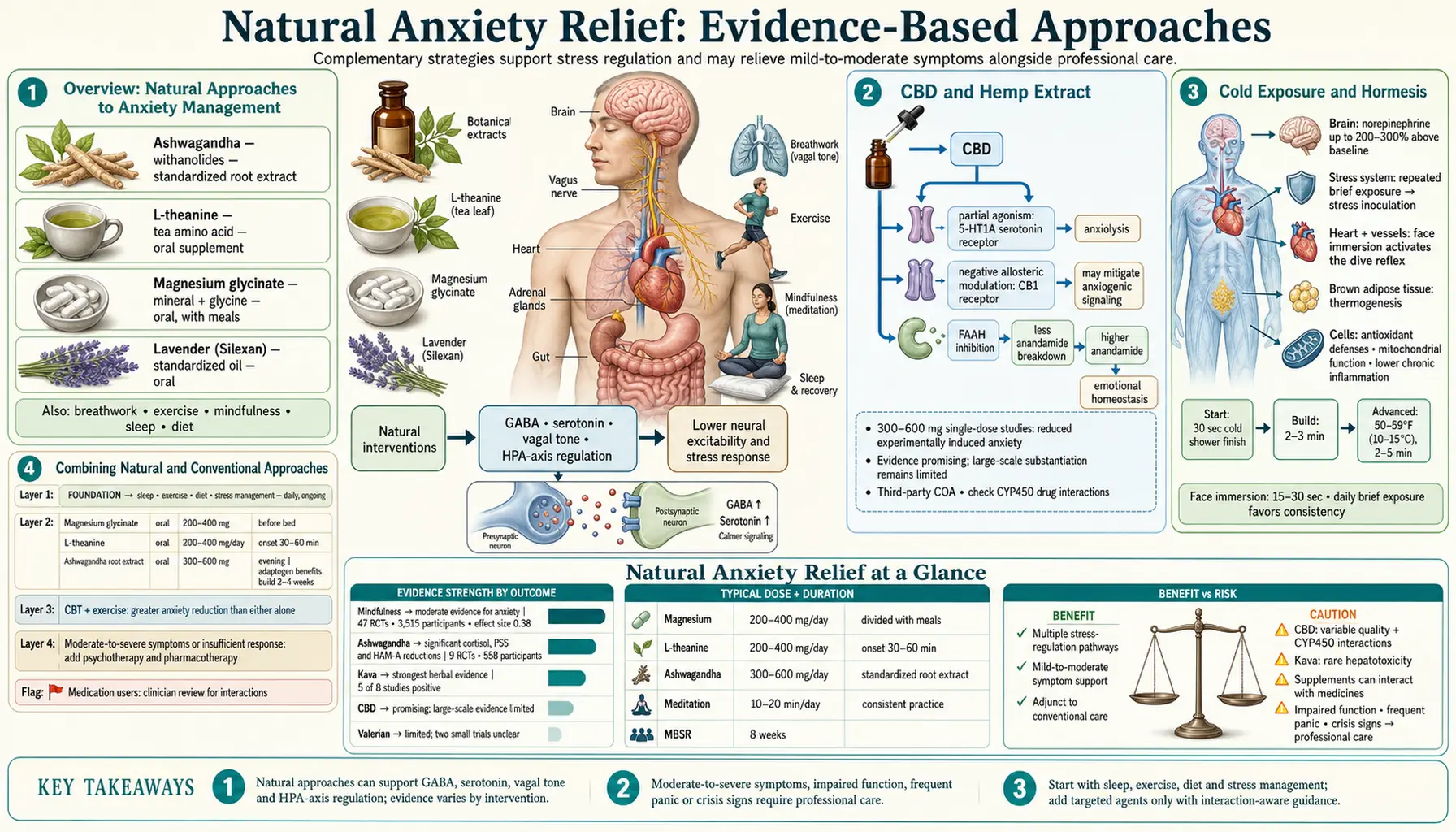
Table of Contents
- Overview: Natural Approaches to Anxiety Management
- Understanding Anxiety: HPA Axis, Neurotransmitters, and Anxiety Disorders
- GABA and the Nervous System
- Herbal Anxiolytics
- Magnesium for Anxiety
- L-Theanine
- CBD and Hemp Extract
- Omega-3 Fatty Acids
- B Vitamins and Anxiety
- Gut-Brain Connection and Probiotics
- Breathwork and Vagus Nerve Stimulation
- Meditation and Mindfulness
- Exercise as Anxiolytic
- Cold Exposure and Hormesis
- Adaptogenic Herbs
- Sleep and Anxiety
- Diet and Blood Sugar Stability
- Lifestyle Modifications
- When Professional Assessment Matters
- Combining Natural and Conventional Approaches
- Key Research Papers
- Connections
- Featured Videos
Overview: Natural Approaches to Anxiety Management
Anxiety disorders are the most common of all mental disorders: the World Health Organization estimates that 470 million people worldwide had an anxiety disorder in 2023, about 5.8% of the global population. Standard treatments are psychological therapies such as cognitive behavioral therapy (CBT) and medicines such as selective serotonin reuptake inhibitors (SSRIs); benzodiazepines are also prescribed. Many people also use herbs, supplements and lifestyle approaches, and these have been tested in clinical trials of very different size and quality.
Conventional anxiety medicines have known drawbacks, including dependence with benzodiazepines and sexual side effects and discontinuation symptoms with SSRIs. Anxiety disorders themselves carry risk: a Danish whole-population register study found higher mortality among people with anxiety disorders than in the general population (mortality rate ratio 1.39 for natural causes and 2.46 for unnatural causes), with comorbid depression playing an important part (Meier 2016).
This page summarizes what trials, systematic reviews and guideline panels report for herbal, nutritional, mind-body and lifestyle approaches. One reference point recurs throughout: the 2022 clinician guidelines of the World Federation of Societies of Biological Psychiatry (WFSBP) and the Canadian Network for Mood and Anxiety Treatments (CANMAT) taskforce rated ashwagandha (++) and lavender (++) as modestly supported, and galphimia (+) as weakly supported, for anxiety disorders; rated kava (−) and chamomile (+/−) as not recommended for generalized anxiety disorder; and found that no nutrient-based product (nutraceutical) other than N-acetylcysteine, for OCD-related disorders, had sufficient evidence in any anxiety-related disorder (Sarris 2022). Decisions about treatment belong with a clinician.
Understanding Anxiety: HPA Axis, Neurotransmitters, and Anxiety Disorders
Anxiety involves the brain's threat-detection circuitry, hormones and neurotransmitters. A central stress-response system is the hypothalamic-pituitary-adrenal (HPA) axis. When the amygdala registers a potential threat, the hypothalamus releases corticotropin-releasing hormone (CRH), which triggers the anterior pituitary to secrete adrenocorticotropic hormone (ACTH), which in turn stimulates the adrenal cortex to produce cortisol. Cortisol normally feeds back to suppress further CRH and ACTH release. Altered HPA-axis regulation has been studied in anxiety disorders, with findings that vary between disorders and between studies.
Several neurotransmitters govern the balance between excitation and calm. Gamma-aminobutyric acid (GABA) is the brain's main inhibitory neurotransmitter. Serotonin modulates mood, sleep and emotional processing, and norepinephrine drives the fight-or-flight response. Glutamate is the main excitatory neurotransmitter and is balanced against GABA. Genetic predisposition, chronic stress, nutritional deficiencies and inflammation have all been proposed as contributors to disturbances in these systems.
Clinically, anxiety appears in several recognized disorders. Generalized Anxiety Disorder (GAD) involves persistent, excessive worry about everyday matters. Panic Disorder features recurrent, unexpected panic attacks with intense physical symptoms. Social Anxiety Disorder centers on fear of social scrutiny and judgment. Specific Phobias involve disproportionate fear of particular objects or situations. Obsessive-Compulsive Disorder (OCD) and Post-Traumatic Stress Disorder (PTSD) share anxiety as a core feature, though they involve distinct neurobiological pathways and are treated differently.
GABA and the Nervous System
Gamma-aminobutyric acid (GABA) is the main inhibitory neurotransmitter in the central nervous system. It acts on two receptor types: GABA-A receptors are chloride channels whose opening hyperpolarizes the neuron and makes it less likely to fire, while GABA-B receptors act more slowly through G proteins. Benzodiazepines work by enhancing GABA-A receptor activity, which is one reason GABA is central to research on anxiety.
Brain imaging has linked GABA to some anxiety disorders. In a magnetic resonance spectroscopy study of 14 unmedicated patients with panic disorder and 14 matched controls, patients had a 22% lower total GABA concentration in the occipital cortex; the levels did not correlate with measures of illness or state anxiety (Goddard 2001).
Laboratory and animal studies have proposed GABA-related actions for several plant compounds, among them valerenic acid from valerian, flavonoids from passionflower and chamomile, kavalactones from kava and rosmarinic acid from lemon balm. A 2018 systematic review identified ten phytomedicines with both preclinical evidence of interaction with the GABA system and human clinical trials: kava, valerian, pennywort, hops, chamomile, ginkgo, passionflower, ashwagandha, skullcap and lemon balm (Savage 2018). A mechanism shown in cells or animals does not establish an effect in people; the human trial results for each herb follow below.
Herbal Anxiolytics
Ashwagandha (Withania somnifera)
A 2024 systematic review and meta-analysis of nine randomized controlled trials (558 patients) found that ashwagandha preparations lowered Perceived Stress Scale scores (mean difference −4.72), Hamilton Anxiety Scale scores (−2.19) and serum cortisol (−2.58) compared with placebo; four of the included studies reported mild to moderate adverse events, and the authors stated that more information is needed on safety with long-term use (Arumugam 2024). An earlier 2014 systematic review found five human trials, all reporting greater improvement than the comparison group on anxiety or stress scales, but all at unclear or high risk of bias (Pratte 2014). In one eight-week trial in 60 stressed healthy adults, a root extract at 250 mg or 600 mg a day lowered perceived-stress scores and serum cortisol compared with placebo (Salve 2019). The WFSBP/CANMAT taskforce rated ashwagandha as modestly supported (++) for anxiety disorders (Sarris 2022). The withanolides are the compounds most studied as its active constituents.
A 2024 double-blind trial in 70 adults with mild to moderate depression and anxiety gave 500 mg a day of a root extract standardized to 2.5% withanolides together with 5 mg piperine, or placebo, for 90 days. Hamilton anxiety and depression scores improved more on the extract, and serum serotonin rose on the extract while falling on placebo (Majeed 2024). The trial measured serotonin in blood; it did not show that this change caused the improvement.
Liver injury has been reported. A case series from Iceland and the US Drug-Induced Liver Injury Network described five people who developed jaundice 2 to 12 weeks after starting ashwagandha-containing supplements; the injury was cholestatic or mixed, no patient developed liver failure, and liver tests normalized within 1 to 5 months in four of them (Björnsson 2020). According to a regulatory review, a risk assessment carried out for the Danish food authority by the Technical University of Denmark's Food Institute (published in 2020) cited the herb's traditional use as an abortifacient, its potential effects on sex and thyroid hormone levels, on acetylcholinesterase and on the immune system, and five cases of liver damage; on that basis Denmark banned ashwagandha in food supplements in 2023. Poland limited the permitted daily intake and the Netherlands proposed a ban (Brendler 2026).
Kava (Piper methysticum)
A 2003 Cochrane review found 11 randomized, double-blind, placebo-controlled trials with 645 participants. Pooling the six that used the Hamilton Anxiety scale showed a significant reduction with kava extract compared with placebo (weighted mean difference 5.0 points, 95% CI 1.1 to 8.8); adverse events in those trials were mild, transient and infrequent, and the reviewers called for more research into long-term safety (Pittler 2003). Later evidence is less consistent. An internet-based trial of 391 adults with anxiety and insomnia found that kava did not relieve anxiety more than placebo (Jacobs 2005); a 2022 network meta-analysis found kava effective overall but possibly ineffective in generalized anxiety disorder (Zhang 2022); and the WFSBP/CANMAT taskforce rated kava as not recommended (−) for generalized anxiety disorder (Sarris 2022). The kavalactones are the compounds studied as its active constituents.
Kava has been linked to severe liver injury. Health professionals in Germany, Switzerland and the United States reported cases of severe hepatic toxicity possibly associated with kava products from 1999 onward, including 11 people who had liver failure and underwent liver transplantation; on March 25, 2002, the US Food and Drug Administration issued a consumer advisory about the potential risk (CDC 2002). Germany and other European countries restricted kava products from 2002; the US National Center for Complementary and Integrative Health notes that a German court later lifted the German ban. A 2011 review stated that the cause remains uncertain, with no clear evidence for a causative role of the kavalactones or of other identified constituents, and called for studies comparing water, acetone and ethanol extracts from different plant parts and for testing of raw material for mould toxins (Teschke 2011).
Passionflower (Passiflora incarnata)
In a pilot double-blind trial, 36 outpatients with generalized anxiety disorder received passionflower extract (45 drops a day) or the benzodiazepine oxazepam (30 mg a day) for four weeks. Both were effective and did not differ at the end of the trial; oxazepam acted faster, and significantly more problems with impairment of job performance were reported on oxazepam (Akhondzadeh 2001). The authors called for a large-scale trial. In a 2022 network meta-analysis, passionflower did not reduce Hamilton anxiety scores significantly in the summary network, although the authors considered it worth further study (Zhang 2022). Its flavonoids, including chrysin and vitexin, have been studied for activity at GABA-A receptors in laboratory work.
Valerian (Valeriana officinalis)
Valerian has a long traditional use for nervousness and insomnia, but its evidence for anxiety is limited. A 2006 Cochrane review found only one eligible trial, a four-week pilot study in 36 patients with generalized anxiety disorder comparing valerian, diazepam and placebo, with no significant difference between valerian and placebo on Hamilton anxiety scores; the reviewers concluded that the evidence was insufficient to draw conclusions (Miyasaka 2006). In the internet-based trial described above, neither kava nor valerian relieved anxiety or insomnia more than placebo (Jacobs 2005), and the 2022 network meta-analysis found insufficient evidence to confirm valerian's effectiveness (Zhang 2022). Its main studied compound, valerenic acid, acts on the GABA system in laboratory studies.
Lavender (Lavandula angustifolia)
The best-studied lavender product for anxiety is a standardized oral lavender oil capsule preparation. In a six-week double-blind trial in adults with generalized anxiety disorder, it was compared with the benzodiazepine lorazepam: Hamilton anxiety scores fell by 45% with lavender oil and by 46% with lorazepam from a baseline of 25 points in both groups, and the authors concluded that the two were similarly effective (Woelk 2010). A larger ten-week trial in 539 adults with generalized anxiety disorder compared 160 mg and 80 mg a day of the preparation with the SSRI paroxetine (20 mg a day) and placebo; both lavender oil doses reduced Hamilton scores more than placebo, paroxetine showed only a trend in the main analysis, and adverse-event rates on lavender oil were comparable to placebo (Kasper 2014). A 2023 meta-analysis of the five placebo-controlled trials of 80 mg a day (1,213 patients) found significant anti-anxiety effects in subthreshold anxiety, generalized anxiety disorder and mixed anxiety and depressive disorder, with no differences in adverse events (Dold 2023). Co-authors of the 2014 trial and of the meta-analysis were employed by the preparation's manufacturer. The WFSBP/CANMAT taskforce rated lavender as modestly supported (++) for anxiety disorders (Sarris 2022). Inhaled lavender (aromatherapy) is a separate question, and its trials are not summarized here.
In an eight-week pilot trial in 45 adults with mild to moderate major depression, lemon balm (2 g a day) and lavender (2 g a day), each given on its own, had effects similar to fluoxetine (20 mg a day); the trial had no placebo group, and the authors called for larger trials (Araj-Khodaei 2020).
Lemon Balm (Melissa officinalis)
A 2021 systematic review and meta-analysis of randomized trials found that lemon balm improved anxiety scores (standardized mean difference −0.98) and depression scores (−0.47) compared with placebo without serious side effects, particularly in acute settings, but the trials were few and highly heterogeneous and the authors advised caution in interpreting the results (Ghazizadeh 2021). In a three-week randomized, double-blind, placebo-controlled trial published in 2023, 100 healthy adults with moderate emotional distress or poor sleep took 400 mg a day of a phospholipid-carrier lemon balm extract or placebo; self-reported depression, anxiety, stress and well-being scores improved on the extract (Bano 2023). An earlier open-label 15-day pilot study with no placebo group reported lower anxiety and insomnia ratings in 20 stressed volunteers; the extract tested contained compounds that inhibit the breakdown of GABA (Cases 2011).
Chamomile (Matricaria chamomilla)
In an eight-week double-blind trial in 57 patients with mild to moderate generalized anxiety disorder, chamomile extract (220 mg capsules standardized to 1.2% apigenin, started at one capsule a day and increased by response to as many as five) reduced Hamilton anxiety scores more than placebo (P = 0.047); the authors concluded that chamomile "may have modest anxiolytic activity" (Amsterdam 2009). In a longer study from the same group, 93 people with moderate to severe generalized anxiety disorder who had responded to 12 weeks of open-label chamomile (500 mg three times daily) were randomized to 26 more weeks of chamomile or placebo. Relapse was 15.2% on chamomile and 25.5% on placebo, a difference that was not statistically significant (hazard ratio 0.52, 95% CI 0.20 to 1.33, P = 0.16), although symptoms stayed significantly lower on chamomile during follow-up (Mao 2016). The 2022 network meta-analysis found insufficient evidence to confirm either the effectiveness or the ineffectiveness of chamomile compared with placebo (Zhang 2022), and the WFSBP/CANMAT taskforce rated chamomile as not recommended (+/−) for generalized anxiety disorder (Sarris 2022). Apigenin is the leading candidate active compound; no trial has tested isolated apigenin for anxiety.
Magnesium for Anxiety
Magnesium is an essential mineral that serves as a cofactor for hundreds of enzymes. In the nervous system it blocks the channel of the N-methyl-D-aspartate (NMDA) receptor at resting membrane potential, limiting the excitatory effects of glutamate and calcium entry into neurons. Effects on GABA receptors and on the HPA axis have also been proposed, mainly from laboratory and animal research.
A 2017 systematic review of magnesium supplementation and subjective anxiety and stress included 18 studies, all in groups with an existing vulnerability to anxiety: mildly anxious people, premenstrual syndrome, postpartum women and people with hypertension. Four of eight studies in anxious samples, four of seven in premenstrual samples and one of two in hypertensive samples reported positive effects on subjective anxiety; magnesium had no effect on postpartum anxiety, and no study used a validated measure of stress. The authors concluded that the evidence is suggestive of a benefit in anxiety-vulnerable groups but that its quality is poor, and called for well-designed trials (Boyle 2017). The WFSBP/CANMAT taskforce found no nutrient-based product other than N-acetylcysteine with sufficient evidence in any anxiety-related disorder (Sarris 2022).
Most of the trials in the 2017 review used forms of magnesium other than glycinate, and no trial has established that magnesium glycinate or magnesium L-threonate works better for anxiety than other forms. Claims that magnesium L-threonate raises brain magnesium come mainly from animal research. Glycine, the amino acid in magnesium glycinate, is itself an inhibitory neurotransmitter. Magnesium citrate draws water into the intestine and is used as a laxative. The US tolerable upper intake level for magnesium from supplements is 350 mg a day for adults, set on the basis of diarrhea at higher intakes. The forms are compared in detail on the Magnesium Glycinate page linked under Connections.
L-Theanine
L-theanine is an amino acid found in the tea plant (Camellia sinensis). Laboratory and animal studies describe effects on glutamate transport and glutamate receptors and on GABA, and resting EEG studies in people report increased alpha-wave activity, the pattern associated with relaxed wakefulness.
A 2024 systematic review of 11 randomized controlled trials in people with diagnosed mental disorders, including schizophrenia, ADHD, OCD, major depression, sleep disorders, generalized anxiety disorder and Tourette syndrome, found that L-theanine reduced psychiatric symptoms more than control conditions in schizophrenia, anxiety disorders and ADHD, and called for further studies to validate the findings (Moshfeghinia 2024). The one trial in diagnosed generalized anxiety disorder was negative for anxiety: 46 adults given 450 to 900 mg of L-theanine or placebo alongside their stable antidepressant treatment for eight weeks showed no difference on the Hamilton Anxiety scale (p = 0.73) or on overall insomnia severity, though those on L-theanine reported greater sleep satisfaction on one item (Sarris 2019). A 2020 systematic review of nine randomized trials of pure L-theanine supplements concluded that 200 to 400 mg a day may assist in reducing stress and anxiety in people exposed to stressful conditions, and that longer and larger studies are needed before it can be clinically justified as a therapeutic agent (Williams 2020). In the 2022 network meta-analysis of herbal treatments, L-theanine did not outperform placebo with statistical certainty (Zhang 2022).
L-theanine is often combined with caffeine in studies of attention and alertness. The individual trials, including their doses and the industry involvement in several of them, are described on the L-Theanine page linked under Connections.
CBD and Hemp Extract
Cannabidiol (CBD) is a non-intoxicating cannabinoid from the cannabis plant. Mechanisms proposed from laboratory and animal research include partial agonism of the 5-HT1A serotonin receptor (the receptor targeted by the anti-anxiety medicine buspirone), negative allosteric modulation of CB1 cannabinoid receptors, and inhibition of fatty acid amide hydrolase (FAAH), the enzyme that breaks down the endocannabinoid anandamide.
A 2024 meta-analysis of eight studies with 316 participants found a large effect of CBD on anxiety (Hedges' g −0.92, 95% CI −1.80 to −0.04), but its authors urged caution because the clinical samples were small (Han 2024). In a single-dose study of 24 people with untreated social anxiety disorder, 600 mg of CBD reduced anxiety, cognitive impairment and discomfort during a simulated public-speaking test compared with placebo (Bergamaschi 2011). In 60 healthy volunteers giving a real speech, 300 mg of CBD reduced anxiety after the speech while 100 mg and 900 mg did not, an inverted U-shaped dose response (Zuardi 2017).
These studies used purified CBD at the doses stated; consumer products are sold at widely varying strengths. A 2019 review of the prescribing information for approved CBD products reported that nearly half of users experienced adverse events, including liver-enzyme elevations, sedation and sleep disturbance, with a general dose-response relationship, and that CBD's effects on the drug-metabolizing enzymes CYP3A4 and CYP2C19 and on the transporter P-glycoprotein create a high potential for drug interactions (Brown 2019).
Omega-3 Fatty Acids
The long-chain omega-3 polyunsaturated fatty acids, eicosapentaenoic acid (EPA) and docosahexaenoic acid (DHA), are structural components of brain cell membranes. EPA competes with the omega-6 fatty acid arachidonic acid in the production of eicosanoids, and an anti-inflammatory action is one proposed route by which omega-3s might affect mood and anxiety.
A 2018 systematic review and meta-analysis of clinical trials (1,203 participants receiving omega-3s and 1,037 controls) found an association between omega-3 treatment and reduced anxiety symptoms (Hedges' g 0.374, 95% CI 0.081 to 0.666). The association was stronger in groups with specific clinical diagnoses than in groups without, and was significant only in subgroups given at least 2,000 mg a day, not in those given less. The authors concluded that omega-3s might help to reduce symptoms of clinical anxiety and called for better-designed studies in people whose main symptom is anxiety (Su 2018).
Effects on the gut barrier and gut microbes have also been proposed as a link between omega-3s and mood. Conversion of the plant omega-3 alpha-linolenic acid (ALA) to EPA and DHA in the human body is limited, and the trials above gave EPA and DHA directly.
B Vitamins and Anxiety
Several B vitamins are cofactors in neurotransmitter metabolism. Vitamin B6, as pyridoxal 5'-phosphate, is the cofactor of glutamic acid decarboxylase, the enzyme that converts glutamate to GABA. Vitamin B12 and folate are needed for the methylation cycle that produces S-adenosylmethionine (SAMe), a methyl donor in the synthesis of monoamine neurotransmitters. Deficiency of thiamine (vitamin B1) or of vitamin B12 can cause neurological and psychiatric symptoms.
A 2019 systematic review and meta-analysis of randomized controlled trials of daily supplementation with three or more B vitamins for at least four weeks included 18 articles (16 trials, 2,015 participants). B vitamins benefited stress (standardized mean difference 0.23, p = 0.03); the benefit for depressive symptoms did not reach significance (p = 0.07), and there was no effect on anxiety (standardized mean difference 0.03, p = 0.71). The authors suggested that people at risk because of poor nutrient status or poor mood may benefit most (Young 2019).
When folate or B12 is deficient, homocysteine accumulates in the blood. Homocysteine acts at NMDA glutamate receptors and promotes oxidative stress in laboratory studies, and its relationship to anxiety has been studied in observational research. Claims that activated vitamin forms (methylfolate, methylcobalamin, pyridoxal 5'-phosphate) or testing for MTHFR gene variants improve anxiety outcomes have not been established in the trials cited here.
Gut-Brain Connection and Probiotics
The gut-brain axis is the two-way communication between the digestive tract and the brain, carried by the vagus nerve, immune signaling molecules and microbial metabolites. The enteric nervous system, the network of neurons in the gut wall, is sometimes called the "second brain." Most of the body's serotonin is made in the gut, and gut microbes influence its production and signaling.
Psychobiotics are live microorganisms with a potential mental health benefit. In mice, chronic feeding with a Lactobacillus rhamnosus strain altered GABA receptor expression in the brain and reduced stress-induced corticosterone and anxiety- and depression-related behavior; these effects were not found in mice whose vagus nerve had been cut, identifying the vagus as a major communication pathway (Bravo 2011). In a study of 22 healthy volunteers, each tested at baseline, after placebo and after the probiotic, Bifidobacterium longum 1714 attenuated the rise in cortisol output and subjective anxiety during a socially evaluated cold-water stress test and reduced daily reported stress (Allen 2016).
A 2019 meta-analysis of 34 controlled clinical trials found that prebiotics did not differ from placebo for depression or anxiety, while probiotics had small but significant effects on depression (d = −0.24) and anxiety (d = −0.10). The authors noted that few trials included clinical samples and called for more randomized trials in people with psychiatric conditions (Liu 2019). The WFSBP/CANMAT taskforce supported probiotics as an add-on treatment for depression (++) but found no nutrient-based product with sufficient evidence in anxiety disorders (Sarris 2022).
Breathwork and Vagus Nerve Stimulation
The vagus nerve, the longest cranial nerve, is the main parasympathetic link between the brain and the internal organs. It sends information to brain regions involved in anxiety regulation, including the locus coeruleus, orbitofrontal cortex, insula, hippocampus and amygdala (George 2008). Heart rate variability (HRV) is used as an index of parasympathetic (vagal) activity.
Implanted vagus nerve stimulation (VNS) has been tested in small open-label studies. In a pilot study that recruited 11 adults with treatment-resistant OCD, panic disorder or PTSD, three were acute responders; four years after implantation, four patients were still receiving VNS with continued improvement in anxiety scores compared with baseline, and the authors called for double-blind studies (George 2008). In a 2025 open-label feasibility study, nine people with moderate to severe treatment-resistant PTSD received 12 sessions of prolonged exposure therapy combined with VNS; all showed loss of the PTSD diagnosis after treatment, benefits persisted six months later, and the authors called for a randomized controlled trial (Powers 2025).
Breathing practices are the most accessible way people try to influence this system. In a remote randomized trial at Stanford, 108 adults practiced one of three breathing exercises (cyclic sighing, which uses a double inhale followed by a prolonged exhale; box breathing, with equal inhale, hold, exhale and hold; or cyclic hyperventilation with retention) or mindfulness meditation for five minutes a day for one month. Breathwork, especially cyclic sighing, produced greater improvement in mood and a larger fall in respiratory rate than mindfulness meditation; state anxiety fell after each session in both the breathwork and the mindfulness groups (Balban 2023). Slow breathing at about six breaths a minute, the 4-7-8 technique, cold water on the face, humming and singing are also described as vagal practices; the evidence for each is covered on the Breath and Cold Exposure page in this section.
Meditation and Mindfulness
A 2014 systematic review and meta-analysis in JAMA Internal Medicine included 47 randomized trials with 3,515 participants that compared meditation programs with active controls. Mindfulness meditation programs had moderate evidence of improved anxiety (effect size 0.38 at 8 weeks and 0.22 at 3 to 6 months), depression and pain, and low evidence of improved stress and mental health-related quality of life. The reviewers found no evidence that meditation programs were better than any active treatment, such as drugs, exercise or other behavioral therapies (Goyal 2014).
Mindfulness-Based Stress Reduction (MBSR) is a standardized eight-week program developed by Jon Kabat-Zinn at the University of Massachusetts Medical Center. In a longitudinal MRI study of 26 stressed but otherwise healthy people who completed MBSR, reductions in perceived stress correlated with decreases in grey-matter density in the right basolateral amygdala (Hölzel 2010).
In a randomized trial of 93 people with generalized anxiety disorder, an eight-week MBSR course was compared with an attention-control stress management education course. Both reduced Hamilton anxiety scores, with no significant difference between them; MBSR produced greater reductions on clinician global ratings and the Beck Anxiety Inventory and in anxiety and distress during a laboratory stress test (Hoge 2013).
Exercise as Anxiolytic
Proposed mechanisms for an anti-anxiety effect of exercise include short-term changes in muscle tension, stress hormones, endorphins and endocannabinoids, and longer-term changes in HPA-axis reactivity, inflammation and brain-derived neurotrophic factor (BDNF), a protein involved in neuroplasticity. Exercise also changes brain neurotransmitter systems, a subject reviewed in 1995 (Meeusen 1995).
A 2017 meta-analysis of six randomized controlled trials including 262 adults with a current anxiety or stress-related disorder found that exercise reduced anxiety symptoms more than control conditions, with a moderate effect size (standardized mean difference −0.582), and the authors described exercise as an important treatment option in these disorders (Stubbs 2017).
The World Health Organization's physical activity guidelines for adults call for at least 150 to 300 minutes of moderate-intensity aerobic activity a week and muscle-strengthening activity on two or more days; these are general health guidelines, not anxiety-specific ones. Yoga and tai chi combine movement with breathing and attention practices and have also been studied for anxiety.
Cold Exposure and Hormesis
Hormesis is the idea that low-dose or short-duration stressors can activate adaptive responses that strengthen resilience. Cold exposure, through cold showers, cold water immersion or cryotherapy, is a strong stimulus to the sympathetic nervous system. In the most-cited catecholamine study, young men immersed head-out for one hour in water at 14°C showed a 530% rise in plasma noradrenaline (norepinephrine) and a 250% rise in dopamine, a 350% rise in metabolic rate, and rises in heart rate (5%) and systolic and diastolic blood pressure (7% and 8%), while cortisol did not increase; immersion at 32°C lowered heart rate, blood pressure and cortisol (Šrámek 2000).
Proponents describe repeated cold exposure as a form of "stress inoculation" that trains the stress-response systems to switch on and off efficiently, and propose cross-adaptation to psychological stress. No randomized trial of cold exposure as a treatment for an anxiety disorder is cited here.
Cold water on the face triggers the diving reflex, which slows the heart. Whole-body cold immersion raises heart rate and blood pressure and carries risks from the cold-shock response, which matter most for people with heart disease or high blood pressure. The evidence and the risks are set out in detail on the Breath and Cold Exposure page in this section.
Adaptogenic Herbs
Adaptogens were initially defined as substances that enhance the "state of nonspecific resistance" in stress (Panossian 2010). The concept was introduced by the Russian pharmacologist Nikolai Lazarev and refined by Israel Brekhman, whose criteria were that an adaptogen be relatively non-toxic, produce a nonspecific increase in resistance to stress, and have a normalizing influence on physiology. A 2010 review describes animal, cell and clinical studies linking adaptogens to the HPA axis and to stress mediators such as heat-shock protein 70 and cortisol (Panossian 2010).
Rhodiola rosea: in a randomized, double-blind trial in 60 people with stress-related fatigue, 576 mg a day of a standardized root extract for 28 days improved a burnout scale and several attention measures more than placebo and changed the cortisol response to awakening; many measures also improved in the placebo group (Olsson 2009). The WFSBP/CANMAT taskforce did not support rhodiola for mood disorders (Sarris 2022).
Holy basil (tulsi, Ocimum sanctum) has a long history in Ayurvedic medicine. A 2017 systematic review identified 24 human studies reporting effects on metabolic disorders, cardiovascular disease, immunity and neurocognition; all reported favorable outcomes and none reported significant adverse events, and the authors called for further studies to clarify dosage, dose form and the populations most likely to benefit (Jamshidi 2017). Ashwagandha is covered in the herbal section above, and the adaptogen trials are described in more detail on the Adaptogenic Herbs page in this section.
Sleep and Anxiety
Sleep and anxiety influence each other: sleep disruption is a recognized feature of all anxiety disorders, and sleep loss raises anxiety. A 2020 brain-imaging study linked the anxiety-raising effect of sleep loss to impaired activity in the medial prefrontal cortex and its connections with limbic regions, found that deep non-rapid eye movement (slow-wave) sleep had an anxiety-reducing effect on these networks, and found that even modest night-to-night reductions in sleep predicted increases in next-day anxiety across the population (Ben Simon 2020).
For chronic insomnia, the American College of Physicians recommends cognitive behavioral therapy for insomnia (CBT-I) as the initial treatment for all adults (strong recommendation, moderate-quality evidence), with medication considered through shared decision-making when CBT-I alone has not worked (Qaseem 2016). Sleep restriction therapy, a component of CBT-I, temporarily limits time in bed to build sleep drive and to weaken the link between the bed and wakefulness or worry.
Trials of supplements for sleep, including magnesium, glycine, L-theanine and chamomile, are covered on their own pages linked under Connections.
Diet and Blood Sugar Stability
When blood glucose falls, the body releases epinephrine (adrenaline) and other counter-regulatory hormones. The resulting symptoms, including rapid heartbeat, trembling, sweating and lightheadedness, can resemble those of a panic attack. A fall in blood glucose a few hours after a high-glycemic meal is called reactive hypoglycemia.
Dietary change has been tested most directly in depression. In the 12-week SMILES trial, 67 adults with moderate to severe depression received either seven individual nutritional counseling sessions with a clinical dietitian or a social-support control on the same visit schedule; the diet group improved significantly more on the main depression scale, and remission was 32.3% versus 8.0% (Jacka 2017). Anxiety was a secondary outcome of that trial.
Caffeine blocks adenosine receptors and can provoke panic symptoms in some people with panic disorder. Alcohol acts initially on GABA receptors but disrupts sleep as it is metabolized. Effects of refined seed oils and artificial sweeteners on mood through inflammation or the gut microbiome have been proposed, but no trial in anxiety is cited here.
Lifestyle Modifications
Nature exposure: in an eight-week study of 36 city dwellers who chose when and where to spend time in nature, a nature experience lowered salivary cortisol by 21.3% per hour beyond its normal daily decline, with the greatest efficiency between 20 and 30 minutes (Hunter 2019). The Japanese practice of shinrin-yoku (forest bathing) has also been studied for effects on stress markers.
Social connection: loneliness and social isolation are associated with poorer mental health, and the hormone oxytocin has been studied for its role in social bonding and in damping stress responses.
Other practices studied for anxiety and stress include limiting news and social media exposure, keeping a regular daily routine, expressive writing about worries, creative activities such as art, music and gardening, and gratitude exercises. The evidence for each varies and is not reviewed in detail on this page.
When Professional Assessment Matters
Clinical guidance treats several situations as calling for professional assessment: anxiety that interferes with work, relationships or daily activities; frequent or unexplained panic attacks, because heart rhythm problems, thyroid disease and medication side effects can produce similar symptoms; and anxiety that occurs together with depression, substance use, an eating disorder or trauma. Suicidal thoughts, self-harm urges or hopelessness are treated as needing immediate help.
Psychological therapy such as cognitive behavioral therapy (CBT) is a first-line treatment for generalized anxiety disorder and panic disorder in clinical guidelines such as those of the UK National Institute for Health and Care Excellence (NICE). For OCD, guidelines list CBT including exposure and response prevention (ERP); for PTSD, trauma-focused CBT and eye movement desensitization and reprocessing (EMDR). Relying only on self-help approaches for these conditions can delay treatments with stronger evidence.
Other markers that clinicians look for include anxiety that has persisted or worsened over months, avoidance that increasingly restricts daily life, and physical symptoms such as chest pain, chronic digestive problems or persistent insomnia. A clinician can rule out medical causes, including thyroid dysfunction, cardiac arrhythmias, medication side effects and hormonal changes, and can discuss psychotherapy, medication and complementary approaches together.
Combining Natural and Conventional Approaches
Cognitive behavioral therapy (CBT) is a first-line psychological treatment for anxiety disorders, and some approaches on this page have been tested alongside it. In a pilot group randomized trial in people with panic disorder, generalized anxiety disorder or social phobia, adding a home-based walking program to group CBT reduced depression, anxiety and stress scores more than adding educational sessions (Merom 2008).
Several herbs and supplements interact with medicines. St. John's wort activates the pregnane X receptor and induces CYP3A4 and P-glycoprotein, and has been shown to alter the levels and effects of drugs including alprazolam, warfarin, digoxin, cyclosporine, simvastatin and oral contraceptives; the degree of induction correlates with the preparation's hyperforin content (Nicolussi 2020). CBD acts on CYP3A4, CYP2C19 and P-glycoprotein, giving a high potential for drug interactions (Brown 2019). Kava and valerian may add to the sedative effects of benzodiazepines and alcohol. For ashwagandha, the Danish risk assessment cited potential effects on thyroid hormone levels and on the immune system (Brendler 2026). Questions about combining supplements with prescription medicines belong with a clinician or pharmacist.
Psychological therapies and medicines remain the standard treatments in clinical guidelines. Among herbs and supplements, the WFSBP/CANMAT taskforce gave modest support for anxiety disorders to ashwagandha and lavender, rated kava and chamomile as not recommended for generalized anxiety disorder, and stated that such products are primarily recommended, where supportive evidence exists, as add-on treatments within standard medical care, especially in more severe mental illness (Sarris 2022). Exercise, mindfulness programs and breathing practices have randomized-trial evidence of small to moderate benefits, as described above.
Key Research Papers
- Pratte MA, Nanavati KB, Young V, Morley CP. An alternative treatment for anxiety: a systematic review of human trial results reported for the Ayurvedic herb ashwagandha (Withania somnifera). Journal of Alternative and Complementary Medicine. 2014;20(12):901-908. — doi:10.1089/acm.2014.0177
- Lopresti AL, Smith SJ. Ashwagandha (Withania somnifera) for the treatment and enhancement of mental and physical conditions: a systematic review of human trials. Journal of Herbal Medicine. 2021;28:100434. — doi:10.1016/j.hermed.2021.100434
- Salve J, Pate S, Debnath K, Langade D. Adaptogenic and anxiolytic effects of ashwagandha root extract in healthy adults: a double-blind, randomized, placebo-controlled clinical study. Cureus. 2019;11(12):e6466. — doi:10.7759/cureus.6466
- Savage K, Firth J, Stough C, Sarris J. GABA-modulating phytomedicines for anxiety: a systematic review of preclinical and clinical evidence. Phytotherapy Research. 2018;32(1):3-18. — doi:10.1002/ptr.5940
- Pittler MH, Ernst E. Kava extract versus placebo for treating anxiety. Cochrane Database of Systematic Reviews. 2003;(1):CD003383. — doi:10.1002/14651858.CD003383
- Akhondzadeh S, Naghavi HR, Vazirian M, et al. Passionflower in the treatment of generalized anxiety: a pilot double-blind randomized controlled trial with oxazepam. Journal of Clinical Pharmacy and Therapeutics. 2001;26(5):363-367. — doi:10.1046/j.1365-2710.2001.00367.x
- Kasper S, Gastpar M, Muller WE, et al. Lavender oil preparation Silexan is effective in generalized anxiety disorder: a randomized, double-blind comparison to placebo and paroxetine. International Journal of Neuropsychopharmacology. 2014;17(6):859-869. — doi:10.1017/S1461145714000017
- Cases J, Ibarra A, Feuillere N, Roller M, Sukkar SG. Pilot trial of Melissa officinalis L. leaf extract in the treatment of volunteers suffering from mild-to-moderate anxiety disorders and sleep disturbances. Mediterranean Journal of Nutrition and Metabolism. 2011;4(3):211-218. — doi:10.1007/s12349-010-0045-4
- Amsterdam JD, Li Y, Soeller I, et al. A randomized, double-blind, placebo-controlled trial of oral Matricaria recutita (chamomile) extract therapy for generalized anxiety disorder. Journal of Clinical Psychopharmacology. 2009;29(4):378-382. — doi:10.1097/JCP.0b013e3181ac935c
- Boyle NB, Lawton C, Dye L. The effects of magnesium supplementation on subjective anxiety and stress: a systematic review. Nutrients. 2017;9(5):429. — doi:10.3390/nu9050429
- Moshfeghinia R, et al. The effects of L-theanine supplementation on the outcomes of patients with mental disorders: a systematic review. BMC Psychiatry. 2024;24(1):886. — doi:10.1186/s12888-024-06285-y
- Zuardi AW, Rodrigues NP, Silva AL, et al. Inverted U-shaped dose-response curve of the anxiolytic effect of cannabidiol during public speaking in real life. Frontiers in Pharmacology. 2017;8:259. — doi:10.3389/fphar.2017.00259
- Su KP, Tseng PT, Lin PY, et al. Association of use of omega-3 polyunsaturated fatty acids with changes in severity of anxiety symptoms: a systematic review and meta-analysis. JAMA Network Open. 2018;1(5):e182327. — doi:10.1001/jamanetworkopen.2018.2327
- Young LM, Pipingas A, White DJ, et al. A systematic review and meta-analysis of B vitamin supplementation on depressive symptoms, anxiety, and stress: effects on healthy and 'at-risk' individuals. Nutrients. 2019;11(9):2232. — doi:10.3390/nu11092232
- Liu RT, Walsh RFL, Sheehan AE. Prebiotics and probiotics for depression and anxiety: a systematic review and meta-analysis of controlled clinical trials. Neuroscience and Biobehavioral Reviews. 2019;102:13-23. — doi:10.1016/j.neubiorev.2019.03.023
- Goyal M, Singh S, Sibinga EM, et al. Meditation programs for psychological stress and well-being: a systematic review and meta-analysis. JAMA Internal Medicine. 2014;174(3):357-368. — doi:10.1001/jamainternmed.2013.13018
- Stubbs B, Vancampfort D, Rosenbaum S, et al. An examination of the anxiolytic effects of exercise for people with anxiety and stress-related disorders: a meta-analysis. Psychiatry Research. 2017;249:102-108. — doi:10.1016/j.psychres.2016.12.020
- George MS, Ward HE, Ninan PT, et al. A pilot study of vagus nerve stimulation (VNS) for treatment-resistant anxiety disorders. Brain Stimulation. 2008;1(2):112-121. — doi:10.1016/j.brs.2008.02.001
- Meeusen R, De Meirleir K. Exercise and brain neurotransmission. Sports Medicine. 1995;20(3):160-188. — doi:10.2165/00007256-199520030-00004
- Panossian A, Wikman G. Effects of adaptogens on the central nervous system and the molecular mechanisms associated with their stress-protective activity. Pharmaceuticals. 2010;3(1):188-224. — doi:10.3390/ph3010188
- Ben Simon E, Rossi A, Harvey AG, Walker MP. Overanxious and underslept. Nature Human Behaviour. 2020;4(1):100-110. — doi:10.1038/s41562-019-0754-8
- Jacka FN, O'Neil A, Opie R, et al. A randomised controlled trial of dietary improvement for adults with major depression (the SMILES trial). BMC Medicine. 2017;15(1):23. — doi:10.1186/s12916-017-0791-y
- Meier SM, Mattheisen M, Mors O, et al. Increased mortality among people with anxiety disorders: total population study. British Journal of Psychiatry. 2016;209(3):216-221. — doi:10.1192/bjp.bp.115.171975
- Sarris J, Ravindran A, Yatham LN, et al.. Clinician guidelines for the treatment of psychiatric disorders with nutraceuticals and phytoceuticals: The World Federation of Societies of Biological Psychiatry (WFSBP) and Canadian Network for Mood and Anxiety Treatments (CANMAT) Taskforce. World Journal of Biological Psychiatry. 2022;23(6):424-455. — PubMed PMID: 35311615
- Goddard AW, Mason GF, Almai A, et al.. Reductions in occipital cortex GABA levels in panic disorder detected with 1h-magnetic resonance spectroscopy. Archives of General Psychiatry. 2001;58(6):556-61. — PubMed PMID: 11386984
- Arumugam V, Vijayakumar V, Balakrishnan A, et al.. Effects of Ashwagandha (Withania Somnifera) on stress and anxiety: A systematic review and meta-analysis. Explore (New York). 2024;20(6):103062. — PubMed PMID: 39348746
- Majeed M, Nagabhushanam K, Murali A, et al.. A Standardized Withania somnifera (Linn.) Root Extract with Piperine Alleviates the Symptoms of Anxiety and Depression by Increasing Serotonin Levels: A Double-Blind, Randomized, Placebo-Controlled Study. Journal of Integrative and Complementary Medicine. 2024;30(5):459-468. — PubMed PMID: 37878284
- Björnsson HK, Björnsson ES, Avula B, et al.. Ashwagandha-induced liver injury: A case series from Iceland and the US Drug-Induced Liver Injury Network. Liver International. 2020;40(4):825-829. — PubMed PMID: 31991029
- Brendler T, Al-Mondhiry R, Lang L, et al.. Ashwagandha: Is It Safe? Part 1: A Regulatory Review. Phytotherapy Research. 2026;40(8):4845-4857. — PubMed PMID: 41420287
- Jacobs BP, Bent S, Tice JA, et al.. An internet-based randomized, placebo-controlled trial of kava and valerian for anxiety and insomnia. Medicine (Baltimore). 2005;84(4):197-207. — PubMed PMID: 16010204
- Zhang W, Yan Y, Wu Y, et al.. Medicinal herbs for the treatment of anxiety: A systematic review and network meta-analysis. Pharmacological Research. 2022;179:106204. — PubMed PMID: 35378276
- Centers for Disease Control and Prevention (CDC). Hepatic toxicity possibly associated with kava-containing products--United States, Germany, and Switzerland, 1999-2002. MMWR Morbidity and Mortality Weekly Report. 2002;51(47):1065-7. — Search PubMed
- Teschke R, Qiu SX, Xuan TD, et al.. Kava and kava hepatotoxicity: requirements for novel experimental, ethnobotanical and clinical studies based on a review of the evidence. Phytotherapy Research. 2011;25(9):1263-74. — PubMed PMID: 21442674
- Miyasaka LS, Atallah AN, Soares BG. Valerian for anxiety disorders. Cochrane Database of Systematic Reviews. 2006(4):CD004515. — PubMed PMID: 17054208
- Woelk H, Schläfke S. A multi-center, double-blind, randomised study of the Lavender oil preparation Silexan in comparison to Lorazepam for generalized anxiety disorder. Phytomedicine. 2010;17(2):94-9. — PubMed PMID: 19962288
- Dold M, Bartova L, Volz HP, et al.. Efficacy of Silexan in patients with anxiety disorders: a meta-analysis of randomized, placebo-controlled trials. European Archives of Psychiatry and Clinical Neuroscience. 2023;273(7):1615-1628. — PubMed PMID: 36717399
- Araj-Khodaei M, Noorbala AA, Yarani R, et al.. A double-blind, randomized pilot study for comparison of Melissa officinalis L. and Lavandula angustifolia Mill. with Fluoxetine for the treatment of depression. BMC Complementary Medicine and Therapies. 2020;20(1):207. — PubMed PMID: 32620104
- Ghazizadeh J, Sadigh-Eteghad S, Marx W, et al.. The effects of lemon balm (Melissa officinalis L.) on depression and anxiety in clinical trials: A systematic review and meta-analysis. Phytotherapy Research. 2021;35(12):6690-6705. — PubMed PMID: 34449930
- Bano A, Hepsomali P, Rabbani F, et al.. The possible "calming effect" of subchronic supplementation of a standardised phospholipid carrier-based Melissa officinalis L. extract in healthy adults with emotional distress and poor sleep conditions: results from a prospective, randomised, double-blinded, placebo-controlled clinical trial. Frontiers in Pharmacology. 2023;14:1250560. — PubMed PMID: 37927585
- Mao JJ, Xie SX, Keefe JR, et al.. Long-term chamomile (Matricaria chamomilla L.) treatment for generalized anxiety disorder: A randomized clinical trial. Phytomedicine. 2016;23(14):1735-1742. — PubMed PMID: 27912875
- Sarris J, Byrne GJ, Cribb L, et al.. L-theanine in the adjunctive treatment of generalized anxiety disorder: A double-blind, randomised, placebo-controlled trial. Journal of Psychiatric Research. 2019;110:31-37. — PubMed PMID: 30580081
- Williams JL, Everett JM, D'Cunha NM, et al.. The Effects of Green Tea Amino Acid L-Theanine Consumption on the Ability to Manage Stress and Anxiety Levels: a Systematic Review. Plant Foods for Human Nutrition. 2020;75(1):12-23. — PubMed PMID: 31758301
- Han K, Wang JY, Wang PY, et al.. Therapeutic potential of cannabidiol (CBD) in anxiety disorders: A systematic review and meta-analysis. Psychiatry Research. 2024;339:116049. — PubMed PMID: 38924898
- Bergamaschi MM, Queiroz RH, Chagas MH, et al.. Cannabidiol reduces the anxiety induced by simulated public speaking in treatment-naïve social phobia patients. Neuropsychopharmacology. 2011;36(6):1219-26. — PubMed PMID: 21307846
- Brown JD, Winterstein AG. Potential Adverse Drug Events and Drug-Drug Interactions with Medical and Consumer Cannabidiol (CBD) Use. Journal of Clinical Medicine. 2019;8(7):989. — PubMed PMID: 31288397
- Powers MB, Hays SA, Rosenfield D, et al.. Vagus nerve stimulation therapy for treatment-resistant PTSD. Brain Stimulation. 2025;18(3):665-675. — PubMed PMID: 40097094
- Balban MY, Neri E, Kogon MM, et al.. Brief structured respiration practices enhance mood and reduce physiological arousal. Cell Reports Medicine. 2023;4(1):100895. — PubMed PMID: 36630953
- Hölzel BK, Carmody J, Evans KC, et al.. Stress reduction correlates with structural changes in the amygdala. Social Cognitive and Affective Neuroscience. 2010;5(1):11-7. — PubMed PMID: 19776221
- Hoge EA, Bui E, Marques L, et al.. Randomized controlled trial of mindfulness meditation for generalized anxiety disorder: effects on anxiety and stress reactivity. Journal of Clinical Psychiatry. 2013;74(8):786-92. — PubMed PMID: 23541163
- Srámek P, Simecková M, Janský L, et al.. Human physiological responses to immersion into water of different temperatures. European Journal of Applied Physiology. 2000;81(5):436-42. — PubMed PMID: 10751106
- Olsson EM, von Schéele B, Panossian AG. A randomised, double-blind, placebo-controlled, parallel-group study of the standardised extract shr-5 of the roots of Rhodiola rosea in the treatment of subjects with stress-related fatigue. Planta Medica. 2009;75(2):105-12. — PubMed PMID: 19016404
- Jamshidi N, Cohen MM. The Clinical Efficacy and Safety of Tulsi in Humans: A Systematic Review of the Literature. Evidence-Based Complementary and Alternative Medicine. 2017;2017:9217567. — PubMed PMID: 28400848
- Qaseem A, Kansagara D, Forciea MA, et al.. Management of Chronic Insomnia Disorder in Adults: A Clinical Practice Guideline From the American College of Physicians. Annals of Internal Medicine. 2016;165(2):125-33. — PubMed PMID: 27136449
- Bravo JA, Forsythe P, Chew MV, et al.. Ingestion of Lactobacillus strain regulates emotional behavior and central GABA receptor expression in a mouse via the vagus nerve. Proceedings of the National Academy of Sciences of the USA. 2011;108(38):16050-5. — PubMed PMID: 21876150
- Allen AP, Hutch W, Borre YE, et al.. Bifidobacterium longum 1714 as a translational psychobiotic: modulation of stress, electrophysiology and neurocognition in healthy volunteers. Translational Psychiatry. 2016;6(11):e939. — PubMed PMID: 27801892
- Hunter MR, Gillespie BW, Chen SY. Urban Nature Experiences Reduce Stress in the Context of Daily Life Based on Salivary Biomarkers. Frontiers in Psychology. 2019;10:722. — PubMed PMID: 31019479
- Merom D, Phongsavan P, Wagner R, et al.. Promoting walking as an adjunct intervention to group cognitive behavioral therapy for anxiety disorders--a pilot group randomized trial. Journal of Anxiety Disorders. 2008;22(6):959-68. — PubMed PMID: 17988832
- Nicolussi S, Drewe J, Butterweck V, et al.. Clinical relevance of St. John's wort drug interactions revisited. British Journal of Pharmacology. 2020;177(6):1212-1226. — PubMed PMID: 31742659
PubMed Topic Searches
Selected PubMed topic searches relevant to non-pharmaceutical approaches to anxiety: adaptogens, magnesium, breathwork, and herbal anxiolytics.
- PubMed: Ashwagandha and anxiety/cortisol
- PubMed: L-theanine and anxiety
- PubMed: Magnesium and anxiety
- PubMed: Oral lavender oil and generalized anxiety
- PubMed: Chamomile and anxiety
- PubMed: Passionflower and anxiety
- PubMed: Kava and anxiety
- PubMed: Saffron and anxiety/depression
- PubMed: Diaphragmatic breathing and anxiety
- PubMed: Mindfulness meditation and anxiety
- PubMed: Aerobic exercise and anxiety
- PubMed: Gut microbiome and anxiety (psychobiotics)
Connections
- All Remedies
- Anxiety
- Depression
- Ashwagandha
- Lavender
- Chamomile
- Passionflower
- Lemon Balm
- Valerian
- Kava
- Magnesium
- Stress Management
- Sleep Hygiene
- Breathwork
- PTSD
- Insomnia
- Gut-Brain Axis
- NAC & Mental Health
- Magnesium Glycinate
- Conditions on this site that reference this page: Bipolar Disorder · Burnout · Grief · Loneliness · Obsessive-Compulsive Disorder (OCD)
- L-Theanine and Green Tea