Longevity Molecules
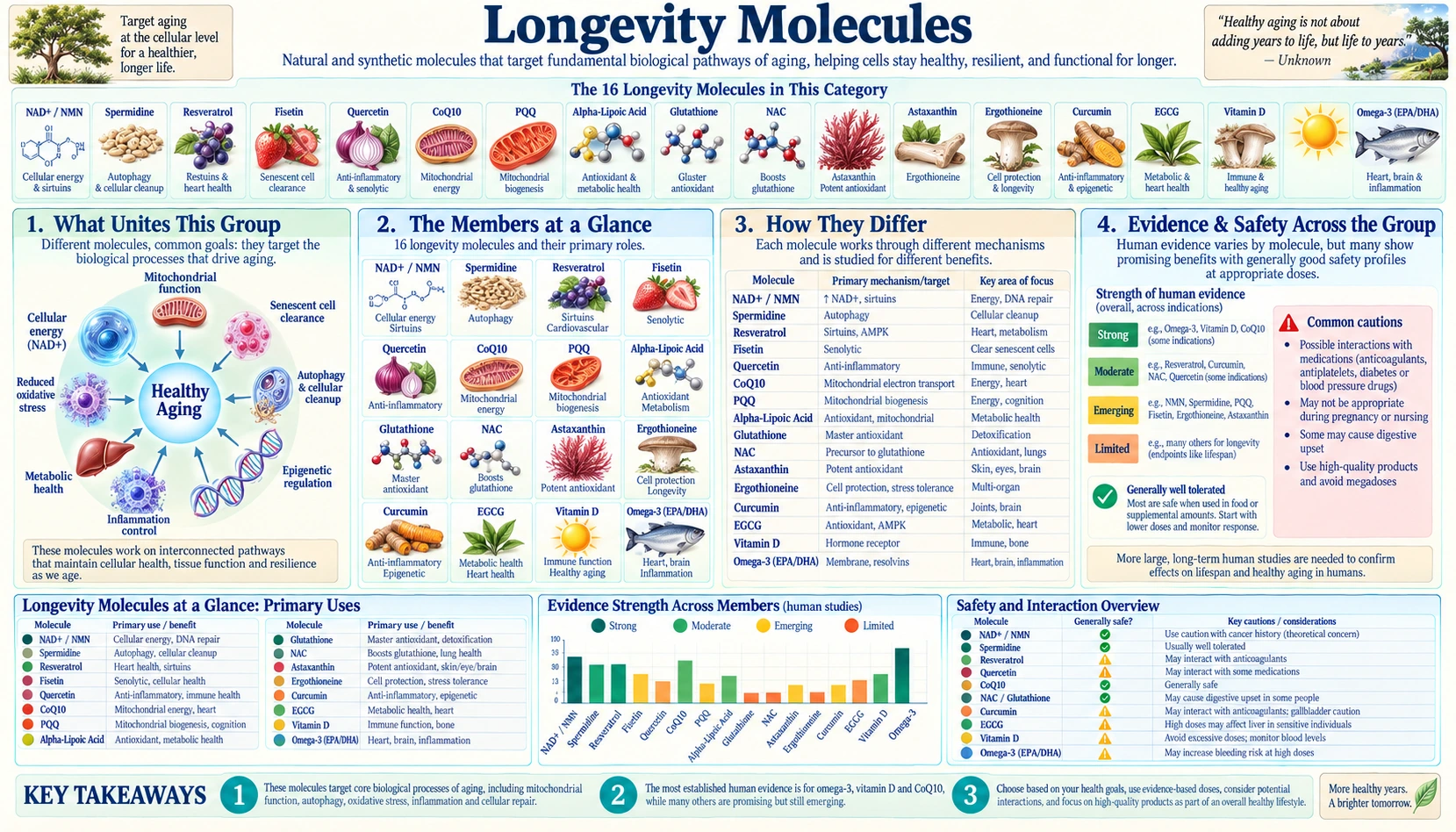
The Molecules (22)
Nicotinamide Adenine Dinucleotide / Nicotinamide Mononucleotide
The energy coenzyme, its precursors nicotinamide mononucleotide (NMN) and nicotinamide riboside (NR), and what small human trials measured
Read the deep dive →Spermidine
The polyamine studied for autophagy, found in wheat germ and natto
Read the deep dive →Resveratrol
The red-wine molecule: a contested mechanism, null mouse lifespan tests, mixed human trials
Read the deep dive →Fisetin
The strawberry flavonoid studied as a senolytic: mixed mouse lifespan results, no posted human trial results
Read the deep dive →Quercetin
The onion flavonoid paired with the drug dasatinib in small senolytic pilot studies
Read the deep dive →Coenzyme Q10
The mitochondrial electron carrier whose blood levels statins lower
Read the deep dive →Pyrroloquinoline Quinone
The compound that stimulates new mitochondria in cell and rodent studies
Read the deep dive →Alpha-Lipoic Acid
The mitochondrial antioxidant described as recycling other antioxidants
Read the deep dive →Glutathione
The body's main cellular antioxidant, and what studies of raising it found
Read the deep dive →N-Acetylcysteine
The glutathione precursor with decades of clinical use
Read the deep dive →Astaxanthin
The salmon-pink carotenoid studied for cell-membrane protection
Read the deep dive →Ergothioneine
The mushroom amino acid proposed as a "longevity vitamin" in a 2018 review
Read the deep dive →Carnosine
The dipeptide from meat studied for anti-glycation effects
Read the deep dive →Sulforaphane
Broccoli-sprout chemistry and the NRF2 defense pathway
Read the deep dive →Curcumin
Turmeric's polyphenol: active in lab studies, poorly absorbed
Read the deep dive →Melatonin
The sleep hormone that is also a mitochondrial antioxidant
Read the deep dive →Methylene Blue
The dye and approved methemoglobinemia drug, studied off-label for mitochondria; its label carries safety warnings
Read the deep dive →Taurine
Mouse lifespan gains; whether blood levels fall with age in people is disputed
Read the deep dive →Glycine
A small lifespan gain in mice; human aging data come mainly from small GlyNAC studies
Read the deep dive →Creatine
Studied for muscle and brain function in older adults
Read the deep dive →Collagen
The structural protein whose production declines with age
Read the deep dive →All Antioxidants →
The complete compound library
Read the deep dive →The compounds discussed in longevity research, each with its own page reviewing the evidence and stating which results come from cells, animals or people. No compound on this list has been shown to extend human lifespan. They cluster by proposed mechanism: the nicotinamide adenine dinucleotide (NAD) system (cellular energy and repair), autophagy (spermidine), senolytics (fisetin, quercetin), mitochondrial function (coenzyme Q10 (CoQ10), pyrroloquinoline quinone (PQQ), alpha-lipoic acid (ALA)), and the glutathione system (glutathione, N-acetylcysteine (NAC)).
Connections
- Longevity — The section hub with all sub-pages
- Antioxidants — The full compound library behind the molecules above
- Natural Medicine — All practices, protocols, and therapies
- Amino Acids — Taurine, glycine, creatine, collagen, and the rest
- Mushrooms — Ergothioneine's richest food source
- Gut Health — The microbiome's role in healthy aging
- Food — Whole-food sources beat capsules where both exist
- Biology — All 137 interactive animations
- Vitamins — Including vitamin D and the B-complex aging essentials
- Notable Doctors — The researchers and clinicians behind the science