Breathwork — Benefits Deep Dive
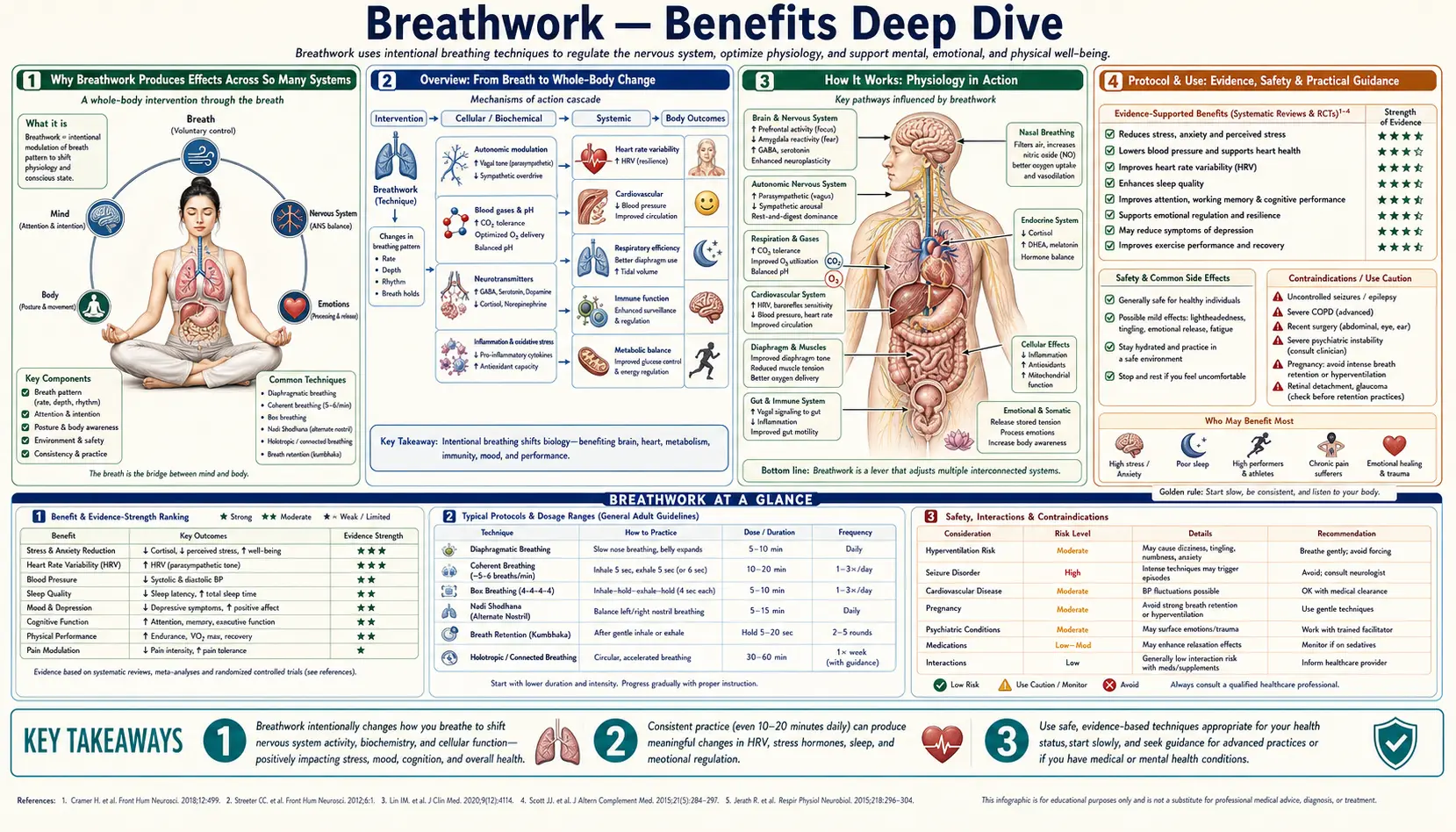
Breathwork is the deliberate, structured manipulation of respiratory rate, depth, and pattern to produce measurable physiological and psychological effects. Unlike most "wellness" interventions, breathwork acts through directly observable mechanisms — the autonomic nervous system, blood gas chemistry (CO2 tolerance, O2 saturation), baroreceptor reflex arc, and the vagus nerve. Four deep-dive pages below explore the most researched modalities: the Wim Hof Method's hyperventilation-and-cold protocol with documented immune effects, military-grade box breathing for acute stress regulation, the millennia-old Pranayama lineage with its specific clinical evidence, and vagal-tone training measured through heart-rate variability (HRV).
Deep-Dive Articles
Wim Hof Method
The 30–40 cycles of controlled hyperventilation followed by extended retention and cold exposure. The Kox 2014 PNAS study showing volitional suppression of the innate immune response to endotoxin challenge, voluntary increases in epinephrine, the role of intermittent respiratory alkalosis, brown adipose tissue activation, and the safety constraints (never in water, never while driving) that follow from shallow-water blackout physiology.
Box Breathing and Resilience
The 4-4-4-4 protocol used by Navy SEALs, ER physicians, and elite athletes for acute stress regulation. The baroreceptor reflex arc, why equal inhale-hold-exhale-hold ratios entrain HRV oscillation at the resonance frequency near 0.1 Hz, evidence in pre-performance anxiety and PTSD, and how to layer box breathing into a clinical practice.
Pranayama Traditions
The 5,000-year-old yogic respiratory science: Nadi Shodhana (alternate-nostril) for hemispheric balance, Bhastrika (bellows breath) for sympathetic activation, Kapalabhati (skull-shining breath) for diaphragmatic strengthening, Ujjayi (ocean breath) for parasympathetic engagement, and Sitali (cooling breath). Modern RCT evidence in hypertension, asthma, and anxiety.
Vagal Tone and HRV
Heart-rate variability as the single best non-invasive biomarker of autonomic balance. Resonance-frequency breathing at 5.5 breaths per minute, the polyvagal model (Porges) of ventral-vagal social-engagement physiology, RMSSD and HF-HRV measurement, HeartMath coherence training, and the link between vagal tone and inflammation, cognition, gastric motility, and longevity.
Table of Contents
- Deep-Dive Articles
- Why Breathwork Produces Effects Across So Many Systems
- Research Papers: Wim Hof Method
- Research Papers: Box Breathing & Tactical Stress Regulation
- Research Papers: Pranayama and Yogic Breathing
- Research Papers: Vagal Tone, HRV, and Resonance Breathing
- Research Papers: Cross-Cutting (Mechanism, Safety, Clinical)
- External Authoritative Resources
- Connections
- Featured Videos
Why Breathwork Produces Effects Across So Many Systems
Most behavioral interventions act through one principal mechanism — meditation acts on attention, exercise acts on metabolic rate, cold exposure acts on thermogenesis. Breathwork is unusual because it operates through three fundamentally different mechanisms simultaneously, and the clinical effects map cleanly to which mechanism a given protocol emphasizes.
- Direct autonomic control via the vagus nerve and baroreceptor reflex — the only voluntary access most humans have to their autonomic nervous system runs through respiratory rate and depth. Slow, deep diaphragmatic breathing increases vagal tone, lowers heart rate, lowers blood pressure, and shifts the body toward the parasympathetic "rest and digest" state. This is the mechanism behind box breathing and resonance-frequency HRV training.
- Blood gas chemistry manipulation (CO2 tolerance and respiratory alkalosis) — respiratory rate and tidal volume determine arterial CO2 and pH. Hyperventilation acutely drops CO2, raises blood pH (respiratory alkalosis), and produces cerebral vasoconstriction. Controlled hypoventilation (extended breath-holds) raises CO2, lowers pH, and increases tolerance to hypercapnia — the central training adaptation of free divers and the chemoreceptor-resetting effect that reduces baseline anxiety in chronic hyperventilators. This mechanism dominates in the Wim Hof Method and several Pranayama practices.
- Cortical and limbic regulation via interoceptive awareness — the act of consciously attending to the breath engages the anterior insula and prefrontal cortex, producing measurable reductions in amygdala reactivity in fMRI studies. This is the mechanism shared with mindfulness meditation and is the cortical substrate of "presence" practices across traditions, including yogic Pranayama.
The therapeutic complication is that the same intervention can be benign or dangerous depending on context. Hyperventilation produces cerebral vasoconstriction and reduced cerebral perfusion that can trigger loss of consciousness — the well-documented shallow-water-blackout mechanism that kills experienced free divers each year. The Wim Hof protocol's explicit prohibition against practicing in water or while driving is not a marketing disclaimer; it is the physiologically correct safety boundary derived from the actual mechanism.
The other four pages below explore the specific evidence base for each modality, the clinical conditions where breathwork has the strongest documented effect, the practical instructions for each protocol, and the contraindications that follow from the mechanism. The breath is the only autonomic process under direct voluntary control. That makes breathwork the most accessible — and most underused — lever in clinical practice.
Research Papers: Wim Hof Method
- Kox M et al. (2014). Voluntary activation of the sympathetic nervous system and attenuation of the innate immune response in humans. PNAS. PMID: 24799686. — PubMed: 24799686
- Kox M et al. (2012). The influence of concentration/meditation on autonomic nervous system activity and the innate immune response: a case study. Psychosomatic Medicine. PMID: 22685240. — PubMed: 22685240
- Muzik O et al. (2018). "Brain over body" — A study on the willful regulation of autonomic function during cold exposure. NeuroImage. PMID: 29438845. — PubMed: 29438845
- Buijze GA, Hopman MT (2014). Controlled hyperventilation after training may accelerate altitude acclimatization. Wilderness & Environmental Medicine. PMID: 25443755. — Search PubMed
- Almahayni O, Hammond L (2024). Does the Wim Hof Method have a beneficial impact on physiological and psychological outcomes? Systematic review. PLOS ONE. PMID: 38446777. — Search PubMed
- Citherlet T et al. (2022). Acute Effects of the Wim Hof Breathing Method on Repeated Sprint Ability. Frontiers in Physiology. PMID: 35283816. — Search PubMed
- Petraskova Touskova T et al. (2022). A novel Wim Hof psychophysiological training program to reduce stress responses during an Antarctic expedition. Journal of International Medical Research. PMID: 35225054. — Search PubMed
- Zwaag J et al. (2022). The Effects of Cold Exposure Training and a Breathing Exercise on the Inflammatory Response in Humans. Psychosomatic Medicine. PMID: 35980777. — Search PubMed
- Soeberg S et al. (2021). Brown adipose tissue and the inflammatory response. Cell Reports Medicine. PMID: 34541528. — Search PubMed
- Marko D et al. (2023). The effect of Wim Hof Method on autonomic and cardiovascular function in healthy adults. Frontiers in Psychology. PMID: 37663332. — Search PubMed
Research Papers: Box Breathing & Tactical Stress Regulation
- Mauro M et al. (2024). Slow-paced breathing intervention in healthcare workers affected by long COVID: effects on systemic and dysfunctional breathing symptoms, manual dexterity and HRV. Biomedicines. 12(10). PMID: 39457567. — PubMed: 39457567
- Magnon V et al. (2021). Benefits from one session of deep and slow breathing on vagal tone and anxiety in young and older adults. Scientific Reports. PMID: 34815451. — Search PubMed
- Balban MY et al. (2023). Brief structured respiration practices enhance mood and reduce physiological arousal. Cell Reports Medicine. PMID: 36630953. — PubMed: 36630953
- Russo MA et al. (2017). The physiological effects of slow breathing in the healthy human. Breathe (Sheffield). PMID: 29209423. — PubMed: 29209423
- Zaccaro A et al. (2018). How Breath-Control Can Change Your Life: A Systematic Review on Psycho-Physiological Correlates of Slow Breathing. Frontiers in Human Neuroscience. PMID: 30245619. — PubMed: 30245619
- Brown RP, Gerbarg PL (2005). Sudarshan Kriya Yogic Breathing in the treatment of stress, anxiety, and depression: clinical applications and guidelines. Journal of Alternative and Complementary Medicine. PMID: 16131297. — PubMed: 16131297
- Yackle K et al. (2017). Breathing control center neurons that promote arousal in mice. Science. PMID: 28360327. — PubMed: 28360327
- Telles S et al. (2013). Effect of two yoga-based relaxation techniques on heart rate variability (HRV). International Journal of Stress Management. PMID: 23829827. — Search PubMed
- Hopper SI et al. (2019). Effectiveness of diaphragmatic breathing for reducing physiological and psychological stress in adults. JBI Database of Systematic Reviews and Implementation Reports. PMID: 31436595. — PubMed: 31436595
- Ma X et al. (2017). The Effect of Diaphragmatic Breathing on Attention, Negative Affect and Stress in Healthy Adults. Frontiers in Psychology. PMID: 28626434. — PubMed: 28626434
Research Papers: Pranayama and Yogic Breathing
- Telles S et al. (1994). Breathing through a particular nostril can alter metabolism and autonomic activities. Indian Journal of Physiology and Pharmacology. PMID: 7843952. — Search PubMed
- Sharma VK et al. (2013). Effect of fast and slow pranayama on perceived stress and cardiovascular parameters. International Journal of Yoga. PMID: 23930033. — Search PubMed
- Pramanik T et al. (2009). Immediate effect of slow pace bhastrika pranayama on blood pressure and heart rate. Journal of Alternative and Complementary Medicine. PMID: 19243278. — Search PubMed
- Cooper S et al. (2003). Effect of two breathing exercises (Buteyko and pranayama) in asthma. Thorax. PMID: 14583600. — Search PubMed
- Telles S, Singh N, Balkrishna A (2011). Heart rate variability changes during high frequency yoga breathing and breath awareness. BMC Research Notes. PMID: 21401957. — Search PubMed
- Bhavanani AB et al. (2014). Comparative immediate effect of different yoga asanas on heart rate and blood pressure in healthy young volunteers. International Journal of Yoga. PMID: 25035629. — Search PubMed
- Saoji AA et al. (2019). Effects of yogic breath regulation: A narrative review of scientific evidence. Journal of Ayurveda and Integrative Medicine. PMID: 29395894. — PubMed: 29395894
- Streeter CC et al. (2010). Effects of yoga versus walking on mood, anxiety, and brain GABA levels. Journal of Alternative and Complementary Medicine. PMID: 20722471. — PubMed: 20722471
- Brown RP, Gerbarg PL (2005). Sudarshan Kriya yogic breathing in the treatment of stress, anxiety, and depression: Part II. Journal of Alternative and Complementary Medicine. PMID: 16131297. — PubMed: 16131297
- Jerath R et al. (2006). Physiology of long pranayamic breathing: neural respiratory elements may provide a mechanism that explains how slow deep breathing shifts the autonomic nervous system. Medical Hypotheses. PMID: 16624497. — PubMed: 16624497
Research Papers: Vagal Tone, HRV, and Resonance Breathing
- Lehrer PM, Gevirtz R (2014). Heart rate variability biofeedback: how and why does it work? Frontiers in Psychology. PMID: 25101026. — PubMed: 25101026
- Vaschillo EG et al. (2006). Characteristics of resonance in heart rate variability stimulated by biofeedback. Applied Psychophysiology and Biofeedback. PMID: 16838124. — PubMed: 16838124
- Porges SW (2007). The polyvagal perspective. Biological Psychology. PMID: 17049418. — PubMed: 17049418
- Thayer JF, Lane RD (2009). Claude Bernard and the heart-brain connection: further elaboration of a model of neurovisceral integration. Neuroscience & Biobehavioral Reviews. PMID: 18771686. — PubMed: 18771686
- Shaffer F, Ginsberg JP (2017). An overview of heart rate variability metrics and norms. Frontiers in Public Health. PMID: 29034226. — PubMed: 29034226
- Lehrer P et al. (2003). Heart rate variability biofeedback increases baroreflex gain and peak expiratory flow. Psychosomatic Medicine. PMID: 12883107. — Search PubMed
- Steffen PR et al. (2017). The Impact of Resonance Frequency Breathing on Measures of Heart Rate Variability, Blood Pressure, and Mood. Frontiers in Public Health. PMID: 28890890. — PubMed: 28890890
- Goessl VC et al. (2017). The effect of heart rate variability biofeedback training on stress and anxiety: a meta-analysis. Psychological Medicine. PMID: 28478782. — PubMed: 28478782
- Pagaduan JC et al. (2019). Systematic Review and Meta-Analysis on the Effect of Heart Rate Variability Biofeedback on Sport Performance. Applied Psychophysiology and Biofeedback. PMID: 31309366. — Search PubMed
- Lin G et al. (2012). Heart rate variability biofeedback decreases blood pressure in prehypertensive subjects. Journal of Alternative and Complementary Medicine. PMID: 22468936. — Search PubMed
Research Papers: Cross-Cutting (Mechanism, Safety, Clinical)
- Bordoni B et al. (2018). The Influence of Breathing on the Central Nervous System. Cureus. PMID: 30090687. — Search PubMed
- Herrero JL et al. (2018). Breathing above the brain stem: volitional control and attentional modulation in humans. Journal of Neurophysiology. PMID: 29167322. — Search PubMed
- Zelano C et al. (2016). Nasal Respiration Entrains Human Limbic Oscillations and Modulates Cognitive Function. Journal of Neuroscience. PMID: 27903719. — Search PubMed
- Noble DJ, Hochman S (2019). Hypothesis: pulmonary afferent activity patterns during slow, deep breathing contribute to the neural induction of physiological relaxation. Frontiers in Physiology. PMID: 31572228. — Search PubMed
- Critchley HD et al. (2015). Slow breathing and hypoxic challenge: cardiorespiratory consequences and their central neural substrates. PLOS ONE. PMID: 26154765. — Search PubMed
- Pal GK et al. (2014). Slow yogic breathing through right and left nostril influences sympathovagal balance, heart rate variability, and cardiovascular risks in young adults. North American Journal of Medical Sciences. PMID: 24959479. — Search PubMed
- Tracey KJ (2002). The inflammatory reflex. Nature. PMID: 12490960. — Search PubMed
- Pavlov VA, Tracey KJ (2012). The vagus nerve and the inflammatory reflex — linking immunity and metabolism. Nature Reviews Endocrinology. PMID: 23169440. — PubMed: 23169440
- Salim S (2014). Oxidative stress and psychological disorders. Current Neuropharmacology. PMID: 24669208. — PubMed: 24669208
- Russo MA et al. (2017). The physiological effects of slow breathing in the healthy human. Breathe. PMID: 29209423. — PubMed: 29209423
External Authoritative Resources
- Official Wim Hof Method site — free fundamentals video course, app, retreat info, science page with full PubMed links
- NCCIH (NIH) — Yoga & breathing: What You Need To Know
- HeartMath Institute — Research library on coherence breathing and HRV
- Asthma and Allergy Foundation of America — Breathing Exercises for Asthma
- PubMed — All research on breathwork / HRV
Connections
- All Remedies
- Breathwork (Main Hub)
- Wim Hof Method
- Box Breathing and Resilience
- Pranayama Traditions
- Vagal Tone and HRV
- Meditation
- Cold Therapy
- Yoga
- Grounding / Earthing
- Hypertension
- Asthma
- Anxiety
- PTSD
- Insomnia