King Oyster Mushroom for Nutrition & Metabolic Health
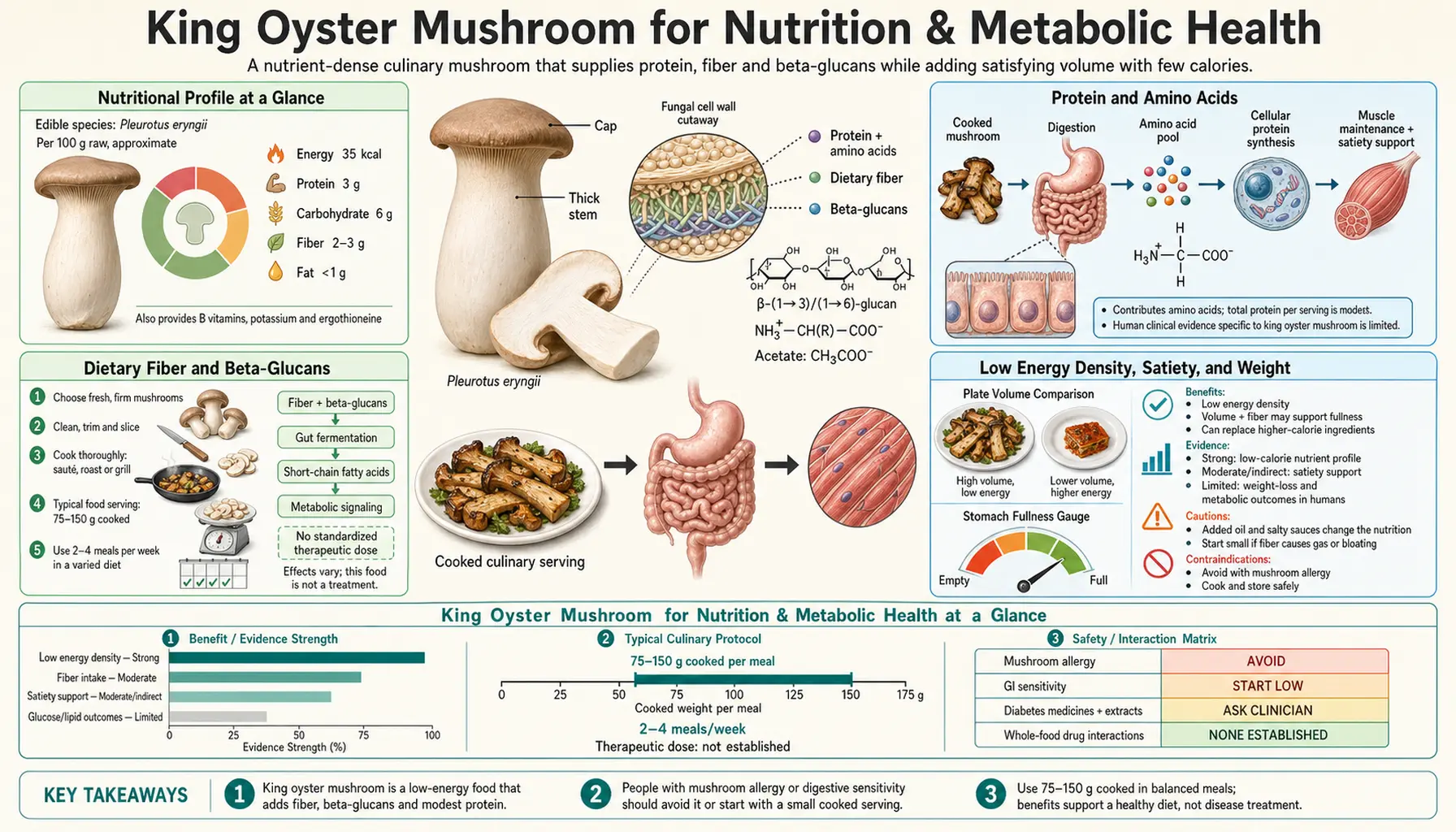
Strip away the antioxidant chemistry and the "natural statin" headlines, and the King Oyster is still a genuinely good food on the plainest nutritional grounds. It is high in protein for a vegetable, rich in fiber, very low in calories, essentially fat-free, naturally low in sodium, and satisfyingly meaty in texture. That combination — a lot of chew and umami for very few calories — makes it a natural ally for weight management, blood-sugar control, and a metabolically healthy diet, especially when it takes the place of processed meat or refined carbohydrate. This page walks through the King Oyster's nutritional profile, its fiber and satiety effects, the emerging (and honestly modest) blood-sugar research, its underappreciated potential as a source of vitamin D, and its mineral contribution.
Table of Contents
- Nutritional Profile at a Glance
- Protein and Amino Acids
- Dietary Fiber and Beta-Glucans
- Low Energy Density, Satiety, and Weight
- Blood Sugar and Insulin Sensitivity
- Vitamin D Potential (UV Exposure)
- Minerals: Potassium, Copper, Selenium
- The Meat-Substitute Advantage
- Human Evidence — Modest and Emerging
- Cautions
- Key Research Papers
- Connections
- Featured Videos
Nutritional Profile at a Glance
Like all mushrooms, the King Oyster is mostly water — roughly 90% by weight when fresh — which is exactly why it is so low in calories. A 100-gram serving of raw King Oyster mushroom provides only about 30–35 kilocalories. The remaining dry matter is unusually favorable: a relatively high proportion of protein and fiber, very little fat, and only modest digestible carbohydrate.
A rough profile per 100 grams of fresh King Oyster (values vary with strain, maturity, and growing conditions, so treat them as approximate):
- Calories: about 30–35 kcal
- Protein: roughly 2.5–3.5 g (high for a low-calorie vegetable; mushrooms are about a quarter to a third protein by dry weight)
- Fat: under 0.5 g, essentially negligible
- Carbohydrate: around 5–8 g, a meaningful share of which is fiber (including beta-glucans and chitin)
- Fiber: roughly 2–3 g
- Sodium: naturally very low
- Micronutrients: B vitamins (notably niacin, riboflavin, and pantothenic acid), plus potassium, copper, selenium, and ergothioneine
The signature of this profile is high nutrient density with low energy density — a lot of protein, fiber, and micronutrients per calorie. That is precisely the pattern nutrition science associates with better weight and metabolic outcomes.
Protein and Amino Acids
By dry weight, mushrooms contain more protein than most vegetables, and the King Oyster is no exception. Because fresh mushrooms are mostly water, the per-serving gram count looks modest, but as a share of calories the protein contribution is substantial — mushrooms deliver protein at a very low calorie cost.
Mushroom protein contains all nine essential amino acids, though, like most single plant or fungal foods, it is relatively lower in some (the sulfur-containing amino acids methionine and cysteine tend to be limiting). In a mixed diet that includes grains, legumes, or animal foods, this is a non-issue — the amino acids complement each other across the day. King Oyster is also a source of glutamate, the amino acid behind its deep savory, umami flavor, which is part of why it works so well as a meat stand-in. For the broader picture of dietary amino acids, see our Amino Acids section.
The practical point: King Oyster is a useful protein contributor in a plant-forward or calorie-controlled diet, adding satiety and savoriness without the saturated fat of many animal protein sources — while not being a complete standalone protein source that should replace all others.
Dietary Fiber and Beta-Glucans
Mushroom fiber is distinctive. Alongside the beta-glucans discussed on the Immune Support page, the King Oyster's cell walls contain chitin (the same structural polymer found in insect shells and crab shells) and chitosan. These fibers resist human digestive enzymes, so they travel to the colon largely intact.
That has three metabolic consequences worth eating for:
- Fermentation and short-chain fatty acids. Gut bacteria ferment the fiber into short-chain fatty acids such as butyrate, which feed the colon lining and have favorable signaling effects on metabolism and appetite regulation.
- Slower digestion. Viscous fiber slows gastric emptying and the absorption of sugars and fats, blunting post-meal blood-sugar spikes and prolonging fullness.
- Bile-acid binding. As covered on the Cholesterol & Heart Health page, soluble fiber's binding of bile acids nudges the liver to pull cholesterol from the blood.
Because so much of a King Oyster's substance is this indigestible-but-fermentable cell wall, it delivers a genuinely useful fiber contribution for very few calories — the opposite of refined, fiber-stripped foods.
Low Energy Density, Satiety, and Weight
The single most useful thing about King Oyster mushrooms for weight management is their low energy density — few calories per gram of food. Decades of nutrition research (much of it associated with the concept of "volumetrics") show that people tend to eat a fairly consistent weight of food to feel full, largely regardless of its calories. Fill part of that volume with a bulky, water- and fiber-rich, low-calorie food, and you feel satisfied on fewer total calories — without the deprivation that sinks most diets.
King Oyster is especially good at this because its meaty, dense texture provides real chew and mouthfeel. A "pulled king oyster" filling or seared king-oyster "steak" delivers the sensory experience of a substantial, satisfying portion while contributing very little energy. The protein and fiber add a second satiety lever on top of sheer volume, both of which are more filling per calorie than fat or refined carbohydrate.
The realistic claim is not that mushrooms "burn fat" or have some special slimming property — they do not. It is that substituting King Oyster for higher-calorie ingredients lowers the calorie density of a meal while keeping it filling and enjoyable, which is a sound, sustainable strategy for weight management and one component of addressing metabolic syndrome.
Blood Sugar and Insulin Sensitivity
Mushrooms are inherently low on the glycemic scale: little digestible carbohydrate, meaningful fiber, and a good dose of protein all work to keep post-meal blood glucose gentle. Replacing a starchy side (rice, potato, bread) with mushrooms lowers the carbohydrate load of the meal directly.
Beyond that simple substitution effect, there is a body of preclinical research suggesting Pleurotus polysaccharides may improve glucose handling and insulin sensitivity. In diabetic animal models, oyster-mushroom extracts and polysaccharides have reduced blood glucose and improved lipid and glucose metabolism (for example, the work of Kanagasabapathy and colleagues). On the human side, the small study by Khatun and colleagues in people with type 2 diabetes found lower blood glucose and cholesterol during oyster-mushroom intake.
The honest framing: the animal evidence for a specific glucose-lowering effect is promising but not proven in humans, and the human data are limited to small studies. What is dependable and non-speculative is the substitution logic — a low-glycemic, high-fiber, high-protein food displacing refined carbohydrate is a sound choice for anyone managing type 2 diabetes or prediabetes. Treat any additional, mushroom-specific metabolic benefit as a plausible bonus still being confirmed, not as a treatment. Manage diabetes with your clinician; use mushrooms as part of the supporting diet.
Vitamin D Potential (UV Exposure)
Mushrooms have a unique nutritional trick: they contain ergosterol in their cell membranes, the fungal equivalent of the cholesterol in our skin that makes vitamin D. When mushrooms are exposed to ultraviolet (UV) light — sunlight or a UV lamp — ergosterol converts to vitamin D2 (ergocalciferol). This means mushrooms are one of the very few non-animal, non-fortified foods that can be a real dietary source of vitamin D.
Two practical caveats keep this honest:
- It depends on UV exposure. Mushrooms grown entirely in the dark (as most commercial mushrooms are) contain little vitamin D. Only sun-exposed or deliberately UV-treated mushrooms accumulate meaningful amounts. Some producers now sell "UV-exposed" or "vitamin D" mushrooms; you can also boost home mushrooms by placing them gill-side-up in sunlight for a period before cooking.
- It is vitamin D2, not D3. Mushrooms make D2, whereas sunlight on skin and most supplements provide D3. Both raise vitamin D status, though D3 is generally considered somewhat more effective at doing so. For the full picture see our Vitamin D3 page.
Used deliberately, UV-exposed King Oyster mushrooms can be a genuine plant-kingdom contributor to vitamin D intake — a helpful option for people limiting animal foods.
Minerals: Potassium, Copper, Selenium
King Oyster contributes several minerals that matter for metabolic and cardiovascular health:
- Potassium — mushrooms are a naturally low-sodium, potassium-containing food, the balance that supports healthy blood pressure and fluid balance.
- Copper — mushrooms are one of the better dietary sources of copper, a trace mineral needed for iron metabolism, energy production, and the body's own antioxidant enzymes (such as copper-zinc superoxide dismutase).
- Selenium — present in variable amounts depending on the growing substrate; selenium is the cofactor for the glutathione peroxidase antioxidant enzymes and for thyroid hormone metabolism.
The King Oyster also supplies B-complex vitamins — particularly niacin (see Vitamin B3), riboflavin, and pantothenic acid — that serve as cofactors in the reactions cells use to turn food into usable energy. None of these is present at a "supplement" level, but together they round out the mushroom as a nutrient-dense whole food rather than empty bulk.
The Meat-Substitute Advantage
The King Oyster's defining physical feature — a thick, dense, fibrous stem — is also its biggest practical health asset. That texture lets it stand in convincingly for meat: sliced into "scallops," shredded into "pulled pork," or cut into "steaks." Each of those swaps replaces a food higher in calories and (for red and processed meats) saturated fat with a food that is low-calorie, fiber-rich, and free of the processing associated with poorer health outcomes.
From a metabolic-health standpoint this substitution is where much of the real-world benefit lives. Cutting back on processed meat and refined starch, and filling the plate with high-satiety, nutrient-dense foods, is exactly the dietary shift linked to better weight, blood sugar, and cardiovascular outcomes — the same logic behind the Mediterranean-style pattern. King Oyster makes that shift genuinely enjoyable, which is what makes it sustainable. Explore more whole foods in our Food section.
Human Evidence — Modest and Emerging
To keep expectations calibrated:
- Well established: King Oyster is low in calories, fat, and sodium and provides protein, fiber, B vitamins, and minerals. Its low energy density supports fullness on fewer calories. UV-exposed mushrooms provide vitamin D2. These are compositional facts, not claims.
- Reasonably supported: substituting mushrooms for higher-calorie or processed foods aids weight management and improves overall diet quality; higher mushroom consumption is associated with favorable health outcomes in large population studies.
- Emerging / preclinical: a specific glucose-lowering or insulin-sensitizing effect of Pleurotus polysaccharides, largely shown in animals with only small, short human studies so far.
- Not claimed: that King Oyster "burns fat," cures diabetes, or replaces medical management of any metabolic disease. It is a nutritious food that supports a healthy diet, not a treatment.
Cautions
- Cook before eating. Raw oyster mushrooms can cause digestive upset and are less digestible; always cook King Oyster, and only eat cultivated or expertly identified mushrooms.
- Fiber and digestion. The chitin and beta-glucan fiber that make mushrooms healthy can cause gas or bloating in some people if intake ramps up quickly. Increase portions gradually and drink water.
- Purines and gout. Mushrooms contain moderate purines. This is not a concern for most people, but those with gout who are managing purine intake may wish to keep portions moderate.
- Not a complete protein source on its own. Enjoy King Oyster as part of a varied diet rather than as a sole protein; combine with grains, legumes, or other proteins for complete amino-acid coverage.
- A food, not a medicine. Manage diabetes, obesity, or metabolic syndrome with your clinician; use King Oyster as one nutritious component of the supporting diet.
Key Research Papers
- Alam N, Amin R, Khan A, et al. (2011). Nutritional analysis of cultivated mushrooms in Bangladesh, including Pleurotus eryngii. Mycobiology. — PubMed
- Kanagasabapathy G, Malek SNA, Kuppusamy UR, Vikineswary S (2011/2013). Pleurotus polysaccharides and glucose/lipid metabolism (animal model). Food Chemistry / BMC Complementary Medicine. — PubMed
- Khatun K, Mahtab H, Khanam PA, et al. (2007). Oyster mushroom reduced blood glucose and cholesterol in diabetic subjects. Mymensingh Medical Journal. — PubMed
- Cardwell G, Bornman JF, James AP, Black LJ (2018). A review of mushrooms as a potential source of dietary vitamin D. Nutrients. — PubMed
- Keegan RJ, Lu Z, Bogusz JM, et al. (2013). Photobiology of vitamin D in mushrooms and its bioavailability in humans. Dermato-Endocrinology. — PubMed
- Rolls BJ, Ello-Martin JA, Tohill BC (2004). What can intervention studies tell us about the relationship between energy density and body weight? Nutrition Reviews. — PubMed
- Roncero-Ramos I, Delgado-Andrade C (2017). The beneficial role of edible mushrooms in human health. Current Opinion in Food Science. — PubMed
- Ba DM, Gao X, Al-Shaar L, et al. (2021). Mushroom intake and risk of type 2 diabetes / metabolic outcomes (population cohorts). — PubMed
- Valverde ME, Hernández-Pérez T, Paredes-López O (2015). Edible mushrooms: improving human health and promoting quality life. International Journal of Microbiology. — PubMed
- Feeney MJ, Dwyer J, Hasler-Lewis CM, et al. (2014). Mushrooms and health summit proceedings. Journal of Nutrition. — PubMed
PubMed Topic Searches
- PubMed: Pleurotus eryngii nutritional composition
- PubMed: Mushroom vitamin D2 and UV exposure
- PubMed: Mushroom intake, weight, and energy density
- PubMed: Pleurotus, blood glucose, and insulin
- PubMed: Mushroom dietary fiber, chitin, and beta-glucan
External Resources
- USDA FoodData Central — search "mushroom, oyster, raw" for full nutrient data
- USDA MyPlate — Vegetables
- PubMed — All Pleurotus eryngii nutrition research
Connections
- King Oyster Mushroom (Main Page)
- King Oyster Benefits Hub
- Cholesterol & Heart Health
- Immune Support
- Type 2 Diabetes
- Metabolic Syndrome
- Obesity
- Vitamin D3
- Vitamin B3 (Niacin)
- Potassium
- Copper
- Amino Acids
- Mediterranean Diet
- Food
- All Medicinal Mushrooms