St. John's Wort (Hypericum perforatum)
Interactive Visualization Serotonin, Mood & SSRIs — build it, fire it, block reuptake Assemble serotonin from tryptophan, fire it across the synapse, then take an SSRI and watch the cleft flood — or starve the tryptophan and watch the signal fade. Launch →
Table of Contents
- Medieval European History
- Active Compounds
- Depression and Clinical Evidence
- Mechanism of Action
- Seasonal Affective Disorder (SAD)
- Anxiety Relief
- Nerve Pain and Neuropathy
- Wound Healing and Topical Use
- Anti-Inflammatory Properties
- Antiviral Activity
- Menopausal Mood Symptoms
- ADHD Research
- OCD Research
- Forms and Preparations
- Recommended Dosage
- Cautions and Drug Interactions
- Featured Videos
Medieval European History
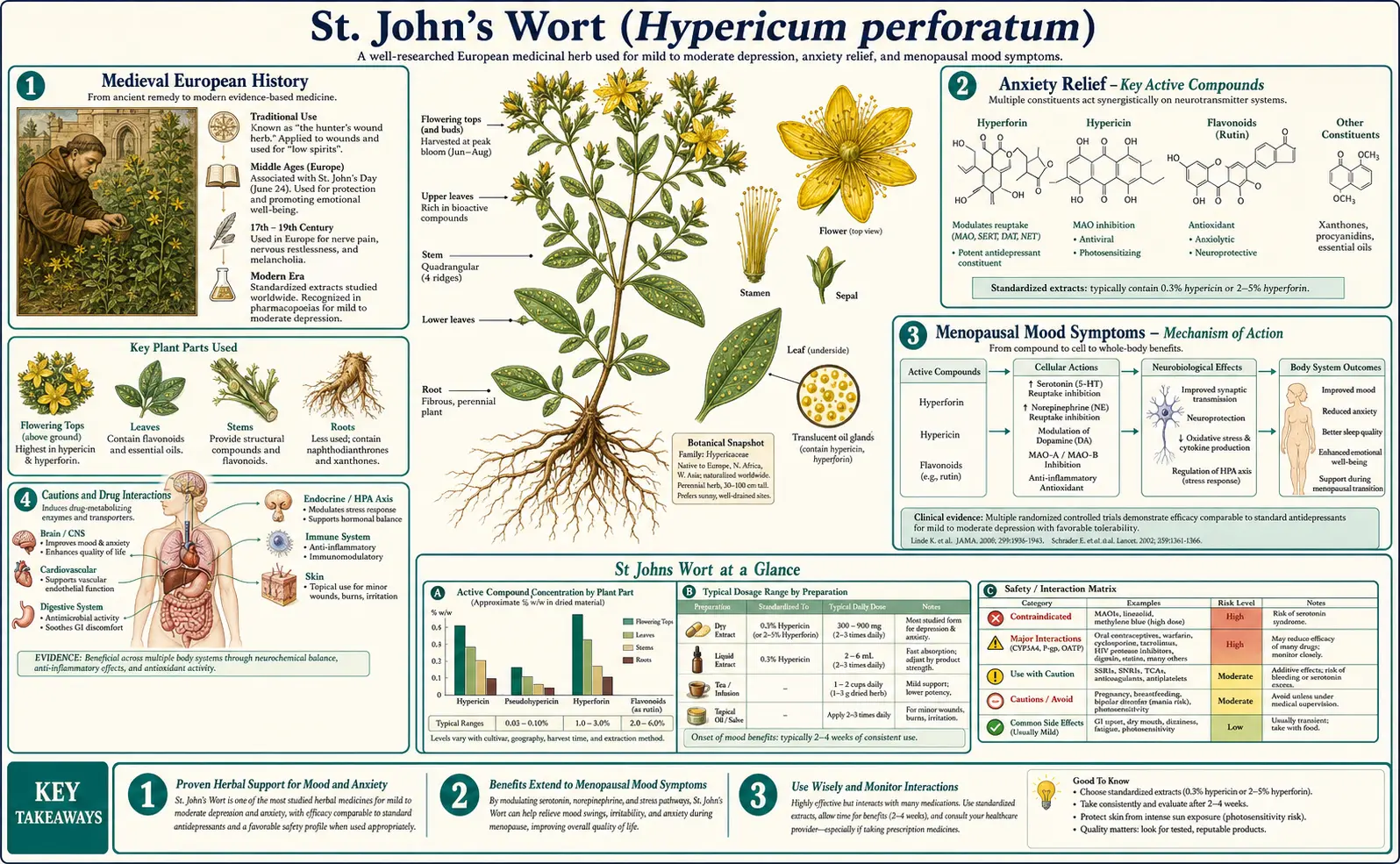
St. John's Wort carries one of the richest histories of any Western medicinal herb. Its name comes from its midsummer blooming around the Feast of St. John the Baptist (June 24), and for centuries it served as both a protective midsummer charm and a wound-and-nerve remedy — a reputation that runs from the ancient Greek physicians through medieval folklore and the Renaissance physician Paracelsus to the standardized antidepressant extracts of today. — the fuller story is told in the dedicated History & Traditional Use article.
Active Compounds
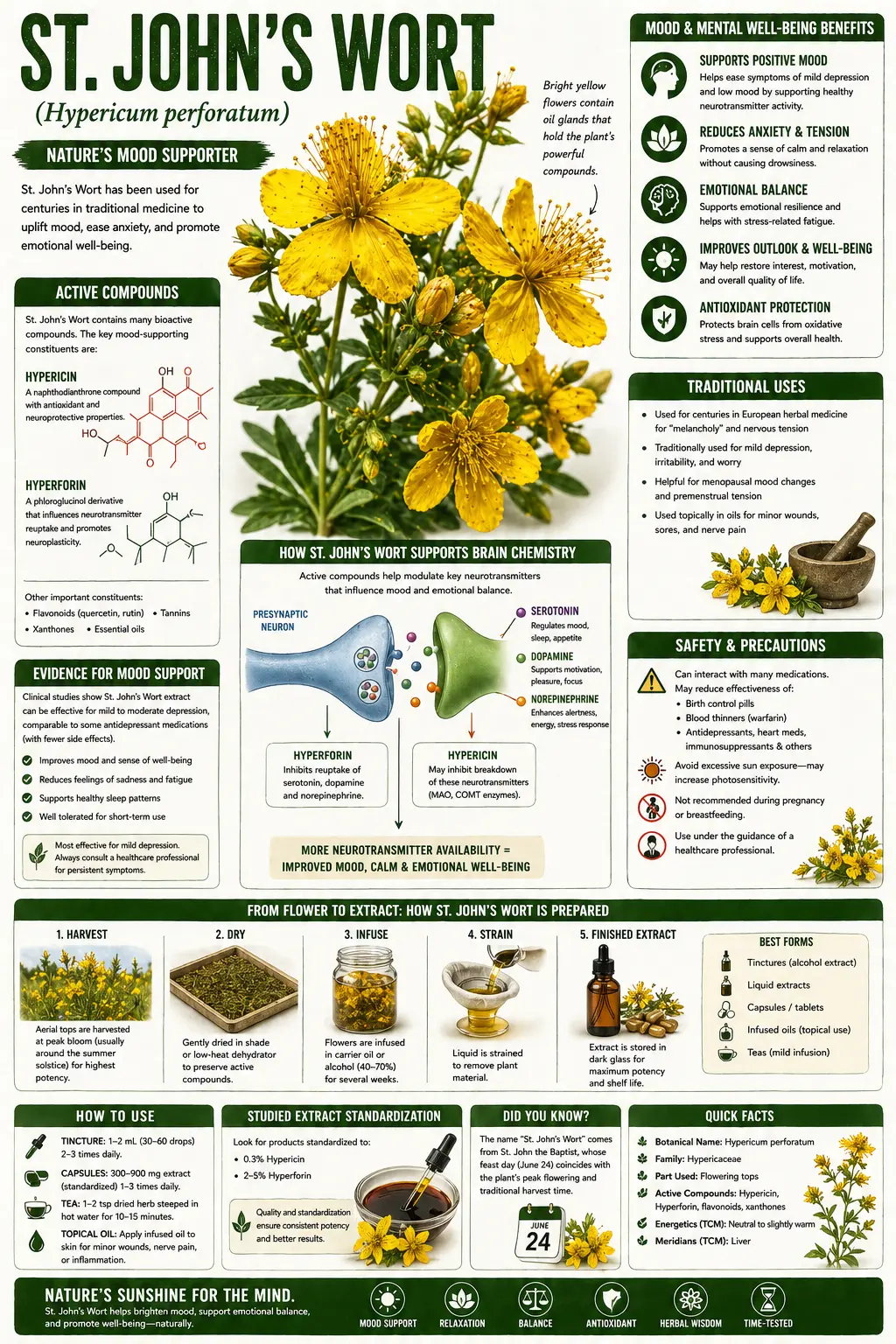
The therapeutic potency of St. John's Wort arises from a complex synergy of bioactive constituents concentrated primarily in the flowers and upper leaves of the plant.
- Hypericin: A red-pigmented naphthodianthrone responsible for the herb's characteristic red staining. Hypericin is the primary marker compound used for standardization of commercial extracts. It exhibits photodynamic, antiviral, and mood-modulating activity. Concentrations are highest in the flower buds and petals.
- Hyperforin: A phloroglucinol derivative now considered the most pharmacologically significant compound for antidepressant effects. Hyperforin is highly lipophilic and unstable when exposed to light and oxygen, making extraction and preservation a significant manufacturing challenge. It acts as a broad-spectrum reuptake inhibitor of multiple neurotransmitters.
- Flavonoids: Including quercetin, rutin, hyperoside, and isoquercitrin. These flavonoids contribute antioxidant, anti-inflammatory, and anxiolytic properties. They also enhance the bioavailability and activity of the other active compounds.
- Procyanidins and Tannins: Contribute to wound-healing and astringent properties, particularly in topical preparations.
- Essential Oils: Small quantities of volatile oils provide additional anti-inflammatory and antimicrobial activity.
- Xanthones: Minor constituents that contribute to the overall antidepressant and neuroprotective profile.
The full therapeutic effect of St. John's Wort is believed to depend on the synergistic interaction of all these compounds rather than any single isolated constituent, which is why whole-plant extracts consistently outperform isolated hypericin in clinical studies.
Depression and Clinical Evidence
St. John's Wort is best known and most extensively researched for its use in mild-to-moderate depression. Dozens of randomized, double-blind, placebo-controlled clinical trials and several major meta-analyses have established its efficacy for this indication.
A landmark Cochrane Review analyzing 29 clinical trials with over 5,000 patients concluded that St. John's Wort extracts were comparable to standard SSRI antidepressants (such as fluoxetine, sertraline, and paroxetine) for mild-to-moderate major depression, while producing significantly fewer side effects. Response rates in well-designed trials typically range from 50 to 70 percent, matching or exceeding those of conventional antidepressants.
German regulatory authorities recognized St. John's Wort as an approved treatment for mild-to-moderate depressive episodes decades ago, and it remains one of the most commonly prescribed antidepressants in Germany, outselling conventional pharmaceutical options. The herb's efficacy appears most robust for mild-to-moderate presentations; evidence for severe major depression is less convincing, and conventional treatment should be considered in those cases.
From a naturopathic perspective, St. John's Wort offers a valuable first-line botanical option for patients experiencing low mood, loss of interest, fatigue, and sleep disturbance associated with mild-to-moderate depression, particularly for those who wish to explore natural alternatives before committing to pharmaceutical intervention.
Mechanism of Action
The antidepressant mechanism of St. John's Wort is remarkably broad compared to conventional single-target pharmaceuticals. Research has identified multiple complementary pathways through which the herb influences brain chemistry.
- Serotonin Reuptake Inhibition: Hyperforin inhibits the reuptake of serotonin (5-HT) at the synaptic cleft, increasing the availability of this key mood-regulating neurotransmitter. This mechanism parallels the action of SSRI drugs.
- Dopamine Reuptake Inhibition: Unlike most SSRIs, hyperforin also inhibits the reuptake of dopamine, which plays a central role in motivation, pleasure, and reward. This dual action may explain why some patients report improved energy and motivation with St. John's Wort.
- Norepinephrine Reuptake Inhibition: Hyperforin further inhibits norepinephrine reuptake, contributing to improved alertness, concentration, and stress resilience. This triple-reuptake inhibition profile is unusual in both botanical and pharmaceutical medicine.
- GABA and Glutamate Modulation: Emerging evidence suggests hyperforin also influences GABA and L-glutamate reuptake, providing additional anxiolytic and neuroprotective effects.
- Interleukin and Cortisol Regulation: St. John's Wort has been shown to reduce elevated cortisol levels and modulate inflammatory cytokines such as interleukin-6, both of which are frequently elevated in depressed patients.
This multi-target mechanism of action, sometimes described as a broad-spectrum reuptake inhibitor, sets St. John's Wort apart from most conventional antidepressants and may account for both its clinical efficacy and its relatively favorable side-effect profile.
Seasonal Affective Disorder (SAD)
Seasonal Affective Disorder represents a particularly fitting indication for St. John's Wort, given the herb's historical association with midsummer light and its photosensitizing properties. SAD is a form of depression that follows a seasonal pattern, typically worsening during autumn and winter months when daylight hours diminish.
Clinical studies have shown that St. John's Wort, used alone or in combination with light therapy, can significantly improve SAD symptoms including depressed mood, hypersomnia, carbohydrate craving, and social withdrawal. One notable study found that combining St. John's Wort extract with bright light therapy produced greater improvement than either treatment alone.
Naturopathic physicians often recommend beginning St. John's Wort supplementation in early autumn, before symptoms fully manifest, as a preventive strategy. Because the herb requires four to six weeks to reach full therapeutic effect, early initiation ensures adequate blood levels are present when the darkest months arrive.
Anxiety Relief
While depression is the primary studied indication, St. John's Wort also demonstrates meaningful anxiolytic properties. Several clinical trials have reported significant reductions in anxiety scores alongside improvements in depressive symptoms.
The anxiety-reducing effects are attributed to the herb's influence on GABA receptors, its modulation of the hypothalamic-pituitary-adrenal (HPA) stress axis, and its ability to lower cortisol levels. The flavonoid components, particularly quercetin and amentoflavone, appear to contribute significantly to anxiolytic activity by binding to benzodiazepine receptor sites.
St. John's Wort may be particularly beneficial for patients presenting with mixed anxiety-depressive states, a common clinical presentation in primary care and naturopathic practice. Its calming effects tend to be gentle and non-sedating, making it suitable for daytime use without impairing cognitive function or work performance.
Nerve Pain and Neuropathy
Traditional herbalists have long valued St. John's Wort as a nervine, an herb that nourishes and restores the nervous system. Modern research supports this traditional use, revealing significant activity in nerve pain conditions.
- Oral Use for Neuropathy: Studies have demonstrated that hyperforin and hypericin possess analgesic properties relevant to neuropathic pain conditions including diabetic neuropathy, post-herpetic neuralgia (shingles pain), and sciatica. The herb appears to modulate pain signaling through its effects on serotonin and norepinephrine pathways, similar to the mechanism of pharmaceutical agents like duloxetine and amitriptyline used for neuropathic pain.
- Topical Use for Nerve Pain: St. John's Wort oil applied topically along affected nerve pathways has shown benefit for localized nerve pain. The oil penetrates tissues and delivers anti-inflammatory and nerve-soothing compounds directly to affected areas. Topical application for intercostal neuralgia and trigeminal neuralgia has been documented in European phytotherapy literature.
- Nerve Regeneration: Preliminary research suggests that St. John's Wort may promote nerve repair and regeneration, potentially through stimulation of nerve growth factor and reduction of inflammatory damage to neural tissues.
Wound Healing and Topical Use
Before it became famous as an antidepressant, St. John's Wort was renowned throughout Europe as a wound-healing herb. The traditional preparation known as "Red Oil" or Oleum Hyperici was a staple of household medicine for centuries.
St. John's Wort oil is prepared by infusing fresh flowers in olive oil and allowing them to steep in sunlight for several weeks. During this process, hypericin dissolves into the oil, turning it a distinctive deep red color. This topical preparation has documented applications for:
- Minor Burns: St. John's Wort oil applied to first-degree and minor second-degree burns accelerates healing, reduces pain, and minimizes scarring. Clinical studies have confirmed faster epithelialization compared to conventional treatments.
- Bruises and Contusions: The anti-inflammatory and circulatory-stimulating properties help resolve bruising more rapidly when the oil is applied topically.
- Sunburn: Paradoxically, despite the herb's photosensitizing effects when taken internally, topical St. John's Wort oil soothes sunburned skin and promotes healing. However, the oil itself should not be applied before sun exposure.
- Abrasions and Minor Wounds: The combination of antimicrobial, anti-inflammatory, and tissue-regenerating properties makes the oil effective for general wound care.
- Surgical Wound Recovery: Some European hospitals have used St. John's Wort preparations to improve cesarean section and episiotomy wound healing.
Anti-Inflammatory Properties
St. John's Wort demonstrates significant anti-inflammatory activity through multiple biochemical pathways, contributing to many of its therapeutic applications.
Hyperforin has been shown to inhibit cyclooxygenase-1 (COX-1) and 5-lipoxygenase (5-LOX), two key enzymes in the inflammatory cascade. This dual inhibition is notable because most conventional anti-inflammatory drugs target only one of these pathways. The resulting suppression of prostaglandins and leukotrienes reduces inflammation, pain, and tissue damage.
The flavonoid components provide additional anti-inflammatory action through inhibition of nuclear factor kappa-B (NF-kB), a master regulator of inflammatory gene expression. This mechanism is relevant to chronic inflammatory conditions and may partly explain the herb's benefits in depression, as neuroinflammation is increasingly recognized as a contributing factor in mood disorders.
These anti-inflammatory properties make St. John's Wort a useful adjunct in naturopathic protocols addressing conditions with an inflammatory component, including inflammatory bowel concerns, arthritis, and chronic pain syndromes.
Antiviral Activity
Both hypericin and hyperforin have demonstrated antiviral activity in laboratory and preliminary clinical studies, particularly against enveloped viruses, which are viruses surrounded by a lipid membrane.
Hypericin exerts its antiviral effect through a photodynamic mechanism: when activated by light, it generates reactive oxygen species that damage viral envelopes and interfere with viral replication. This activity has been demonstrated against a range of enveloped viruses including influenza, herpes simplex virus (HSV-1 and HSV-2), hepatitis B and C, and certain retroviruses.
Hyperforin contributes additional antiviral activity through non-photodynamic mechanisms, directly disrupting viral membrane integrity and inhibiting viral assembly. Research into hyperforin's effects on methicillin-resistant Staphylococcus aureus (MRSA) has also revealed potent antibacterial activity, broadening the herb's antimicrobial profile.
While these findings are promising, most antiviral research on St. John's Wort remains at the laboratory and preliminary clinical stage. The herb should not be used as a standalone treatment for serious viral infections but may serve a supportive role in comprehensive naturopathic protocols.
Menopausal Mood Symptoms
St. John's Wort has shown particular promise for managing the mood-related symptoms of menopause, including irritability, mood swings, depressed mood, and emotional lability that commonly accompany the menopausal transition.
Clinical trials in perimenopausal and postmenopausal women have demonstrated significant improvements in psychological well-being, with reductions in anxiety, depression, and mood-related quality of life impairment. One well-designed study found that St. John's Wort significantly improved menopausal mood symptoms and also reduced the frequency and severity of hot flashes.
Combination studies pairing St. John's Wort with black cohosh (Actaea racemosa) have shown particularly strong results, with the combination addressing both the mood and vasomotor (hot flash) dimensions of menopausal complaints more effectively than either herb alone. This combination has become a standard recommendation in naturopathic menopausal support protocols.
ADHD Research
Research into St. John's Wort for Attention-Deficit/Hyperactivity Disorder (ADHD) has produced mixed but intriguing results. The rationale for investigating this application stems from the herb's effects on dopamine and norepinephrine, the same neurotransmitter systems targeted by conventional ADHD medications.
A randomized controlled trial in children and adolescents with ADHD did not demonstrate significant superiority over placebo for core ADHD symptoms over an eight-week period. However, some open-label studies and case reports have suggested modest improvements in attention, impulsivity, and hyperactivity, particularly in patients with co-occurring depressive or anxious features.
The current evidence does not support St. John's Wort as a primary treatment for ADHD. However, it may offer value as an adjunctive therapy in cases where ADHD presents alongside mood or anxiety symptoms, and further research with longer treatment durations and refined patient selection may clarify its role in this condition.
OCD Research
Preliminary investigations into St. John's Wort for Obsessive-Compulsive Disorder (OCD) have been conducted based on the herb's serotonergic activity, since conventional OCD treatment relies heavily on serotonin reuptake inhibitors at high doses.
Early open-label studies reported meaningful reductions in OCD symptom severity, with some patients experiencing substantial improvement in obsessive thoughts and compulsive behaviors. However, a subsequent double-blind, placebo-controlled trial did not replicate these positive findings, and the current evidence base remains insufficient to recommend St. John's Wort as a standalone OCD treatment.
Researchers have noted that the doses used in OCD trials may have been too low, as pharmaceutical SSRI treatment for OCD typically requires significantly higher doses than those used for depression. Future studies employing higher doses of St. John's Wort extract may yield different results. In naturopathic practice, the herb may be considered as part of a comprehensive approach to mild OCD symptoms alongside cognitive behavioral therapy and other supportive interventions.
Forms and Preparations
St. John's Wort is available in several therapeutic forms, each suited to different clinical applications.
- Standardized Extract (Capsules/Tablets): The most studied form, standardized to contain 0.3% hypericin and, in better-quality products, also standardized for hyperforin content (typically 2-5%). This is the preferred form for treating depression, anxiety, and mood disorders, as it provides consistent and measurable doses of active compounds.
- Tincture (Hydroethanolic Extract): A liquid preparation typically made with 45-60% ethanol. Tinctures offer flexible dosing and rapid absorption. They are useful for patients who have difficulty swallowing capsules and allow dose titration. Quality varies significantly between manufacturers.
- Infused Oil (Oleum Hyperici): The traditional "Red Oil" made by steeping fresh flowers in olive or sunflower oil. Used exclusively for topical applications including wound healing, burns, nerve pain, and massage. Not taken internally.
- Tea (Infusion): Dried herb steeped in hot water for 10-15 minutes. Tea provides a milder therapeutic effect and is best suited for mild mood support and relaxation. The concentration of active compounds is lower and less standardized than in extract or tincture forms. Approximately 2 teaspoons of dried herb per cup.
- Fresh Plant Juice: Available in some European markets, pressed from fresh flowering tops. Provides a broad spectrum of constituents but has limited shelf life.
Recommended Dosage
Standardized dosing based on clinical trial evidence for depression and mood disorders:
- Standardized Extract (0.3% hypericin): 300 mg three times daily with meals, for a total of 900 mg per day. This is the most well-studied dosing regimen.
- Tincture (1:5): 2-4 mL three times daily.
- Tea: 2-4 grams of dried herb steeped for 10-15 minutes, taken 2-3 times daily.
Important timing considerations:
- St. John's Wort requires 4 to 6 weeks of consistent daily use before full therapeutic effects become apparent. Patients must be counseled about this delayed onset to prevent premature discontinuation.
- Initial mild improvements in sleep and anxiety may be noticed within the first 1-2 weeks, but the full antidepressant effect develops gradually.
- Treatment duration for a depressive episode is typically 6-12 months, consistent with recommendations for conventional antidepressant therapy.
- Discontinuation should be gradual, tapering over 2-4 weeks to avoid potential rebound symptoms.
Cautions and Drug Interactions
St. John's Wort has the most extensive and clinically significant drug interaction profile of any medicinal herb. These interactions are primarily caused by hyperforin's potent induction of the cytochrome P450 3A4 (CYP3A4) enzyme system and the P-glycoprotein drug transporter in the intestine and liver. This induction accelerates the metabolism and elimination of numerous medications, potentially reducing their blood levels to sub-therapeutic or even undetectable concentrations.
Critical Drug Interactions
- Oral Contraceptives (Birth Control Pills): St. John's Wort significantly reduces the effectiveness of hormonal birth control, including combination pills, progestin-only pills, patches, and rings. Breakthrough bleeding and unintended pregnancies have been documented. Women taking hormonal contraception must use alternative or additional contraceptive methods.
- Anticoagulants (Blood Thinners): Warfarin and other coumarin-based anticoagulants are metabolized faster, reducing their blood-thinning effect and increasing the risk of blood clots, stroke, or pulmonary embolism. INR monitoring is essential if co-administration cannot be avoided.
- SSRIs and Serotonergic Drugs (Serotonin Syndrome Risk): Combining St. John's Wort with SSRIs (fluoxetine, sertraline, paroxetine, citalopram), SNRIs (venlafaxine, duloxetine), triptans, tramadol, or other serotonergic agents creates a serious risk of serotonin syndrome, a potentially life-threatening condition characterized by agitation, confusion, rapid heart rate, high blood pressure, dilated pupils, muscle twitching, hyperthermia, and in severe cases, seizures and death. This combination must be strictly avoided.
- HIV Medications (Antiretrovirals): Protease inhibitors (indinavir, ritonavir, saquinavir) and non-nucleoside reverse transcriptase inhibitors (efavirenz, nevirapine) are profoundly affected. St. John's Wort can reduce antiretroviral drug levels by 50% or more, potentially causing treatment failure and viral resistance. This interaction is considered absolutely contraindicated.
- Immunosuppressants: Cyclosporine, tacrolimus, and sirolimus levels can drop precipitously, risking organ transplant rejection. Multiple cases of acute organ rejection following St. John's Wort use have been reported. This combination is absolutely contraindicated in transplant patients.
Additional Significant Interactions
- Digoxin: Reduced blood levels, risking loss of cardiac rhythm control.
- Chemotherapy agents: Irinotecan, imatinib, and other cancer drugs may be rendered less effective.
- Benzodiazepines: Alprazolam and midazolam clearance is increased.
- Statins: Simvastatin and atorvastatin effectiveness may be reduced.
- Anti-seizure medications: Carbamazepine and phenytoin levels may be altered.
- Anesthetics: Discontinue St. John's Wort at least 5 days before planned surgery due to interactions with anesthetic agents.
Photosensitivity
St. John's Wort, particularly at higher doses, can cause increased sensitivity to sunlight (photosensitization). Fair-skinned individuals are most susceptible. Patients should be advised to use sun protection, avoid prolonged sun exposure, and avoid tanning beds while taking the herb. Photosensitivity is more pronounced at doses exceeding 1,800 mg per day but can occur at standard therapeutic doses in sensitive individuals.
General Precautions
- Not recommended during pregnancy or breastfeeding due to insufficient safety data and potential effects on uterine tone.
- Use with caution in patients with bipolar disorder, as St. John's Wort may trigger manic episodes, similar to conventional antidepressants.
- Patients should always disclose St. John's Wort use to all healthcare providers, pharmacists, and before any surgical procedures.
- Always consult a qualified naturopathic physician or healthcare provider before starting St. John's Wort, especially if taking any prescription medications.
Research Papers and References
The following are topic-level PubMed search links covering the main evidence streams for St. John's Wort (Hypericum perforatum). Each link resolves to a curated PubMed query so that the most current randomized trials, meta-analyses, and mechanistic studies can be reviewed directly from the National Library of Medicine.
- St. John's wort in mild to moderate depression: meta-analyses. — PubMed: Hypericum perforatum depression meta-analysis
- Hypericin and hyperforin: pharmacology and mechanisms. — PubMed: hypericin hyperforin pharmacology
- St. John's wort vs SSRIs: head-to-head trials. — PubMed: Hypericum perforatum SSRI comparison
- St. John's wort and CYP3A4/P-glycoprotein induction. — PubMed: Hypericum perforatum CYP3A4 drug interactions
- St. John's wort in menopausal symptoms. — PubMed: Hypericum perforatum menopause
- St. John's wort in PMS. — PubMed: Hypericum perforatum premenstrual syndrome PMS
- Hypericum in somatoform and anxiety disorders. — PubMed: Hypericum perforatum somatoform disorders
- Topical Hypericum in wound healing. — PubMed: Hypericum perforatum wound healing topical
- Photosensitivity risk with St. John's wort. — PubMed: Hypericum perforatum photosensitivity
- Hypericum in seasonal affective disorder. — PubMed: Hypericum perforatum seasonal affective disorder
- Serotonin syndrome risk with St. John's wort. — PubMed: Hypericum perforatum serotonin syndrome
- Safety and tolerability of St. John's wort. — PubMed: Hypericum perforatum safety review
External Authoritative Resources
- NCCIH — Herbs at a Glance
- MedlinePlus — Herbs and Supplements
- PubMed — All research on Hypericum perforatum
Connections
- All Herbs
- Serotonin, Mood & SSRIs — interactive animation
- St John's Wort Benefits Deep Dive
- Depression
- Anxiety
- Lavender
- Ashwagandha
- Stress Management
- Lemon Balm
- Rhodiola Rosea
- ADHD
- OCD
- Shingles
- Black Cohosh
- Bipolar Disorder
- Chronic Pain
- Fatigue