Elecampane — Benefits Deep Dive
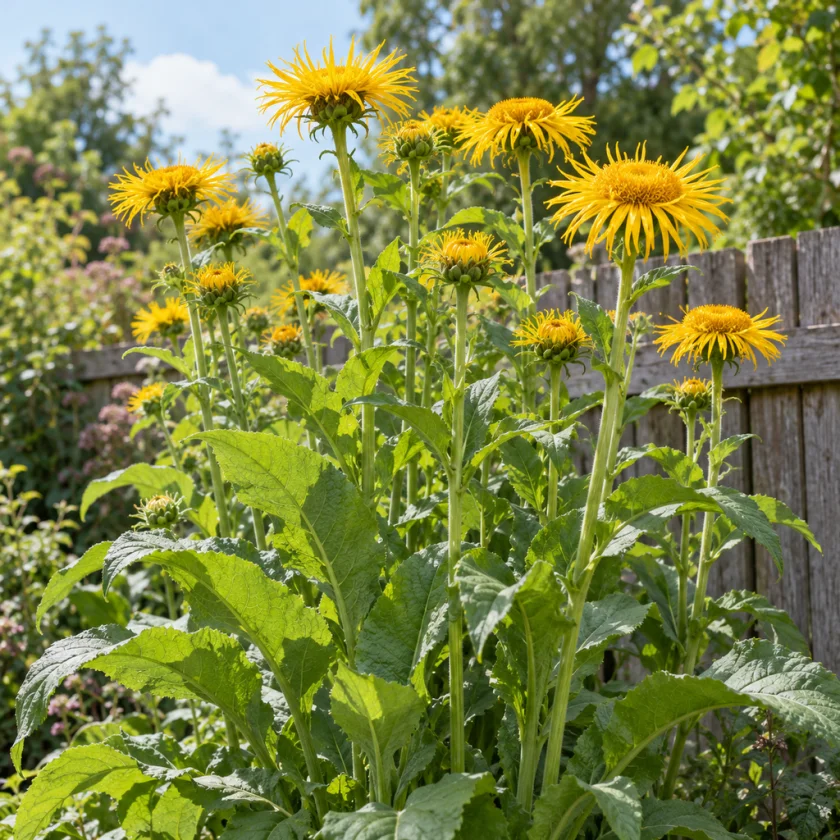
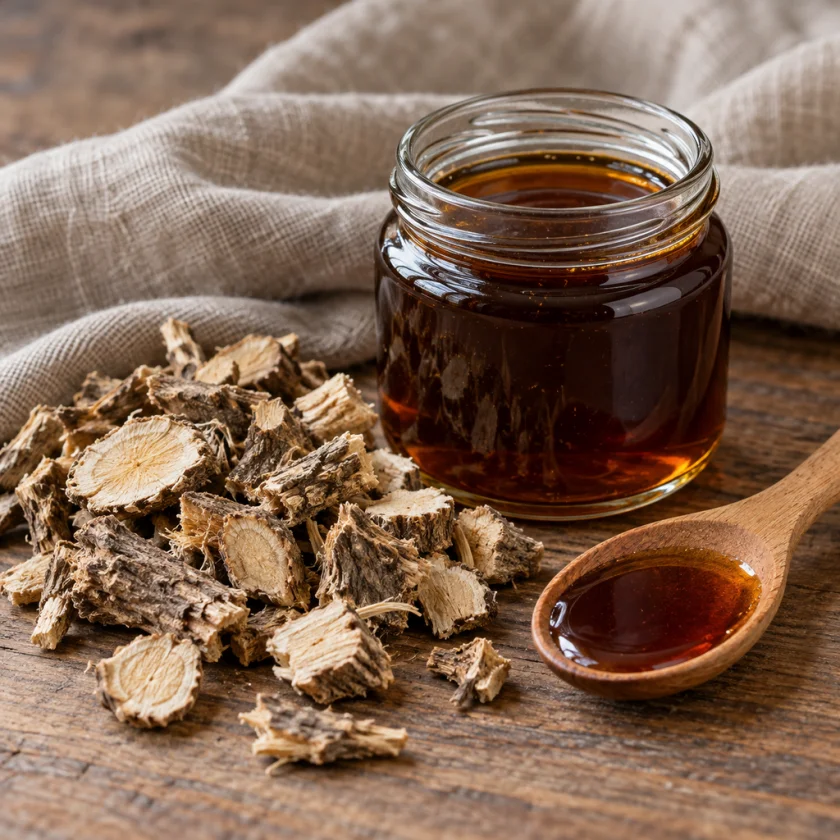
Elecampane (Inula helenium) is a five-to-eight-foot Asteraceae perennial with a long European and Asian record as a respiratory and digestive root remedy — carried through Dioscorides, the medieval monastery gardens, and the nineteenth-century Eclectic physicians under names like horse-heal and elfdock. Two constituents define it, and it is worth naming them precisely because almost every claim about the plant traces to one or the other. The first pair is the sesquiterpene lactones alantolactone and isoalantolactone, which are at once the pharmacologically active fraction and the allergenic fraction — the same molecules doing both jobs, which is the single most important thing to understand about this herb. The second is inulin, the storage fructan that elecampane root is unusually rich in, and which is where the polysaccharide got its name: it was first isolated from this plant, and named after its genus.
These four articles take the benefits apart honestly. The traditional cough and expectorant use is deep and consistent and has essentially no adequate controlled human trial behind it. The antimicrobial and antiparasitic laboratory work is real, reproduced, and routinely over-read — in-vitro potency does not imply a clinical effect at concentrations a body can reach. The inulin angle is genuinely interesting and usually missed, but it is fibre fermentation rather than a herbal action, easier to get from chicory, and the same property that feeds the microbiome is what worsens symptoms in irritable bowel syndrome (IBS) and small intestinal bacterial overgrowth (SIBO). And the safety story is the same-compound story: elecampane is a documented cause of allergic contact dermatitis, cross-reacts across the daisy family, and supplies one of the three compounds in dermatology's standard sesquiterpene lactone patch-test mix. We label every claim's evidence tier and we do not pretend the gaps are smaller than they are.
Deep-Dive Articles
Elecampane for Cough and Bronchitis
The main traditional claim, examined closely. What "warming expectorant" actually meant, the bitter and aromatic rationale, the one study that used human immune cells and a human lung-cell line — and the blunt fact that no adequate randomised trial of elecampane for cough or bronchitis exists. Includes preparations, traditional blends, when the herb is the wrong choice, and the warning signs that point to a more serious illness.
Read the deep dive →Elecampane, Inulin and the Gut
The fructan inulin was first isolated from this root in 1804 and named after the genus Inula. That gives elecampane a real prebiotic-fermentation angle — and a real problem, because fermentable fructan is exactly what provokes symptoms in irritable bowel syndrome and small intestinal bacterial overgrowth. Why this is fibre rather than a herbal action, why chicory is the better source, and why the dose cannot safely be scaled up.
Read the deep dive →Elecampane: Antimicrobial and Antiparasitic Research
Organism by organism: Staphylococcus aureus including methicillin-resistant Staphylococcus aureus (MRSA), mycobacteria and the tuberculosis question, Candida and fungi, protozoa, and the anthelmintic data behind the traditional worm use. All preclinical. Includes why in-vitro results mislead, whether the lactones could ever reach their target, and what evidence would actually change the verdict.
Read the deep dive →Elecampane Safety: Sesquiterpene Lactones and Allergy
The same-compound problem in full. Why thiol-alkylating lactones cause type IV hypersensitivity, the documented contact dermatitis, Asteraceae cross-reactivity with ragweed, chrysanthemum, feverfew and chamomile, patch testing and the SL mix, gastric irritation, pregnancy, drug interactions, and the practical point that Inula is a large genus and only I. helenium is what the tradition means.
Read the deep dive →Table of Contents
- Deep-Dive Articles
- What These Four Articles Conclude
- Key Research: Respiratory and Anti-Inflammatory
- Key Research: Inulin, Prebiotics and FODMAPs
- Key Research: Antimicrobial and Antiparasitic
- Key Research: Allergy and Contact Dermatitis
- Key Research: Chemistry, Absorption and Species
- External Resources
- Connections
- Featured Videos
What These Four Articles Conclude
The main points, each with its evidence tier.
- The respiratory use is traditional, not proven. Two thousand years of consistent recommendation for a wet, congested, lingering cough — and no adequate randomised controlled trial. Traditional use only.
- The most airway-relevant modern finding used human cells. Inula helenium preparations reduced inflammatory mediator release in human neutrophils (white blood cells) and in a human lung epithelial cell line (A549, a lung cancer cell line, not airway tissue taken from people). In the dish, alantolactone lowered the three main neutrophil-attracting signals (IL-8, TNF-α and IL-1β) about as much as the steroid budesonide, and the extracts reduced neutrophils sticking to the epithelial cells by lowering the adhesion molecule β2-integrin. That is a real mechanistic bridge to the old indication; it is still cell work, with no human trial. Preliminary (in vitro, human cells).
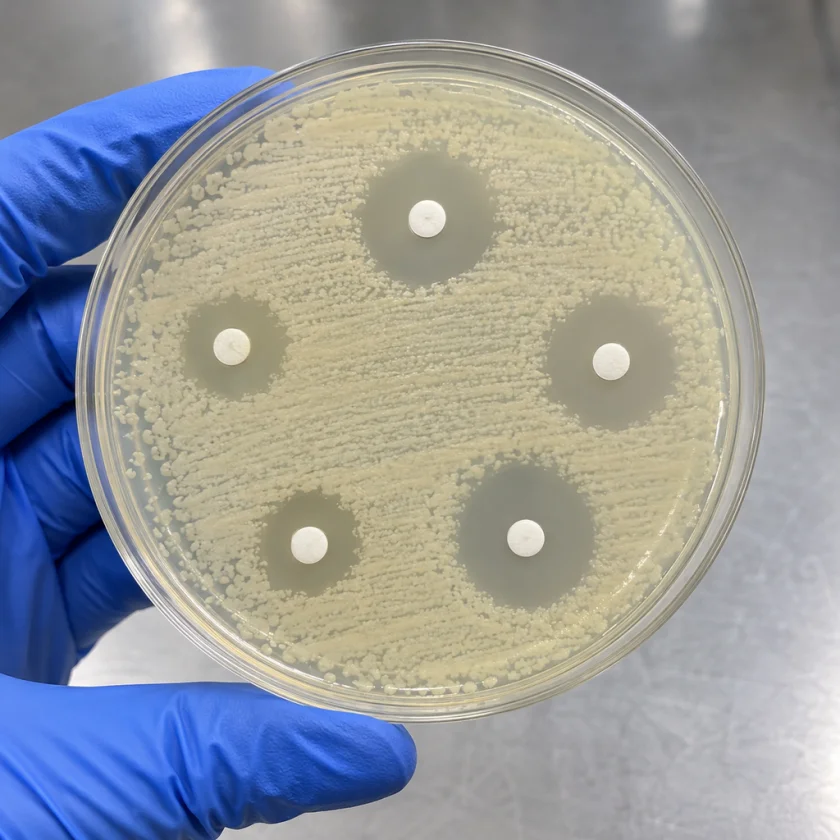
- The antimicrobial data are real and routinely over-read. Activity against Staphylococcus aureus including methicillin-resistant Staphylococcus aureus has been reproduced by independent groups, with cell membrane damage as the proposed mechanism, and there are antimycobacterial and antifungal findings too. None of it is clinical, no human pharmacokinetic study exists, and in-vitro potency does not imply a clinical effect at achievable concentrations. Preliminary (in vitro).
- Elecampane is not a tuberculosis treatment. Its historical use for consumptive coughs and the modern antimycobacterial laboratory hits have not been tested as a replacement for therapy; inadequately treated tuberculosis (TB) kills patients and breeds resistant strains. Clinically contraindicated.
- The worm tradition is plausible and obsolete. A poorly absorbed compound stays concentrated in the gut lumen, which is where helminths are, and in-vitro plus veterinary anthelmintic data support the idea. But albendazole, mebendazole, praziquantel, and ivermectin exist and work. Traditional use plus preliminary data.
- Inulin was named after this plant. First isolated from Inula helenium in 1804; the root is unusually fructan-rich. Established chemistry and history.
- The prebiotic effect is fibre fermentation, not a herbal action. Purified inulin has genuine randomised human trial support for bifidogenic and related effects — but at 5 to 20 grams a day of chicory-derived fibre, not a cup of root decoction. Elecampane's contribution is modest, and the dose cannot be raised because the lactones make you sick first. Trials for inulin; inference for elecampane.
- The same fructan is a problem for a large group of readers. Fructans are the "F" in FODMAP; they provoke pain and bloating in irritable bowel syndrome and ferment upstream in small intestinal bacterial overgrowth. Recommending elecampane as a herbal antimicrobial for small intestinal bacterial overgrowth and delivering a fructan load in the same cup are two rationales pulling in opposite directions. Controlled human evidence for the harm; practice consensus for small intestinal bacterial overgrowth.
- The activity and the allergy are the same molecules. Alantolactone and isoalantolactone alkylate protein thiols — which is how they disrupt microbes, inhibit inflammatory signalling, kill cells in culture, and haptenise skin proteins. There is no version that keeps one and drops the other, and "standardised to alantolactone" is a warning as much as a quality claim. Established chemistry.
- Allergic contact dermatitis is the best-documented human clinical fact about elecampane. Better documented than any benefit. It cross-reacts across the Asteraceae with ragweed, chrysanthemum, feverfew, chamomile, arnica, and marigold, and alantolactone is one of three compounds in the standard sesquiterpene lactone patch-test mix. Well-documented human clinical evidence.
- Oral use is not exempt from the allergy. Systemic contact dermatitis after ingesting a plant one is contact-sensitised to is documented for Compositae, so for people with a known daisy-family allergy the risk applies to elecampane tea as well as elecampane ointment.
- Documented cautions. Dose-related nausea, vomiting, and cramping; no safety data for pregnancy, breastfeeding, and children; possible added effects with sedatives, diabetes medication (additive hypoglycaemia), blood-pressure drugs, and around surgery; no human toxicity threshold or long-term safety data. Documented adverse effects; interactions traditional and theoretical only.
- Identification matters. Inula holds roughly a hundred species and only I. helenium is what the European tradition means — I. racemosa (pushkarmula) and I. japonica (xuan fu hua) are different medicines, and much published isoalantolactone research used I. racemosa. The binomial (two-part Latin name) on a label or in a study shows which species it is.
Key Research: Respiratory and Anti-Inflammatory
Named papers link to their PubMed records; the other entries are live PubMed topic searches, so they stay current and you can read the abstracts directly.
- Gierlikowska B and colleagues, "Inula helenium and Grindelia squarrosa as a source of compounds with anti-inflammatory activity in human neutrophils and cultured human respiratory epithelium," Journal of Ethnopharmacology, 2020 — the single most airway-relevant study on the plant, because it used human immune cells and a human lung epithelial cell line (A549). Preliminary (in vitro, human cells). — PubMed PMID: 31644941
- Work on alantolactone as an inhibitor of NF-κB-dependent inflammatory signalling in cell and rodent models — the mechanistic backdrop. Preliminary. PubMed search: alantolactone NF-kB inflammation
- The clinical literature on mucoactive and expectorant agents in acute and chronic bronchitis — the comparison class elecampane's traditional claim belongs to, and itself a mixed evidence base. PubMed search: mucoactive expectorant agents in bronchitis
- Research on bitter taste receptors (T2R) in airway smooth muscle and ciliated epithelium — the modern mechanism that would make the old "bitters help the chest" claim testable. PubMed search: bitter taste receptors in airway smooth muscle. — Search PubMed
- The placebo-response literature in cough trials, which sets the bar any cough remedy has to clear — and which a warm, aromatic, bitter decoction clears rather easily without any specific herbal action. PubMed search: placebo response in cough trials
- Inula helenium in European ethnobotanical surveys of respiratory remedies — documents the pattern of use, not an effect. Traditional use only. PubMed search: Inula helenium ethnobotany and respiratory use. — Search PubMed
Key Research: Inulin, Prebiotics and FODMAPs
- Gibson GR and colleagues, the "Expert consensus document: The International Scientific Association for Probiotics and Prebiotics (ISAPP) consensus statement on the definition and scope of prebiotics," Nature Reviews Gastroenterology & Hepatology, 2017 — the reference framework, in which inulin-type fructans are the exemplar. — PubMed PMID: 28611480
- Roberfroid MB, "Inulin-type fructans: functional food ingredients," Journal of Nutrition, 2007 — the foundational review of fructan physiology and the human data. Randomised trials, for purified inulin. — PubMed PMID: 17951492
- Halmos EP and colleagues, "A diet low in FODMAPs reduces symptoms of irritable bowel syndrome," Gastroenterology, 2014 — the controlled feeding trial behind low-FODMAP practice, and the reason fructan is a problem for a large group of readers. — PubMed PMID: 24076059
- Bonnema AL and colleagues, "Gastrointestinal tolerance of chicory inulin products," Journal of the American Dietetic Association, 2010 — dose- and chain-length-dependent tolerance. — PubMed PMID: 20497775
- Work on short-chain fatty acid production from fructan fermentation and butyrate's role in colonocyte metabolism and barrier function. PubMed search: inulin fermentation and butyrate
- Literature on fermentable substrate load and prebiotic restriction in small intestinal bacterial overgrowth. PubMed search: SIBO and fermentable carbohydrate
Key Research: Antimicrobial and Antiparasitic
- O'Shea S, Lucey B, Cotter L, on the in-vitro activity of Inula helenium against clinical Staphylococcus aureus strains including MRSA, British Journal of Biomedical Science, 2009. Preliminary (in vitro). — PubMed PMID: 20095126
- Stojanović-Radić Z and colleagues on the antistaphylococcal activity of elecampane root essential oil and eudesmane sesquiterpene lactone—induced cell membrane damage, European Journal of Clinical Microbiology & Infectious Diseases, 2012 — a mechanism, not just a susceptibility number. — PubMed PMID: 21901633
- Deriu A and colleagues, "Antimicrobial activity of Inula helenium L. essential oil against Gram-positive and Gram-negative bacteria and Candida spp.," International Journal of Antimicrobial Agents, 2008. — PubMed PMID: 18450429
- Cantrell CL and colleagues, "Antimycobacterial eudesmanolides from Inula helenium and Rudbeckia subtomentosa," Planta Medica, 1999 — in-vitro activity against Mycobacterium tuberculosis. Interesting chemistry; not a treatment. — PubMed PMID: 10364842
- Anthelmintic screening of sesquiterpene lactones and Inula extracts against nematodes, including the veterinary work on Haemonchus contortus and anthelmintic resistance. PubMed search: sesquiterpene lactones anthelmintic activity
- Antiprotozoal activity of sesquiterpene lactones, including against Leishmania and trypanosomes, and parasite thiol-redox systems as drug targets. PubMed search: sesquiterpene lactones antileishmanial and antitrypanosomal. — Search PubMed
- Methodological critiques of essential-oil antimicrobial testing — solubilisation artefacts, non-standard units, chemotype variability — which apply to nearly every study above. PubMed search: essential oil antimicrobial testing methodology. — Search PubMed
Key Research: Allergy and Contact Dermatitis
- Paulsen E, "Contact sensitization from Compositae-containing herbal remedies and cosmetics," Contact Dermatitis, 2002 — the central reference for herbal-product daisy-family allergy. Well-documented human clinical evidence. — PubMed PMID: 12492516
- Paulsen E, Andersen KE, Hausen BM on Compositae dermatitis in a dermatology department, Contact Dermatitis, 1993 — clinic-level epidemiology and cross-reactivity. — PubMed PMID: 8365167
- Literature on the composition and sensitivity of the sesquiterpene lactone mix patch-test allergen — alantolactone, dehydrocostus lactone, costunolide. Alantolactone, from this plant, is one of the three. PubMed search: sesquiterpene lactone mix patch testing
- Reports of systemic contact dermatitis after ingesting a plant to which a patient is contact-sensitised — why known Asteraceae allergy rules out oral elecampane too. PubMed search: systemic contact dermatitis from ingested plant allergens. — Search PubMed
- The airborne contact dermatitis literature for Compositae plants, affecting face, neck, and eyelids without direct touch. PubMed search: airborne Compositae contact dermatitis
- Hausen BM and colleagues on the sensitising capacity of Compositae plants and structure–activity relationships in lactone allergy. PubMed search: sensitising capacity of Compositae plants
Key Research: Chemistry, Absorption and Species
- Seca AML and colleagues, "The genus Inula and their metabolites: from ethnopharmacological to medicinal uses," Journal of Ethnopharmacology, 2014 — the best single map of the genus, and useful for seeing how thin the clinical column is next to the phytochemical one. — PubMed PMID: 24754913
- Trendafilova A and colleagues, "Ultrasound-assisted extraction of alantolactone and isoalantolactone from Inula helenium roots," Pharmacognosy Magazine, 2010 — quantifies both lactones and shows how much extraction method changes content, and therefore both potency and risk. — PubMed PMID: 20931085
- Xu R and colleagues, "Intestinal absorption of isoalantolactone and alantolactone, two sesquiterpene lactones from Radix Inulae, using Caco-2 cells," European Journal of Drug Metabolism and Pharmacokinetics, 2019 — the only bioavailability groundwork, and one step out of six. — PubMed PMID: 30209793
- Reviews of the alpha-methylene-gamma-lactone group as a Michael acceptor alkylating protein thiols and glutathione — the one mechanism that explains the antimicrobial activity, the cytotoxicity, and the allergy together. PubMed search: alpha-methylene-gamma-lactone thiol alkylation. — Search PubMed
- Cytotoxicity studies on alantolactone and isoalantolactone in mammalian cell lines — the property behind the anticancer research interest, and the reason prolonged high-dose use cannot be called safe. Preliminary (in vitro). PubMed search: alantolactone cytotoxicity and glutathione depletion. — Search PubMed
- Comparative work across Inula species — I. helenium, I. racemosa, I. japonica, I. britannica — which is how you check whether a study is even about the right plant. PubMed search: Inula species comparison and metabolites
External Resources
- PubMed — the US National Library of Medicine's biomedical literature database. Every citation on these pages links into it.
- National Center for Complementary and Integrative Health (NCCIH) — the U.S. National Institutes of Health (NIH) centre for evidence reviews of herbs and supplements.
- LiverTox (U.S. National Institutes of Health) — the reference database on drug- and herb-induced liver injury.
- European Medicines Agency — Herbal Medicinal Products — EU herbal monographs and assessment reports.
- World Health Organization — Tuberculosis — why tuberculosis needs supervised multi-drug therapy, relevant to elecampane's historical consumptive-cough use.
- U.S. Centers for Disease Control and Prevention (CDC) — Parasites — diagnosis and proven treatment for intestinal worms and protozoa, in place of the traditional vermifuge use.
- American Academy of Dermatology — patient information on contact dermatitis and patch testing.
- Monash University FODMAP — the research group that developed the low-FODMAP approach; the reference for fructan sensitivity.
- Royal Botanic Gardens, Kew — authoritative plant taxonomy, for checking which Inula you actually have.
Connections
- All Herbs
- Elecampane (main article)
- Elecampane for Cough and Bronchitis
- Elecampane, Inulin and the Gut
- Elecampane: Antimicrobial Research
- Elecampane Safety and Allergy
- Mullein
- Mullein Benefits
- Marshmallow Root
- Marshmallow Root Benefits
- Thyme
- Thyme Benefits
- Coltsfoot
- Coltsfoot Benefits
- Chrysanthemum
- Chrysanthemum Benefits
- Yarrow
- Yarrow Benefits
- Feverfew
- Chamomile
- Wormwood
- Licorice
- Eucalyptus
- Bronchitis
- Chronic Obstructive Pulmonary Disease
- Pulmonology
- Small Intestinal Bacterial Overgrowth
- Irritable Bowel Syndrome
- Contact Dermatitis
- Allergies
- Staphylococcus aureus
- Parasites
Safety and disclaimer. These pages are educational and are not medical advice. Elecampane's traditional respiratory and digestive uses have no adequate controlled human trial support, and every antimicrobial and antiparasitic finding described here is preclinical — in-vitro potency does not imply a clinical effect at concentrations the body can reach. The best-documented human fact about the plant is that it causes allergic contact dermatitis: its active sesquiterpene lactones alantolactone and isoalantolactone are potent sensitisers, alantolactone is a standard patch-test allergen, and the plant cross-reacts across the daisy family, so the allergy risk applies to elecampane in any form — including tea — for people who react to ragweed, chrysanthemum, feverfew, chamomile, arnica, marigold, or yarrow. There is no safety data for pregnancy, breastfeeding, or children. Higher doses cause nausea, vomiting, and cramping; no human toxicity threshold or long-term safety data exist. The root's large fructan content can worsen irritable bowel syndrome and small intestinal bacterial overgrowth symptoms. Possible interactions (traditional and theoretical) are with sedatives, diabetes medication, blood-pressure drugs, and anticoagulants, which also matters before surgery. Elecampane has not been shown to treat tuberculosis, pneumonia, a staphylococcal infection, or a diagnosed parasitic infection, and inadequately treated tuberculosis kills patients and breeds resistant strains. A cough with blood, breathlessness, fever, night sweats, weight loss, or lasting beyond three weeks are warning signs that doctors investigate promptly.