Thyme — Benefits Deep Dive
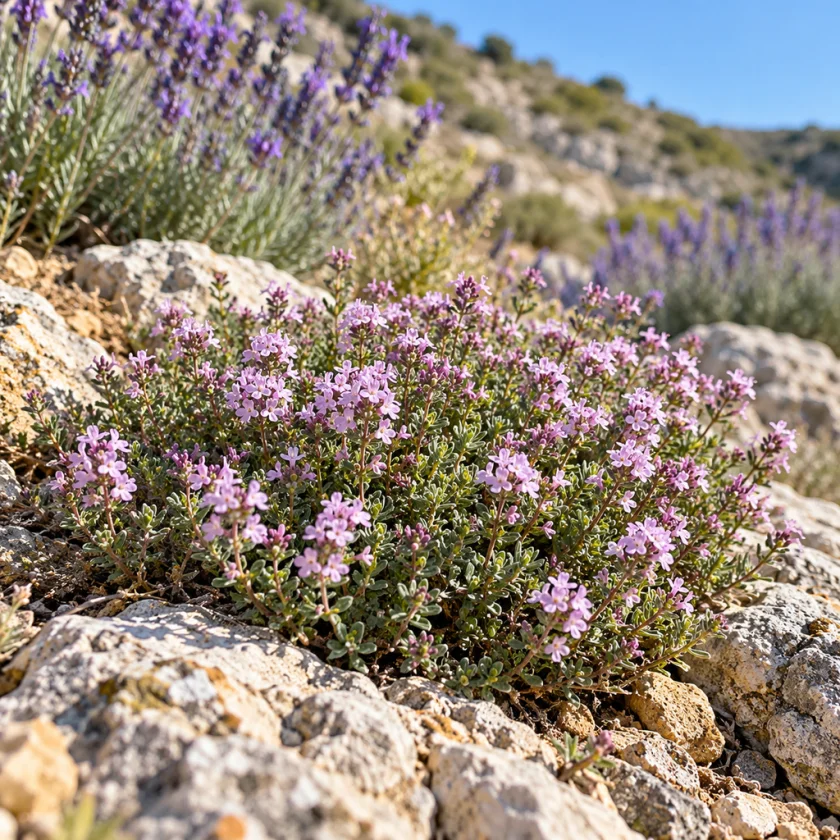
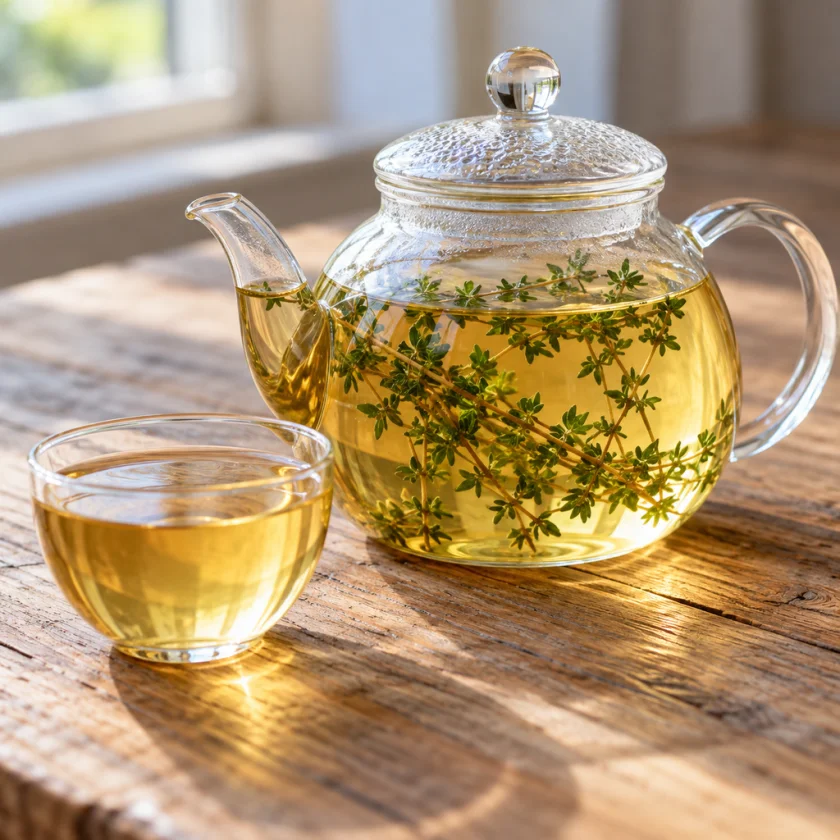
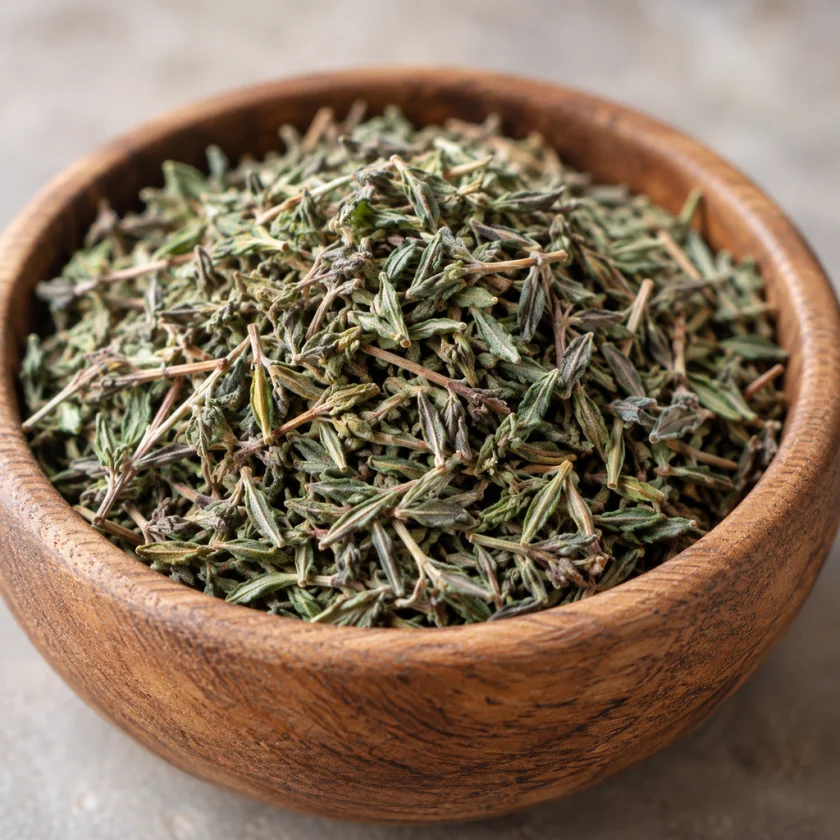
Thyme (Thymus vulgaris) is the small-leaved culinary garden thyme of southern European kitchens and one of the few medicinal herbs to have received formal European phytotherapy approval — the German Commission E lists thyme as an approved treatment for symptoms of bronchitis, whooping cough, and upper respiratory catarrh. Its therapeutic value rests on a distinctive essential oil composition dominated by thymol (40-60% of the oil), carvacrol, and p-cymene — the same phenolic monoterpene chemistry that powers oregano, but in a milder, more palatable matrix that has made thyme the most-traditional cough remedy in European folk medicine for centuries. Four benefit pages below explore where the evidence is strongest: the bronchitis and cough indication with the data from trials of a thyme and ivy combination syrup, the broad antimicrobial spectrum that rivals oregano against methicillin-resistant Staphylococcus aureus (MRSA) / Candida / E. coli, the antispasmodic and carminative digestive use, and the antioxidant rosmarinic acid biochemistry together with a 2012 laboratory (test-tube) study, presented at the Society for General Microbiology, in which thyme tincture had a stronger antibacterial effect than standard concentrations of benzoyl peroxide against the acne bacterium Cutibacterium acnes.
Deep-Dive Articles
Respiratory Health & Cough
The German Commission E approved indication for bronchitis, whooping cough, and upper respiratory catarrh; the randomized trials of a thyme and ivy combination syrup in acute bronchitis showing faster cough resolution vs. placebo; the thymol expectorant and secretolytic mechanism (loosens viscous mucus, restores ciliary beat); the antispasmodic effect on bronchial smooth muscle; and the centuries-long traditional use as cough syrup base across European folk medicine.
Read the deep dive →Antimicrobial Spectrum
Thyme essential oil has broad-spectrum antimicrobial activity comparable to oregano oil. In-vitro work documents minimum inhibitory concentration (MIC) values against methicillin-resistant Staphylococcus aureus (MRSA), Candida albicans, Escherichia coli, Salmonella, and Pseudomonas aeruginosa. Clinical mouthwash applications (a commercial essential-oil mouthwash containing thymol), food preservation patents, and the chemotype variability between thymol-dominant and carvacrol-dominant essential oil chemotypes.
Read the deep dive →Digestive Aid
Antispasmodic action on gastrointestinal smooth muscle (calcium-channel modulation), traditional use as a carminative for bloating and flatulence, and dyspepsia relief in clinical use.
Read the deep dive →Antioxidant & Acne
A 2012 laboratory (test-tube) study presented at the Society for General Microbiology, in which thyme tincture had a stronger antibacterial effect than standard concentrations of benzoyl peroxide against Cutibacterium acnes (formerly Propionibacterium acnes), with the researchers noting that further tests were needed; the rosmarinic acid and flavonoid antioxidant chemistry that complements the essential oil phenolics; and the centuries-long traditional Mediterranean use of thyme as a topical wound and skin remedy.
Read the deep dive →Table of Contents
- Deep-Dive Articles
- Why Thyme Produces These Effects
- Research Papers: Respiratory Health & Cough
- Research Papers: Antimicrobial Spectrum
- Research Papers: Digestive Aid
- Research Papers: Antioxidant & Acne
- Research Papers: Cross-Cutting (Chemotype, Safety, Toxicology)
- External Authoritative Resources
- Connections
- Featured Videos
Why Thyme Produces These Effects
Thyme's clinical activity flows almost entirely from four phenolic monoterpenes concentrated in the essential oil that the plant secretes from glandular trichomes on the underside of its leaves: thymol (typically 40-60% of the oil in the canonical thymol chemotype), carvacrol (its structural isomer), p-cymene (long thought to be the precursor of both; a 2021 study found that the plant makes thymol and carvacrol from gamma-terpinene through short-lived intermediates, and that p-cymene forms from those same intermediates when the final enzyme step is missing), and gamma-terpinene. Layered on top of the volatile oil is a water-soluble polyphenol fraction dominated by rosmarinic acid, a caffeic acid ester first isolated from rosemary that thyme produces in similar abundance. Each of the four therapeutic effects maps directly to a subset of this chemistry.
- Antimicrobial activity — thymol and carvacrol are membrane-active phenols. They partition into the bacterial and fungal cell membrane lipid bilayer, disrupt membrane fluidity, depolarize the proton-motive force, and at higher concentrations cause leakage of intracellular contents. This is the mechanism behind the broad-spectrum activity against gram-positive and gram-negative bacteria, yeasts, and dermatophytes that puts thyme essential oil in the same MIC range as oregano oil in in-vitro comparisons.
- Expectorant and secretolytic activity — thymol stimulates ciliary beat frequency in respiratory epithelium and reduces the viscosity of bronchial mucus, making it easier to clear by mucociliary action and coughing. This is the mechanism behind the German Commission E approval and the bronchitis trial benefit of a thyme and ivy combination syrup.
- Antispasmodic activity — thymol, carvacrol, and the flavonoid fraction relax both bronchial smooth muscle (contributing to the cough-relief effect) and gastrointestinal smooth muscle (the basis for the traditional carminative use for indigestion). The mechanism is a combination of calcium-channel modulation and direct muscle relaxation.
- Antioxidant activity — rosmarinic acid is one of the most potent dietary radical scavengers known, with an oxygen radical absorbance capacity (ORAC) value rivaling green tea catechins. Thyme leaves are among the highest-ORAC culinary herbs per gram. Combined with the thymol fraction that scavenges peroxyl radicals, this is the mechanism behind thyme's topical applications and the 2012 laboratory acne study result.
One important nuance: the relative proportion of thymol vs. carvacrol vs. p-cymene varies dramatically by genetic chemotype, growing region, harvest time, and post-harvest handling. Six distinct Thymus vulgaris chemotypes have been characterized — thymol-dominant, carvacrol-dominant, geraniol-dominant, linalool-dominant, alpha-terpineol-dominant, and trans-sabinene-hydrate-dominant. The therapeutic literature is overwhelmingly built on the thymol chemotype; aromatherapy practitioners describe the gentler linalool chemotype as the one used on sensitive skin and for children's topical use. The chemotype of a thyme essential oil is stated on its certificate of analysis.
Research Papers: Respiratory Health & Cough
The main placebo-controlled trial of a thyme and ivy combination syrup treated 361 adults with acute bronchitis and a productive cough for 11 days. By days 7-9, their daytime coughing fits had fallen by 68.7% from the start with the syrup, against 47.6% with placebo (p < 0.0001), and a 50% reduction in coughing fits came 2 days sooner. Side effects were no more frequent than with placebo. A matching 2007 trial of a thyme and primrose combination in 361 adults found a 67.1% fall in coughing fits against 51.3% with placebo (p < 0.0001).
A 2025 open-label randomized trial in 325 adults with acute bronchitis then compared an ivy-only extract with a thyme-ivy and a thyme-primrose combination. The ivy-only extract was at least as good as both combinations, and better than the thyme-ivy combination on a bronchitis severity score at day 7 (it was not significantly better than thyme-primrose). The trial was funded by the company that makes the ivy extract, and three of its five authors work for that company.
- German Commission E monograph: Thymi herba (thyme herb) approved for bronchitis, whooping cough, and upper respiratory catarrh — PubMed: Commission E thyme monograph
- Kemmerich B, Eberhardt R, Stammer H (2006). Efficacy and tolerability of a fluid extract combination of thyme herb and ivy leaves and matched placebo in adults suffering from acute bronchitis with productive cough. A prospective, double-blind, placebo-controlled clinical trial. Arzneimittelforschung. 56(9):652-660. — PubMed PMID: 17063641
- Kemmerich B (2007). Evaluation of efficacy and tolerability of a fixed combination of dry extracts of thyme herb and primrose root in adults suffering from acute bronchitis with productive cough. A prospective, double-blind, placebo-controlled multicentre clinical trial. Arzneimittelforschung. 57(9):607-615. — PubMed PMID: 17966760
- Thymol stimulation of ciliary beat frequency in respiratory epithelium — PubMed: Thymol and ciliary beat
- Thymol and carvacrol expectorant secretolytic mucolytic mechanism — PubMed: Thymol secretolytic mechanism
- Thyme essential oil antispasmodic effect on bronchial smooth muscle — PubMed: Bronchial antispasmodic effect
- European Medicines Agency Committee on Herbal Medicinal Products (HMPC) monograph on Thymus vulgaris herba — PubMed: EMA HMPC thyme
- Thyme syrup vs. cough syrup in pediatric upper respiratory infection — PubMed: Pediatric thyme syrup
- Thyme inhalation in chronic bronchitis — PubMed: Thyme inhalation
- Thyme and ivy combination meta-analysis of pooled bronchitis trials — PubMed: thyme and ivy combination meta-analysis
- Kardos P, de Zeeuw J, Trompetter I, Braun S, Ilieva Y (2025). Efficacy and safety of a single ivy extract versus two herbal extract combinations in patients with acute bronchitis: a multi-center, randomized, open-label clinical trial. Pharmaceuticals (Basel). 18(5):754. — PubMed PMID: 40430571
Research Papers: Antimicrobial Spectrum
- Thyme essential oil broad-spectrum antimicrobial activity comparable to oregano — PubMed: Thyme vs. oregano antimicrobial
- Thymol and carvacrol membrane-disrupting mechanism in bacteria — PubMed: Membrane-disrupting mechanism
- Thymol activity against methicillin-resistant Staphylococcus aureus (MRSA) — PubMed: Thyme against MRSA
- Thyme essential oil antifungal activity against Candida albicans — PubMed: Thyme against Candida
- Thyme oil against Escherichia coli and gram-negative pathogens — PubMed: Thyme against E. coli
- Thymol-based mouthwash and oral antimicrobial applications — PubMed: Thymol mouthwash
- Thyme essential oil as natural food preservative — PubMed: Thyme food preservation
- Thymol vs. carvacrol chemotype variability in Thymus vulgaris — PubMed: Thyme chemotypes
- Thyme oil activity against Pseudomonas aeruginosa biofilms — PubMed: Thyme against Pseudomonas
- Thymol synergy with conventional antibiotics — PubMed: Thymol-antibiotic synergy
Research Papers: Digestive Aid
- A nine-herb liquid digestive preparation (STW 5) for functional dyspepsia (thyme is not one of its nine herbs) — PubMed: STW 5 for dyspepsia
- Thyme antispasmodic effect on gastrointestinal smooth muscle — PubMed: GI antispasmodic
- The same nine-herb preparation (STW 5) for irritable bowel syndrome (thyme is not one of its herbs) — PubMed: STW 5 for IBS
- Khayyal MT, el-Ghazaly MA, Kenawy SA, Seif-el-Nasr M, Mahran LG, Kafafi YA, Okpanyi SN (2001). Antiulcerogenic effect of some gastrointestinally acting plant extracts and their combination. Arzneimittelforschung. 51(7):545-553. (Lists the nine STW 5 herbs: bitter candytuft, lemon balm, chamomile, caraway, peppermint, licorice, angelica, milk thistle and greater celandine.) — PubMed PMID: 11505785
- Thymol carminative and digestive traditional use — PubMed: Carminative use
- Thymol calcium-channel modulation and smooth muscle relaxation — PubMed: Calcium channel mechanism
Research Papers: Antioxidant & Acne
- Gomez-Escalada M and colleagues, Leeds Metropolitan University (2012). Laboratory (test-tube) study of thyme, marigold and myrrh tinctures against P. acnes, compared with benzoyl peroxide; presented at the Society for General Microbiology Spring Conference, Dublin. — Microbiology Society news release, 28 March 2012
- Thymol antimicrobial activity against Cutibacterium acnes (formerly P. acnes) — PubMed: Thymol vs. C. acnes
- Rosmarinic acid antioxidant mechanism and ORAC value — PubMed: Rosmarinic acid antioxidant
- Thyme leaves as among the highest-ORAC culinary herbs — PubMed: Thyme ORAC value
- Traditional Mediterranean topical use of thyme for wound and skin — PubMed: Mediterranean topical use
- Thyme oil wound healing in animal models — PubMed: Thyme wound healing
- Thymol scavenging of peroxyl radicals and lipid peroxidation — PubMed: Thymol antioxidant
- Thyme flavonoids (luteolin, apigenin) antioxidant contribution — PubMed: Thyme flavonoids
Research Papers: Cross-Cutting (Chemotype, Safety, Toxicology)
- Six chemotypes of Thymus vulgaris (thymol, carvacrol, geraniol, linalool, alpha-terpineol, trans-sabinene hydrate) — PubMed: Six chemotypes
- Thymol and carvacrol food-additive safety review (GRAS, "generally recognized as safe") — PubMed: GRAS safety review
- Thyme essential oil dermal sensitization and patch testing — PubMed: Dermal sensitization
- Pregnancy and lactation safety of medicinal-dose thyme — PubMed: Pregnancy safety
- Thymol oral toxicology and acceptable daily intake — PubMed: Thymol ADI
- Spanish thyme (Thymus zygis) vs. common thyme essential oil comparison — PubMed: T. zygis vs. T. vulgaris
- Wild thyme (Thymus serpyllum) traditional and pharmacological review — PubMed: Wild thyme review
- Thyme historical and ethnobotanical review — PubMed: Historical review
External Authoritative Resources
- European Medicines Agency — Committee on Herbal Medicinal Products (HMPC) monograph on Thymus vulgaris herba (regulatory dossier on traditional and well-established use indications)
- ESCOP — European Scientific Cooperative on Phytotherapy (Thymi herba monograph; the gold-standard European phytotherapy reference)
- MedlinePlus — Thyme
- U.S. National Center for Complementary and Integrative Health (NCCIH) — Herbs at a Glance
- PubMed — All research on Thymus vulgaris / thyme (~5,000+ papers)
Connections
- All Herbs
- Thyme (Main Page)
- Thyme for Respiratory Health & Cough
- Thyme Antimicrobial Spectrum
- Thyme as Digestive Aid
- Thyme Antioxidant & Acne
- Oregano (Carvacrol Cousin)
- Rosemary
- Sage
- Eucalyptus
- Garlic
- Tea Tree
- Clove
- Pulmonology
- Staphylococcus Aureus / Methicillin-Resistant Staphylococcus Aureus
- Escherichia Coli
- Acne
- Immune Boosting
- Oxidative Stress
- History