Elecampane Safety: Sesquiterpene Lactones and Allergy
Most herb safety pages read like a legal disclaimer bolted onto an enthusiastic sales pitch. Elecampane deserves something better, because its central safety fact is not a caveat — it is the same fact as its central pharmacology fact. Alantolactone and isoalantolactone are simultaneously what makes elecampane biologically interesting and what makes it allergenic. There is no purified, gentle version of the herb that keeps the activity and drops the risk, because the activity and the risk are the same molecules doing the same chemistry: alkylating protein thiols. Elecampane is a documented cause of allergic contact dermatitis; it is an Asteraceae plant, so it cross-reacts with ragweed, chrysanthemum, feverfew, and chamomile sensitivity; and sesquiterpene lactone mix is a standard patch-test allergen partly because of plants like this one. This page covers that properly, along with gastric irritation, pregnancy, drug interactions, and the practical identification problem that Inula is a large genus and only I. helenium is what the tradition means.
Table of Contents
- The Same-Compound Problem
- Why This Chemistry Causes Allergy
- Allergic Contact Dermatitis from Elecampane
- Asteraceae Cross-Reactivity
- Patch Testing and the SL Mix
- Who the Research Raises Concerns For
- Gastric Irritation and Dose-Related Toxicity
- Pregnancy, Breastfeeding and Children
- Drug Interactions
- Identification: Telling Inula helenium From Other Inula Species
- What Lowers the Risk, According to the Literature
- Evidence Tiers at a Glance
- Key Research Papers
- Connections
- Featured Videos
The Same-Compound Problem
The structure of the problem comes first, because it changes how everything else on this page weighs.
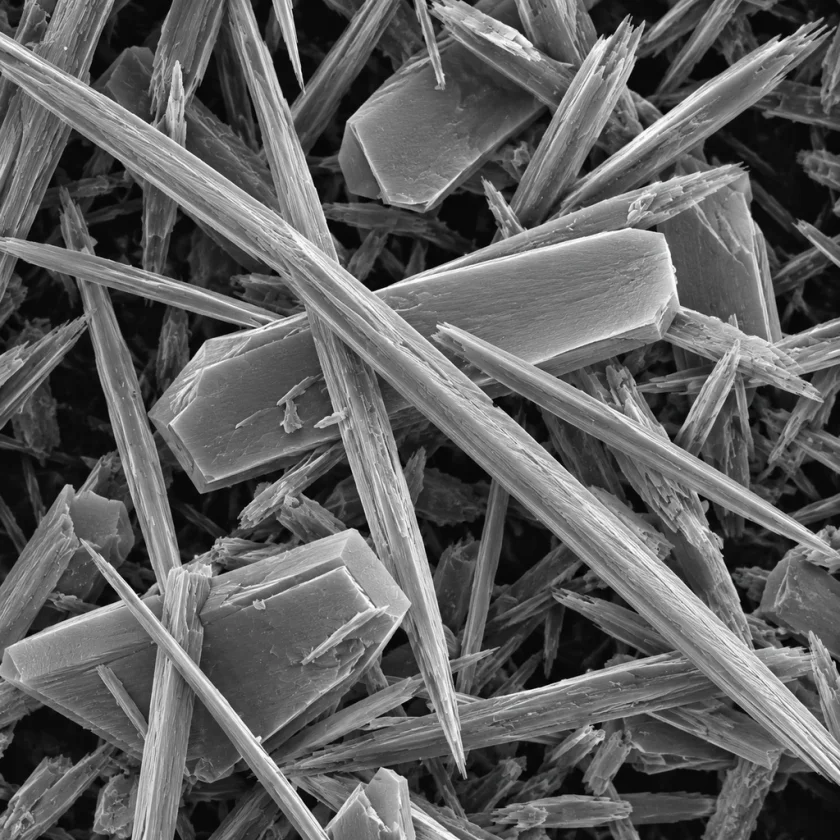
Elecampane root's pharmacologically active fraction is its essential oil, and within it two eudesmanolide sesquiterpene lactones: alantolactone and isoalantolactone, historically isolated together as "helenin" or "alant camphor." Essentially everything modern research finds interesting in the plant traces to those two molecules — the antibacterial and antifungal activity, the anti-inflammatory effects in human airway cells, the much-publicised anticancer activity in cell lines, the antiparasitic screening hits, and the bitterness itself.
The same two molecules are potent contact sensitisers. Alantolactone is allergenic enough to serve as a marker compound in dermatology patch testing for daisy-family allergy. This is not a contaminant, not a processing artefact, and not confined to one plant chemotype. It is the active constituent.
Two conclusions follow that you will not find on most herbal-supplement pages.
First, "standardised to alantolactone content" is a warning label, not a quality claim. A product standardised to a higher lactone content is more pharmacologically active and more sensitising, in the same proportion. The marketing framing that treats standardisation as pure reassurance is inverted here.
Second, a "gentler preparation" trades away the activity. A water decoction extracts these lipophilic lactones relatively poorly compared with an alcohol tincture or a steam-distilled oil, so it is genuinely lower-risk — and correspondingly lower in whatever pharmacological effect the herb has. Preparation cannot separate them, only dilute both together. That trade-off is coherent, and it is one reason the traditional water-based decoction has a better safety record than any concentrated modern form.
Evidence tier: established chemistry, well documented on both sides.
Why This Chemistry Causes Allergy
The mechanism is worth understanding, because it explains the cross-reactivity, the patch-test practice, and why contact-allergy practice relies on avoidance rather than dose reduction once a person is sensitised.
Sesquiterpene lactones carry an alpha-methylene-gamma-lactone group: a reactive electrophile, a Michael acceptor, which forms covalent bonds with nucleophiles. Its favourite targets are the sulfhydryl groups of cysteine residues in proteins and the thiol of glutathione. That reactivity is exactly why these compounds disrupt bacterial membranes, inhibit inflammatory signalling proteins, and kill cells in culture — they modify proteins indiscriminately.
Apply the same molecule to skin and you get haptenisation. The lactone binds covalently to skin proteins, creating a modified self-protein the immune system has never seen. Langerhans cells and other dendritic cells pick up the hapten-protein complex, migrate to regional lymph nodes, and present it to T cells. That is the sensitisation phase, and it is silent — nothing visible happens, which is why people are surprised when the reaction appears on a later exposure rather than the first.
On re-exposure, the now-primed memory T cells recognise the hapten and mount a type IV delayed hypersensitivity response: itching, redness, papules, sometimes vesicles and weeping, typically appearing 24 to 72 hours after contact and peaking around 48 to 96 hours. That delay is diagnostically important. Because the rash appears a day or two later, people routinely blame the wrong exposure.
Three practical implications:
- Sensitisation is generally permanent. Once the memory T-cell population exists, it persists for years to life. There is no meaningful desensitisation protocol for contact allergens of this type.
- Dose reduction does not solve it. Elicitation thresholds in a sensitised person are low, and repeated small exposures maintain the dermatitis. Avoidance is the standard treatment.
- Cross-reactivity is chemical, not botanical. The immune system recognises the reactive lactone structure, so it responds to structurally similar lactones from unrelated plants. This is the key to the next section.
Evidence tier: established immunology and contact-allergy science.
Allergic Contact Dermatitis from Elecampane
This is, in our reading, the best-documented human clinical fact about elecampane — better documented than any of its benefits. That asymmetry is worth sitting with: the clinical literature on this plant is largely a literature of harm, because dermatology patch-test clinics generate systematic data while traditional cough remedies do not.
Historically, occupational dermatitis in people who handled and processed the root is recorded, which is what you would expect from a potent sensitiser handled in bulk. The plant's own folk name "scabwort" comes from its veterinary use on skin conditions in livestock, which is a nice irony given that its most reliable modern effect on human skin is to cause one.
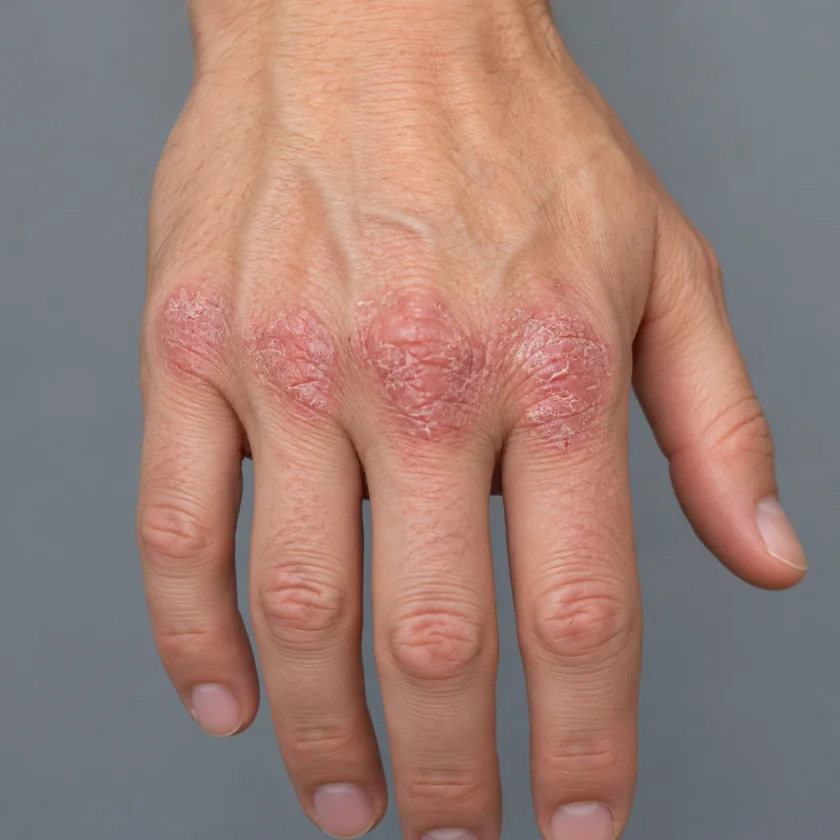
The clinical picture in a sensitised person follows the type IV pattern: itch, erythema, papules, and sometimes vesicles at the contact site, developing a day or two after handling the plant, a tincture, an ointment, a compress, or the essential oil. Involvement typically favours hands, forearms, and face — the exposed sites, with facial involvement often from airborne particles or from touching the face. Repeated exposure can produce chronic lichenified eczema that no longer looks acute and is easily mistaken for ordinary hand eczema.
A few practical patterns from the wider Compositae dermatitis literature apply here:
- Gardeners, herbalists, florists, and farm workers are the classic risk groups, from cumulative handling.
- Airborne contact dermatitis is a recognised Compositae presentation, affecting face, neck, and eyelids from plant particles rather than direct touch.
- Photoaggravation is described in Compositae dermatitis, so sun-exposed sites can be worse and the picture can be confused with photosensitivity.
- Systemic contact dermatitis — a generalised eruption after ingesting a plant to which someone is contact-sensitised — is documented for Compositae. This is the mechanism by which a sensitised person can react to elecampane tea, not just to handling the root, and it is why patients with Compositae sensitisation are routinely warned against vegetables, spices, teas and herbal remedies from the family. What is not known: a 2017 review by Paulsen found the evidence for these systemic reactions "mostly anecdotal and based on statements from patients rather than scientific data"; a few clinical reports of accidental exposure and oral challenge prove the reaction exists, most convincingly for strong contact allergens such as costunolide in bay leaves. Elecampane is among the species suspected of causing systemic reactions, alongside artichoke, mugwort, yarrow, dandelion and feverfew; how often it happens has not been measured.
Evidence tier: well-documented human clinical evidence (case series, patch-test clinic data, occupational reports).
Asteraceae Cross-Reactivity
Because sensitisation is to the reactive lactone structure rather than to the species, someone allergic to one Compositae plant frequently reacts to others. Paulsen's work on Compositae dermatitis — including "Contact sensitization from Compositae-containing herbal remedies and cosmetics" in Contact Dermatitis in 2002, and earlier survey work with Andersen and Hausen on Compositae dermatitis in a dermatology department — documents how common this cross-sensitivity is and how often the culprit is a herbal or cosmetic product rather than a garden plant. The 2002 review lists at least 15 Compositae species in herbal remedies and cosmetics suspected of causing sensitisation, among them arnica, German and Roman chamomile, marigold, echinacea and elecampane. Epidemiological data exist for only two of them, arnica and German chamomile; the rest of the evidence is anecdotal. On that basis, Paulsen concluded that sensitisation "seems to occur relatively frequently with a few species such as arnica and elecampane, and occurs rarely with the majority, especially the widely used German chamomile."
Plants in the family that share sesquiterpene lactone chemistry and are commonly implicated:
- Ragweed (Ambrosia) — the classic. Ragweed dermatitis is a well-described entity distinct from ragweed hay fever.
- Chrysanthemum and dahlia — frequent culprits in florists.
- Feverfew (Tanacetum parthenium), whose lactone parthenolide is a strong sensitiser.
- Chamomile, both German and Roman — worth flagging because it is perceived as the gentlest herb in the cupboard. Sensitisation from German chamomile is rare for how widely it is used (Paulsen 2002), yet chamomile was the second most frequent positive plant extract, after feverfew, in a 1993 Danish patch-test clinic series.
- Arnica, widely used topically, which is a particularly bad combination with a lactone allergy.
- Marigold (Calendula), yarrow, tansy, wormwood and mugwort, dandelion, echinacea, artichoke, chicory, lettuce, and sunflower.
- Elecampane itself, plus other Inula species.
Two clarifications that prevent common confusion.
Contact allergy and respiratory allergy are different mechanisms. Ragweed hay fever is immunoglobulin E-mediated type I hypersensitivity to pollen protein; Compositae dermatitis is T-cell-mediated type IV hypersensitivity to lactone haptens. Having one does not automatically mean having the other. That said, the two populations overlap substantially in practice, atopy is a risk factor for a great many things. Patients with Compositae contact allergy are routinely warned against herbal remedies from the family (Paulsen 2017); for ragweed hay fever alone, the risk of reacting to elecampane has not been measured. Elecampane's traditional respiratory use has no controlled trial behind it, so there is no measured benefit to set against this risk.
Food cross-reactions are real but usually mild. Lettuce, chicory, artichoke, and sunflower seeds are Compositae. Most sensitised people tolerate them fine, since dietary lactone exposure is low, but hand dermatitis in food handlers from lettuce and chicory is documented.
Evidence tier: well-documented human clinical evidence.
Patch Testing and the SL Mix
For a suspected plant contact allergy, the diagnostic tool is patch testing, performed in dermatology clinics. Small amounts of standardised allergens are applied to the back under occlusion, left in place around 48 hours, then read at 48 and 96 hours — the delayed reads are essential given the type IV timing.
Standard patch-test series include a sesquiterpene lactone mix, conventionally composed of alantolactone, dehydrocostus lactone, and costunolide. Note the first ingredient: alantolactone, from elecampane, is one of the three compounds used worldwide to screen for daisy-family allergy. That is about as strong an institutional statement of a compound's sensitising potency as dermatology makes.
The SL mix, made of equal molar amounts of alantolactone, costunolide and dehydrocostus lactone, was developed in the 1980s as a screening agent for Compositae sensitisation. Since it entered the baseline patch-test series, about 1% of tested patients in Europe and 0.8% in North America react to it, and between 0% and 10.7% in other countries. A 2023 review by Paulsen notes that its detection rate is lower than that of some plant extracts, and that ideally it would be supplemented with a mix of lactones from locally common allergenic plants.
The SL mix is a screen, not a complete answer. It misses a meaningful fraction of Compositae-sensitive patients — estimates in the literature vary, but enough that many clinics supplement it with a Compositae mix and with testing against the patient's own suspected plant material. In one year at a Danish dermatology department (Paulsen, Andersen and Hausen 1993), 686 patients were tested with the SL mix and 31 Compositae-sensitive patients (4.5%) were found, but only 17 of the 30 tested with both reacted to both the SL mix and a Compositae plant-extract mix — the authors called supplementary testing necessary for patients suspected of Compositae allergy. A negative SL-mix result with a compelling history is therefore the situation in which clinics extend testing.
Two practical notes. First, a positive SL mix result is a durable, portable piece of information: it marks a whole family of plants and products as likely triggers, including topical arnica, calendula and chamomile creams, feverfew supplements, and elecampane in any form. Second, patch testing is diagnostic, not therapeutic — and it is done under clinical control rather than improvised at home, because deliberately applying a potent sensitiser to skin can itself sensitise a person.
Evidence tier: established clinical practice.
Who the Research Raises Concerns For
The groups for whom the contact-allergy research, the traditional cautions and the missing safety data raise the strongest concerns:
- Anyone with known or suspected Asteraceae or sesquiterpene lactone allergy, including ragweed, chrysanthemum, feverfew, chamomile, arnica, marigold, or a positive SL-mix patch test. Systemic contact dermatitis makes this apply to oral use, not just topical.
- Pregnant or breastfeeding women. See below.
- Infants and young children. No established dosing, an irritant bitter root, and a potent sensitiser.
- People with active or a history of significant Compositae dermatitis, in whom further exposure maintains the disease.
- Anyone using it as a substitute for treatment of a serious infection — tuberculosis above all, but also pneumonia, staphylococcal infection, or a diagnosed parasitic infection. See the antimicrobial article for why the in-vitro data do not support this.
- People with significant liver or kidney impairment, on general principles: the lactones are reactive electrophiles cleared by hepatic conjugation, no human pharmacokinetic data exist, and there is no basis for dosing in impairment.
Gastric Irritation and Dose-Related Toxicity
The second real safety issue is much more mundane and much more common than allergy: elecampane irritates the gut at higher doses. Reported effects are nausea, vomiting, diarrhoea, and abdominal cramping, and they are clearly dose-related.
The mechanism is unsurprising given the chemistry. A bitter, thiol-reactive electrophile in direct contact with gastric and intestinal mucosa is locally irritant, and the emetic response to bitter compounds is a general protective reflex, not something specific to this plant. Traditional practice reflected this: doses were modest, the root was usually taken as a dilute decoction rather than a concentrate, and it was frequently blended with other herbs rather than used alone.
In practice:
- More is not better, and the failure mode is quick. Unlike some herbs where excess produces subtle problems, excess elecampane causes nausea fairly promptly, and the nausea is the early sign of an irritant dose.
- Concentrated forms carry the risk disproportionately. Essential oil is the most concentrated form; undiluted sesquiterpene-lactone-rich oil taken internally is a mucosal irritant.
- Herbal practice treats pre-existing upper-gut (gastrointestinal) disease as a contraindication. Reflux, gastritis, and peptic ulcer disease all argue against a bitter, irritant root, and bitters increase gastric acid secretion as part of their mechanism.
- The fructan load adds to it. Separately from irritation, elecampane's large inulin content ferments in the colon and can cause gas, bloating, and loose stools — markedly so in irritable bowel syndrome (IBS) or small intestinal bacterial overgrowth (SIBO). Two independent gastrointestinal mechanisms, easily confused with each other.
Note also what is not known: there is no published human toxicity threshold, no established no-observed-adverse-effect level for oral use, and no long-term safety data. Given that the active compounds are cytotoxic in cell lines and alkylate glutathione, prolonged high-dose use is not something anyone can call safe on current evidence. Traditional use argues for short courses at modest doses, and that is where the safety record such as it is actually lies.
Evidence tier: well-documented dose-related adverse effects; long-term safety unknown.
Pregnancy, Breastfeeding and Children
Both traditional and mechanistic cautions count against elecampane in pregnancy. There are two reasons, and they compound.
The first is traditional: elecampane has a longstanding reputation as an emmenagogue — a herb that promotes menstruation — and herbs in that traditional category are conventionally avoided in pregnancy on the grounds of possible uterine stimulation. Traditional reputation is weak evidence, but herbal safety practice in pregnancy gives weak evidence of harm more weight than weak evidence of benefit.
The second is mechanistic and more concerning. Sesquiterpene lactones are reactive electrophiles that alkylate proteins and deplete glutathione, and alantolactone is cytotoxic to dividing cells in culture — which is precisely the property that generates the anticancer research interest. A compound that is cytotoxic to rapidly dividing cells has no safety data for organogenesis (the weeks when the baby's organs form), and there is no reproductive toxicity data for elecampane in humans and little in animals. The absence of data is the finding.
Breastfeeding: the same concerns apply, plus the unknown of transfer into milk. Nothing is known about whether alantolactone or isoalantolactone appear in breast milk or at what concentration.
Children: no paediatric dosing exists. Historical use of elecampane candy by children is real but says nothing useful about safety at a characterised dose, and the combination of a potent sensitiser, a gastric irritant, and no paediatric dosing is a poor one. For a child's cough, honey (over 12 months of age) has actual trial evidence behind it and no sensitisation risk.
Evidence tier: traditional caution plus mechanistic concern; no human safety data.
Drug Interactions
All of the following are theoretical or traditional cautions rather than documented interaction studies — no formal drug-interaction trials exist for elecampane. The absence of interaction studies means these risks are unmeasured, not ruled out.
- Sedatives, hypnotics, benzodiazepines, and alcohol. Elecampane has a mild traditional sedative and antispasmodic quality, and additive drowsiness is plausible. This includes other sedating herbs — valerian, passionflower, hops, kava — and prescription sleep aids.
- Diabetes medication: insulin, sulfonylureas, metformin. Elecampane carries a traditional caution about lowering blood sugar, and separately its inulin content may modestly influence glycaemic markers over time. The concern with insulin or a sulfonylurea is additive hypoglycaemia. The signs of low blood sugar are shakiness, sweating, a fast heartbeat, hunger and confusion.
- Blood-pressure medication. Traditional sources caution about additive effects; the interaction is poorly characterised, which is itself a reason for care in someone whose blood pressure is being actively managed.
- Anticoagulants and antiplatelet drugs. No specific data for elecampane, but many Asteraceae contain coumarin-type and other constituents affecting platelet function, and caution is conventional before surgery: surgical and anaesthetic guidance commonly lists stopping non-essential herbal products around two weeks before an operation.
- Drugs with a narrow therapeutic index handled by hepatic conjugation. A glutathione-depleting electrophile is a theoretical concern alongside anything that also stresses that pathway — paracetamol (acetaminophen) at high or repeated doses being the obvious example. This is mechanistic speculation, not a documented interaction.
- Immunosuppressants and corticosteroids. Worth flagging for a specific reason from the parasite literature: corticosteroids in someone with undiagnosed strongyloidiasis can precipitate life-threatening hyperinfection. The dangerous scenario is a herb used instead of a diagnosis for a suspected parasitic infection.
Evidence tier: traditional and theoretical; no interaction studies.
Identification: Telling Inula helenium From Other Inula Species
A practical point that matters for product quality and for anyone foraging. Inula is a large genus — on the order of a hundred species — and only Inula helenium is what the European tradition of elecampane means.
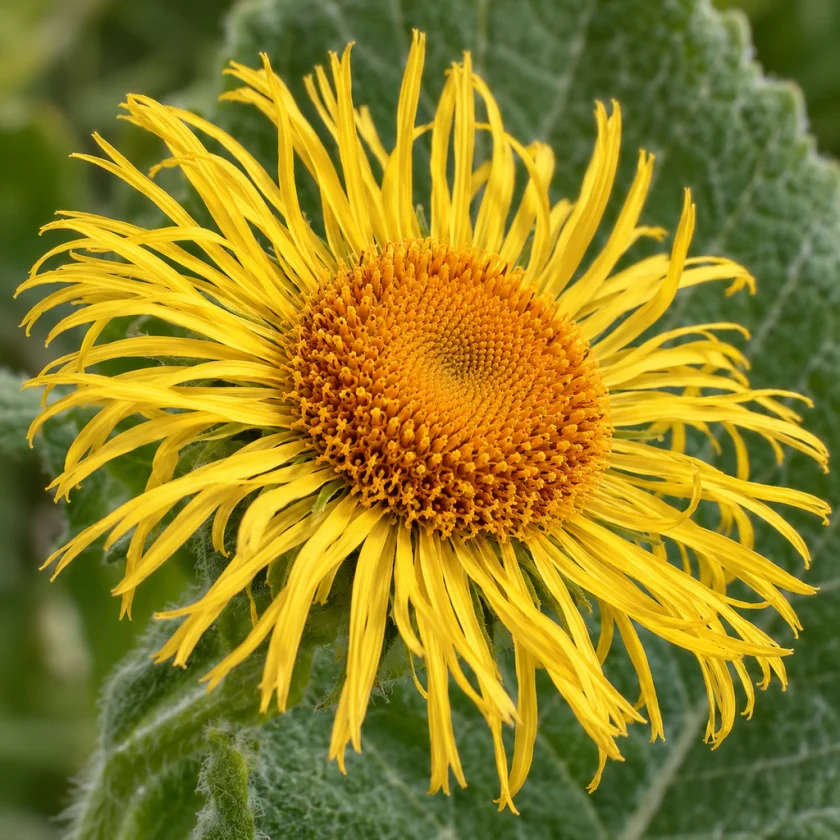
Inula helenium is distinctive when mature: a very tall plant, commonly five to eight feet, with broad downy leaves that can exceed a foot in length and shaggy yellow daisy-like flower heads, and a thick branching aromatic rootstock harvested in the autumn of its second or third year. Fresh root smells faintly of ripe banana or violet; dried root is bitter and camphorous.
Species that are traded, studied, or used medicinally elsewhere and are not the same plant:
- Inula racemosa — pushkarmula in Ayurveda, used for chest and cardiac complaints, and a genuinely common source of isoalantolactone in the research literature. Papers on isoalantolactone frequently used I. racemosa, which is why findings get transferred to elecampane by inference.
- Inula japonica and Inula britannica — the source of xuan fu hua in Chinese medicine, used for phlegm, with a different constituent profile.
- Inula viscosa (now often placed in Dittrichia) — a Mediterranean plant with its own substantial ethnobotanical literature.
- Inula cappa, Inula obtusifolia, and others appearing in regional traditions.
Three consequences. The binomial matters, not the common name — "elecampane" and "Indian elecampane" are different plants, and a supplement labelled only "Inula root extract" has told you nothing. Transferred research deserves scepticism: a study on I. racemosa is evidence about I. racemosa, and while the shared lactone chemistry makes extrapolation reasonable, it is extrapolation. And foraging it without confident identification is risky — the Asteraceae contains genuinely dangerous plants, some containing liver-toxic (hepatotoxic) pyrrolizidine alkaloids, and a large yellow composite is not a safe guess. A supplier that states the binomial and the plant part removes that uncertainty.
One more sourcing note: the medicinal part is the root, harvested in autumn from a second- or third-year plant. Leaf or aerial-part material is not the traditional medicine and will not have the same profile.
What Lowers the Risk, According to the Literature
This sits alongside the verdict on the other pages: the traditional respiratory indication has no controlled trial support, and the well-documented part of elecampane's clinical literature is its allergenicity. The factors the contact-allergy and herbal-safety literature links with lower or higher risk:
- Prior allergy. Any history of reaction to ragweed, chrysanthemum, feverfew, chamomile, arnica, calendula, or yarrow — or a positive sesquiterpene lactone mix patch test — marks the people at highest risk from any form of the herb.
- Gloves when handling the raw plant or root. Occupational dermatitis in root handlers is documented, and sensitisation is generally permanent once it happens.
- The traditional dilute water decoction rather than tinctures, concentrated extracts, or essential oil. It carries less of the lactone fraction — and correspondingly less of whatever effect the herb has.
- No internal use of the essential oil. It is the most concentrated lactone source and a mucosal irritant.
- Small amounts, and stopping at the first sign of nausea, cramping, or any rash. A rash appearing 24 to 72 hours later still counts — the delay is the point.
- Short courses rather than indefinite daily use. There is no long-term safety data and the active compounds are cytotoxic in culture.
- Dose uncertainty. No standard dose exists: published traditional ranges vary, lactone content varies with preparation, plant age, and harvest, and no human toxicity threshold has been set.
- Drug combinations. The interactions listed above — additive low blood sugar with insulin or a sulfonylurea, added drowsiness with sedatives, poorly characterised effects with blood-pressure drugs and anticoagulants, and the two-week herbal stop before surgery — apply to anyone taking these drugs or facing an operation.
- Not a substitute for a diagnosis. A cough lasting beyond three weeks, blood in sputum, breathlessness, fever, night sweats, or weight loss are signs that clinics investigate for tuberculosis, pneumonia or cancer.
Evidence Tiers at a Glance
- Well-documented human clinical evidence: allergic contact dermatitis from elecampane and other Compositae; cross-reactivity across the family; alantolactone's use as a standard patch-test allergen; occupational dermatitis in root handlers.
- Well-documented adverse effects: dose-related nausea, vomiting, diarrhoea, and cramping from oral use.
- Established chemistry and immunology: the alpha-methylene-gamma-lactone group as a thiol-alkylating hapten, and type IV delayed hypersensitivity as the mechanism.
- Established clinical practice: patch testing with sesquiterpene lactone mix, with supplementary Compositae mix where indicated.
- Traditional caution plus mechanistic concern: pregnancy and breastfeeding avoidance; paediatric avoidance.
- Traditional and theoretical only: all listed drug interactions. No interaction studies exist.
- Unknown: human pharmacokinetics, a toxicity threshold, long-term safety, reproductive toxicity, and transfer into breast milk.
Key Research Papers
- Paulsen E (2002). Contact sensitization from Compositae-containing herbal remedies and cosmetics. Contact Dermatitis 47(4):189-98 — the central reference for herbal-product Compositae allergy. — PubMed PMID: 12492516
- Paulsen E, Andersen KE, Hausen BM (1993). Compositae dermatitis in a Danish dermatology department in one year (I). Results of routine patch testing with the sesquiterpene lactone mix supplemented with aimed patch testing with extracts and sesquiterpene lactones of Compositae plants. Contact Dermatitis 29(1):6-10 — clinic-level epidemiology and cross-reactivity. — PubMed PMID: 8365167
- Paulsen E (2017). Systemic allergic dermatitis caused by sesquiterpene lactones. Contact Dermatitis 76(1):1-10. — PubMed PMID: 27568784
- Paulsen E (2023). The sesquiterpene lactone mix: A review of past, present and future aspects. Contact Dermatitis 89(6):434-441. — PubMed PMID: 37820718
- Seca AM, Grigore A, Pinto DC, Silva AM (2014). The genus Inula and their metabolites: from ethnopharmacological to medicinal uses. J Ethnopharmacol 154(2):286-310 — useful for distinguishing I. helenium from I. racemosa, I. japonica, and the rest of the genus. — PubMed PMID: 24754913
- Trendafilova A, Chanev C, Todorova M (2010). Ultrasound-assisted extraction of alantolactone and isoalantolactone from Inula helenium roots. Pharmacogn Mag 6(23):234-7 — shows how much preparation method changes lactone content, and therefore both potency and risk. — PubMed PMID: 20931085
PubMed Topic Searches
- Literature on the composition and performance of the sesquiterpene lactone mix patch-test allergen — alantolactone, dehydrocostus lactone, costunolide — and its sensitivity for detecting Compositae allergy. PubMed search: sesquiterpene lactone mix patch testing
- Work on the value of adding a Compositae mix to the standard series because SL mix alone misses cases. PubMed search: Compositae mix patch test screening
- Hausen BM and colleagues on the sensitising capacity of Compositae plants and structure–activity relationships in sesquiterpene lactone allergy. PubMed search: sensitising capacity of Compositae plants
- Reviews of the alpha-methylene-gamma-lactone group as a Michael acceptor alkylating protein thiols and glutathione — the mechanism shared by the activity and the allergy. PubMed search: alpha-methylene-gamma-lactone thiol alkylation. — Search PubMed
- The literature on airborne contact dermatitis from Compositae plants, affecting face, neck, and eyelids. PubMed search: airborne Compositae contact dermatitis
- Reports of systemic contact dermatitis after ingestion of a plant to which the patient is contact-sensitised — the basis for the warnings against oral elecampane in Asteraceae-allergic people. PubMed search: systemic contact dermatitis from ingested plant allergens. — Search PubMed
- Cytotoxicity studies on alantolactone and isoalantolactone in mammalian cell lines — the same reactivity that drives the anticancer research interest and the reason long-term high-dose use cannot be called safe. PubMed search: alantolactone cytotoxicity and glutathione depletion. — Search PubMed
- Literature on herbal medicine use in pregnancy and the general absence of reproductive safety data for traditional emmenagogue herbs. PubMed search: herbal medicine safety in pregnancy
- Guidance on discontinuing herbal products before surgery and reporting herbal use to anaesthetic teams. PubMed search: herbal supplements and perioperative risk
Connections
- All Herbs
- Elecampane (main article)
- Elecampane Benefits Hub
- Elecampane for Cough and Bronchitis
- Elecampane, Inulin and the Gut
- Elecampane: Antimicrobial Research
- Contact Dermatitis
- Contact Dermatitis (Dermatology)
- Eczema
- Allergies
- Allergic Rhinitis
- Pain and Allergy
- Chrysanthemum
- Chrysanthemum Benefits
- Feverfew
- Feverfew Benefits
- Chamomile
- Chamomile Benefits
- Yarrow
- Yarrow Benefits
- Calendula
- Dandelion
- Echinacea
- Wormwood
Safety and disclaimer. This page is educational and is not medical advice. Elecampane's active sesquiterpene lactones, alantolactone and isoalantolactone, are documented contact allergens — alantolactone is one of three compounds in the standard sesquiterpene lactone mix used worldwide to patch-test for daisy-family allergy — and the allergenicity is inseparable from the activity because they are the same molecules. People who react to ragweed, chrysanthemum, feverfew, chamomile, arnica, marigold, or yarrow, or who have a positive sesquiterpene lactone mix patch test, are at the highest risk from elecampane in any form; systemic contact dermatitis means this applies to oral use as well as topical. Pregnancy, breastfeeding and childhood carry traditional and mechanistic cautions, and there are no safety data for them. Higher doses cause nausea, vomiting, diarrhoea, and cramping, and no human toxicity threshold or long-term safety data exist. Theoretical interactions are listed with sedatives, diabetes medication, blood-pressure medication, and anticoagulants, and surgical guidance commonly lists stopping herbal products about two weeks before an operation. A rash, itching, or blistering after contact — including one appearing a day or two later — is the typical sign of a contact allergy, and patch testing in a dermatology clinic is how a plant contact allergy is confirmed. Elecampane has not been shown to treat serious infections such as tuberculosis or pneumonia in people.