⚠ Evidence warning: Clinical trials or other evidence do not support the claim that turkey tail eases inflammation by inhibiting NF-kB, COX-2 and iNOS, the same targets as ibuprofen and aspirin, with a more favorable side effect profile. This page keeps it as a report of what people, websites or other media say.
Turkey Tail Mushroom (Trametes versicolor)
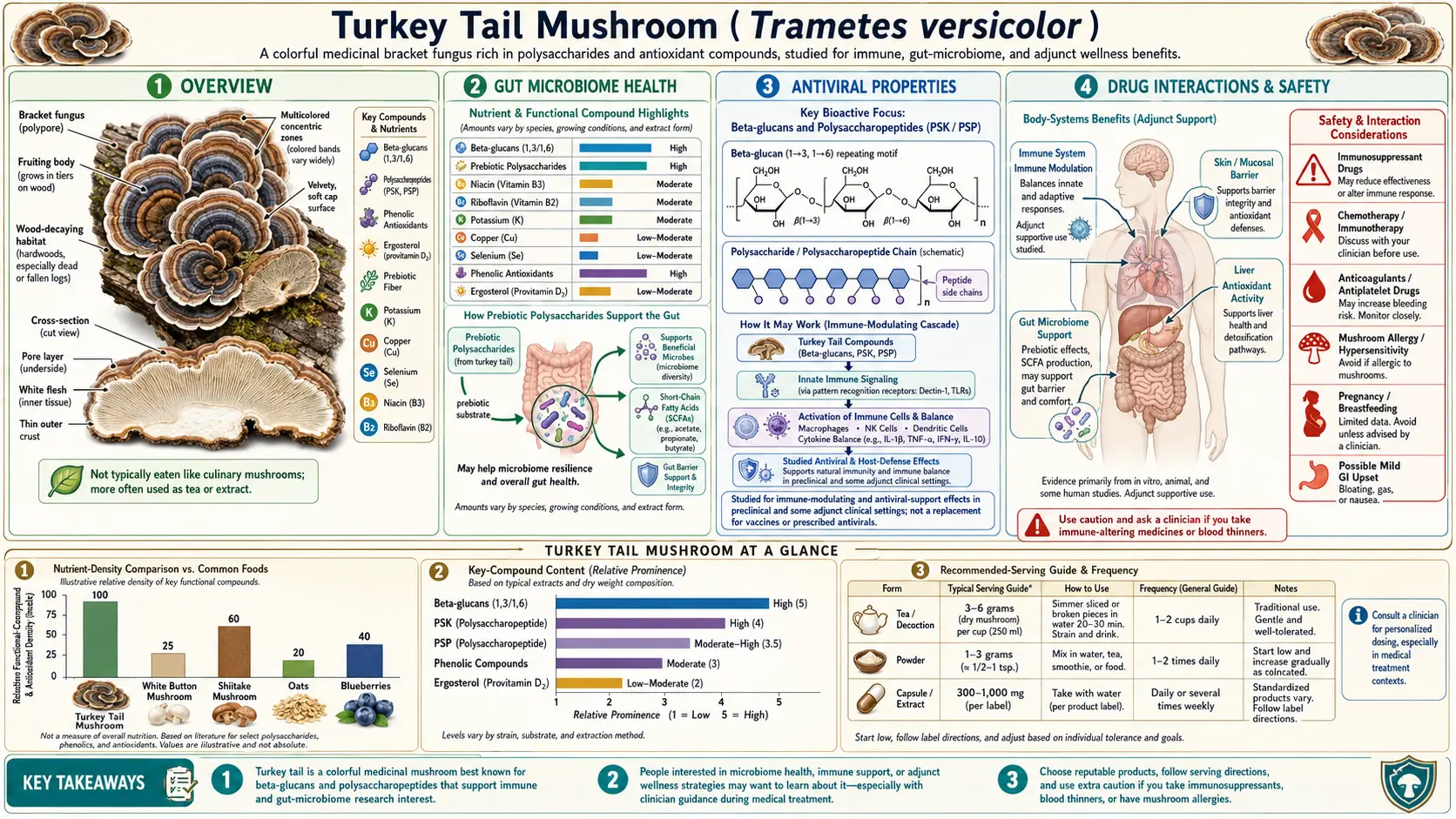
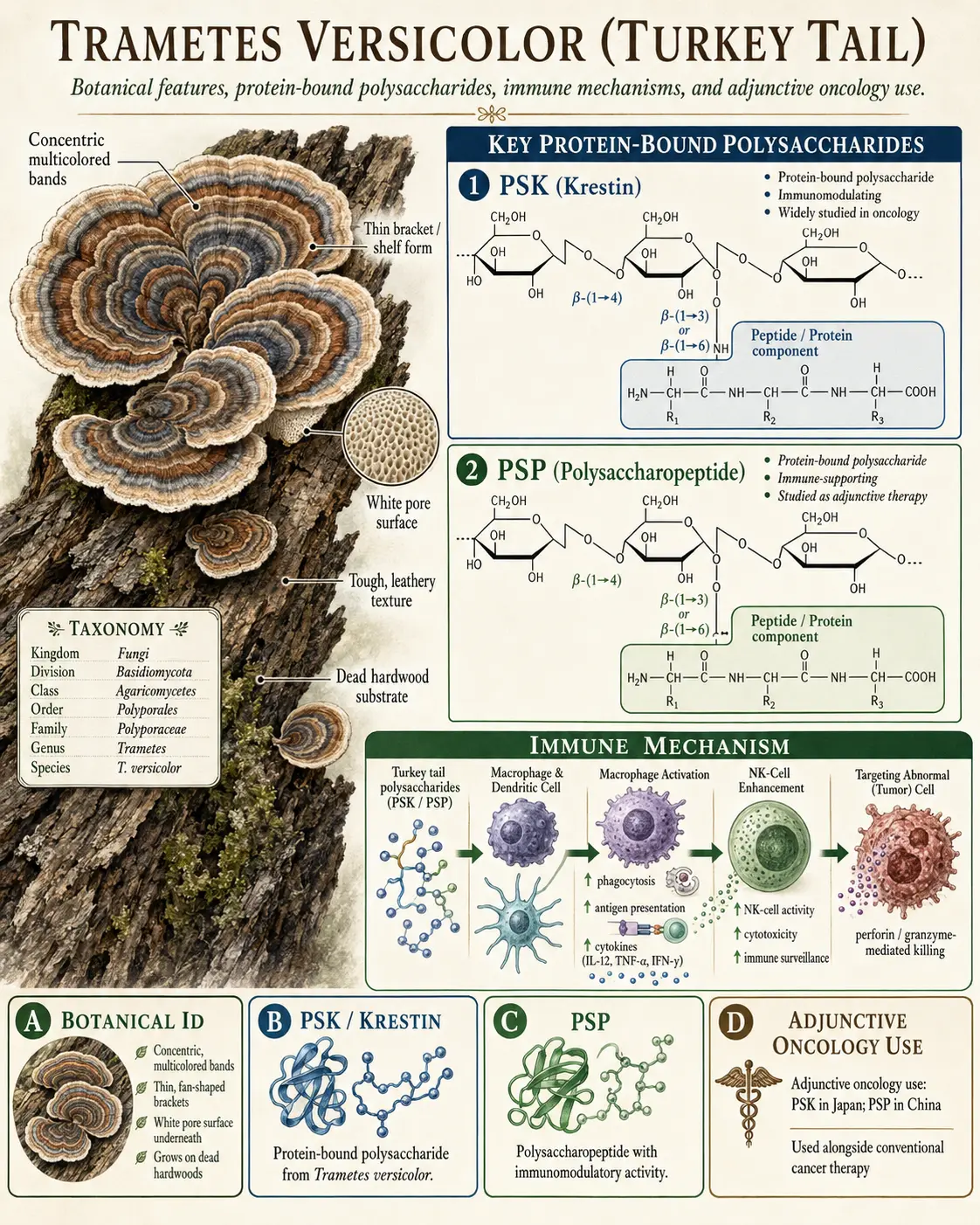
Table of Contents
- Overview
- History in Traditional Medicine
- Botanical Description
- Active Compounds
- Cancer Research and Immunotherapy
- Immune System Enhancement
- Gut Microbiome Health
- Human Papillomavirus Research
- Chemotherapy and Radiation Support
- Anti-Inflammatory Properties
- Antioxidant Effects
- Respiratory Health
- Liver Health
- Antiviral Properties
- Athletic Performance and Fatigue Reduction
- Paul Stamets' Mother's Story
- Supplement Forms and Quality
- Doses Used in Studies and Products
- Safety and Side Effects
- Drug Interactions
- Key Research Papers
- Connections
- Featured Videos
Overview
Turkey tail mushroom, scientifically known as Trametes versicolor (formerly Coriolus versicolor), stands as the most extensively researched medicinal mushroom in the world for cancer treatment and immune system support. This remarkable bracket fungus has earned its place in modern oncology through decades of rigorous clinical trials, culminating in government-approved pharmaceutical applications in Japan and China. Among the thousands of mushroom species found in nature, turkey tail has accumulated the strongest body of clinical evidence supporting its role as a biological response modifier in human health.
The common name "turkey tail" derives from the mushroom's striking resemblance to the fanned tail feathers of a wild turkey, with its concentric rings of brown, tan, grey, and cream radiating outward from the point of attachment. Found on dead and fallen hardwood trees across forests in North America, Europe, and Asia, turkey tail is one of the most commonly encountered fungi in temperate woodlands worldwide. Its scientific species name, versicolor, meaning "of several colors," reflects the extraordinary chromatic diversity displayed across its cap surface.
What distinguishes turkey tail from other medicinal mushrooms is not merely its traditional use spanning more than two millennia, but the unprecedented level of modern scientific validation it has received. Two pharmaceutical-grade compounds extracted from turkey tail, known as PSK (polysaccharide-K) and PSP (polysaccharopeptide), have been the subject of more than 400 published studies, including numerous randomized controlled clinical trials involving thousands of cancer patients. PSK alone has been approved by the Japanese Ministry of Health and Welfare as an adjunctive cancer therapy since 1977, making it one of the few mushroom-derived compounds to achieve regulatory approval as a prescription medicine.
Beyond its applications in oncology, turkey tail has demonstrated significant potential in supporting gut microbiome health, combating viral infections, protecting the liver, reducing inflammation, and enhancing overall immune surveillance. As the scientific community continues to uncover the mechanisms behind this ancient remedy, turkey tail mushroom has emerged as a bridge between traditional wisdom and evidence-based medicine.
History in Traditional Medicine
Turkey tail has a long documented history in East Asian medicine, where the Chinese knew it as Yun Zhi (雲芝), the "cloud mushroom," and the Japanese as Kawaratake, the "roof-tile mushroom." Its modern reputation rests on a genuinely remarkable twentieth-century chapter: chemists in Japan and China isolated protein-bound polysaccharides from the mushroom — PSK and PSP — that went on to be used as adjuncts to cancer treatment. The names, the traditional uses, and the real dates and people behind those milestones — the fuller story is told in the dedicated History & Traditional Use article.
Botanical Description
Turkey tail belongs to the kingdom Fungi, phylum Basidiomycota, class Agaricomycetes, order Polyporales, and family Polyporaceae. As a polypore bracket fungus, it produces its spores within tiny vertical tubes (pores) on the underside of the cap rather than on gills, a defining characteristic of the polypore group. The fruiting body is sessile, meaning it lacks any discernible stem or stalk, instead growing directly from the surface of dead or dying hardwood trees, stumps, and fallen logs. Turkey tail is a saprotrophic organism, meaning it obtains nutrients by decomposing dead organic matter, playing a vital ecological role in forest nutrient cycling by breaking down lignin and cellulose in wood.
The cap of turkey tail is thin, leathery, and flexible, typically measuring 2 to 10 centimeters across and only 1 to 3 millimeters thick. Its shape ranges from semicircular to fan-shaped or tongue-shaped, and individual caps frequently grow in dense, overlapping clusters called rosettes that can cover extensive areas of a log or stump. The upper surface displays the mushroom's most distinctive feature: strikingly beautiful concentric zones of contrasting colors arranged in bands radiating from the point of attachment. These zones exhibit a remarkable variety of hues including shades of brown, tan, rust, grey, blue-grey, green, purple, black, and cream, with the outermost margin consistently pale white or cream-colored. The cap surface is finely velvety to silky in texture, with alternating zones of smooth and hairy bands.
The pore surface on the underside of the cap is white to pale yellowish, with extremely fine pores numbering 3 to 5 per millimeter, which are often too small to see clearly with the naked eye. This fine pore density is an important identification feature that helps distinguish true turkey tail from look-alike species such as Stereum ostrea (false turkey tail), which has a smooth underside lacking pores entirely. The flesh is white, thin, and tough with a leathery texture that makes the mushroom inedible as a culinary ingredient in the traditional sense, though it is commonly prepared as a tea or processed into extracts and powders.
Turkey tail is one of the most cosmopolitan fungi on Earth, found on every continent except Antarctica. It fruits year-round in temperate climates, with peak production in autumn and spring. The mushroom preferentially colonizes hardwoods such as oak, maple, birch, and beech, though it occasionally appears on conifer wood as well. Its remarkable adaptability and abundance make it one of the most commonly encountered mushrooms in forests and woodlands worldwide, readily identifiable to even casual nature observers by its distinctive colorful, fan-shaped brackets.
Active Compounds
The therapeutic power of turkey tail mushroom is attributed primarily to two protein-bound polysaccharides that have been isolated, characterized, and extensively studied in clinical settings: PSK (polysaccharide-K) and PSP (polysaccharopeptide). Both compounds belong to a class of molecules known as beta-glucans, specifically beta-1,3 and beta-1,4 glucans bound to protein residues, which gives them their designation as proteoglycans or polysaccharopeptides. These molecules have a high molecular weight of approximately 100 kilodaltons (kDa) and are the primary agents responsible for turkey tail's immunomodulatory and anticancer effects.
PSK was first isolated from turkey tail mycelium in 1971 in Japan using the CM-101 strain. PSK is a protein-bound beta-glucan with a polysaccharide backbone consisting primarily of beta-1,4 linked glucose units with beta-1,3 and beta-1,6 branching. The protein component constitutes approximately 25 to 38 percent of the molecule's total mass and includes a diverse array of amino acids. PSK became the first mushroom-derived compound approved as an anticancer drug in Japan in 1977 and has been prescribed to hundreds of thousands of cancer patients over the subsequent decades.
PSP was isolated independently in China from the COV-1 strain of turkey tail in the 1980s. While structurally similar to PSK, PSP contains a slightly different sugar composition, with more arabinose and rhamnose in its polysaccharide backbone. PSP also contains a unique alpha-1,4 and beta-1,3 glucan structure and is bound to a peptide moiety rich in aspartic acid and glutamic acid. Both PSK and PSP have demonstrated significant biological activity in preclinical and clinical studies, though they have been developed and researched primarily in their respective countries of origin: PSK in Japan and PSP in China.
Beyond PSK and PSP, turkey tail contains a rich array of additional bioactive compounds. These include other beta-glucans with varying structures and biological activities, phenolic compounds including flavonoids and tannins with antioxidant properties, sterols including ergosterol (a precursor to vitamin D2), triterpenes with anti-inflammatory activity, and various enzymes including laccases and peroxidases. Research has identified over 35 different phenolic compounds in turkey tail extracts, contributing to the mushroom's broad-spectrum antioxidant capacity. The synergistic interaction among these diverse compounds is believed to produce therapeutic effects that exceed what any single isolated molecule can achieve.
Cancer Research and Immunotherapy
Turkey tail mushroom has been the subject of more cancer research than any other medicinal mushroom, with clinical investigations spanning over five decades. The foundation of this research rests on the landmark approval of PSK by the Japanese Ministry of Health and Welfare in 1977 as an adjunctive therapy for cancer. This approval was based on extensive clinical trial data demonstrating that PSK, when administered alongside conventional chemotherapy and radiation therapy, significantly improved survival rates and quality of life in cancer patients. PSK became one of the best-selling anticancer drugs in Japan throughout the 1980s, with annual sales exceeding $350 million at its peak.
The clinical evidence supporting PSK's anticancer efficacy is substantial. Based on three decades of Asian clinical research, PSK as adjuvant therapy has been indicated for cancers of the stomach, esophagus, nasopharynx, colon, rectum, lung, and breast. A 2012 systematic review and meta-analysis of 13 clinical trials of Yun Zhi (turkey tail) found a 9% absolute reduction in 5-year mortality, resulting in one additional patient alive for every 11 patients treated; the effect on overall 5-year survival was more evident in breast, gastric and colorectal cancer treated with chemotherapy, but not in esophageal cancer and nasopharyngeal carcinoma. Multiple randomized controlled trials have demonstrated that PSK at a standard dose of 3 grams per day, administered concurrently with chemotherapy, produces measurable improvements in disease-free survival, overall survival, and immune function parameters. A 2015 systematic review of PSK for lung cancer included 6 randomized controlled trials and 5 nonrandomized controlled trials: the nonrandomized trials showed improvement of various survival measures, and the randomized trials showed benefits on a range of endpoints, including immune parameters, performance status and body weight, tumor-related symptoms, and survival. Results conflicted for some tumor-related symptoms and median survival, but overall most randomized controlled trials supported a positive impact for PSK.
In gastric cancer, several large-scale Japanese trials demonstrated that patients receiving PSK in addition to chemotherapy had significantly higher five-year survival rates compared to those receiving chemotherapy alone. A 2007 meta-analysis of 8,009 patients from eight centrally randomized controlled trials in curatively resected gastric cancer found an overall hazard ratio of 0.88 (95% confidence interval 0.79-0.98; P = 0.018) for chemotherapy plus PSK; the authors concluded that adding PSK improves survival after curative gastric cancer surgery. In a 1994 Lancet trial, 262 patients at 46 Japanese institutions were randomly assigned standard chemotherapy (mitomycin plus oral fluorouracil) alone or with PSK; the 5-year disease-free rate was 70.7% with PSK vs 59.4% with standard treatment, and 5-year survival 73.0% vs 60.0%. Similarly, in colorectal cancer, randomized trials showed that PSK combined with oral fluoropyrimidine chemotherapy improved disease-free and overall survival in patients with stage II and III disease; a 2006 meta-analysis of three centrally randomized trials with 1,094 patients found an overall survival risk ratio of 0.71 (95% CI 0.55-0.90) and a disease-free survival risk ratio of 0.72 (95% CI 0.58-0.90) for chemotherapy plus PSK compared with chemotherapy alone. For non-small cell lung cancer, PSK administered alongside radiation and chemotherapy improved immune parameters and extended survival in multiple studies.
In the United States, the National Institutes of Health (NIH) funded a phase I clinical trial through Bastyr University Research Institute examining turkey tail mushroom in women with breast cancer following standard chemotherapy and radiation therapy. The phase 1 study, published in the journal ISRN Oncology, gave a freeze-dried turkey tail mycelial powder at 3, 6 or 9 grams per day for 6 weeks (three women per dose; nine of eleven recruited women completed it) and found that up to 9 grams per day was safe and tolerable, with nine adverse events reported (7 mild, 1 moderate and 1 severe). The immune results were trends: increased lymphocyte counts at 6 and 9 grams per day, increased natural killer cell activity at 6 grams per day, and dose-related increases in CD8+ T cells and CD19+ B cells, but not CD4+ T cells or NK cells. These findings helped lay the groundwork for further clinical investigation of turkey tail in Western oncology settings.
A 2019 meta-analysis of 23 randomized trials involving 4,246 cancer patients looked at Coriolus versicolor (turkey tail) and Ganoderma lucidum (reishi) products added to cancer treatment. The products were associated with a lower risk of death (hazard ratio 0.82; 95% CI 0.72-0.94), but there was no significant difference between turkey tail products and control treatment in relapse-free survival (hazard ratio 1.19; 95% CI 0.91-1.55), and the products had no effect on natural killer (NK) cell levels (mean difference 5.87%; 95% CI -1.06 to 12.8). The authors concluded that the products might have potential benefits on overall survival and quality of life in cancer patients.
Immune System Enhancement
Turkey tail mushroom functions as a potent biological response modifier (BRM), a substance that enhances the body's immune response rather than directly attacking disease. The immune-modulating effects of turkey tail are mediated primarily through its beta-glucan polysaccharides, which interact with specific receptors on immune cells to trigger a coordinated cascade of defensive responses. Unlike conventional immunostimulants that broadly upregulate immune activity, turkey tail demonstrates the capacity to both activate and regulate immune function, making it a true immunomodulator rather than a simple immune stimulant.
At the cellular level, the beta-glucans in turkey tail, particularly PSK and PSP, bind to pattern recognition receptors (PRRs) on the surface of innate immune cells. These receptors include Dectin-1, Toll-like receptors 2 and 4 (TLR2/TLR4), and complement receptor 3 (CR3). When beta-glucans engage these receptors, they trigger signaling pathways that activate multiple arms of the immune system simultaneously. The beta-glucans function as pathogen-associated molecular patterns (PAMPs), essentially "training" the immune system by mimicking the cell wall components of pathogenic organisms, thereby priming immune cells for a more rapid and effective response to actual threats.
Turkey tail's effects on specific immune cell populations are well documented. Research demonstrates that PSK and PSP stimulate natural killer (NK) cells, enhancing their cytotoxic activity against tumor cells and virus-infected cells. They promote the maturation and activation of dendritic cells, the critical antigen-presenting cells that initiate adaptive immune responses. They enhance the proliferation and function of T lymphocytes, including both CD4+ helper T cells and CD8+ cytotoxic T cells, while also promoting the production of immunoglobulins by B lymphocytes. The compound PSP consistently induces the expression of interferon-gamma (IFN-gamma), a potent immunostimulatory cytokine, through the induction of interleukin-12 (IL-12), creating a positive feedback loop that amplifies both innate and adaptive immune surveillance.
A particularly important aspect of turkey tail's immune activity is its effect on monocytes and macrophages. These cells serve as the first line of defense in innate immunity, and turkey tail polysaccharides enhance their phagocytic activity, increasing their ability to engulf and destroy pathogens and abnormal cells. The complement receptor 3 (CR3), which is highly expressed on monocyte and natural killer cell surfaces, plays a key role in this process, facilitating the extravasation of these cells toward sites of infection or tumor growth and initiating phagocytosis and degranulation. This multi-pronged activation of immune surveillance represents one of the most comprehensive immunological responses documented for any natural compound.
Gut Microbiome Health
Emerging research has revealed that turkey tail mushroom exerts significant prebiotic effects on the human gut microbiome, favorably modifying the composition and diversity of intestinal bacterial communities. Given that approximately 70 to 80 percent of the body's immune cells reside in the gut-associated lymphoid tissue (GALT), the connection between turkey tail's gut microbiome benefits and its immunomodulatory properties represents a critically important area of scientific investigation. The polysaccharides in turkey tail serve as fermentable substrates for beneficial gut bacteria, functioning much like dietary fiber to nourish and support the growth of health-promoting microbial populations.
A landmark randomized clinical trial published in the journal Gut Microbes examined the effects of polysaccharopeptide (PSP) from turkey tail on the gut microbiome of healthy human volunteers. The study found that PSP consumption consistently and favorably modulated intestinal microbiome composition. Specifically, participants receiving turkey tail extract showed significant increases in populations of beneficial bacteria, including Bifidobacterium and Lactobacillus species, which are widely recognized as health-promoting probiotic organisms. Simultaneously, the extract reduced populations of potentially harmful bacteria, including Clostridium, Staphylococcus, E. coli, and Shigella species.
The study also compared turkey tail PSP with the antibiotic amoxicillin: 24 healthy volunteers were randomized to receive PSP, amoxicillin, or no treatment, so no participant took PSP together with the antibiotic. Amoxicillin caused substantial microbiome changes, most notably an increase in Escherichia/Shigella, and these changes persisted to the end of the study, 42 days after the antibiotic ended. PSP led to clear and consistent microbiome changes consistent with its activity as a prebiotic, although each person's baseline microbiome tended to remain stable and to overshadow the treatment effects. Whether turkey tail protects the gut during or after antibiotic treatment was not tested in this design.
The prebiotic activity of turkey tail is attributed primarily to its beta-glucan polysaccharides, which resist digestion in the upper gastrointestinal tract and arrive intact in the colon where they are fermented by resident bacteria. This fermentation process produces short-chain fatty acids (SCFAs) including butyrate, propionate, and acetate, which serve as energy sources for colonocytes, strengthen the intestinal barrier, reduce inflammation, and modulate immune function locally and systemically. The gut microbiome modulation achieved by turkey tail thus represents a foundational mechanism through which many of the mushroom's broader health benefits, including immune enhancement and anti-inflammatory effects, may be mediated.
Human Papillomavirus Research
One of the most promising and clinically significant areas of turkey tail research involves its effects on human papillomavirus (HPV) infection, a family of viruses responsible for cervical cancer, oral cancers, and other malignancies. Human papillomavirus infections are extremely common, with the majority of sexually active adults contracting at least one human papillomavirus strain during their lifetime, and while most infections clear spontaneously through immune surveillance, persistent infection with high-risk strains such as HPV-16 and HPV-18 can lead to precancerous changes and eventually cancer if left untreated.
A preliminary randomized study produced remarkable results that have generated significant interest in the scientific community. The study examined the effects of oral administration of Trametes versicolor (turkey tail) combined with Ganoderma lucidum (reishi) at a dose of 200 milligrams per day over a two-month period in patients positive for oral HPV16 or HPV18 infection. Among the 41 patients given turkey tail and reishi, 88 percent achieved clearance of their oral human papillomavirus infection, compared to 5 percent clearance in a comparison group of 20 patients given a different mushroom, Laetiporus sulphureus. This dramatic difference suggests that turkey tail's immunomodulatory compounds may enhance the body's ability to recognize and eliminate human papillomavirus-infected cells, a mechanism consistent with its known effects on natural killer cell and T lymphocyte activity.
Additional research has explored the topical application of turkey tail-based preparations for cervical human papillomavirus infections and associated dysplasia. Studies have demonstrated that patients who applied a Coriolus versicolor-based vaginal gel during the standard watchful waiting period for low-grade cervical lesions showed increased human papillomavirus clearance rates and improved cervical cytology results compared to control groups. These findings suggest that turkey tail's bioactive compounds may exert both systemic and local immunomodulatory effects when applied to human papillomavirus-affected tissues, potentially offering a complementary approach during the surveillance period for low-grade cervical abnormalities.
In 2026 the International Federation of Gynecology and Obstetrics (FIGO) and the International Gynecologic Cancer Society (IGCS) published a position statement reviewing topical treatments for high-risk HPV infection and low-grade cervical lesions (LSIL), including Coriolus versicolor-based vaginal gels. It found that no randomized controlled trial has been adequately designed or powered to evaluate whether topical therapies prevent high-grade cervical lesions (HSIL/CIN3+), and that available studies are small, short and rely on surrogate endpoints such as HPV nondetection. For the Coriolus versicolor-based gels it listed additional methodological concerns, including retrospective trial registration and misinterpretation of findings. FIGO and IGCS do not endorse the routine clinical use of any currently available topical agent for high-risk HPV infection or LSIL, and the statement names evidence-based surveillance as the standard of care.
The proposed mechanism behind turkey tail's anti-HPV effects centers on its ability to stimulate immune cells critical for viral clearance. PSK and PSP activate natural killer cells and cytotoxic T lymphocytes that are specifically equipped to identify and destroy virus-infected cells. By enhancing interferon-gamma production and promoting dendritic cell maturation, turkey tail may help overcome the immune evasion strategies that human papillomavirus employs to persist in host tissues. While these early clinical findings are highly encouraging, larger and longer-term randomized controlled trials are needed to fully establish optimal dosing protocols and confirm the magnitude of benefit. The 2026 FIGO/IGCS statement described above names evidence-based surveillance as the standard of care.
Chemotherapy and Radiation Support
One of the best-established clinical applications of turkey tail mushroom is its use as an adjunctive therapy alongside conventional chemotherapy and radiation treatment. The bulk of evidence for this application comes from decades of Japanese and Chinese clinical trials using PSK and PSP, which have consistently demonstrated that these compounds can improve treatment outcomes, reduce side effects, and enhance quality of life when administered concurrently with standard oncological therapies. In Japan, PSK has been routinely prescribed as part of cancer treatment protocols since the late 1970s, particularly for gastrointestinal and lung cancers.
The primary mechanism through which turkey tail supports patients undergoing chemotherapy is immune system preservation and recovery. Chemotherapy drugs are cytotoxic agents that destroy rapidly dividing cells, including not only cancer cells but also immune cells such as white blood cells and lymphocytes. This immunosuppressive effect leaves patients vulnerable to infections and may compromise the body's ability to conduct immune surveillance against residual tumor cells. PSK and PSP have been shown to counteract this immunosuppression by stimulating the production and activation of white blood cells, enhancing natural killer cell activity, and promoting the recovery of lymphocyte populations depleted by chemotherapy.
Clinical trials have documented multiple specific benefits of PSK/PSP supplementation during cancer treatment. These include improved white blood cell counts, enhanced antibody production, increased natural killer cell cytotoxicity, improved appetite and nutritional status, reduced nausea and fatigue, and overall improvement in quality of life measures. In gastric cancer trials, patients receiving PSK alongside chemotherapy showed not only improved survival rates but also better maintenance of body weight and nutritional parameters compared to chemotherapy-only groups. For patients undergoing radiation therapy, PSK has demonstrated a capacity to mitigate radiation-induced immunosuppression while potentially enhancing the direct antitumor effects of radiation through immune-mediated mechanisms.
An important consideration is that turkey tail polysaccharides appear to work synergistically with conventional therapies rather than interfering with them. Multiple clinical trials using PSK at 3 grams per day concurrently with various chemotherapy regimens have shown improved outcomes without increased toxicity. The PSK-treated groups in these studies consistently demonstrated better disease-free survival and overall survival without reports of additional adverse events attributable to the mushroom extract. This favorable safety profile in combination with conventional treatments represents one of the strongest arguments for integrating turkey tail into comprehensive cancer care protocols.
Anti-Inflammatory Properties
Chronic inflammation is recognized as a driving force behind numerous degenerative diseases, including cardiovascular disease, diabetes, neurodegenerative conditions, autoimmune disorders, and cancer. Turkey tail mushroom has demonstrated significant anti-inflammatory properties through multiple complementary mechanisms, positioning it as a valuable natural agent for managing inflammatory conditions. The anti-inflammatory effects of turkey tail are mediated primarily through its polysaccharopeptides, phenolic compounds, and triterpenes, which modulate inflammatory signaling pathways at the cellular and molecular level.
In a 2019 laboratory study on human blood immune cells in culture (in vitro), fractions of the rice-flour substrate fermented by turkey tail mycelium triggered large and dose-dependent increases in immune-activating pro-inflammatory cytokines (IL-2, IL-6), anti-inflammatory cytokines interleukin-1 receptor antagonist (IL-1ra) and interleukin-10 (IL-10), interferon-gamma and other signals; the turkey tail mycelium itself triggered more modest cytokine increases. IL-1ra functions by blocking the pro-inflammatory effects of interleukin-1, one of the primary mediators of acute inflammation, while interleukin-10 is a potent anti-inflammatory cytokine that suppresses the production of inflammatory mediators by macrophages and T helper cells.
A 2017 review in Frontiers in Immunology of turkey tail's polysaccharopeptide (PSP) reported that PSP induces a largely pro-inflammatory cytokine profile, and described its effects on various immune cell types and the clinical data that led to its widespread adoption as an adjunct cancer therapy in many Eastern countries. Separately from that review, proposed anti-inflammatory mechanisms for turkey tail include inhibition of the nuclear factor kappa-B (NF-kB) signaling pathway, a master regulator of inflammatory gene expression, as well as suppression of cyclooxygenase-2 (COX-2) and inducible nitric oxide synthase (iNOS) enzyme activity. These are the same molecular targets addressed by conventional anti-inflammatory drugs such as ibuprofen and aspirin, suggesting that turkey tail may offer a natural approach to inflammation management with a more favorable side effect profile.
The anti-inflammatory properties of turkey tail extend to the gastrointestinal tract, where they may be particularly relevant for conditions such as inflammatory bowel disease, colitis, and gastritis. By modulating gut microbiome composition and enhancing the production of short-chain fatty acids through prebiotic activity, turkey tail promotes intestinal barrier integrity and reduces local inflammatory responses in the gut mucosa. This dual action of direct anti-inflammatory signaling combined with gut microbiome-mediated effects represents a comprehensive approach to managing systemic and local inflammation.
Antioxidant Effects
Turkey tail mushroom is a rich source of antioxidant compounds that protect cells from oxidative damage caused by free radicals and reactive oxygen species (ROS). Oxidative stress, the imbalance between free radical production and antioxidant defense, is implicated in aging, cancer development, cardiovascular disease, neurodegenerative conditions, and numerous other pathological processes. The diverse array of antioxidant molecules in turkey tail provides broad-spectrum protection against multiple forms of oxidative damage, complementing the mushroom's immune-modulating and anti-inflammatory activities.
Research has identified an impressive array of antioxidant compounds in turkey tail, with one comprehensive analysis detecting over 35 different phenolic compounds in turkey tail mushroom extracts. These phenolics include various flavonoids, which are among the most potent plant-derived antioxidants known to science, as well as tannins, gallic acid derivatives, and other polyphenolic molecules. Flavonoids and phenolic compounds in turkey tail have been established as having both antioxidant and anti-inflammatory qualities, creating a synergistic effect where oxidative stress reduction and inflammation control reinforce each other to protect cellular health.
Beyond phenolic compounds, the polysaccharopeptides PSK and PSP themselves demonstrate direct antioxidant activity. These compounds have been shown to scavenge superoxide anions, hydroxyl radicals, and hydrogen peroxide, three of the most damaging reactive oxygen species in biological systems. Additionally, turkey tail polysaccharides upregulate the body's endogenous antioxidant defense systems by increasing the activity of key antioxidant enzymes, including superoxide dismutase (SOD), glutathione peroxidase (GPx), and catalase. This dual mechanism of direct radical scavenging combined with enhancement of the body's own antioxidant machinery provides more robust and sustained protection than either mechanism alone.
The antioxidant effects of turkey tail are particularly relevant in the context of cancer prevention and treatment. Oxidative DNA damage is a well-established mechanism of carcinogenesis, and by reducing the burden of free radical damage to genetic material, turkey tail's antioxidant compounds may help prevent the mutations that initiate cancer development. During cancer treatment, the antioxidant properties may help protect healthy cells from the collateral oxidative damage caused by chemotherapy and radiation, although the interaction between antioxidants and certain chemotherapy agents remains an area of ongoing investigation.
Respiratory Health
Turkey tail mushroom has a long history of use in Traditional Chinese Medicine (TCM) for supporting respiratory health and lung function. Within the TCM framework, Yun Zhi was commonly prescribed for conditions involving the Lung meridian, including chronic cough, excessive phlegm production, and respiratory weakness following illness. Modern research has begun to elucidate the mechanisms behind these traditional applications, revealing that turkey tail's immunomodulatory and anti-inflammatory properties may offer genuine benefit for respiratory health maintenance and recovery from respiratory infections.
The respiratory benefits of turkey tail are thought to be mediated primarily through its effects on mucosal immunity. The respiratory tract is lined with mucosa-associated lymphoid tissue (MALT) that serves as a critical first line of defense against airborne pathogens. Turkey tail's beta-glucans stimulate the activity of immune cells within this mucosal tissue, including alveolar macrophages, the specialized immune cells that patrol the lung surfaces and engulf inhaled pathogens and particulate matter. By enhancing the activity of these sentinel cells, turkey tail may improve the respiratory tract's ability to defend against bacterial, viral, and fungal infections.
The anti-inflammatory properties of turkey tail are particularly relevant for respiratory health, as many respiratory conditions, including asthma, chronic obstructive pulmonary disease (COPD), and acute respiratory infections, involve excessive inflammatory responses that damage lung tissue and impair breathing. By modulating inflammatory cytokine production and reducing oxidative stress in respiratory tissues, turkey tail may help alleviate the inflammatory component of these conditions. Additionally, the mushroom's documented antiviral properties suggest it may support the body's defenses against respiratory viruses, a benefit that has generated increased interest in the context of emerging viral respiratory threats.
While clinical trials specifically targeting respiratory outcomes with turkey tail are still limited compared to the extensive cancer research, the existing evidence from immune function studies, combined with the mushroom's established safety profile and centuries of traditional use for respiratory conditions, is the reasoning behind its inclusion in respiratory health support protocols. No trial on this page tested turkey tail in place of conventional treatment for diagnosed respiratory conditions.
Liver Health
Turkey tail mushroom has demonstrated significant hepatoprotective (liver-protecting) properties in both cellular and animal studies, supporting the liver's critical roles in detoxification, metabolism, and immune regulation. The liver processes virtually every substance that enters the body, making it highly susceptible to damage from environmental toxins, medications, alcohol, viral infections, and metabolic waste products. Turkey tail's combination of antioxidant, anti-inflammatory, and immunomodulatory compounds provides multi-layered support for liver health and function.
Research has shown that PSP and PSK increase the levels of key hepatic antioxidant enzymes, including glutathione peroxidase (GPx), superoxide dismutase (SOD), and catalase, within liver tissues. These enzymes play a pivotal role in detoxifying reactive oxygen species, thereby protecting hepatocytes (liver cells) from oxidative damage that can lead to cell death, inflammation, and progressive liver disease. Studies conducted on mice in 2017 and 2018 demonstrated that PSP exerted significant hepatoprotective effects and showed potential as a functional food for protecting against alcoholic liver disease, one of the most common causes of liver damage worldwide.
Turkey tail has also shown the ability to downregulate transforming growth factor-beta (TGF-beta) and suppress the activation of hepatic stellate cells, which are key mechanisms in the development of liver fibrosis. When the liver is chronically injured, hepatic stellate cells become activated and produce excessive collagen and extracellular matrix proteins, leading to fibrosis and eventually cirrhosis. By inhibiting this fibrotic cascade, turkey tail may help prevent the progression of liver damage from reversible inflammation to irreversible scarring. Additionally, the mushroom's effects on gut microbiome composition may indirectly support liver health through the gut-liver axis, reducing the translocation of bacterial endotoxins from the gut into the portal circulation, a major contributor to liver inflammation and disease progression.
The liver also serves as a major immune organ, containing the largest population of resident macrophages (Kupffer cells) in the body. Turkey tail's immunomodulatory effects may enhance the function of these hepatic immune cells, improving the liver's ability to filter pathogens and damaged cells from the bloodstream while maintaining the delicate balance between immune activation and tolerance that is essential for normal liver function. While human clinical trials specifically focused on liver outcomes are needed to confirm these preclinical findings, the existing evidence supports turkey tail as a promising agent for liver health maintenance and protection.
Antiviral Properties
Turkey tail mushroom has demonstrated broad-spectrum antiviral activity against multiple virus families through both direct antiviral mechanisms and indirect immune-mediated effects. The antiviral properties of turkey tail have been documented against human papillomavirus (HPV), human immunodeficiency virus (HIV), herpes simplex virus (HSV), hepatitis B and C viruses, and various respiratory viruses. These effects are attributed to the mushroom's polysaccharopeptides, phenolic compounds, and other secondary metabolites produced by both the fruiting body and the mycelium.
The direct antiviral mechanisms of turkey tail involve interference with multiple stages of viral replication. Research has shown that turkey tail compounds can block viral entry into host cells by competing for binding sites on cell surface receptors, inhibit viral replication within infected cells, and prevent the assembly and release of new viral particles. PSK and PSP have been demonstrated to interfere with the reverse transcriptase enzyme used by retroviruses such as human immunodeficiency virus, and to inhibit viral proteases needed for the maturation of viral proteins. These direct effects complement the well-documented indirect antiviral activity achieved through immune system enhancement.
The immune-mediated antiviral effects of turkey tail are perhaps even more significant than its direct antiviral action. By activating natural killer cells, cytotoxic T lymphocytes, and macrophages, turkey tail enhances the body's innate capacity to identify and destroy virus-infected cells before the infection can spread. The induction of interferon-gamma, a critical antiviral cytokine, creates an antiviral state in neighboring uninfected cells, making them more resistant to viral infection. Turkey tail also promotes the production of antiviral cytokines including tumor necrosis factor-alpha and various interleukins that coordinate the cellular immune response against viral pathogens.
The breadth of turkey tail's antiviral activity, spanning both DNA viruses (HSV, HPV) and RNA viruses (human immunodeficiency virus, hepatitis C), suggests that its mechanisms of action target fundamental aspects of viral biology and host immune defense rather than virus-specific features. This broad-spectrum activity makes turkey tail a potentially valuable component of natural antiviral support protocols, particularly for individuals with recurrent viral infections or compromised immune surveillance. No study described on this page tested turkey tail as a replacement for proven antiviral medications.
Athletic Performance and Fatigue Reduction
While turkey tail mushroom is most renowned for its immune-modulating and anticancer properties, emerging research suggests it may also offer meaningful benefits for athletic performance and exercise recovery. The mechanisms underlying these effects relate to turkey tail's antioxidant capacity, anti-inflammatory properties, immune support during periods of intense physical stress, and potential effects on cellular energy metabolism. Athletes and physically active individuals may benefit from turkey tail supplementation through multiple complementary pathways.
Animal studies have provided encouraging preliminary evidence for turkey tail's anti-fatigue effects. Research using a mouse model found that subjects fed turkey tail extracts demonstrated greater forelimb grip strength and higher exercise tolerance compared to control animals. The turkey tail-supplemented mice also showed lower blood lactate and ammonia levels following exhaustive exercise, both of which are metabolic byproducts that accumulate during intense physical activity and contribute to the sensation of fatigue and the reduction of muscular performance. By supporting the clearance of these metabolic waste products, turkey tail may help delay the onset of exercise-induced fatigue and improve recovery between bouts of physical activity.
Turkey tail's potential benefits for athletes extend to immune protection during periods of heavy training. Intense and prolonged exercise is well documented to cause transient immunosuppression, commonly referred to as the "open window" period during which athletes are more susceptible to upper respiratory tract infections and other illnesses. Turkey tail mushroom modulates gut-associated lymphoid tissue (GALT) and enhances post-exercise immune function, potentially reducing illness-related training downtime. For endurance athletes in particular, the prebiotic effects of turkey tail on gut microbiome health may help maintain the intestinal barrier integrity that can be compromised during prolonged exercise, reducing the risk of exercise-induced gastrointestinal distress.
The adaptogenic qualities of turkey tail, while not as extensively characterized as those of cordyceps or reishi mushrooms, may contribute to improved stress resilience during demanding training periods. Turkey tail supports mitochondrial respiration and may improve oxygen utilization efficiency, although direct human performance studies remain limited. The mushroom's antioxidant compounds help neutralize the excessive free radicals generated during intense exercise, potentially reducing exercise-induced oxidative damage to muscles, cell membranes, and DNA. While more human clinical trials specifically measuring athletic performance outcomes are needed, the existing evidence supports turkey tail as a reasonable component of a comprehensive nutritional strategy for active individuals seeking to optimize recovery, immune resilience, and long-term health.
Paul Stamets' Mother's Story
Perhaps no single personal account has done more to bring turkey tail mushroom into public awareness than the story of Patricia Stamets, the mother of renowned mycologist Paul Stamets. Paul Stamets is widely regarded as one of the world's leading experts on medicinal mushrooms, and an influential advocate for mycological research and conservation. His mother's remarkable experience with turkey tail mushroom during her cancer treatment has become one of the most well-known narratives in the history of medicinal mushroom use, shared by Stamets in a widely viewed 2011 medical conference talk and numerous interviews.
In her eighties, Patricia Stamets was diagnosed with stage 4 breast cancer that had metastasized to her sternum and liver. Her oncologist gave her an estimated three months to live. However, her physician also recommended that she participate in a clinical trial studying the effects of turkey tail mushroom at the Bastyr University Integrative Oncology Research Center, a U.S. National Institutes of Health-funded study. Patricia began taking turkey tail mushroom supplements alongside her conventional treatment with paclitaxel and trastuzumab, the standard-of-care medications for her type of breast cancer.
The results were extraordinary. After one year of combined treatment incorporating turkey tail mushroom supplementation with her conventional cancer medications, Patricia's scans showed no detectable cancer. Her tumor markers returned to normal levels, and she experienced what her physicians described as a remarkable response to treatment. Patricia went on to live cancer-free for many more years, ultimately passing away at the age of 93, more than a decade after her terminal diagnosis. Her case is anecdotal and not a controlled experiment. The turkey tail breast cancer trial described on this page (the Bastyr phase 1 trial) measured safety and immune markers in nine women, not cancer outcomes, and the survival trials described above tested PSK in gastric, colorectal and lung cancer.
It is important to place this story in proper scientific context. Patricia received state-of-the-art conventional cancer treatment including paclitaxel and trastuzumab, both of which are effective against breast cancer, particularly HER2-positive subtypes responsive to trastuzumab. The turkey tail mushroom supplementation was used as an adjunct to, not a replacement for, these proven therapies. As with any individual case, it is impossible to determine with certainty how much of the positive outcome was attributable to the conventional treatment, the turkey tail supplementation, or other factors. Nevertheless, Patricia's story powerfully illustrates the potential of integrative approaches that combine the best of conventional oncology with evidence-based complementary therapies, and it has inspired significant further research into turkey tail mushroom's role in cancer care.
Supplement Forms and Quality
Turkey tail mushroom supplements are available in a variety of forms, and they differ in what they contain. The primary forms include whole fruiting body powders, mycelium-on-grain products, hot water extracts, dual extracts (combining hot water and alcohol extraction), and standardized pharmaceutical-grade extracts such as PSK and PSP. Each form has distinct characteristics regarding bioavailability, potency, and the spectrum of active compounds delivered.
Hot water extraction is the traditional and most scientifically validated preparation method for turkey tail. The beta-glucans, PSK, and PSP that are responsible for the majority of turkey tail's documented health benefits are water-soluble polysaccharides that are effectively released through prolonged hot water extraction. This process breaks down the tough chitin cell walls of the mushroom, liberating the bioactive polysaccharides and making them bioavailable for absorption. Products made from hot water extraction typically list their beta-glucan content on the label, with higher-quality products containing 30 percent or more beta-glucans by weight. Dual extraction products that combine hot water and alcohol extraction capture both water-soluble polysaccharides and alcohol-soluble triterpenes, providing a broader spectrum of active compounds.
Mycelium-on-grain products, in which turkey tail mycelium is grown on a grain substrate such as rice or oats and then the entire substrate is ground into powder, represent the most common and least expensive form of turkey tail supplement. However, these products often contain a significant proportion of grain starch rather than pure mushroom material, which can dilute the concentration of bioactive compounds. Products listing "mycelium" or "myceliated grain" as the primary ingredient may contain substantially lower levels of beta-glucans compared to fruiting body extracts. Some products specify the source as fruiting body and give beta-glucan content tested by independent third-party laboratories. The Bastyr breast cancer trial described above used a freeze-dried turkey tail mycelial powder.
Quality indicators described for turkey tail supplements include a clear statement of whether the product is derived from fruiting body or mycelium, verified beta-glucan percentages, and testing for contaminants including heavy metals, pesticides, and microbial contamination. Other markers described are organically cultivated or responsibly wildcrafted mushrooms and extraction methods validated by scientific research. Products standardized to specific levels of PSK or PSP are generally the closest approximations to the pharmaceutical-grade preparations used in clinical trials, though these may be more expensive and less widely available than general mushroom supplements.
Doses Used in Studies and Products
Dosage recommendations for turkey tail mushroom vary depending on the form of supplementation, the concentration of active compounds, and the specific health goals of the individual. The most robust dosage data comes from clinical trials using pharmaceutical-grade PSK and PSP, which provide clear benchmarks for therapeutic dosing. However, translating these doses to commercially available supplements requires consideration of the extract concentration and beta-glucan content of the specific product being used.
In the extensive Japanese clinical trials that led to PSK's approval as an anticancer adjuvant, the standard therapeutic dose was 3 grams (3,000 milligrams) of PSK per day, typically divided into three doses of 1 gram each taken with meals. This dose was consistently used across multiple randomized controlled trials in gastric, colorectal, and lung cancer and was demonstrated to be both effective and well-tolerated. Chinese clinical trials using PSP employed similar doses, generally in the range of 1 to 3 grams per day. The U.S. National Institutes of Health-funded Bastyr University breast cancer trial tested 3, 6 and up to 9 grams per day of a freeze-dried turkey tail mycelial powder in nine women and found up to 9 grams per day safe and tolerable; the immune changes were trends, including dose-related increases in CD8+ T cells and CD19+ B cells.
For commercially available whole mushroom powders (100 percent turkey tail fruiting body powder without extraction), common dosage recommendations range from 2,000 to 2,500 milligrams per day. For concentrated extracts standardized to specific beta-glucan levels, lower doses may be sufficient to deliver equivalent amounts of active compounds, typically in the range of 500 to 1,500 milligrams per day depending on concentration. Some practitioners describe starting with a lower dose and increasing it over one to two weeks to assess individual tolerance before reaching the full target dose.
Turkey tail supplements are typically taken with food to enhance absorption and reduce the likelihood of gastrointestinal discomfort. Many practitioners recommend splitting the daily dose into two or three portions taken throughout the day rather than consuming the entire dose at once. No definitive safety studies have established optimal dosing for all populations. Safety data for pregnancy and breastfeeding are insufficient.
Safety and Side Effects
Turkey tail mushroom is generally regarded as safe and is well-tolerated by most healthy adults, even at relatively high doses. Its long history of human use spanning over 2,000 years, combined with extensive clinical trial data involving thousands of participants, provides a substantial safety record. In the Japanese and Chinese clinical trials using pharmaceutical-grade PSK and PSP at doses of 3 grams per day over extended periods, serious adverse events directly attributable to the mushroom extracts were rare. The U.S. National Institutes of Health-funded Bastyr University trial, which tested doses up to 9 grams per day in breast cancer patients, reported nine adverse events (7 mild, 1 moderate and 1 severe) and described the preparation as safe and tolerable up to 9 grams per day.
The most commonly reported side effects of turkey tail supplementation are mild gastrointestinal symptoms, including bloating, gas, changes in stool consistency, and occasional nausea. These effects are generally transient and most frequently occur when supplementation is initiated at full doses without a gradual introduction period. Starting with a lower dose and slowly increasing over one to two weeks typically minimizes gastrointestinal discomfort. Some individuals have reported mild flu-like symptoms when first starting turkey tail supplements, which may reflect the activation of immune responses and typically resolve within a few days of continued use. In rare cases, darkening of fingernails has been reported with long-term PSK use.
Individuals receiving chemotherapy combined with PSK have occasionally reported nausea, vomiting, decreased white blood cell counts, and liver enzyme elevations, although it can be difficult to distinguish these effects from the side effects of chemotherapy itself. PSK has been associated with low platelet counts (thrombocytopenia) in rare cases, which is a consideration for individuals with existing bleeding disorders or those taking blood-thinning medications. Allergic reactions to turkey tail are uncommon but possible, particularly in individuals with known mushroom allergies or sensitivities to mold.
Safety information is limited or raises concerns for certain groups. For pregnant and breastfeeding women, safety data are insufficient. In people with autoimmune conditions, turkey tail's immunostimulatory properties could theoretically exacerbate autoimmune activity. The precaution described for surgery is stopping turkey tail at least two weeks before the procedure, because of potential effects on blood clotting and immune function. For people taking prescription medicines, the interactions in the next section apply: turkey tail may counteract immunosuppressant drugs, rare low platelet counts have been reported with PSK, and in rats PSP raised blood levels of cyclophosphamide.
Drug Interactions
Turkey tail mushroom has the potential to interact with several classes of pharmaceutical medications, and awareness of these interactions is essential for safe use, particularly among individuals managing complex medical conditions. The most clinically significant interactions involve immunosuppressant medications, but interactions with anticoagulants, diabetes medications, and certain chemotherapy agents have also been identified.
The most important drug interaction involves immunosuppressant medications. Because turkey tail is a potent immunomodulator that stimulates multiple components of the immune system including T cells, natural killer cells, macrophages, and dendritic cells, it may directly counteract the intended effects of immunosuppressive drugs. This is of critical concern for organ transplant recipients taking medications such as cyclosporine, tacrolimus, or mycophenolate to prevent rejection, as well as individuals with autoimmune conditions being treated with immunosuppressants such as methotrexate, azathioprine, or biologics. Stimulating immune function in these patients could trigger organ rejection or autoimmune flares, potentially with life-threatening consequences. Turkey tail supplementation is generally listed as contraindicated in these groups.
Turkey tail may also interact with anticoagulant and antiplatelet medications, including warfarin, heparin, aspirin, and clopidogrel. Due to rare reports of thrombocytopenia associated with PSK use and the potential for turkey tail to affect platelet function, combining these supplements with blood-thinning medications could theoretically increase the risk of bleeding. Additionally, turkey tail may lower blood sugar levels, and combining it with diabetes medications such as insulin, metformin, or sulfonylureas could potentially cause hypoglycemia.
A specific interaction has been identified between PSP and cyclophosphamide, a chemotherapy drug used for various cancers and autoimmune conditions. In a 2006 study in rats, acute pre-treatment with PSP decreased the clearance of cyclophosphamide by 31%, increased the area under the concentration-time curve (AUC) by 44% and prolonged its plasma half-life by 43%; three days of PSP pre-treatment decreased clearance by 33%, increased the AUC by 50% and prolonged the half-life by 34%. In a cancer cell line in the laboratory (HepG2 cells), PSP at 10 microM further decreased cell viability by 22% compared with cyclophosphamide alone. The authors suggested both effects may be beneficial in the use of PSP as an adjunct to cyclophosphamide treatment; the effect in people has not been measured in these studies. In the 1994 Lancet gastric cancer trial, PSK combined with mitomycin and fluorouracil caused only slight toxic effects (nausea, leucopenia and liver function impairment), with no significant differences between the groups.
Key Research Papers
- Torkelson CJ, Sweet E, Martzen MR, et al. Phase 1 clinical trial of Trametes versicolor in women with breast cancer. ISRN Oncology. 2012;2012:251632. — doi:10.5402/2012/251632
- Fritz H, Kennedy DA, Ishii M, et al. Polysaccharide K and Coriolus versicolor extracts for lung cancer: a systematic review. Integrative Cancer Therapies. 2015;14(3):201-211. — doi:10.1177/1534735415572883
- Pallav K, Dowd SE, Villafuerte J, et al. Effects of polysaccharopeptide from Trametes versicolor and amoxicillin on the gut microbiome of healthy volunteers: a randomized clinical trial. Gut Microbes. 2014;5(4):458-467. — doi:10.4161/gmic.29558
- Saleh MH, Rashedi I, Keating A. Immunomodulatory properties of Coriolus versicolor: the role of polysaccharopeptide. Frontiers in Immunology. 2017;8:1087. — doi:10.3389/fimmu.2017.01087
- Eliza WL, Fai CK, Chung LP. Efficacy of Yun Zhi (Coriolus versicolor) on survival in cancer patients: systematic review and meta-analysis. Recent Patents on Inflammation and Allergy Drug Discovery. 2012;6(1):78-87. — PubMed PMID: 22185453
- Donatini B. Control of oral human papillomavirus (HPV) by medicinal mushrooms, Trametes versicolor and Ganoderma lucidum: a preliminary clinical trial. International Journal of Medicinal Mushrooms. 2014;16(5):497-498. — doi:10.1615/IntJMedMushrooms.v16.i5.80
- Habtemariam S. Trametes versicolor (Synn. Coriolus versicolor) polysaccharides in cancer therapy: targets and efficacy. Biomedicines. 2020;8(5):135. — doi:10.3390/biomedicines8050135
- Maehara Y, Tsujitani S, Saeki H, et al. Biological mechanism and clinical effect of protein-bound polysaccharide K (KRESTIN): review of development and future perspectives. Surgery Today. 2012;42(1):8-28. — doi:10.1007/s00595-011-0075-7
- Standish LJ, Wenner CA, Sweet ES, et al. Trametes versicolor mushroom immune therapy in breast cancer. Journal of the Society for Integrative Oncology. 2008;6(3):122-128. — PubMed PMID: 19087769
- National Cancer Institute. Mushrooms (PDQ) - Health Professional Version. cancer.gov. Updated 2024.
- Memorial Sloan Kettering Cancer Center. Coriolus versicolor. Integrative Medicine: About Herbs, Botanicals and Other Products. mskcc.org.
- Benson KF, Stamets P, Davis R, et al. The mycelium of the Trametes versicolor (turkey tail) mushroom and its fermented substrate each show potent and complementary immune activating properties in vitro. BMC Complementary and Alternative Medicine. 2019;19(1):342. — doi:10.1186/s12906-019-2681-7
- Janjusevic L, Karaman M, Sibul F, et al. The lignicolous fungus Trametes versicolor (L.) Lloyd (1920): a promising natural source of antiradical and AChE inhibitory agents. Journal of Enzyme Inhibition and Medicinal Chemistry. 2017;32(1):355-362. — doi:10.1080/14756366.2016.1252759
- Chen J, Jin X, Zhang L, Yang L. A study on the antioxidant effect of Coriolus versicolor polysaccharide in rat brain tissues. African Journal of Traditional, Complementary and Alternative Medicines. 2013;10(6):481-484. — PubMed PMID: 24311873
- Ho CY, Lau CB, Kim CF, et al. Differential effect of Coriolus versicolor (Yunzhi) extract on cytokine production by murine lymphocytes in vitro. International Immunopharmacology. 2004;4(12):1549-1557. — PubMed PMID: 15351324
- Luo KW, Yue GG, Ko CH, et al. In vivo and in vitro anti-tumor and anti-metastasis effects of Coriolus versicolor aqueous extract on mouse mammary 4T1 carcinoma. Phytomedicine. 2014;21(8-9):1078-1087. — doi:10.1016/j.phymed.2014.04.020
- Chang Y, Zhang M, Jiang Y, et al. Preclinical and clinical studies of Coriolus versicolor polysaccharopeptide as an immunotherapeutic in China. Discovery Medicine. 2017;23(127):207-219. — PubMed PMID: 28595034
- Zhong L, Yan P, Lam WC, Yao L, Bian Z. Coriolus versicolor and Ganoderma lucidum related natural products as an adjunct therapy for cancers: a systematic review and meta-analysis of randomized controlled trials. Frontiers in Pharmacology. 2019;10:703. — PubMed PMID: 31333449
- Oba K, Teramukai S, Kobayashi M, Matsui T, Kodera Y, Sakamoto J. Efficacy of adjuvant immunochemotherapy with polysaccharide K for patients with curative resections of gastric cancer. Cancer Immunology, Immunotherapy. 2007;56(6):905-911. — PubMed PMID: 17106715
- Sakamoto J, Morita S, Oba K, et al. Efficacy of adjuvant immunochemotherapy with polysaccharide K for patients with curatively resected colorectal cancer: a meta-analysis of centrally randomized controlled clinical trials. Cancer Immunology, Immunotherapy. 2006;55(4):404-411. — PubMed PMID: 16133112
- Chan SL, Yeung JH. Effects of polysaccharide peptide (PSP) from Coriolus versicolor on the pharmacokinetics of cyclophosphamide in the rat and cytotoxicity in HepG2 cells. Food and Chemical Toxicology. 2006;44(5):689-694. — PubMed PMID: 16297519
- Pareja R, Heredia F, Sánchez-Díaz E, et al. FIGO/IGCS statement on the efficacy of topical treatments for high-risk human papillomavirus in preventing CIN 3+ lesions. International Journal of Gynaecology and Obstetrics. 2026;175(1):18-25. — PubMed PMID: 42677467
PubMed Topic Searches
Selected peer-reviewed literature. Links resolve to PubMed or DOI.
- Search PubMed
- Search PubMed
- Search PubMed
- Nakazato H, Koike A, Saji S, et al. Efficacy of immunochemotherapy as adjuvant treatment after curative resection of gastric cancer. Study Group of Immunochemotherapy with PSK for Gastric Cancer. Lancet. 1994;343(8906):1122-1126. — PubMed PMID: 7910230
- Search PubMed
- Search PubMed
- Search PubMed
- Chu KK, Ho SS, Chow AH. Coriolus versicolor: a medicinal mushroom with promising immunotherapeutic values. J Clin Pharmacol. 2002;42(9):976-984. — PubMed PMID: 12211223
- Search PubMed
- PubMed — PSK / PSP / Trametes versicolor cancer search. — Search PubMed
- PubMed — turkey tail mushroom immune search.