⚠ Evidence warning: Clinical trials or other evidence do not support the claims that modern research has validated Chaga's traditional health claims, that its DNA protection in human cells is a scientifically validated finding, that it has genuinely exceptional antioxidant properties, and that it supports liver, skin, cardiovascular and immune health in people: no clinical trial of Chaga in people has been published, and Memorial Sloan Kettering notes that the safety and efficacy of chaga have yet to be evaluated in clinical studies; the findings on this page come from cell, test-tube and animal studies. This page keeps it as a report of what people, websites or other media say.
Chaga Mushroom (Inonotus obliquus): The King of Medicinal Mushrooms
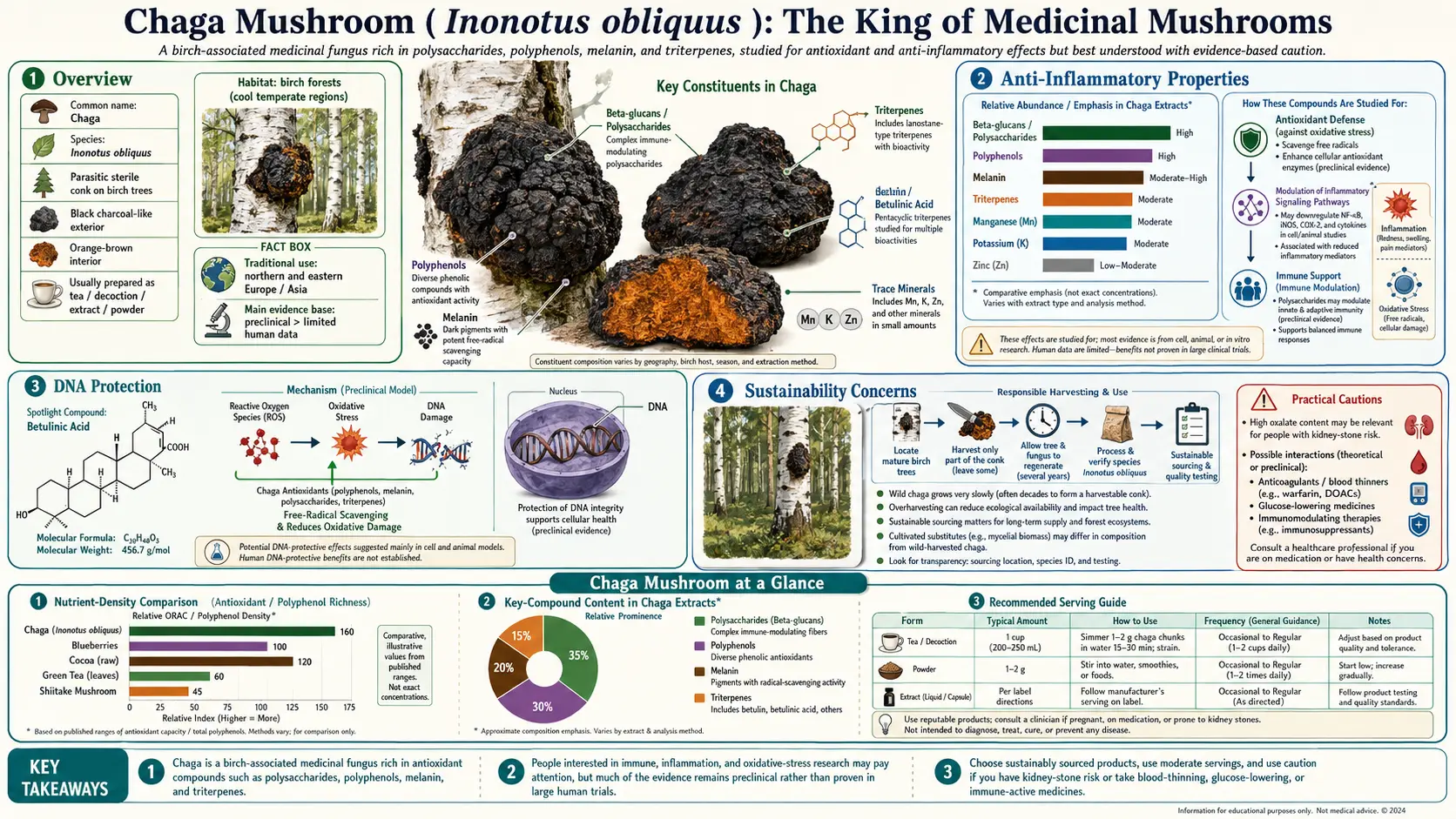
Table of Contents
- Overview
- History and Traditional Use
- Botanical Description
- Active Compounds
- Antioxidant Powerhouse
- Anti-Cancer Research
- Immune System Modulation
- Anti-Inflammatory Properties
- Digestive Health
- Blood Sugar Regulation
- Cardiovascular Health
- Liver Protection
- Skin Health
- Anti-Viral Properties
- DNA Protection
- Gut Microbiome Support
- Traditional Preparation
- Modern Extract Forms
- Dosage
- Safety and Side Effects
- Drug Interactions
- Sustainability Concerns
- Key Research Papers
- Connections
- Featured Videos
Overview
Chaga mushroom (Inonotus obliquus) is a parasitic fungus that has earned the title "King of Medicinal Mushrooms" due to its extraordinary concentration of bioactive compounds and centuries of documented therapeutic use. Unlike the cap-and-stem mushrooms most people recognize, Chaga appears as a large, irregular, darkly pigmented growth on the trunks of birch trees, resembling a mass of burnt charcoal. Beneath this rough, blackened exterior lies a rich, golden-orange interior packed with some of the most powerful antioxidants and health-promoting substances found anywhere in nature.
Found predominantly in the cold climates of Russia, Siberia, Scandinavia, Canada, and the northern United States, Chaga thrives in environments where birch trees grow abundantly. The fungus develops a symbiotic yet ultimately parasitic relationship with its host tree, slowly drawing nutrients from the living birch over a period of ten to twenty years. During this extended growth period, Chaga accumulates a remarkable array of compounds, including betulin and betulinic acid derived from the birch bark, unique melanin pigments, potent polysaccharides, and an exceptionally high concentration of the antioxidant enzyme superoxide dismutase.
Modern scientific research has validated many of the health claims that traditional healers attributed to Chaga for centuries. Studies have demonstrated its potential as an anti-inflammatory, antioxidant, anticancer, anti-diabetic, anti-obesity, hepatoprotective, renoprotective, anti-fatigue, antibacterial, and antiviral agent. While much of this research remains at the preclinical stage, involving in vitro and animal studies, the breadth of documented biological activities has made Chaga one of the most intensively studied medicinal mushrooms in the world today.
What distinguishes Chaga from other medicinal mushrooms is not merely the range of its therapeutic properties but the sheer potency of its bioactive constituents. Its oxygen radical absorbance capacity (ORAC) antioxidant score ranks among the highest of any natural substance, its melanin content is unrivaled in the fungal kingdom, and its unique combination of birch-derived triterpenoids and fungal polysaccharides creates a matrix of compounds that, its proponents say, no single isolated supplement can replicate.
History and Traditional Use
Chaga has been used in the folk medicine of Russia, Siberia, and the Baltic and Nordic lands since at least the sixteenth century, chiefly as a dark birch-fungus tea for digestive complaints and as a general tonic, and the tradition is often traced to northern peoples such as the Khanty of Western Siberia. It reached a wide international audience through Aleksandr Solzhenitsyn's 1968 novel Cancer Ward, in which patients drink a tea brewed from the birch mushroom — the fuller story is told in the dedicated History & Traditional Use article.
Botanical Description
Chaga (Inonotus obliquus) belongs to the family Hymenochaetaceae within the order Hymenochaetales. It is not technically a mushroom in the conventional sense but rather a sclerotium, a dense, hardened mass of fungal mycelium that forms on the exterior of living birch trees. The sclerotium develops when the fungus infects a wound or break in the bark of the tree, and over a period of five to twenty years, it slowly grows outward, forming an irregular, bulbous protrusion that can reach sizes of ten to forty centimeters in diameter and weigh several kilograms.
The exterior of the Chaga conk is deeply cracked, rough, and jet-black in color due to an extraordinarily high concentration of melanin pigments. This dark outer layer, called the sclerotium crust, is one of the most melanin-rich biological substances known and is responsible for much of Chaga's antioxidant potency. Beneath this dark exterior lies the interior tissue, which is golden to amber-orange in color and has a cork-like, somewhat granular texture. This interior contains the highest concentrations of the fungus's bioactive polysaccharides and triterpenoid compounds.
Chaga is an obligate parasite of birch trees, with Betula pendula (silver birch) and Betula pubescens (downy birch) being its most common hosts. It can also occasionally be found on alder, beech, and other hardwoods, though birch-grown Chaga is considered therapeutically superior because the fungus absorbs and concentrates betulin and betulinic acid from the birch bark during its growth. The relationship between Chaga and its host is ultimately destructive: the fungus causes white heart rot in the tree, gradually breaking down the lignin and cellulose of the heartwood. The host birch tree typically dies within ten to twenty years of infection, at which point the Chaga conk also ceases to grow and begins to deteriorate.
It is important to distinguish the sterile sclerotium that is harvested for medicinal use from the actual fruiting body of Inonotus obliquus, which only appears after the host tree has died. The true fruiting body is a flat, resupinate structure that forms beneath the bark and is rarely seen or collected. The medicinal Chaga that has been used for centuries and that is commercially harvested today is exclusively the living sclerotium, which must be collected from living or recently dead birch trees to retain its full complement of bioactive compounds.
Active Compounds
The therapeutic power of Chaga derives from an exceptionally diverse array of bioactive compounds, many of which are unique to this fungus or present in concentrations far exceeding those found in other medicinal mushrooms. The principal classes of active compounds include triterpenoids, polysaccharides, melanin pigments, polyphenols, and the antioxidant enzyme superoxide dismutase. These compounds work both independently and synergistically to produce Chaga's broad spectrum of biological activities.
Betulin and betulinic acid are triterpenoid compounds that originate not from the fungus itself but from the birch tree bark on which Chaga grows. The fungus absorbs these compounds and further metabolizes them, concentrating betulinic acid to levels significantly higher than those found in birch bark alone. Betulinic acid has attracted considerable research attention for its demonstrated anticancer, anti-inflammatory, anti-HIV, and anti-malarial properties. Other important triterpenoids found in Chaga include inotodiol, lanosterol, and trametenolic acid, each of which contributes to the fungus's anti-tumor and hepatoprotective activities.
Polysaccharides, particularly beta-glucans, constitute one of the most therapeutically significant compound classes in Chaga. Beta-glucans are complex carbohydrates that serve as potent biological response modifiers, primarily through their effects on the immune system. Chaga's beta-glucan content has been shown to stimulate macrophage activity, enhance natural killer cell function, and modulate cytokine production. Beyond beta-glucans, Chaga contains other polysaccharides including heteroglycans and xylans that contribute to its anti-diabetic and anti-inflammatory properties.
Melanin is the pigment responsible for Chaga's characteristically dark exterior and makes up approximately 30 percent of the sclerotium's dry weight. Chaga melanin is a potent free radical scavenger with strong antioxidant, genoprotective, and photoprotective properties. Superoxide dismutase (SOD) is an antioxidant enzyme present in Chaga at concentrations reported to be up to 50 times higher than in other medicinal mushrooms. Superoxide dismutase plays a critical role in neutralizing superoxide radicals, one of the most damaging forms of reactive oxygen species in the body. Additionally, Chaga contains significant concentrations of polyphenolic compounds, including flavonoids and phenolic acids, which contribute further to its total antioxidant capacity.
Antioxidant Powerhouse
Chaga has earned a reputation as one of the most potent antioxidant substances found in nature, a claim supported by its extraordinarily high Oxygen Radical Absorbance Capacity (ORAC) score. The ORAC assay measures the ability of a substance to neutralize free radicals in a laboratory setting, and Chaga's score of approximately 146,700 micromoles of Trolox equivalents per 100 grams places it among the highest-scoring natural substances ever tested. This figure is nearly 50 percent higher than acai berry, which scores approximately 102,700, and vastly exceeds popular antioxidant-rich foods such as blueberries, which score around 3,200.
The antioxidant potency of Chaga arises from the combined action of multiple compound classes working in concert. The melanin in Chaga's outer crust is itself a powerful free radical scavenger capable of neutralizing a broad spectrum of reactive oxygen and nitrogen species. Superoxide dismutase provides enzymatic antioxidant defense, specifically targeting superoxide radicals, while the polyphenolic compounds, including flavonoids and phenolic acids, contribute additional radical-scavenging capacity. This multi-layered antioxidant system is more comprehensive than what any single antioxidant compound can provide.
It is important to note some caveats regarding Chaga's ORAC score. The ORAC test is performed in vitro, and the antioxidant capacity of a substance in a test tube does not necessarily translate directly to antioxidant activity within the human body. Antioxidants must be extracted from food, absorbed through the digestive system, and distributed to tissues before they can exert their effects, and these processes involve many variables not captured by the ORAC assay. The U.S. Department of Agriculture withdrew its ORAC database in 2012, noting that ORAC values were being routinely misused for marketing purposes and that the values did not necessarily reflect in vivo biological activity.
Nevertheless, beyond the ORAC score, multiple independent studies have confirmed Chaga's antioxidant activity through various other methodologies. Research has demonstrated that Chaga extracts effectively reduce markers of oxidative stress in cell culture and animal models, protect against hydrogen peroxide-induced cellular damage, and reduce lipid peroxidation. The convergence of evidence from multiple testing approaches strongly supports the conclusion that Chaga possesses genuinely exceptional antioxidant properties, even if the precise magnitude of benefit in humans requires further clinical investigation.
Anti-Cancer Research
The anticancer potential of Chaga has been a primary focus of scientific investigation, driven in part by the centuries-old traditional use of Chaga decoctions as a cancer remedy in Russian and Siberian folk medicine. Modern research has identified multiple mechanisms through which Chaga compounds may inhibit cancer cell growth, including direct cytotoxicity, induction of apoptosis, inhibition of tumor angiogenesis, and modulation of signaling pathways critical to cancer cell proliferation.
Betulinic acid, the birch-derived triterpenoid concentrated in Chaga, has been the subject of particularly intense anticancer research. Studies have demonstrated that betulinic acid can selectively induce apoptosis in various cancer cell lines while showing relatively low toxicity toward normal cells. A 2024 study published in Biomolecules identified four highly bioactive triterpenoids in Chaga, including inotodiol, trametenolic acid, 3-hydroxy-lanosta-8,24-dien-21-al, and betulin, that were able to decrease breast cancer cell viability. The study used a Chaga water extract digested in the test tube to mimic drinking it as a tea, and identified the enzyme dihydrofolate reductase (DHFR) as the crucial target of these four triterpenoids; the digested extract inhibited DHFR activity in SK-BR-3 and MDA-MB-231 breast cancer cell lines, and pure betulinic acid, which forms when betulin is oxidized, reduced DHFR activity by about 40–50% at 25 µM in both cell lines.
Research published in 2024 in Pharmaceuticals tested freeze-dried 80% ethanolic Chaga extracts against 31 different human cancer cell lines using a sulforhodamine B assay. The extracts showed moderate activity against all cancer cell lines examined but did not reach high cytotoxicity (IC50 ≤ 20 µg/mL; IC50 is the concentration needed to inhibit the cells by half). The strongest inhibitions were observed against HepG2 (liver cancer) and CAL-62 (thyroid cancer) cells, with IC50 values of 37.71 and 43.30 µg/mL for Chaga grown on silver birch (Betula pendula), and 49.99 µg/mL against HepG2 for Chaga grown on downy birch (Betula pubescens). The silver-birch Chaga was somewhat stronger on most cell lines, which the authors attributed to its higher inotodiol content. A separate 2024 study in Scientific Reports (Yeo and colleagues) found that Chaga extract reduced the viability and proliferation of HSC-4 oral cancer cells and arrested their cell cycle by suppressing STAT3 activity, a key mechanism that cancer cells rely on for continued division. A 2024 study by Ng and colleagues compared hot- and cold-water extracts of six medicinal fungi against lung (A549) and breast (MCF-7 and MDA-MB-231) cancer cells; the cold-water Chaga extract had an IC50 of (701 ± 35) µg/mL against A549 lung cancer cells, one of the highest cytotoxicities among the extracts tested against those cells.
Despite these promising findings, it is essential to emphasize that the vast majority of Chaga anticancer research has been conducted in cell cultures and animal models. No large-scale human clinical trials have yet demonstrated that Chaga can prevent or treat cancer in humans. The effects observed in laboratory studies are described as moderate rather than dramatic, and the doses used in research often exceed what typical supplementation would provide. Memorial Sloan Kettering Cancer Center notes that the safety and efficacy of chaga have yet to be evaluated in clinical studies.
Immune System Modulation
One of the most well-documented properties of Chaga is its ability to modulate immune system function. Rather than simply stimulating the immune system indiscriminately, Chaga appears to act as a biological response modifier, helping to upregulate immune activity when it is suppressed and calm it when it is overactive. This balancing effect is primarily attributed to Chaga's polysaccharide content, particularly its beta-glucans, which interact with specific receptors on immune cells to influence their activity.
Beta-glucans from Chaga bind to the Dectin-1 receptor on macrophages, which serves as the primary receptor for beta-glucan recognition. Activation of Dectin-1 by Chaga polysaccharides triggers a cascade of immune responses, including enhanced macrophage phagocytic activity, increased cytokine production, and improved antigen presentation. Studies have shown that Chaga beta-glucans boost the activity of natural killer (NK) cells, a class of immune cells that play a critical role in the body's defense against virus-infected cells and tumor cells. Chaga mushrooms have been found to contain an 8.57 percent concentration of beta-glucans, a substantial amount that contributes meaningfully to its immune-modulating effects.
A pivotal study published in the journal Mycobiology examined the immunomodulatory activity of water extracts from Inonotus obliquus and confirmed that Chaga polysaccharides could enhance macrophage function and influence cytokine signaling in ways that support balanced immune responses. The research suggested that Chaga's immunomodulatory effects operate through multiple pathways simultaneously, affecting both innate and adaptive immune function. This multi-pathway approach to immune modulation is considered more therapeutically valuable than simple immune stimulation because it supports the body's natural regulatory mechanisms rather than overriding them.
The implications of Chaga's immune-modulating properties extend beyond simple infection resistance. By supporting balanced immune function, Chaga may help the body maintain appropriate inflammatory responses, potentially benefiting individuals with autoimmune conditions or chronic inflammatory disorders. However, the research raises a theoretical concern for people with autoimmune diseases, as the enhanced immune activity could exacerbate autoimmune responses in susceptible individuals.
Anti-Inflammatory Properties
Chronic low-grade inflammation is recognized as a contributing factor in numerous degenerative diseases, including cardiovascular disease, diabetes, neurodegenerative disorders, and cancer. Chaga has demonstrated significant anti-inflammatory activity in multiple research models, mediated through several distinct molecular mechanisms that target different components of the inflammatory cascade.
Research on the methanol and ethanol extracts of Chaga has shown that these extracts inhibit macrophage activity by reducing the production of inflammatory mediators, including nitric oxide and pro-inflammatory cytokines such as tumor necrosis factor-alpha, interleukin-1 beta (IL-1β), and interleukin-6 (IL-6). Water-based polysaccharide extracts and ethanol-based extracts of Chaga have both demonstrated notable anti-inflammatory properties, suggesting that multiple compound classes within the fungus contribute to this effect. The triterpenoid compounds, including betulinic acid, inotodiol, and ergosterol, help reduce inflammation by inhibiting cytokine production through the NF-kB signaling pathway, a master regulator of inflammatory gene expression.
Animal studies have provided further support for Chaga's anti-inflammatory effects. In models of acute and chronic inflammation, Chaga extracts have reduced edema, suppressed inflammatory cell infiltration, and lowered circulating levels of inflammatory biomarkers. The polysaccharide fraction appears to exert its anti-inflammatory effects partly by modulating the gut microbiome, which in turn influences systemic inflammatory tone through the gut-immune axis. The melanin component of Chaga also contributes anti-inflammatory activity, further broadening the spectrum of pathways through which Chaga can influence inflammatory processes.
The combined anti-inflammatory action of Chaga's multiple bioactive compounds suggests potential applications in conditions characterized by excessive or dysregulated inflammation. Traditional use of Chaga for gastritis and ulcers aligns with modern understanding of the role of inflammation in these conditions. While human clinical trials specifically evaluating Chaga's anti-inflammatory effects are still needed, the consistency of findings across different research models and the identification of specific molecular mechanisms provide a robust scientific foundation for Chaga's traditional anti-inflammatory reputation.
Digestive Health
Chaga has been used as a digestive tonic in traditional medicine systems for centuries, and modern research is beginning to elucidate the mechanisms behind these traditional applications. The Khanty people of Siberia specifically valued Chaga for its ability to aid digestion and support gastrointestinal comfort, and Russian folk medicine has long prescribed Chaga decoctions for the treatment of gastritis, stomach ulcers, and general digestive complaints.
From a physiological perspective, Chaga is considered a tonic to the digestive tract that may protect the gastric mucosa, the mucous membrane lining of the stomach that serves as a critical barrier against acid damage and pathogenic organisms. The anti-inflammatory properties of Chaga's polysaccharides and triterpenoids are thought to help soothe inflamed gastrointestinal tissues, while its antioxidant compounds may protect mucosal cells from oxidative damage caused by free radicals generated during digestion and immune responses in the gut.
The polysaccharides in Chaga also function as prebiotics, serving as a food source for beneficial gut bacteria. By selectively nourishing health-promoting microbial species, Chaga's polysaccharides may help maintain a balanced and diverse gut ecosystem, which is increasingly recognized as fundamental to overall health. Research has shown that mushroom polysaccharides, including those from Chaga, can increase populations of beneficial bacteria such as Bifidobacterium and Lactobacillus species while inhibiting the growth of potentially harmful organisms.
Traditional preparations of Chaga as a tea or decoction may have provided additional digestive benefits due to the warm liquid delivery format itself, which can stimulate gastric motility and promote the secretion of digestive enzymes. The traditional practice of drinking Chaga tea before or between meals to promote digestive function aligns with the understanding that many of Chaga's water-soluble polysaccharides and polyphenols are readily accessible in aqueous preparations and can exert their effects directly on the gastrointestinal mucosa upon consumption.
Blood Sugar Regulation
Research into Chaga's effects on blood sugar regulation has yielded some of the most quantitatively impressive results in the entire body of Chaga literature. Multiple animal studies have demonstrated that Chaga extracts can significantly lower blood glucose levels, improve insulin sensitivity, and modulate the metabolic pathways involved in glucose and lipid metabolism.
In a 2017 study of Chaga mushroom polysaccharides in mice given type 2 diabetes with a high-fat diet and streptozotocin, oral polysaccharides at a dose of 900 mg/kg significantly reduced fasting blood glucose, improved glucose tolerance, raised liver glycogen and eased insulin resistance compared with untreated diabetic mice. The authors linked the effect to activation of the PI3K-Akt pathway and movement of the glucose transporter GLUT4.
A separate study examining Inonotus obliquus extract at doses of 250 mg/kg and 500 mg/kg demonstrated that oral administration significantly alleviated blood glucose levels and insulin resistance in diabetic mice. The mechanism of action was identified as operating through the PI3K/Akt and AMPK/ACC signaling pathways, which are central to cellular glucose uptake and lipid metabolism. The researchers identified beta-glucans, triterpenoids, and polyphenols as the principal active components responsible for the anti-hyperglycemic and anti-hyperlipidemic activities. In a 2021 study, a high oral dose (1.2 g/kg) of Chaga polysaccharide given for 4 weeks reduced blood glucose by 31% compared with untreated streptozotocin-diabetic mice and relieved dyslipidemia (abnormal blood fats), and Chaga's antioxidants may also protect pancreatic beta cells, which are responsible for insulin production and are progressively damaged in type 2 diabetes.
Despite these promising preclinical results, it is essential to note that no human clinical trials have yet confirmed these effects in people. The doses used in animal studies may not translate directly to human supplementation, and the metabolic differences between rodents and humans mean that results observed in mice cannot be assumed to occur in human subjects. Memorial Sloan Kettering notes that in vitro, chaga had additive effects in lowering blood sugar with glucose-lowering drugs, and that the clinical significance is yet unknown; the concern with combining them is blood sugar falling too low (hypoglycemia).
Cardiovascular Health
The cardiovascular benefits of Chaga appear to operate through multiple mechanisms, including improvement of lipid profiles, reduction of oxidative stress in vascular tissue, and modulation of blood pressure-related pathways. These effects have been documented primarily in animal studies and provide a scientific rationale for the traditional use of Chaga as a general tonic for vitality and longevity.
Research examining the effects of Inonotus obliquus extract on lipid metabolism in diabetic mice found that doses of 250 mg/kg and 500 mg/kg increased high-density lipoprotein cholesterol (HDL-C) while simultaneously decreasing total cholesterol, triglycerides, and low-density lipoprotein cholesterol (LDL-C). A study using Chaga mushroom polysaccharides at 900 mg/kg in diabetic mice likewise reported increased HDL-C and decreased total cholesterol, triglycerides and LDL-C. These lipid changes were measured in diabetic mice.
The antioxidant properties of Chaga also contribute to cardiovascular protection by reducing oxidative modification of low-density lipoprotein (LDL) cholesterol, a process considered central to the development of atherosclerosis. Oxidized low-density lipoprotein is taken up by macrophages in arterial walls, leading to foam cell formation and the development of atherosclerotic plaques. By reducing low-density lipoprotein oxidation, Chaga's antioxidant compounds may help slow or prevent the atherosclerotic process. Additionally, the anti-inflammatory effects of Chaga triterpenoids and polysaccharides may help reduce vascular inflammation, another key driver of cardiovascular disease progression.
Chaga's triterpenoid compounds, particularly betulinic acid and inotodiol, have also shown potential effects on blood pressure regulation in preclinical models. The mechanisms appear to involve modulation of the renin-angiotensin system and improvement of endothelial function, the ability of blood vessel walls to dilate and constrict appropriately. These findings remain in the early stages of investigation. Memorial Sloan Kettering notes that chaga extract inhibited platelet aggregation in a mouse model and may have synergistic effects with anticoagulant and antiplatelet drugs, with clinical relevance not known.
Liver Protection
Hepatoprotection, the ability to protect the liver from damage, is one of the well-documented therapeutic properties of Chaga in modern research. The liver serves as the body's primary detoxification organ, and its constant exposure to toxins, metabolic byproducts, and oxidative stress makes it particularly vulnerable to damage. Chaga's combination of antioxidant, anti-inflammatory, and direct hepatoprotective compounds positions it as a promising natural support for liver health.
A 2022 study (Peng and colleagues) found that Chaga and three of its constituents, inotodiol, lanosterol, and trametenolic acid, reduced fat buildup in the livers of mice fed a methionine-choline-deficient diet and in LO2 liver cells loaded with oleic acid, a model of non-alcoholic fatty liver disease (NAFLD), a condition affecting an estimated 25 percent of the global population. They lowered the activity of fat-making genes (SREBP-1c, ACC1 and FASN) and raised FXR and SHP, part of the FXR/SHP/SREBP-1c pathway, a signaling cascade that controls lipid synthesis and accumulation in liver cells; blocking FXR with an inhibitor abolished inotodiol's effect in the liver cells. In these mouse and cell models, Chaga triterpenoids reduced the excessive fat buildup in hepatocytes that characterizes fatty liver disease.
The melanin component of Chaga has also demonstrated significant hepatoprotective effects. Studies have shown that Chaga melanin was able to minimize signs of liver tissue damage including necrosis, fat accumulation, and steatosis, and was able to normalize levels of total protein, serum cholinesterase, gamma-glutamyl transpeptidase, total bilirubin, and unconjugated bilirubin, all of which are key biomarkers of liver function. These findings suggest that melanin contributes to liver protection through both antioxidant mechanisms and direct modulation of hepatic metabolic processes.
The combined hepatoprotective action of Chaga's triterpenoids, melanin, polysaccharides, and polyphenols provides a multi-targeted approach to liver support that addresses oxidative damage, inflammation, and metabolic dysfunction simultaneously. Traditional medicine systems that prescribed Chaga for liver and digestive complaints were evidently recognizing, through empirical observation, the same hepatoprotective properties that modern science is now elucidating at the molecular level. The liver findings summarized here come from mouse and cell studies; Memorial Sloan Kettering notes that the safety and efficacy of chaga have yet to be evaluated in clinical studies.
Skin Health
Chaga's potential benefits for skin health are closely linked to its extraordinarily high melanin content. Melanin is the same class of pigment that determines human skin, hair, and eye color, and it serves a critical biological function as a protector against ultraviolet radiation and oxidative damage. The melanin in Chaga's dark outer crust, comprising approximately 30 percent of its dry weight, represents one of the most concentrated natural sources of this protective pigment available.
Research has demonstrated that Chaga melanin exhibits strong photoprotective properties, meaning it can help shield biological tissues from damage caused by ultraviolet (UV) radiation. This same mechanism that protects the fungus from solar radiation in its exposed position on birch tree trunks may translate to protective benefits for human skin when consumed internally or applied topically. The antioxidant properties of Chaga melanin help neutralize the free radicals generated by ultraviolet exposure, which are primary drivers of premature skin aging, including wrinkle formation, loss of elasticity, and hyperpigmentation.
Beyond melanin, Chaga's broad-spectrum antioxidant activity supports skin health by combating systemic oxidative stress, which accelerates the aging of all tissues including skin. The superoxide dismutase in Chaga specifically targets superoxide radicals, which are implicated in the breakdown of collagen and elastin, the structural proteins that maintain skin firmness and elasticity. The anti-inflammatory properties of Chaga triterpenoids may also benefit inflammatory skin conditions, though direct clinical evidence for this application remains limited.
Traditional use of Chaga for skin health extends back to the Khanty people, who incorporated it into soap preparations, suggesting an early recognition of its external benefits. Modern cosmetic and skincare manufacturers have begun incorporating Chaga extracts into topical products, leveraging its antioxidant and melanin content. While the evidence for Chaga's skin benefits is still largely preliminary and based on the known properties of its constituent compounds rather than direct clinical trials of skin outcomes, the theoretical foundation is strong and consistent with the broader understanding of how antioxidants and melanin support skin health.
Anti-Viral Properties
Chaga has demonstrated antiviral activity against a range of viruses in laboratory studies, adding another dimension to its already diverse therapeutic profile. The antiviral properties of Chaga appear to involve both direct virucidal mechanisms, in which compounds from the fungus inactivate viral particles, and indirect mechanisms that enhance the host's immune response to viral infections.
Among the most significant findings in Chaga antiviral research are studies demonstrating activity against serious human pathogens. Betulin and betulinic acid, the birch-derived triterpenoids concentrated in Chaga, have been identified as potential anti-HIV agents that inhibit human immunodeficiency virus (HIV) reverse transcriptase, an enzyme essential for the virus's replication cycle. Research has also shown that constituents of Chaga's black exterior surface inhibit human influenza A and B viruses as well as horse influenza A virus. Chaga extracts have demonstrated virucidal activity against hepatitis C virus, with observed protective effects and measurable reduction of infective viral particles in cell culture.
Studies on herpes simplex virus (HSV) have provided additional evidence of Chaga's antiviral potential. Research observed deletion of viral DNA in Chaga-treated cells, suggesting protection from HSV cytotoxicity through a mechanism that directly targets viral genetic material. The diversity of viruses against which Chaga has shown activity, spanning retroviruses, influenza viruses, and herpesviruses, suggests that its antiviral mechanisms are broad rather than virus-specific, potentially involving general enhancement of cellular antiviral defenses as well as direct action against viral particles.
DNA Protection
One of the most compelling health benefits attributed to Chaga is its ability to protect cellular DNA from oxidative damage, a property with profound implications for aging, cancer prevention, and overall cellular health. DNA damage caused by reactive oxygen species is a fundamental driver of the aging process and a prerequisite for the development of many cancers, making DNA protection a critically important biological function.
A landmark study assessed Chaga's genoprotective properties using the comet assay, a sensitive technique for measuring DNA strand breaks in individual cells. The research demonstrated that cells pretreated with Chaga extract showed over 40 percent reduction in DNA fragmentation compared with control cells exposed to hydrogen peroxide, a potent inducer of oxidative DNA damage. The study pretreated human lymphocytes with an aqueous Chaga extract at 10, 50, 100 and 500 µg/mL for 1 hour before exposing them to hydrogen peroxide (100 µM for 5 minutes).
The DNA-protective effects of Chaga are attributed to the combined action of its multiple antioxidant systems. Melanin, which makes up approximately 30 percent of Chaga's dry weight, has documented genoprotective properties that extend beyond simple free radical scavenging to include chelation of metal ions that catalyze DNA-damaging Fenton reactions. Superoxide dismutase neutralizes superoxide radicals before they can generate the hydroxyl radicals that are most destructive to DNA. The polyphenolic compounds in Chaga provide additional layers of protection through both direct radical scavenging and upregulation of endogenous cellular antioxidant defense systems.
The implications of Chaga's DNA-protective properties are significant in the context of both aging and cancer prevention. Accumulated DNA damage in stem cells and progenitor cells is increasingly recognized as a central mechanism of aging, and substances that reduce the rate of DNA damage accumulation may theoretically slow aspects of the aging process. Similarly, since cancer initiation requires mutations in oncogenes or tumor suppressor genes, protecting DNA from oxidative damage represents a fundamental approach to cancer prevention. Current evidence does not show Chaga to be an anti-aging cure or cancer preventive; its demonstrated ability to significantly reduce oxidative DNA damage in human lymphocytes in the laboratory is a noteworthy and scientifically validated finding.
Gut Microbiome Support
Emerging research into the gut microbiome has revealed that the health of the microbial community residing in the gastrointestinal tract influences virtually every aspect of human health, from immune function and mental health to metabolic regulation and disease risk. Chaga's polysaccharides play an important role in supporting gut microbiome health through their action as prebiotic substrates that selectively nourish beneficial bacterial species.
The complex polysaccharides in Chaga, including beta-glucans and other structural carbohydrates, resist digestion in the upper gastrointestinal tract and arrive intact in the colon, where they serve as a food source for beneficial bacteria. This prebiotic activity promotes a balanced gut ecosystem by supporting the growth of health-associated bacterial populations while potentially suppressing the growth of pathogenic organisms. Research on mushroom polysaccharides has demonstrated their ability to increase populations of Bifidobacterium and Lactobacillus species, which are associated with improved immune function, enhanced nutrient absorption, and production of beneficial short-chain fatty acids.
The short-chain fatty acids produced by gut bacteria fermenting Chaga polysaccharides, particularly butyrate, propionate, and acetate, have their own array of health benefits. Butyrate serves as the primary energy source for colonocytes, the cells lining the colon, and plays a crucial role in maintaining the integrity of the intestinal barrier. A healthy intestinal barrier prevents the translocation of bacterial endotoxins into the bloodstream, a process known as "leaky gut" that is increasingly linked to systemic inflammation, autoimmune conditions, and metabolic disorders.
The gut microbiome-modulating effects of Chaga may also help explain some of its systemic health benefits, including its anti-inflammatory and immune-modulating properties. The gut-immune axis, the bidirectional communication network between the gut microbiome and the immune system, means that improvements in gut microbial health can translate to improved immune regulation throughout the body. By supporting a healthy, diverse gut microbiome, Chaga may exert health benefits that extend far beyond the gastrointestinal tract itself, contributing to its traditional reputation as a whole-body tonic.
Traditional Preparation
The traditional method of preparing Chaga for medicinal use involves making a tea or decoction from chunks of the dried sclerotium. This method, practiced for centuries by Siberian indigenous peoples and Russian folk healers, differs significantly from the typical preparation of herbal teas. While most herbal teas are prepared by infusing plant material in hot water for a few minutes, Chaga requires a prolonged decoction process to extract its bioactive compounds from the dense, woody matrix of the sclerotium.
The traditional decoction method involves breaking or grinding the dried Chaga into small chunks, placing them in water, and simmering on medium-low heat for two to three hours, being careful not to allow the mixture to reach a full boil. Excessive heat can degrade some of the more delicate bioactive compounds, particularly certain polysaccharides and enzymes. The resulting liquid is a dark, rich tea with a mild, slightly earthy flavor often compared to a blend of coffee and vanilla, without the bitterness associated with either. Many traditional preparations recommend reusing the same Chaga chunks for multiple decoctions, as a single batch of Chaga contains enough extractable material for several preparations.
The Khanty people traditionally consumed Chaga as a daily beverage, much as other cultures consume tea or coffee, reflecting their understanding of its benefits as a tonic for general health rather than a treatment for specific acute conditions. In Russian folk medicine, Chaga decoctions were typically consumed two to three times daily, often on an empty stomach to maximize absorption. The warm liquid delivery format was considered therapeutically significant in itself, as warm beverages stimulate digestive secretions and promote circulation, potentially enhancing the absorption and distribution of Chaga's bioactive compounds.
Home preparation as traditionally described uses wild-harvested Chaga from birch trees, appropriately sized chunks or coarsely ground material, water kept below boiling during decoction, and a long extraction time. Some traditional practitioners recommend an initial cold-water soak of several hours or overnight before beginning the decoction process, as this preliminary step begins to soften the chitin matrix and may improve the extraction of water-soluble compounds during subsequent heating.
Modern Extract Forms
While traditional decoction remains a viable and respected method of consuming Chaga, modern processing techniques have expanded the range of available formats significantly. Each extraction method captures a different profile of bioactive compounds, and understanding these differences is important for selecting the most appropriate product for specific health goals.
Hot water extracts are the modern equivalent of traditional decoctions and are the most effective method for extracting Chaga's polysaccharides, including the immunomodulating beta-glucans. Commercial hot water extraction processes use controlled temperature and pressure to maximize polysaccharide yield while preserving molecular integrity. Hot water extract powders dissolve readily in warm water and can be prepared as tea in minutes rather than hours, making them the most convenient option for those seeking Chaga's immune-supporting polysaccharides.
Alcohol-based tinctures are effective for extracting Chaga's triterpenoid compounds, including betulinic acid, inotodiol, and lanosterol, which are not water-soluble and therefore not well captured by hot water extraction alone. The most comprehensive Chaga products employ a dual extraction process that combines both hot water and alcohol extraction, ensuring that both the water-soluble polysaccharides and the alcohol-soluble triterpenoids are present in the final product. Dual-extracted tinctures are often described as the most complete form of Chaga supplementation. In Russia, Chaga has also been formulated as syrups, tablets, aerosols, and even suppositories, reflecting the extensive pharmaceutical interest in this fungus within Russian medicine.
Powdered Chaga, made by drying and grinding the raw sclerotium, represents the simplest processed form and retains the full spectrum of Chaga's compounds in their natural matrix. However, the bioavailability of compounds in raw powder may be lower than in extracted forms because the chitin cell walls of the fungus can impede the release of some active constituents during digestion. Powdered Chaga can be added to smoothies, soups, coffee, and baked goods. For those who prefer capsules, both raw powder and extracted forms are available in encapsulated formats for convenient daily supplementation.
Dosage
Establishing precise dosage recommendations for Chaga is complicated by the lack of standardized clinical trials in humans and the significant variation in potency between different products and preparation methods. However, several figures have emerged from traditional use and available research data.
Chaga's high oxalate content becomes a concern at higher doses (see the safety section). For standardized hot water or dual extracts, typical supplemental doses range from 500 mg to 1,500 mg per day, though the exact dose depends on the concentration and extraction method of the specific product.
For traditional Chaga tea prepared from raw chunks, a typical serving uses approximately 5 to 10 grams of dried Chaga material simmered in water for two to three hours. However, because the decoction process extracts only a fraction of the total material into the liquid, the actual dose of bioactive compounds consumed in a cup of tea is substantially less than the weight of the raw material used. Many traditional practitioners consumed two to three cups of Chaga tea daily.
The published kidney-damage cases involved daily Chaga powder amounts of 4 to 5 teaspoons for six months and 10 to 15 grams for three months, and in a 2026 rat study the kidney injury was reported in the high-dose group (3,844.8 mg/kg body weight); a standard-dose group (1,281.6 mg/kg) was also tested. The research raises concerns for people with kidney conditions, for people taking blood-thinning medications (Memorial Sloan Kettering notes chaga may increase the risk of bleeding) and for people on diabetes medications (additive blood-sugar lowering in vitro).
Safety and Side Effects
While Chaga has a long history of traditional use and is generally well tolerated by most individuals at recommended doses, there are important safety concerns. The most significant safety issue relates to Chaga's exceptionally high oxalate content, which has been documented to cause serious kidney damage in several clinical case reports.
Chaga mushroom has been found to contain extremely high oxalate concentrations, measured at approximately 14.2 grams per 100 grams of dried material. Oxalates are compounds that can bind to calcium in the body to form calcium oxalate crystals, which can accumulate in the kidneys and cause a condition known as oxalate nephropathy. Multiple published case reports have documented severe kidney damage resulting from excessive Chaga consumption. A 72-year-old Japanese woman who ingested Chaga mushroom powder at 4 to 5 teaspoons per day for six months developed decreased renal function requiring hemodialysis, with kidney biopsy confirming oxalate crystal deposition. A 69-year-old man who consumed 10 to 15 grams of Chaga powder daily along with 500 mg of vitamin C for three months developed acute kidney injury with calcium oxalate crystals found in the renal tubules. Most alarmingly, a 49-year-old man developed end-stage renal disease with kidney biopsy findings consistent with chronic tubulointerstitial nephritis with oxalate crystal deposits from long-term Chaga powder exposure.
Animal work points the same way. In a 2026 rat study, Chaga powder at a high dose of 3,844.8 mg/kg body weight (equivalent to oxalate at 549 mg/kg body weight), a dose extrapolated from a reported human case, caused oxalate crystal deposits and kidney tubule injury, raised urinary protein and markers of oxidative damage, and lowered final body weight compared with the other groups. A standard-dose group (1,281.6 mg/kg, equivalent to oxalate at 183 mg/kg) and an untreated control group were compared, and the authors concluded that high-dose consumption of Chaga mushrooms may cause kidney damage due to its high oxalate content.
These case reports reveal several important patterns. The patients who developed kidney damage were generally consuming raw Chaga powder rather than extracted preparations, and they were consuming amounts significantly exceeding recommended doses over extended periods. The combination of Chaga with vitamin C, which increases oxalate production in the body, may have increased risk in at least one case. The research raises the greatest concern for people with pre-existing kidney conditions, a history of kidney stones, or other risk factors for oxalate nephropathy, even at commonly used doses.
Beyond oxalate concerns, Chaga's blood sugar-lowering effects mean it could potentially cause hypoglycemia, particularly in individuals who are fasting or not eating adequately. Some individuals may experience digestive discomfort, particularly when first beginning Chaga supplementation. There is no safety data on Chaga in pregnancy or breastfeeding. For people with autoimmune conditions, the concern is theoretical: Chaga's immune-stimulating properties could exacerbate autoimmune responses.
Drug Interactions
Chaga's broad spectrum of biological activities means it has the potential to interact with several classes of medications. Understanding these interactions is essential for safe supplementation, particularly for individuals managing chronic health conditions with pharmaceutical treatments.
The most clinically significant potential interaction involves anticoagulant and antiplatelet medications, including warfarin, heparin, aspirin, and clopidogrel. Chaga contains compounds that may have blood-thinning properties, and combining Chaga with these medications could heighten the risk of bleeding complications, including bruising, prolonged bleeding from cuts, gastrointestinal bleeding, or, in severe cases, internal hemorrhage. Memorial Sloan Kettering notes that chaga extract inhibited platelet aggregation in a mouse model, that it may have synergistic effects with anticoagulant and antiplatelet drugs (clinical relevance not known), and that chaga mushroom may increase the risk of bleeding in people taking blood thinners such as warfarin.
The hypoglycemic effects of Chaga create the potential for significant interactions with diabetes medications, including insulin, metformin, sulfonylureas, and other glucose-lowering drugs. The combination of Chaga's blood sugar-lowering properties with pharmaceutical diabetes treatment could result in excessively low blood sugar levels, a condition known as hypoglycemia that can cause symptoms ranging from dizziness and confusion to seizures and loss of consciousness. Memorial Sloan Kettering notes that in vitro, chaga had additive effects in lowering blood sugar with glucose-lowering agents, and that the clinical significance is yet unknown.
Chaga's immune-modulating properties raise theoretical concerns about interactions with immunosuppressant medications used by organ transplant recipients and individuals with autoimmune conditions. By enhancing immune cell activity, Chaga could potentially counteract the effects of immunosuppressive drugs such as cyclosporine, tacrolimus, and corticosteroids, potentially increasing the risk of organ rejection in transplant patients or exacerbation of autoimmune disease activity.
Sustainability Concerns
The growing global popularity of Chaga as a health supplement has raised significant concerns about the sustainability of wild harvesting practices. Unlike many cultivated mushrooms, Chaga cannot be commercially farmed in a way that produces a product equivalent to wild-harvested sclerotia, because the unique chemical profile of Chaga depends on its prolonged parasitic relationship with living birch trees and the accumulation of birch-derived compounds such as betulin and betulinic acid over many years.
Chaga grows slowly, requiring five to twenty years to develop a sclerotium large enough for harvest. When a Chaga conk is removed from a living birch tree, it does not quickly regenerate; the tree may eventually produce another growth at the same site, but this process takes many additional years. If the tree dies as a result of the fungal infection or harvest damage, no further Chaga can be produced from that host. The combination of slow growth, dependence on wild birch forests, and inability to farm Chaga commercially means that the resource is inherently limited and vulnerable to depletion from excessive harvesting.
The rising demand for Chaga products has led to increased commercial harvesting across its natural range, including Siberia, Scandinavia, Canada, and the northern United States. Chaga is relatively easy to identify on birch trees due to its distinctive dark, charcoal-like appearance, making it prone to overharvesting by both commercial harvesters and recreational foragers. Conservation experts have raised concerns that unsustainable harvesting practices pose a significant threat not only to Chaga populations but also to the broader forest ecosystems in which they play ecological roles, as the fungus contributes to nutrient cycling and habitat creation through its effects on host trees.
Ethical harvesting of Chaga, as described, includes leaving at least a portion of each conk intact to allow regrowth, never harvesting from dead trees where the Chaga is no longer medicinally viable, and avoiding harvesting from areas where Chaga populations are sparse. Some suppliers are exploring cultivation methods that grow Chaga mycelium on birch substrate in controlled environments, though these cultured products may not contain the full spectrum of compounds found in wild sclerotia, particularly the birch-derived triterpenoids. Research into sustainable cultivation methods and certified sustainable sourcing are the two approaches described for keeping this fungus available over the long term.
Key Research Papers
- Raal, A., et al. "Chemical Content and Cytotoxic Activity on Various Cancer Cell Lines of Chaga (Inonotus obliquus) Growing on Betula pendula and Betula pubescens." Pharmaceuticals, vol. 17, no. 8, 2024, p. 1013. — doi:10.3390/ph17081013
- Wang, J., et al. "Chaga Mushroom Triterpenoids Inhibit Dihydrofolate Reductase and Act Synergistically with Conventional Therapies in Breast Cancer." Biomolecules, vol. 14, no. 11, 2024, p. 1454. — doi:10.3390/biom14111454
- Wagle, S., et al. "Synergistic Cytotoxicity of Extracts of Chaga Mushroom and Microalgae against Mammalian Cancer Cells In Vitro." Oxidative Medicine and Cellular Longevity, 2024, article 7944378. — PubMed PMID: 38268969
- Wang, J., et al. "Anti-diabetic Effects of Inonotus obliquus Polysaccharides in Streptozotocin-induced Type 2 Diabetic Mice and Potential Mechanism via PI3K-Akt Signal Pathway." Biomedicine & Pharmacotherapy, vol. 95, 2017, pp. 1669-1677. — PubMed PMID: 28954386
- Zhang, Z., et al. "Effect of Inonotus obliquus (Fr.) Pilat Extract on the Regulation of Glycolipid Metabolism via PI3K/Akt and AMPK/ACC Pathways in Mice." Journal of Ethnopharmacology, vol. 273, 2021, article 113963. — doi:10.1016/j.jep.2021.113963
- Kikuchi, Y., et al. "Chaga Mushroom-induced Oxalate Nephropathy." Clinical Nephrology, vol. 81, no. 6, 2014, pp. 440-4. — PubMed PMID: 23149251
- Kwon, O., et al. "Chaga Mushroom-induced Oxalate Nephropathy That Clinically Manifested as Nephrotic Syndrome: A Case Report." Medicine (Baltimore), vol. 101, no. 10, 2022, article e28997. — PubMed PMID: 35451393
- Lee, S., et al. "Development of End Stage Renal Disease after Long-Term Ingestion of Chaga Mushroom: Case Report and Review of Literature." Journal of Korean Medical Science, vol. 35, no. 19, 2020, article e122. — doi:10.3346/jkms.2020.35.e122
- Ern, P.T.Y., et al. "Therapeutic Properties of Inonotus obliquus (Chaga Mushroom): A Review." Mycology, vol. 15, no. 2, 2024, pp. 144-161. — PubMed PMID: 38813471
- Fordjour, E., et al. "Chaga Mushroom: A Super-Fungus with Countless Facets and Untapped Potential." Frontiers in Pharmacology, vol. 14, 2023, article 1273786. — doi:10.3389/fphar.2023.1273786
- Camilleri, E., et al. "A Brief Overview of the Medicinal and Nutraceutical Importance of Inonotus obliquus (Chaga) Mushrooms." Heliyon, vol. 10, no. 15, 2024, article e35638. — PubMed PMID: 39170453
- Park, Y.K., et al. "Chaga Mushroom Extract Inhibits Oxidative DNA Damage in Human Lymphocytes as Assessed by Comet Assay." BioFactors, vol. 21, no. 1-4, 2004, pp. 109-112. — PubMed PMID: 15630179
- Kim, Y.O., et al. "Immunomodulatory Activity of the Water Extract from Medicinal Mushroom Inonotus obliquus." Mycobiology, vol. 33, no. 3, 2005, pp. 158-162. — doi:10.4489/MYCO.2005.33.3.158
- Yeo, D., et al. "Chaga Mushroom Extract Suppresses Oral Cancer Cell Growth via Inhibition of Energy Metabolism." Scientific Reports, vol. 14, no. 1, 2024, article 10616. — PubMed PMID: 38720012
- Ng, M.J., et al. "Comparative Cytotoxicity Evaluation of Heat-Assisted vs Cold Water Extractions of Six Medicinal Fungi against Breast and Lung Cancer Cells." Food Technology and Biotechnology, vol. 62, no. 2, 2024, pp. 254-263. — PubMed PMID: 39045305
- Xu, T., et al. "Inonotus obliquus Polysaccharide Ameliorates Serum Profiling in STZ-induced Diabetic Mice Model." BMC Chemistry, vol. 15, no. 1, 2021, article 64. — PubMed PMID: 34920751
- Peng, A., et al. "Inonotus obliquus and Its Bioactive Compounds Alleviate Non-alcoholic Fatty Liver Disease via Regulating FXR/SHP/SREBP-1c Axis." European Journal of Pharmacology, vol. 921, 2022, article 174841. — PubMed PMID: 35278405
- Lee, S., et al. "Kidney Injury Induced by High-Dose Chaga Mushroom Consumption: Experimental Evidence in a Rat Model." Journal of Korean Medical Science, vol. 41, no. 3, 2026, article e37. — PubMed PMID: 41555803
- Solzhenitsyn, A. The Cancer Ward. Farrar, Straus and Giroux, 1968.
- Memorial Sloan Kettering Cancer Center. "Chaga Mushroom." Integrative Medicine: Herbs. Accessed March 2026.
PubMed Topic Searches
Selected peer-reviewed literature. Links resolve to PubMed or DOI.
- Search PubMed
- Search PubMed
- Glamočlija J, Ćirić A, Nikolić M, et al. Chemical characterization and biological activity of Chaga (Inonotus obliquus), a medicinal "mushroom". J Ethnopharmacol. 2015;162:323-32. — PubMed PMID: 25576897
- Search PubMed
- Search PubMed
- Search PubMed
- Search PubMed
- Search PubMed
- Zheng W, Miao K, Liu Y, et al. Chemical diversity of biologically active metabolites in the sclerotia of Inonotus obliquus and submerged culture strategies for up-regulating their production. Appl Microbiol Biotechnol. 2010;87(4):1237-54. — PubMed PMID: 20532760
- PubMed — Inonotus obliquus / chaga cancer search.
- PubMed — chaga antioxidant / immune search.