⚠ Evidence warning: Clinical trials or other evidence do not support the claims that kidney disease is the strongest modern evidence base for astragalus, that its benefits accumulate over six to twelve weeks, and that it suits chronic rather than acute conditions while acute respiratory infection is better addressed with echinacea, elderberry or zinc. This page keeps it as a report of what people, websites or other media say.
Astragalus — Benefits Deep Dive
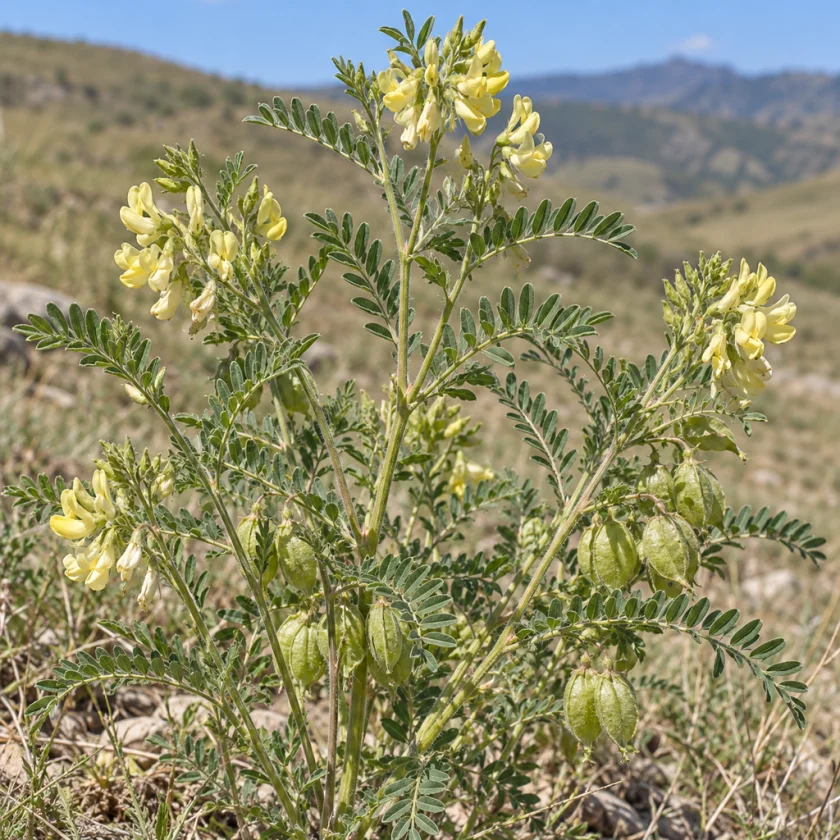
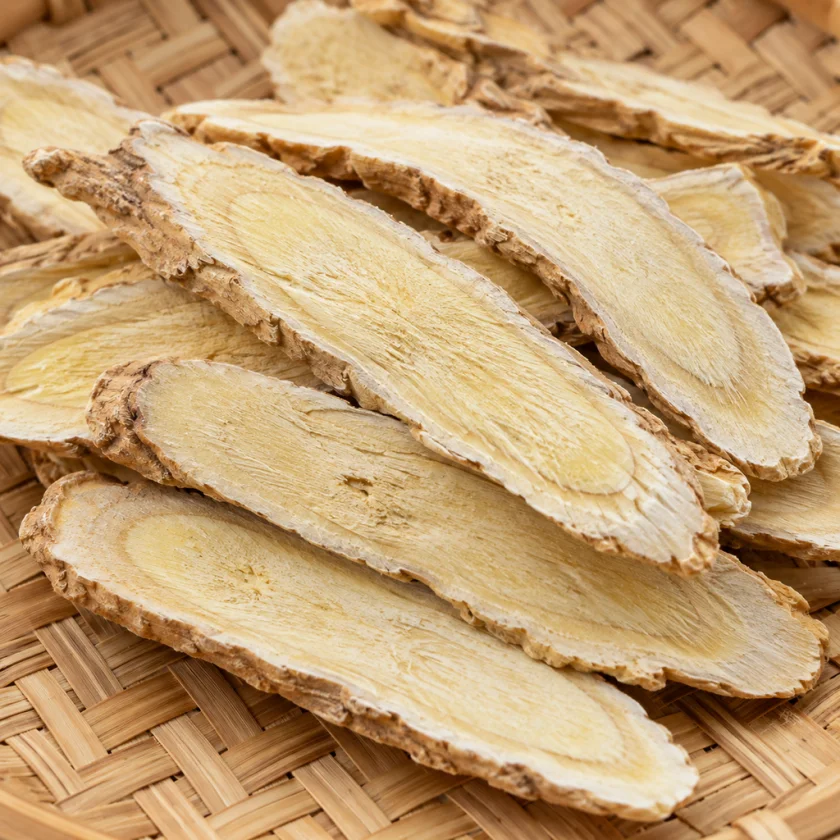
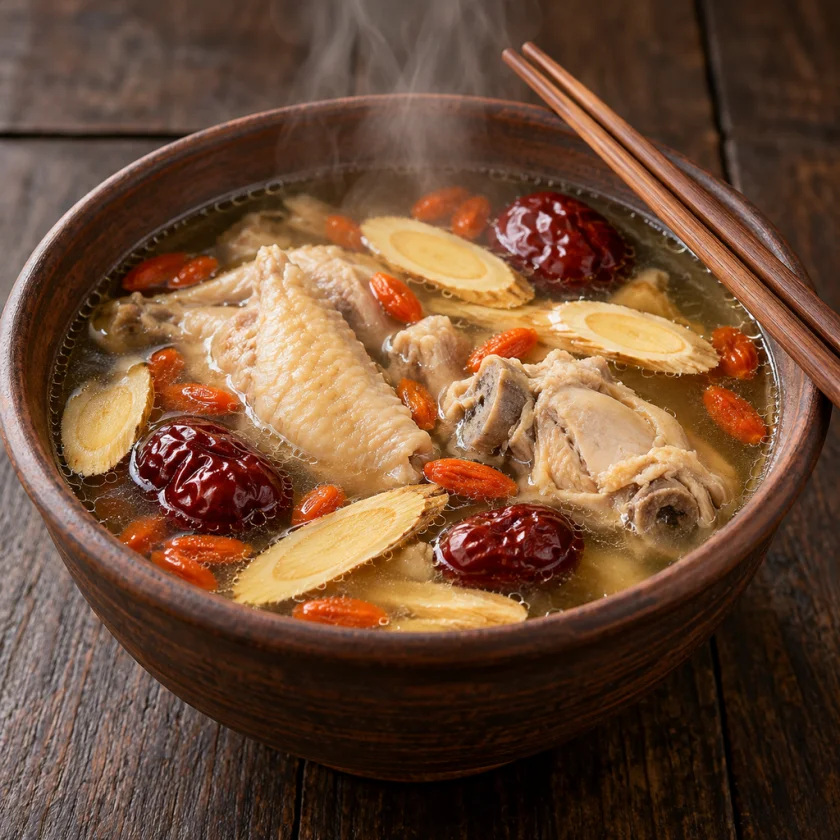
Astragalus (Astragalus membranaceus, known in China as huang qi, 黄耀, the "yellow leader") is the premier qi-tonifying herb of the Traditional Chinese Medicine pharmacopoeia, used continuously for more than 2,000 years to fortify the body's defensive wei qi, restore strength after illness, and protect against external pathogens. What modern pharmacology has discovered is that the same root the Han-dynasty physicians prescribed for "weak qi" contains a remarkable combination of immunomodulating polysaccharides (APS), cardioprotective and renoprotective triterpenoid saponins (astragalosides), and one molecule — cycloastragenol — that has placed an ancient tonic at the center of twenty-first-century longevity research through its ability to activate telomerase. Four deep-dive pages below trace the four most extensively studied modern indications: immune support, cardiovascular protection, anti-aging and telomere biology, and the clinical trials, mostly small and of low quality, in diabetic nephropathy and chronic kidney disease.
Deep-Dive Articles
Immune Function
Why astragalus is the cornerstone TCM immune tonic. Astragalus polysaccharides (APS) and astragalosides activate macrophages, natural killer cells, and cytotoxic T lymphocytes; the classical Yu Ping Feng San (Jade Windscreen) formula and modern respiratory infection trials; chemotherapy-induced myelosuppression rescue; Th1/Th2 modulation; and the long-build pattern that distinguishes astragalus from acute-phase herbs like echinacea.
Read the deep dive →Cardiovascular Health
Astragaloside IV as a cardioprotective triterpenoid: Chinese hospital congestive heart failure trials, improvements in left ventricular ejection fraction, post-myocardial infarction remodeling, endothelial nitric oxide function, cAMP signaling and inotropic effect, antioxidant protection of vascular endothelium, and what the trials of astragalus added to standard heart failure treatment report.
Read the deep dive →Anti-Aging & Telomeres
Cycloastragenol — the saponin aglycone studied for telomerase activation — and the commercial astragalus-derived telomerase activator sold as a supplement, the Harley 2011 immune-aging study of a commercial health program, the industry-funded 2016 placebo-controlled telomere trial, the Bernardes de Jesus 2011 mouse trial showing telomere lengthening without tumorigenesis, the geroscience case for telomerase activators, and the appropriate skepticism toward longevity claims in the absence of multi-decade human outcome data.
Read the deep dive →Kidney & Diabetic Nephropathy
The strongest modern evidence base for astragalus. The largest group of astragalus trials, mostly small Chinese studies of low quality. The Li 2011 meta-analysis (25 studies, 1,804 patients, mostly astragalus injection) reporting less urine protein and better creatinine clearance in diabetic nephropathy, the 2014 Cochrane review that found the kidney-function results inconsistent, mechanisms including TGF-beta-mediated fibrosis reduction, podocyte protection, immunoglobulin A (IgA) nephropathy applications, and the doses used in the trials.
Read the deep dive →Table of Contents
- Deep-Dive Articles
- Why Astragalus Produces Effects Across So Many Systems
- Safety Facts from the U.S. National Center for Complementary and Integrative Health
- Research Papers: Immune Function
- Research Papers: Cardiovascular Health
- Research Papers: Anti-Aging & Telomeres
- Research Papers: Kidney & Diabetic Nephropathy
- Research Papers: Cross-Cutting (Pharmacology, Safety, Drug Interactions)
- External Authoritative Resources
- Connections
- Featured Videos
Why Astragalus Produces Effects Across So Many Systems
Most medicinal herbs occupy one therapeutic niche: ginger for nausea, echinacea for acute upper respiratory infection, valerian for sleep, milk thistle for the liver. Astragalus is unusual because it is studied for effects across at least four distinct organ systems — immune, cardiovascular, renal, and the longevity-relevant telomere biology. The U.S. National Center for Complementary and Integrative Health (NCCIH) states (May 2025) that there is not sufficient reliable scientific evidence to know whether astragalus is useful for any health condition. The explanation offered for the range of effects seen in laboratory and clinical studies is that the root contains two pharmacologically separable classes of large molecules, each driving its own mechanism, on top of a third effect that emerges only from a highly concentrated single-molecule aglycone product.
- Astragalus polysaccharides (APS) — the immune mechanism. APS are large branched-chain glucan and arabinogalactan sugars that the human gut cannot digest. They bind toll-like receptors (primarily TLR4) and dectin-1 on macrophages and dendritic cells, triggering an innate immune signaling cascade that increases natural killer cell cytotoxicity, macrophage phagocytic capacity, interferon production, and B-cell antibody output. This is the mechanism behind the classical wei qi (defensive qi) effect of huang qi and behind the modern data on respiratory infection prophylaxis, chemotherapy-induced myelosuppression rescue, and adjunctive use in integrative oncology.
- Astragalosides (triterpenoid saponins) — the cardiovascular and renal mechanism. Astragaloside IV is the most thoroughly studied saponin and exerts a positive inotropic effect on cardiomyocytes via cAMP-mediated calcium handling, improves endothelial nitric oxide production, reduces TGF-beta-driven fibrosis in both heart and kidney, protects against ischemia-reperfusion injury, and reduces oxidative stress in vascular and renal tissue. This is the mechanism behind the Chinese hospital trials showing improved ejection fraction in congestive heart failure and the trials reporting reduced proteinuria in diabetic nephropathy. The 2014 Cochrane review of astragalus in chronic kidney disease (22 trials, 1,323 people, 241 of them on dialysis) found that astragalus added to standard treatment lowered urine protein by about 0.53 g per 24 hours and raised haemoglobin and blood albumin, but the kidney-function results were inconsistent, no trial reported the time to dialysis or deaths, and study quality was low overall, so the reviewers could not draw definitive conclusions.
- Cycloastragenol — the longevity / telomerase mechanism. Cycloastragenol is the saponin aglycone obtained by hydrolyzing astragaloside IV. At the concentrations achievable from whole-root preparations it has only marginal telomerase-activating effect; at the concentrations achievable from a purified single-molecule product (a commercial astragalus-derived telomerase activator sold as a supplement) it modestly upregulates the catalytic subunit of telomerase (hTERT) in cells with low baseline telomerase expression. This is the mechanism behind the geroscience interest in astragalus as a telomerase activator. In a 2011 mouse study (Bernardes de Jesus), the purified activator lengthened critically short telomeres only in cells that had telomerase, and in female mice fed it, glucose tolerance, bone loss and skin measures improved without a significant rise in overall cancer — an animal result. The first randomised, placebo-controlled human trial (Salvador 2016; 117 relatively healthy people aged 53–87, all cytomegalovirus-positive, one year) found that telomeres in the low-dose group lengthened by about 530 base pairs while the placebo group lost about 290; the high dose did not reach statistical significance. The study was funded by the product's maker, two authors were its employees and the others consulted for it, and it measured telomere length, not health outcomes.
The four deep-dive pages below explore each mechanism with the relevant clinical trials, the doses those trials used, and their limits. A common thread across all four is that astragalus is a slow-build, long-game herb — benefits accumulate over six to twelve weeks of consistent use, and the herb is well-suited to chronic rather than acute presentations. Acute-phase respiratory infection is better addressed with echinacea, elderberry, or zinc; chronic immune resilience, post-illness recovery, and the long-term protection of cardiovascular and renal tissue are where astragalus shines. In Traditional Chinese Medicine astragalus is described as a slow-build tonic, taken over weeks to months for long-standing weakness and recovery after illness rather than for an acute infection.
Safety Facts from the U.S. National Center for Complementary and Integrative Health
- The U.S. National Center for Complementary and Integrative Health (NCCIH, May 2025) states that astragalus may be safe when taken by mouth: up to 60 grams a day for as long as 4 months does not seem to cause adverse effects. A thorough safety evaluation has not been done.
- Astragalus might worsen the symptoms of autoimmune diseases, NCCIH states.
- Astragalus may interact with medicines that suppress the immune system.
- In the 2014 Cochrane review of 22 kidney-disease trials, 6 trials reported that no adverse effects were seen and the other 16 did not report on adverse effects.
Source: NCCIH — Astragalus; Zhang 2014 Cochrane review, PubMed PMID: 25335553.
Research Papers: Immune Function
- Astragalus polysaccharides (APS) immunomodulation mechanism — PubMed: APS immunomodulation
- APS activation of macrophages via TLR4 signaling — PubMed: APS TLR4 macrophages
- Yu Ping Feng San (Jade Windscreen) formula for respiratory infection prevention — PubMed: Yu Ping Feng San
- Astragalus in chemotherapy-induced myelosuppression rescue — PubMed: Chemo myelosuppression
- Natural killer cell activation by astragalus — PubMed: NK cell activation
- Astragalus in upper respiratory tract infection prophylaxis — PubMed: URI prophylaxis
- T-helper Th1/Th2 modulation by astragalus extracts — PubMed: Th1/Th2 modulation
- Astragalus in integrative oncology adjunctive therapy — PubMed: Integrative oncology adjunct
- Astragalus increases serum IgA, IgG, IgM in clinical trials — PubMed: Serum immunoglobulins
- Astragalus for chronic hepatitis B viral load reduction — PubMed: Chronic hepatitis B
Research Papers: Cardiovascular Health
- Astragaloside IV cardioprotective mechanisms review — PubMed: Astragaloside IV cardioprotection
- Astragalus injection in congestive heart failure (Chinese hospital trials) — PubMed: CHF trials
- Astragaloside IV protection against ischemia-reperfusion injury — PubMed: Ischemia-reperfusion
- Astragalus post-myocardial infarction cardiac remodeling — PubMed: Post-MI remodeling
- Astragalus endothelial nitric oxide and vasodilation — PubMed: Endothelial NO
- Astragaloside IV cAMP signaling and inotropic effect — PubMed: cAMP and inotropy
- Astragalus reduces LDL oxidation and atherosclerosis — PubMed: LDL oxidation
- Astragalus antiplatelet activity — PubMed: Antiplatelet activity
- Astragalus in viral myocarditis (Coxsackie) — PubMed: Viral myocarditis
- Astragalus reduces oxidative damage in vascular endothelium — PubMed: Vascular antioxidant
Research Papers: Anti-Aging & Telomeres
- Cycloastragenol telomerase activation mechanism — PubMed: Cycloastragenol mechanism
- Harley CB, Liu W, Blasco M, Vera E, Andrews WH, Briggs LA, Raffaele JM. A natural product telomerase activator as part of a health maintenance program. Rejuvenation Res. 2011;14(1):45-56. PubMed PMID: 20822369
- Bernardes de Jesus B, Schneeberger K, Vera E, Tejera A, Harley CB, Blasco MA. The telomerase activator TA-65 elongates short telomeres and increases health span of adult/old mice without increasing cancer incidence. Aging Cell. 2011;10(4):604-21. PubMed PMID: 21426483
- Salvador L, Singaravelu G, Harley CB, Flom P, Suram A, Raffaele JM. A Natural Product Telomerase Activator Lengthens Telomeres in Humans: A Randomized, Double Blind, and Placebo Controlled Study. Rejuvenation Res. 2016;19(6):478-484. (Industry-funded.) PubMed PMID: 26950204
- Telomere length and biological aging (Blackburn review) — PubMed: Telomeres and aging
- Telomerase activator and critically short telomere lengthening in human leukocytes — PubMed: Short telomeres in leukocytes
- Cycloastragenol and senescence-associated secretory phenotype (SASP) — PubMed: SASP modulation
- Telomerase activator long-term safety and cancer signal — PubMed: Telomerase safety
- Astragalus and stem cell mobilization research — PubMed: Stem cell mobilization
- Cycloastragenol and skin aging / fibroblast research — PubMed: Skin aging
- Astragalus extract HDM2 / p53 cellular senescence research — PubMed: p53 senescence
Research Papers: Kidney & Diabetic Nephropathy
- Li M, Wang W, Xue J, Gu Y, Lin S. Meta-analysis of the clinical value of Astragalus membranaceus in diabetic nephropathy. J Ethnopharmacol. 2011;133(2):412-9. PubMed PMID: 20951192
- Zhang HW, Lin ZX, Xu C, Leung C, Chan LS. Astragalus (a traditional Chinese medicine) for treating chronic kidney disease. Cochrane Database Syst Rev. 2014;2014(10):CD008369. PubMed PMID: 25335553
- Astragalus reduces proteinuria in chronic kidney disease — PubMed: Proteinuria reduction
- Astragaloside IV TGF-beta inhibition and renal fibrosis — PubMed: TGF-beta renal fibrosis
- Astragalus podocyte protection in nephrotic syndrome — PubMed: Podocyte protection
- Astragalus for IgA nephropathy — PubMed: IgA nephropathy
- Astragalus and glomerular filtration rate (eGFR) improvement — PubMed: eGFR improvement
- Astragalus in renal ischemia-reperfusion injury — PubMed: Renal I-R injury
- Astragalus combined with ACE inhibitors in diabetic kidney disease — PubMed: ACE-inhibitor combination
- Astragalus and renal microcirculation — PubMed: Renal microcirculation
- Astragalus and oxidative stress in kidney tissue — PubMed: Renal oxidative stress
Research Papers: Cross-Cutting (Pharmacology, Safety, Drug Interactions)
- Astragalus phytochemistry comprehensive review — PubMed: Phytochemistry review
- Astragaloside IV pharmacokinetics in humans — PubMed: AS-IV pharmacokinetics
- Astragalus polysaccharide oral bioavailability — PubMed: APS bioavailability
- Astragalus safety profile and adverse event review — PubMed: Safety review
- Astragalus drug interactions: cyclosporine, anticoagulants, lithium — PubMed: Drug interactions
- Astragalus and CYP450 enzyme modulation — PubMed: CYP450 interactions
- Astragalus in autoimmune disease: caution and contraindications — PubMed: Autoimmune caution
- Yu Ping Feng San classical formula composition and modern use — PubMed: YPFS composition
- Bu Zhong Yi Qi Tang classical formula clinical applications — PubMed: BZYQT applications
- Memorial Sloan Kettering Cancer Center astragalus monograph — PubMed: MSKCC monograph
External Authoritative Resources
- Memorial Sloan Kettering Cancer Center — Astragalus Monograph — the most rigorously evidence-graded clinician-facing summary of astragalus, with drug-interaction tables
- U.S. National Center for Complementary and Integrative Health (NCCIH) — Astragalus — National Center for Complementary and Integrative Health overview
- LiverTox (U.S. National Institutes of Health, NIH) — Astragalus — U.S. National Institutes of Health consumer-facing summary with interactions and dosing
- European Medicines Agency — Astragali radix monograph
- PubMed — All research on Astragalus membranaceus (~9,000+ papers)
Connections
- All Herbs
- Astragalus (Main Page)
- Astragalus for Immune Function
- Astragalus for Cardiovascular Health
- Astragalus for Anti-Aging & Telomeres
- Astragalus for Kidney & Diabetic Nephropathy
- Echinacea
- Ashwagandha
- Rhodiola Rosea
- Schisandra
- Ginseng
- Holy Basil
- Immune Boosting
- Stress Management
- Oxidative Stress
- Cardiovascular Disease
- Kidney Disease
- Cancer
- Fatigue
- Kidney Function
- Complete Blood Count
- History