Meadowsweet — Benefits Deep Dive
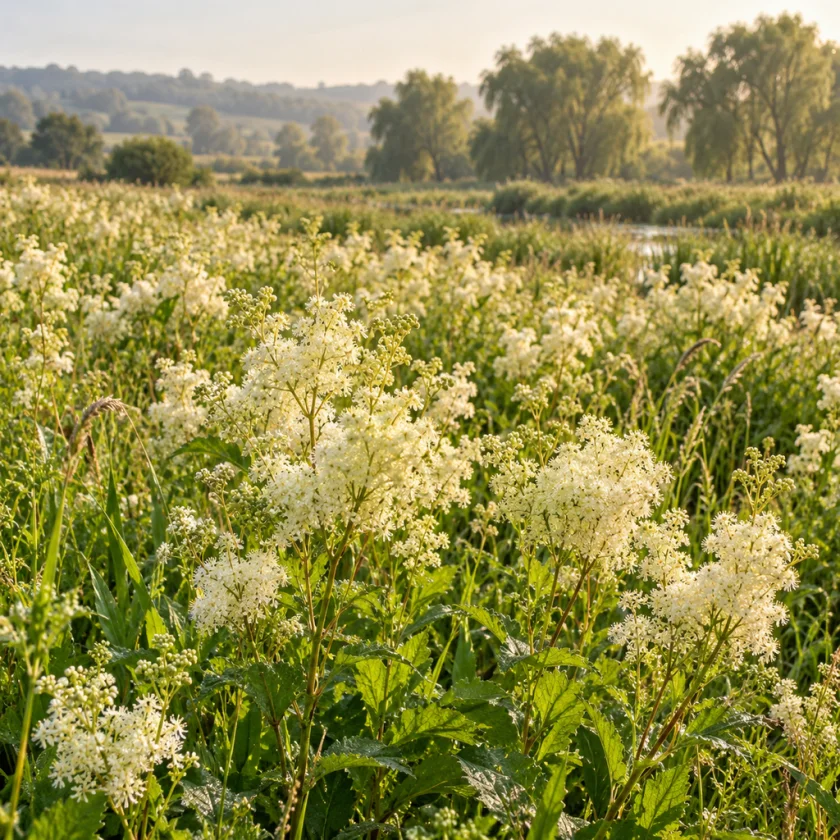
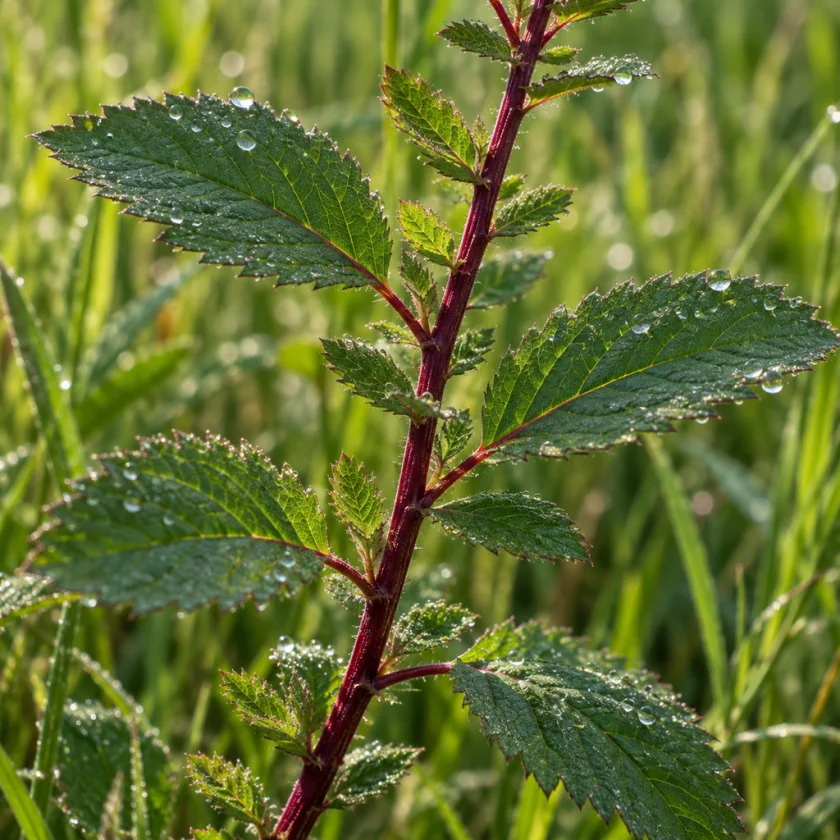
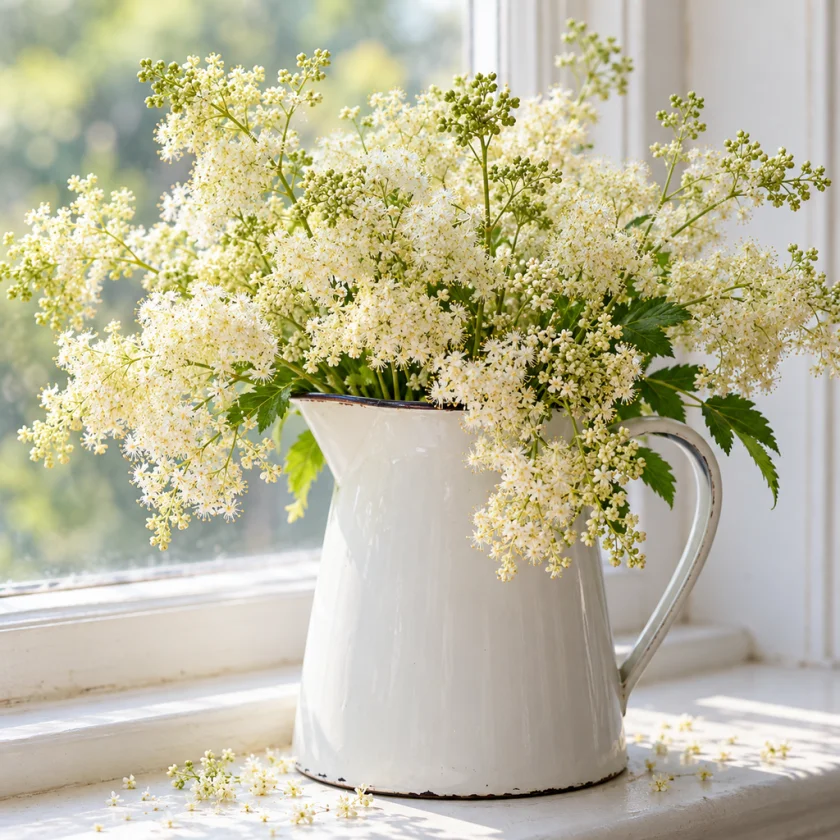
Meadowsweet (Filipendula ulmaria, formerly Spiraea ulmaria) is the herb with the best story in the whole European herbal cabinet, and the story is usually told wrong. The -spir- in aspirin really does come from Spiraea, this plant's old genus — that etymology is genuine and worth knowing. But the plant does not contain aspirin. It contains salicylate glycosides and aromatic salicylates, not acetylsalicylic acid, and the acetyl group that Bayer added in 1897 is precisely what changes how the drug behaves in your stomach and your platelets. "Herbal aspirin" is not an exaggeration; it is a category error.
These four deep dives work through what follows from that. Why the etymology is real but the pharmacology is different. Why a salicylate plant was traditionally used for stomach complaints when aspirin famously causes them — and how far the proposed resolution actually goes. What the joint-pain and fever evidence amounts to, which is tradition plus animal data and essentially no controlled human trial of meadowsweet for any indication. And, most practically, who the research raises concerns for: the salicylate-sensitive, people with aspirin-sensitive asthma, children and teenagers with a viral illness, and anyone on an anticoagulant. Each page labels its claims by evidence tier — randomised trial, preliminary animal or in-vitro, or traditional use only — because for this plant those three tiers point in noticeably different directions.
Meadowsweet, Salicylates and the Aspirin Story
The etymology is real: Spiraea gave aspirin its "-spir-". The chemistry is not what people assume. Meadowsweet holds salicylate glycosides, salicylaldehyde and methyl salicylate — never acetylsalicylic acid — and acetylation is what creates irreversible COX inhibition, lifelong platelet blockade and the classic gastric injury. Why "herbal aspirin" misleads in both directions, why the tea is no substitute for prescribed low-dose aspirin, and why nobody can tell you your dose.
Read the deep dive →Meadowsweet for Digestion and Stomach Comfort
Aspirin causes ulcers; meadowsweet was traditionally used to soothe them. The best content on this plant is the resolution of that paradox — non-acetylated salicylate that is a weak, reversible COX inhibitor, glycosides that pass the stomach intact, and a heavy load of ellagitannins and mucilage — supported by real animal gastroprotection data. Also the honest limit: that is a plausible mechanism with preclinical support, not a demonstrated human effect.
Read the deep dive →Meadowsweet for Joint Pain and Fever
Rheumatic pain and feverish colds are the plant's oldest indications, resting on centuries of European use plus positive but preliminary anti-inflammatory work in cells and rodents. What is missing is any adequate controlled human trial. German Commission E permitted it as supportive therapy for colds — a monograph built on tradition, not trial data. Includes a direct comparison with willow bark, which has the weaker story and the better evidence.
Read the deep dive →Meadowsweet Safety: Who Should Avoid It
The practically important page. Because it delivers salicylates, the research raises concerns for people with salicylate sensitivity and aspirin-sensitive asthma, where reactions can be severe; for children and teenagers with a viral illness, given the Reye's syndrome association; and with anticoagulants and antiplatelets, in active peptic ulcer disease despite the tradition, and in pregnancy. Plus the coumarin myth corrected, and why an unstandardised dose cuts both ways.
Read the deep dive →Table of Contents
- What Meadowsweet Is
- The Four Deep Dives
- Evidence at a Glance
- Key Research: History and Etymology
- Key Research: Chemistry and Salicylates
- Key Research: Gastroprotection and Digestion
- Key Research: Inflammation, Pain and Antioxidants
- Key Research: Salicylate Safety
- External Resources
- Connections
- Featured Videos
What Meadowsweet Is
A tall perennial of damp European meadows, ditches and riverbanks, in the rose family (Rosaceae), carrying flat sprays of tiny creamy flowers that smell of wintergreen and almond. Old English names include queen of the meadow, bridewort and meadwort — the last a reminder that the flowers were used to flavour mead. The parts used medicinally are the flowering tops: flowers and upper leaves, gathered in summer and dried.
Its chemistry divides into three groups that matter differently:
- Salicylates — the phenolic glycosides monotropitin (gaultherin) and spiraein, plus the volatile salicylaldehyde and methyl salicylate that produce the scent, and a little free salicylic acid. These are stored sugar-bound and released mainly by gut bacteria, which makes onset slow and the delivered dose dependent on your own microbiome.
- Tannins — ellagitannins in quantity, including rugosin-type compounds. By weight, meadowsweet is more a tannin herb than a salicylate herb, and the tannins are the traditional basis for its astringent, stomach-settling reputation.
- Flavonoids — notably spiraeoside (quercetin 4′-O-glucoside, named for the plant), with quercetin, hyperoside, rutin and kaempferol glycosides. If the herb has any anti-inflammatory effect in people, these are at least as plausible a contributor as the salicylates.
The full topic overview, including the plant's history and the Hoffmann–Eichengrün question, sits on the main Meadowsweet page.
The Four Deep Dives
- Meadowsweet, Salicylates and the Aspirin Story — the true etymology, the two-plant history shared with willow, the glycoside pharmacology, what acetylation actually does, and why the herb is not a substitute for prescribed antiplatelet aspirin.
- Meadowsweet for Digestion and Stomach Comfort — the paradox and its proposed resolution, the dual mechanism of nonsteroidal anti-inflammatory drug (NSAID) gastric injury, tannins and mucilage, the animal gastroprotection data, and the human evidence gap.
- Meadowsweet for Joint Pain and Fever — traditional indications, the salicylate and polyphenol rationales, the preclinical data, what a Commission E monograph does and does not mean, and how it compares with willow bark.
- Meadowsweet Safety: Who Should Avoid It — the practical page: salicylate sensitivity, aspirin-exacerbated respiratory disease, Reye's syndrome, anticoagulants, ulcers, pregnancy, and the unstandardised dose.
Evidence at a Glance
Sorting meadowsweet's claims by what they actually rest on, because the tiers differ dramatically and most write-ups blend them:
- Settled chemistry and history. That meadowsweet was Spiraea ulmaria; that spiraeic acid gave aspirin its "-spir-"; that the plant contains salicylate glycosides and aromatic salicylates but no acetylsalicylic acid. Not health claims at all — documented fact.
- Established pharmacology, applied by inference. That acetylation is what produces irreversible COX inhibition and lifelong platelet blockade; that non-acetylated salicylate drugs such as salsalate are less gastrotoxic and barely antiplatelet. Solid for the drugs; extrapolated to the herb.
- Preliminary — animal and in vitro. Gastroprotection in an experimental gastric-lesion model; anti-inflammatory activity in cells and rodents; analgesic effects in animal models; retained activity of gut-generated metabolites; high antioxidant capacity; antimicrobial activity of extracts and volatile oil.
- Traditional use only. Fever, rheumatic and joint pain, heartburn, gastritis, nausea, mild diarrhoea. Centuries of consistent European use and a German Commission E monograph permitting it as supportive therapy for colds — a monograph based on documented tradition and expert judgement rather than trials.
- Absent. Adequate controlled human trials of meadowsweet for any indication. Not negative trials — effectively no trials. The one human clinical report is a 1993 Russian study: 48 women with cervical dysplasia (precancerous changes of the neck of the womb) were treated with courses of an ointment made from meadowsweet flowers, and a positive response was recorded in 32 (67%), including complete regression in 25 (52%), with no recurrence within 12 months in the 10 women followed after a complete cure. The abstract reports no comparison group, so it is not a controlled trial; in the same paper, a flower decoction applied locally lowered chemically induced cervical and vaginal cancer in mice by 39% (Peresun'ko 1993). The research sections below include searches that let you verify the absence of controlled trials for yourself.
That profile makes meadowsweet an interesting and under-studied plant rather than a proven remedy, and it is a much more useful thing to know than a confident claim you would have to distrust.
Key Research: History and Etymology
Each named paper below closes with its fixed PubMed record (PMID) or, where the paper is not in PubMed, its DOI. Entries that describe a body of literature rather than one paper link to PubMed topic searches, so you can see the surrounding studies.
- Sneader W. "The discovery of aspirin: a reappraisal." BMJ, 2000. The influential argument from Bayer's laboratory record that Arthur Eichengrün, not Felix Hoffmann, directed the acetylation work. Tier: historical scholarship. — PubMed PMID: 11124191
- Desborough MJR, Keeling DM. "The aspirin story — from willow to wonder drug." British Journal of Haematology, 2017;177(5):674-683. Traces salicylates through both willow and meadowsweet, which is the accurate two-plant version of the story. Tier: narrative review. — PubMed PMID: 28106908
- Wood JN. "From plant extract to molecular panacea: a commentary on Stone (1763) 'An account of the success of the bark of the willow in the cure of the agues'." Philosophical Transactions of the Royal Society B, 2015;370(1666). Revisits the report usually treated as the start of the salicylate story. Tier: historical scholarship. — PubMed PMID: 25750237
- Mahdi JG. "Medicinal potential of willow: a chemical perspective of aspirin discovery." Journal of Saudi Chemical Society, 2010;14(3):317-322. Reviews the salicylate chemistry that meadowsweet shares (not indexed in PubMed). Tier: review. — doi:10.1016/j.jscs.2010.04.010
Key Research: Chemistry and Salicylates
- Analytical literature on meadowsweet's salicylate glycosides. Characterisation of monotropitin (gaultherin), spiraein and related phenolic glycosides, and their hydrolysis to salicylaldehyde and methyl salicylate. Tier: analytical chemistry. — Search PubMed
- Savina T, Lisun V, Feduraev P, Skrypnik L. "Variation in phenolic compounds, antioxidant and antibacterial activities of extracts from different plant organs of meadowsweet (Filipendula ulmaria)." Molecules, 2023;28(8). Documents how much the chemistry differs between flowers, leaves and roots — the analytical reason the dose in a tea cannot be known. Tier: analytical / in vitro. — PubMed PMID: 37110746
- Vane JR. "Inhibition of prostaglandin synthesis as a mechanism of action for aspirin-like drugs." Nature New Biology, 1971;231(25):232-5. The foundational COX mechanism behind every salicylate claim. Tier: established mechanism. — PubMed PMID: 5284360
- Literature on aspirin's irreversible acetylation of cyclo-oxygenase. The covalent serine modification that distinguishes aspirin from every plant salicylate. Tier: established mechanism. — Search PubMed
- Willow bark salicin pharmacokinetics. Human studies tracing a plant salicylate glycoside through bacterial hydrolysis to circulating salicylic acid — the same slow, variable route meadowsweet's glycosides take. Tier: human pharmacokinetics (willow). — Search PubMed
Key Research: Gastroprotection and Digestion
- Samardžić S, Arsenijević J, Božić D, Milenković M, Tešević V, Maksimović Z. "Antioxidant, anti-inflammatory and gastroprotective activity of Filipendula ulmaria (L.) Maxim. and Filipendula vulgaris Moench." Journal of Ethnopharmacology, 2018;213:132-137. The central modern echo of the traditional gastric use: reduced gastric damage in an experimental model. The model was alcohol (ethanol)-induced acute stomach injury in rats: freeze-dried flower infusions (100–300 mg/kg by mouth) preserved the stomach lining, and two compounds isolated from the related dropwort (F. vulgaris) — the flavonoid spiraeoside (50 mg/kg) and the tannin tellimagrandin II (40 mg/kg) — each prevented ulcers. The authors credit flavonoid and tannin components, rather than salicylates, with part of the effects, which fits the tannin point above. Tier: preliminary (animal and in vitro). — PubMed PMID: 29132911
- Early Russian pharmacology on anti-ulcer activity of meadowsweet flower decoction (around 1980). The original animal report behind most modern ulcer claims for this plant. Old, in Russian, predating current reporting standards — provenance rather than reliable evidence. Tier: preliminary (animal), low quality. — Search PubMed
- Literature on the dual mechanism of NSAID gastric injury. Local ion-trapping injury plus systemic COX-1-dependent loss of mucosal defence — the framework for asking whether a non-acetylated salicylate escapes the problem. Tier: established mechanism. — Search PubMed
- Comparative gastrointestinal tolerability of non-acetylated salicylates. Salsalate and relatives show less gastric toxicity than aspirin — the strongest drug-based support for meadowsweet's gentler reputation. Tier: clinical pharmacology of drugs, applied by inference. — Search PubMed
- Tannins, astringency and gastrointestinal effects. Protein binding at mucosal surfaces, anti-diarrhoeal use, and reduced non-haem iron absorption — the honest counterpoint that tannins are not uniformly soothing. Tier: mixed mechanism and human absorption studies. — Search PubMed
Key Research: Inflammation, Pain and Antioxidants
- Katanić J, Boroja T, Mihailović V, Nikles S, Pan SP, Rosić G, Selaković D, Joksimović J, Mitrović S, Bauer R. "In vitro and in vivo assessment of meadowsweet (Filipendula ulmaria) as anti-inflammatory agent." Journal of Ethnopharmacology, 2016;193:627-636. The principal anti-inflammatory study, in both cells and animals. Tier: preliminary (animal and in vitro). — PubMed PMID: 27721054
- Van der Auwera A, Peeters L, Foubert K, Piazza S, Vanden Berghe W, Hermans N, Pieters L. "In vitro biotransformation and anti-inflammatory activity of constituents and metabolites of Filipendula ulmaria." Pharmaceutics, 2023;15(4). Gut-generated metabolites retain anti-inflammatory activity — important, because the effect then does not require intact glycosides to be absorbed. Tier: preliminary, in vitro. — PubMed PMID: 37111776
- Recent pharmacology on anti-inflammatory and analgesic effects of Filipendula ulmaria extract in animal models. Adds the pain dimension to the anti-inflammatory picture. Tier: preliminary (animal). — Search PubMed
- Radulović N, Misić M, Aleksić J, Doković D, Palić R, Stojanović G. "Antimicrobial synergism and antagonism of salicylaldehyde in Filipendula vulgaris essential oil." Fitoterapia, 2007;78(7-8):565-70. Identifies salicylaldehyde as a principal active constituent of the volatile oil. Tier: preliminary, in vitro. — PubMed PMID: 17590530
- Systematic-review literature on willow bark for musculoskeletal pain. The comparison case: the salicylate herb that does have randomised placebo-controlled trials, showing what meadowsweet's evidence base would look like if it existed. Tier: randomised trials and systematic review (willow bark). — Search PubMed
- Search for controlled human trials of Filipendula ulmaria. Deliberately included so this site's central negative claim is checkable rather than asserted. Tier: absence of evidence. — Search PubMed
- Peresun'ko AP, Bespalov VG, Limarenko AI, Aleksandrov VA. "Clinico-experimental study of using plant preparations from the flowers of Filipendula ulmaria (L.) Maxim for the treatment of precancerous changes and prevention of uterine cervical cancer." Voprosy Onkologii, 1993;39(7-12):291-5 (in Russian). Flower ointment in 48 women with cervical dysplasia, and a flower decoction in a mouse cervical-cancer model. Tier: uncontrolled human case series and animal. — PubMed PMID: 7825300
- Redl M, Weisenburger S, Wasilewicz A, Grienke U, Lehner MD, Bredenbröker D, Rollinger JM. "Miquelianin and spiraeoside from Filipendula ulmaria mitigate α-synuclein accumulation in C. elegans and reduce the expression of neuroinflammatory cytokines in human microglia." Frontiers in Pharmacology, 2025;16:1720314. A meadowsweet extract reduced build-up of α-synuclein (the protein that clumps in Parkinson's disease) in roundworms by up to 25%, and its flavonoids spiraeoside and miquelianin by 32% and 35%; the extract also lowered the inflammatory signals IL-1β, IL-6 and MCP-1 in human brain immune cells (microglia) grown in the laboratory. Worm and cell-culture work only; the study was funded by a herbal-medicine manufacturer. Tier: preliminary (animal and in vitro). — PubMed PMID: 41756116
Key Research: Salicylate Safety
- Reye RD, Morgan G, Baral J. "Encephalopathy and fatty degeneration of the viscera: a disease entity in childhood." Lancet, 1963;2(7311):749-52. The original description of the syndrome behind the paediatric salicylate contraindication. Tier: original clinical description. — PubMed PMID: 14055046
- Epidemiology of salicylates and Reye's syndrome, and the fall in cases after public health warnings. Surveillance data through the 1980s and 1990s. Tier: epidemiological, strong. — Search PubMed
- Rajan JP, Wineinger NE, Stevenson DD, White AA. "Prevalence of aspirin-exacerbated respiratory disease among asthmatic patients: a meta-analysis of the literature." Journal of Allergy and Clinical Immunology, 2015;135(3):676-81. Across 27 studies, aspirin-exacerbated respiratory disease was found in 7.15% of adults with asthma, 14.89% of people with severe asthma and 9.69% of people with nasal polyps. Tier: meta-analysis of prevalence studies. — PubMed PMID: 25282015
- Guidelines on classification, diagnosis and management of NSAID hypersensitivity. Including the distinction between true allergy and pharmacological cross-intolerance. Tier: expert guideline. — Search PubMed
- Salicylate–warfarin and salicylate–methotrexate interaction literature. Protein-binding displacement and reduced methotrexate clearance — the mechanistic basis for the drug cautions. Tier: pharmacokinetic and clinical (drugs). — Search PubMed
- Dicoumarol, spoiled sweet clover and the origin of warfarin. The history showing plain plant coumarin is not an anticoagulant — a myth corrected on the safety page. Tier: established history and pharmacology. — Search PubMed
External Resources
- PubMed — the biomedical literature database behind every citation search on these pages.
- U.S. National Institutes of Health (NIH) National Center for Complementary and Integrative Health — US government evidence and safety summaries for herbal products.
- MedlinePlus — plain-language drug, supplement and condition information from the National Library of Medicine.
- European Medicines Agency — the European regulator, whose traditional-use category is where meadowsweet products sit.
- DailyMed — official US prescribing information, useful for checking your own medicines' salicylate and nonsteroidal anti-inflammatory drug warnings.
- Plants of the World Online (Kew) — authoritative record of the Spiraea ulmaria to Filipendula ulmaria name change that the aspirin etymology depends on.
Connections
- All Herbs
- Meadowsweet
- Meadowsweet and the Aspirin Story
- Meadowsweet for Digestion
- Meadowsweet for Joint Pain and Fever
- Meadowsweet Safety
- Willow Bark
- Willow Bark Benefits
- Willow Bark for Pain
- Willow Bark vs Aspirin
- Aspirin
- Aspirin Benefits
- Aspirin Side Effects
- Aspirin Bleeding Risks
- Marshmallow Root
- Slippery Elm
- Licorice for Gastrointestinal Health and Ulcers
- Boswellia
- Turmeric
- Devil's Claw
- Ginger
- Feverfew
- Yarrow
- Elderberry
- Peptic Ulcer Disease
- Gastritis
- Osteoarthritis
- Arthritis
- Asthma
Safety and disclaimer. Meadowsweet delivers salicylates at an unstandardised, unmeasurable dose. Salicylates can set off reactions in people sensitive to aspirin or salicylates, and attacks in people with aspirin-exacerbated respiratory disease, which a 2015 meta-analysis found in 7.15% of adults with asthma, 14.89% of people with severe asthma and 9.69% of people with nasal polyps (Rajan 2015). Salicylates are linked to Reye's syndrome in children and teenagers, especially during a viral illness, and the safety page lists pregnancy and breastfeeding among the concerns. Salicylates interact with anticoagulants, antiplatelets, methotrexate and other nonsteroidal anti-inflammatory drugs (NSAIDs), and in active peptic ulcer disease the salicylate content works against the traditional use. These pages are educational information, not medical advice, and nothing here is a reason to stop or change a prescribed medicine — least of all prescribed aspirin.