⚠ Evidence warning: Clinical trials or other evidence do not support the claim that a 1:1 sage and rosemary extract works better against Staphylococcus aureus than either herb alone. This page keeps it as a report of what people, websites or other media say.
Sage (Salvia officinalis)
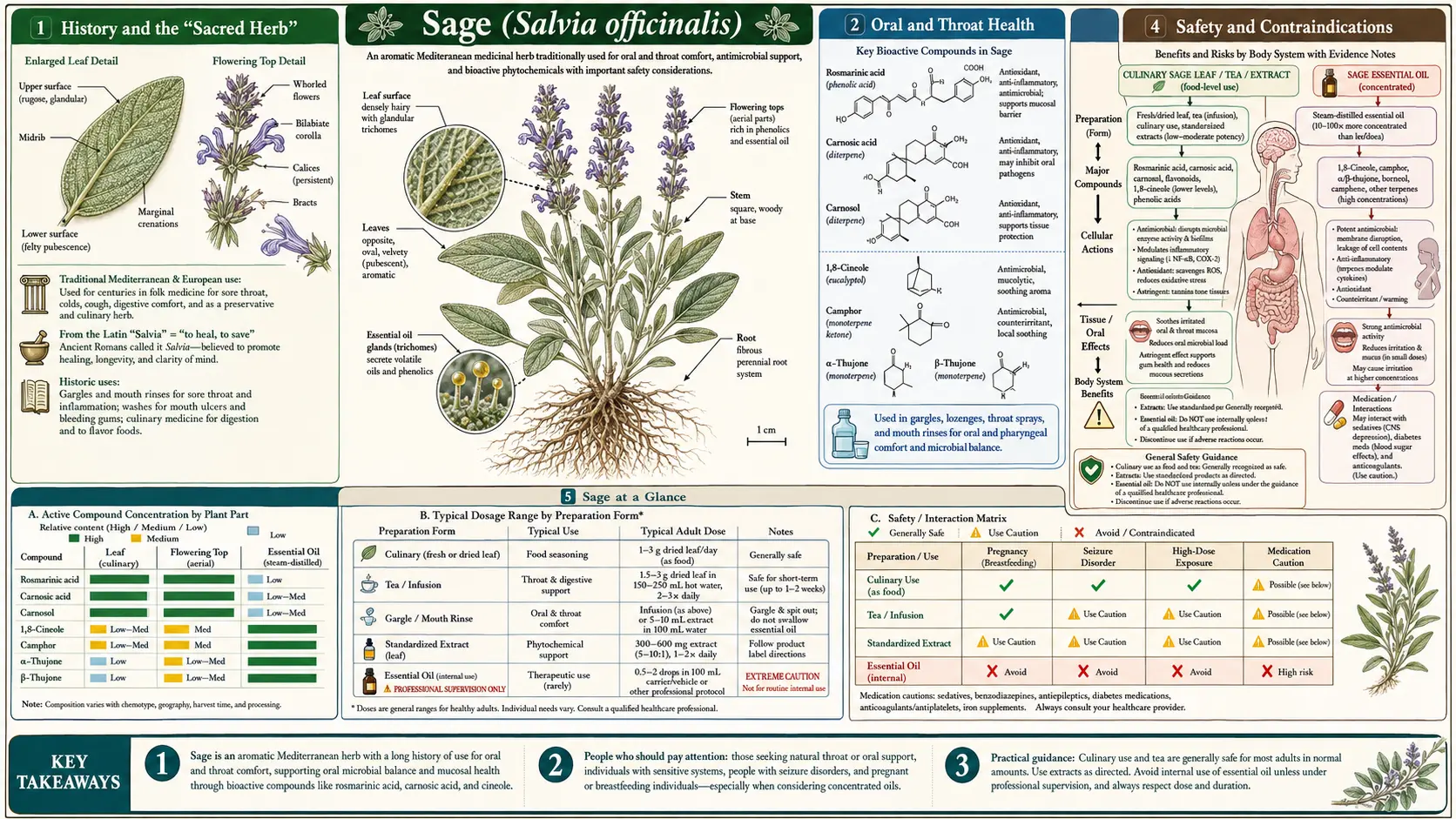
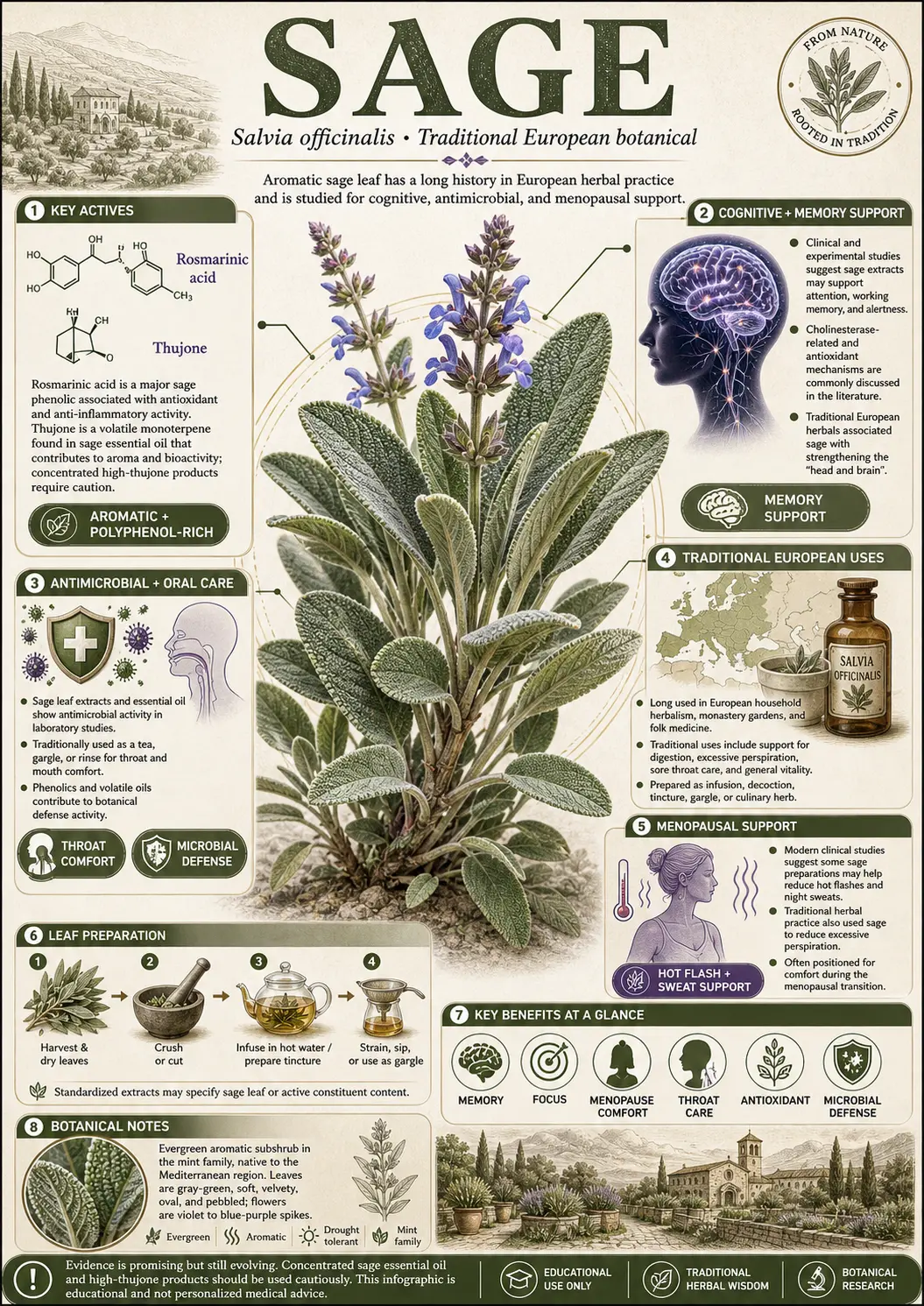
The very name of sage speaks to its healing legacy. The Latin genus Salvia derives from the verb salvare, meaning "to save" or "to heal." The species name officinalis indicates that it was officially recognized in the pharmacopoeias of apothecaries and healing practitioners. For centuries, sage has been regarded as one of the most important medicinal herbs in the Western herbal tradition, and modern science has increasingly validated its remarkable antibacterial properties, placing sage at the forefront of research into plant-based antimicrobial agents.
Table of Contents
- History and the "Sacred Herb"
- Key Antibacterial Compounds
- Mechanism of Antibacterial Action
- Bacteria Targeted by Sage
- Research Studies and Clinical Evidence
- Oral and Throat Health
- Respiratory Antibacterial Uses
- Skin Infections and Wound Healing
- Food Preservation
- Sage Essential Oil vs Culinary Sage
- Synergistic Effects with Other Herbs
- Other Health Benefits
- Forms and Preparations
- Dosage in Traditional Use
- Safety and Contraindications
- Key Research Papers
- Featured Videos
History and the "Sacred Herb"
Sage has been revered as a healing plant for more than two thousand years — its very name, from the Latin salvare ("to save"), records that reputation. The Romans called it a sacred herb, medieval monks gave it the place of honour in their physic gardens, and the masters of the Salerno medical school famously asked why a man should die while sage grew in his garden — the fuller story is told in the dedicated History & Traditional Use article.
Key Antibacterial Compounds
Sage contains a complex phytochemical profile with numerous bioactive compounds that contribute to its antibacterial activity. The synergy among these compounds produces an antimicrobial effect that is often greater than any single isolated constituent.
Monoterpene Ketones
- Alpha-thujone: The most abundant monoterpene ketone in sage essential oil, typically comprising 18-43% of the oil. Alpha-thujone is a powerful antimicrobial agent that disrupts bacterial cell membranes. It is particularly effective against Gram-positive bacteria. At high concentrations, thujone is neurotoxic, which is why sage essential oil carries a poisoning risk, but at the concentrations found in culinary sage and sage tea, it contributes significantly to antibacterial activity without posing a safety risk.
- Beta-thujone: Present at lower concentrations than its alpha isomer (typically 3-8% of the essential oil), beta-thujone works synergistically with alpha-thujone to enhance overall antimicrobial potency. Research has shown that the combination of both thujone isomers produces stronger antibacterial effects than either alone.
Monoterpene Oxides and Bicyclic Monoterpenes
- 1,8-Cineole (eucalyptol): Comprising 5-15% of sage essential oil, 1,8-cineole is a potent antibacterial and anti-inflammatory compound also found in eucalyptus and rosemary. It penetrates bacterial cell membranes and disrupts their structural integrity. 1,8-cineole has demonstrated strong activity against respiratory pathogens and is a key reason why sage has been traditionally used for throat and lung infections.
- Camphor: Present at approximately 5-22% of the essential oil, camphor provides additional antimicrobial activity and is particularly effective in topical applications for skin infections. Camphor also enhances the penetration of other antimicrobial compounds through bacterial cell walls, acting as a permeability enhancer.
Phenolic Diterpenes
- Carnosic acid: One of the most important phenolic diterpenes in sage, carnosic acid exhibits strong antibacterial activity, particularly against Gram-positive bacteria including methicillin-resistant Staphylococcus aureus (MRSA). Carnosic acid damages bacterial membranes by inserting into the lipid bilayer and causing leakage of intracellular contents. It also possesses powerful antioxidant properties, protecting cells from oxidative damage caused by bacterial infections.
Phenolic Acids
- Rosmarinic acid: A caffeic acid ester found abundantly in sage leaves, rosmarinic acid is a dual-action compound that provides both antibacterial and anti-inflammatory effects. It inhibits bacterial adhesion to host tissues, preventing colonization and biofilm formation. Rosmarinic acid has demonstrated activity against a broad spectrum of bacteria, including both Gram-positive and Gram-negative species. Studies have shown that it also enhances the effectiveness of conventional antibiotics when used in combination.
Pentacyclic Triterpenoids
- Ursolic acid: This triterpenoid compound is found in significant quantities in sage leaves and has garnered substantial research interest for its antimicrobial properties. Ursolic acid inhibits bacterial growth by interfering with bacterial enzymes essential for cell wall synthesis. It has shown particular promise against drug-resistant bacteria and has demonstrated synergistic effects when combined with conventional antibiotics such as ampicillin and tetracycline.
Mechanism of Antibacterial Action
Sage's antibacterial activity operates through multiple simultaneous mechanisms, making it difficult for bacteria to develop resistance. This multi-target approach is one of the most significant advantages of plant-based antimicrobials over single-molecule pharmaceutical antibiotics.
Membrane Disruption
The terpenoid compounds in sage, particularly thujone, 1,8-cineole, and camphor, are lipophilic molecules that preferentially partition into bacterial cell membranes. Once embedded in the lipid bilayer, they disrupt the ordered arrangement of phospholipids, increasing membrane permeability. This leads to leakage of critical intracellular components including potassium ions, adenosine triphosphate (ATP), nucleic acids, and amino acids. The resulting loss of membrane integrity ultimately causes cell lysis and bacterial death. Studies using electron microscopy have confirmed that sage-treated bacteria exhibit pronounced morphological changes, including membrane blebbing, cell wall degradation, and cytoplasmic leakage.
Protein Synthesis Inhibition
Several of sage's bioactive compounds interfere with bacterial protein synthesis at multiple levels. Carnosic acid and ursolic acid inhibit key enzymes involved in bacterial translation, disrupting the ability of ribosomes to accurately read messenger RNA and assemble functional proteins. Additionally, rosmarinic acid has been shown to interfere with bacterial DNA gyrase, an enzyme essential for DNA replication and transcription. By targeting these fundamental cellular processes, sage compounds effectively halt bacterial growth and reproduction even at sub-lethal concentrations, a mechanism known as bacteriostatic activity.
Oxidative Stress Induction
While sage is well known for its antioxidant properties in human cells, its interaction with bacterial cells can paradoxically generate oxidative stress. Certain phenolic compounds in sage, particularly carnosic acid and rosmarinic acid, undergo redox cycling within bacterial cells, generating reactive oxygen species (ROS) including superoxide anions, hydrogen peroxide, and hydroxyl radicals. These reactive oxygen species damage bacterial DNA, oxidize membrane lipids, and inactivate critical enzymes. Bacteria with limited antioxidant defense systems are particularly susceptible to this mechanism, which explains why sage shows variable effectiveness across different bacterial species.
Biofilm Disruption
An increasingly important aspect of sage's antibacterial activity is its ability to prevent and disrupt bacterial biofilms. Biofilms are structured communities of bacteria encased in a protective matrix of polysaccharides, proteins, and DNA that makes them up to 1,000 times more resistant to antibiotics than free-floating (planktonic) bacteria. Sage extracts have been shown to interfere with quorum sensing, the chemical communication system bacteria use to coordinate biofilm formation. By disrupting this communication, sage prevents bacteria from establishing the protective biofilm matrix, leaving them vulnerable to both immune defenses and antimicrobial agents.
Bacteria Targeted by Sage
Sage has demonstrated antibacterial activity against a wide range of pathogenic bacteria in laboratory and clinical studies. Its effectiveness varies depending on the bacterial species, the sage preparation used, and the concentration applied.
Gram-Positive Bacteria
Sage shows its strongest antibacterial effects against Gram-positive bacteria, which have a simpler cell wall structure that is more permeable to sage's lipophilic terpenoid compounds.
- Staphylococcus aureus: Sage extracts consistently show strong activity against S. aureus, including methicillin-resistant strains. This is clinically significant because methicillin-resistant Staphylococcus aureus infections represent a major public health challenge. Minimum inhibitory concentrations (MIC) of sage essential oil against S. aureus have been reported in the range of 0.25-2.0 mg/mL. Sage's effectiveness against this pathogen supports its traditional use for wound infections and skin abscesses.
- Staphylococcus epidermidis: This common skin bacterium, which can cause serious infections in immunocompromised patients and in those with implanted medical devices, is significantly inhibited by sage extracts. The anti-biofilm properties of sage are particularly relevant for S. epidermidis, which is notorious for forming biofilms on catheters and prosthetic implants.
- Bacillus subtilis: Sage essential oil and aqueous extracts demonstrate potent bactericidal activity against B. subtilis, with inhibition zones of 15-25 mm in disk diffusion assays. While B. subtilis is generally non-pathogenic, its susceptibility to sage serves as an important model organism for studying antibacterial mechanisms against Gram-positive bacteria.
Gram-Negative Bacteria
Gram-negative bacteria possess an outer membrane that provides an additional barrier against antimicrobial compounds. Sage is generally less effective against Gram-negative species, though significant activity has been documented.
- Escherichia coli: Sage extracts show moderate activity against E. coli, with minimum inhibitory concentration values typically ranging from 2.0-8.0 mg/mL. The combination of sage with other antimicrobial herbs significantly enhances activity against E. coli, suggesting that sage may be most effective against Gram-negative bacteria when used as part of a multi-herb formulation.
- Klebsiella pneumoniae: This opportunistic pathogen, responsible for hospital-acquired pneumonia and urinary tract infections, shows susceptibility to sage essential oil at moderate concentrations. Sage's anti-biofilm properties may contribute to its effectiveness against K. pneumoniae, which commonly forms biofilms in clinical settings.
- Pseudomonas aeruginosa: Among the most resistant Gram-negative pathogens, P. aeruginosa shows variable susceptibility to sage. While sage essential oil alone has limited activity against this organism, the combination of sage with conventional antibiotics has been shown to enhance antibiotic efficacy, suggesting a potential role for sage as an antibiotic adjuvant in treating P. aeruginosa infections.
Oral Bacteria
- Streptococcus mutans: The primary causative agent of dental caries (cavities), S. mutans is highly susceptible to sage extracts. Sage inhibits both the growth of S. mutans and its ability to produce glucans, the sticky polysaccharides that enable bacterial adhesion to tooth surfaces. This dual action makes sage particularly valuable for oral health.
- Porphyromonas gingivalis: This anaerobic bacterium is a major causative agent of periodontal disease (gum disease). Sage extracts demonstrate significant activity against P. gingivalis, reducing bacterial counts and inhibiting the production of virulence factors that damage gum tissue. This provides scientific support for the centuries-old practice of using sage as a mouth rinse for gum health.
- Fusobacterium nucleatum: An important periodontal pathogen and a key bridging organism in dental plaque formation, F. nucleatum is effectively inhibited by sage extracts in both planktonic and biofilm forms.
Research Studies and Clinical Evidence
The antibacterial properties of sage have been investigated in numerous peer-reviewed studies, with a growing body of evidence supporting its traditional uses.
In Vitro Studies
- Journal of Agricultural and Food Chemistry (2007): Bozin and colleagues tested the essential oils of sage and rosemary in the laboratory against 13 bacterial strains and 6 fungi. Both oils acted most strongly on Escherichia coli, Salmonella typhi, Salmonella enteritidis and Shigella sonnei.
Clinical Studies
- European Journal of Medical Research (2006): A randomized, double-blind, placebo-controlled trial (Hubbert and colleagues) tested a throat spray containing a sage extract in 286 patients with acute viral sore throat (pharyngitis). The 15% sage spray reduced throat pain significantly more than placebo, with relief within the first two hours after the first dose; side effects were minor, such as a dry or mildly burning throat.
- European Journal of Medical Research (2009): A separate double-blind trial (Schapowal and colleagues) in 154 patients with acute sore throat compared an echinacea/sage spray with a chlorhexidine/lidocaine throat spray, not with placebo. The two sprays worked similarly over the first 3 days: 63.8% of the echinacea/sage group and 57.8% of the chlorhexidine/lidocaine group responded.
- Mouth and gum rinse (traditional use): Sage rinses for sore, inflamed gums and mouth are a traditional use. The European Medicines Agency lists sage leaf as a traditional herbal medicine for relief of inflammations in the mouth or the throat, used as a warm gargle or rinse (2.5 g of leaf in 100 ml of boiling water, three times daily).
Oral and Throat Health
Perhaps the best-documented traditional use of sage's antibacterial properties is in oral and throat care. The practice of gargling with sage tea for sore throats dates back to antiquity and remains one of the most widely recommended herbal remedies in European phytotherapy.
Traditional Sore Throat Gargle
Sage gargle has been a staple remedy for sore throats across European folk medicine for centuries. The preparation involves steeping two teaspoons of dried sage leaves in a cup of boiling water for 10-15 minutes, straining, and gargling with the warm infusion every two to three hours. The effectiveness of this traditional remedy rests on sage's dual antibacterial and anti-inflammatory actions: the antimicrobial compounds directly reduce bacterial load in the throat, while the anti-inflammatory tannins and rosmarinic acid reduce swelling, redness, and pain in inflamed mucous membranes.
Activity Against Oral Pathogens
Sage extracts are highly effective against the bacteria most responsible for dental caries and periodontal disease. Against Streptococcus mutans, the primary cause of tooth decay, sage has been shown to inhibit bacterial adhesion to tooth enamel by interfering with glucosyltransferase enzymes. This prevents the formation of the sticky glucan matrix that anchors bacterial plaque to teeth. Sage is equally effective against Porphyromonas gingivalis, the keystone pathogen in chronic periodontitis. Sage extracts reduce P. gingivalis virulence by inhibiting the production of gingipains, the cysteine proteinases that this bacterium uses to degrade gum tissue and evade immune responses.
Pharyngitis and Tonsillitis
Both bacterial and viral pharyngitis respond well to sage-based treatments. In bacterial pharyngitis caused by Group A Streptococcus (Streptococcus pyogenes), sage gargle can reduce bacterial load in the throat and provide symptomatic relief, particularly in the early stages of infection. A 2009 trial found an echinacea/sage spray about as effective as a chlorhexidine/lidocaine throat spray (see above). For recurrent tonsillitis, regular use of sage gargle may reduce the frequency and severity of episodes by maintaining lower bacterial colonization of the tonsillar crypts.
Canker Sores and Mouth Ulcers
Sage mouth rinse accelerates the healing of aphthous ulcers (canker sores) through its combined antibacterial, anti-inflammatory, and astringent properties. The antibacterial action prevents secondary infection of the ulcer, the anti-inflammatory compounds reduce pain and swelling, and the tannins in sage produce an astringent effect that helps protect the ulcer surface and promotes tissue repair. Traditional herbalists describe rinsing the mouth with sage tea three to four times daily until the ulcers resolve.
Respiratory Antibacterial Uses
Sage has a long history of use in treating respiratory infections, and its antibacterial compounds — particularly 1,8-cineole, camphor, and thujone — have strong affinity for respiratory tissues.
Cough and Bronchitis
Sage tea has been used for centuries to treat productive coughs and bronchitis. The herb acts through multiple respiratory mechanisms: its antibacterial compounds combat the bacteria responsible for secondary respiratory infections, its anti-inflammatory properties reduce bronchial inflammation, and its astringent tannins help dry excessive mucus secretions. The German Commission E, the scientific advisory board that evaluated herbal medicines for the German government, approved sage for internal use in treating inflammation of the mucous membranes of the nose and throat, as well as for excessive perspiration — formally endorsing traditional uses that date back centuries.
Sinus Infections
Bacterial sinusitis, commonly caused by Streptococcus pneumoniae, Haemophilus influenzae, and Moraxella catarrhalis, may benefit from sage-based treatments used as adjuncts to conventional therapy. Sage steam inhalation delivers volatile antibacterial compounds directly to the sinus cavities, where they can act on bacteria in concentrations that may not be achievable through systemic administration. The 1,8-cineole component of sage is particularly relevant for sinus infections, as clinical studies of isolated 1,8-cineole have demonstrated significant improvement in sinusitis symptoms.
Steam Inhalation
Sage steam inhalation is a simple and effective method for delivering antibacterial volatile compounds to the respiratory tract. The preparation involves adding a handful of fresh sage leaves or two tablespoons of dried sage to a bowl of boiling water, then inhaling the steam with a towel draped over the head for 10-15 minutes. The heat volatilizes the essential oil compounds, which are then inhaled directly into the nasal passages, sinuses, and bronchial tree. This method is particularly effective because the antibacterial terpenoids in sage are highly volatile and readily absorbed by respiratory mucous membranes.
Skin Infections and Wound Healing
Sage has been applied topically to wounds, skin infections, and inflammatory skin conditions since Roman times. Its antibacterial, anti-inflammatory, and astringent properties make it well suited for treating a variety of dermatological infections.
Traditional Poultices
In European folk medicine, fresh sage leaves were bruised and applied directly to infected wounds, boils, and abscesses as a poultice. The crushed leaves release their essential oil compounds directly onto the affected tissue, providing a concentrated dose of antibacterial agents at the site of infection. Dried sage was also mixed with honey — itself an antimicrobial agent — to create healing salves for cuts, burns, and ulcerated skin. These traditional preparations align with modern understanding of sage's mechanism of action, as direct topical application ensures high local concentrations of antibacterial compounds.
Antiseptic Wash
A strong sage decoction (prepared by simmering sage leaves for 15-20 minutes rather than simply steeping them) has been used traditionally as an antiseptic wash for cleaning wounds, surgical sites, and skin ulcers. Modern research supports this use, as sage decoctions contain sufficient concentrations of antibacterial compounds to significantly reduce bacterial contamination on skin surfaces. Studies have demonstrated that sage wash reduces counts of S. aureus and S. epidermidis on skin surfaces by 90-99% within 30 minutes of application.
Infected Wounds and Ulcers
For infected wounds that are slow to heal, sage-based preparations offer a multi-faceted therapeutic approach. The antibacterial compounds combat the infecting organisms, the anti-inflammatory properties reduce wound-bed inflammation that impedes healing, and the antioxidant compounds protect newly forming tissue from oxidative damage. Research has demonstrated that sage extracts promote fibroblast proliferation and collagen synthesis, which are essential processes in wound repair. Additionally, sage's anti-biofilm properties may be particularly valuable for chronic wounds, which are frequently colonized by antibiotic-resistant biofilm communities.
Food Preservation
Long before refrigeration, sage was one of the most important culinary herbs used to preserve food and prevent spoilage caused by bacterial growth. This practical application of sage's antibacterial properties has a history stretching back thousands of years.
Meat Preservation
Sage was traditionally rubbed onto fresh meat to extend its shelf life, a practice that was particularly important in warm climates and during seasons when refrigeration was impossible. The antibacterial compounds in sage inhibit the growth of spoilage organisms and foodborne pathogens including Salmonella spp., Listeria monocytogenes, and Clostridium spp. Studies have confirmed that sage extract-treated meat samples maintain significantly lower bacterial counts over storage periods of 7-14 days compared to untreated controls.
Sausage Making
The association between sage and sausage making is not merely culinary — it is fundamentally antimicrobial. Traditional sausage recipes throughout Europe and the Middle East include sage as a primary ingredient, and this tradition arose from the practical observation that sage-seasoned sausages were less likely to spoil and cause illness than unseasoned ones. The ground meat environment, with its high moisture content, neutral pH, and abundant nutrients, is an ideal growth medium for bacteria. Sage's antibacterial compounds help control bacterial proliferation during the curing and storage process. The English breakfast sausage, Italian saltimbocca, and Middle Eastern sausages all reflect this time-tested preservation strategy.
Natural Antimicrobial in the Food Industry
Modern food science has renewed interest in sage as a natural food preservative. Sage essential oil and sage extracts are being investigated as alternatives to synthetic preservatives in a variety of food products. Research has demonstrated that sage-based preservatives can extend the shelf life of fresh meat, poultry, fish, dairy products, and baked goods. Sage extract has been shown to be particularly effective against Listeria monocytogenes, a dangerous foodborne pathogen that can grow at refrigeration temperatures. In the European Union, extracts of rosemary — a close relative of sage — are an authorised food additive under the code E 392, reviewed by the European Food Safety Authority in 2018; sage is not part of E 392.
Sage Essential Oil vs Culinary Sage
Understanding the difference between sage essential oil and culinary sage preparations is critical for both safety and effectiveness. These two forms of sage differ dramatically in the concentration of bioactive compounds, particularly thujone.
Concentration Differences
Sage essential oil is a highly concentrated extraction product obtained by steam distillation of sage leaves. It takes approximately 50-70 kg of fresh sage plant material to produce 1 kg of essential oil. As a result, the essential oil contains antibacterial compounds at concentrations 50-100 times higher than those found in sage tea or culinary sage. While this extreme concentration gives sage essential oil powerful antibacterial activity, it also dramatically increases the risk of toxicity, particularly from thujone.
Thujone Content
Thujone is the compound of greatest safety concern in sage. In sage essential oil, alpha-thujone and beta-thujone together may comprise 25-50% of the total oil composition. At these concentrations, thujone is a confirmed neurotoxin that can cause seizures, confusion, and organ damage if ingested. By contrast, a typical cup of sage tea contains only 2-5 mg of thujone, well within the safe range. Culinary use of sage in cooking further reduces thujone exposure, as heat volatilizes much of the thujone during the cooking process. The European Medicines Agency has established a maximum daily intake of 6 mg of thujone from herbal preparations, a limit that is easily respected with sage tea (1-3 cups daily) but could be vastly exceeded with even small oral doses of sage essential oil.
Practical Implications
For antibacterial applications, sage tea and aqueous or ethanolic extracts provide clinically meaningful antibacterial activity with a wide margin of safety. Sage essential oil is used externally (topical applications, steam inhalation, or diffusion); swallowing the oil is where the poisoning reports come from. For use on the skin, the oil is diluted in a carrier oil to 1-3%, because undiluted oil irritates the skin and lets more thujone be absorbed.
Synergistic Effects with Other Herbs
Sage's antibacterial activity can be significantly enhanced when combined with other antimicrobial herbs. Synergy occurs when the combined effect of two or more agents exceeds the sum of their individual effects, and several herb combinations with sage have demonstrated true synergistic antibacterial activity.
Sage and Rosemary
Rosemary (Rosmarinus officinalis) and sage are closely related members of the Lamiaceae (mint) family and share many bioactive compounds, including carnosic acid, rosmarinic acid, and 1,8-cineole. Herbal practice often combines the two, and herbalists describe the blend as stronger against bacteria than either herb alone. A 1:1 combination of sage and rosemary extracts reduced the minimum inhibitory concentration against S. aureus compared to either herb alone. The mechanism of synergy appears to involve complementary membrane-disrupting activities, with each herb contributing different terpenoid compounds that target different aspects of membrane structure.
Sage and Thyme
Thyme (Thymus vulgaris) contains thymol and carvacrol, phenolic compounds with exceptionally strong antibacterial activity. When combined with sage, thyme's phenolic compounds work synergistically with sage's terpenoid ketones and phenolic diterpenes. The combination has shown enhanced activity against both Gram-positive and Gram-negative bacteria, including E. coli, S. aureus, and P. aeruginosa. This combination is particularly effective for respiratory infections, as both herbs have strong affinity for respiratory tissues. Traditional European herbal medicine frequently combines sage and thyme in throat and cough preparations.
Sage and Oregano
Oregano (Origanum vulgare), another Lamiaceae family member, contributes carvacrol and thymol to the antimicrobial partnership. The sage-oregano combination has demonstrated particularly strong antibacterial activity in food preservation applications. Research has shown that adding sage and oregano essential oils to food packaging materials creates an active antimicrobial packaging system that significantly extends the shelf life of fresh meat and cheese products. The combination is more effective than either herb alone against foodborne pathogens including Salmonella typhimurium and Listeria monocytogenes.
Other Health Benefits
While this article focuses on sage's antibacterial properties, the herb possesses numerous additional health benefits that are well supported by scientific research.
Memory and Cognitive Function
Sage has been known as the "herb of remembrance" since ancient times. Modern research has validated this traditional association, demonstrating that sage extracts improve memory, attention, and cognitive processing speed. A 2003 study in Pharmacology, Biochemistry, and Behavior (Tildesley and colleagues) gave single doses of the essential oil of a related species, Spanish sage (Salvia lavandulaefolia), to healthy young adults in two small crossover trials of 20 and 24 volunteers; the 50 microlitre dose significantly improved immediate word recall in both trials. The mechanism involves inhibition of acetylcholinesterase, the enzyme that breaks down the neurotransmitter acetylcholine. This same mechanism is the basis of several pharmaceutical drugs used to treat Alzheimer's disease, and sage extracts have shown promising results in clinical trials with Alzheimer's patients, including a 2003 study in the Journal of Clinical Pharmacy and Therapeutics that demonstrated significant improvement in cognitive function over a 4-month treatment period.
Menopausal Symptoms
Sage is one of the most effective herbal remedies for menopausal hot flashes and night sweats. A 2011 study in Advances in Therapy followed 71 menopausal women taking a once-daily sage tablet for 8 weeks and documented a 50% reduction in hot flashes within 4 weeks and a 64% reduction by 8 weeks. The mechanism is thought to involve sage's estrogenic and anti-galactogenic properties. Sage has also been traditionally used to reduce excessive lactation, which is why high-dose sage preparations are a concern while breastfeeding.
Anti-Inflammatory Properties
Sage contains multiple anti-inflammatory compounds, including rosmarinic acid, ursolic acid, carnosic acid, and 1,8-cineole. These compounds inhibit the production of pro-inflammatory cytokines (tumor necrosis factor-alpha, interleukin-1beta and interleukin-6) and block the cyclooxygenase (COX) and lipoxygenase (LOX) pathways. Sage extracts have demonstrated anti-inflammatory effects comparable to non-steroidal anti-inflammatory drugs in animal studies, without the gastrointestinal side effects associated with pharmaceutical nonsteroidal anti-inflammatory drugs (NSAIDs).
Antioxidant Activity
Sage is among the most potent antioxidant herbs, with an oxygen radical absorbance capacity (ORAC) value exceeding that of most fruits and vegetables. Carnosic acid, rosmarinic acid, and carnosol are the primary antioxidant compounds, and they protect cells from damage caused by free radicals and reactive oxygen species. The antioxidant properties of sage contribute to its anti-aging, neuroprotective, and cardioprotective effects.
Blood Sugar Regulation
Several studies have demonstrated that sage can lower blood glucose levels and improve insulin sensitivity. A 2006 study in the British Journal of Nutrition (Lima and colleagues) was an animal and cell study, with no human volunteers: drinking sage tea instead of water for 14 days lowered fasting blood glucose in healthy mice, and liver cells from rats that drank sage tea showed metformin-like effects (these effects were not seen in liver cells from diabetic rats). A 2013 randomized, placebo-controlled trial in Complementary Therapies in Medicine (Kianbakht and Dabaghian) gave 80 people with type 2 diabetes and high blood fats (hyperlipidemia) either sage leaf extract (one 500 mg capsule three times a day) or placebo for 3 months; compared with placebo, the extract group had lower fasting blood glucose, hemoglobin A1c (HbA1c), total cholesterol, triglycerides and low-density lipoprotein (LDL) cholesterol, and higher high-density lipoprotein (HDL) cholesterol, with no adverse effects reported. The hypoglycemic mechanism involves enhanced insulin receptor sensitivity and inhibition of hepatic glucose production.
Forms and Preparations
Sage can be prepared and used in a variety of forms, each with distinct advantages for different applications.
Fresh Sage Leaves
Fresh sage leaves contain the full complement of volatile and non-volatile bioactive compounds. They can be chewed directly for sore throats, bruised and applied topically as poultices for skin infections, or added to cooking. Fresh leaves are preferred for making poultices and for culinary use. Approximately 2-3 fresh leaves are equivalent to 1 teaspoon of dried sage in terms of antibacterial potency.
Dried Sage
Properly dried sage retains most of its antibacterial compounds, with some loss of the more volatile terpenoids. Dried sage is the most common form used for making tea and is widely available commercially. Store dried sage in an airtight container away from light and heat; properly stored dried sage maintains its potency for 1-2 years.
Sage Tea (Infusion)
Sage tea is the most traditional and accessible antibacterial preparation. To prepare, steep 1-2 teaspoons (1.5-3 grams) of dried sage leaves in 150 mL of boiling water for 10-15 minutes, then strain. The extended steeping time is important, as shorter infusion times extract significantly less of the antibacterial compounds. Sage tea can be consumed for internal conditions or used as a gargle or mouth rinse for oral and throat infections. It has a distinctive, aromatic, slightly astringent flavor.
Sage Essential Oil
Sage essential oil is the most concentrated form and is obtained by steam distillation. It is reserved for external use only due to the high thujone content. For topical antibacterial applications, dilute 2-5 drops in 10 mL of carrier oil (such as olive, coconut, or jojoba oil). For steam inhalation, add 3-5 drops to a bowl of hot water. Undiluted sage essential oil can irritate or burn the skin, and swallowing the oil is what the seizure reports involve (see Safety below).
Tincture (Alcoholic Extract)
Sage tincture is prepared by macerating dried sage leaves in 45-70% ethanol for 2-4 weeks, then straining and bottling. The alcohol extracts a broader range of antibacterial compounds than water alone, including lipophilic terpenoids that are poorly soluble in water. Tinctures provide a convenient, stable, and precisely dosable form of sage that maintains its potency for several years. They can be taken internally (diluted in water) or applied topically.
Sage Gargle
A dedicated sage gargle for throat infections is prepared at higher concentration than regular sage tea. Use 2 tablespoons (approximately 6 grams) of dried sage per cup of boiling water, steep for 15 minutes covered, strain thoroughly, and allow to cool to a comfortably warm temperature. Gargle for 30-60 seconds, then spit out. Repeat every 2-3 hours during acute throat infections. Adding a pinch of salt enhances the osmotic antibacterial effect.
Dosage in Traditional Use
The following doses come from traditional use and available clinical research, and individual responses vary. For comparison, the European Medicines Agency's sage-leaf monograph lists 1-2 g of leaf in 150 ml of boiling water as a tea three times daily for mild indigestion, and 2.5 g of leaf in 100 ml of boiling water as a warm gargle three times daily for mouth and throat inflammation.
Sage Tea
- General health and mild infections: 1-2 teaspoons (1.5-3 g) dried sage per cup (150 mL), steeped 10-15 minutes. Drink 2-3 cups daily.
- Upper end of traditional daily intake: 4-6 grams of dried sage (equivalent to 3-4 cups of tea). Higher daily doses over long periods add up to more thujone exposure.
- Duration: For acute infections, sage tea is traditionally taken for up to 2 weeks. For general health purposes, most herbalists describe a pattern of 3 weeks on, 1 week off, to limit thujone accumulation.
Tincture
- Standard dose: 2-4 mL (approximately 40-80 drops) of a 1:5 tincture in 45% ethanol, taken 2-3 times daily, diluted in a small amount of water.
- Acute infections: Up to 5 mL three times daily for short periods (up to 1 week), then reduce to standard dosing.
Essential Oil (External Use Only)
- Topical application: 2-5 drops diluted in 10 mL carrier oil (1-3% concentration). Apply to affected skin areas 2-3 times daily.
- Steam inhalation: 3-5 drops in a bowl of hot water. Inhale steam for 10-15 minutes, 2-3 times daily for respiratory infections.
- Diffusion: 3-5 drops in an essential oil diffuser for atmospheric antimicrobial effects.
Gargle Preparation
- For sore throat and oral infections: 2 tablespoons (approximately 6 g) dried sage in 250 mL boiling water. Steep 15 minutes, strain, cool to warm. Gargle for 30-60 seconds and spit. Repeat every 2-3 hours.
- As a daily mouth rinse: 1 tablespoon dried sage in 250 mL boiling water. Steep 10 minutes, strain, cool. Rinse mouth for 30 seconds twice daily after brushing teeth.
Safety and Contraindications
While sage is generally safe when used in culinary amounts and as tea, certain precautions apply, particularly to concentrated preparations and essential oil.
Thujone Neurotoxicity
Thujone, the most abundant terpenoid in sage essential oil, is a documented neurotoxin at high doses. It acts by blocking gamma-aminobutyric acid-A receptors in the central nervous system, which can lead to hyperexcitability of neurons. Symptoms of thujone toxicity include restlessness, vomiting, vertigo, tremors, and in severe cases, tonic-clonic seizures. The toxic threshold for thujone is estimated at approximately 25-50 mg for oral ingestion. A single cup of sage tea contains approximately 2-5 mg of thujone, providing a wide safety margin. However, sage essential oil can contain 200-500 mg of thujone per milliliter, meaning that ingestion of even 1-2 mL of essential oil could produce toxic effects. Long-term daily consumption of very large quantities of sage tea (more than 6-8 cups daily) could theoretically lead to cumulative thujone toxicity.
Pregnancy and Breastfeeding
The European Medicines Agency's sage-leaf monograph does not recommend sage medicines during pregnancy or breastfeeding, because their safety there has not been established. Thujone has demonstrated uterotonic (uterus-stimulating) activity in animal studies and could theoretically increase the risk of miscarriage. Additionally, sage has traditionally been used to reduce milk production, and some clinical evidence supports this effect. That milk-reducing effect is the concern with therapeutic doses of sage (tea, tinctures, and supplements) while breastfeeding, and it is the reason sage tea is traditionally used by mothers who are weaning. Culinary amounts of sage used in cooking are generally considered safe during pregnancy and breastfeeding.
Epilepsy and Seizure Disorders
Due to thujone's pro-convulsant mechanism (gamma-aminobutyric acid-A receptor blockade), sage essential oil and high-dose sage preparations are contraindicated in individuals with epilepsy or other seizure disorders. The European Medicines Agency's sage-leaf monograph reports that sage oil taken in amounts corresponding to more than 15 g of sage leaf has caused a feeling of heat, a fast heartbeat (tachycardia), dizziness (vertigo) and seizures, and it requires the daily thujone exposure from a sage medicine to stay below 6.0 mg. The same monograph does not recommend sage-leaf medicines for children and teenagers under 18, for lack of adequate data. For people taking anticonvulsant medications, the concern is that sage could theoretically lower the seizure threshold and interfere with medication efficacy.
Essential Oil Dangers
Swallowed sage essential oil is the main poisoning risk: ingestion of as little as 12 drops of sage essential oil has been reported to cause seizures in adults. Applied undiluted to the skin, the oil can cause contact dermatitis and chemical burns. A child swallowing sage essential oil is a poisoning that hospitals treat as an emergency. Used in or near the nose and mouth of infants and young children, the camphor and 1,8-cineole in the oil carry a risk of throat spasm (laryngospasm) and slowed breathing (respiratory depression).
Drug Interactions
- Anticonvulsants: Sage may reduce the efficacy of anticonvulsant medications due to thujone's gamma-aminobutyric acid-A antagonism.
- Diabetes medications: Sage can lower blood glucose levels and may potentiate the effects of insulin and oral hypoglycemic drugs, increasing the risk of hypoglycemia.
- Sedatives and central nervous system (CNS) depressants: The interaction between sage's gamma-aminobutyric acid-modulating effects and sedative medications is complex and unpredictable.
- Hormone-sensitive conditions: Sage has estrogenic activity, which raises a concern for women with hormone-sensitive conditions including estrogen-receptor-positive breast cancer, endometriosis, and uterine fibroids.
Key Research Papers
- Walch, S.G., Tinzoh, L.N., Zimmermann, B.F., Sthlinger, W., and Lachenmeier, D.W. "Antioxidant capacity and polyphenolic composition as quality indicators for aqueous infusions of Salvia officinalis L." Frontiers in Pharmacology, 2011; 2: 79. — doi:10.3389/fphar.2011.00079
- Longaray Delamare, A.P., Moschen-Pistorello, I.T., Artico, L., Atti-Serafini, L., and Echeverrigaray, S. "Antibacterial activity of the essential oils of Salvia officinalis L. and Salvia triloba L. cultivated in South Brazil." Food Chemistry, 2007; 100(2): 603-608. — doi:10.1016/j.foodchem.2005.09.078
- Bozin, B., Mimica-Dukic, N., Samojlik, I., and Jovin, E. "Antimicrobial and antioxidant properties of rosemary and sage (Rosmarinus officinalis L. and Salvia officinalis L., Lamiaceae) essential oils." Journal of Agricultural and Food Chemistry, 2007; 55(19): 7879-7885. — doi:10.1021/jf0715323
- Hubbert, M., Sievers, H., Lehnfeld, R., and Kehrl, W. "Efficacy and tolerability of a spray with Salvia officinalis in the treatment of acute pharyngitis - a randomised, double-blind, placebo-controlled study with adaptive design and interim analysis." European Journal of Medical Research, 2006; 11(1): 20-26. — PubMed PMID: 16504956
- Schapowal, A., Berger, D., Klein, P., and Suter, A. "Echinacea/sage or chlorhexidine/lidocaine for treating acute sore throats: a randomized double-blind trial." European Journal of Medical Research, 2009; 14(9): 406-412. — PubMed PMID: 19748859
- Tildesley, N.T., Kennedy, D.O., Perry, E.K., Ballard, C.G., Savelev, S., Wesnes, K.A., and Scholey, A.B. "Salvia lavandulaefolia (Spanish sage) enhances memory in healthy young volunteers." Pharmacology, Biochemistry, and Behavior, 2003; 75(3): 669-674. — PubMed PMID: 12895685
- Lima, C.F., Azevedo, M.F., Araujo, R., Fernandes-Ferreira, M., and Pereira-Wilson, C. "Metformin-like effect of Salvia officinalis (common sage): is it useful in diabetes prevention?" British Journal of Nutrition, 2006; 96(2): 326-333. — PubMed PMID: 16923227
- Kianbakht, S., and Dabaghian, F.H. "Improved glycemic control and lipid profile in hyperlipidemic type 2 diabetic patients consuming Salvia officinalis L. leaf extract: a randomized placebo. Controlled clinical trial." Complementary Therapies in Medicine, 2013; 21(5): 441-446. — PubMed PMID: 24050577
- Akhondzadeh, S., Noroozian, M., Mohammadi, M., Ohadinia, S., Jamshidi, A.H., and Khani, M. "Salvia officinalis extract in the treatment of patients with mild to moderate Alzheimer's disease." Journal of Clinical Pharmacy and Therapeutics, 2003; 28(1): 53-59. — doi:10.1046/j.1365-2710.2003.00463.x
- Bommer, S., Klein, P., and Suter, A. "First time proof of sage's tolerability and efficacy in menopausal women with hot flushes." Advances in Therapy, 2011; 28(6): 490-500. — doi:10.1007/s12325-011-0027-z
- Ghorbani, A. and Esmaeilizadeh, M. "Pharmacological properties of Salvia officinalis and its components." Journal of Traditional and Complementary Medicine, 2017; 7(4): 433-440. — doi:10.1016/j.jtcme.2016.12.014
- Miraj, S. and Kiani, S. "Study of pharmacological effect of Salvia officinalis (sage)." Der Pharmacia Lettre, 2016; 8(6): 299-306.
- Hamidpour, M., Hamidpour, R., Hamidpour, S., and Shahlari, M. "Chemistry, pharmacology, and medicinal property of sage (Salvia) to prevent and cure illnesses such as obesity, diabetes, depression, dementia, lupus, autism, heart disease, and cancer." Journal of Traditional and Complementary Medicine, 2014; 4(2): 82-88. — doi:10.4103/2225-4110.130373
- Alizadeh, A. and Shaabani, M. "Essential oil composition, phenolic content, antioxidant, and antimicrobial activity of Salvia officinalis L." Journal of Medicinal Plants and By-products, 2014; 3(1): 59-65.
- Abu-Darwish, M.S., Cabral, C., Ferreira, I.V., Gonçalves, M.J., Cavaleiro, C., Cruz, M.T., Al-bdour, T.H., and Salgueiro, L. "Essential oil of common sage (Salvia officinalis L.) from Jordan: assessment of safety in mammalian cells and its antifungal and anti-inflammatory potential." BioMed Research International, 2013; 2013: 538940. — PubMed PMID: 24224168
- EFSA Panel on Food Additives and Nutrient Sources added to Food (EFSA ANS Panel), Younes, M., Aggett, P., et al. "Refined exposure assessment of extracts of rosemary (E 392) from its use as food additive." EFSA Journal, 2018; 16(8): e05373. — PubMed PMID: 32626018
PubMed Topic Searches
The following are topic-level PubMed search links covering the main evidence streams for Sage (Salvia officinalis). Each link resolves to a curated PubMed query so that the most current randomized trials, meta-analyses, and mechanistic studies can be reviewed directly from the National Library of Medicine.
- Sage and cognitive performance in healthy adults. — PubMed: Salvia officinalis memory cognition
- Sage extract in mild to moderate Alzheimer's disease. — PubMed: Salvia officinalis Alzheimer dementia
- Sage for menopausal hot flashes and night sweats. — PubMed: Salvia officinalis menopause hot flashes
- Sage spray in acute pharyngitis. — PubMed: Salvia officinalis sore throat pharyngitis
- Antioxidant pharmacology of Salvia officinalis. — PubMed: Salvia officinalis antioxidant
- Antimicrobial activity of sage extracts. — PubMed: Salvia officinalis antimicrobial
- Carnosic acid and rosmarinic acid: pharmacology. — PubMed: rosmarinic acid carnosic acid pharmacology
- Sage and glycemic control in type 2 diabetes. — PubMed: Salvia officinalis blood glucose diabetes
- Effects of sage on lipid profile. — PubMed: Salvia officinalis lipid cholesterol
- Anti-inflammatory effects of Salvia officinalis. — PubMed: Salvia officinalis anti-inflammatory
- Cholinesterase inhibition by sage constituents. — PubMed: sage acetylcholinesterase inhibition
- Thujone content and safety of sage preparations. — PubMed PMID: 30000875
External Authoritative Resources
Connections
- All Herbs
- Sage Benefits Deep Dive
- Rosemary
- Thyme
- Oregano
- Alzheimer's Disease
- Bacopa Monnieri
- Lemon Balm
- Eucalyptus
- Staphylococcus Aureus
- Diabetes
- Depression
- Dementia
- Cancer
- Epilepsy
- Oxidative Stress
- Echinacea
- Sinusitis
- Lavender
- Conditions on this site that reference this page: Streptococcus pyogenes (Group A Strep) · Menopause and Hormone Replacement Therapy (HRT) · Sore Throat