Fennel — Benefits Deep Dive
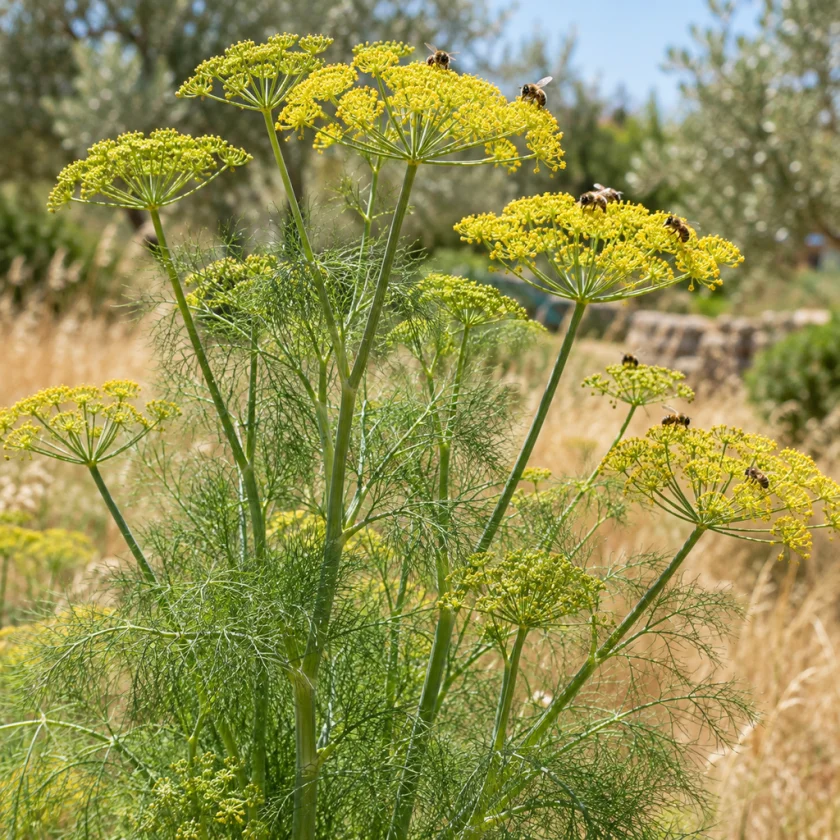
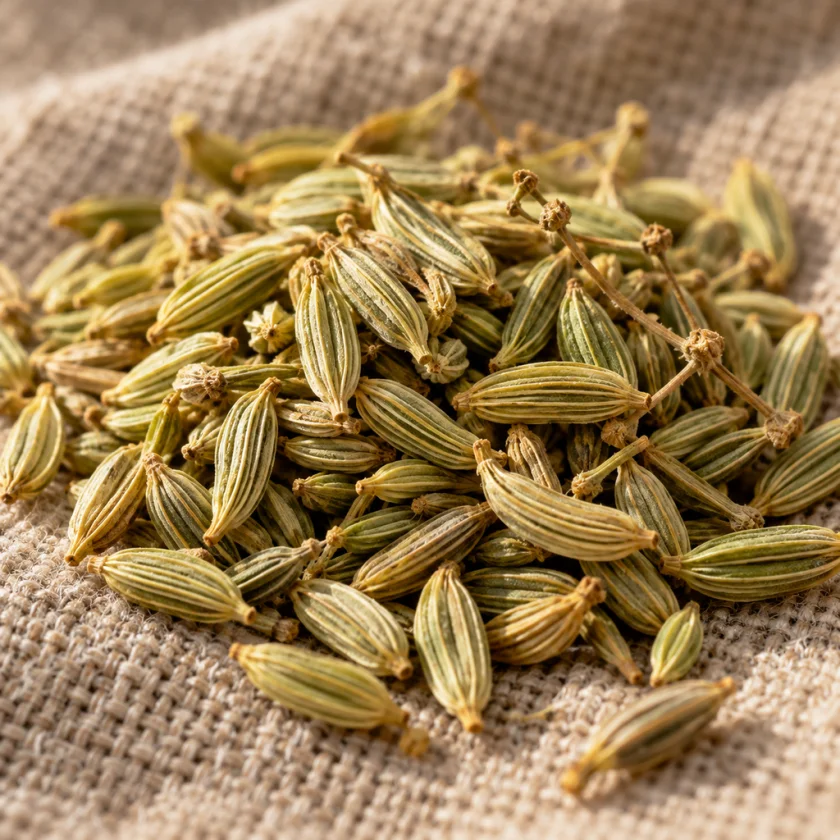
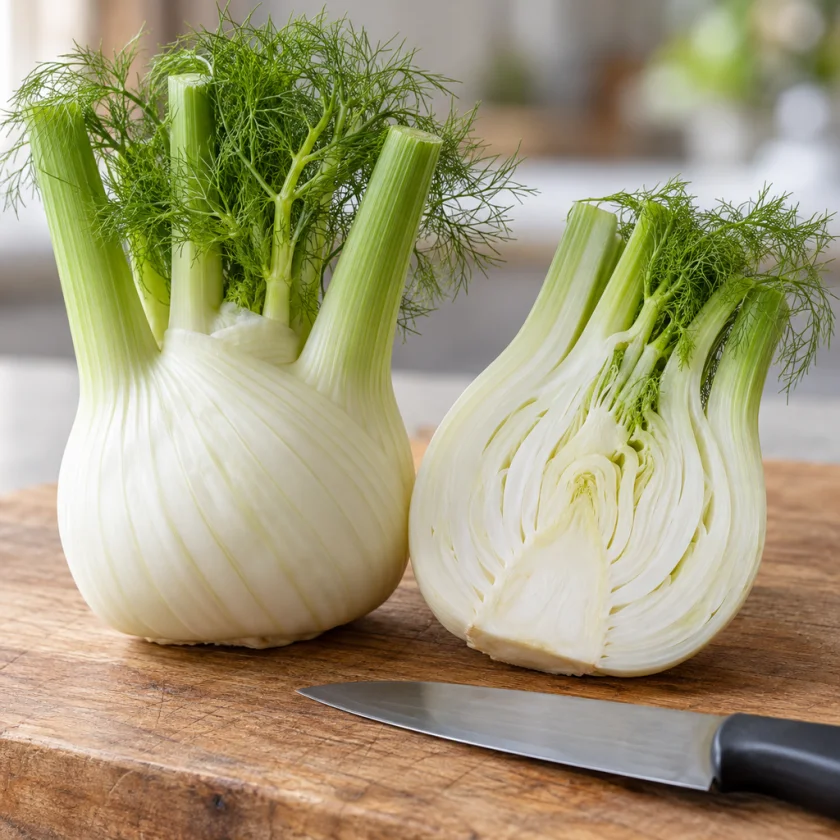
Fennel (Foeniculum vulgare) is a licorice-flavored Mediterranean umbelliferous herb whose seed and bulb have been used continuously for over three thousand years across Greek, Roman, Egyptian, Indian Ayurvedic, and Chinese traditions. The principal phytochemical responsible for fennel's distinctive sweet anise aroma — trans-anethole — is also the molecule that explains most of fennel's pharmacology. Laboratory studies suggest that anethole has weak estrogen-like activity at the estrogen receptor (ER), and this is the usual explanation for why one plant covers three apparently unrelated clinical domains — digestion (the post-meal Indian sweet-shop chew, infant colic, irritable bowel syndrome, IBS), lactation (a traditional galactagogue used for centuries postpartum), and the menstrual / menopausal symptom cluster (primary dysmenorrhea, menopausal symptoms, vaginal atrophy). The four deep-dive pages below explore each domain with the pivotal randomized trials, mechanism, dosing, and the one population-level caution that runs across all of them: estrogen-sensitive cancers.
Deep-Dive Articles
Digestive Aid
The post-meal fennel-seed chew (the Indian sweet-shop saunf tradition still practiced today), anethole as a smooth-muscle antispasmodic, the Alexandrovich 2003 infantile-colic randomized trial in 125 infants aged 2–12 weeks (fennel-seed-oil emulsion ended colic — crying cut to under 9 hours a week — in 65% of infants, against 23.7% on placebo), the historical role of fennel in gripe water, irritable bowel syndrome adjunct evidence, a 2022 double-blind trial in adults over 60 with long-term constipation (a 10 g sachet of fennel plus damask rose twice a day for 4 weeks, 25 people per group completing, improved constipation severity, stool consistency and quality of life more than the laxative polyethylene glycol 4000, with fewer side effects), the carminative mechanism (relaxes ileocecal valve and lower esophageal sphincter, allowing trapped gas to pass), and the empty-stomach decoction protocol used in Ayurveda.
Read the deep dive →Lactation & Galactagogue
The Sim 2014 interview study of 20 Western Australian breastfeeding women who used herbal galactagogues (milk-promoting herbs), the proposed prolactin-stimulating effect of dietary phytoestrogens, the traditional view of anethole as the estrogen-like compound behind the milk-volume increase people describe (no human milk-volume trial is cited here), how fennel is compared with the prescription galactagogue domperidone (a dopamine blocker), traditional postpartum use across Mediterranean and South Asian cultures, the doses nursing mothers use, and the unresolved infant-exposure question for the anethole metabolite that crosses into breast milk.
Read the deep dive →Menstrual & Menopausal
The Omidvar 2012 placebo-controlled trial in primary dysmenorrhea (50 young women completed; a 30 mg fennel-extract capsule four times a day for 3 days eased menstrual pain more than a wheat-flour placebo), the Namavar Jahromi 2003 comparison of 2% fennel essence with the nonsteroidal anti-inflammatory drug (NSAID) mefenamic acid in 30 women with moderate-to-severe dysmenorrhea (both relieved pain compared with an untreated cycle; mefenamic acid was stronger on the second and third days, and 5 women left the study because of fennel's smell), the Rahimikian 2017 triple-blind trial in 90 women aged 45–60 (100 mg fennel soft capsules twice daily for 8 weeks lowered the overall Menopause Rating Scale score more than placebo at 4, 8 and 10 weeks), a small 2023 placebo-controlled trial in 47 women with polycystic ovary syndrome (46 mg fennel twice daily for 3 months lowered ovarian follicle numbers compared with placebo, while hormone changes were seen only with the comparison herb asafoetida), the anethole phytoestrogen mechanism at the alpha-estrogen receptor, and the dose forms used (decoction, essential-oil softgel, standardized seed extract).
Read the deep dive →Eye Health
The Dongare 2012 laboratory data (trans-anethole from fennel blocked the lens enzyme aldose reductase and protected eye lenses kept in high-glucose solution in the laboratory), the Agarwal 2008 rabbit study (fennel-seed eye drops lowered eye pressure in glaucoma models by up to about 31%, comparable to the glaucoma drug timolol), the centuries-old Ayurvedic and Greek tradition of fennel decoction for "sharp sight," the proposed anethole-mediated lens protection hypothesis (anethole as an aldose-reductase modulator slowing sorbitol accumulation in the lens), the theoretical role of fennel flavonoids (quercetin, kaempferol) as systemic antioxidants reaching the aqueous humor, and the honest framing — encouraging mechanistic and animal data, no large human randomized controlled trials (RCTs) yet.
Read the deep dive →Table of Contents
Why Fennel Produces Effects Across So Many Systems
Most medicinal herbs are described as having a list of unrelated effects — an artifact of empirical traditional use rather than a deep mechanistic theme. Fennel is genuinely different: the four headline applications (digestion, lactation, menstrual / menopausal symptoms, and theoretical eye-health benefit) all trace back to a single principal molecule, trans-anethole, which accounts for 50–90% of fennel essential oil by weight and operates through three overlapping mechanisms.
- Phytoestrogen activity at the estrogen receptor (the hormonal effects) — laboratory studies suggest that trans-anethole has weak estrogen-like activity at estrogen-receptor alpha (ERα) and beta (ERβ); it is a small plant molecule, not a steroid, and its activity is described as far weaker than estradiol itself. This estrogen-like activity is the usual explanation offered for the primary-dysmenorrhea pain relief, the menopausal-symptom changes, and the reported effect on vaginal atrophy, as well as the traditional galactagogue (milk-promoting) effect, proposed to act through prolactin.
- Smooth-muscle antispasmodic activity (the digestive effects) — anethole and its companion volatiles fenchone and estragole block voltage-gated calcium channels in gastrointestinal smooth muscle, producing measurable relaxation of intestinal and uterine smooth muscle in isolated tissue preparations. This is the same calcium-channel-blocking mechanism that makes peppermint oil effective in irritable bowel syndrome, and it is the molecular basis for the centuries-old practice of chewing fennel seeds after a meal to relieve bloating, the use of fennel-seed-oil emulsion for infantile colic, and the irritable bowel syndrome adjunct role.
- Carminative and antimicrobial activity (the "gentle gut harmoniser" effects) — the lipid-soluble volatile oil fraction reduces foam formation and surface tension in the gut lumen, allowing trapped gas pockets to coalesce and be passed. The same essential-oil fraction has demonstrable in vitro antimicrobial activity against Candida albicans, common gut bacteria associated with bloating, and several food-borne pathogens. This is the "carminative" effect of fennel known to every traditional herbal: it reduces post-meal gas mechanically, not just by relaxing the gut wall.
The eye-health claim sits separately from the anethole-driven hormonal and digestive effects. It rests on the antioxidant flavonoids (quercetin, kaempferol) reaching the aqueous humor systemically, on laboratory data for lens protection (Dongare 2012) and on a rabbit study of eye pressure (Agarwal 2008). It is the weakest of the four deep-dive applications in terms of randomized clinical evidence, and is presented honestly as "traditional use plus animal data, awaiting human trials."
The therapeutic complication that emerges from the phytoestrogen mechanism is the single most important caution attached to fennel: estrogen-sensitive cancers — principally estrogen-receptor-positive breast cancer, endometrial cancer, and certain ovarian cancers — are a population in which the same estrogen-like activity that is thought to ease menopausal symptoms raises a theoretical concern. The caution is discussed in detail in the section below and at the bottom of each individual deep-dive page.
Key Research Papers
- Alexandrovich I, Rakovitskaya O, Kolmo E, Sidorova T, Shushunov S (2003). The effect of fennel (Foeniculum vulgare) seed oil emulsion in infantile colic: a randomized, placebo-controlled study. Alternative Therapies in Health and Medicine 9(4):58-61. — PubMed PMID: 12868253
- Omidvar S, Esmailzadeh S, Baradaran M, Basirat Z (2012). Effect of fennel on pain intensity in dysmenorrhoea: a placebo-controlled trial. Ayu 33(2):311-3. — PubMed PMID: 23559811
- Namavar Jahromi B, Tartifizadeh A, Khabnadideh S (2003). Comparison of fennel and mefenamic acid for the treatment of primary dysmenorrhea. International Journal of Gynaecology and Obstetrics 80(2):153-7. — PubMed PMID: 12566188
- Rahimikian F, Rahimi R, Golzareh P, Bekhradi R, Mehran A (2017). Effect of Foeniculum vulgare Mill. (fennel) on menopausal symptoms in postmenopausal women: a randomized, triple-blind, placebo-controlled trial. Menopause 24(9):1017-1021. — PubMed PMID: 28509813
- Sim TF, Hattingh HL, Sherriff J, Tee LB (2014). Perspectives and attitudes of breastfeeding women using herbal galactagogues during breastfeeding: a qualitative study. BMC Complementary and Alternative Medicine 14:216. — PubMed PMID: 24985246
- Agarwal R, Gupta SK, Agrawal SS, Srivastava S, Saxena R (2008). Oculohypotensive effects of Foeniculum vulgare in experimental models of glaucoma. Indian Journal of Physiology and Pharmacology 52(1):77-83. — PubMed PMID: 18831355
- Dongare V, Kulkarni C, Kondawar M, Magdum C, Haldavnekar V, Arvindekar A (2012). Inhibition of aldose reductase and anti-cataract action of trans-anethole isolated from Foeniculum vulgare Mill. fruits. Food Chemistry 132(1):385-90. — PubMed PMID: 26434305
- Ghavi F, Shakeri F, Abdolahian S (2023). "Ferula assa-foetida L" or "Foeniculum vulgare"? Which one is more effective in the management of polycystic ovarian syndrome? A randomized, placebo controlled, triple-blinded. Avicenna Journal of Phytomedicine 13(3):280-289. — PubMed PMID: 37655000
- Azimi M, Niayesh H, Raeiszadeh M, Khodabandeh-Shahraki S (2022). Efficacy of the herbal formula of Foeniculum vulgare and Rosa damascena on elderly patients with functional constipation: a double-blind randomized controlled trial. Journal of Integrative Medicine 20(3):230-236. — PubMed PMID: 35339396
PubMed Topic Searches
External Authoritative Resources
- U.S. National Center for Complementary and Integrative Health (NCCIH) — Herbs at a Glance — the National Center for Complementary and Integrative Health summary of herbal therapies
- LactMed (U.S. National Institutes of Health, NIH) — Fennel — consumer-grade summary of evidence, dosing, and interactions
- European Medicines Agency — Foeniculi amari fructus (bitter fennel fruit) monograph — the EMA HMPC formal traditional-use herbal monograph for fennel
- e-lactancia — Fennel breastfeeding compatibility — pediatric pharmacology evaluation of fennel for nursing mothers
- PubMed — All research on Foeniculum vulgare (~3,500 papers as of 2026)
Caution: Estrogen-Sensitive Cancers
Because laboratory studies suggest that the principal phytochemical in fennel — trans-anethole — has weak estrogen-like activity, the research raises a theoretical concern about concentrated fennel preparations for people with estrogen-sensitive cancers. The categories of concern are:
- Estrogen-receptor-positive (ER+) breast cancer — the largest single subgroup of breast cancer (approximately 75% of cases). Tamoxifen is a selective estrogen receptor modulator (SERM), and anethole could in theory compete with it at the receptor. Aromatase inhibitors (anastrozole, letrozole, exemestane) are not SERMs — they lower the body's own estrogen — and fulvestrant blocks and breaks down the estrogen receptor; with these drugs the theoretical concern is that a plant compound with estrogen-like activity works against the low-estrogen state the treatment aims for. The concern is about concentrated essential-oil capsules and standardized extracts at menopausal or dysmenorrhea doses; culinary amounts in food are generally not regarded as a concern.
- Endometrial cancer / endometrial hyperplasia — unopposed estrogenic stimulation of the endometrium is the central pathological mechanism in endometrial cancer. The theoretical concern about fennel supplements is greatest for people with active or recently treated endometrial cancer.
- Hormone-receptor-positive ovarian cancer — a smaller subset of ovarian cancers express estrogen receptor and may respond to estrogen-like compounds. The same theoretical concern applies.
- Patients on hormone replacement therapy (HRT) — fennel may in theory add to the estrogenic effect of hormone replacement therapy.
- Pregnancy — high-dose fennel essential oil is contraindicated in pregnancy due to theoretical estrogenic activity and an unresolved question about estragole genotoxicity. Culinary fennel (the bulb, fronds, and modest seed use as a spice) is considered safe.
For all other adults, fennel is exceptionally well-tolerated — centuries of continuous traditional use and the EMA HMPC monograph both support its safety profile for the digestive, lactation, and menstrual / menopausal indications at the dose ranges discussed in the four deep-dive pages.
Connections
- All Herbs
- Fennel (Main Page)
- Fennel as Digestive Aid
- Fennel for Lactation & Galactagogue
- Fennel for Menstrual & Menopausal Symptoms
- Fennel for Eye Health
- Fenugreek (Companion Galactagogue)
- Peppermint (Companion Antispasmodic)
- Chamomile
- Coriander Seeds
- Cumin
- Ajwain
- Ginger
- Lemon Balm
- Turmeric
- Irritable Bowel Syndrome
- Bloating
- Reflux
- Polycystic Ovary Syndrome
- Gut Healing
- Potassium
- Vitamin C
- History