Coriander Seeds (Coriandrum sativum)
Buddhist Name: "The Holy Herb That Cools the Destructive Inner Fire"
Table of Contents
Description
- Small aromatic round seeds (NOT the same as green coriander leaves — seeds have completely different chemical composition and far more concentrated medicinal power)
- Carried by monks traveling the Silk Road
- Fundamental remedy for deep purification and detoxification
Key Active Compounds
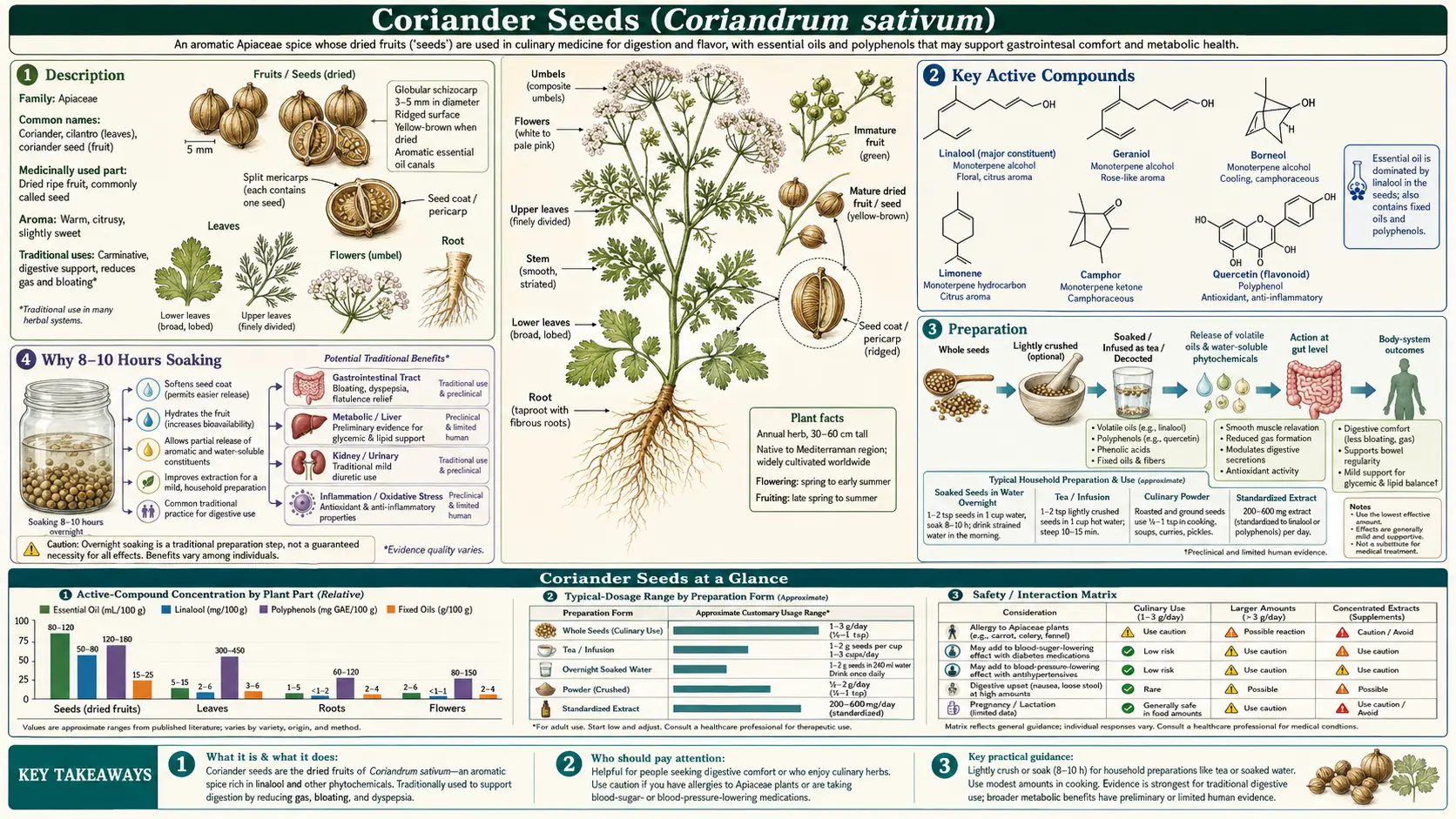
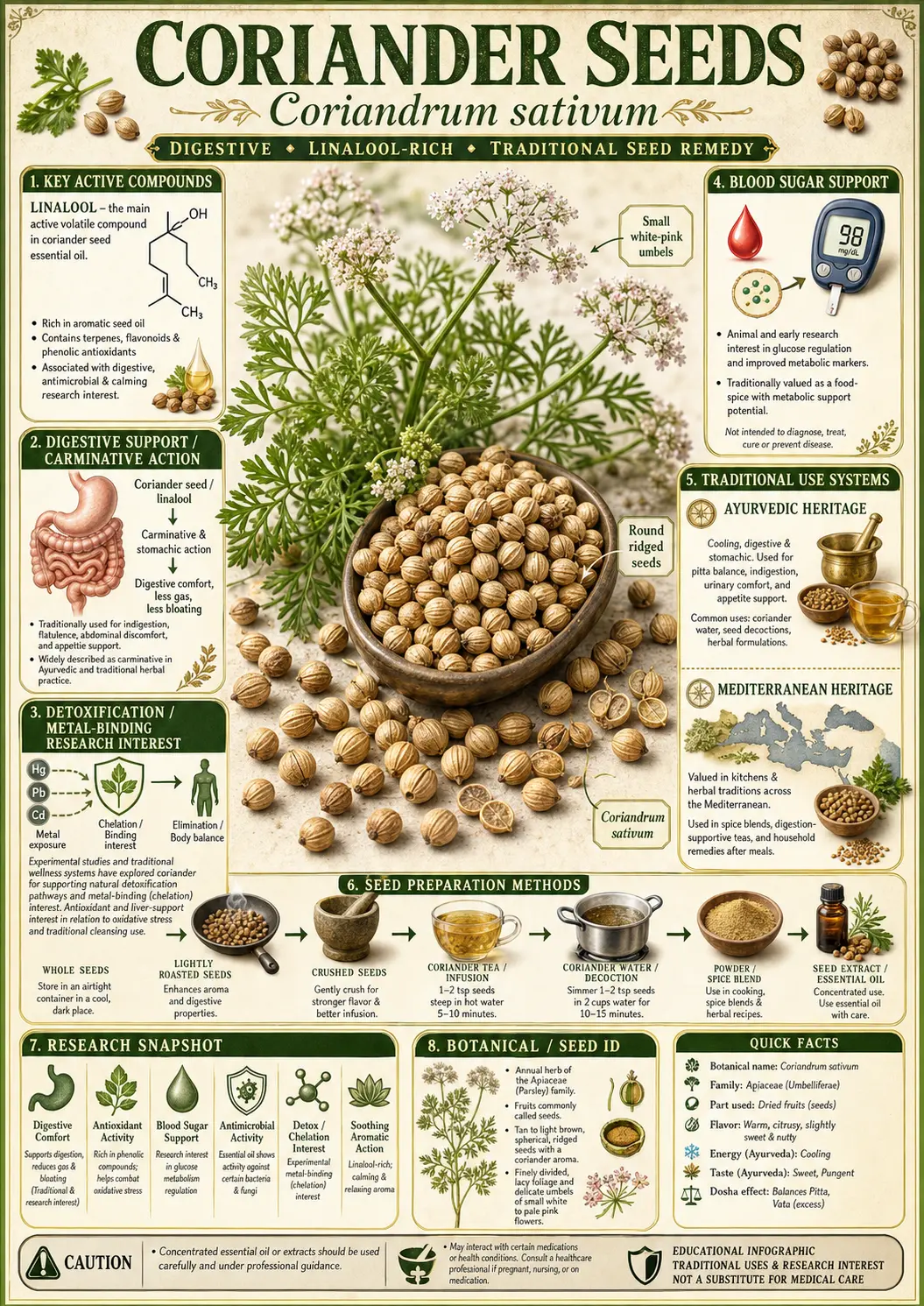
- Linalool: Extremely powerful antioxidant (gives sweet citrusy aroma)
- Quercetin, Kaempferol, Rhamnetin: Rare phytonutrients with extraordinary health-promoting properties
- Volatile essential oils with antimicrobial and anti-inflammatory activities
- Rich in dietary fiber, bioavailable iron, magnesium, and manganese
Health Benefits
Deep Detoxification & Kidney Support
- Acts as powerful natural detoxifier
- Helps kidneys filter toxic waste from blood more efficiently
- Gentle natural diuretic — increases urine production to eliminate toxins, excess salts, and metabolic waste
- Does NOT force kidneys like pharmaceutical diuretics (supports natural function while providing protective antioxidants)
- Helps prevent kidney stone formation
- Can help break down existing small kidney stones
Blood Pressure Regulation
- Contains natural calcium channel blockers
- Helps blood vessels relax and dilate properly
- Reduces pressure on arterial walls without side effects
- Reduces both systolic and diastolic pressure
- Natural diuretic effect reduces fluid volume in blood system
- Can complement prescribed blood pressure medications
Skin Health Improvement
- Detoxifying properties eliminate toxins that cause skin problems
- Fights acne, eczema, and dull/prematurely aged skin
- Anti-inflammatory and antimicrobial compounds fight pimple-causing bacteria and reduce skin inflammation
- Antioxidants protect skin cells against oxidative damage, wrinkles, spots, and accelerated aging
Preparation
- Amount: 1 generous tablespoon (10-12 grams)
- CRUCIAL STEP: Lightly crush seeds with mortar/pestle or back of spoon (increases extraction of beneficial compounds by 40-50% vs whole seeds)
- Water: 300-400 ml filtered water at room temperature (never hot)
- Soak: 8-10 hours overnight, covered with breathable cloth
- Sign of readiness: Water turns slightly yellowish with mild pleasant aroma
- Drink: On empty stomach, 15-30 minutes before breakfast
- Can strain or drink with seeds
Why 8-10 Hours Soaking
- First hours: Water only begins to soften tough outer shell
- 6+ hours: Deep essential oils and most valuable compounds begin releasing
- 8-10 hours: Maximum extraction of all minerals, antioxidants, and healing compounds
Key Research Papers
- Laribi B, Kouki K, M'Hamdi M, et al. (2015). Coriander (Coriandrum sativum L.) and its bioactive constituents. Fitoterapia — PubMed PMID: 25776008
- Mahleyuddin NN, Moshawih S, Ming LC, et al. (2021). Coriandrum sativum L.: A Review on Ethnopharmacology, Phytochemistry, and Cardiovascular Benefits. Molecules (Basel, Switzerland) — PubMed PMID: 35011441
- Jabeen Q, Bashir S, Lyoussi B, et al. (2009). Coriander fruit exhibits gut modulatory, blood pressure lowering and diuretic activities. Journal of Ethnopharmacology — PubMed PMID: 19146935
- Aissaoui A, El-Hilaly J, Israili ZH, et al. (2008). Acute diuretic effect of continuous intravenous infusion of an aqueous extract of Coriandrum sativum L. in anesthetized rats. Journal of Ethnopharmacology — PubMed PMID: 17961943
- Lakhera A, Ganeshpurkar A, Bansal D, et al. (2015). Chemopreventive role of Coriandrum sativum against gentamicin-induced renal histopathological damage in rats. Interdisciplinary Toxicology — PubMed PMID: 27486367
- Silva F, Ferreira S, Queiroz JA, et al. (2011). Coriander (Coriandrum sativum L.) essential oil: its antibacterial activity and mode of action evaluated by flow cytometry. Journal of Medical Microbiology — PubMed PMID: 21862758
- Park G, Kim HG, Lim S, et al. (2014). Coriander alleviates 2,4-dinitrochlorobenzene-induced contact dermatitis-like skin lesions in mice. Journal of Medicinal Food — PubMed PMID: 24963872
- Kern C, Gombert C, Roso A, et al. (2022). Effect of the supplementation of virgin coriander seed oil on reducing reactivity in healthy women with sensitive skin: a randomized double-blind placebo-controlled pilot clinical study. Food & Nutrition Research — PubMed PMID: 35440935
PubMed Topic Searches
The following PubMed topic searches aggregate the peer-reviewed literature underpinning the claims above. Each link opens a live PubMed query so the result set stays current as new research is published.
- PubMed: Blood glucose and diabetes
- PubMed: Lipid profile and cholesterol
- PubMed: Essential oil antimicrobial linalool
- PubMed: Antioxidant
- PubMed: Anti-inflammatory
- PubMed: Anxiety and sedative
- PubMed: Digestion dyspepsia and IBS
- PubMed: Heavy metal chelation and lead
- PubMed: Diuretic and blood pressure
- PubMed: Systematic review
- PubMed: Seed pharmacology
Connections
- Fluoride Chelation — cilantro is the classic binding herb, paired with chlorella
- Parsley — fellow Apiaceae culinary herb
- All Herbs
- Coriander Seeds Benefits Deep Dive
- Lead
- Blood Sugar Control
- Type 2 Diabetes
- Turmeric
- Ginger
- Fenugreek
- Irritable Bowel Syndrome
- Fennel
- Cumin
- Blood Pressure
- Detoxification
- Quercetin
- Magnesium
- Iron
- Acne
- Carum Ajwain
- Gut Healing
- Conditions on this site that reference this page: Bacteria · Small Intestinal Bacterial Overgrowth (SIBO)