Clove (Syzygium aromaticum)
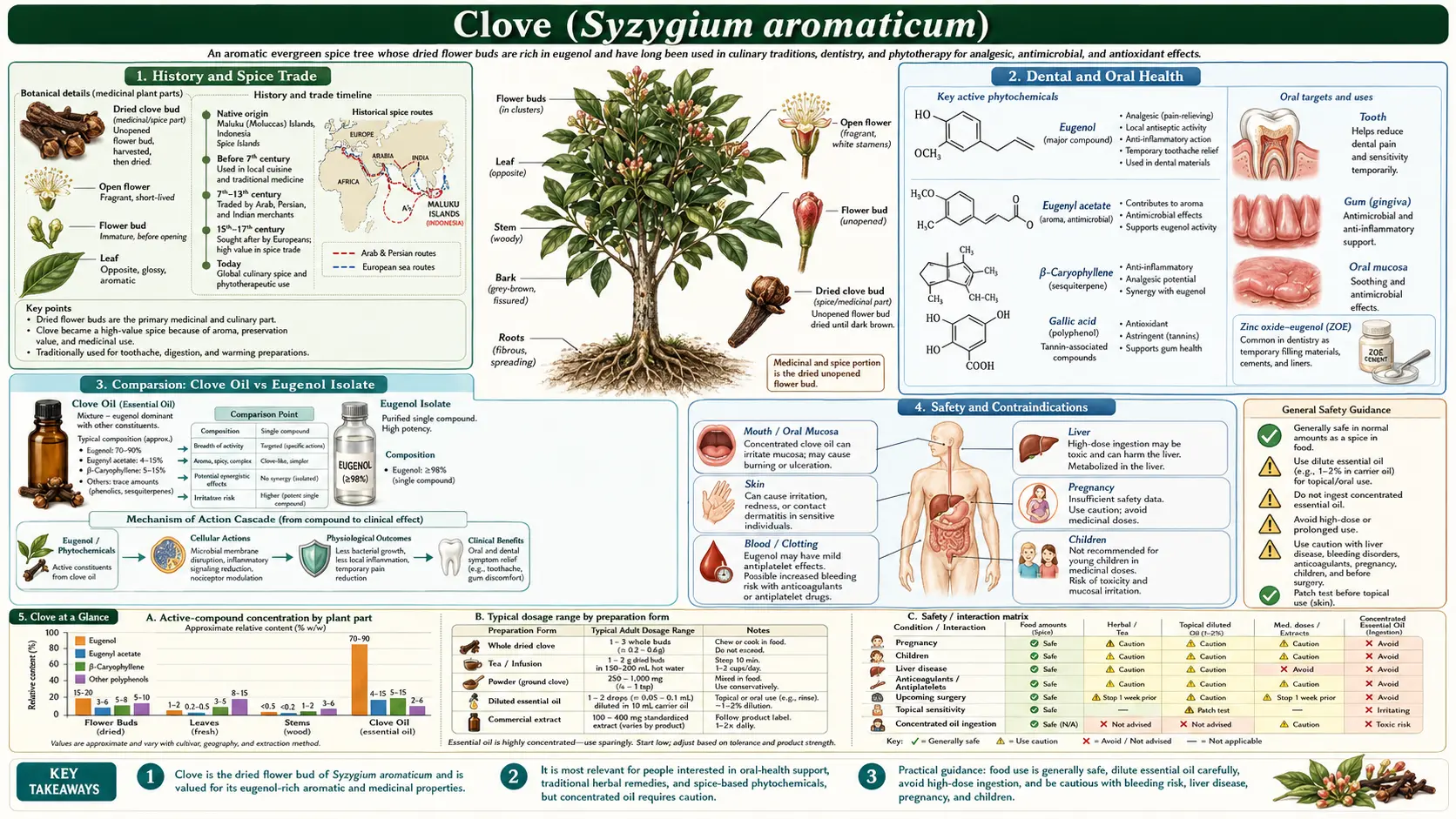
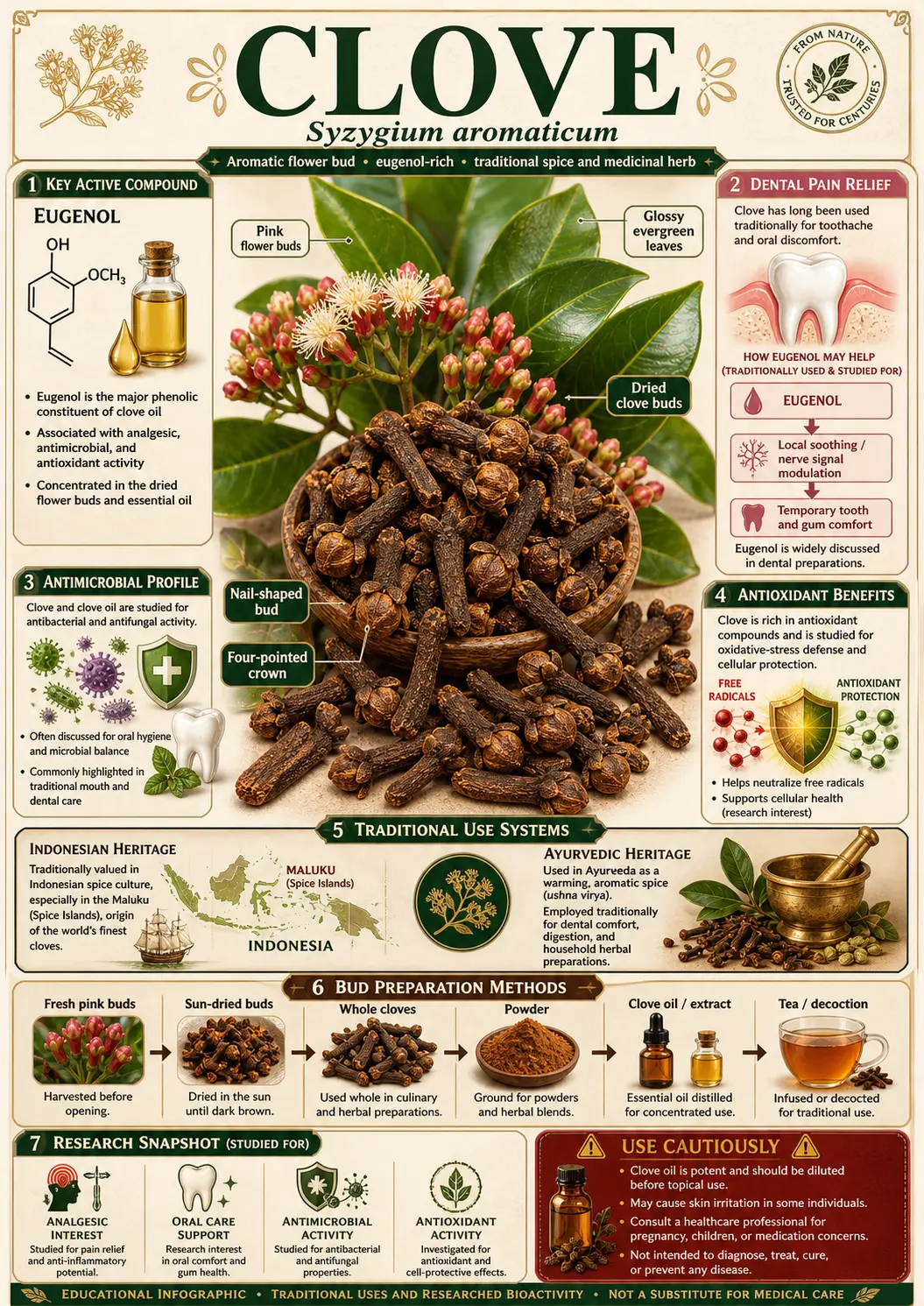
Clove is the dried flower bud of Syzygium aromaticum, a tropical evergreen tree in the family Myrtaceae, and has been used for centuries as a spice, a food preservative and a traditional medicine. Its essential oil is dominated by the phenylpropanoid eugenol, and clove is among the spices most studied in laboratory tests of antibacterial activity, against both Gram-positive and Gram-negative bacteria. Most of that research is in test tubes and animals. The human evidence is small and is concentrated in dentistry, where eugenol has a long-standing, regulated use in zinc oxide–eugenol cement. In the United States, clove and its oils, including eugenol, are affirmed as generally recognized as safe (GRAS) for use as food flavorings, while swallowed clove oil is a documented cause of serious poisoning in young children.
Table of Contents
- History and Spice Trade
- Key Antibacterial Compounds
- Mechanism of Antibacterial Action
- Bacteria Targeted
- Research Studies and Clinical Evidence
- Dental and Oral Health
- Food Preservation and Safety
- Wound Care and Skin Infections
- Drug-Resistant Bacteria Research
- Comparison: Clove Oil vs Eugenol Isolate
- Synergistic Effects
- Other Health Benefits
- Forms and Preparations
- Amounts Used in Monographs and Studies
- Safety and Contraindications
- Key Research Papers
- Featured Videos
History and Spice Trade
Clove is native to the Maluku Islands of eastern Indonesia — the fabled “Spice Islands” that were, for most of recorded history, the world’s only source of the spice. Its remoteness made clove one of the most valuable commodities in the ancient and medieval world, prized in China, Rome, and the Arab trade, and so coveted that European powers fought to control it, culminating in the Dutch East India Company’s monopoly and its eventual breaking by French seedling-smuggling around 1770; the fuller story is told in the dedicated History & Traditional Use article.
Key Antibacterial Compounds
Clove’s laboratory antibacterial activity is attributed mainly to the compounds of its essential oil, with phenolic acids from the bud tissue adding to the activity of whole-clove extracts. The dried bud contains 15–17% essential oil, and three components make up nearly 99% of that oil, according to the composition data summarized in the European Medicines Agency’s 2011 assessment report on clove.
- Eugenol (4-allyl-2-methoxyphenol): 75 to 88 percent of clove bud oil (EMA assessment report); one GC/MS analysis of clove bud oil measured 76.23% eugenol (Xu 2016). Eugenol gives clove its warm, pungent aroma and is the compound most studied for its antibacterial, antifungal, anti-inflammatory and local anesthetic effects. In laboratory studies its phenolic structure lets it damage bacterial membranes, so that cell contents leak out (Devi 2010; Marchese 2017). Reported minimum inhibitory concentrations (MICs) vary with the organism and method; against Salmonella typhi, one study measured an MIC of 0.0125% and a minimum bactericidal concentration of 0.025% (Devi 2010).
- Eugenol acetate (acetyl eugenol): 4 to 15 percent of the oil (EMA assessment report). In experiments on human platelets, both eugenol and acetyl eugenol inhibited platelet aggregation (Srivastava 1993; see Safety below).
- Beta-caryophyllene: 5 to 14 percent of the oil (EMA assessment report). This sesquiterpene binds selectively to the cannabinoid CB2 receptor and acts as a CB2 agonist, without the psychoactive effects linked to the CB1 receptor; taken by mouth at 5 mg/kg it reduced experimental inflammation in normal mice but not in mice lacking CB2 receptors (Gertsch 2008). Against oral bacteria, beta-caryophyllene on its own was less active than clove oil or eugenol (Moon 2011).
- Gallic acid and other phenolics: clove is one of the richest sources of phenolic compounds such as eugenol, eugenol acetate and gallic acid (Cortés-Rojas 2014), and the bud also contains flavonoids, ellagitannins and other phenolic acids (EMA assessment report). Gallic acid and the other non-volatile phenolics are found in extracts of the bud rather than in the steam-distilled oil.
Mechanism of Antibacterial Action
Laboratory work describes several overlapping ways in which eugenol and clove oil damage bacteria. All of it comes from isolated bacteria in culture; how much of it applies inside the human body is not known.
Membrane disruption: In Salmonella typhi, eugenol increased membrane permeability, caused the release of intracellular material, and produced membrane damage visible by scanning electron and atomic force microscopy; it inactivated the organism within 60 minutes (Devi 2010). Against several Gram-negative species, 1 mM eugenol damaged nearly 50% of the bacterial membrane (Hemaiswarya 2009). A review of the eugenol literature describes this membrane action as the common thread across bacteria and fungi (Marchese 2017).
Effects inside the cell: In Staphylococcus aureus, clove bud oil damaged the cell wall and membrane and caused loss of intracellular material; the authors proposed that the oil then inhibits the synthesis of DNA and proteins needed for growth (Xu 2016).
Interaction with antibiotics: Because eugenol damages membranes, it can let other drugs in. Against five Gram-negative species, combining eugenol with ten different antibiotics lowered the MIC of the combination by a factor of 5 to 1,000 compared with each agent alone, and vancomycin and beta-lactam antibiotics, which on their own have little activity against these bacteria, became more active after pretreatment with eugenol (Hemaiswarya 2009).
Bacteria Targeted
Clove oil and eugenol have been tested against a wide range of bacteria in laboratory studies. The figures below come from specific studies; values differ between methods, strains and oil samples, and none of them is a human dose.
- Staphylococcus aureus: a common cause of skin and wound infections. Clove bud oil had an MIC of 0.625 mg/mL against a reference strain (Xu 2016), and 0.4% clove oil reduced the bacterial population by 5 logarithmic orders at 21 °C (Nuñez 2012). A review describes activity against multidrug-resistant strains (Marchese 2017), and clove oil has been tested against multi-resistant Staphylococcus epidermidis isolated from dialysis biomaterials (Chaieb 2007).
- Escherichia coli: eugenol alone had an MIC of 1,600 mg/L in one study, falling to 400 mg/L when it was combined with cinnamaldehyde, thymol or carvacrol (Pei 2009). In a study of killing kinetics, E. coli was the most sensitive of the three organisms tested (Nuñez 2012).
- Pseudomonas aeruginosa: an opportunistic pathogen that is resistant to many antibiotics. In the same study, 0.4% clove oil reduced viable counts by 5 logarithmic orders at 21 °C; organic matter reduced the effect without abolishing it (Nuñez 2012).
- Salmonella: eugenol’s MIC against S. typhi was 0.0125% (Devi 2010), and clove oil was bactericidal in vitro against S. Typhimurium (Radünz 2019).
- Listeria monocytogenes: a foodborne pathogen that is especially dangerous in pregnancy, in newborns and in people with weakened immunity. Clove oil was inhibitory and bactericidal against it in vitro (Radünz 2019).
- Oral bacteria, including species involved in tooth decay and periodontal disease: clove oil and eugenol had similar activity against all the oral bacteria tested, and both were more active than beta-caryophyllene (Moon 2011).
Research Studies and Clinical Evidence
Most published research on clove’s antibacterial action is laboratory work. The European Medicines Agency’s 2011 assessment found no clinical data that could support a “well-established use” of clove or clove oil; its approval of clove oil for mouth and tooth use rests on long-standing traditional use made plausible by laboratory pharmacology (EMA assessment report).
The clearest human trial is in dentistry. In a randomized, subject-blinded study of 73 adult volunteers, a homemade clove gel and a 20% benzocaine gel applied to the inside of the cheek both gave lower pain scores from needle sticks than placebo, with no significant difference between clove and benzocaine (Alqareer 2006, Journal of Dentistry).
In food science, a review in Frontiers in Microbiology summarizes how essential oils, clove among them, act on bacteria, how they combine with one another, and how fats, proteins and other food components can reduce their effect (Hyldgaard 2012). A 2019 study in Food Chemistry found clove oil inhibitory and bactericidal in vitro against S. aureus, E. coli, L. monocytogenes and S. Typhimurium; encapsulated with sodium alginate, it gave bacterial growth in meat-like products similar to that seen with nitrite (Radünz 2019).
Mechanistic studies have used membrane-permeability assays, measurement of leaked cell contents, and electron and atomic force microscopy to show eugenol disrupting the membrane of Salmonella typhi (Devi 2010, Journal of Ethnopharmacology), and kill-time assays to show clove bud oil slowing the growth of surviving S. aureus (Xu 2016).
Dental and Oral Health
Clove’s association with dentistry spans centuries. The European Medicines Agency notes consistent records of traditional clove use for toothache, and modern dentistry still uses eugenol in regulated products.
Regulated dental use. Eugenol is mixed with zinc oxide to make a paste that hardens quickly on contact with saliva and is used as a temporary filling material (EMA assessment report). In the United States, zinc oxide–eugenol is a Class I medical device intended to serve as a temporary tooth filling, as a base cement for a temporary filling, to fix crowns or bridges, or to be applied to a tooth to protect the pulp (21 CFR 872.3275). Applied near the pulp over an intact layer of dentin, eugenol cement has shown no toxicity, but applied directly to exposed pulp it has been reported to cause pulp inflammation and necrosis (EMA assessment report).
Clove oil for toothache. The EMA’s 2011 herbal monograph lists clove oil as a traditional herbal medicinal product for the temporary relief of toothache due to a dental cavity and for the symptomatic treatment of minor inflammation of the mouth or throat, “exclusively based upon long-standing use”. The monograph calls the toothache relief only a provisional measure and states that dental attention should be sought as soon as possible (amounts are listed under Amounts Used in Monographs and Studies).
How eugenol numbs. In rat dental nerve cells, eugenol blocked sodium currents and action potentials, an effect that did not depend on the TRPV1 receptor (Park 2006). A later rat study found it inhibited sodium channels in several types of pain-sensing trigeminal neurons and reduced the response to painful stimulation of the tooth pulp; the authors note that eugenol shares two actions with local anesthetics, blocking voltage-gated sodium channels and activating TRPV1 (Park 2009). In people, the 73-volunteer trial above found a clove gel comparable to 20% benzocaine for needle-stick pain (Alqareer 2006).
Oral bacteria. Clove oil and eugenol were active in the laboratory against bacteria involved in tooth decay and periodontal disease, and combining them with ampicillin or gentamicin lowered the MIC to between one-half and one-sixteenth of the single-agent value (Moon 2011). No trial found for this page measured tooth decay or gum disease in people using clove.
Food Preservation and Safety
The use of clove as a food preservative has deep historical roots, predating the modern understanding of microbiology. Before refrigeration, spices including clove, cinnamon and pepper were used in cured meats, sauces, pickles and spiced wines, and many spice blends, herb liqueurs and bitter liqueurs still contain clove (EMA assessment report). Laboratory studies give a mechanism for this use: eugenol and clove oil inhibit spoilage organisms and foodborne pathogens in culture (Hyldgaard 2012; Radünz 2019).
Contemporary research has tested clove oil in preservation systems. A practical limit is its strong odour; one study encapsulated clove oil with sodium alginate partly to disguise it, and found bacterial growth in meat-like products similar to that with nitrite (Radünz 2019). A review notes that results in culture broth often do not carry over fully into foods, because fats, proteins and other food components bind essential-oil compounds and reduce their activity (Hyldgaard 2012). Combining compounds is one approach to lowering the amounts needed: the eugenol–cinnamaldehyde, eugenol–thymol and eugenol–carvacrol pairs were synergistic against E. coli, and the authors note that this could reduce the unpleasant smell that limits their use (Pei 2009).
Antimicrobial packaging is another active area. Researchers have incorporated clove oil or eugenol into polymer films designed to release antimicrobial vapour into the package; one 2017 study in Food Control tested clove essential oil infused into chemically modified linear low-density polyethylene film for packaging chicken meat (Mulla 2017).
Wound Care and Skin Infections
Clove has been used traditionally on minor wounds and skin infections; the EMA assessment report lists traditional external use of clove oil for minor infections of the mouth and skin and for dressing minor wounds. In the laboratory, clove oil was active against Staphylococcus aureus and Pseudomonas aeruginosa, two common wound organisms, and the authors of that study describe clove essential oil as a potential antimicrobial agent for external use (Nuñez 2012).
The human evidence for wounds, burns and acne is very limited, and no controlled human trial of clove for these uses is described on this page.
Skin reactions are the main documented hazard of applying clove. Clove oil can irritate skin and mucous membranes, and eugenol is a known contact allergen. In a patch-test study, 20% clove oil in petrolatum caused redness in 2 of 25 healthy subjects, while 2% and 0.2% caused none; people sensitized to Peru balsam react to clove more often (EMA assessment report).
Drug-Resistant Bacteria Research
Interest in clove and eugenol as partners for antibiotics comes from the problem of antimicrobial resistance. A review of the eugenol literature reports effects on multidrug-resistant microorganisms, and activity against bacteria growing in biofilms as well as free-floating cells (Marchese 2017). Clove oil has also been tested against multi-resistant Staphylococcus epidermidis isolated from dialysis biomaterials (Chaieb 2007).
The most specific evidence concerns combinations. Against five Gram-negative species, eugenol combined with ten antibiotics lowered the MIC of the combination by a factor of 5 to 1,000, and made vancomycin and beta-lactam antibiotics active against bacteria they normally barely affect. The eugenol concentrations used were below its cytotoxic level in human blood cells, and the authors state that pharmacodynamic studies are still needed before any dosage could be decided (Hemaiswarya 2009).
Against oral bacteria, clove oil or eugenol combined with ampicillin or gentamicin lowered the MIC to between one-half and one-sixteenth of the single-agent value, and time-kill studies confirmed faster killing with the combinations (Moon 2011). All of this is laboratory work; no human trial of eugenol as an antibiotic adjuvant was found for this page.
Comparison: Clove Oil vs Eugenol Isolate
Whether whole clove oil or purified eugenol is more active depends on the organism and the test. Against oral bacteria, clove oil and eugenol had similar activity, and both were more active than beta-caryophyllene (Moon 2011), which is consistent with eugenol accounting for most of the oil’s antibacterial effect. Clove oil also contains acetyl eugenol and beta-caryophyllene (EMA assessment report), which have biological effects of their own (see Key Antibacterial Compounds above).
The two are used in different regulated settings. Clove oil is the form covered by the EMA herbal monograph for toothache and minor mouth and throat inflammation, while purified eugenol is the ingredient of zinc oxide–eugenol dental cement (21 CFR 872.3275). In U.S. food regulation, clove bud, leaf and stem oils and eugenol are covered by the same GRAS affirmation as flavoring agents (21 CFR 184.1257).
Synergistic Effects
Several laboratory studies have combined clove’s main compound with other essential-oil components. In one, eugenol had an MIC of 1,600 mg/L against E. coli, while cinnamaldehyde (from cinnamon), thymol and carvacrol (from thyme and oregano) each had MICs of 400 mg/L. The pairs cinnamaldehyde/eugenol, thymol/eugenol and carvacrol/eugenol were synergistic, lowering the MICs to 400 mg/L for eugenol and 100 mg/L for the other compounds (Pei 2009).
A review of essential oils in food preservation discusses how such combinations work and why results in culture broth do not always carry over into foods (Hyldgaard 2012). Combinations of clove oil or eugenol with antibiotics are described under Drug-Resistant Bacteria Research above.
Other Health Benefits
Clove and eugenol have been studied for several other effects. Almost all of this evidence comes from laboratory and animal studies.
- Antifungal activity: eugenol was fungicidal against growing Candida albicans in vitro, with damage to the cell envelope. In immunosuppressed rats with oral candidiasis, eight days of eugenol or carvacrol significantly reduced the number of yeast colonies compared with untreated rats, with similar results for the reference drug nystatin (Chami 2005). This is an animal result, not a human clinical study.
- Antiviral activity: eugenol inhibited the replication of herpes simplex virus types 1 and 2 in vitro (50% inhibitory concentrations 25.6 and 16.2 µg/mL), was virucidal, worked synergistically with acyclovir, and topical eugenol delayed herpes keratitis in mice (Benencia 2000). In another laboratory study, phenylpropanoids including eugenol reduced HSV-1 infectivity by about 60–80% by inactivating free virus particles, but among the compounds tested only beta-caryophyllene had a high selectivity index (Astani 2011). Clove oil has also been investigated against hepatitis C virus (Chaieb 2007).
- Anti-inflammatory activity: clove oil inhibited prostaglandin synthesis in an in vitro enzyme preparation, with an IC50 for eugenol of 11 µM compared with 1.2 µM for indomethacin, and eugenol and its derivatives are described as inhibitors of the enzymes 5-lipoxygenase and COX-2 (EMA assessment report). In mouse macrophages, clove extract inhibited production of the cytokines IL-1β, IL-6 and IL-10, and eugenol inhibited IL-6 and IL-10; the authors propose suppression of the NF-κB pathway (Bachiega 2012). Beta-caryophyllene acts on the CB2 receptor (Gertsch 2008).
- Antioxidant activity: in a comparison of 26 spice extracts, clove was among the spices with the highest antioxidant capacity in a test-tube assay, and antioxidant capacity tracked total phenolic content (Shan 2005). Lists that rank clove by “ORAC” (oxygen radical absorbance capacity) quote another test-tube assay. The USDA published an ORAC table for foods and withdrew it in 2012, stating that there is no evidence the beneficial effects of polyphenol-rich foods can be attributed to their antioxidant properties, that test-tube antioxidant values cannot be extrapolated to effects in people, and that ORAC values were routinely misused to promote foods and supplements (USDA ARS notice). An ORAC number is therefore not evidence of a health effect, and none is used on this page. The topic is covered in the Clove Antioxidant Capacity article.
- Analgesic activity: eugenol blocks voltage-gated sodium channels in pain-sensing trigeminal neurons and activates TRPV1 receptors in rat studies (Park 2006; Park 2009), and a clove gel matched 20% benzocaine for needle-stick pain in a human trial (Alqareer 2006). Its use on other kinds of pain has not been tested in comparable trials.
Forms and Preparations
Clove is used in several forms, each with a different composition and regulatory status.
- Whole cloves: dried, intact flower buds, the least processed form. The European Pharmacopoeia requires clove buds to contain not less than 150 mL/kg of essential oil, and constituent data put the oil content at 15–17% (EMA assessment report). Whole cloves are used in cooking and steeped as tea. Holding a clove against a painful tooth is a traditional practice; the EMA notes that clove for that purpose is taken from the kitchen rather than from medicinal products.
- Ground clove: powdered dried buds, used in cooking and in spice blends such as curry (EMA assessment report).
- Clove essential oil: the oil described in the EMA monograph is obtained by steam distillation of the dried flower buds; oils are also distilled from clove leaves and stems, which U.S. food regulation lists separately (21 CFR 184.1257). Concentrated oil can irritate skin and mucous membranes, and the EMA monograph lists mucosal irritation and allergic reactions as undesirable effects.
- Clove tincture and extracts: alcohol or water extracts of the buds contain non-volatile phenolics such as gallic acid that are not present in the distilled oil (Cortés-Rojas 2014). No clinical study of clove tincture was found for this page, and no monograph gives a tincture dose.
- Dental preparations: zinc oxide–eugenol cement for temporary fillings, bases and protection of the pulp, regulated in the United States as a Class I device (21 CFR 872.3275); and clove-oil preparations for toothache and mouth inflammation covered by the EMA monograph.
Amounts Used in Monographs and Studies
No dose-finding trials of clove exist. The amounts below are what regulators and studies state; they are reported as information, not as instructions.
- Food use: in the United States, clove and its derivatives, including the bud, leaf and stem oils and eugenol, are affirmed as GRAS for use as flavoring agents and adjuvants at levels not exceeding good manufacturing practice (21 CFR 184.1257). The EMA assessment report notes an allowed daily intake for clove oil in the United States reported as 2.5 mg per kg of body weight.
- EMA herbal monograph (2011), adults and the elderly: for minor inflammation of the mouth or throat, mouthwashes corresponding to 1–5% essential oil, applied several times daily. For temporary relief of toothache due to a dental cavity, undiluted essential oil, solutions of at least 50% or gels of 20%, on a small piece of cotton wool or a cotton bud directed at the decayed part of the tooth, repeated after 20 minutes and then every 2 hours if necessary; the monograph also states “avoid contact with gums.” Both uses are limited to one week. The monograph does not recommend these uses in children and adolescents under 18 because adequate data are lacking.
- Human trial: the dental anesthesia trial applied a homemade clove gel to the cheek lining for 5 minutes before needle sticks (Alqareer 2006).
Safety and Contraindications
Clove as a food spice is affirmed by the FDA as GRAS (21 CFR 184.1257). The NIH LiverTox database states that eugenol in therapeutic doses has not been implicated in causing serum enzyme elevations or clinically apparent liver injury, but that ingestion of high doses, as in an overdose, can cause severe liver injury (LiverTox 2019). The documented hazards concern concentrated clove oil.
- Clove oil poisoning in young children: the EMA monograph states that life-threatening conditions were observed after 5–10 mL of clove oil taken by mouth by children under 2 years of age, and that overdose may lead to CNS depression, urinary abnormalities, anion-gap acidosis, deterioration of liver function, coma, seizures and low blood glucose. Case reports describe a 15-month-old boy with fulminant liver failure after swallowing 10 mL (Janes 2005), a 3-month-old girl with fulminant liver failure after less than 8 mL (Eisen 2004), a 7-month-old with CNS depression and a large anion-gap acidosis (Lane 1991), a 2-year-old with disseminated intravascular coagulation and liver-cell necrosis (Brown 1992), and a child with coma, seizures, a clotting disorder and acute liver damage (Hartnoll 1993).
- N-acetylcysteine as antidote: the EMA monograph notes reports in the literature that N-acetylcysteine — the antidote used for paracetamol (acetaminophen) poisoning — has been used successfully as an antidote. In two of the case reports, the children improved after intravenous N-acetylcysteine (Eisen 2004, using the acetaminophen protocol; Janes 2005), and a 2018 report concerns early N-acetylcysteine after clove oil ingestion (Kim 2018). Hartnoll and colleagues compared the syndrome to the late stages of a substantial paracetamol overdose (Hartnoll 1993). In cultured rat liver cells, eugenol’s toxicity was linked to depletion of glutathione and to its quinone methide metabolite (Thompson 1998).
- Bleeding risk (theoretical): in laboratory tests on human platelets, eugenol and acetyl eugenol inhibited aggregation induced by arachidonate, adrenaline and collagen, and by their IC50 values were more potent than aspirin (Srivastava 1993). The EMA assessment report notes that this antiplatelet effect may increase the risk of bleeding when clove oil is taken with anticoagulant or antiplatelet medicines, while judging such theoretical interactions not relevant to short-term mouth and tooth use. No case report of bleeding from clove in food or ordinary use was found for this page; abnormal clotting has been reported in clove oil poisoning, together with liver failure (Brown 1992; Hartnoll 1993).
- Pregnancy and breastfeeding: the EMA monograph states that safety during pregnancy and lactation has not been established and that, in the absence of sufficient data, use of its clove-oil preparations during pregnancy and lactation is not recommended. This concerns the medicinal oil, not clove as a food spice.
- Children and adolescents: the EMA monograph does not recommend its clove-oil uses under 18 years of age because adequate data are lacking.
- Irritation and allergy: the EMA monograph lists mucosal irritation and allergic reactions as undesirable effects and contraindicates use in people hypersensitive to clove oil or to Peru balsam. The EMA assessment report describes a woman who accidentally spread clove oil on her upper lip and cheek while treating a toothache: burning and inflammation were followed by local numbness and reduced sweating that persisted at 11 months.
- Absorption and elimination: in healthy volunteers, eugenol taken by mouth was rapidly absorbed and metabolized and almost completely excreted in the urine within 24 hours, more than 99% of it as phenolic conjugates (Fischer 1990). In rats given 40 mg/kg by gavage, the plasma half-life was 14 hours (Guénette 2007).
- Animal toxicity data: the oral LD50 of eugenol in rats is listed as 2.68 g/kg in the EMA assessment report; the monograph states that eugenol showed equivocal results in several test systems for genotoxicity and carcinogenicity.
- Clove cigarettes: smoking clove cigarettes has been associated with acute respiratory injury, including hemorrhagic pulmonary edema, in adolescents and young adults; the U.S. Centers for Disease Control received 11 such case reports in 1984–1985, including two deaths (EMA assessment report).
Decisions about medicines and supplements belong with a clinician.
Key Research Papers
- Chaieb, K., Hajlaoui, H., Zmantar, T., Kahla-Nakbi, A. B., Rouabhia, M., Mahdouani, K., and Bakhrouf, A. (2007). The chemical composition and biological activity of clove essential oil, Eugenia caryophyllata (Syzygium aromaticum L. Myrtaceae): A short review. Phytotherapy Research, 21(6), 501-506. — PubMed PMID: 17380552
- Cortés-Rojas, D. F., de Souza, C. R. F., and Oliveira, W. P. (2014). Clove (Syzygium aromaticum): A precious spice. Asian Pacific Journal of Tropical Biomedicine, 4(2), 90-96. — PubMed PMID: 25182278
- Devi, K. P., Nisha, S. A., Sakthivel, R., and Pandian, S. K. (2010). Eugenol (an essential oil of clove) acts as an antibacterial agent against Salmonella typhi by disrupting the cellular membrane. Journal of Ethnopharmacology, 130(1), 107-115. — PubMed PMID: 20435121
- Guénette, S. A., Ross, A., Marier, J. F., Beaudry, F., and Vachon, P. (2007). Pharmacokinetics of eugenol and its effects on thermal hypersensitivity in rats. European Journal of Pharmacology, 562(1-2), 60-67. — PubMed PMID: 17321520
- Hemaiswarya, S., and Doble, M. (2009). Synergistic interaction of eugenol with antibiotics against Gram negative bacteria. Phytomedicine, 16(11), 997-1005. — PubMed PMID: 19540744
- Hyldgaard, M., Mygind, T., and Meyer, R. L. (2012). Essential oils in food preservation: Mode of action, synergies, and interactions with food matrix components. Frontiers in Microbiology, 3, 12. — PubMed PMID: 22291693
- Kamatou, G. P., Vermaak, I., and Viljoen, A. M. (2012). Eugenol - from the remote Maluku Islands to the international market place: A review of a remarkable and versatile molecule. Molecules, 17(6), 6953-6981. — PubMed PMID: 22728369
- Marchese, A., Barbieri, R., Coppo, E., Orhan, I. E., Daglia, M., Nabavi, S. F., Izadi, M., Abdollahi, M., Nabavi, S. M., and Ajami, M. (2017). Antimicrobial activity of eugenol and essential oils containing eugenol: A mechanistic viewpoint. Critical Reviews in Microbiology, 43(6), 668-689. — PubMed PMID: 28346030 (Corrected 2026-10-14: this entry previously named a book chapter credited to eleven authors all surnamed Ferraiuolo, which could not be found; the 2017 Marchese review of eugenol’s antimicrobial activity is cited instead.)
- Nuñez, L., and D'Aquino, M. (2012). Microbicide activity of clove essential oil (Eugenia caryophyllata). Brazilian Journal of Microbiology, 43(4), 1255-1260. — PubMed PMID: 24031950
- Pei, R. S., Zhou, F., Ji, B. P., and Xu, J. (2009). Evaluation of combined antibacterial effects of eugenol, cinnamaldehyde, thymol, and carvacrol against E. coli with an improved method. Journal of Food Science, 74(7), M379-M383. — PubMed PMID: 19895484
- Radwan, I. A., Abed, A. H., Abeer, M. R., Ibrahim, M. A., and Abdallah, A. S. (2014). Effect of thymol, carvacrol and eugenol on the antibacterial activity of clove oil against methicillin-resistant Staphylococcus aureus. International Journal of Current Microbiology and Applied Sciences, 3(5), 1-10. (Editorial note, 2026-10-14: this paper could not be found in PubMed or Crossref, and nothing on this page relies on it.)
- Xu, J. G., Liu, T., Hu, Q. P., and Cao, X. M. (2016). Chemical composition, antibacterial properties and mechanism of action of essential oil from clove buds against Staphylococcus aureus. Molecules, 21(9), 1194. — PubMed PMID: 27617990
- Alqareer A, Alyahya A, Andersson L (2006). The effect of clove and benzocaine versus placebo as topical anesthetics. Journal of Dentistry, 34(10), 747-750. — PubMed PMID: 16530911
- Moon SE, Kim HY, Cha JD (2011). Synergistic effect between clove oil and its major compounds and antibiotics against oral bacteria. Archives of Oral Biology, 56(9), 907-916. — PubMed PMID: 21397894
- Gertsch J, Leonti M, Raduner S, et al. (2008). Beta-caryophyllene is a dietary cannabinoid. Proceedings of the National Academy of Sciences of the USA, 105(26), 9099-9104. — PubMed PMID: 18574142
- Srivastava KC (1993). Antiplatelet principles from a food spice clove (Syzygium aromaticum L). Prostaglandins, Leukotrienes and Essential Fatty Acids, 48(5), 363-372. — PubMed PMID: 8321872
- Park CK, Li HY, Yeon KY, et al. (2006). Eugenol inhibits sodium currents in dental afferent neurons. Journal of Dental Research, 85(10), 900-904. — PubMed PMID: 16998128
- Park CK, Kim K, Jung SJ, et al. (2009). Molecular mechanism for local anesthetic action of eugenol in the rat trigeminal system. Pain, 144(1-2), 84-94. — PubMed PMID: 19376653
- Chami N, Bennis S, Chami F, Aboussekhra A, Remmal A (2005). Study of anticandidal activity of carvacrol and eugenol in vitro and in vivo. Oral Microbiology and Immunology, 20(2), 106-111. — PubMed PMID: 15720571
- Benencia F, Courrèges MC (2000). In vitro and in vivo activity of eugenol on human herpesvirus. Phytotherapy Research, 14(7), 495-500. — PubMed PMID: 11054837
- Astani A, Reichling J, Schnitzler P (2011). Screening for antiviral activities of isolated compounds from essential oils. Evidence-Based Complementary and Alternative Medicine, 2011, 253643. — PubMed PMID: 20008902
- Bachiega TF, de Sousa JP, Bastos JK, Sforcin JM (2012). Clove and eugenol in noncytotoxic concentrations exert immunomodulatory/anti-inflammatory action on cytokine production by murine macrophages. Journal of Pharmacy and Pharmacology, 64(4), 610-616. — PubMed PMID: 22420667
- Shan B, Cai YZ, Sun M, Corke H (2005). Antioxidant capacity of 26 spice extracts and characterization of their phenolic constituents. Journal of Agricultural and Food Chemistry, 53(20), 7749-7759. — PubMed PMID: 16190627
- Radünz M, da Trindade MLM, Camargo TM, et al. (2019). Antimicrobial and antioxidant activity of unencapsulated and encapsulated clove (Syzygium aromaticum, L.) essential oil. Food Chemistry, 276, 180-186. — PubMed PMID: 30409582
- Mulla M, Ahmed J, Al-Attar H, Castro-Aguirre E, Arfat YA, Auras R (2017). Antimicrobial efficacy of clove essential oil infused into chemically modified LLDPE film for chicken meat packaging. Food Control, 73, 663-671. — doi:10.1016/j.foodcont.2016.09.018
- Fischer IU, von Unruh GE, Dengler HJ (1990). The metabolism of eugenol in man. Xenobiotica, 20(2), 209-222. — PubMed PMID: 2333717
- Thompson DC, Barhoumi R, Burghardt RC (1998). Comparative toxicity of eugenol and its quinone methide metabolite in cultured liver cells using kinetic fluorescence bioassays. Toxicology and Applied Pharmacology, 149(1), 55-63. — PubMed PMID: 9512727
- LiverTox: Clinical and Research Information on Drug-Induced Liver Injury. Eugenol (Clove Oil). Bethesda (MD): National Institute of Diabetes and Digestive and Kidney Diseases; entry updated 28 October 2019. — PubMed PMID: 31869191
- Janes SE, Price CS, Thomas D (2005). Essential oil poisoning: N-acetylcysteine for eugenol-induced hepatic failure and analysis of a national database. European Journal of Pediatrics, 164(8), 520-522. — PubMed PMID: 15895251
- Eisen JS, Koren G, Juurlink DN, Ng VL (2004). N-acetylcysteine for the treatment of clove oil-induced fulminant hepatic failure. Journal of Toxicology. Clinical Toxicology, 42(1), 89-92. — PubMed PMID: 15083943
- Lane BW, Ellenhorn MJ, Hulbert TV, McCarron M (1991). Clove oil ingestion in an infant. Human & Experimental Toxicology, 10(4), 291-294. — PubMed PMID: 1679654
- Brown SA, Biggerstaff J, Savidge GF (1992). Disseminated intravascular coagulation and hepatocellular necrosis due to clove oil. Blood Coagulation & Fibrinolysis, 3(5), 665-668. — PubMed PMID: 1450336
- Hartnoll G, Moore D, Douek D (1993). Near fatal ingestion of oil of cloves. Archives of Disease in Childhood, 69(3), 392-393. — PubMed PMID: 8215554
- Kim A, Farkas AN, Dewar SB, Abesamis MG (2018). Early administration of N-acetylcysteine in the treatment of clove oil ingestion. Journal of Pediatric Gastroenterology and Nutrition, 67(2), e38-e39. — PubMed PMID: 29601442
- European Medicines Agency, Committee on Herbal Medicinal Products (2011). Community herbal monograph on Syzygium aromaticum (L.) Merill et L. M. Perry, floris aetheroleum (clove oil). EMA/HMPC/534924/2010, adopted 13 September 2011; reviewed without change in 2020 (EMA/HMPC/475451/2020). — EMA monograph (PDF)
- European Medicines Agency, Committee on Herbal Medicinal Products (2011). Assessment report on Syzygium aromaticum (L.) Merill et L.M. Perry, flos and floris aetheroleum. EMA/HMPC/534946/2010. — EMA assessment report (PDF)
- U.S. Code of Federal Regulations, 21 CFR 184.1257 — Clove and its derivatives (direct food substances affirmed as generally recognized as safe). — eCFR 21 CFR 184.1257
- U.S. Code of Federal Regulations, 21 CFR 872.3275 — Dental cement: (a) zinc oxide-eugenol, Class I device. — eCFR 21 CFR 872.3275
- U.S. Department of Agriculture, Agricultural Research Service. Oxygen Radical Absorbance Capacity (ORAC) of Selected Foods, Release 2 (2010) — withdrawal notice, last modified 16 May 2012. — USDA ARS (archived copy)
PubMed Topic Searches
The following are topic-level PubMed search links covering the main evidence streams for Clove (Syzygium aromaticum). Each link resolves to a curated PubMed query so that the most current randomized trials, meta-analyses, and mechanistic studies can be reviewed directly from the National Library of Medicine.
- Eugenol and clove oil for dental pain. — PubMed: clove eugenol dental toothache
- Antimicrobial activity of clove essential oil. — PubMed: Syzygium aromaticum antimicrobial
- Antifungal activity of clove against Candida. — PubMed: clove oil antifungal candida
- Eugenol: anti-inflammatory pharmacology. — PubMed: eugenol pharmacology anti-inflammatory
- Antioxidant capacity of Syzygium aromaticum. — PubMed: clove antioxidant
- Clove and glycemic control in diabetes models. — PubMed: clove glucose diabetes
- Clove and platelet aggregation inhibition. — PubMed: clove platelet aggregation
- Clove oil in oral candidiasis and denture stomatitis. — PubMed: clove oral candida denture stomatitis
- Topical clove-containing cream in premature ejaculation. — PubMed: clove premature ejaculation
- Insecticidal and repellent activity of clove oil. — PubMed: clove insecticidal repellent
- Hepatoprotective effects of clove extracts. — PubMed: clove hepatoprotective
- Eugenol safety and hepatotoxicity considerations. — PubMed: clove oil safety eugenol toxicity
External Authoritative Resources
Connections
- All Herbs
- Clove Benefits Deep Dive
- Oregano
- Cinnamon
- Thyme
- Tea Tree
- Antibacterial Herbs
- Staphylococcus Aureus
- Escherichia Coli
- Acne
- Rosemary
- Zinc
- Diabetes
- Oxidative Stress
- Inflammatory Markers
- Urinary Tract Infections
- Pneumonia
- Bacillus Subtilis
- Myrrh
- Conditions on this site that reference this page: Helicobacter Pylori · Streptococcus pyogenes (Group A Strep)