⚠ Evidence warning: Clinical trials or other evidence do not support the claims that myrrh keeps its activity against drug-resistant bacteria and restores antibiotics that have stopped working, ranks among the most potent antibacterial plants, reduces plaque and gum inflammation as a mouthwash, has genuine antiparasitic activity against schistosomiasis, and has a thyroid-suppressing effect of interest in hyperthyroidism. This page keeps it as a report of what people, websites or other media say.
Myrrh (Commiphora myrrha)
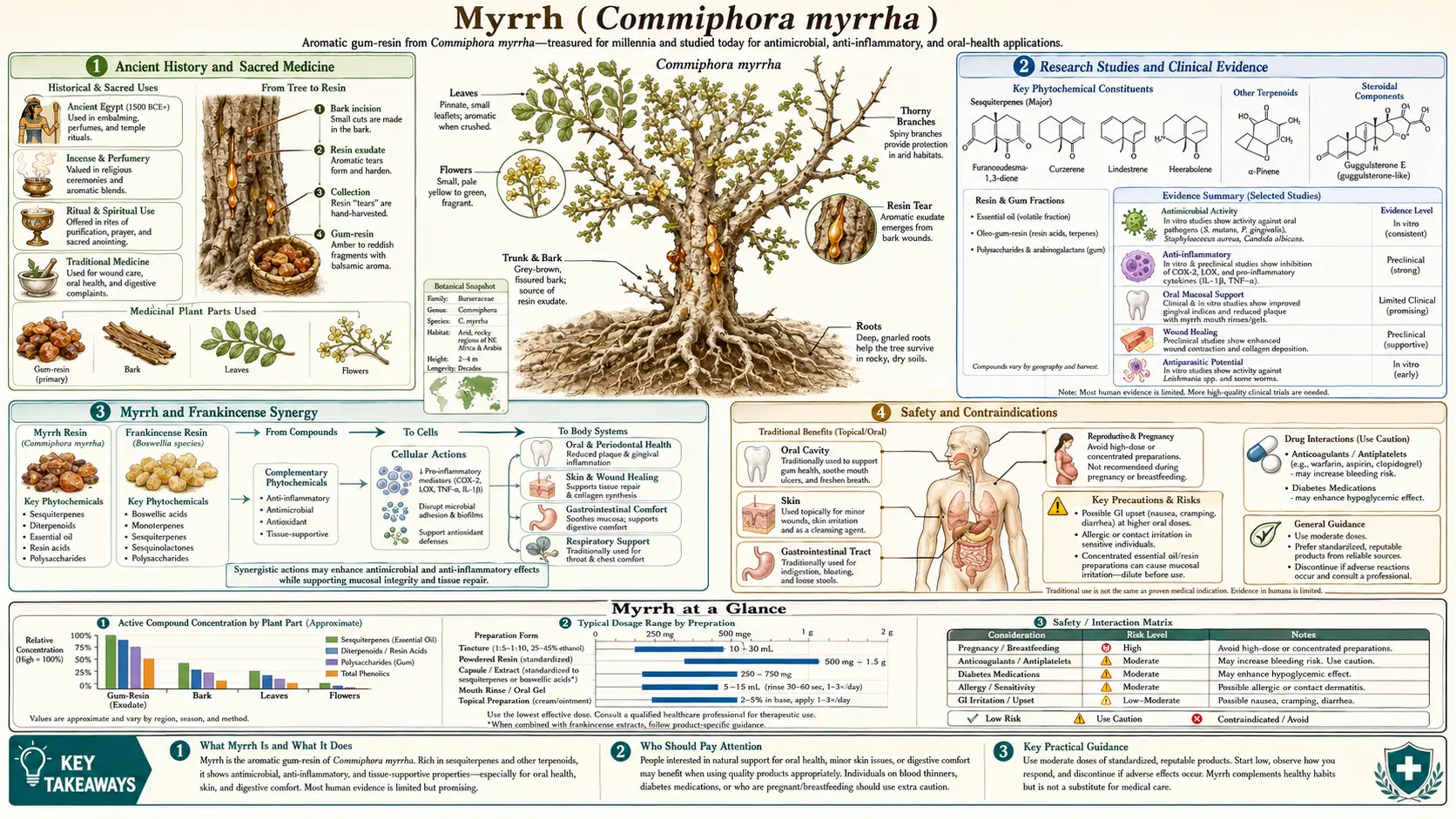
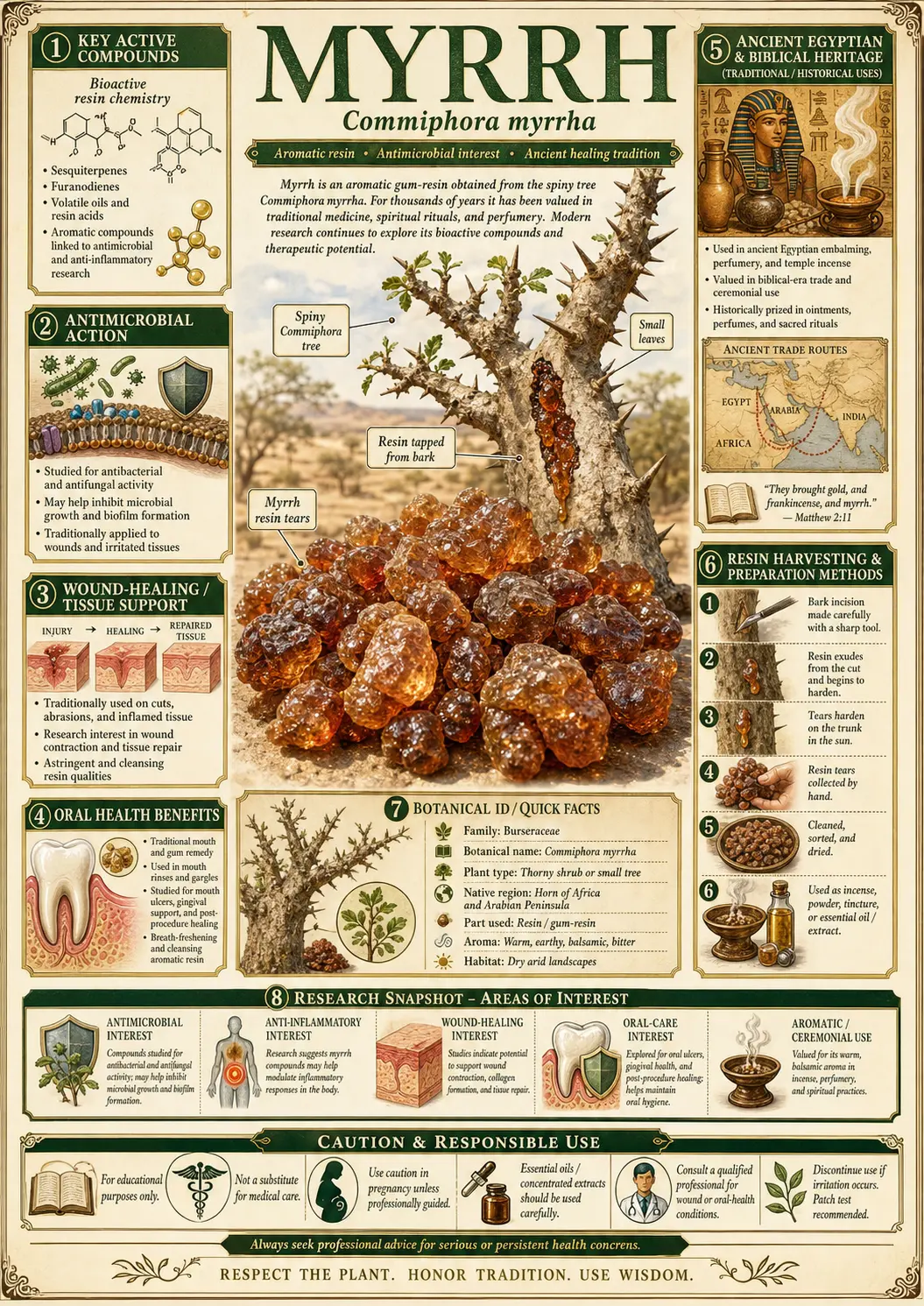
Table of Contents
- Ancient History and Sacred Medicine
- Key Antibacterial Compounds
- Mechanism of Antibacterial Action
- Bacteria Targeted
- Research Studies and Clinical Evidence
- Oral Health and Dental Applications
- Wound Healing and Skin Infections
- Gastrointestinal Uses
- Respiratory Applications
- Myrrh and Frankincense Synergy
- Other Health Benefits
- Forms and Preparations
- Dosage: EMA Monograph and Traditional Use
- Safety and Contraindications
- Key Research Papers
- Featured Videos
Ancient History and Sacred Medicine
Myrrh (Commiphora myrrha) is an aromatic oleo-gum resin harvested from small, thorny trees of the genus Commiphora, native to the arid regions of northeastern Africa and the Arabian Peninsula. For thousands of years it was one of the most valued medicines, perfumes, and ritual materials in the world — used in ancient Egyptian embalming, carried along the great incense-trade caravans, named in the Bible, and prized by Greek, Roman, Chinese, and Ayurvedic physicians for the mouth and throat, for easing pain, and for dressing wounds. — the fuller story is told in the dedicated History & Traditional Use article.
Key Antibacterial Compounds
Myrrh resin contains a complex mixture of bioactive compounds that collectively account for its potent antibacterial activity. The resin is composed of approximately 30-60% water-soluble gum (polysaccharides), 25-40% alcohol-soluble resin, and 2-8% volatile essential oil. Each fraction contributes distinct antibacterial constituents, and the synergistic interaction among these compounds produces effects greater than any single constituent alone.
The terpenoid fraction of myrrh essential oil contains several compounds with demonstrated antibacterial properties. Curzerene, a sesquiterpene that typically constitutes 15-30% of myrrh essential oil, has shown significant activity against both Gram-positive and Gram-negative bacteria in laboratory studies. Furanoeudesma-1,3-diene, another major sesquiterpene component, contributes to the bactericidal action of myrrh oil and has been identified as one of the compounds responsible for the opioid-like analgesic effects of myrrh, providing pain relief alongside infection control. Lindestrene, a third major sesquiterpene, demonstrates antimicrobial activity and is present in concentrations of 5-15% in most myrrh oil samples.
The sesquiterpene fraction of myrrh is exceptionally diverse, containing over 200 identified compounds. Beta-elemene, delta-elemene, beta-eudesmol, and alpha-copaene are among the sesquiterpenes that have been individually tested and found to possess antibacterial activity. The furanosesquiterpenes unique to myrrh, including furanodiene, furanodienone, and isofuranogermacrene, are of particular interest because they are not commonly found in other medicinal plants and may represent novel classes of antibacterial agents.
Commiphoric acids are a group of resinous acids specific to Commiphora species. These include alpha-commiphoric acid, beta-commiphoric acid, and commiphorinic acid. Research has demonstrated that these acids exhibit direct bacteriostatic and bactericidal effects, particularly against Gram-positive organisms. The commiphoric acids appear to work by disrupting bacterial cell membrane integrity and interfering with enzymatic processes essential for bacterial metabolism.
The volatile oil fraction also contains significant quantities of eugenol, cuminaldehyde, and methoxydecane, all of which have independently documented antibacterial properties. Eugenol, well-known for its presence in clove oil, inhibits bacterial growth by disrupting cell membrane permeability and inhibiting ATPase activity. The combined presence of these multiple antibacterial agents in myrrh creates a multi-target approach to bacterial inhibition that makes the development of bacterial resistance considerably more difficult than with single-compound antibiotics.
Mechanism of Antibacterial Action
The antibacterial mechanisms of myrrh operate through multiple simultaneous pathways, which collectively make it an effective broad-spectrum antimicrobial agent. Modern microbiological research has elucidated four primary mechanisms through which myrrh compounds exert their antibacterial effects.
Membrane disruption is the most extensively studied mechanism. The terpenoid compounds in myrrh, particularly the sesquiterpenes and commiphoric acids, are lipophilic molecules that integrate into bacterial cell membranes. Once embedded in the phospholipid bilayer, these compounds disrupt the ordered arrangement of fatty acid chains, increasing membrane fluidity and permeability. This leads to uncontrolled leakage of intracellular contents, including potassium ions, adenosine triphosphate (ATP), nucleotides, and proteins. The resulting collapse of the transmembrane electrochemical gradient (proton motive force) halts adenosine triphosphate synthesis and active transport processes, leading to rapid cell death. Studies using electron microscopy have confirmed that myrrh-treated bacteria exhibit extensive membrane blebbing, pore formation, and eventual cell lysis.
Oxidative damage represents a second key mechanism. Certain myrrh compounds, particularly the furanosesquiterpenes, generate reactive oxygen species (ROS) within bacterial cells. These reactive oxygen species, including superoxide anions, hydrogen peroxide, and hydroxyl radicals, cause oxidative damage to bacterial DNA, proteins, and lipids. The oxidative stress overwhelms bacterial antioxidant defense systems, including superoxide dismutase and catalase, leading to irreversible cellular damage. Research has shown that myrrh extracts increase intracellular reactive oxygen species levels in susceptible bacteria by 3-5 fold within the first hour of exposure.
Anti-adhesion properties constitute a third important mechanism. Bacterial pathogenesis often begins with adhesion to host tissues via surface adhesins, fimbriae, and pili. Myrrh compounds have been shown to interfere with bacterial adhesion by modifying the expression of adhesin genes and by coating host cell surfaces with a protective layer that blocks bacterial attachment. This anti-adhesion effect has been particularly well-documented in oral bacteria, where myrrh extracts reduce the ability of Streptococcus mutans and other cariogenic bacteria to adhere to tooth enamel and form dental plaque.
Biofilm inhibition is perhaps the most clinically significant mechanism of myrrh's antibacterial action. Biofilms are structured communities of bacteria enclosed in a self-produced matrix of extracellular polymeric substances (EPS), and they are responsible for up to 80% of chronic bacterial infections. Bacteria within biofilms are typically 100-1000 times more resistant to antibiotics than their free-floating (planktonic) counterparts. Myrrh compounds have demonstrated the ability to both prevent biofilm formation and disrupt established biofilms. The sesquiterpenes in myrrh penetrate the EPS matrix and destabilize its structural integrity, while the commiphoric acids inhibit quorum sensing signals that bacteria use to coordinate biofilm formation. Studies have shown that sub-inhibitory concentrations of myrrh extract can reduce biofilm formation by 50-70% in susceptible species.
Bacteria Targeted
Myrrh has demonstrated antibacterial activity against a broad spectrum of both Gram-positive and Gram-negative bacteria, including several clinically important pathogens and antibiotic-resistant strains.
Staphylococcus aureus is one of the most extensively studied targets of myrrh's antibacterial activity. This Gram-positive coccus is a leading cause of skin and soft tissue infections, surgical site infections, bacteremia, and endocarditis. Multiple studies have confirmed that myrrh essential oil and resin extracts exhibit strong bactericidal activity against S. aureus, with minimum inhibitory concentrations (MICs) typically ranging from 0.125 to 2.0 mg/mL depending on the extract preparation and bacterial strain. Of particular clinical importance, myrrh has shown activity against methicillin-resistant Staphylococcus aureus (MRSA), a pathogen that poses serious treatment challenges in healthcare settings worldwide.
Escherichia coli, a Gram-negative rod and common cause of urinary tract infections, gastroenteritis, and neonatal meningitis, is susceptible to myrrh extracts, though generally at higher concentrations than Gram-positive organisms due to the additional outer membrane barrier present in Gram-negative bacteria. Minimum inhibitory concentration (MIC) values for E. coli typically range from 1.0 to 4.0 mg/mL. Myrrh has shown particular efficacy against enterotoxigenic and enteropathogenic strains of E. coli that cause diarrheal disease.
Pseudomonas aeruginosa, a highly resistant Gram-negative opportunistic pathogen responsible for severe nosocomial infections, wound infections, and respiratory infections in immunocompromised patients, represents one of the more challenging targets for myrrh-based treatment. While myrrh shows moderate direct bactericidal activity against P. aeruginosa (minimum inhibitory concentration values of 2.0-8.0 mg/mL), its anti-biofilm properties are particularly relevant because P. aeruginosa is one of the most prolific biofilm-forming pathogens. Studies have demonstrated that myrrh extracts can reduce P. aeruginosa biofilm biomass by 40-60% at sub-inhibitory concentrations.
Bacillus subtilis, a Gram-positive, spore-forming bacterium used as a model organism in antimicrobial testing, is highly susceptible to myrrh compounds. Minimum inhibitory concentration values as low as 0.0625 mg/mL have been reported, making B. subtilis one of the most sensitive species to myrrh's antibacterial effects. This high susceptibility extends to other Bacillus species, including Bacillus cereus, a foodborne pathogen.
Oral bacteria represent a particularly important target group for myrrh's antibacterial activity, given the long traditional history of myrrh use in oral hygiene. Streptococcus mutans, the primary causative agent of dental caries, is strongly inhibited by myrrh extracts, with minimum inhibitory concentration values of 0.125-0.5 mg/mL. Myrrh not only kills S. mutans directly but also inhibits its production of glucosyltransferase enzymes that synthesize the sticky glucan polymers responsible for dental plaque formation. Aggregatibacter actinomycetemcomitans, a key pathogen in aggressive periodontitis, is also susceptible to myrrh, with studies demonstrating significant growth inhibition at concentrations achievable in mouthwash preparations. Additional oral pathogens inhibited by myrrh include Porphyromonas gingivalis (associated with chronic periodontitis), Fusobacterium nucleatum (involved in periodontal disease progression), and Streptococcus sanguinis (an early colonizer of dental plaque).
Other bacteria with demonstrated susceptibility to myrrh include Streptococcus pyogenes (Group A Streptococcus, causing pharyngitis and skin infections), Enterococcus faecalis (a nosocomial pathogen often resistant to multiple antibiotics), Salmonella typhimurium (causing gastroenteritis), Klebsiella pneumoniae (a cause of pneumonia and urinary tract infections), and Helicobacter pylori (the causative agent of gastric ulcers).
Research Studies and Clinical Evidence
A substantial body of scientific literature supports the antibacterial properties of myrrh, with studies published in peer-reviewed journals spanning phytochemistry, microbiology, and clinical medicine.
Research published in Phytotherapy Research has examined myrrh's antibacterial compounds. A 2008 study (Rahman and colleagues) isolated four terpenes from the oleo-resin of Commiphora molmol and tested them in the laboratory against several Staphylococcus aureus strains, including multidrug-resistant ones, finding minimum inhibitory concentrations (MICs) of 4 to 256 micrograms per mL. The most active compound, 3,4-seco-mansumbinoic acid, had an MIC of 4 micrograms per mL against a multidrug-resistant strain, compared with 32 micrograms per mL for the antibiotic norfloxacin.
Laboratory work has employed both disc diffusion and broth microdilution methods to determine minimum inhibitory concentration and minimum bactericidal concentration (MBC) values, indicating true bactericidal rather than merely bacteriostatic activity. The chemical composition of myrrh oil has been investigated using gas chromatography-mass spectrometry (GC-MS), correlating specific compound concentrations with antibacterial activity and identifying curzerene and furanoeudesma-1,3-diene as the primary contributors.
Multiple studies have examined myrrh's activity against drug-resistant pathogens. Myrrh resin extracts have been tested against multidrug-resistant clinical isolates collected from hospital settings, including methicillin-resistant Staphylococcus aureus, vancomycin-resistant Enterococcus (VRE), and extended-spectrum beta-lactamase (ESBL)-producing E. coli. The reported results were that myrrh maintained antibacterial activity against resistant strains at concentrations similar to those effective against susceptible strains, suggesting that the resistance mechanisms that protect bacteria from conventional antibiotics do not confer cross-resistance to myrrh compounds.
A 2020 laboratory study in AMB Express (Khalil and colleagues) tested myrrh essential oil against four multidrug-resistant clinical isolates — S. aureus (MRSA, from sputum), E. coli (from urine), P. aeruginosa (from a wound) and Klebsiella pneumoniae (from sputum). After 2 hours of contact, the oil killed 99.59% of the P. aeruginosa isolate but only 54.04% of the K. pneumoniae isolate.
The same 2008 Phytotherapy Research study looked at myrrh alongside antibiotics: in the laboratory, the crude extract of the myrrh oleo-resin potentiated (strengthened) ciprofloxacin and tetracycline against S. aureus, several Salmonella Typhimurium strains and two K. pneumoniae strains.
Fractional inhibitory concentration (FIC) index values have been reported to indicate true synergy rather than mere additive effects, suggesting that myrrh compounds may serve as antibiotic adjuvants that restore the efficacy of drugs to which bacteria have developed resistance. The proposed mechanism involves myrrh's membrane-disrupting activity increasing bacterial membrane permeability, thereby enhancing intracellular accumulation of co-administered antibiotics.
In a comparison with other traditional Arabian medicinal plants, myrrh ranked among the most potent antibacterial agents tested, outperforming many commonly used medicinal plants. Time-kill work has also been reported, finding that myrrh extracts at twice the minimum inhibitory concentration rapidly reduced viable S. aureus counts.
Clinical studies, while less numerous than laboratory investigations, have provided supportive evidence. A myrrh-containing mouthwash in patients with chronic gingivitis has been reported to give statistically significant reductions in bacterial plaque scores and gingival inflammation indices compared to placebo after eight weeks of use.
Clinical studies are less numerous than laboratory investigations. In people, the uses recognised by the European Medicines Agency (EMA) rest on tradition: its monograph lists myrrh tincture as a traditional herbal medicine for minor ulcers and inflammation in the mouth (stomatitis and gingivitis) and for minor wounds and small boils, on the basis of long-standing use.
Oral Health and Dental Applications
The application of myrrh in oral health represents one of the most well-documented traditional uses of this ancient resin. Myrrh has been used to maintain oral hygiene and treat oral diseases for thousands of years.
Myrrh-containing mouthwashes are traditionally used against mouth bacteria, dental plaque and gum inflammation. The EMA monograph recognises myrrh tincture as a traditional herbal medicine for minor ulcers and inflammation in the mouth (stomatitis and gingivitis), exclusively on the basis of long-standing use.
Twice-daily rinsing with a mouthwash containing 10% myrrh tincture for eight weeks has been reported to reduce plaque index scores and gingival index scores more than placebo, with significant reductions in salivary total viable bacterial counts and particular decreases in Streptococcus mutans and Lactobacillus species.
Myrrh's effectiveness against gingivitis and periodontal disease stems from its combined antibacterial and anti-inflammatory properties. The resin's antibacterial action targets the periodontal pathogens, including P. gingivalis, A. actinomycetemcomitans, Treponema denticola, and Tannerella forsythia, that colonize subgingival spaces and trigger the inflammatory cascade leading to tissue destruction and bone loss. Simultaneously, myrrh's terpenoid compounds inhibit the production of pro-inflammatory cytokines (interleukin-1-beta, tumor necrosis factor-alpha, interleukin-6) and prostaglandins (PGE2) by gingival fibroblasts and immune cells, reducing the excessive inflammatory response that causes much of the tissue damage in periodontal disease.
In traditional Middle Eastern oral hygiene practices, myrrh has been used in several forms. Chewing small pieces of myrrh resin was a common practice for maintaining oral health, with the resin gradually releasing antibacterial compounds as it softened in the mouth. Myrrh was also a component of traditional tooth powders, mixed with salt, charcoal, and other herbs, and applied to the teeth and gums with a miswak (chewing stick). In Yemeni and Saudi Arabian folk medicine, a paste of ground myrrh mixed with honey was applied directly to painful or infected gums. Many traditional Arabic and Persian toothpaste formulations included myrrh as a primary ingredient, a practice that continues in various natural dental products today.
Modern dental applications of myrrh extend beyond mouthwashes. Myrrh tincture is applied directly to aphthous ulcers (canker sores) and oral mucosal lesions, where it provides both pain relief through its analgesic properties and infection prevention through its antibacterial action. Several European dental products incorporate myrrh extract as an active ingredient, and the German Commission E has approved myrrh for the treatment of mild inflammations of the oral and pharyngeal mucosa. Myrrh is also used in some endodontic preparations as an intracanal medicament due to its ability to inhibit E. faecalis, a bacterium commonly associated with persistent root canal infections.
Wound Healing and Skin Infections
The use of myrrh as a wound healing agent represents one of the oldest and most consistent applications of this resin throughout human history. From the battlefield antiseptics of Roman legions to the wound dressings of traditional African healers, myrrh has been applied to wounds across virtually every culture that had access to it.
As a traditional battlefield antiseptic, myrrh was highly valued by ancient military physicians. Roman army medics carried supplies of myrrh resin and myrrh-infused wine for treating combat injuries. The resin was ground to powder and applied directly to sword cuts, arrow wounds, and other battle injuries, where it served the dual purpose of controlling bleeding through its astringent properties and preventing wound infection through its antibacterial activity. Crusaders returning from the Middle East brought renewed knowledge of myrrh's wound-healing properties back to Europe, where it became a standard component of medieval wound salves.
Traditional wound irrigation with myrrh solutions involved dissolving myrrh resin in wine, vinegar, or water to create antiseptic washes. These solutions were used to clean wounds before the application of dressings, and historical accounts consistently note that wounds treated with myrrh were less likely to develop the foul-smelling suppuration characteristic of severe infection. Modern research has confirmed that aqueous and alcoholic extracts of myrrh are effective at reducing bacterial contamination of wound surfaces, with in vitro studies showing significant inhibition of wound-associated pathogens including S. aureus, S. pyogenes, P. aeruginosa, and E. coli.
Myrrh's application in burn treatment draws on both its antibacterial and tissue-regenerating properties. Burns are highly susceptible to secondary bacterial infection, which is a leading cause of morbidity and mortality in burn patients. Animal studies have demonstrated that topical application of myrrh-based ointments to experimental burn wounds results in faster epithelialization, increased collagen deposition, and higher tensile strength in healed tissue compared to untreated controls. The antibacterial properties of myrrh help prevent colonization of burn wounds by opportunistic pathogens, while its anti-inflammatory effects reduce excessive inflammation that can impede the healing process.
Beyond direct antibacterial action, myrrh promotes wound healing through several additional mechanisms. It stimulates the proliferation and migration of fibroblasts, the cells responsible for producing collagen and other structural proteins in healing tissue. Myrrh compounds also promote angiogenesis (the formation of new blood vessels) in wound beds, ensuring adequate oxygen and nutrient delivery to healing tissue. Additionally, myrrh modulates the immune response at wound sites, promoting the transition from the inflammatory phase to the proliferative phase of wound healing, which is often delayed in chronic wounds.
Gastrointestinal Uses
Myrrh has a long history of use in treating gastrointestinal infections, and modern research has studied its antiparasitic activity, especially against Schistosoma species, the causative agents of schistosomiasis, with conflicting results in human trials.
Schistosomiasis (bilharzia) is a tropical parasitic disease affecting over 200 million people worldwide, caused by blood flukes of the genus Schistosoma. The standard treatment, praziquantel, faces challenges including emerging drug resistance and limited efficacy against juvenile worm stages. Research into myrrh as an alternative antiparasitic agent began in the early 2000s when Egyptian researchers reported antischistosomal activity for a commercial myrrh oleoresin capsule (a soft gelatin capsule containing purified Commiphora molmol oleoresin). A series of clinical studies published in the American Journal of Tropical Medicine and Hygiene and the Journal of the Egyptian Society of Parasitology evaluated the capsule in patients with Schistosoma mansoni and Schistosoma haematobium infections. The first large report (Sheir 2001, 204 patients) gave a cure rate of 91.7% after three days of treatment. Later randomized trials of the commercial capsule, published in the American Journal of Tropical Medicine and Hygiene, compared it with the standard drug praziquantel and found low cure rates: 15.6% after a first treatment and 8.9% after a second, against 73.7% and 76.3% with praziquantel (Barakat 2005, 104 people), and 9.1% in school children and 8.9% in household members, against 62.5% and 79.7% with praziquantel (Botros 2005, 1,131 people). While subsequent studies produced more variable results and sparked debate about the true efficacy of myrrh against schistosomiasis, the research established that myrrh compounds have genuine antiparasitic activity and stimulated further investigation into the mechanisms involved.
Myrrh's activity against gut pathogens extends beyond parasites to include bacterial and protozoal causes of gastroenteritis. Studies have demonstrated antibacterial activity against Salmonella typhimurium, Shigella dysenteriae, and Vibrio cholerae, all major causes of infectious diarrhea in developing countries. The antibacterial effect is complemented by myrrh's antidiarrheal properties, which include reduction of intestinal hypermotility through effects on smooth muscle contractility and inhibition of prostaglandin-mediated intestinal secretion.
Against protozoal gut infections, myrrh has shown activity against Giardia lamblia, Entamoeba histolytica, and Cryptosporidium parvum. Traditional use in Middle Eastern and African folk medicine for treating intestinal parasites is widespread, with preparations typically involving the ingestion of myrrh resin dissolved in warm milk or water. A small clinical study of 7 patients with fascioliasis (liver fluke infection; Massoud 2001) reported a dramatic drop in egg counts and improvement in symptoms after myrrh given at 12 mg per kg of body weight a day for 6 days.
Myrrh also demonstrates activity against Helicobacter pylori, the Gram-negative bacterium responsible for gastric and duodenal ulcers and a recognized carcinogen linked to gastric cancer. In vitro studies have shown that myrrh extracts inhibit H. pylori growth at achievable therapeutic concentrations, and the additional gastroprotective effects of myrrh, including stimulation of mucus secretion and inhibition of gastric acid production, may provide complementary benefits in managing H. pylori-related gastric disease.
Respiratory Applications
The use of myrrh incense for air purification and respiratory health represents one of the most ancient applications of this resin. Burning myrrh as incense was practiced in temples, hospitals, and homes throughout the ancient world, with practitioners believing that the fragrant smoke purified the air and prevented the spread of contagious diseases. Modern research has provided scientific support for this traditional practice.
Studies have examined whether incense smoke reduces airborne bacteria in enclosed spaces. In one, published in the Journal of Ethnopharmacology (Nautiyal 2007), smoke from burning wood and a mixture of fragrant medicinal herbs used in Indian fire rituals (havan sámagri) — not myrrh — cut airborne bacterial counts by over 94% within 60 minutes in a closed room. In another, in the same journal (Ljaljević Grbić 2018), myrrh and frankincense essential oils and incense fume inhibited bacteria and fungi in laboratory tests, and in a sealed 17th-century church the fume of frankincense (Boswellia carteri) incense reduced airborne bacteria by up to 91.43%; myrrh was not the incense tested in the church. The antibacterial volatiles released during myrrh combustion include terpenoid compounds, phenolic derivatives, and aldehydes that remain suspended in the air and exert bactericidal effects on airborne microorganisms.
Traditional use of myrrh for respiratory infections encompasses several preparation methods. Myrrh steam inhalation, achieved by adding myrrh resin or tincture to hot water and inhaling the vapors, has been used to treat bronchitis, sinusitis, pharyngitis, and upper respiratory infections. The inhaled volatile compounds reach the respiratory mucosa and exert local antibacterial and anti-inflammatory effects, reducing infection burden and alleviating symptoms of congestion and inflammation. Myrrh gargles, prepared from myrrh tincture diluted in warm water, are used for sore throats and tonsillitis, where they provide both antiseptic action against pharyngeal pathogens and analgesic relief from throat pain.
In Ayurvedic and Unani medicine traditions, myrrh has been used as an expectorant to loosen and expel mucus from the respiratory tract. The resin is believed to warm and dry excessive dampness in the lungs, a conceptual framework that aligns with its observed ability to reduce excessive mucus secretion while maintaining adequate mucosal hydration. Some traditional preparations combine myrrh with honey, ginger, and other warming herbs for the treatment of productive coughs and chest congestion.
Myrrh and Frankincense Synergy
The combination of myrrh (Commiphora myrrha) and frankincense (Boswellia sacra or Boswellia serrata) represents one of the most ancient and enduring herbal pairings in the history of medicine. These two resins have been used together for over 3,000 years across Egyptian, Biblical, Ayurvedic, and traditional Chinese medicine traditions, and modern research has confirmed that their combined use produces enhanced antibacterial activity through synergistic interactions.
The traditional combination of myrrh and frankincense was not merely ceremonial but reflected empirical observation of superior therapeutic outcomes. Egyptian physicians frequently prescribed the two resins together for wound treatment, embalming preparations, and religious purification rituals. In traditional Chinese medicine, the pairing of mo yao (myrrh) and ru xiang (frankincense) is considered a classic combination for moving blood, reducing swelling, and relieving pain, and many traditional formulations include both resins in equal proportions.
Modern laboratory studies have systematically evaluated the antibacterial interactions between myrrh and frankincense using checkerboard assays and FIC index calculations. These studies have consistently demonstrated synergistic or additive antibacterial effects when the two resins are combined. A 2012 study in Letters in Applied Microbiology (de Rapper and colleagues) tested essential oils of three frankincense species and two myrrh species from Ethiopia, alone and in combination: the combinations showed synergistic, additive and non-interactive effects, with no antagonism, and in tests against Bacillus cereus the most favourable pairing was Boswellia papyrifera frankincense with Commiphora myrrha. One proposed explanation for such synergy is complementary mechanisms of action: while both resins disrupt bacterial membranes, frankincense's boswellic acids also inhibit bacterial topoisomerase enzymes, and the combined assault on multiple cellular targets overwhelms bacterial defense mechanisms.
The enhanced antibacterial activity of the combination allows for lower effective doses of each individual resin, potentially reducing the risk of side effects while maintaining or improving therapeutic efficacy. This finding supports the traditional practice of combining the two resins and suggests that combination preparations may be more effective than either resin used alone.
Other Health Benefits
Anti-inflammatory properties: Myrrh is a potent anti-inflammatory agent. The sesquiterpenes and commiphoric acids in myrrh inhibit the cyclooxygenase-2 (COX-2) and 5-lipoxygenase (5-LOX) enzymes responsible for producing pro-inflammatory prostaglandins and leukotrienes. Myrrh also suppresses the nuclear factor kappa-B (NF-kB) signaling pathway, a master regulator of inflammatory gene expression. These anti-inflammatory effects complement its antibacterial properties, as excessive inflammation at infection sites can cause tissue damage and impede healing.
Analgesic effects: Myrrh has been used as a pain reliever since antiquity, and research has identified specific compounds responsible for its analgesic activity. The furanosesquiterpenes in myrrh, particularly furanoeudesma-1,3-diene and curzerene, interact with opioid receptors in the central and peripheral nervous systems. A 1996 letter in Nature (Dolara and colleagues) is cited for identifying curzerene, furanoeudesma-1,3-diene and lindestrene as the compounds behind myrrh's pain-relieving effect. Two other myrrh compounds, furanodiene-6-one and methoxyfuranoguaia-9-ene-8-one, come from a separate study (Dolara 2000, Planta Medica), which found antibacterial and antifungal activity and a local-anaesthetic effect that blocks the sodium current in nerve membranes; that study did not examine opioid receptors. This opioid-mediated analgesia is complemented by peripheral pain relief through inhibition of inflammatory mediators at pain sites.
Antifungal activity: Myrrh demonstrates significant antifungal properties against multiple pathogenic fungi. Studies have reported activity against Candida albicans (the most common cause of fungal infections in humans), Aspergillus niger, Trichophyton rubrum (causing dermatophyte infections), and Cryptococcus neoformans. The antifungal mechanisms are similar to the antibacterial mechanisms, involving disruption of fungal cell membrane integrity through interaction of terpenoid compounds with ergosterol in fungal membranes.
Anticancer research: Preliminary research has explored myrrh's potential anticancer properties. Studies have demonstrated that myrrh extracts and specific compounds, including sesquiterpenes and commiphoric acids, inhibit the proliferation of various cancer cell lines, including breast, prostate, liver, lung, and pancreatic cancer cells. The proposed anticancer mechanisms include induction of apoptosis (programmed cell death) through activation of caspase cascades, inhibition of tumor angiogenesis, suppression of NF-kB-mediated survival signals, and cell cycle arrest. A study published in the Journal of Natural Products (Zhu 2001) isolated six furanosesquiterpenoids from myrrh; one showed weak cytotoxic activity against a breast cancer cell line, and the other five were inactive in that test. However, these findings remain preclinical, and no clinical trials of myrrh as a cancer treatment have been completed.
Antiparasitic activity: Beyond the schistosomiasis research discussed in the gastrointestinal section, myrrh has demonstrated activity against multiple parasitic species. Studies have shown efficacy against Fasciola species (liver flukes), Leishmania species (causing leishmaniasis), Trypanosoma species (causing trypanosomiasis), and various intestinal helminths. The antiparasitic activity appears to involve disruption of parasite tegument (outer covering) integrity and interference with parasite metabolic enzymes.
Forms and Preparations
Whole resin: Raw myrrh resin tears are the most traditional form. These irregular, reddish-brown to dark brown nodules can be chewed directly (for oral health benefits), ground to powder for incorporation into topical preparations, or dissolved in alcohol or water for various applications. Good-quality resin is aromatic, semi-translucent at thin edges, and free of excessive bark debris. Somali and Ethiopian myrrh is generally considered the highest quality commercially available.
Tincture: Myrrh tincture is prepared by macerating crushed myrrh resin in alcohol (typically 90% ethanol) at a ratio of 1:5 (resin to solvent) for 2-4 weeks. The resulting tincture is a dark reddish-brown liquid with a characteristic bitter, balsamic taste. Tinctures are the most common form used in Western herbal medicine and are applied for oral health (gargling, direct application to gums), wound treatment (diluted as an antiseptic wash), and internal use (drops taken in water). Commercial myrrh tinctures are available from most herbal suppliers and pharmacies in Europe.
Essential oil: Myrrh essential oil is obtained by steam distillation of the resin and contains the concentrated volatile fraction, rich in sesquiterpenes including curzerene, furanoeudesma-1,3-diene, and lindestrene. The oil is a pale yellow to amber liquid with a warm, balsamic, slightly medicinal aroma. Essential oil is used in aromatherapy, added to carrier oils for topical application, and incorporated into mouthwash and oral care formulations. Due to its concentrated nature, myrrh essential oil is diluted before topical application, typically to 2-5% in a suitable carrier oil.
Capsules: Standardized myrrh capsules and tablets are available as dietary supplements, typically containing powdered myrrh resin or standardized extracts. These provide a convenient method of internal administration and allow for consistent dosing. The commercial myrrh oleoresin capsule used in the schistosomiasis research is an example of a capsule formulation containing purified myrrh oleoresin.
Mouthwash: Myrrh-based mouthwashes can be prepared by diluting myrrh tincture in water (typically 10-20 drops of tincture per half cup of warm water) or by using commercially prepared oral rinses containing myrrh extract. Several European dental brands offer myrrh-containing mouthwashes, often combined with other antimicrobial herbs such as sage, chamomile, or ratanhia root.
Powder: Finely ground myrrh resin powder can be applied directly to wounds, mixed with other ingredients to form poultices or ointments, or encapsulated for internal use. Powdered myrrh is also used in traditional tooth powder formulations and can be mixed with warm water to create antiseptic washes. The powder form provides the full spectrum of active compounds, including both volatile and non-volatile constituents.
Dosage: EMA Monograph and Traditional Use
Doses for myrrh vary by preparation form and intended use. The European Medicines Agency's monograph (EMA/HMPC/96911/2010) covers only a 1:5 myrrh tincture in 90% ethanol, used in the mouth or on the skin — it describes no internal use. For mouth ulcers and inflammation of the mouth and gums it gives 0.5–5 mL of tincture in 150 mL of water as a rinse or gargle 3 times daily, or the undiluted tincture dabbed on the sore area with a cotton bud 2–3 times daily; for minor wounds and small boils, the area is dabbed 2–3 times daily with the tincture, undiluted or diluted in water. It does not recommend use under 12 years of age, for lack of data, and advises seeing a doctor or qualified health practitioner if symptoms persist after 1 week. The other amounts below, including all internal use, come from traditional herbal practice, not from the EMA.
Tincture (1:5 in 90% ethanol):
- Internal use (traditional practice): 1-2 mL (approximately 20-40 drops) diluted in water, taken 2-3 times daily
- Oral rinse (traditional practice): 5-10 drops added to a small glass of warm water, used as a gargle or mouthwash 2-3 times daily
- Direct application to gums or oral lesions: undiluted tincture applied with a cotton swab, 2-3 times daily (as in the EMA monograph)
Mouthwash preparation (traditional practice):
- 10-20 drops of myrrh tincture in 100 mL of warm water
- Alternatively, 0.5-1 g of powdered myrrh resin dissolved in 100 mL of warm water
- Swished for 30-60 seconds, then spat out rather than swallowed
- Used 2-3 times daily after meals for oral health maintenance
Topical use (traditional practice):
- Essential oil: diluted to 2-5% in a carrier oil (jojoba, coconut, or olive oil) for skin application
- Wound wash: 2-4 mL of tincture in 100 mL of sterile water or saline
- Powder: a thin layer of finely ground myrrh applied directly to clean wounds
- Poultice: myrrh powder mixed with warm water or honey into a paste, applied to the affected area and covered with a clean dressing
Internal capsules (traditional practice):
- Powdered resin: 300-600 mg taken 2-3 times daily with meals
- Traditional practice limits internal use to about 2-4 weeks at a time
These amounts are for adults. The EMA monograph, which covers mouth and skin use only, adds these safety points: use under 12 years of age is not recommended for lack of data; symptoms that worsen or last more than a week, fever, or signs of a spreading skin infection are the points at which it advises seeing a doctor, and small boils on the face are for a doctor to treat; contact of the tincture with the eyes is to be avoided; the alcohol in the tincture may cause brief pain and irritation on the mouth lining or skin; and allergic skin reactions have been reported.
Safety and Contraindications
Pregnancy: Myrrh is a known uterine stimulant that can induce uterine contractions and has been historically used as an emmenagogue (agent to promote menstruation). Ingestion of myrrh during pregnancy carries a significant risk of miscarriage, premature labor, and other adverse pregnancy outcomes. The concern extends to all trimesters of pregnancy and to women who are actively trying to conceive. The EMA monograph states that safety during pregnancy and breastfeeding has not been established and that, in the absence of sufficient data, use during pregnancy and breastfeeding is not recommended; it lists no fertility data.
Breastfeeding: The same EMA statement covers breastfeeding: safety has not been established. Whether myrrh compounds are excreted in breast milk is not well established.
Bleeding disorders and anticoagulant medications: Myrrh may inhibit platelet aggregation, which raises a theoretical concern alongside antiplatelet and anticoagulant medicines such as heparin, aspirin, clopidogrel and the newer oral anticoagulants. For warfarin, the one published case report describes the opposite: myrrh (Commiphora molmol) taken as a herbal medicine weakened (antagonised) warfarin's anticoagulant effect (Al Faraj 2005). The EMA monograph lists interactions as “None reported.” A two-week break before planned surgery is a precaution commonly applied to herbs suspected of affecting bleeding.
Diabetes medications: Myrrh has been shown to lower blood glucose levels in some studies, and it may potentiate the hypoglycemic effects of insulin, metformin, sulfonylureas, and other diabetes medications. The concern is low blood sugar (hypoglycaemia) in people taking these drugs.
Thyroid effects: A search of the research literature for this page found no study showing that myrrh lowers thyroid hormone levels. The one thyroid study it found in the same plant genus is on guggul (Commiphora mukul, a different species): in female mice given a drug that lowers thyroid function, guggul reversed the effect, which the authors described as a potential to stimulate thyroid function (Panda and Kar 2005). The potential thyroid-suppressing effect may be of interest in the management of hyperthyroidism, though this application has not been clinically validated.
Gastrointestinal side effects: Internal use of myrrh may cause gastrointestinal irritation, including nausea, diarrhea, and stomach cramping, particularly at higher doses. Taking myrrh with food may reduce these effects.
Allergic reactions: Contact dermatitis and allergic skin reactions have been reported with topical use of myrrh, particularly with undiluted essential oil. The EMA monograph lists allergic skin reactions (frequency not known), and its one contraindication is hypersensitivity (allergy) to myrrh. A patch test before first topical application is the usual precaution, and known allergy to other plants in the Burseraceae family raises a concern of cross-reaction.
Drug interactions: Beyond the interactions noted above, myrrh may interact with drugs metabolized by the cytochrome P450 enzyme system. The EMA monograph, which covers mouth and skin use, lists interactions as “None reported.”
Kidney and liver function: Large doses of myrrh taken internally over extended periods may affect kidney and liver function. This concern matters most for people with existing kidney or liver disease.
Key Research Papers
- Dolara P, Luceri C, Ghelardini C, et al. "Analgesic effects of myrrh." Nature. 1996;379(6560):29.
- Tipton DA, Lyle B, Babich H, Dabbous MK. "In vitro cytotoxic and anti-inflammatory effects of myrrh oil on human gingival fibroblasts and epithelial cells." Toxicology In Vitro. 2003;17(3):301-310.
- Haffor AS. "Effect of myrrh (Commiphora molmol) on leukocyte levels before and during healing from gastric ulcer or skin injury." Journal of Immunotoxicology. 2010;7(1):68-75.
- Sheir Z, Nasr AA, Massoud A, et al. "A safe, effective herbal antischistosomal therapy derived from myrrh." American Journal of Tropical Medicine and Hygiene. 2001;65(6):700-704.
- Mahboubi M, Kashani LM. "The anti-dermatophyte activity of Commiphora molmol." Pharmaceutical Biology. 2016;54(4):720-725.
- Al-Harbi MM, Qureshi S, Raza M, et al. "Anticarcinogenic effect of Commiphora molmol on solid tumors induced by Ehrlich carcinoma cells in mice." Chemotherapy. 1994;40(5):337-347.
- Hanus LO, Rezanka T, Dembitsky VM, Moussaieff A. "Myrrh — commiphora chemistry." Biomedical Papers. 2005;149(1):3-27.
- Rahman MM, Garvey M, Piddock LJ, Gibbons S. "Antibacterial terpenes from the oleo-resin of Commiphora molmol (Engl.)" Phytotherapy Research. 2008;22(10):1356-1360.
- Nomicos EY. "Myrrh: medical marvel or myth of the Magi?" Holistic Nursing Practice. 2007;21(6):308-323.
- Su S, Wang T, Duan JA, et al. "Anti-inflammatory and analgesic activity of different extracts of Commiphora myrrha." Journal of Ethnopharmacology. 2011;134(2):251-258.
- Omer SA, Adam SEI, Mohammed OB. "Antimicrobial activity of Commiphora myrrha against some bacteria and Candida albicans isolated from gazelles at King Khalid Wildlife Research Centre." Research Journal of Medicinal Plant. 2011;5(1):65-71. — doi:10.3923/rjmp.2011.65.71
- Shen T, Li GH, Wang XN, Lou HX. "The genus Commiphora: a review of its traditional uses, phytochemistry and pharmacology." Journal of Ethnopharmacology. 2012;142(2):319-330.
- de Rapper S, Van Vuuren SF, Kamatou GP, Viljoen AM, Dagne E. "The additive and synergistic antimicrobial effects of select frankincense and myrrh oils — a combination from the pharaonic pharmacopoeia." Letters in Applied Microbiology. 2012;54(4):352-358. — PubMed PMID: 22288378
- Tonkal AM, Morsy TA. "An update review on Commiphora molmol and related species." Journal of the Egyptian Society of Parasitology. 2008;38(3):763-796.
- Barakat R, Elmorshedy H, Fenwick A. "Efficacy of myrrh in the treatment of human Schistosomiasis mansoni." American Journal of Tropical Medicine and Hygiene. 2005;73(2):365-367. — PubMed PMID: 16103605
- Botros S, Sayed H, El-Dusoki H, et al. "Efficacy of mirazid in comparison with praziquantel in Egyptian Schistosoma mansoni-infected school children and households." American Journal of Tropical Medicine and Hygiene. 2005;72(2):119-123. — PubMed PMID: 15741544
- Massoud A, El Sisi S, Salama O, Massoud A. "Preliminary study of therapeutic efficacy of a new fasciolicidal drug derived from Commiphora molmol (myrrh)." American Journal of Tropical Medicine and Hygiene. 2001;65(2):96-99. — PubMed PMID: 11508399
- Dolara P, Corte B, Ghelardini C, et al. "Local anaesthetic, antibacterial and antifungal properties of sesquiterpenes from myrrh." Planta Medica. 2000;66(4):356-358. — PubMed PMID: 10865454
- Zhu N, Kikuzaki H, Sheng S, et al. "Furanosesquiterpenoids of Commiphora myrrha." Journal of Natural Products. 2001;64(11):1460-1462. — PubMed PMID: 11720534
- Nautiyal CS, Chauhan PS, Nene YL. "Medicinal smoke reduces airborne bacteria." Journal of Ethnopharmacology. 2007;114(3):446-451. — PubMed PMID: 17913417
- Ljaljević Grbić M, Unković N, Dimkić I, et al. "Frankincense and myrrh essential oils and burn incense fume against micro-inhabitants of sacral ambients. Wisdom of the ancients?" Journal of Ethnopharmacology. 2018;219:1-14. — PubMed PMID: 29530608
- Khalil N, Fikry S, Salama O. "Bactericidal activity of Myrrh extracts and two dosage forms against standard bacterial strains and multidrug-resistant clinical isolates with GC/MS profiling." AMB Express. 2020;10(1):21. — PubMed PMID: 31993779
- Al Faraj S. "Antagonism of the anticoagulant effect of warfarin caused by the use of Commiphora molmol as a herbal medication: a case report." Annals of Tropical Medicine and Parasitology. 2005;99(2):219-220. — PubMed PMID: 15814041
- Panda S, Kar A. "Guggulu (Commiphora mukul) potentially ameliorates hypothyroidism in female mice." Phytotherapy Research. 2005;19(1):78-80. — PubMed PMID: 15798994
- European Medicines Agency, Committee on Herbal Medicinal Products. "Community herbal monograph on Commiphora molmol Engler, gummi-resina." EMA/HMPC/96911/2010. 12 July 2011. — EMA monograph (PDF)
PubMed Topic Searches
The following PubMed topic searches aggregate the peer-reviewed literature underpinning the claims above. Each link opens a live PubMed query so the result set stays current as new research is published.
Connections
- All Herbs
- Myrrh Benefits Deep Dive
- Garlic
- Thyme
- Oregano
- Immune Boosting
- Goldenseal
- Manuka Honey
- Silver Nanoparticles
- Cancer
- Staphylococcus Aureus
- Diabetes
- Honey
- Urinary Tract Infections
- Parasites
- Fungal Infections
- Clove
- Conditions on this site that reference this page: Gingivitis · Halitosis (Chronic Bad Breath) · Periodontitis (Gum Disease) · Dentistry & Oral Health