Yogurt
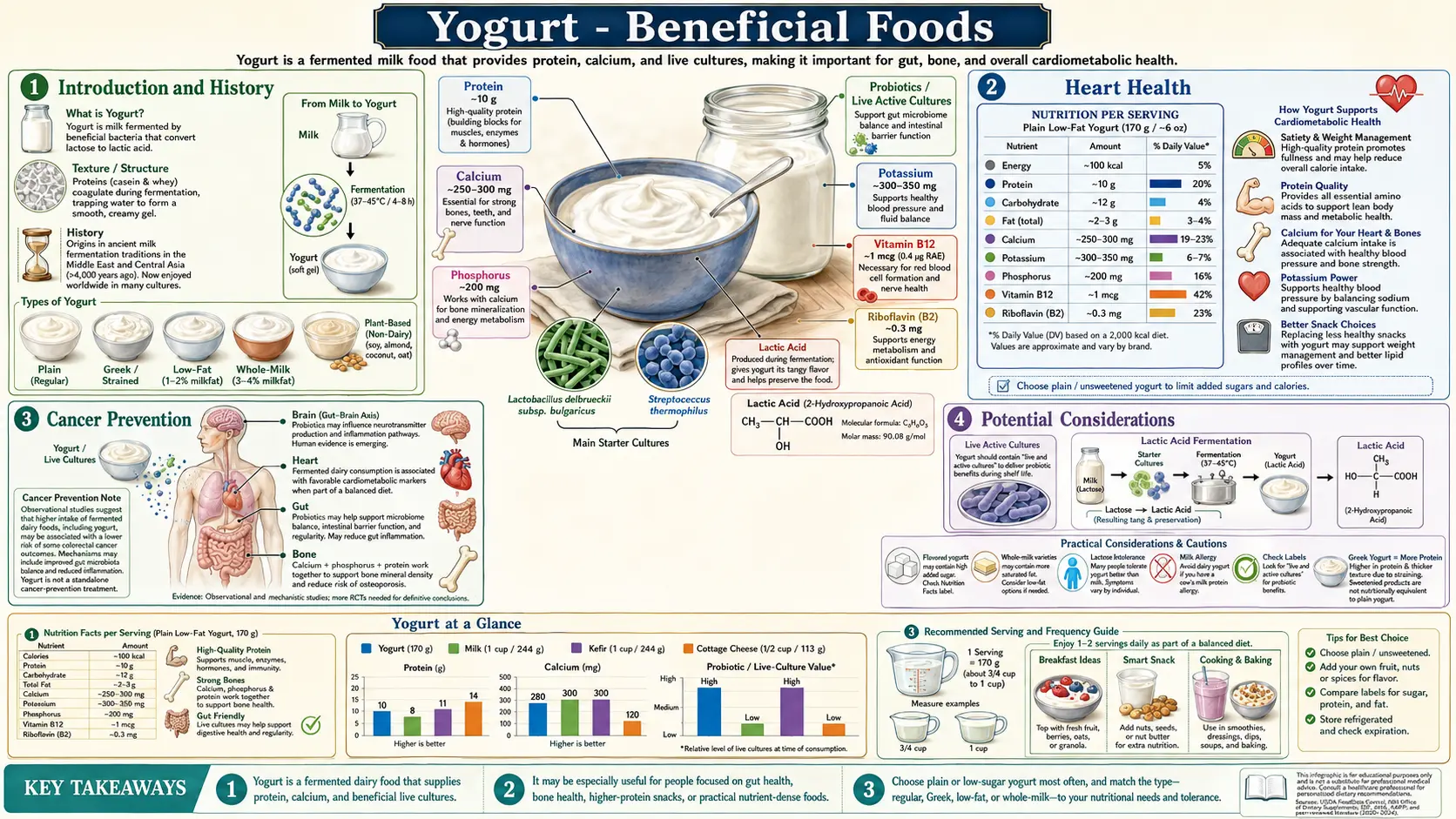
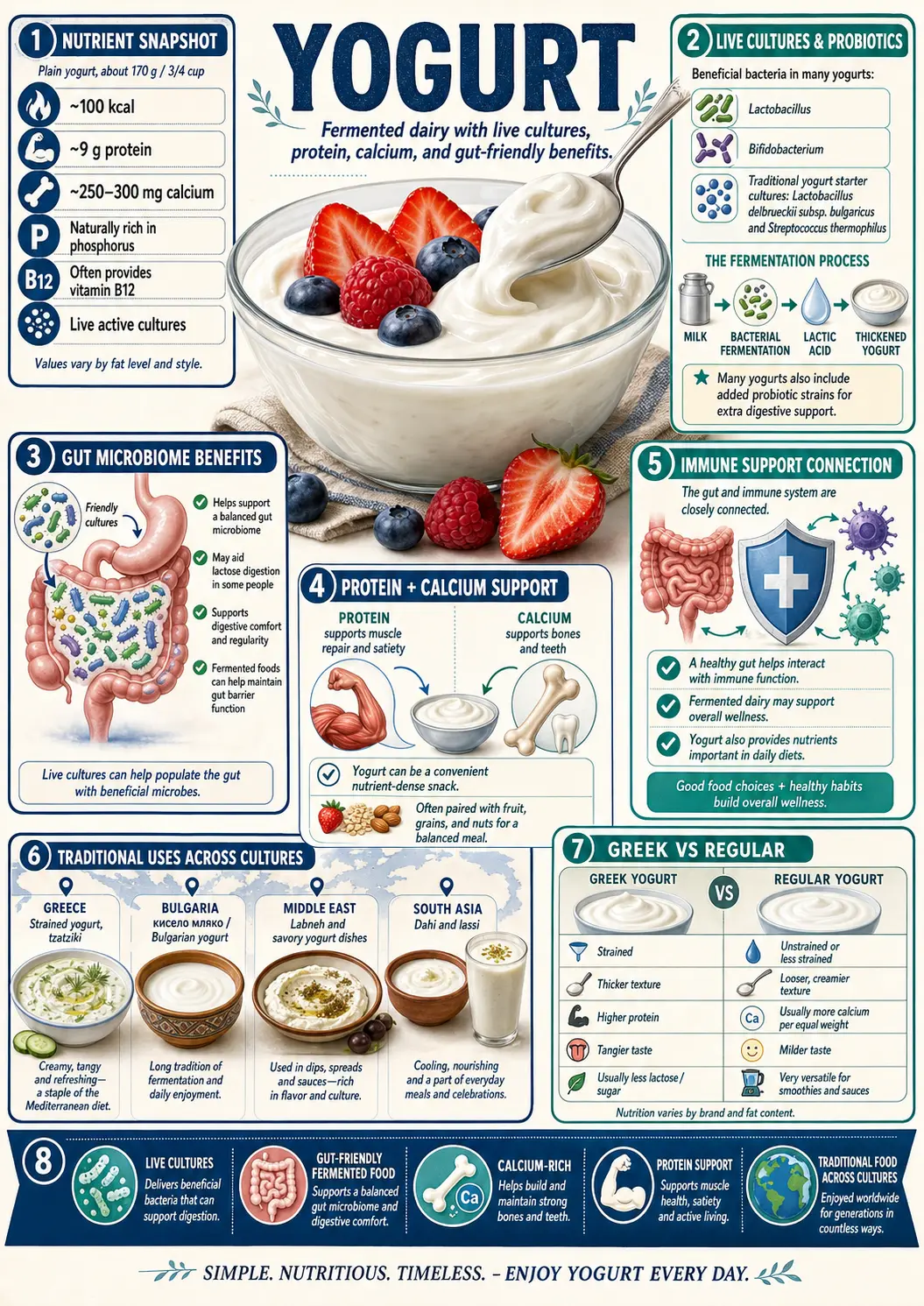
Table of Contents
- Introduction and History
- Nutritional Profile
- Gut Health and Probiotics
- Immune Function Research
- Bone Health
- Heart Health
- Body Weight
- Digestion and Lactose
- Mental Health and the Gut-Brain Axis
- Type 2 Diabetes and Blood Sugar
- Eczema and Skin
- Cancer Research
- Dental Health
- Greek vs Regular Yogurt
- Labels: Live Cultures, Milkfat and Sweeteners
- Amounts Used in Studies
- Cautions and Open Questions
- Key Research Papers
- Connections
- Featured Videos
1. Introduction and History
Yogurt is milk fermented by bacteria. Under the US standard of identity, it is the food produced by culturing cream, milk, partially skimmed milk or skim milk with a characterizing bacterial culture that contains the lactic acid-producing bacteria Lactobacillus delbrueckii subsp. bulgaricus and Streptococcus thermophilus. The dairy ingredients must be pasteurized or ultra-pasteurized before the culture is added, and the finished yogurt has a pH of 4.6 or lower within 24 hours after filling (21 CFR 131.200).
Fermented milk has long been eaten by people who digest lactose poorly. A 1984 study notes that large quantities of yogurt are consumed by some lactase-deficient population groups (Kolars 1984), and a 2014 review describes yogurt as traditionally consumed throughout the world among populations seemingly unable to digest lactose (Savaiano 2014). More than a century ago, Élie Metchnikoff theorized that health could be enhanced and senility delayed by manipulating the intestinal microbiome with bacteria found in yogurt; the theory flourished for a time, drifted to the fringe of medical practice, and re-emerged in the mid-1990s as a concept worthy of mainstream medical attention (Mackowiak 2013). The origins of yogurt, its name and its commercial history are covered on the Yogurt History page.
A 2021 systematic review of 108 studies concluded that a causal relationship exists between yogurt consumption and lactose digestion and tolerance. It also reported consistent associations between fermented milk consumption and reduced risk of breast and colorectal cancer and type 2 diabetes, improved weight maintenance, and improved cardiovascular, bone and gastrointestinal health, and an association between prostate cancer and dairy consumption in general, with no difference between fermented and unfermented products (Savaiano 2021). Apart from lactose digestion, these are associations from observational research. The deep-dive articles on the Yogurt Benefits page cover the probiotic strains, Greek and regular yogurt, lactose tolerance, and bone.
2. Nutritional Profile
Values per 100 g from the USDA FoodData Central SR Legacy database. USDA lists one 6-ounce container of plain whole-milk yogurt as 170 g.
- Yogurt, plain, whole milk (FDC 171284) — 61 kcal, 3.47 g protein, 3.25 g fat (2.096 g saturated), 4.66 g carbohydrate, 4.66 g total sugars, 121 mg calcium, 95 mg phosphorus, 155 mg potassium, 46 mg sodium, 12 mg magnesium, 0.59 mg zinc, 2.2 µg selenium, 0.142 mg riboflavin, 0.37 µg vitamin B12, 0.389 mg pantothenic acid, 2 IU vitamin D.
- Yogurt, Greek, plain, whole milk (FDC 171304) — 97 kcal, 9 g protein, 5 g fat (2.395 g saturated), 3.98 g carbohydrate, 4 g total sugars, 100 mg calcium, 135 mg phosphorus, 141 mg potassium, 35 mg sodium, 11 mg magnesium, 0.52 mg zinc, 9.7 µg selenium, 0.278 mg riboflavin, 0.75 µg vitamin B12, 0.331 mg pantothenic acid, 0 IU vitamin D.
These entries are averages for plain products; individual products differ, and flavoured or sweetened yogurts carry added sugars that the plain entries do not. Vitamin A and vitamin D are optional added ingredients in US yogurt; if either is added, the food must contain at least 10% of the Daily Value per reference amount, and the label must say so (21 CFR 131.200). A ranked table of the nutrients in plain whole-milk yogurt is on the Yogurt Nutrients page.
Fermented dairy also contains vitamin K2 (menaquinones) made by bacteria. In US dairy foods, which included yogurt and Greek yogurt, full-fat products contained appreciable menaquinones, primarily MK-9, MK-10 and MK-11, and reduced-fat or fat-free products contained about 5–22% of the vitamin K of their full-fat equivalents; the authors found the vitamin K content of dairy products proportional to their fat content (Fu 2017).
In a cross-sectional study of 6,526 adults in the Framingham Offspring and Third Generation cohorts, yogurt consumers had higher potassium intakes and were 47%, 55%, 48%, 38% and 34% less likely than non-consumers to have inadequate intakes of riboflavin, vitamin B12, calcium, magnesium and zinc respectively (Wang 2013).
Besides the two characterizing bacteria, the US standard lists other cultures as optional ingredients (21 CFR 131.200). Label rules for live cultures are set out in section 15.
3. Gut Health and Probiotics
A probiotic is defined, in the FAO/WHO wording reaffirmed by a 2014 expert panel of the International Scientific Association for Probiotics and Prebiotics (ISAPP), as “live microorganisms which when administered in adequate amounts confer a health benefit on the host” (Hill 2014). When 20 healthy volunteers ate commercial yogurt, L. bulgaricus and S. thermophilus were found in their faeces, suggesting that both can survive transit through the gastrointestinal tract (Elli 2006).
Fermented foods and the microbiome. In a 17-week randomized study of healthy adults (18 per arm), a high-fermented-food diet — yogurt, kefir, fermented cottage cheese, kombucha, vegetable brine drinks and fermented vegetables such as kimchi — steadily increased microbiota diversity and decreased inflammatory markers: 19 of 93 inflammatory serum proteins measured fell over the intervention, including IL-6, IL-10 and IL-12b. A high-fiber diet in the other arm left microbial community diversity stable. The number of servings of yogurt or vegetable brine drinks was the most strongly correlated with diversity (Wastyk 2021).
Irritable bowel syndrome. The 2021 American College of Gastroenterology guideline suggests against probiotics for the treatment of global IBS symptoms (conditional recommendation, very low level of evidence), and the 2020 American Gastroenterological Association guideline recommends their use in IBS only in the context of a clinical trial; neither recommended a strain. The British Society of Gastroenterology guideline states that probiotics, as a group, may be an effective treatment for global symptoms and abdominal pain in IBS (Marlicz 2021; Lacy 2021; Su 2020). These guidelines concern probiotic preparations, not yogurt.
Antibiotic-associated diarrhoea. These trials tested probiotic preparations, not yogurt:
- A 2012 meta-analysis of 63 randomized trials (11,811 participants) found probiotics associated with less antibiotic-associated diarrhoea (relative risk 0.58; number needed to treat 13). Most trials used Lactobacillus-based products, strains were poorly documented, and the evidence was insufficient to tell whether the effect varied by population, antibiotic or probiotic preparation (Hempel 2012).
- A 2021 meta-analysis of 42 studies in adults (11,305 participants) found a 37% lower risk (risk ratio 0.63; moderate-quality evidence); studies with a low baseline risk showed no difference (Goodman 2021).
- The 2025 Cochrane review found that probiotics may reduce antibiotic-associated diarrhoea (risk ratio 0.67; 40 studies; low-certainty evidence) and C. difficile-associated diarrhoea (risk ratio 0.50; 38 trials; low-certainty evidence) (Esmaeilinezhad 2025).
- A 2015 meta-analysis of Lactobacillus rhamnosus GG begins from the premise that the effects of probiotics are strain specific. It found that the strain reduced antibiotic-associated diarrhoea from 22.4% to 12.3% (low quality of evidence); the reduction was significant in children but not in adults, except in a subset receiving antibiotics for Helicobacter pylori eradication (Szajewska 2015).
The strains, survival in the gut and safety findings are set out on the Probiotic Strains page.
4. Immune Function Research
Two sets of findings on respiratory infections:
- Older adults — in a double-blind trial in 1,072 free-living older people (median age 76), 200 g a day of a fermented dairy product containing Lactobacillus casei DN-114 001 for 3 months, compared with a non-fermented control product, shortened the average duration of an episode of common infectious disease (6.5 vs 8 days) and the cumulative duration (7 vs 8 days); the reductions were significant for upper respiratory tract infections. The number of infections, the primary outcome, did not differ between groups, nor did severity, fever, medication use or immune blood parameters. The first author was affiliated with the product’s manufacturer (Guillemard 2010).
- Children — a 2013 meta-analysis of four randomized trials (1,805 children) of Lactobacillus rhamnosus GG found a lower incidence of acute otitis media (relative risk 0.76) and of antibiotic treatment (relative risk 0.80), and in one trial (281 children) a lower risk of upper respiratory infections (relative risk 0.62). Overall respiratory infections and lower respiratory infections did not differ significantly from placebo. The trials tested the strain itself, not yogurt (Liu 2013).
5. Bone Health
In the USDA data, 100 g of plain whole-milk yogurt contains 121 mg calcium and 3.47 g protein, and 100 g of plain whole-milk Greek yogurt contains 100 mg calcium and 9 g protein. What the studies of yogurt and bone report:
- Framingham Offspring Study — in 3,212 participants (mean baseline age 55) followed for 12 years, yogurt intake was associated with bone mineral density (BMD) at the trochanter alone, and not at the femoral neck or spine. Yogurt showed a weak protective trend for hip fracture that was not statistically significant (hazard ratio 0.46, 95% CI 0.21–1.03, for up to four servings a week, and 0.43, 0.06–3.27, for more than four), with 43 hip fractures in the cohort. The authors concluded that the suggestive fracture results for milk and yogurt need further confirmation (Sahni 2013).
- 2018 meta-analysis — pooling 10 cohort and 8 case-control studies, the summary relative risks for hip fracture at the highest compared with the lowest intake in the cohort studies were 0.75 (0.66–0.86) for yogurt, 0.68 (0.61–0.77) for cheese, 0.91 (0.74–1.12) for milk and 1.02 (0.93–1.12) for total dairy products (Bian 2018).
- Two US cohorts — in 80,600 postmenopausal women and 43,306 men over 50 followed for up to 32 years, each daily serving of milk was associated with an 8% lower hip-fracture risk; yogurt consumption was low and was not associated with risk (Feskanich 2018).
- Aged-care trial — in a two-year cluster randomised trial in 7,195 residents (mean age 86) of 60 Australian aged-care facilities, who were replete in vitamin D, additional milk, yogurt and cheese supplying 562 mg/day calcium and 12 g/day protein were associated with risk reductions of 33% for all fractures (hazard ratio 0.67), 46% for hip fractures (0.54) and 11% for falls (0.89); mortality was unchanged. The trial tested the three dairy foods together, not yogurt alone (Iuliano 2021).
The cohort findings are associations. Calcium, protein, vitamin K2 and vitamin D are covered on the Bone Density and Calcium page.
6. Heart Health
- Hypertensive adults — among 55,898 women in the Nurses’ Health Study and 18,232 men in the Health Professionals Follow-Up Study who had high blood pressure, eating at least two servings of yogurt a week, compared with less than one a month, was associated with a 17% lower risk of cardiovascular disease (myocardial infarction and stroke) in the women and a 21% lower risk in the men (Buendia 2018).
- PURE, 21 countries — in 136,384 people aged 35–70, eating more than one serving of yogurt a day, compared with none, was associated with a lower risk of the composite of death or major cardiovascular events (hazard ratio 0.86, 95% CI 0.75–0.99), and more than two servings a day of total dairy with a lower risk of the composite (0.84) and of major cardiovascular disease (0.78). The investigators wrote that dietary guidelines recommend minimising whole-fat dairy as a source of saturated fats, and that evidence for this contention is sparse (Dehghan 2018).
- Cholesterol — a 2020 meta-analysis of seven trials (274 participants) in people with mild to moderate hypercholesterolaemia found that probiotic yogurt lowered total cholesterol by 8.73 mg/dL and LDL cholesterol by 10.61 mg/dL, with no significant effect on HDL cholesterol or triglycerides (Pourrajab 2020).
- Blood pressure — a 2014 meta-analysis of nine trials of probiotics found reductions of 3.56 mm Hg in systolic and 2.38 mm Hg in diastolic blood pressure; interventions shorter than 8 weeks, or with daily doses below 1011 colony-forming units, did not produce a significant reduction (Khalesi 2014). Milk proteins, both caseins and whey proteins, are a rich source of peptides that inhibit angiotensin-converting enzyme; these peptides lowered blood pressure in spontaneously hypertensive rats, and a limited number of human studies have associated milk-protein peptides with significant hypotensive effects (FitzGerald 2004).
- Metabolic markers — in the Framingham cross-sectional study, yogurt consumption was associated with lower circulating triglycerides and glucose, lower systolic blood pressure and lower insulin resistance (Wang 2013).
The cohort results are observational associations. Cardiovascular disease is covered on the Cardiovascular Disease page.
7. Body Weight
- Long-term weight change — in three US cohorts (120,877 women and men who were not obese at baseline), weight change over each 4-year period was inversely associated with increased daily servings of vegetables (−0.22 lb), whole grains (−0.37 lb), fruits (−0.49 lb), nuts (−0.57 lb) and yogurt (−0.82 lb), the largest of the inverse associations reported. These are observational associations (Mozaffarian 2011).
- Satiety — in 15 healthy women, a 160-kcal afternoon snack of Greek yogurt with 24 g protein led to lower hunger, higher fullness and a later request for dinner (178 minutes after the snack) than yogurt snacks with 5 g or 14 g protein (152 and 158 minutes); the 160 kcal of the snacks was not fully compensated for at dinner (Douglas 2013). The other satiety trials are on the Greek vs Regular page.
- A named strain — in a double-blind trial in 87 adults with a body mass index of 24.2–30.7, 200 g a day of fermented milk containing Lactobacillus gasseri SBT2055 for 12 weeks reduced abdominal visceral fat area by 4.6%, subcutaneous fat area by 3.3% and body weight by 1.4%; none of these fell significantly with the same fermented milk without the strain. The first author was affiliated with a dairy company’s research institute (Kadooka 2010).
8. Digestion and Lactose
A 2017 review puts genetically determined lactase non-persistence at 65–70% of the world’s adult population (Bayless 2017). Lactose malabsorption is any failure to digest or absorb lactose in the small intestine; lactose intolerance is the onset of abdominal symptoms such as pain, bloating and diarrhoea after lactose in a person with malabsorption, and its likelihood depends on the lactose dose, lactase expression and the intestinal microbiome (Misselwitz 2019).
Yogurt still contains lactose, but the yogurt bacteria carry their own lactase:
- Kolars 1984 — in lactase-deficient subjects, 18 g of lactose in yogurt produced only about one third as much breath hydrogen as a similar load in milk or water, and fewer reports of diarrhoea or flatulence. The authors attributed this to digestion of lactose inside the intestine by lactase released from the yogurt organisms (Kolars 1984).
- Savaiano 1984 — in nine lactase-deficient subjects, yogurt was unique among the products tested in enhancing lactose digestion; pasteurizing the yogurt eliminated that effect, reduced its lactase activity 10-fold and reduced its cell counts 100-fold. Even so, all subjects fed pasteurized yogurt were symptom-free, whereas eight of nine had gastrointestinal distress after cultured milk, although the amount of lactose malabsorbed was similar (Savaiano 1984).
- Mechanism — a 2014 review describes the bacterial lactase as surviving the acidic stomach, apparently protected within the bacterial cells and helped by the buffering capacity of yogurt, and becoming active as the pH rises in the small intestine. It describes flavoured yogurts as having somewhat reduced lactase activity but still being well tolerated (Savaiano 2014).
- EU health claim — the European Union authorises the claim “Live cultures in yoghurt or fermented milk improve lactose digestion of the product in individuals who have difficulty digesting lactose” for yoghurt or fermented milk containing at least 108 colony-forming units of live starter microorganisms (L. delbrueckii subsp. bulgaricus and S. thermophilus) per gram (Regulation (EU) No 432/2012).
- Tolerated amounts — a systematic review of 36 randomized trials found moderate-quality evidence that 12 to 15 g of lactose (approximately 1 cup of milk) is well tolerated by most adults with presumed lactose intolerance or malabsorption (Shaukat 2010).
The genetics, the breath-hydrogen studies and what reviews report for people with lactose intolerance are on the Lactose Tolerance page.
9. Mental Health and the Gut-Brain Axis
- Mice — chronic feeding with Lactobacillus rhamnosus JB-1 changed GABA receptor expression in several brain regions and reduced stress-induced corticosterone and anxiety- and depression-related behaviour in mice. The effects were not found in vagotomized mice, which identified the vagus nerve as a major pathway between the gut bacteria and the brain (Bravo 2011). This is an animal study.
- Brain imaging in healthy women — healthy women with no gastrointestinal or psychiatric symptoms were randomized to a fermented milk product with probiotic (12 women; Bifidobacterium animalis subsp. lactis, S. thermophilus, L. bulgaricus and Lactococcus lactis subsp. lactis), a non-fermented milk product (11) or no intervention (13), twice daily for 4 weeks. On functional MRI, the fermented product was associated with a reduced response of a network containing affective, viscerosensory and somatosensory cortices during an emotional-faces attention task, and with changes in midbrain connectivity at rest. Grant funding for the project came from the product’s manufacturer, which employed three of the authors (Tillisch 2013).
- Cognitive reactivity to sad mood — in a triple-blind trial in 40 healthy people without a current mood disorder, a 4-week multispecies probiotic food supplement (not a yogurt) reduced cognitive reactivity to sad mood compared with placebo, largely through reduced rumination and aggressive thoughts. The authors described this as a marker of vulnerability to depression and called for further research (Steenbergen 2015).
None of these studies tested yogurt as a treatment for anxiety or depression. Depression and anxiety are covered on the Depression and Anxiety pages.
10. Type 2 Diabetes and Blood Sugar
In three US cohorts — 41,436 men in the Health Professionals Follow-Up Study and 67,138 and 85,884 women in the Nurses’ Health Studies I and II — total dairy intake was not associated with type 2 diabetes, nor was low-fat or high-fat dairy, but yogurt intake was consistently and inversely associated with risk (pooled hazard ratio 0.83, 95% CI 0.75–0.92, per daily serving). In an updated meta-analysis of 14 prospective cohorts with 459,790 participants, the relative risk was 0.82 (0.70–0.96) per daily serving of yogurt and 0.98 (0.96–1.01) per daily serving of total dairy (Chen 2014). In the Framingham cross-sectional study, yogurt consumers had lower circulating glucose and insulin resistance (Wang 2013). These are observational associations. The research on diabetes is covered on the Type 2 Diabetes page.
11. Eczema and Skin
A 2015 systematic review of 29 randomized trials, prepared to inform World Allergy Organization guidelines, found that probiotics reduced the risk of eczema in infants when used by women in the last trimester of pregnancy (relative risk 0.71), by breastfeeding mothers (0.57) or when given to infants (0.80). The certainty of the evidence was low or very low, and no effect was observed for the prevention of other allergic conditions (Cuello-Garcia 2015). The trials tested probiotic preparations; the review did not study yogurt.
12. Cancer Research
Among 32,606 men in the Health Professionals Follow-up Study and 55,743 women in the Nurses’ Health Study who had lower endoscopy between 1986 and 2012, men who ate two or more servings of yogurt a week, compared with none, had a lower risk of conventional colorectal adenoma (odds ratio 0.81, 95% CI 0.71–0.94), and the association was stronger for adenomas with high malignant potential (0.74). In women, no associations were observed (Zheng 2020).
The 2021 systematic review reported consistent associations between fermented milk consumption and reduced risk of breast and colorectal cancer, and an association between prostate cancer and dairy consumption in general, with no difference between fermented and unfermented products (Savaiano 2021). These are observational findings.
13. Dental Health
A complex of casein phosphopeptide and amorphous calcium phosphate (CPP-ACP) is used in some dental products. A 2019 systematic review and meta-analysis of clinical and laboratory studies found significant remineralization of white spot lesions of tooth enamel with CPP-ACP compared with control or baseline (Ma 2019). Those studies tested the dental preparation, not yogurt. No study on this page measured the effect of eating yogurt on tooth decay or gum disease.
14. Greek vs Regular Yogurt
In the USDA whole-milk entries above, Greek (strained) yogurt has more protein (9 g vs 3.47 g per 100 g), energy, fat, phosphorus, riboflavin and vitamin B12 than plain yogurt, and less calcium (100 mg vs 121 mg), potassium and sodium; total sugars are 4 g and 4.66 g. A 2013 study noted that no US standard of identity exists for Greek yogurt and that Greek yogurts can be made by traditional straining and centrifugation or by adding dried dairy ingredients (“fortified Greek”). In its sensory testing, full-fat Greek yogurts were characterized by firmness and denseness, which the low- and non-fat yogurts lacked, and consumers knew Greek yogurts had more protein but were generally unaware of the difference between strained and fortified products (Desai 2013).
The comparison is worked through on the Greek vs Regular page. Kefir, a different fermented milk, has its own Kefir page.
15. Labels: Live Cultures, Milkfat and Sweeteners
- “Contains live and active cultures” — a US yogurt may carry this phrase if it contains at least 107 colony-forming units per gram (CFU/g) at the time of manufacture, with a reasonable expectation of 106 CFU/g through the manufacturer’s assigned shelf life (21 CFR 131.200).
- Heat-treated yogurt — to extend shelf life, US yogurt may be treated after culturing to inactivate viable microorganisms. It keeps the name “yogurt”, but the label must then carry the phrase “does not contain live and active cultures” in letters at least half the height of the name (21 CFR 131.200). In the 1984 study described in section 8, pasteurized yogurt lost its enhanced lactose digestion, but the subjects who ate it were symptom-free (Savaiano 1984).
- EU lactose claim — the EU claim on live cultures and lactose digestion requires at least 108 CFU of live starter microorganisms per gram (Regulation (EU) No 432/2012).
- Milkfat — the US standard sets yogurt at not less than 3.25% milkfat. A yogurt with at least 2.44% but less than 3.25% milkfat must state its milkfat percentage with the name; below 2.44%, the product is treated as a modified food under 21 CFR 130.10 (21 CFR 131.200). Reduced-fat and fat-free dairy products contained about 5–22% of the vitamin K of their full-fat equivalents (Fu 2017).
- Sweeteners — a US yogurt with an added nutritive carbohydrate sweetener and no characterizing flavour must carry the word “sweetened” with its name (21 CFR 131.200). A 2009 American Heart Association scientific statement gave a prudent upper limit for added sugars of no more than 100 calories a day for most American women and 150 calories a day for most American men (Johnson 2009).
- Named strains — the effects of probiotics are treated as strain specific, so the clinical effects of each strain need to be evaluated separately (Szajewska 2015). Results from trials of one strain do not necessarily apply to yogurts made with other cultures.
16. Amounts Used in Studies
The amounts below are what the studies on this page tested or measured; they are reported findings, not intake targets.
- 200 g a day of a fermented dairy product for 3 months in older adults (Guillemard 2010), and 200 g a day of fermented milk for 12 weeks in adults with a higher body mass index (Kadooka 2010).
- A fermented milk product twice daily for 4 weeks in the brain-imaging study (Tillisch 2013).
- 160-kcal yogurt snacks with 5, 14 or 24 g protein on single afternoons (Douglas 2013).
- A goal of six servings a day of fermented foods, a serving of yogurt being 6 oz, in the 17-week microbiome study (Wastyk 2021).
- At least two servings of yogurt a week compared with less than one a month (Buendia 2018); more than one serving a day compared with none (Dehghan 2018); and risk per daily serving (Chen 2014; Mozaffarian 2011) in the cohort studies.
- Additional milk, yogurt and cheese supplying 562 mg calcium and 12 g protein a day in aged-care residents (Iuliano 2021).
17. Cautions and Open Questions
- Cow’s milk allergy — a different condition from lactose intolerance. The British Society for Allergy and Clinical Immunology guideline describes cow’s milk allergy as presenting in the first year of life, with an estimated population prevalence of 2–3%; its treatment is advice on cow’s milk avoidance and suitable substitute milks, the allergy often resolves, and it must be distinguished from primary lactose intolerance (Luyt 2014). The yogurt studies on this page did not study milk allergy.
- Lactose intolerance — independent of lactose digestion, people with visceral hypersensitivity associated with anxiety or irritable bowel syndrome are at increased risk of symptoms (Misselwitz 2019). Tolerated amounts are set out in section 8.
- Probiotics in serious illness — the 2017 Cochrane review on C. difficile concluded that short-term use of probiotics appears to be safe and effective alongside antibiotics in patients who are not immunocompromised or severely debilitated (Goldenberg 2017; updated in Esmaeilinezhad 2025). The case reports and trials of harm in severe illness are on the Probiotic Strains page.
- Biogenic amines — histamine, tyramine and other biogenic amines are formed by some lactic acid bacteria during the fermentation of cheese, meats, vegetables, soybeans and wine; decarboxylase-negative starter cultures are one strategy used to reduce their formation (Marco 2021). The sources on this page do not report amine levels in yogurt.
- Added sugars — the USDA figures on this page are for plain yogurt; sweetened yogurt carries added sugars and, in the US, the word “sweetened” on its label (21 CFR 131.200).
- Strain and product differences — trials of named strains, probiotic preparations and fermented milks are not trials of yogurt in general (Szajewska 2015).
Decisions about diet in a medical condition belong with a clinician.
Key Research Papers
- Mozaffarian D, Hao T, Rimm EB, Willett WC, Hu FB. "Changes in diet and lifestyle and long-term weight gain in women and men" New England Journal of Medicine 364(25):2392-404, 2011. — PubMed PMID: 21696306 (In three cohorts of 120,877 US women and men, 4-year weight change was inversely associated with increased daily servings of yogurt (−0.82 lb), the largest of the inverse associations reported.)
- Tillisch K, Labus J, Kilpatrick L, et al. "Consumption of fermented milk product with probiotic modulates brain activity" Gastroenterology 144(7):1394-401, 2013. — PubMed PMID: 23474283 (Healthy women given a fermented milk product with probiotic twice daily for 4 weeks (n = 12, against 11 controls and 13 with no intervention) showed changes on functional MRI in brain regions that control central processing of emotion and sensation.)
- Steenbergen L, Sellaro R, van Hemert S, Bosch JA, Colzato LS. "A randomized controlled trial to test the effect of multispecies probiotics on cognitive reactivity to sad mood" Brain, Behavior, and Immunity 48:258-64, 2015. — PubMed PMID: 25862297 (In 40 healthy people, a 4-week multispecies probiotic food supplement reduced cognitive reactivity to sad mood compared with placebo.)
- Bravo JA, Forsythe P, Chew MV, et al. "Ingestion of Lactobacillus strain regulates emotional behavior and central GABA receptor expression in a mouse via the vagus nerve" Proceedings of the National Academy of Sciences 108(38):16050-5, 2011. — PubMed PMID: 21876150 (A mouse study: L. rhamnosus JB-1 altered brain GABA receptor expression and reduced anxiety- and depression-related behaviour; the effects were absent in vagotomized mice.)
- Wastyk HC, Fragiadakis GK, Perelman D, et al. "Gut-microbiota-targeted diets modulate human immune status" Cell 184(16):4137-4153.e14, 2021. — PubMed PMID: 34256014 (A 17-week randomized study (18 per arm): the high-fermented-food diet increased microbiota diversity and decreased inflammatory markers, 19 of 93 inflammatory serum proteins including IL-6.)
- Chen M, Sun Q, Giovannucci E, et al. "Dairy consumption and risk of type 2 diabetes: 3 cohorts of US adults and an updated meta-analysis" BMC Medicine 12:215, 2014. — PubMed PMID: 25420418 (In a meta-analysis of 14 cohorts with 459,790 participants, the relative risk of type 2 diabetes was 0.82 per daily serving of yogurt; total dairy was not associated with risk.)
- Buendia JR, Li Y, Hu FB, et al. "Regular yogurt intake and risk of cardiovascular disease among hypertensive adults" American Journal of Hypertension 31(5):557-565, 2018. — PubMed PMID: 29462263 (Among hypertensive adults in the Nurses’ Health Study and the Health Professionals Follow-Up Study, at least two servings of yogurt a week was associated with a 17% (women) and 21% (men) lower cardiovascular disease risk.)
- Sahni S, Tucker KL, Kiel DP, Quach L, Casey VA, Hannan MT. "Milk and yogurt consumption are linked with higher bone mineral density but not with hip fracture: the Framingham Offspring Study" Archives of Osteoporosis 8:119, 2013. — PubMed PMID: 23371478 (Yogurt intake was associated with trochanter bone mineral density alone; its weak protective trend for hip fracture was not statistically significant.)
- Kadooka Y, Sato M, Imaizumi K, et al. "Regulation of abdominal adiposity by probiotics (Lactobacillus gasseri SBT2055) in adults with obese tendencies in a randomized controlled trial" European Journal of Clinical Nutrition 64(6):636-43, 2010. — PubMed PMID: 20216555 (In 87 adults, 200 g a day of fermented milk with L. gasseri SBT2055 for 12 weeks reduced abdominal visceral fat area by 4.6%, against no significant change with the control fermented milk.)
- Guillemard E, Tondu F, Lacoin F, Schrezenmeir J. "Consumption of a fermented dairy product containing the probiotic Lactobacillus casei DN-114001 reduces the duration of respiratory infections in the elderly in a randomised controlled trial" British Journal of Nutrition 103(1):58-68, 2010. — PubMed PMID: 19747410 (In 1,072 older adults, 200 g a day for 3 months shortened the duration of common infectious diseases; the number of infections (primary outcome) did not differ.)
- Liu S, Hu P, Du X, Zhou T, Pei X. "Lactobacillus rhamnosus GG supplementation for preventing respiratory infections in children: a meta-analysis of randomized, placebo-controlled trials" Indian Pediatrics 50(4):377-81, 2013. — PubMed PMID: 23665598 (Four trials, 1,805 children: lower incidence of acute otitis media and of antibiotic treatment; no significant difference in overall respiratory infections.)
- Zheng X, Wu K, Song M, et al. "Yogurt consumption and risk of conventional and serrated precursors of colorectal cancer" Gut 69(5):970-972, 2020. — PubMed PMID: 31209182 (Research letter. Men eating two or more servings of yogurt a week had a lower risk of conventional adenoma (OR 0.81); no associations were observed in women.)
- Goodman C, Keating G, Georgousopoulou E, Hespe C, Levett K. "Probiotics for the prevention of antibiotic-associated diarrhoea: a systematic review and meta-analysis" BMJ Open 11(8):e043054, 2021. — PubMed PMID: 34385227 (In 42 studies of adults (11,305 participants), probiotics given with antibiotics reduced the risk of antibiotic-associated diarrhoea by 37%.)
- Cuello-Garcia CA, Brożek JL, Fiocchi A, et al. "Probiotics for the prevention of allergy: A systematic review and meta-analysis of randomized controlled trials" Journal of Allergy and Clinical Immunology 136(4):952-61, 2015. — PubMed PMID: 26044853 (Probiotics reduced the risk of eczema in infants when used in late pregnancy (RR 0.71), during breastfeeding (RR 0.57) or given to infants (RR 0.80); certainty of evidence low.)
- Pourrajab B, Fatahi S, Dehnad A, Kord Varkaneh H, Shidfar F. "The impact of probiotic yogurt consumption on lipid profiles in subjects with mild to moderate hypercholesterolemia: A systematic review and meta-analysis of randomized controlled trials" Nutrition, Metabolism and Cardiovascular Diseases 30(1):11-22, 2020. — PubMed PMID: 31748179 (Seven trials, 274 participants: total cholesterol −8.73 mg/dL and LDL cholesterol −10.61 mg/dL; no significant change in HDL cholesterol or triglycerides.)
- Bian S, Hu J, Zhang K, Wang Y, Yu M, Ma J. "Dairy product consumption and risk of hip fracture: a systematic review and meta-analysis" BMC Public Health 18(1):165, 2018. — PubMed PMID: 29357845
- Feskanich D, Meyer HE, Fung TT, Bischoff-Ferrari HA, Willett WC. "Milk and other dairy foods and risk of hip fracture in men and women" Osteoporosis International 29(2):385-396, 2018. — PubMed PMID: 29075804
- Iuliano S, Poon S, Robbins J, et al. "Effect of dietary sources of calcium and protein on hip fractures and falls in older adults in residential care: cluster randomised controlled trial" BMJ 375:n2364, 2021. — PubMed PMID: 34670754
- Savaiano DA, AbouElAnouar A, Smith DE, Levitt MD. "Lactose malabsorption from yogurt, pasteurized yogurt, sweet acidophilus milk, and cultured milk in lactase-deficient individuals" American Journal of Clinical Nutrition 40(6):1219-23, 1984. — PubMed PMID: 6439026
- Kolars JC, Levitt MD, Aouji M, Savaiano DA. "Yogurt — an autodigesting source of lactose" New England Journal of Medicine 310(1):1-3, 1984. — PubMed PMID: 6417539
- Savaiano DA, Hutkins RW. "Yogurt, cultured fermented milk, and health: a systematic review" Nutrition Reviews 79(5):599-614, 2021. — PubMed PMID: 32447398
- Savaiano DA. "Lactose digestion from yogurt: mechanism and relevance" American Journal of Clinical Nutrition 99(5 Suppl):1251S-5S, 2014. — PubMed PMID: 24695892
- Su GL, Ko CW, Bercik P, et al. "AGA clinical practice guidelines on the role of probiotics in the management of gastrointestinal disorders" Gastroenterology 159(2):697-705, 2020. — PubMed PMID: 32531291
- Lacy BE, Pimentel M, Brenner DM, et al. "ACG clinical guideline: management of irritable bowel syndrome" American Journal of Gastroenterology 116(1):17-44, 2021. — PubMed PMID: 33315591
- Marlicz W, Skonieczna-Żydecka K, Krynicka P, Łoniewski I, Rydzewska G. "Probiotics in irritable bowel syndrome – is the quest for the right strain over? Rapid review of existing guidelines and recommendations" Przegląd Gastroenterologiczny 16(4):369-382, 2021. — PubMed PMID: 34976247
- Hempel S, Newberry SJ, Maher AR, et al. "Probiotics for the prevention and treatment of antibiotic-associated diarrhea: a systematic review and meta-analysis" JAMA (2012) 307(18):1959-69. — PubMed PMID: 22570464
- Szajewska H, Kołodziej M. "Systematic review with meta-analysis: Lactobacillus rhamnosus GG in the prevention of antibiotic-associated diarrhoea in children and adults" Alimentary Pharmacology & Therapeutics 42(10):1149-57, 2015. — PubMed PMID: 26365389
- Goldenberg JZ, Yap C, Lytvyn L, et al. "Probiotics for the prevention of Clostridium difficile-associated diarrhea in adults and children" Cochrane Database of Systematic Reviews 12:CD006095, 2017. — PubMed PMID: 29257353
- Esmaeilinezhad Z, Ghosh NR, Walsh CM, et al. "Probiotics for the prevention of Clostridioides difficile-associated diarrhea in adults and children" Cochrane Database of Systematic Reviews 9:CD006095, 2025. — PubMed PMID: 40931979
- Hill C, Guarner F, Reid G, et al. "Expert consensus document. The International Scientific Association for Probiotics and Prebiotics consensus statement on the scope and appropriate use of the term probiotic" Nature Reviews Gastroenterology & Hepatology 11(8):506-14, 2014. — PubMed PMID: 24912386
- Elli M, Callegari ML, Ferrari S, et al. "Survival of yogurt bacteria in the human gut" Applied and Environmental Microbiology 72(7):5113-7, 2006. — PubMed PMID: 16820518
- Marco ML, Sanders ME, Gänzle M, et al. "The International Scientific Association for Probiotics and Prebiotics (ISAPP) consensus statement on fermented foods" Nature Reviews Gastroenterology & Hepatology 18(3):196-208, 2021. — PubMed PMID: 33398112
- Dehghan M, Mente A, Rangarajan S, et al. "Association of dairy intake with cardiovascular disease and mortality in 21 countries from five continents (PURE): a prospective cohort study" The Lancet 392(10161):2288-2297, 2018. — PubMed PMID: 30217460
- Khalesi S, Sun J, Buys N, Jayasinghe R. "Effect of probiotics on blood pressure: a systematic review and meta-analysis of randomized, controlled trials" Hypertension 64(4):897-903, 2014. — PubMed PMID: 25047574
- FitzGerald RJ, Murray BA, Walsh DJ. "Hypotensive peptides from milk proteins" Journal of Nutrition 134(4):980S-8S, 2004. — PubMed PMID: 15051858
- Wang H, Livingston KA, Fox CS, Meigs JB, Jacques PF. "Yogurt consumption is associated with better diet quality and metabolic profile in American men and women" Nutrition Research 33(1):18-26, 2013. — PubMed PMID: 23351406
- Douglas SM, Ortinau LC, Hoertel HA, Leidy HJ. "Low, moderate, or high protein yogurt snacks on appetite control and subsequent eating in healthy women" Appetite 60(1):117-122, 2013. — PubMed PMID: 23022602
- Desai NT, Shepard L, Drake MA. "Sensory properties and drivers of liking for Greek yogurts" Journal of Dairy Science 96(12):7454-66, 2013. — PubMed PMID: 24404579
- Fu X, Harshman SG, Shen X, et al. "Multiple vitamin K forms exist in dairy foods" Current Developments in Nutrition 1(6):e000638, 2017. — PubMed PMID: 29955705
- Bayless TM, Brown E, Paige DM. "Lactase non-persistence and lactose intolerance" Current Gastroenterology Reports 19(5):23, 2017. — PubMed PMID: 28421381
- Misselwitz B, Butter M, Verbeke K, Fox MR. "Update on lactose malabsorption and intolerance: pathogenesis, diagnosis and clinical management" Gut (2019) 68(11):2080-2091. — PubMed PMID: 31427404
- Shaukat A, Levitt MD, Taylor BC, et al. "Systematic review: effective management strategies for lactose intolerance" Annals of Internal Medicine 152(12):797-803, 2010. — PubMed PMID: 20404262
- Luyt D, Ball H, Makwana N, et al. "BSACI guideline for the diagnosis and management of cow’s milk allergy" Clinical & Experimental Allergy 44(5):642-72, 2014. — PubMed PMID: 24588904
- Ma X, Lin X, Zhong T, Xie F. "Evaluation of the efficacy of casein phosphopeptide-amorphous calcium phosphate on remineralization of white spot lesions in vitro and clinical research: a systematic review and meta-analysis" BMC Oral Health 19(1):295, 2019. — PubMed PMID: 31888600
- Johnson RK, Appel LJ, Brands M, et al. "Dietary sugars intake and cardiovascular health: a scientific statement from the American Heart Association" Circulation 120(11):1011-20, 2009. — PubMed PMID: 19704096
- Mackowiak PA. "Recycling Metchnikoff: probiotics, the intestinal microbiome and the quest for long life" Frontiers in Public Health 1:52, 2013. — PubMed PMID: 24350221
- U.S. Food and Drug Administration. 21 CFR 131.200 — Yogurt (standard of identity; 86 FR 31137, June 11, 2021, as amended) — eCFR: 21 CFR 131.200
- Commission Regulation (EU) No 432/2012 of 16 May 2012 establishing a list of permitted health claims made on foods (Annex: live yoghurt cultures) — legislation.gov.uk: Regulation (EU) No 432/2012, Annex (as in force 31 December 2020)
- U.S. Department of Agriculture, Agricultural Research Service. FoodData Central, SR Legacy (April 2018): Yogurt, plain, whole milk (FDC 171284); Yogurt, Greek, plain, whole milk (FDC 171304) — FoodData Central: FDC 171284, FDC 171304
PubMed Topic Searches
The following curated PubMed topic searches lead to the peer-reviewed primary literature and systematic reviews that underpin the health claims discussed on this page. Each link opens PubMed in a new tab.
- PubMed: Yogurt consumption and type 2 diabetes risk: meta-analysis
- PubMed: Probiotic yogurt and gut microbiota
- PubMed: Yogurt and weight management: prospective cohort
- PubMed: Fermented dairy and cardiovascular disease
- PubMed: Yogurt and bone mineral density
- PubMed: Lactobacillus bulgaricus and Streptococcus thermophilus
- PubMed: Yogurt and hypertension: DASH
- PubMed: Yogurt intake and metabolic syndrome
- PubMed: Greek yogurt protein and satiety
- PubMed: Yogurt and colorectal cancer risk
Browse all PubMed citations for “Yogurt”
This content is provided for informational purposes only and does not constitute medical advice. Decisions about diet in a medical condition belong with a clinician.
Editorial note (2026-10-14): this page was checked against the abstracts (and, where open, the full texts) of the papers above, the eCFR text of 21 CFR 131.200, the EU Regulation 432/2012 annex and the USDA SR Legacy data. Earlier versions of this list misnamed the authors of entry 8 (“Sahana S”; the first author is Sahni), entry 11 (“Hojsak I”, Journal of Pediatrics; the paper is Liu et al., Indian Pediatrics), entry 12 (“Zheng J”), entry 13 (“Hao Q”, Antibiotics; the paper is Goodman et al., BMJ Open) and entry 15 (“Nasiri N”, 2019; the paper is Pourrajab et al., 2020), gave the wrong journal for entry 10 (it is the British Journal of Nutrition), and linked entry 5 to a PubMed search; it now links the Wastyk 2021 paper. Figures that the papers do not report were corrected or removed, among them a fracture reduction for vitamin D-fortified yogurt, a calcium-absorption advantage for yogurt, a 13-trial cholesterol figure, respiratory-infection percentages for children, and a hip and femoral-neck bone-density finding for Framingham, where the abstract reports the trochanter only.
Connections
- All Food
- Kefir
- Milk
- Kimchi
- Probiotics
- Fermented Foods
- Gut Healing
- Gut-Brain Axis
- Gut Microbiome
- Calcium
- Phosphorus
- Potassium
- Type 2 Diabetes
- Depression
- Anxiety
- Irritable Bowel Syndrome
- Osteoporosis
- Cardiovascular Disease
- Low FODMAP Diet for IBS
- Élie Metchnikoff — the Nobel laureate who made yogurt a health food in 1908
- Conditions on this site that reference this page: Canker Sores (Aphthous Ulcers) · Lactose Intolerance · Bacterial Vaginosis · Yeast Infections