Olive Oil
Interactive Visualization Cholesterol & the Artery Wall — watch a plaque form Follow LDL particles into the artery wall and see foam cells build plaque — then add a statin and watch the receptors clear them. Launch → Interactive Visualization Bile Acids — emulsify a fatty meal yourself Eat a fatty meal and watch bile squirt from the gallbladder to emulsify the fat into droplets lipase can attack — then block the bile and watch the fat, and vitamins A, D, E and K, go straight through. Launch →
Table of Contents
- Introduction and History
- Nutritional Profile
- Heart Health
- Anti-Inflammatory Properties
- Brain Health Research
- Cancer Research
- Blood Sugar and Diabetes
- Bone Health
- Digestive Health
- Historical Medical Use (1926)
- Skin and Hair Health
- Weight Management
- Antioxidant Properties
- Extra Virgin vs Refined Olive Oil
- Heating and Cooking Research
- Grades, Labels and Storage
- Potential Considerations
- Key Research Papers
- Connections
- Featured Videos
Introduction and History
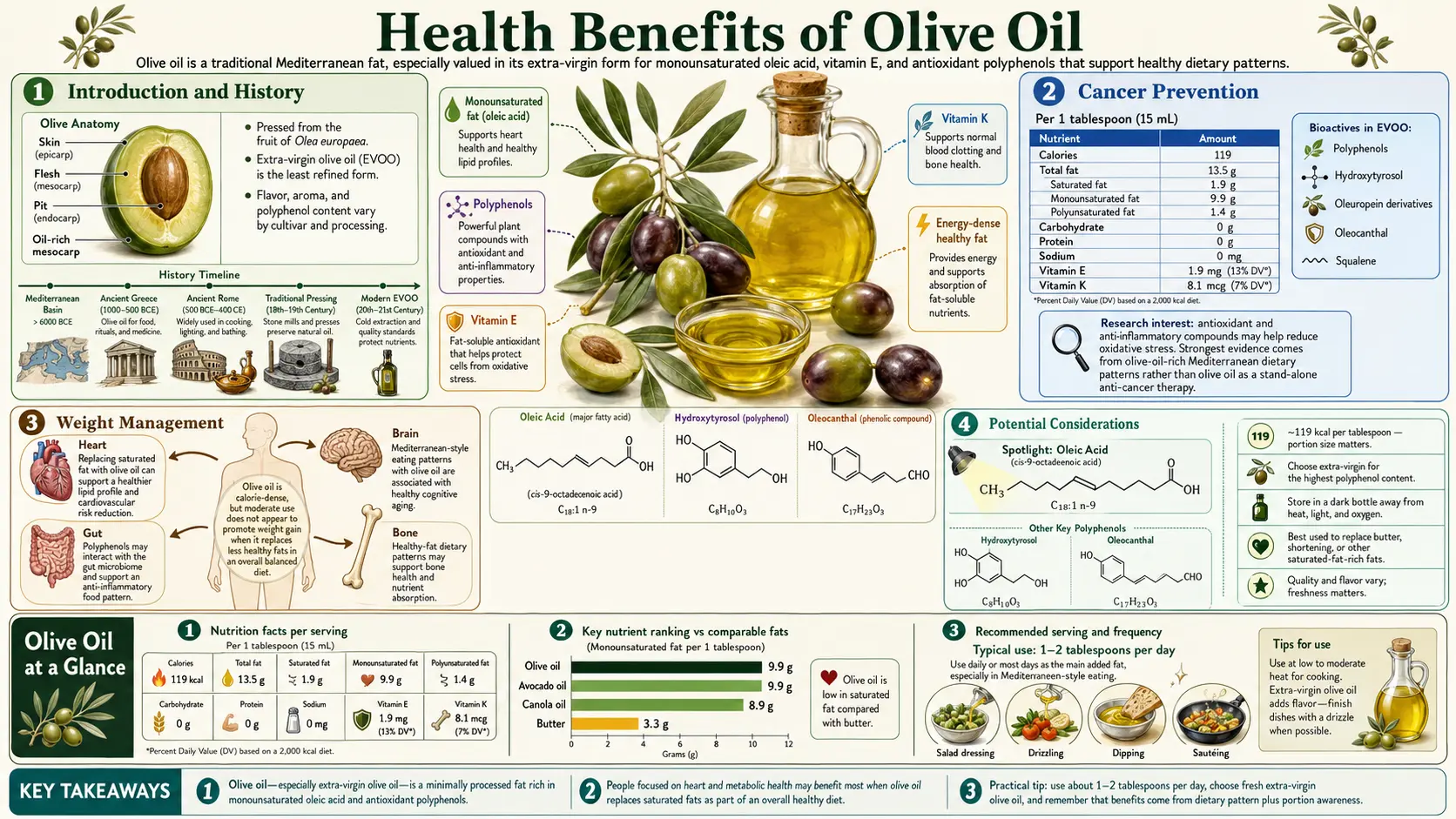
Olive oil is pressed from the fruit of the olive tree, Olea europaea. Chemical analysis of residues in pottery from Ein Zippori, in the lower Galilee of northern Israel, found olive oil to be one of the most common residues in vessels from the sixth to fifth millennia BC, which the excavators read as evidence of large-scale olive-oil production and use at that time (Namdar and colleagues, 2015). The oil’s place in ancient Greek, Roman and later Mediterranean life is covered on the Olive Oil History page.
Olive oil is the main added fat of the Mediterranean diet, which UNESCO inscribed in 2013 on its Representative List of the Intangible Cultural Heritage of Humanity. The largest trial of that dietary pattern, PREDIMED, gave one of its two Mediterranean-diet groups free extra-virgin olive oil; its results are described under Heart Health below.
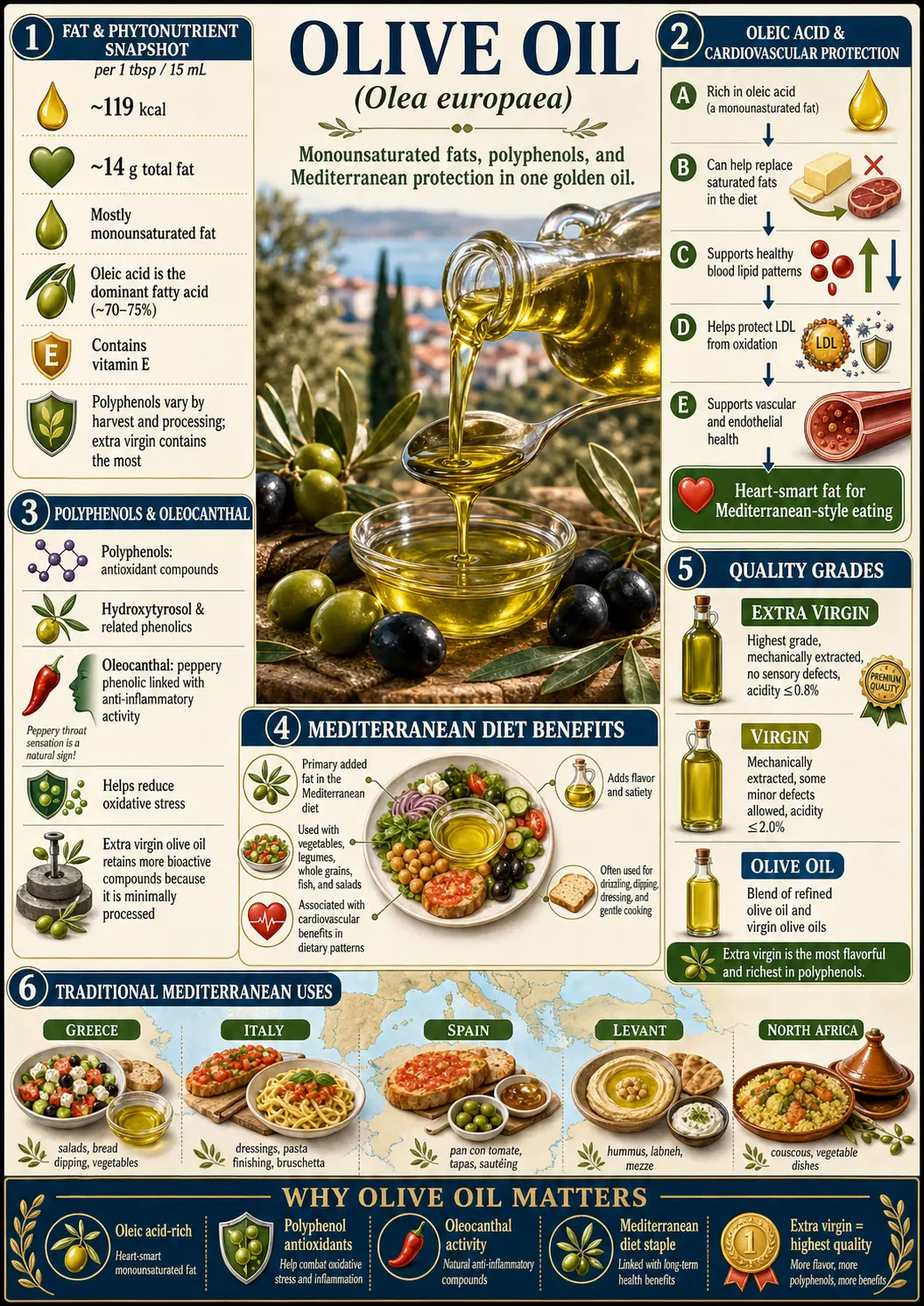
Besides its fat, extra-virgin olive oil carries small amounts of phenolic compounds (among them hydroxytyrosol, tyrosol, oleuropein aglycone, oleacein and oleocanthal), vitamin E and plant sterols. This page summarizes what human trials, cohort studies and laboratory studies have reported about olive oil, and says which kind of study each finding comes from.
Nutritional Profile
Oleic acid, a monounsaturated fatty acid (C18:1), is the main fatty acid of olive oil. The EU marketing standard for olive oil (Delegated Regulation (EU) 2022/2104) sets the fatty-acid ranges an olive oil must fall within: oleic acid 55.00 to 85.00 percent of total fatty acids, palmitic acid 7.00 to 20.00 percent, linoleic acid 2.50 to 21.00 percent and stearic acid 0.50 to 5.00 percent, with linolenic acid at or below 1.00 percent for the extra-virgin and virgin grades. In a 2018 heating study of ten cooking oils, oils high in polyunsaturated fat degraded more readily than extra-virgin olive oil (see Heating and Cooking Research below).
The phenolic fraction is what most distinguishes extra-virgin from refined olive oil. Oleocanthal is the compound behind the stinging sensation that newly pressed extra-virgin oil produces at the back of the throat (Beauchamp and colleagues, 2005). A 2003 sensory study of phenolic fractions isolated from virgin olive oils found almost all of them bitter and astringent, and traced most of the burning pungency of pungent extra-virgin oils to one compound, deacetoxy-ligstroside aglycon (Andrewes and colleagues, 2003). Phenolic content varies widely from oil to oil: two Calabrian monovarietal extra-virgin oils held between about 1,260 and 2,070 mg/kg of the seven phenolic compounds measured during a year of storage (Frisina and colleagues, 2023), while the ordinary virgin olive oil used in a crossover trial naturally contained 80 mg of phenolic compounds per kg (Martín-Peláez and colleagues, 2017).
The USDA FoodData Central record for olive oil (entry 171413, “Oil, olive, salad or cooking”) lists, per 100 g: 884 kcal; 100 g of fat, of which 13.8 g saturated, 73.0 g monounsaturated and 10.5 g polyunsaturated; no protein, carbohydrate or cholesterol; 14.4 mg of vitamin E (alpha-tocopherol); 60.2 µg of vitamin K (phylloquinone); and 221 mg of phytosterols. The same record gives a tablespoon as 13.5 g. The Olive Oil Nutrient Profile page lists the fuller panel.
Heart Health
The PREDIMED trial (Prevención con Dieta Mediterránea) assigned 7,447 Spanish adults aged 55 to 80 (57 percent women) who were at high cardiovascular risk, but had no cardiovascular disease, to one of three diets: a Mediterranean diet supplemented with extra-virgin olive oil, a Mediterranean diet supplemented with mixed nuts, or a control diet (advice to reduce dietary fat). All groups had quarterly educational sessions, and the Mediterranean groups received the olive oil or nuts free. The first report, published in the New England Journal of Medicine in 2013, was withdrawn after the investigators identified protocol deviations, including household members enrolled without randomization, non-random assignment of some participants at one of the 11 sites, and apparently inconsistent use of randomization tables at another; the trial was republished in 2018 with reanalyses that do not rely only on the assumption that every participant was randomized.
In the 2018 report, after a median 4.8 years, a major cardiovascular event (heart attack, stroke or death from cardiovascular causes) occurred in 96 participants (3.8 percent) in the olive-oil group, 83 (3.4 percent) in the nut group and 109 (4.4 percent) in the control group. The hazard ratio, adjusted for baseline characteristics and propensity scores, was 0.69 (95% CI 0.53 to 0.91) for the olive-oil diet and 0.72 (0.54 to 0.95) for the nut diet; results were similar after the 1,588 participants whose assignments were known or suspected to have departed from the protocol were omitted (Estruch and colleagues, 2018). The 2018 abstract does not give results for individual components such as stroke. Several PREDIMED secondary analyses, including the breast-cancer and diabetes reports quoted below, carry 2018 corrections; the figures quoted on this page are from their abstracts. The Olive Oil and Heart Health page covers the trial in more detail.
In two large U.S. cohorts (61,181 women in the Nurses’ Health Study and 31,797 men in the Health Professionals Follow-up Study, followed for 24 years), people who consumed more than half a tablespoon (more than 7 g) of olive oil a day had a 14 percent lower risk of cardiovascular disease (pooled HR 0.86) and an 18 percent lower risk of coronary heart disease (HR 0.82) than non-consumers. No significant association was seen for total or ischemic stroke, and none when olive oil was compared with other plant oils combined (Guasch-Ferré and colleagues, 2020, Journal of the American College of Cardiology). A 2022 analysis of the same cohorts over 28 years found that those with the highest intake (more than 7 g a day) had a lower risk of death from all causes (HR 0.81) and a 19 percent lower risk of cardiovascular death (HR 0.81) than people who never or rarely used olive oil; again, no significant associations were seen when olive oil was compared with other vegetable oils combined (Guasch-Ferré and colleagues, 2022). These are observational associations. Within PREDIMED, an observational analysis of 7,216 participants found that the highest third of baseline extra-virgin olive oil intake was associated with a 39 percent lower cardiovascular disease risk (HR 0.61) than the lowest third, and the association was significant in the two Mediterranean-diet groups but not in the control group (Guasch-Ferré and colleagues, 2014).
Blood-pressure findings are mixed. In a randomized, double-blind crossover trial in 23 people with hypertension, each diet lasting six months, the daily antihypertensive drug dosage fell by 48 percent during a diet using extra-virgin olive oil, against 4 percent during a sunflower-oil diet, and 8 patients needed no drug therapy during the olive-oil diet; the authors suggested polyphenol-stimulated nitric oxide as a possible explanation (Ferrara and colleagues, 2000). A 2024 meta-analysis of 17 randomized trials of olive oil (14 trials) or flaxseed oil (3 trials) in healthy adults and adults at risk of hypertension found no significant effect on systolic or diastolic blood pressure (McNabb and colleagues, 2024).
In the French Three-City Study (7,625 older adults with no history of stroke, median follow-up 5.25 years, 148 strokes), those with intensive olive oil use had a 41 percent lower risk of stroke (95% CI 6 to 63 percent) than those who never used olive oil, after adjustment for sociodemographic and dietary variables, physical activity, body mass index and stroke risk factors (Samieri and colleagues, 2011). This, too, is an observational association.
In the United States, the FDA said in 2004 that it would consider exercising enforcement discretion for a qualified health claim reading: “Limited and not conclusive scientific evidence suggests that eating about 2 tablespoons (23 grams) of olive oil daily may reduce the risk of coronary heart disease due to the monounsaturated fat in olive oil. To achieve this possible benefit, olive oil is to replace a similar amount of saturated fat and not increase the total number of calories you eat in a day.” In 2018 the agency announced enforcement discretion for a claim covering oils with at least 70 percent oleic acid, olive oil among them: “Supportive but not conclusive scientific evidence suggests that daily consumption of about 1½ tablespoons (20 grams) of oils containing high levels of oleic acid, when replaced for fats and oils higher in saturated fat, may reduce the risk of coronary heart disease.”
Anti-Inflammatory Properties
In 2005 Beauchamp, Breslin and colleagues, at the Monell Chemical Senses Center in Philadelphia, reported in Nature that oleocanthal, a compound in newly pressed extra-virgin olive oil, produces a stinging sensation in the throat like that caused by solutions of the anti-inflammatory drug ibuprofen. Their laboratory work found that the shared sensation seemed to indicate a shared pharmacological activity: oleocanthal acted as an anti-inflammatory compound with a potency and profile “strikingly similar” to ibuprofen’s, inhibiting the same cyclooxygenase (COX) enzymes despite a different structure. The report describes laboratory activity; it does not report effects of olive oil intake in people.
In a small study of 12 healthy adults who ate a fat-rich meal made with extra-virgin olive oil, ordinary olive oil or corn oil (each with 150 g of potatoes, two weeks apart), the inflammatory markers thromboxane B2 and leukotriene B4 fell 2 and 6 hours after the extra-virgin oil meal but not after the other two oils, and serum antioxidant capacity rose (Bogani and colleagues, 2007). The authors linked the difference to the phenolic compounds of extra-virgin oil.
Arthritis research on olive-oil compounds is mainly in animals. In mice with collagen-induced arthritis, a model of rheumatoid arthritis, an oral extra-virgin olive oil polyphenol extract reduced joint swelling, cartilage degradation and bone erosion, lowered pro-inflammatory cytokines and prostaglandin E2 in the joint, and decreased nuclear factor kappa-B (NF-κB) translocation (Rosillo and colleagues, 2014).
Brain Health Research
Two reports from the PREDIMED-NAVARRA centre assessed cognition after 6.5 years of intervention. In 522 participants (mean age 74.6 at testing), both Mediterranean-diet groups had higher scores than the low-fat control group on the Mini-Mental State Examination (MMSE) and the Clock Drawing Test; the adjusted MMSE difference was +0.62 points for the olive-oil group and +0.57 for the nut group (Martínez-Lapiscina and colleagues, 2013, Journal of Neurology, Neurosurgery and Psychiatry). In a random subsample of 285 participants given a fuller test battery, the olive-oil group performed better than control in all cognitive domains, significantly so on fluency and memory tasks, and had less mild cognitive impairment (OR 0.34, 95% CI 0.12 to 0.97); differences were non-significant for most domains, and the nut group did not differ from control (Martínez-Lapiscina and colleagues, 2013, Journal of Nutrition, Health and Aging). Both reports measured cognition after the intervention.
Laboratory and animal studies have looked at how olive-oil compounds might act on Alzheimer’s disease processes. In cultured mouse brain endothelial cells and in wild-type mice, oleocanthal increased P-glycoprotein and LRP1, two transport proteins at the blood-brain barrier, and enhanced the clearance of amyloid-beta from the brain (Abuznait and colleagues, 2013). In test-tube experiments, oleocanthal blocked the fibrillization of tau protein by reacting with its amino groups (Li and colleagues, 2009). In TgSwDI mice, a strain that accumulates amyloid-beta, six months of an extra-virgin olive oil-enriched diet begun before amyloid accumulation reduced brain amyloid-beta and tau and improved cognitive behaviour; begun later, a three-month diet lowered amyloid-beta but did not affect tau or cognition (Qosa and colleagues, 2015). None of these were studies in people.
In the Nurses’ Health Study and the Health Professionals Follow-up Study (92,383 adults, 28 years, 4,751 dementia-related deaths), consuming at least 7 g of olive oil a day was associated with a 28 percent lower risk of dementia-related death (HR 0.72, 95% CI 0.64 to 0.81) than never or rarely consuming it; results were consistent after adjustment for the APOE ε4 gene variant, and no interaction with diet-quality scores was found. Replacing 5 g a day of margarine and mayonnaise with olive oil was associated with an 8 to 14 percent lower risk, while substitutions for other vegetable oils or butter were not significant (Tessier and colleagues, 2024; a 2024 correction concerns errors in the paper’s Table 1 and figures).
In the SUN cohort of 10,094 initially healthy Spanish university graduates (median follow-up 4.4 years, 480 new cases of depression), higher adherence to a Mediterranean dietary pattern was associated with a lower risk of depression, with hazard ratios of 0.74, 0.66, 0.49 and 0.58 for the four upper adherence categories compared with the lowest. The diet score counted the ratio of monounsaturated to saturated fat rather than olive oil itself, and that ratio showed an inverse dose-response relationship with depression (Sánchez-Villegas and colleagues, 2009).
Cancer Research
A 2022 systematic review and meta-analysis in PLoS ONE pooled 45 studies, 37 of them case-control and 8 cohort studies. The highest olive oil consumption was associated with a 31 percent lower likelihood of any cancer (pooled RR 0.69, 95% CI 0.62 to 0.77), and with a lower likelihood of breast (RR 0.67), gastrointestinal (RR 0.77), upper aerodigestive (RR 0.74) and urinary tract (RR 0.46) cancers (Markellos and colleagues, 2022). The authors called for more prospective cohort studies and large randomized trials. In the U.S. cohorts described under Heart Health, the highest olive oil intake was associated with a 17 percent lower risk of cancer death (HR 0.83) (Guasch-Ferré and colleagues, 2022).
In human cancer cell lines grown in culture, oleocanthal caused cell death as quickly as 30 minutes after treatment in the absence of serum, by permeabilizing lysosomal membranes; in non-transformed (non-cancer) cells it suppressed proliferation but did not cause cell death. The authors linked the difference to the more fragile lysosomal membranes of cancer cells (LeGendre and colleagues, 2015). This was a cell-culture study.
In PREDIMED, breast cancer was a prespecified secondary outcome in 4,152 women without a prior history of it. After a median 4.8 years, 35 confirmed cases had been identified; observed rates were 1.1, 1.8 and 2.9 per 1,000 person-years in the olive-oil, nut and control groups, and the adjusted hazard ratios were 0.32 (95% CI 0.13 to 0.79) for the olive-oil group and 0.59 (0.26 to 1.35) for the nut group. The authors noted that the result came from a secondary analysis based on few cases and needed confirmation in longer and larger studies (Toledo and colleagues, 2015; corrected in 2018 in the notice on PREDIMED derivative studies).
Most of the cancer evidence for olive oil is therefore observational or from laboratory work; the one randomized result, the PREDIMED breast-cancer analysis, rests on 35 cases.
Blood Sugar and Diabetes
At the PREDIMED-Reus centre (418 participants without diabetes, median follow-up 4.0 years), diabetes incidence was 10.1 percent with the Mediterranean diet supplemented with virgin olive oil (1 litre a week), 11.0 percent with the nut diet and 17.9 percent with the low-fat control diet; the adjusted hazard ratios were 0.49 and 0.48. The diets were not calorie-restricted, and the reduction occurred without significant changes in body weight or physical activity (Salas-Salvadó and colleagues, 2011). Across the wider trial (3,541 participants without diabetes, median 4.1 years), new-onset diabetes occurred at 16.0, 18.7 and 23.6 cases per 1,000 person-years in the extra-virgin olive oil, nut and control groups; the adjusted hazard ratio was 0.60 (95% CI 0.43 to 0.85) for the olive-oil diet and 0.82 (0.61 to 1.10) for the nut diet. This was a subgroup analysis of a prespecified secondary outcome, and randomization was not stratified by diabetes status (Salas-Salvadó and colleagues, 2014). Both papers carry 2018 errata.
A 2017 meta-analysis of four cohort studies (15,784 type 2 diabetes cases) found a 16 percent lower risk of type 2 diabetes for the highest versus the lowest olive oil intake (RR 0.84), with evidence of a nonlinear relationship. In trials in people with type 2 diabetes (29 trials were included in the meta-analysis overall), olive oil lowered HbA1c by 0.27 percentage points and fasting plasma glucose by 0.44 mmol/L more than control diets. The authors noted that the conclusion concerns olive oil as a food and might not hold for its single components (Schwingshackl and colleagues, 2017).
Bone Health
The authors of a PREDIMED-Reus analysis note that osteoporotic fractures are less common in Mediterranean countries. In their study, an observational cohort of 870 participants nested in the trial (114 osteoporosis-related fractures over a median 8.9 years), the highest third of extra-virgin olive oil consumption was associated with a 51 percent lower fracture risk than the lowest third (HR 0.49, 95% CI 0.29 to 0.81). The diet the participants had been randomized to had no effect on fracture risk, and total and common olive oil consumption were not associated with it (García-Gavilán and colleagues, 2018).
Filip and colleagues cite preclinical research suggesting that olive-tree compounds may protect against bone loss by increasing osteoblast activity. In their 12-month double-blind trial in 64 postmenopausal women with osteopenia, 250 mg a day of an olive polyphenol extract plus 1,000 mg of calcium was compared with calcium alone: serum osteocalcin, a marker of bone formation, rose in the extract group; lumbar-spine bone mineral density stayed stable with the extract while it fell with calcium alone; and total and LDL cholesterol fell with the extract (Filip and colleagues, 2015). The authors called it an exploratory study, and it tested a specific olive extract, not olive oil.
Digestive Health
Digested fat in the small intestine releases the hormone cholecystokinin (CCK), which makes the gallbladder contract. In six healthy volunteers, 30 g of olive oil produced an integrated CCK response of 143 pmol/l·min, against 277 after corn oil and 44 after suet, and 3.5 g of sodium oleate (the salt of oleic acid) contracted the gallbladder to 42 percent of its starting volume (Beardshall and colleagues, 1989). In seven patients with pancreatic insufficiency, oleic acid given into the duodenum as a free fatty acid released CCK faster and more strongly, and contracted the gallbladder more, than a triglyceride emulsion (Guimbaud and colleagues, 1997).
In a crossover trial in 12 people with high cholesterol, three raw virgin olive oils were each taken at 25 mL a day for 3 weeks: an ordinary virgin oil with 80 mg of phenolic compounds per kg, the same oil enriched to 500 mg/kg with olive phenols, and one enriched to 500 mg/kg with a mix of olive and thyme phenols. Only the olive-and-thyme oil increased bifidobacteria (compared with the ordinary oil) and lowered oxidized LDL (compared with before that oil); the oil enriched with olive phenols alone did not change the bacterial populations measured, though it raised faecal hydroxytyrosol (Martín-Peláez and colleagues, 2017).
Laboratory work has found phenolic compounds with dialdehydic structures in virgin olive oil to be bactericidal against Helicobacter pylori. In two pilot studies in 60 infected adults, the first group took 30 g a day of washed and then of unwashed virgin olive oil (14 days each) and the second 30 g a day of a different virgin oil for 14 days. Four to six weeks later the infection had been eradicated in 8 of 30 people in the first study (27 percent by intention to treat, 40 percent per protocol) and in 3 of 30 in the second (10 and 11 percent); 13 participants withdrew because of the taste or nausea. The authors described the effect as moderate and called for further studies (Castro and colleagues, 2012).
In 45,756 U.S. men followed for 14 years, the highest fifth of monounsaturated fat intake was associated with a lower risk of symptomatic gallstone disease than the lowest fifth (RR 0.83, 95% CI 0.70 to 1.00), as was polyunsaturated fat (RR 0.84) (Tsai and colleagues, 2004). The study measured monounsaturated fat from the whole diet, not olive oil specifically.
Historical Medical Use (1926 U.S. Dispensatory)
The 1926 (21st) edition of the Dispensatory of the United States of America lists olive oil (Oleum Olivae), the fixed oil from the ripe fruit of the olive tree, as “nutritious and mildly laxative” and “often used in milder cases of chronic constipation, especially when associated with malnutrition.” It describes an olive-oil enema as “often a useful remedy in fecal impaction” and gives the laxative dose as “from one-half to two fluidounces (15-60 cc.).” Externally the oil was used “to soften and relax the skin,” and its most extensive use was in pharmacy, as a constituent of liniments, ointments, cerates and plasters.
On gallstones, the 1926 text was already sceptical. Olive oil, it says, “was formerly largely used in the treatment of gall stones with the idea that it stimulated the secretion of bile. The concretions which were passed by these patients, however, were shown to be masses of hardened soap and it is extremely questionable whether the oil has any real value in this disease.”
What later research says. Olive oil does stimulate CCK release and gallbladder contraction (see Digestive Health above), although in one small study corn oil was the stronger stimulus. The modern “liver flush” or “liver cleanse,” in which a course of laxatives is taken with olive oil, produces soft, stone-like objects in the stool. A 2010 Dutch review notes that such “liver stones” have been described in the literature and are understood to develop from the olive oil taken with the laxatives, that passing them is not associated with a reduction in gallstones, and that laxation is not effective in removing gallstones (van Hooft and colleagues, 2010). Two case-report letters in The Lancet discuss such regimens (Sies and Brooker, 2005, “Could these be gallstones?”; Dekkers, 1999, “Apple juice and the chemical-contact softening of gallstones”); their full text was not available for this review, so their findings are not restated here.
Bile-duct stones. The British Society of Gastroenterology’s 2017 guideline on common bile duct stones estimates that such stones are present in 10 to 20 percent of people with symptomatic gallstones and notes that they can cause pain, jaundice, infection and acute pancreatitis; management of confirmed stones may involve endoscopic retrograde cholangiopancreatography (ERCP), surgery or radiological stone extraction (Williams and colleagues, 2017).
Citations
- Sies CW, Brooker J. “Could these be gallstones?” The Lancet, 2005;365(9468):1388. doi:10.1016/S0140-6736(05)66373-8 (Case-report letter, PubMed PMID 15836886; full text not available for this review.) [VERIFIED]
- Dekkers R. “Apple juice and the chemical-contact softening of gallstones.” The Lancet, 1999;354(9196):2171. doi:10.1016/S0140-6736(05)77083-5 (Case-report letter, PubMed PMID 10609857; full text not available for this review.) [VERIFIED]
- Beardshall K, Frost G, Morarji Y, et al. “Saturation of fat and cholecystokinin release: implications for pancreatic carcinogenesis.” The Lancet, 1989;2:1008-10. — PubMed PMID: 2572741 (Olive oil, corn oil and suet compared for CCK release and gallbladder contraction in six volunteers; replaces a PubMed topic search on olive oil, cholecystokinin and gallbladder contraction.)
- van Hooft J, Oude Elferink R, Seppen J. “Gluttony and penance – laxatives and ‘liver stones’” (in Dutch, English abstract). Nederlands Tijdschrift voor Geneeskunde, 2010;154:A2645. — PubMed PMID: 21211072
- Williams E, Beckingham I, El Sayed G, et al. “Updated guideline on the management of common bile duct stones (CBDS).” Gut, 2017;66:765-782. — PubMed PMID: 28122906
- Wood HC, Lawall CH, Youngken HW. The Dispensatory of the United States of America, 21st edition. Philadelphia: J. B. Lippincott Company, 1926. Monograph “Oleum Olivae” — Internet Archive scan
Skin and Hair Health
In a cross-sectional analysis of the SUVIMAX cohort (1,264 women and 1,655 men aged 45 to 60), a lower risk of severe facial photoaging was associated with higher intakes of monounsaturated fat from olive oil in both sexes; no association was found for monounsaturated fat from animal sources such as dairy products and meat (Latreille and colleagues, 2012). A cross-sectional study cannot show that olive oil caused the difference.
Applied to the skin, olive oil reduced skin-barrier integrity in a randomized forearm study of 19 adult volunteers with and without a history of atopic dermatitis: four weeks of olive oil twice daily significantly reduced stratum corneum integrity and caused mild redness, whereas sunflower seed oil preserved integrity and improved hydration. The authors concluded that topical olive oil significantly damages the skin barrier and could promote or worsen atopic dermatitis, and wrote that its use for dry skin and infant massage should be discouraged (Danby and colleagues, 2013).
A laboratory study of human hair fibres found that capillary adhesion between fibres treated with coconut, olive or sunflower oil decreased over time, but not with mineral oil; the authors interpreted this as the oil being absorbed into the fibre, leaving a thinner film on the surface (Keis and colleagues, 2005). The abstract does not report effects on protein loss or on hair condition.
Weight Management
PREDIMED’s bodyweight analysis was republished in 2019 after the protocol-deviation reanalysis (the 2016 version was retracted). Energy restriction was not advised and physical activity was not promoted. After a median 4.8 years, participants in all three groups had marginally reduced bodyweight and increased waist circumference. Compared with the control group, the adjusted difference in five-year weight change was −0.410 kg for the olive-oil group (95% CI −0.830 to 0.010; p = 0.056), and the difference in waist change was −0.466 cm (−1.109 to 0.176; p = 0.154); neither difference was statistically significant (Estruch and colleagues, 2019).
In rodent experiments, fat infused into the duodenum stimulated the small intestine to produce oleoylethanolamide (OEA), a lipid messenger made from dietary oleic acid; mice lacking the fatty-acid transporter CD36 or the receptor PPAR-alpha lost the satiety response to fat (Schwartz and colleagues, 2008). That study did not test whether the pathway affects appetite in people.
In 12 postmenopausal women given high-fat test meals of equal energy made with either cream or extra-virgin olive oil, diet-induced thermogenesis did not differ overall, but fat oxidation after the meal was higher with olive oil; in the eight women with obesity, diet-induced thermogenesis was also higher after the olive-oil meal (5.1 versus 2.5 percent of energy) (Soares and colleagues, 2004).
In a two-year trial in 322 moderately obese adults (86 percent men), the Mediterranean diet was calorie-restricted, as was the low-fat diet, while the low-carbohydrate diet was not. Mean weight loss was 2.9 kg on the low-fat diet, 4.4 kg on the Mediterranean diet and 4.7 kg on the low-carbohydrate diet; the Mediterranean group had the highest ratio of monounsaturated to saturated fat, and among the 36 participants with diabetes, fasting glucose and insulin changed more favourably on the Mediterranean diet than on the low-fat diet (Shai and colleagues, 2008). The trial tested whole diets, not olive oil alone.
Antioxidant Properties
The phenolic compounds measured in extra-virgin olive oil include hydroxytyrosol, tyrosol, oleuropein aglycone, oleacein and oleocanthal (Frisina and colleagues, 2023). In laboratory work with commercial oils, total antioxidant activity was mainly explained by phenol and alpha-tocopherol content, and phenolic compounds from extra-virgin oil helped protect alpha-tocopherol from loss during domestic-style heating at 160 to 190 °C (Pellegrini and colleagues, 2001).
The body can convert tyrosol into hydroxytyrosol. Experiments in rats and in human liver microsomes identified the liver enzyme CYP2A6 as the main enzyme involved, with CYP2D6 also contributing, and found differences between individuals in how much hydroxytyrosol was formed (Rodríguez-Morató and colleagues, 2017).
The European Union authorizes one health claim for olive oil polyphenols, following a 2011 EFSA scientific opinion: “Olive oil polyphenols contribute to the protection of blood lipids from oxidative stress.” Under Regulation (EU) No 432/2012 the claim may be used only for olive oil that contains at least 5 mg of hydroxytyrosol and its derivatives (for example oleuropein complex and tyrosol) per 20 g of olive oil, and the consumer must be told that the beneficial effect is obtained with a daily intake of 20 g of olive oil. In 2025 EFSA’s nutrition panel assessed two further proposed claims and concluded that a cause-and-effect relationship had not been established between phenolic compounds naturally present in olive oil and lower LDL cholesterol or systolic blood pressure, and that the evidence was insufficient for olive oil polyphenols and the maintenance of normal HDL cholesterol.
Extra Virgin vs Refined Olive Oil
On the label, EU law describes extra-virgin olive oil as “superior category olive oil obtained directly from olives and solely by mechanical means,” virgin olive oil as “olive oil obtained directly from olives and solely by mechanical means,” and the blended grade sold as “olive oil” as “oil comprising exclusively olive oils that have undergone refining and oils obtained directly from olives.” Under Delegated Regulation (EU) 2022/2104, extra-virgin oil must have a free acidity of no more than 0.80 percent and a peroxide value of no more than 20 milliequivalents of oxygen per kg, meet limits on UV absorbance (K232 no more than 2.50, K270 no more than 0.22) and on fatty-acid ethyl esters (no more than 35 mg/kg), and pass a tasting panel with a median defect score of 0 and a fruity median above 0. Virgin olive oil may have a free acidity of up to 2.0 percent and a median defect of up to 3.5. Refined olive oil is limited to a free acidity of 0.30 percent and the refined-and-virgin blend to 1.00 percent, with no tasting-panel requirement for either. The term “cold extraction” may appear only on extra-virgin or virgin oils obtained below 27 °C by percolation or centrifugation of the olive paste, and “first cold pressing” only on those obtained below 27 °C from a first mechanical pressing in a traditional hydraulic press.
In an analysis of lampante (lamp-grade) olive oils sampled at each stage of refining (degumming, chemical and physical neutralization, bleaching and deodorization), total hydroxytyrosol and tyrosol were completely removed in the early steps, while tocopherols fell significantly, by 7 to 16 percent, in only four of nine samples (Lucci and colleagues, 2020). An earlier analysis of three grades of olive oil and ten vegetable cooking oils found 48 µg of polyphenols per gram in extra-virgin olive oil, more than in any other oil tested; the other oils held between 2 and 10 µg/g, or none (Colquhoun and colleagues, 1996).
The major olive-oil trials used virgin or extra-virgin oil: PREDIMED supplied extra-virgin olive oil, and the PREDIMED-Reus diabetes report describes virgin olive oil. In the PREDIMED-Reus fracture analysis, extra-virgin but not common olive oil was associated with fewer fractures, and in the 12-person meal study described under Anti-Inflammatory Properties, inflammatory markers fell after extra-virgin oil but not after ordinary olive oil or corn oil. None of the studies on this page was a randomized comparison of refined with extra-virgin olive oil on clinical outcomes.
EU rules also govern several label terms. The harvesting year may be shown only on extra-virgin and virgin olive oil, and only when 100 percent of the contents come from one harvesting year; member states may make it compulsory for their own domestic production sold on their national market. Indications of taste or smell may appear only on extra-virgin and virgin oils. On request, the tasting-panel leader may certify the terms robust, medium or delicate for the positive attributes fruitiness, bitterness and pungency, according to the panel’s median score (more than 6.0, more than 3.0 up to 6.0, and 3.0 or less), and must report a bitter or pungent median above 5.0. The pungent throat sensation comes largely from phenolic compounds (Beauchamp and colleagues, 2005; Andrewes and colleagues, 2003).
Heating and Cooking Research
The smoke point is the temperature at which an oil begins to smoke continuously. A 2018 study by De Alzaa, Guillaume and Ravetti measured it by a standard method (AOCS Cc 9a-48) in ten cooking oils bought in Australian supermarkets: extra-virgin olive oil smoked at 206.67 °C, against 255.67 °C for canola oil, 254.67 °C for sunflower oil and 191.00 °C for coconut oil. The study was published in Acta Scientific Nutritional Health, a journal not indexed in PubMed, and its authors work at a commercial olive-oil testing laboratory in Australia.
The same study asked whether smoke point predicts how an oil holds up under heat. A 250 mL sample of each oil was heated gradually from 25 °C to 240 °C over about 20 minutes, and a 3-litre sample was held at 180 °C in a deep fryer for 6 hours; polar compounds, free fatty acids, oxidative stability, UV coefficients and fatty-acid profiles were measured along the way. The heating runs used oil alone, without food. The authors concluded that, under these conditions, smoke point did not predict how an oil performed when heated, and that oxidative stability and UV coefficients, combined with total polyunsaturated fat, were better predictors. Extra-virgin olive oil produced the lowest level of polar compounds after heating, “closely followed by coconut oil,” while oils such as canola generated high levels of by-products (De Alzaa and colleagues, 2018).
Indexed frying studies with food report a similar pattern. In domestic deep-frying run until total polar compounds reached the 25 percent legal limit, all the olive oil categories tested lasted longer (24 to 27 hours) than a commercial vegetable-oil blend (15 hours), and the authors concluded that olive oil was resistant to frying conditions whichever commercial category was used (Casal and colleagues, 2010). In a potato deep-frying study at 175 °C, peanut and canola oils reached the 25 percent limit after 18 to 20 hours, while extra-virgin olive oil lasted more than 28 hours; the major antioxidants were lost during the first 8 to 12 hours of frying, and the authors noted that extra-virgin olive oil loses its pool of natural bioactive compounds in the first hours (Santos and colleagues, 2019). A 2021 peer-reviewed study by the same Australian laboratory group, deep-frying chips, chicken nuggets and broccoli at 180 °C, found more antioxidants and monounsaturated fat in the foods cooked in extra-virgin olive oil than in canola or grapeseed oil, and the highest polar compounds in food cooked in canola and grapeseed oils (De Alzaa and colleagues, 2021).
Adding olive oil when cooking tomatoes increased lycopene absorption in a small five-day trial: plasma trans-lycopene rose by 82 percent in 11 people who ate 470 g of diced tomatoes a day cooked with 25 mL of extra-virgin olive oil, with no significant change in 12 people who ate the tomatoes cooked without oil (Fielding and colleagues, 2005). The Cooking Temperature page covers heating in more detail.
Grades, Labels and Storage
Mislabelled extra-virgin oil has been documented. In a screening study of 88 commercial products labelled extra-virgin olive oil, bought in College Park, Maryland, 55 (62.5 percent) did not meet one or more of the near-infrared spectroscopy criteria the method uses for authentic extra-virgin oil; the method flagged possible mixing with oils high in linoleic acid, oils high in oleic acid, palm olein or refined olive oil. Had the products been judged only on whether their fatty-acid composition fell within International Olive Council ranges, fewer than 10 percent would have been identified as non-extra-virgin. The authors reported that their results were consistent with earlier data from two IOC-accredited sensory panels (Mossoba and colleagues, 2017). Adulteration is an old problem: the 1926 Dispensatory of the United States noted peanut (arachis) oil found “in numerous samples of imported olive oil.”
Phenolic content falls during storage: in the Frisina study, two extra-virgin oils lost 15 and 32 percent of their measured phenolic compounds over 12 months. Heating also consumes phenolic compounds (see Heating and Cooking Research).
Formal sensory grading is done by a trained tasting panel. Under the EU standard, an extra-virgin oil must show some fruitiness (a fruity median above 0) and no defect (a median defect of 0). The regulation defines fruitiness as the set of olfactory sensations characteristic of the oil, depending on the olive variety and coming from sound, fresh olives, perceived directly or through the back of the nose.
Potential Considerations
Olive oil is energy-dense: 884 kcal per 100 g in the USDA record. Both FDA qualified health claims are framed around replacing saturated fat, or fats and oils higher in saturated fat, without increasing total daily calories. PREDIMED tested whole Mediterranean dietary patterns, with quarterly educational sessions, against a control diet.
Adulteration is a long-standing problem, from the peanut oil reported in 1926 to the 62.5 percent of products flagged in the 2017 screening study (see Grades, Labels and Storage).
Olive oil, like other fats, stimulates gallbladder contraction through CCK (see Digestive Health). Applied to the skin, it reduced skin-barrier integrity in a forearm study (see Skin and Hair Health).
In the two large U.S. cohorts, olive oil was associated with lower mortality when compared with margarine, butter, mayonnaise and dairy fat, but no significant associations were seen when it was compared with other vegetable oils combined (Guasch-Ferré and colleagues, 2022); for dementia-related death, substituting olive oil for other vegetable oils or butter was not significant (Tessier and colleagues, 2024).
Key Research Papers
- Estruch R, Ros E, Salas-Salvadó J, et al. “Primary Prevention of Cardiovascular Disease with a Mediterranean Diet Supplemented with Extra-Virgin Olive Oil or Nuts” New England Journal of Medicine, 2018. — PubMed PMID: 29897866 (Extra-virgin olive oil arm: HR 0.69, 95% CI 0.53–0.91, for major cardiovascular events among 7,447 high-risk participants. Corrected and republished in 2018 after the 2013 report, PMID 23432189, was retracted — retraction and republication notice: PubMed PMID: 29897867)
- Samieri C, Féart C, Proust-Lima C, et al. “Olive oil consumption, plasma oleic acid, and stroke incidence: the Three-City Study” Neurology, 2011. — PubMed PMID: 21676914 (Intensive olive oil users had a 41% lower risk of stroke among 7,625 older adults; observational.)
- Ferrara LA, Raimondi AS, d’Episcopo L, et al. “Olive oil and reduced need for antihypertensive medications” Archives of Internal Medicine, 2000. — PubMed PMID: 10737284 (23 hypertensive patients, 6-month crossover: daily drug dosage fell 48% with extra-virgin olive oil vs 4% with sunflower oil.)
- Beauchamp GK, Keast RS, Morel D, et al. “Phytochemistry: ibuprofen-like activity in extra-virgin olive oil” Nature, 2005. — PubMed PMID: 16136122 (Oleocanthal inhibits the same cyclooxygenase enzymes as ibuprofen in laboratory tests.)
- Martínez-Lapiscina EH, Clavero P, Toledo E, et al. “Virgin olive oil supplementation and long-term cognition: the PREDIMED-NAVARRA randomized, trial” Journal of Nutrition, Health and Aging, 2013. — PubMed PMID: 23732551 (Random subsample of 285 participants after 6.5 years: better fluency and memory and less mild cognitive impairment with the olive-oil diet; most domains non-significant.)
- Abuznait AH, Qosa H, Busnena BA, et al. “Olive-oil-derived oleocanthal enhances β-amyloid clearance as a potential neuroprotective mechanism against Alzheimer’s disease: in vitro and in vivo studies” ACS Chemical Neuroscience, 2013. — PubMed PMID: 23414128 (Cultured mouse brain endothelial cells and wild-type mice: oleocanthal raised P-glycoprotein and LRP1 and enhanced amyloid-beta clearance.)
- Tessier AJ, Cortese M, Yuan C, et al. “Consumption of Olive Oil and Diet Quality and Risk of Dementia-Related Death” JAMA Network Open, 2024. — PubMed PMID: 38709531 (At least 7 g/day associated with a 28% lower risk of dementia-related death among 92,383 U.S. adults; erratum PubMed PMID: 38916897.)
- Sánchez-Villegas A, Delgado-Rodríguez M, Alonso A, et al. “Association of the Mediterranean dietary pattern with the incidence of depression: the Seguimiento Universidad de Navarra/University of Navarra follow-up (SUN) cohort” Archives of General Psychiatry, 2009. — PubMed PMID: 19805699 (Mediterranean dietary pattern associated with lower depression risk among 10,094 Spanish graduates.)
- Markellos C, Ourailidou ME, Gavriatopoulou M, et al. “Olive oil intake and cancer risk: A systematic review and meta-analysis” PLoS ONE, 2022. — PubMed PMID: 35015763 (45 studies, 37 of them case-control: highest olive oil intake associated with a 31% lower likelihood of any cancer.)
- LeGendre O, Breslin PA, Foster DA. “(-)-Oleocanthal rapidly and selectively induces cancer cell death via lysosomal membrane permeabilization” Molecular and Cellular Oncology, 2015. — PubMed PMID: 26380379 (Cell-culture study: cancer cell lines died within 30 minutes; non-transformed cells stopped proliferating but did not die.)
- Toledo E, Salas-Salvadó J, Donat-Vargas C, et al. “Mediterranean Diet and Invasive Breast Cancer Risk Among Women at High Cardiovascular Risk in the PREDIMED Trial: A Randomized Clinical Trial” JAMA Internal Medicine, 2015. — PubMed PMID: 26365989 (Secondary outcome, 35 cases: HR 0.32 for the extra-virgin olive oil group; corrected 2018, notice PubMed PMID: 30398520.)
- Salas-Salvadó J, Bulló M, Babio N, et al. “Reduction in the incidence of type 2 diabetes with the Mediterranean diet: results of the PREDIMED-Reus nutrition intervention randomized trial” Diabetes Care, 2011. — PubMed PMID: 20929998 (418 participants: HR 0.49 with virgin olive oil and 0.48 with nuts vs a low-fat control diet; erratum PubMed PMID: 30104300.)
- Schwingshackl L, Lampousi AM, Portillo MP, et al. “Olive oil in the prevention and management of type 2 diabetes mellitus: a systematic review and meta-analysis of cohort studies and intervention trials” Nutrition and Diabetes, 2017. — PubMed PMID: 28394365 (Four cohorts: RR 0.84 for type 2 diabetes; trials in type 2 diabetes: HbA1c −0.27 percentage points, fasting glucose −0.44 mmol/L.)
- Shai I, Schwarzfuchs D, Henkin Y, et al. “Weight loss with a low-carbohydrate, Mediterranean, or low-fat diet” New England Journal of Medicine, 2008. — PubMed PMID: 18635428 (Two-year trial: weight loss 4.4 kg on a calorie-restricted Mediterranean diet, 2.9 kg on a calorie-restricted low-fat diet, 4.7 kg on an unrestricted low-carbohydrate diet.)
- Guasch-Ferré M, Liu G, Li Y, et al. “Olive Oil Consumption and Cardiovascular Risk in U.S. Adults” Journal of the American College of Cardiology, 2020. — PubMed PMID: 32147453 (More than 7 g/day: 14% lower cardiovascular disease and 18% lower coronary heart disease risk; no association with stroke.)
- Guasch-Ferré M, Li Y, Willett WC, et al. “Consumption of Olive Oil and Risk of Total and Cause-Specific Mortality Among U.S. Adults” Journal of the American College of Cardiology, 2022. — PubMed PMID: 35027106
- Guasch-Ferré M, Hu FB, Martínez-González MA, et al. “Olive oil intake and risk of cardiovascular disease and mortality in the PREDIMED Study” BMC Medicine, 2014. — PubMed PMID: 24886626
- McNabb TB, Young I, Newman RG, et al. “Supplementation of Olive Oil and Flaxseed Oil on Blood Pressure and Inflammation in Healthy and At-Risk Adults: A Systematic Literature Review and Meta-Analysis” Current Hypertension Reviews, 2024. — PubMed PMID: 39558500
- Bogani P, Galli C, Villa M, Visioli F. “Postprandial anti-inflammatory and antioxidant effects of extra virgin olive oil” Atherosclerosis, 2007. — PubMed PMID: 16488419
- Rosillo MÁ, Alcaraz MJ, Sánchez-Hidalgo M, et al. “Anti-inflammatory and joint protective effects of extra-virgin olive-oil polyphenol extract in experimental arthritis” Journal of Nutritional Biochemistry, 2014. — PubMed PMID: 25294776 (Mouse study.)
- Martínez-Lapiscina EH, Clavero P, Toledo E, et al. “Mediterranean diet improves cognition: the PREDIMED-NAVARRA randomised trial” Journal of Neurology, Neurosurgery and Psychiatry, 2013. — PubMed PMID: 23670794
- Li W, Sperry JB, Crowe A, et al. “Inhibition of tau fibrillization by oleocanthal via reaction with the amino groups of tau” Journal of Neurochemistry, 2009. — PubMed PMID: 19549281 (Test-tube study.)
- Qosa H, Mohamed LA, Batarseh YS, et al. “Extra-virgin olive oil attenuates amyloid-β and tau pathologies in the brains of TgSwDI mice” Journal of Nutritional Biochemistry, 2015. — PubMed PMID: 26344778 (Mouse study.)
- Salas-Salvadó J, Bulló M, Estruch R, et al. “Prevention of diabetes with Mediterranean diets: a subgroup analysis of a randomized trial” Annals of Internal Medicine, 2014. — PubMed PMID: 24573661 (Erratum 2018, PubMed PMID: 30128530.)
- García-Gavilán JF, Bulló M, Canudas S, et al. “Extra virgin olive oil consumption reduces the risk of osteoporotic fractures in the PREDIMED trial” Clinical Nutrition, 2018. — PubMed PMID: 28143667 (Observational analysis nested in the trial; diet allocation itself had no effect on fracture risk.)
- Filip R, Possemiers S, Heyerick A, et al. “Twelve-month consumption of a polyphenol extract from olive (Olea europaea) in a double blind, randomized trial increases serum total osteocalcin levels and improves serum lipid profiles in postmenopausal women with osteopenia” Journal of Nutrition, Health and Aging, 2015. — PubMed PMID: 25560820
- Guimbaud R, Moreau JA, Bouisson M, et al. “Intraduodenal free fatty acids rather than triglycerides are responsible for the release of CCK in humans” Pancreas, 1997. — PubMed PMID: 8981511
- Martín-Peláez S, Mosele JI, Pizarro N, et al. “Effect of virgin olive oil and thyme phenolic compounds on blood lipid profile: implications of human gut microbiota” European Journal of Nutrition, 2017. — PubMed PMID: 26541328
- Castro M, Romero C, de Castro A, et al. “Assessment of Helicobacter pylori eradication by virgin olive oil” Helicobacter, 2012. — PubMed PMID: 22759331
- Tsai CJ, Leitzmann MF, Willett WC, Giovannucci EL. “The effect of long-term intake of cis unsaturated fats on the risk for gallstone disease in men: a prospective cohort study” Annals of Internal Medicine, 2004. — PubMed PMID: 15466768
- Latreille J, Kesse-Guyot E, Malvy D, et al. “Dietary monounsaturated fatty acids intake and risk of skin photoaging” PLoS ONE, 2012. — PubMed PMID: 22970231
- Danby SG, AlEnezi T, Sultan A, et al. “Effect of olive and sunflower seed oil on the adult skin barrier: implications for neonatal skin care” Pediatric Dermatology, 2013. — PubMed PMID: 22995032
- Keis K, Persaud D, Kamath YK, Rele AS. “Investigation of penetration abilities of various oils into human hair fibers” Journal of Cosmetic Science, 2005. — PubMed PMID: 16258695
- Estruch R, Martínez-González MA, Corella D, et al. “Effect of a high-fat Mediterranean diet on bodyweight and waist circumference: a prespecified secondary outcomes analysis of the PREDIMED randomised controlled trial” Lancet Diabetes and Endocrinology, 2019. — PubMed PMID: 31003626 (Republished after the 2016 version, PMID 27283479, was retracted.)
- Schwartz GJ, Fu J, Astarita G, et al. “The lipid messenger OEA links dietary fat intake to satiety” Cell Metabolism, 2008. — PubMed PMID: 18840358 (Rodent study.)
- Soares MJ, Cummings SJ, Mamo JC, et al. “The acute effects of olive oil v. cream on postprandial thermogenesis and substrate oxidation in postmenopausal women” British Journal of Nutrition, 2004. — PubMed PMID: 14756910
- Pellegrini N, Visioli F, Buratti S, Brighenti F. “Direct analysis of total antioxidant activity of olive oil and studies on the influence of heating” Journal of Agricultural and Food Chemistry, 2001. — PubMed PMID: 11368632
- Rodríguez-Morató J, Robledo P, Tanner JA, et al. “CYP2D6 and CYP2A6 biotransform dietary tyrosol into hydroxytyrosol” Food Chemistry, 2017. — PubMed PMID: 27664690
- Andrewes P, Busch JL, de Joode T, et al. “Sensory properties of virgin olive oil polyphenols: identification of deacetoxy-ligstroside aglycon as a key contributor to pungency” Journal of Agricultural and Food Chemistry, 2003. — PubMed PMID: 12590491
- Frisina M, Bonacci S, Oliverio M, et al. “Storage Effects on Bioactive Phenols in Calabrian Monovarietal Extra Virgin Olive Oils Based on the EFSA Health Claim” Foods, 2023. — PubMed PMID: 37893692
- EFSA Panel on Nutrition, Novel Foods and Food Allergens (NDA). “Phenolic compounds naturally present in olive oil and lowering of blood LDL-cholesterol and systolic blood pressure, therefore reducing the risk of coronary heart disease: Evaluation of a health claim pursuant to Article 14 of Regulation (EC) No 1924/2006” EFSA Journal, 2025. — PubMed PMID: 40416788 (Cause-and-effect relationship not established.)
- EFSA Panel on Nutrition, Novel Foods and Food Allergens (NDA). “Olive oil polyphenols and the maintenance of normal HDL-cholesterol concentrations: Evaluation of a health claim pursuant to Article 13(5) of Regulation (EC) No 1924/2006” EFSA Journal, 2025. — PubMed PMID: 40321163 (Evidence insufficient.)
- EFSA Panel on Dietetic Products, Nutrition and Allergies (NDA). “Scientific Opinion on the substantiation of health claims related to polyphenols in olive and protection of LDL particles from oxidative damage (ID 1333, 1638, 1639, 1696, 2865) and other claims, pursuant to Article 13(1) of Regulation (EC) No 1924/2006” EFSA Journal, 2011;9(4):2033. — doi:10.2903/j.efsa.2011.2033 (Basis of the claim authorized in Commission Regulation (EU) No 432/2012, EUR-Lex 32012R0432.)
- Lucci P, Bertoz V, Pacetti D, et al. “Effect of the Refining Process on Total Hydroxytyrosol, Tyrosol, and Tocopherol Contents of Olive Oil” Foods, 2020. — PubMed PMID: 32150867
- Colquhoun DM, Hicks BJ, Reed AW. “Phenolic content of olive oil is reduced in extraction and refining” Asia Pacific Journal of Clinical Nutrition, 1996. — PubMed PMID: 24394520
- De Alzaa F, Guillaume C, Ravetti L. “Evaluation of Chemical and Physical Changes in Different Commercial Oils during Heating” Acta Scientific Nutritional Health, 2018;2(6):2-11. — Full text (journal PDF) (Not indexed in PubMed; no DOI; authors at a commercial olive-oil testing laboratory.)
- de Alzaa F, Guillaume C, Ravetti L. “Evaluation of Chemical and Nutritional Changes in Chips, Chicken Nuggets, and Broccoli after Deep-Frying with Extra Virgin Olive Oil, Canola, and Grapeseed Oils” Journal of Food Quality, 2021. — doi:10.1155/2021/7319013
- Casal S, Malheiro R, Sendas A, et al. “Olive oil stability under deep-frying conditions” Food and Chemical Toxicology, 2010. — PubMed PMID: 20678538
- Santos CSP, García LM, Cruz R, et al. “Impact of potatoes deep-frying on common monounsaturated-rich vegetable oils: a comparative study” Journal of Food Science and Technology, 2019. — PubMed PMID: 30728571
- Fielding JM, Rowley KG, Cooper P, O’Dea K. “Increases in plasma lycopene concentration after consumption of tomatoes cooked with olive oil” Asia Pacific Journal of Clinical Nutrition, 2005. — PubMed PMID: 15927929
- Mossoba MM, Azizian H, Fardin-Kia AR, et al. “First Application of Newly Developed FT-NIR Spectroscopic Methodology to Predict Authenticity of Extra Virgin Olive Oil Retail Products in the USA” Lipids, 2017. — PubMed PMID: 28401382
- Namdar D, Amrani A, Getzov N, Milevski I. “Olive oil storage during the fifth and sixth millennia BC at Ein Zippori, Northern Israel” Israel Journal of Plant Sciences, 2015;62(1-2):65-74. — doi:10.1080/07929978.2014.960733
Regulatory and Agency Sources
- Commission Delegated Regulation (EU) 2022/2104 of 29 July 2022, marketing standards for olive oil (grade definitions, Annex I quality and fatty-acid limits, “cold extraction” and harvesting-year rules) — EUR-Lex 32022R2104
- U.S. FDA, qualified health claim letters of enforcement discretion, including “Monounsaturated Fatty Acids from Olive Oil and Coronary Heart Disease” (November 1, 2004) — FDA: Qualified Health Claims, Letters of Enforcement Discretion
- U.S. FDA constituent update, November 19, 2018: qualified health claim for oleic acid and coronary heart disease — FDA constituent update
- USDA FoodData Central, “Oil, olive, salad or cooking” (FDC 171413) — FoodData Central 171413
- UNESCO Intangible Cultural Heritage, “Mediterranean diet,” inscribed 2013 — UNESCO ICH listing
PubMed Topic Searches
The following curated PubMed topic searches lead to the peer-reviewed primary literature and systematic reviews that underpin the health claims discussed on this page. Each link opens PubMed in a new tab.
- PubMed: Olive oil and cardiovascular disease: PREDIMED
- PubMed: Extra virgin olive oil oleocanthal and inflammation
- PubMed: Olive oil polyphenols (hydroxytyrosol)
- PubMed: Olive oil and LDL oxidation (EFSA health claim)
- PubMed: Olive oil and blood pressure
- PubMed: Mediterranean diet and all-cause mortality
- PubMed: Olive oil and type 2 diabetes
- PubMed: Olive oil and cognitive decline
- PubMed: Olive oil and breast cancer risk
- PubMed: Olive oil and endothelial function
Browse all PubMed citations for “Olive Oil”
This content is provided for informational purposes only and does not constitute medical advice. Decisions about diet and health belong with a clinician.
Connections
- Fake Olive Oil — What “extra virgin” means as a legal grade, and how the label goes wrong
- All Food
- Bile Acids: How You Digest Fat — interactive animation
- Cholesterol & the Artery Wall — interactive animation
- Atherosclerosis
- Almonds
- Walnuts
- Avocado
- Salmon
- Tomatoes
- Vitamin E
- Vitamin K
- Cardiovascular Disease
- Alzheimer's Disease
- Cancer
- Diabetes
- Insulin Resistance
- Oxidative Stress
- Glutathione
- Green Tea
- Anti Inflammatory Diet
- Oregano
- Mediterranean Diet — the dietary pattern olive oil anchors, and the framework tested in the PREDIMED trial.
- Covered in depth on its own page: Hydroxytyrosol
- Conditions on this site that reference this page: Cholesterol Management · Reversing Insulin Resistance · Diet for IBD · MASLD (Fatty Liver Disease) · POTS Diet · Diet and Rheumatoid Arthritis
- Traditional Fats vs Industrial Seed Oils