Chronic Cough
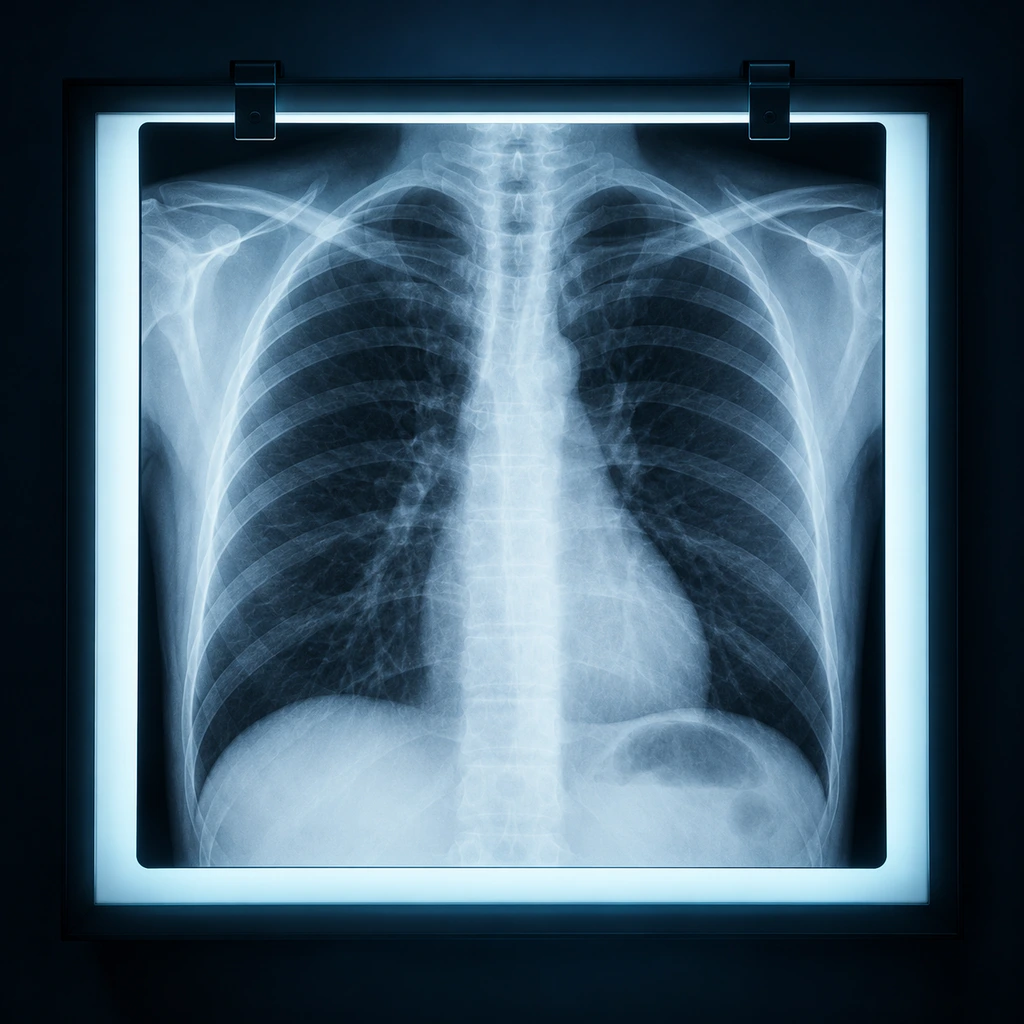
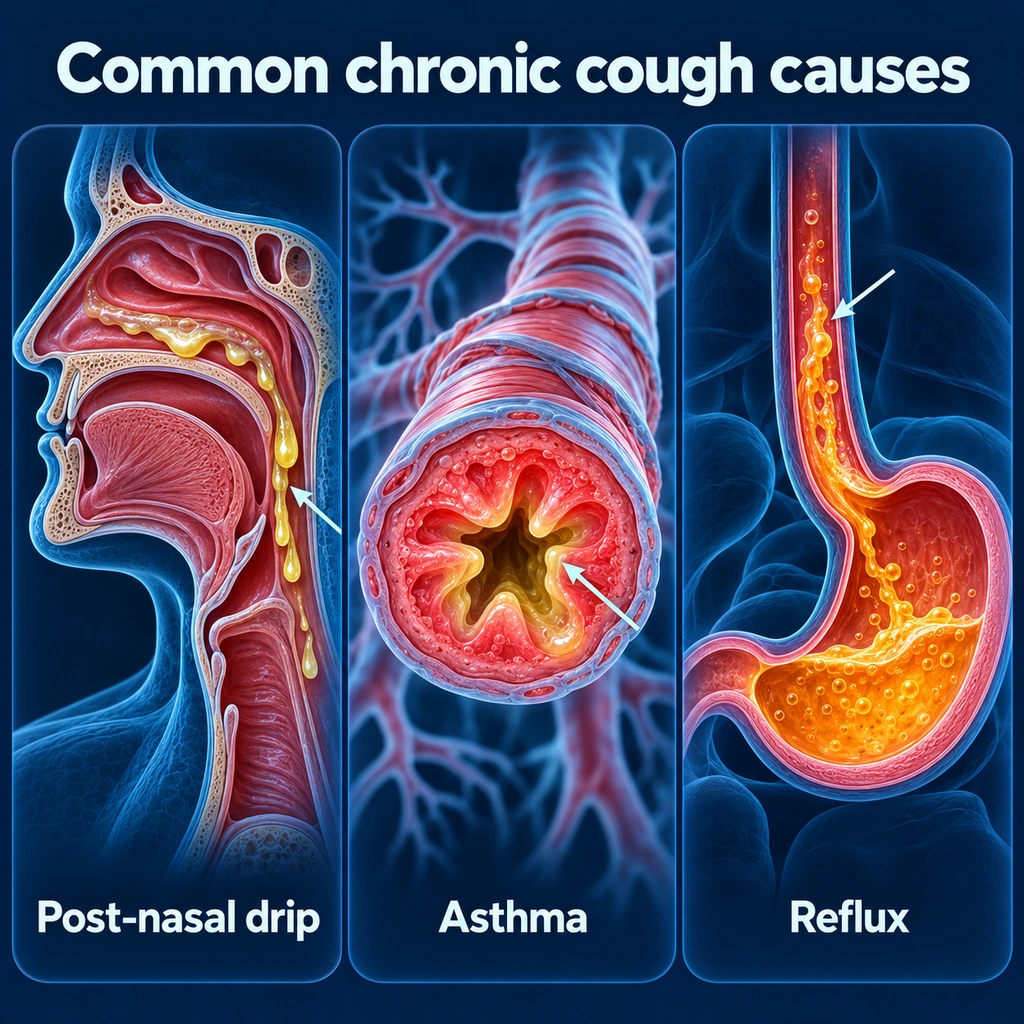
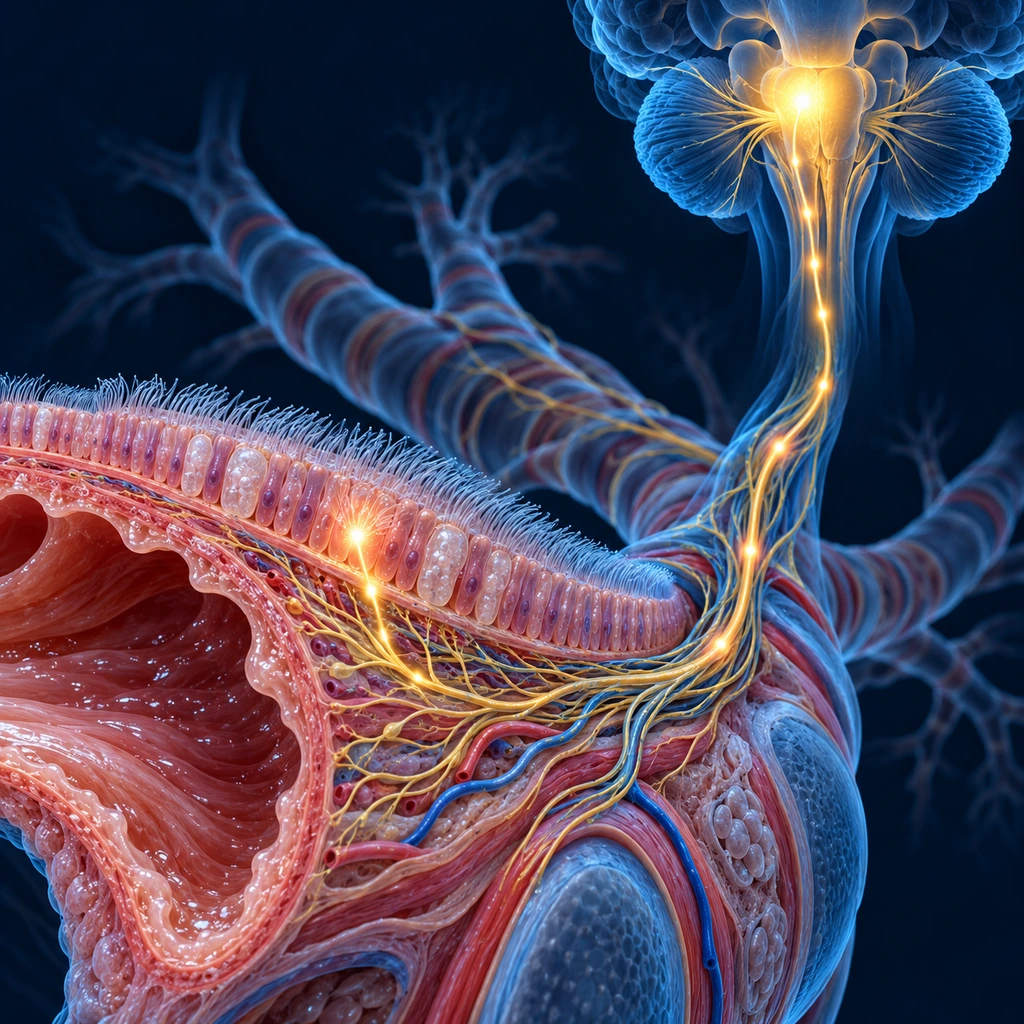
Table of Contents
Overview
Chronic cough is defined as cough lasting more than eight weeks in adults (four weeks in children). It is one of the most common reasons for outpatient visits and one of the most under-evaluated. In a non-smoker not on an angiotensin-converting enzyme inhibitor (ACE inhibitor), the "big three" account for the great majority of cases: upper-airway cough syndrome (formerly post-nasal drip), cough-variant asthma, and gastroesophageal reflux. A systematic, sequential approach can resolve symptoms in most patients, while a smaller group with cough that resists this approach has "refractory chronic cough" driven by cough-reflex hypersensitivity, and benefits from neuromodulator therapy.
Chronic cough is common: a 2025 review gives adult chronic cough “a global prevalence of approximately 10%.” The same review describes refractory chronic cough as thought to arise from nerve dysregulation involving both peripheral and central mechanisms, called cough hypersensitivity syndrome, which is typically felt as a tickle or itch in the throat that leads to an urge to cough in response to seemingly harmless stimuli.
Types of Cough
- Acute cough — less than three weeks; usually viral upper respiratory infection.
- Subacute cough — three to eight weeks; commonly post-infectious cough after a viral illness, sometimes pertussis.
- Chronic cough — more than eight weeks; what this page addresses.
- Dry vs productive — productive (mucus) suggests bronchitis, chronic obstructive pulmonary disease (COPD), bronchiectasis, infection; dry suggests asthma, reflux, post-nasal drip, interstitial lung disease (ILD), ACE-inhibitor cough.
- Daytime vs nocturnal — nocturnal cough that wakes the patient suggests asthma, gastroesophageal reflux disease (GERD), or heart failure.
- Refractory chronic cough — persistent despite treatment of identifiable causes; cough-reflex hypersensitivity is the unifying concept.
- Hemoptysis — coughing blood; always warrants evaluation.
Common Causes
- Upper-airway cough syndrome — chronic rhinitis, post-nasal drip, allergic rhinitis, sinusitis. The most common cause in non-smokers.
- Asthma and cough-variant asthma — cough is the dominant or only symptom in cough-variant asthma; spirometry may be normal between flares.
- Gastroesophageal reflux disease and laryngopharyngeal reflux (LPR) — reflux of acid or non-acid contents triggers cough through vagal reflex and direct laryngeal irritation.
- Angiotensin-converting enzyme inhibitor cough — lisinopril, enalapril, ramipril and related drugs can produce a dry cough; the 2006 American College of Chest Physicians (ACCP) guideline reports its incidence in the range of 5 to 35% among people taking these drugs. It typically resolves within 1 to 4 weeks after the drug is stopped, but can linger for up to 3 months.
- Smoking and chronic obstructive pulmonary disease — current smokers and patients with chronic bronchitis or emphysema.
- Post-infectious cough — persistent airway hyperreactivity for weeks to months after a viral or bacterial respiratory infection.
- Interstitial lung disease and pulmonary fibrosis — dry, persistent cough with progressive shortness of breath.
- Bronchiectasis and chronic infection — productive cough, often with recurrent infections; these can include non-tuberculous mycobacteria and atypical pathogens.
- Lung cancer — particularly in smokers and former smokers; new persistent cough or change in chronic cough warrants imaging.
- Heart failure — nocturnal cough, orthopnea, dyspnea on exertion, leg swelling.
- Eosinophilic bronchitis — airway eosinophilia without asthma; responds to inhaled corticosteroids.
- Foreign-body aspiration — a possible cause of any sudden-onset persistent cough, particularly in children and the cognitively impaired.
- Habit cough and tic cough — often in children and adolescents; absent during sleep.
Mechanisms
- Cough reflex — mechanical, chemical, and inflammatory stimuli activate vagal afferent nerves in the airway; signals travel to the medulla and trigger the cough motor program.
- Cough-reflex hypersensitivity — in chronic cough, the threshold for triggering cough is lowered; ordinary stimuli (cold air, talking, perfume) provoke cough.
- Inflammation — eosinophilic, neutrophilic, or mixed airway inflammation produces ongoing afferent stimulation.
- Mucus and ciliary dysfunction — excess mucus or impaired clearance triggers cough; central in chronic obstructive pulmonary disease, bronchiectasis, and cystic fibrosis.
- Reflux pathways — both micro-aspiration of refluxate and vagally mediated reflexes (esophago-bronchial) drive reflux-related cough.
Evaluation
- History — smoking, occupational exposures, angiotensin-converting enzyme inhibitor use, allergies, reflux symptoms, weight loss, fever, hemoptysis, travel, tuberculosis exposure.
- Chest X-ray — first-line imaging in any chronic cough.
- Spirometry — with bronchodilator response; methacholine challenge if normal but asthma still suspected.
- Stopping an angiotensin-converting enzyme inhibitor — in people taking one; the ACCP guideline reports that the cough typically resolves within 1 to 4 weeks after stopping, but may linger for up to 3 months.
- Empiric trial for upper-airway cough syndrome — first-generation antihistamine plus decongestant or intranasal corticosteroid for 2–3 weeks.
- Empiric trial for gastroesophageal reflux disease — proton pump inhibitor (PPI) twice daily for 8–12 weeks plus lifestyle modifications.
- Computed tomography (CT) chest — if abnormal X-ray, hemoptysis, smoking history, or no response to empiric therapy.
- Ear, nose and throat evaluation — laryngoscopy for refractory or LPR-suggestive cough.
- Esophageal pH-impedance testing — for non-acid reflux when proton pump inhibitor fails.
- Bronchoscopy — for hemoptysis, suspected foreign body, or persistent unexplained findings.
Management
- Stopping smoking — the single most effective step for people who smoke.
- Stopping angiotensin-converting enzyme inhibitors — the ACCP guideline describes stopping the drug as the only uniformly effective treatment for angiotensin-converting enzyme inhibitor cough, and reports that the incidence of cough with angiotensin-receptor blockers (ARBs), a related class of blood-pressure drugs, appears to be similar to that of the control drug.
- Treatment of upper-airway cough syndrome — intranasal corticosteroid, second-generation antihistamine for allergic rhinitis; first-generation antihistamine + decongestant for non-allergic rhinitis.
- Treatment of asthma and cough-variant asthma — inhaled corticosteroid with or without long-acting beta-agonist; leukotriene antagonist as adjunct.
- Treatment of gastroesophageal reflux disease — proton pump inhibitor, weight loss, bed-head elevation, and leaving out late meals and trigger foods; surgical fundoplication is an option in refractory cases. The 2020 European Respiratory Society (ERS) guideline describes non-acid reflux as treated with promotility agents rather than anti-acid drugs.
- Treatment of eosinophilic bronchitis — inhaled corticosteroids.
- Pulmonary rehabilitation and airway clearance — in chronic obstructive pulmonary disease, bronchiectasis, interstitial lung disease.
- Cough-suppressant neuromodulators — gabapentin, pregabalin, low-dose morphine, and the P2X3 antagonist gefapixant for refractory chronic cough. The 2020 ERS guideline states that low-dose morphine is highly effective in a subset of patients whose cough resists other treatments, and that gabapentin and pregabalin are also advocated but, in clinical experience, are limited by adverse events. In a 2012 randomised trial of 62 adults with refractory chronic cough, gabapentin (up to 1800 mg a day for 10 weeks) improved cough-specific quality of life compared with placebo (between-group difference in Leicester Cough Questionnaire score 1.80; number needed to treat 3.58); side effects, most commonly nausea and fatigue, occurred in 31% of patients on gabapentin and 10% on placebo. Gefapixant has been approved in the European Union, United Kingdom, Switzerland and Japan, but not in the United States or Canada.
- Speech-language pathology cough-suppression therapy — behavioral retraining of cough reflex, particularly for refractory chronic cough and habit cough.
- Vaccinations — influenza, pneumococcal, pertussis to reduce post-infectious cough.
P2X3 Blockers in Clinical Trials
P2X3 blockers are oral drugs that, as the 2020 ERS guideline describes them, tackle nerve hypersensitivity by blocking the excitability of the sensory (afferent) nerves at the ATP receptor P2X3. Trial results so far:
- Gefapixant (COUGH-1 and COUGH-2, 2022) — two phase 3 trials enrolled adults with refractory or unexplained chronic cough lasting a year or more (730 in COUGH-1 and 1,314 in COUGH-2). Gefapixant 45 mg twice a day lowered 24-hour cough frequency compared with placebo by 18.5% at 12 weeks in COUGH-1 and by 14.6% at 24 weeks in COUGH-2; the 15 mg twice-a-day dose did not show a significant reduction in either trial. The most common side effects were taste changes: altered taste (dysgeusia) in 16.2% and 21.1% of participants and loss of taste (ageusia) in 4.9% and 6.5%. The authors described it as the first treatment to show efficacy with an acceptable safety profile in phase 3 trials for refractory or unexplained chronic cough.
- Five P2X3 blockers compared (2024) — a network meta-analysis of 16 randomised trials with 4,904 participants compared gefapixant, sivopixant, eliapixant, camlipixant and filapixant. Placebo alone gave a mean 33.1% reduction in 24-hour cough frequency. At its median effective dose, gefapixant showed the largest anti-cough effect (median 28.1% reduction in 24-hour cough frequency) but also the most taste disturbance (absolute risk difference of 38 per 100 patients) and the most discontinuation; camlipixant showed a median 14.7% reduction with a taste-disturbance risk difference of 2 per 100 patients. The authors noted that phase III trials of camlipixant were under way.
- Camlipixant (SOOTHE, 2025) — in this phase 2b trial, 310 adults with refractory chronic cough lasting a year or more were given camlipixant 12.5, 50 or 200 mg twice daily or placebo for 4 weeks. Compared with placebo, 24-hour cough frequency fell by 34.4% on 50 mg and 34.2% on 200 mg. Taste alteration occurred in 4.8–6.5% of patients on camlipixant versus 0% on placebo, and no serious treatment-emergent adverse events were reported.
When to Seek Medical Care
- Coughing up blood (any amount).
- Unintentional weight loss, drenching night sweats, or persistent fever.
- Progressive shortness of breath or chest pain with cough.
- New cough in a current or former smoker over 40.
- Cough lasting more than eight weeks not responding to standard therapy.
- Hoarseness or voice change persisting more than 2–3 weeks.
- Cough with leg swelling, orthopnea (consider heart failure).
- Known tuberculosis exposure or recent travel to endemic areas.
Connections
- All Symptoms
- Asthma
- Chronic Obstructive Pulmonary Disease
- Interstitial Lung Disease
- Gastroesophageal Reflux Disease
- Heart Failure
- Influenza
- Allergies
- Pneumonia
- Pulmonary Embolism
- Reflux
- Shortness of Breath
- Chest Pain
- Sinusitis
- Cystic Fibrosis
- Mold Mycotoxins
- Sore Throat
- Herbs covered on this site that discuss this condition: Coltsfoot · Baheda (Terminalia bellirica) · Lungwort · Plantain (Herb) · Star Anise (Illicium verum)
Key Research Papers
Historical Background
The systematic study of chronic cough began with Irwin's 1981 anatomic-diagnostic protocol, which established the "big three" etiologies and a sequential approach. The European Respiratory Society and American College of Chest Physicians have since published a series of guidelines, and the conceptual framework has shifted from "identify the cause" to "identify the cough hypersensitivity phenotype." In 2022 the oral P2X3 receptor antagonist gefapixant became the first treatment to show efficacy with an acceptable safety profile in phase 3 trials for refractory chronic cough; a 2025 review reports it approved in the European Union, United Kingdom, Switzerland and Japan, though not in the United States or Canada.
Key Research Papers
- Irwin RS, Corrao WM, Pratter MR. Chronic persistent cough in the adult: the spectrum and frequency of causes and successful outcome of specific therapy. American Review of Respiratory Disease. 1981;123(4 Pt 1):413-417. — PubMed PMID: 7224353
- Morice AH, Millqvist E, Bieksiene K, et al. ERS guidelines on the diagnosis and treatment of chronic cough in adults and children. European Respiratory Journal. 2020;55(1):1901136. — doi:10.1183/13993003.01136-2019
- Irwin RS, Baumann MH, Bolser DC, et al. Diagnosis and management of cough: ACCP evidence-based clinical practice guidelines. Chest. 2006;129(1 Suppl):1S-23S. — doi:10.1378/chest.129.1_suppl.1S
- McGarvey LP, Birring SS, Morice AH, et al. Efficacy and safety of gefapixant, a P2X3 receptor antagonist, in refractory chronic cough and unexplained chronic cough (COUGH-1 and COUGH-2). The Lancet. 2022;399(10328):909-923. — doi:10.1016/s0140-6736(21)02348-5
- Chung KF, McGarvey L, Mazzone SB. Chronic cough as a neuropathic disorder. Lancet Respiratory Medicine. 2013;1(5):414-422. — doi:10.1016/s2213-2600(13)70043-2
- Pratter MR. Chronic upper airway cough syndrome secondary to rhinosinus diseases (previously referred to as postnasal drip syndrome): ACCP evidence-based clinical practice guidelines. Chest. 2006;129(1 Suppl):63S-71S. — doi:10.1378/chest.129.1_suppl.63S
- Dicpinigaitis PV. Chronic cough due to asthma: ACCP evidence-based clinical practice guidelines. Chest. 2006;129(1 Suppl):75S-79S. — doi:10.1378/chest.129.1_suppl.75S
- Irwin RS. Chronic cough due to gastroesophageal reflux disease. Chest. 2006;129(1 Suppl):80S-94S. — doi:10.1378/chest.129.1_suppl.80S
- Vertigan AE, Theodoros DG, Gibson PG, Winkworth AL. Efficacy of speech pathology management for chronic cough: a randomised placebo-controlled trial. Thorax. 2006;61(12):1065-1069. — doi:10.1136/thx.2006.064337
- Ryan NM, Birring SS, Gibson PG. Gabapentin for refractory chronic cough: a randomised, double-blind, placebo-controlled trial. The Lancet. 2012;380(9853):1583-1589. — doi:10.1016/S0140-6736(12)60776-4
- Dicpinigaitis PV. Angiotensin-converting enzyme inhibitor-induced cough: ACCP evidence-based clinical practice guidelines. Chest. 2006;129(1 Suppl):169S-173S. — doi:10.1378/chest.129.1_suppl.169S
- Peters AT, Altman KW, Dicpinigaitis P, et al. Therapeutic and mechanistic advances in chronic cough. Annals of Allergy, Asthma & Immunology. 2025;134(6):639-648. — doi:10.1016/j.anai.2024.12.021
- Yamamoto S, Horita N, Hara J, et al. Benefit-Risk Profile of P2X3 Receptor Antagonists for Treatment of Chronic Cough: Dose-Response Model-Based Network Meta-Analysis. Chest. 2024;166(5):1124-1140. — doi:10.1016/j.chest.2024.05.015
- Smith JA, Birring SS, Blaiss MS, et al. Camlipixant in Refractory Chronic Cough: A Phase 2b, Randomized, Placebo-controlled Trial (SOOTHE). American Journal of Respiratory and Critical Care Medicine. 2025;211(6):1038-1048. — doi:10.1164/rccm.202409-1752OC
PubMed Topic Searches
Featured Videos
