Trypanosoma: African Sleeping Sickness and Chagas Disease
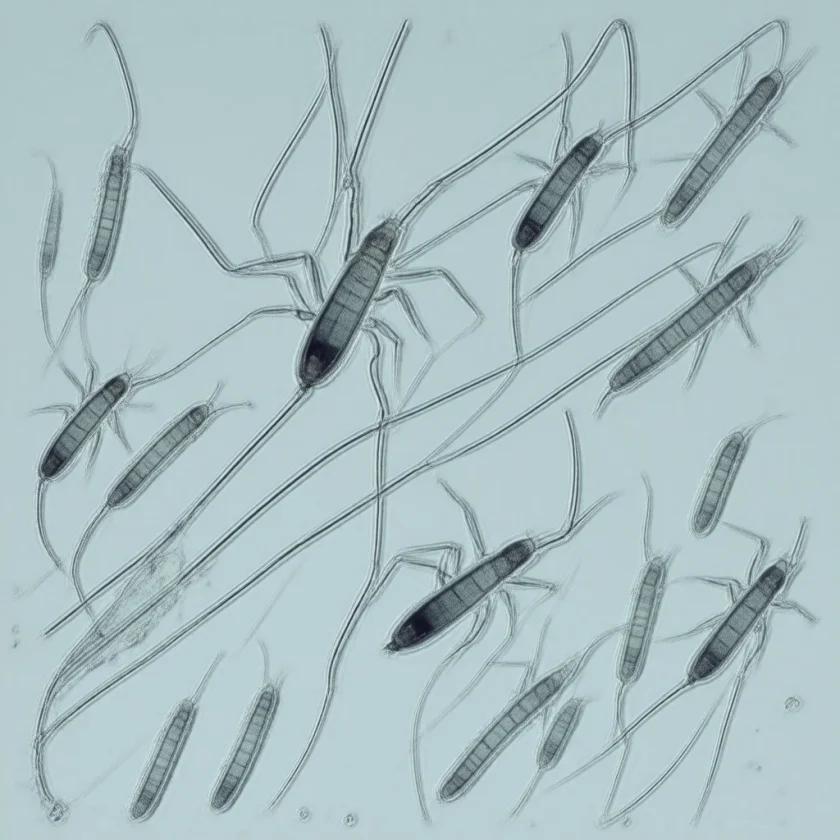
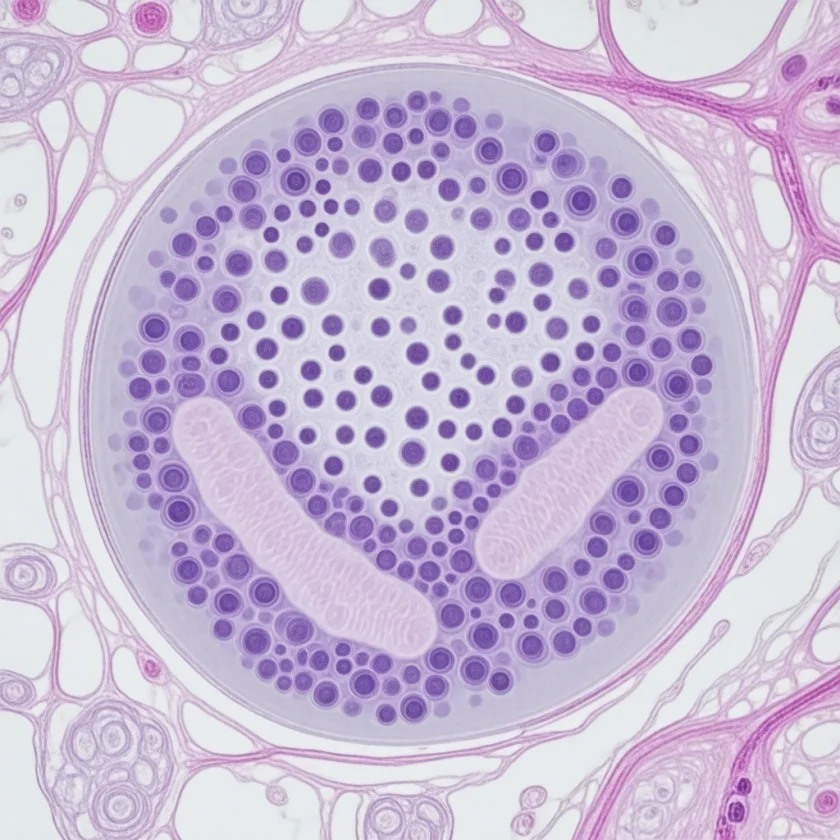
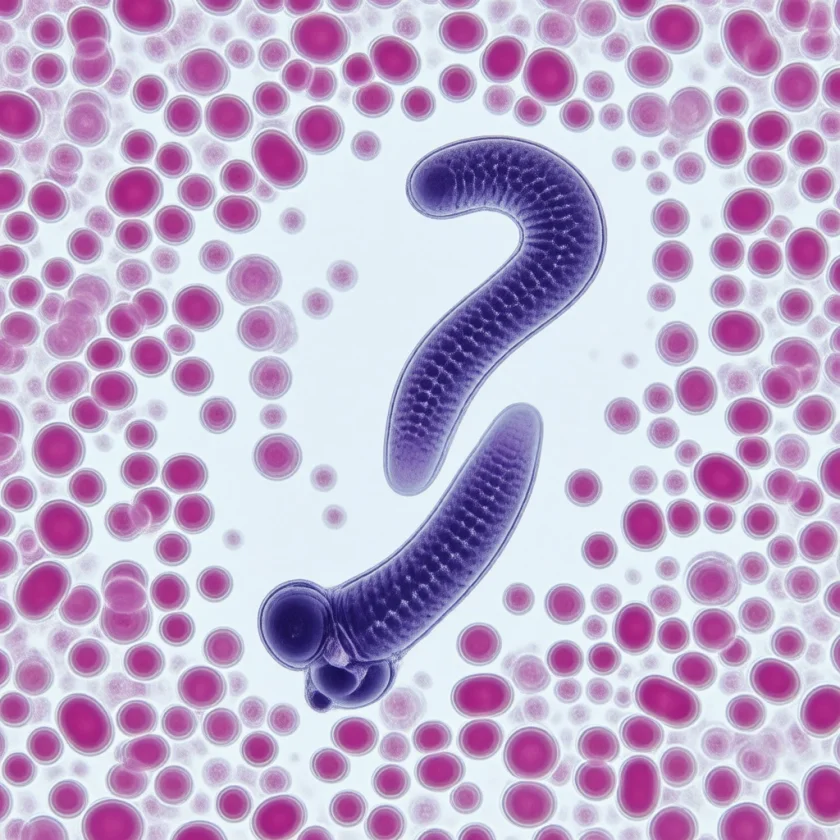
Two Trypanosoma species cause entirely different diseases: T. brucei causes African sleeping sickness (progressive neurological destruction, coma, and death if untreated), while T. cruzi causes Chagas disease (heart failure and megacolon, prevalent across Latin America and increasingly in the US via immigration). Together these parasites infect millions of people worldwide and rank among the most neglected tropical diseases.
Table of Contents
1. What Trypanosoma Is
Trypanosoma is a genus of single-celled protozoan parasites belonging to the order Kinetoplastida, named for the distinctive kinetoplast — a dense mass of mitochondrial DNA visible under the microscope. These flagellated parasites live in the bloodstream and tissues of vertebrate hosts and require an insect vector to complete their life cycle.
Two species are responsible for all human disease. Trypanosoma brucei — transmitted by the tsetse fly in sub-Saharan Africa — causes human African trypanosomiasis (HAT), commonly called sleeping sickness. Trypanosoma cruzi — transmitted by triatomine bugs in the Americas — causes Chagas disease. The two diseases differ profoundly in their biology, clinical course, and geographic distribution, but both share a remarkable ability to evade the immune system and establish prolonged infection.
Globally, an estimated 65 million people are at risk of sleeping sickness in Africa, and Chagas disease affects roughly 6–7 million people across Latin America, with hundreds of thousands of infected immigrants now living in the United States and Europe.
2. African Sleeping Sickness (T. brucei)
Human African trypanosomiasis is caused by two subspecies. T. brucei gambiense accounts for over 90% of cases and causes a slowly progressive chronic disease over months to years, concentrated in West and Central Africa. T. brucei rhodesiense causes a rapidly fatal acute disease in East Africa, with death possible within weeks if untreated.
After a tsetse fly bite inoculates parasites into the skin, they multiply locally, causing a painful swelling called a chancre at the bite site. Within days to weeks, parasites enter the bloodstream and lymphatics — the first stage (hemolymphatic stage). Fever, headaches, joint pain, and swollen lymph nodes — particularly the posterior cervical nodes, called Winterbottom's sign — are characteristic.
A key feature of T. brucei is its extraordinary ability to evade immunity through antigenic variation. The parasite continuously switches its surface coat protein (variant surface glycoprotein, VSG), presenting a new antigen before the immune system can mount an effective response. This allows persistent infection despite an active immune response and produces the characteristic waves of fever associated with waves of parasitemia.
3. The Tsetse Fly
Tsetse flies of the genus Glossina are the sole vectors of T. brucei. Unlike mosquitoes, both male and female tsetse flies take blood meals, and both can transmit the parasite. Tsetse flies inhabit sub-Saharan Africa, particularly near rivers, lakes, and dense vegetation, and they are active during the day.
When a tsetse fly bites an infected human or animal reservoir, it ingests bloodstream trypomastigotes. These parasites undergo a complex developmental cycle inside the fly over two to three weeks, eventually migrating to the salivary glands as infective metacyclic trypomastigotes, which are then transmitted to the next host during a blood meal.
Animals — particularly cattle, wild game, and pigs — serve as important reservoir hosts for T. brucei rhodesiense. People in agricultural communities who work near game parks or water bodies are at highest risk. Control programs have historically combined insecticide-treated targets (blue-and-black panels that attract tsetse flies) with population screening and treatment.
4. Neurological Stage and Coma
If untreated, T. brucei inevitably crosses the blood-brain barrier and enters the central nervous system — the meningoencephalitic stage (stage 2). This transition marks a dramatic worsening of the disease.
Neurological symptoms include severe headaches, personality changes, confusion, psychosis, and sensory disturbances. The hallmark symptom is disruption of the sleep-wake cycle: patients experience daytime somnolence with nighttime insomnia (not simply excessive sleep), leading to the name "sleeping sickness." As the disease progresses, tremors, ataxia, seizures, and deep coma follow. Without treatment, stage 2 sleeping sickness is uniformly fatal.
The distinction between stage 1 and stage 2 is critical because the drugs used in each stage differ. Stage 2 requires agents that penetrate the blood-brain barrier, which traditionally meant the highly toxic arsenic derivative melarsoprol. In recent years, the oral drug fexinidazole and combination therapy (NECT: nifurtimox-eflornithine) have transformed treatment of gambiense HAT, dramatically reducing toxicity.
5. Chagas Disease (T. cruzi)
Chagas disease, named after Brazilian physician Carlos Chagas who first described it in 1909, is caused by T. cruzi. It has two distinct phases. The acute phase occurs immediately after infection and lasts weeks to months: most people have no or mild symptoms (fever, malaise, swelling at the inoculation site called a chagoma), but a small percentage develop life-threatening myocarditis or meningoencephalitis.
One distinctive sign of acute Chagas disease is Roña's sign (Roña's oedema) — painless swelling of the eyelid when the conjunctiva is the entry site. After the acute phase, the great majority of people enter the chronic indeterminate phase: they test positive for T. cruzi antibodies but have no symptoms and a normal heart on ECG and echocardiogram. About 20–30% will eventually develop chronic symptomatic Chagas disease over decades.
6. The Kissing Bug
Triatomine bugs (family Reduviidae) — known as "kissing bugs" because they often bite around the mouth and eyes while people sleep — are the primary vectors of T. cruzi. Over 100 triatomine species exist; those of the genera Triatoma, Rhodnius, and Panstrongylus are medically important.
Transmission occurs not through the bite itself but through fecal contamination. After the bug feeds, it defecates near the bite wound. The parasite-containing feces are rubbed into the wound or mucous membrane when the person scratches. This indirect fecal-oral mechanism means the bite alone is insufficient for transmission — an important distinction from tsetse fly transmission.
Beyond vector transmission, T. cruzi also spreads through blood transfusion, organ transplantation, congenital transmission (mother to fetus), consumption of food contaminated with triatomine feces, and rarely through laboratory accidents. In the United States, congenital transmission and blood product transmission are the main concerns, since kissing bugs and endemic transmission are limited primarily to rural Latin America.
7. Chronic Chagas — Heart and GI Damage
The most feared complication of Chagas disease is Chagas cardiomyopathy. Decades after initial infection, the heart muscle deteriorates, causing dilated cardiomyopathy, arrhythmias, heart block, and apical aneurysms. Sudden cardiac death — from ventricular fibrillation in a previously ambulatory person — is a hallmark of the disease. Heart failure follows in a significant proportion, and some patients require pacemakers or defibrillators.
Gastrointestinal Chagas disease affects roughly 10% of chronic cases. The parasite destroys the myenteric (Auerbach's) plexus — the network of nerves that controls gut motility — producing megaesophagus (difficulty swallowing, regurgitation, aspiration) and megacolon (severe constipation, obstruction, toxic megacolon). These complications are anatomically dramatic and may require surgical intervention.
The pathogenesis of chronic disease is believed to involve both persistent parasites in cardiac and gut tissues and autoimmune damage triggered by molecular mimicry. T. cruzi shares antigens with cardiac myosin, and the immune response may attack heart tissue even in the absence of ongoing parasitemia.
8. Diagnosis and Treatment
Sleeping sickness is diagnosed by demonstrating parasites in blood, lymph node aspirates, or cerebrospinal fluid (CSF). The card agglutination test for trypanosomiasis (CATT) is a field-deployable serological screening tool. CSF examination is mandatory to determine disease stage: elevated white cells (>5 cells/μL) or detection of parasites in CSF indicates stage 2.
Stage 1 gambiense HAT is now treated with fexinidazole (oral, 10-day course), a milestone in neglected tropical disease therapy. Stage 2 is treated with NECT (nifurtimox + eflornithine) or fexinidazole for appropriate patients. Rhodesiense HAT stage 1 uses suramin; stage 2 still requires melarsoprol (an arsenical with a 5% risk of reactive encephalopathy).
Chagas disease diagnosis in the chronic phase relies on serology (ELISA, indirect hemagglutination, immunofluorescence) — two concordant tests from different platforms are required for confirmation. In the acute phase, direct microscopy of blood finds trypomastigotes.
Treatment of Chagas disease uses benznidazole or nifurtimox. Both are most effective when given during the acute phase; they clear parasitemia and may prevent or delay chronic disease. In the chronic phase, treatment remains controversial: the BENEFIT trial (2015) showed benznidazole did not reduce cardiac events in patients with established cardiomyopathy, though it did reduce parasitemia. Current guidelines recommend treatment for all acute and congenital cases, for children under 18 with chronic infection, and for immunocompromised patients.
Key Research Papers
Landmark studies and reviews on Trypanosoma biology, epidemiology, and treatment.
- Barrett MP, Burchmore RJ, Stich A, et al. The trypanosomiases. The Lancet. 2003;362(9394):1469–1480. Find on PubMed
- Simarro PP, Cecchi G, Franco JR, et al. Estimating and Mapping the Population at Risk of Sleeping Sickness. PLOS Neglected Tropical Diseases. 2012;6(10):e1859. — doi:10.1371/journal.pntd.0001859
- Rassi A Jr, Rassi A, Marin-Neto JA. Chagas disease. The Lancet. [PubMed PMID: 20399979]. — Search PubMed
- Morillo CA, Marin-Neto JA, Avezum A, et al. Randomized Trial of Benznidazole for Chronic Chagas Cardiomyopathy (BENEFIT). New England Journal of Medicine. 2015;373(14):1295–1306. [PubMed PubMed PMID: 26323937]. — PubMed PMID: 26323937
- Buscher P, Cecchi G, Jamonneau V, Priotto G. Human African trypanosomiasis. The Lancet. [PubMed PMID: 40288400]. — Search PubMed