Angiostrongylus (Rat Lungworm)
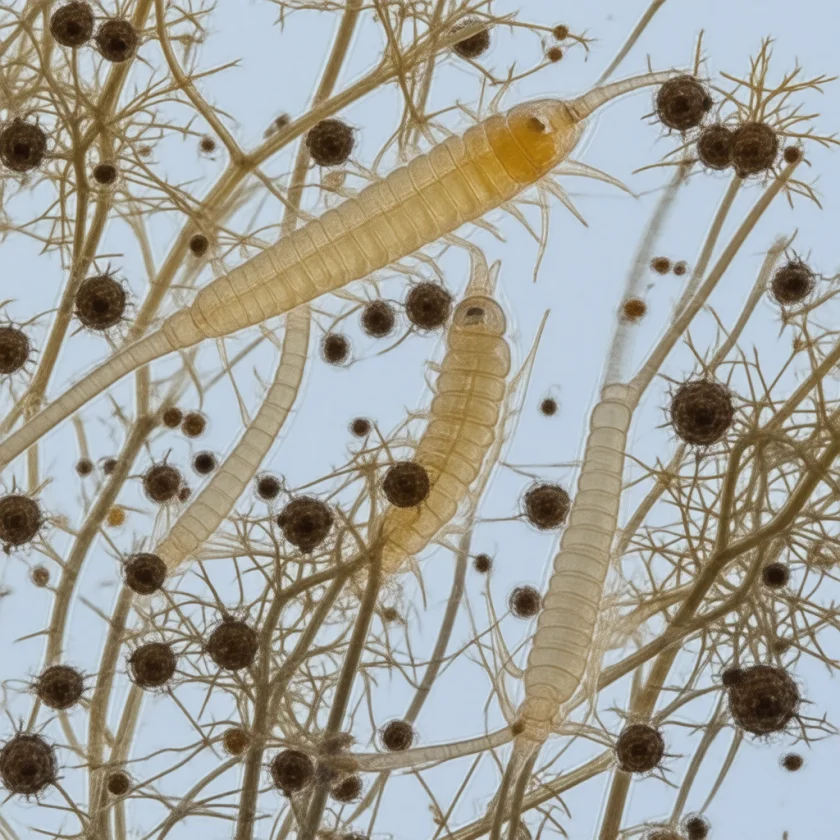
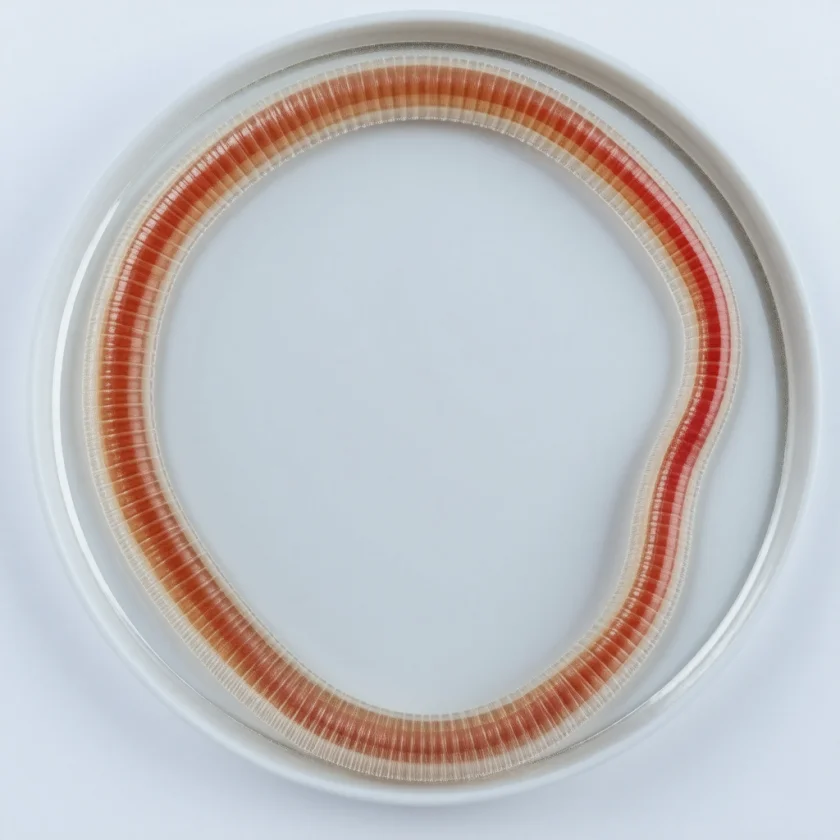
Angiostrongylus cantonensis — commonly called the rat lungworm — is a small parasitic roundworm with an unusual and unsettling habit: when it infects a person by mistake, its larvae travel to the brain. It is the leading infectious cause of eosinophilic meningitis worldwide, an inflammation of the lining around the brain and spinal cord driven by a flood of a particular white blood cell, the eosinophil. The parasite is long established across Southeast Asia and the Pacific islands, is well known in Hawaii, and has been steadily expanding its range — including into the southern United States. The good news, and it is real, is that most people who get infected recover on their own over a few weeks; the honest caution is that a minority become severely ill, and rare cases have been fatal. This page explains what the worm is, how its life cycle loops through rats and snails, how people get infected, what the illness feels like, and how it is diagnosed, treated, and — most importantly — prevented.
Table of Contents
Overview
Angiostrongylus cantonensis is a nematode — a roundworm — whose adult stage naturally lives in the lung arteries of rats. Humans are not part of its plan. When a person accidentally swallows the worm's infective larvae, those larvae behave as they would in a rat: they head for the brain. But a human brain is a dead end. The larvae cannot finish growing up, cannot reproduce, and eventually die there. It is precisely their dying — and the immune storm the body raises against them — that produces the illness.
That illness is eosinophilic meningitis, and A. cantonensis is its single most common infectious cause around the world. "Eosinophilic" refers to the eosinophils, immune cells the body deploys against parasites; in this infection they pour into the fluid around the brain and spinal cord. The result is a severe headache, a stiff neck, and often strange skin sensations. The medical name for the human disease is neuroangiostrongyliasis, though in everyday conversation it is simply "rat lungworm disease."
A second point worth stating plainly: for most people, this is a self-limited illness. The worms die, the inflammation gradually settles, and recovery follows over weeks. That does not make it trivial — the headaches can be among the worst a person ever experiences, and heavy infections, especially in young children, can be dangerous. But it is not usually a chronic, lifelong parasite the way some others are. Understanding the life cycle explains both why it happens and why it usually ends on its own.
The Parasite & Life Cycle
The natural cycle of the rat lungworm runs between two animals: rats and snails or slugs. Neither one is optional, and humans are simply an unlucky bystander who steps into the loop.
The cycle begins in the rat, the parasite's definitive host — the animal in which the worm reaches adulthood and reproduces. Adult worms live in the rat's pulmonary arteries, the blood vessels feeding the lungs. There the females lay eggs, which hatch into first-stage larvae. These young larvae make a remarkable journey: they break into the airways, are coughed up, swallowed, and finally passed out in the rat's droppings.
Now the second animal is needed. Snails and slugs — the intermediate hosts — crawl over or eat the contaminated rat feces and take up the larvae. Inside the snail or slug, the larvae mature into their third stage, the form that is infective to mammals. When a rat eats an infected snail or slug, the cycle closes: the third-stage larvae travel to the rat's brain, develop further, and then move on to the lung arteries to become the next generation of adults.
Humans, and also some other animals, enter this loop only by swallowing that infective third-stage larva — from a snail, a slug, or a so-called paratenic (transport) host. Paratenic hosts are creatures that eat infected snails or slugs and carry the larvae in their tissues without changing them, such as freshwater prawns and shrimp, land crabs, frogs, and flatworms (planarians). In a person, the larvae do exactly what they do in a rat — they migrate toward the brain — but here the story stops. The human is a dead-end host: the worms cannot mature or breed, they die in the nervous system, and the person cannot pass the infection to anyone else.
How People Get It
People do not catch rat lungworm from another person, from casual contact, or from the air. Every human infection comes down to swallowing an infective larva, and there are a handful of everyday ways that happens.
- Eating raw or undercooked snails or slugs. This is the classic route, whether the snails are gathered as food, eaten as a folk remedy, or consumed on a bet. Some outbreaks have been traced to raw snail dishes eaten deliberately.
- Eating raw or undercooked paratenic hosts. Freshwater prawns and shrimp, land crabs, and frogs can all carry the larvae in their flesh if they have fed on infected snails or slugs. Raw or lightly pickled versions of these have caused human cases.
- Contaminated raw produce. A tiny slug, a snail, or the slime trail either leaves behind on unwashed leafy greens, herbs, or vegetables can carry larvae. Someone eating a salad may never see the culprit. Homemade fresh vegetable juices have also been implicated.
- Children and accidental swallowing. Young children exploring the garden sometimes put slugs or snails in their mouths, and there are documented cases of teenagers or adults swallowing a slug on a dare — occasionally with severe consequences.
The common thread is raw. Thorough cooking destroys the larvae. Most infections trace back to something eaten raw, half-raw, or unwashed — which is also exactly why this disease is so preventable.
Symptoms & Disease
Symptoms usually begin one to three weeks after exposure (occasionally sooner or later), a gap long enough that many people no longer connect the illness to a meal or a snail. The hallmark is the meningitis: as the larvae move through the brain and spinal cord and then die, the body mounts an intense eosinophilic reaction against them, and the lining around the brain becomes inflamed.
The most common complaints are:
- Severe headache — often described as the worst of a person's life, throbbing and unrelenting, and frequently the dominant symptom.
- Neck stiffness and pain on bending the neck, the classic sign of meningeal irritation.
- Tingling, prickling, or painful skin (paresthesias and hypersensitivity) — a somewhat characteristic feature in which the skin becomes strangely sensitive or crawls with abnormal sensations.
- Nausea and vomiting, sometimes with a low-grade fever.
Less often, the infection reaches the eyes or specific nerves. Ocular involvement can occur when a larva migrates into the eye, causing visual disturbance; cranial-nerve problems, such as a drooping or weakened facial muscle, reflect larvae or inflammation affecting the nerves at the base of the brain.
Here is the honest balance of the disease. In most people it is self-limited: over a span of weeks the larvae die, the inflammation subsides, and health returns, sometimes after more than one rough week. But the course can be severe — heavy infections, and infections in young children, can lead to confusion, weakness, seizures, coma, lasting neurological damage, or, rarely, death. The severity tends to track how many larvae were swallowed. So the reassuring rule ("most recover") and the serious caution ("some do not") are both true at once, which is why medical evaluation matters whenever this infection is suspected.
Who's at Risk & Geography
Anyone who swallows an infective larva can be infected, but risk clusters around diet and place. People most likely to be exposed include those who eat raw or undercooked snails, slugs, freshwater prawns, land crabs, or frogs; gardeners and produce-eaters in areas where infected snails and slugs are common; young children who mouth garden creatures; and travelers who sample raw local delicacies in endemic regions.
Geographically, A. cantonensis is deeply established across Southeast Asia (Thailand, Taiwan, and neighboring countries), southern China, and the Pacific islands, including Hawaii, where rat lungworm disease is a recognized public-health concern. Over the past several decades the parasite has spread far beyond that historic range, carried by rats and by invasive snails and slugs. It is now reported in parts of Australia, the Caribbean, Brazil and other parts of the Americas, Africa, and — of note for readers in the United States — the southern US, where infected rats and snails have been found in Gulf Coast and southeastern states. The spread is linked in part to invasive species such as the giant African land snail. In short, this is a warm-climate parasite whose map is expanding, not shrinking.
Diagnosis
Diagnosing rat lungworm disease is a matter of putting two things together: the right clues in the spinal fluid and a plausible exposure. The worm itself is rarely caught in the act, so doctors reason from the pattern.
The central test is a lumbar puncture (spinal tap) to examine the cerebrospinal fluid, the clear fluid bathing the brain and spinal cord. In this infection the fluid shows eosinophilic pleocytosis — an abnormal number of white cells, an unusually high share of which are eosinophils (generally defined as at least 10 percent eosinophils in the fluid). Because so few conditions cause eosinophils to surge into the spinal fluid, this finding is a strong pointer toward a parasitic cause. The pressure of the fluid is often raised, which is part of why the headache is so severe.
A convincing exposure history supports the picture: recent raw snails or slugs, undercooked prawns or crabs, unwashed greens, or travel to an endemic area. Where available, a PCR test that detects the parasite's DNA in the spinal fluid can confirm the diagnosis directly and is the most specific tool; specialized reference laboratories, including the US CDC, offer it. Antibody (serology) tests exist but are less reliable and less standardized. Imaging, such as an MRI of the brain, is often done to look for inflammation and to rule out other problems, though its findings in this disease are frequently nonspecific. Only occasionally is an actual larva seen — most memorably when one is spotted in the eye.
Treatment
There is no simple "take this pill and the parasite is gone" cure, and the reason is biological: the larvae are already dying in the brain, and much of the damage comes from the inflammation around them rather than from the living worm. So treatment centers on supportive care — calming the inflammation and controlling symptoms — while the illness runs its course.
The mainstays are:
- Pain control. The headache can be extreme and deserves careful, adequate management.
- Repeated therapeutic lumbar punctures. Draining a little spinal fluid lowers the raised pressure and can bring striking, if temporary, relief of the headache. This may be repeated as needed.
- Corticosteroids. Anti-inflammatory steroids, typically prednisolone, are used to quiet the eosinophilic inflammation. Randomized trials from Thailand found that a two-week course of prednisolone shortened the duration of headache, and steroids have become a common part of care for more than mild cases.
The genuinely debated question is whether to add an anti-parasitic (anthelmintic) drug such as albendazole. The concern is real and worth understanding: killing the worms quickly can release more of their material and worsen the inflammation, potentially making the person sicker for a time. Some studies have paired albendazole with a steroid to blunt that reaction; one randomized trial comparing prednisolone plus albendazole against prednisolone alone found the outcomes broadly similar, without a clear advantage from adding the anti-parasitic. Practice therefore varies from place to place and from patient to patient, and specialists weigh the possible benefit against the risk of a flare. The honest summary is that the role of anti-parasitic drugs remains unsettled, that any decision to use them belongs with an experienced clinician, and that supportive care plus corticosteroids is the widely shared foundation of treatment.
Prevention
This is a disease that prevention can very nearly erase, because every infection starts with something swallowed. A few practical habits cover almost all of the risk.
- Never eat raw or undercooked snails, slugs, freshwater prawns or shrimp, land crabs, or frogs. Cook them thoroughly — heat reliably kills the larvae. Treat "lightly pickled" or "marinated but not cooked" as raw.
- Wash produce thoroughly. Rinse leafy greens, herbs, and vegetables well under running water and inspect them, since a hidden slug, snail, or slime trail is the danger. When in doubt about produce from a high-risk area, cooking it removes the risk entirely.
- Supervise young children in gardens and outdoors, and teach them not to put snails or slugs in their mouths. Discourage the "eat a slug on a dare" stunt — it has caused tragedy.
- Control snails and slugs around the home and garden, keep rat populations down, and store produce where snails and slugs cannot reach it.
- Wash hands after gardening or handling snails, slugs, or freshwater shellfish, and before preparing or eating food.
None of this requires special equipment or expense — just the habit of cooking the right foods and washing the rest. For travelers to endemic regions, the simplest rule is the safest: enjoy local food, but be cautious with anything raw that could hide a snail, a slug, or their traces.
Key Research Papers
Peer-reviewed reviews, outbreak investigations, and treatment trials on Angiostrongylus cantonensis and the eosinophilic meningitis it causes — covering the parasite's biology and spread, how the disease presents and is diagnosed, and what the evidence says about corticosteroids and anti-parasitic drugs. Journal names appear as plain text; the year/volume/pages link opens the full citation via DOI.
- Wang QP, Lai DH, Zhu XQ, Chen XG, Lun ZR. Human angiostrongyliasis. The Lancet Infectious Diseases. 2008;8(10):621–630. — A landmark review of the human disease, its global spread, and clinical features. — doi:10.1016/S1473-3099(08)70229-9
- Barratt J, Chan D, Sandaradura I, Malik R, Spielman D, Lee R, et al. Angiostrongylus cantonensis: a review of its distribution, molecular biology and clinical significance as a human pathogen. Parasitology. 2016;143(9):1087–1118. — A broad synthesis of the parasite's biology, genetics, and worldwide range. — doi:10.1017/S0031182016000652
- Graeff-Teixeira C, da Silva ACA, Yoshimura K. Update on Eosinophilic Meningoencephalitis and Its Clinical Relevance. Clinical Microbiology Reviews. 2009;22(2):322–348. — Reviews the causes, mechanisms, and management of eosinophilic meningitis, with rat lungworm at the center. — doi:10.1128/CMR.00044-08
- Martins YC, Tanowitz HB, Kazacos KR. Central nervous system manifestations of Angiostrongylus cantonensis infection. Acta Tropica. 2015;141(Pt A):46–53. — Focuses on how the infection affects the brain and spinal cord and how it is recognized. — doi:10.1016/j.actatropica.2014.10.002
- Ansdell V, Wattanagoon Y. Angiostrongylus cantonensis in travelers: clinical manifestations, diagnosis, and treatment. Current Opinion in Infectious Diseases. 2018;31(5):399–408. — A practical review aimed at travel- and infection-medicine, including treatment approaches. — doi:10.1097/QCO.0000000000000481
- Slom TJ, Cortese MM, Gerber SI, Jones RC, Holtz TH, Lopez AS, et al. An Outbreak of Eosinophilic Meningitis Caused by Angiostrongylus cantonensis in Travelers Returning from the Caribbean. New England Journal of Medicine. 2002;346(9):668–675. — Documented an outbreak among tourists, showing how travel and raw food spread the disease. — doi:10.1056/NEJMoa012462
- Diaz JH. Recognizing and Reducing the Risks of Helminthic Eosinophilic Meningitis in Travelers: Differential Diagnosis, Disease Management, Prevention, and Control. Journal of Travel Medicine. 2009;16(4):267–275. — A prevention-focused overview for travelers and clinicians. — doi:10.1111/j.1708-8305.2009.00305.x
- Punyagupta S, Juttijudata P, Bunnag T. Eosinophilic Meningitis in Thailand: Clinical Studies of 484 Typical Cases Probably Caused by Angiostrongylus cantonensis. The American Journal of Tropical Medicine and Hygiene. 1975;24(6):921–931. — A classic large case series that defined the clinical picture of the disease. — doi:10.4269/ajtmh.1975.24.921
- Chotmongkol V, Kittimongkolma S, Niwattayakul K, Intapan PM, Thavornpitak Y. Comparison of Prednisolone Plus Albendazole with Prednisolone Alone for Treatment of Patients with Eosinophilic Meningitis. The American Journal of Tropical Medicine and Hygiene. 2009;81(3):443–445. — A randomized trial informing the debate over adding an anti-parasitic drug to steroids. — doi:10.4269/ajtmh.2009.81.443
- McAuliffe L, Fortin Ensign S, Larson D, Bavaro M, Yetto J, Cathey M, et al. Severe CNS angiostrongyliasis in a young marine: a case report and literature review. The Lancet Infectious Diseases. 2019;19(4):e132–e142. — A detailed severe case with a review of diagnosis and management. — doi:10.1016/S1473-3099(18)30434-1
PubMed Topic Searches
Each link opens a live PubMed query so results stay current as new papers are indexed.
- PubMed: Angiostrongylus cantonensis rat lungworm
- PubMed: Eosinophilic meningitis Angiostrongylus
- PubMed: Neuroangiostrongyliasis
- PubMed: Life cycle: snail and slug hosts
- PubMed: Angiostrongylus in Hawaii
- PubMed: Spread in the southern United States
- PubMed: Treatment: corticosteroids and albendazole
- PubMed: PCR diagnosis in spinal fluid