Lyme Disease Symptoms — Three Stages of Borrelia burgdorferi Infection
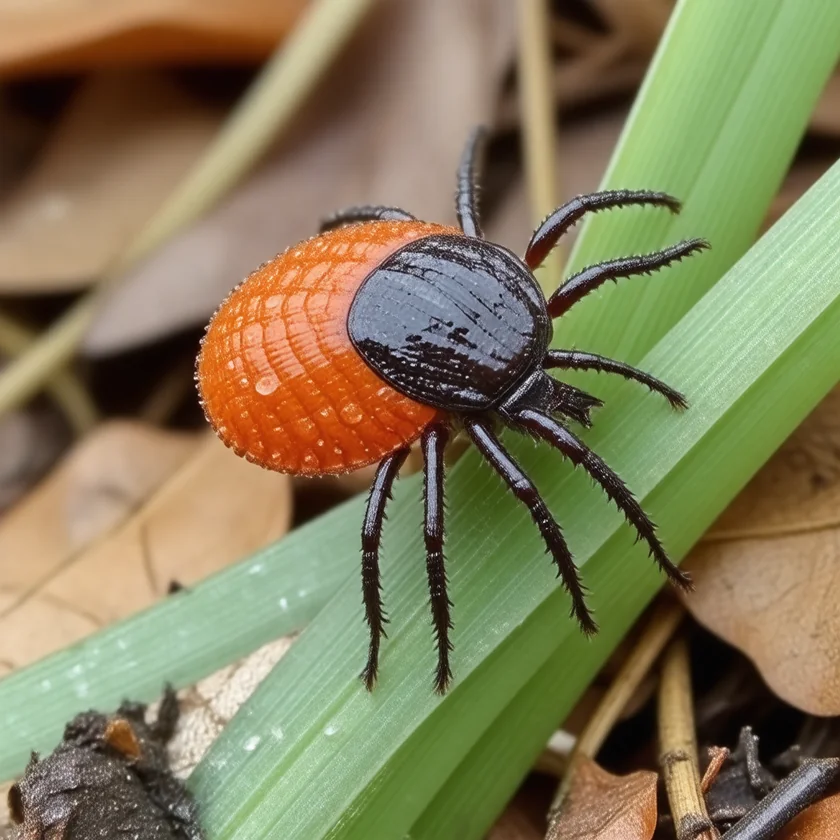
Early Lyme & Erythema Migrans
The bull's-eye rash, flu-like illness, tick biology, and early dissemination signs including carditis and Bell's palsy.
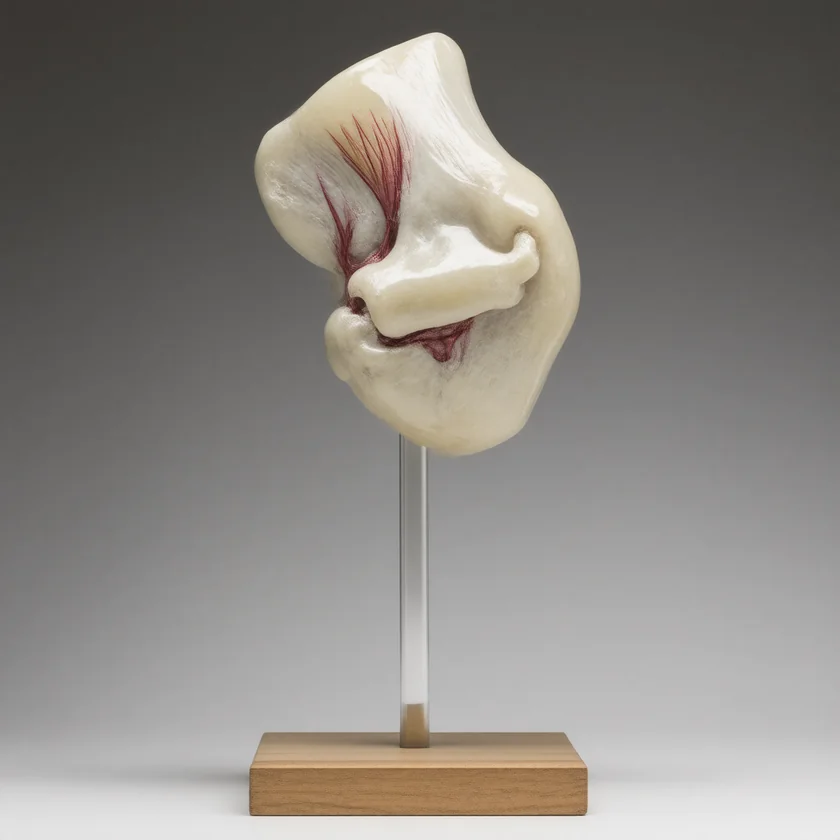
Read the deep dive →Late Lyme, Neuroborreliosis & Arthritis
Lyme arthritis of the knee, neuroborreliosis, Bell's palsy, Lyme carditis, and untreated progression.
Read the deep dive →Diagnosis & Controversies
Two-tier ELISA/Western blot testing, false negatives in early Lyme, seronegative Lyme, and the "chronic Lyme" debate.
Read the deep dive →Table of Contents
- What Is Borrelia burgdorferi?
- How Lyme Disease Is Transmitted
- Stage 1 — Early Localized Lyme Disease
- Stage 2 — Early Disseminated Lyme Disease
- Stage 3 — Late Lyme Disease
- Lyme Carditis
- Neurological Lyme Disease
- Who Is Most at Risk?
- Geographic Distribution
- When to Seek Medical Attention
- Key Research Papers
- Connections
- Featured Videos
What Is Borrelia burgdorferi?
Borrelia burgdorferi is a spiral-shaped bacterium (spirochete) and the primary cause of Lyme disease in North America. It was first identified in 1982 by Dr. Willy Burgdorfer, a scientist at the National Institutes of Health, who isolated the organism from the midgut of Ixodes scapularis ticks collected in Lyme, Connecticut — the town that gave the disease its name. The bacterium belongs to the phylum Spirochaetota, sharing structural similarity with the organisms responsible for syphilis and leptospirosis, though it is genetically distinct.
Borrelia burgdorferi has an unusually small and segmented genome, spread across a linear chromosome and up to 21 linear and circular plasmids. This genomic fragmentation encodes a remarkable repertoire of surface proteins that allow the bacterium to adapt rapidly to different host environments. OspA (outer surface protein A) is expressed during residence in the tick midgut, where it binds tick gut receptors and aids colonization. As the tick begins feeding, rising temperatures trigger a switch to OspC expression, which is essential for migration from the tick midgut to the salivary glands and subsequent transmission to the mammalian host.
Once in human tissue, Borrelia uses its corkscrew motility — driven by periplasmic flagella running beneath the outer membrane — to burrow through connective tissue and evade immune surveillance. Its ability to alter surface protein expression (antigenic variation via VlsE recombination) helps it persist despite an active antibody response, which partly explains why untreated Lyme disease can become chronic.
How Lyme Disease Is Transmitted
Lyme disease is transmitted exclusively through the bite of infected Ixodes ticks. In the eastern and midwestern United States, the vector is Ixodes scapularis (the black-legged tick or "deer tick"). On the Pacific Coast, Ixodes pacificus is responsible, though transmission rates there are lower because the lizard species that western ticks frequently feed on do not support Borrelia infection.
The white-footed mouse (Peromyscus leucopus) is the primary reservoir host in the eastern US — it maintains the bacterium in wildlife populations and infects larval and nymph ticks that feed on it. Deer are essential for tick reproduction but are not competent reservoirs for Borrelia burgdorferi; their role is to sustain the tick population, not to transmit infection.
Ixodes ticks pass through three life stages: larva, nymph, and adult. Nymphs are responsible for the majority of human Lyme disease cases. They are roughly the size of a poppy seed (1-2 mm), making them extremely easy to overlook, and they are most active during late spring and early summer — peak Lyme disease season. Adult ticks, active in fall and early spring, are more visible (about 3-4 mm) but cause fewer infections because they are easier to detect and remove.
A critical transmission threshold is tick attachment time. Borrelia burgdorferi resides in the tick's midgut during non-feeding periods. Transmission requires the tick to feed for at least 36 to 48 hours, which allows the bacteria time to migrate from the midgut through the hemolymph to the salivary glands and then into the host. This window means that prompt tick removal — within 24 to 36 hours of attachment — is highly protective. Transmission is not known to occur through direct person-to-person contact, blood transfusion, or sexual contact.
Stage 1 — Early Localized Lyme Disease
The first stage of Lyme disease typically begins 3 to 30 days after an infected tick bite. The hallmark finding is erythema migrans (EM) — an expanding skin rash at or near the bite site. The rash appears in approximately 70 to 80 percent of confirmed Lyme disease cases. When present, erythema migrans is highly specific for Lyme disease in endemic areas and is sufficient for a clinical diagnosis without waiting for laboratory confirmation.
A common misconception is that erythema migrans always appears as a bull's-eye — a red ring with central clearing. In reality, approximately 50 percent or more of EM rashes are solid red, without a distinct ring pattern. The rash typically measures at least 5 cm in diameter and can expand to 30 cm or larger over days to weeks. It is usually painless and non-itchy, though it feels warm to the touch. It does not blister or crust, which helps distinguish it from contact dermatitis, ringworm, or spider bites.
Accompanying the rash, many patients experience a flu-like prodrome: fatigue (often the most debilitating symptom), muscle aches (myalgia), joint aches without swelling (arthralgia), headache, fever or chills (usually low-grade, rarely above 38.5°C / 101°F), neck stiffness, and swollen lymph nodes near the bite site. These symptoms can precede, accompany, or briefly follow the rash. Because the constellation resembles influenza or a nonspecific viral illness, many cases of early Lyme disease are initially attributed to a "summer flu" and go undiagnosed.
It is important to note that 20 to 30 percent of patients with Lyme disease never develop or notice a rash — either because the tick bite was in a concealed area (scalp, behind the knees, groin, axilla), because the rash appeared and resolved before being seen, or because atypical pigmentation in some patients makes the erythema difficult to distinguish visually. For these patients, the flu-like illness is the only early clue.
Stage 2 — Early Disseminated Lyme Disease
If Lyme disease is not treated during Stage 1, the bacteria can spread through the bloodstream to other organs and tissues — a process that typically occurs days to weeks after the initial infection. This stage is called early disseminated Lyme disease, and it marks the beginning of systemic involvement.
The most visible sign of dissemination is the appearance of multiple erythema migrans lesions at sites distant from the original bite. These secondary EM lesions represent hematogenous seeding of the skin and confirm that Borrelia burgdorferi has escaped local tissue. The secondary lesions are typically smaller than the primary rash and may appear anywhere on the body.
Beyond the skin, Stage 2 Lyme disease most prominently affects three organ systems:
- Heart: Lyme carditis develops in roughly 1 to 10 percent of untreated patients (estimates vary by study population). The most common manifestation is atrioventricular (AV) conduction block, ranging from first-degree (prolonged PR interval) to complete (third-degree) heart block. Patients may experience palpitations, lightheadedness, syncope (fainting), shortness of breath, and chest pain. Complete heart block may require temporary cardiac pacing.
- Nervous system: Lyme neuroborreliosis in early dissemination most often presents as facial nerve palsy (Bell's palsy) — a sudden weakness or paralysis of one or both sides of the face. Other neurological manifestations include lymphocytic meningitis (headache, stiff neck, photophobia without fever), radiculopathy (shooting pain following the path of a nerve root, often mistaken for a herniated disc), and cranial neuropathies affecting the eye muscles.
- Joints: Migratory arthralgias — aches that move from joint to joint without persistent swelling — are common in Stage 2. Frank arthritis with joint swelling is more characteristic of Stage 3, but some patients develop early synovitis.
Fatigue typically worsens during Stage 2 and can be profoundly disabling. Cognitive symptoms — difficulty concentrating, memory lapses, word-finding problems — may also emerge, sometimes called "Lyme fog."
Stage 3 — Late Lyme Disease
Late Lyme disease develops months to years after the initial infection if the disease goes untreated. Not everyone with untreated Lyme disease progresses to Stage 3 — some patients appear to clear the infection spontaneously — but a significant proportion develop one or more of the following syndromes:
Lyme arthritis is the most common manifestation of late Lyme disease in the United States, affecting approximately 60 percent of untreated patients. It typically presents as intermittent episodes of joint pain and swelling, most commonly in the knee. Episodes may last days to weeks and then resolve, only to recur. Over time, some patients develop persistent Lyme arthritis — continuous, non-resolving knee swelling that can last months and, in antibiotic-refractory cases, may reflect an autoimmune mechanism triggered by the original infection rather than ongoing bacterial presence.
Late neuroborreliosis is less common in North America than in Europe (where Borrelia afzelii is more neurotropic) but can produce subacute encephalopathy — characterized by subtle cognitive impairment, memory difficulties, sleep disturbance, and mood changes. Peripheral neuropathy with sensory symptoms (numbness, tingling, pain) is also reported. These neurological symptoms are distinct from the post-treatment cognitive complaints sometimes labeled "post-treatment Lyme disease syndrome."
Acrodermatitis chronica atrophicans (ACA) is a late skin manifestation seen almost exclusively in European Lyme disease (caused by Borrelia afzelii). It begins as a bluish-red discoloration of the extremities and progresses over months to years to thin, atrophic skin resembling tissue paper. It is rare in North American disease.
Lyme Carditis
Lyme carditis is an underrecognized but potentially life-threatening manifestation of Borrelia burgdorferi infection. It occurs when the spirochete infiltrates cardiac tissue, primarily targeting the conduction system. The atrioventricular (AV) node — which controls the electrical impulse traveling from the atria to the ventricles — is the most commonly affected structure.
The degree of AV block determines clinical severity. First-degree AV block (PR interval greater than 200 ms) is often asymptomatic and detected only on electrocardiogram. Second-degree block produces intermittent dropped beats and may cause palpitations. Third-degree (complete) AV block interrupts all electrical conduction between atria and ventricles; the ventricles beat at a slow escape rhythm, causing severe bradycardia, dizziness, syncope, and potentially sudden cardiac death.
Lyme carditis is associated with an estimated 1 percent of untreated Lyme disease in the United States, though surveillance data suggest it may be more common than historically believed. Between 2000 and 2014, the CDC identified several sudden cardiac deaths attributed to undiagnosed Lyme carditis in endemic areas. Young, previously healthy individuals in Lyme-endemic regions who present with new AV block should be evaluated for Lyme disease even without a known tick bite or rash.
Myopericarditis (inflammation of the heart muscle and/or pericardium) is a less common cardiac manifestation, presenting with chest pain that worsens with lying flat and improves sitting forward, along with elevated troponin or creatine kinase on blood testing. Echocardiography may reveal pericardial effusion or regional wall motion abnormalities in severe cases.
Lyme carditis responds well to antibiotics, with most AV block resolving within days to weeks of treatment. Patients with high-degree AV block are typically hospitalized for cardiac monitoring and may receive IV antibiotics (ceftriaxone) initially. Temporary pacing is reserved for complete block causing hemodynamic instability. Permanent pacemaker implantation is rarely necessary.
Neurological Lyme Disease
The nervous system is one of the most important targets of disseminated Borrelia burgdorferi, and neurological Lyme disease (neuroborreliosis) produces a range of syndromes depending on the timing and location of infection.
Facial nerve palsy (Bell's palsy) is the single most common neurological manifestation of Lyme disease in North America, accounting for up to 25 percent of all facial palsies in endemic regions during summer months. It typically presents as sudden weakness or complete paralysis of one side of the face — drooping of the eyelid and corner of the mouth, difficulty closing the eye fully, and impaired facial expression. Unlike idiopathic Bell's palsy, Lyme-associated facial palsy may be bilateral (affecting both sides), which is highly unusual for any other cause. The prognosis for full recovery is excellent with appropriate antibiotic therapy.
Lymphocytic meningitis in Lyme disease produces headache, stiff neck, and photophobia, typically without the high fever seen in bacterial meningitis. Cerebrospinal fluid analysis shows a mild to moderate lymphocytic pleocytosis (increased white cells), elevated protein, and normal glucose — a pattern consistent with aseptic meningitis. Unlike viral meningitis, Lyme meningitis responds to antibiotics.
Radiculopathy — pain, numbness, or weakness following the distribution of a nerve root — occurs when spirochetes invade the nerve roots exiting the spinal cord. In the United States this typically affects the trunk (thoracic radiculopathy causing band-like chest or abdominal pain) or extremities. In Europe, painful thoracic radiculopathy called "Bannwarth syndrome" is a classic early neuroborreliosis presentation.
Late neuroborreliosis encephalopathy is a subtle but disabling syndrome characterized by cognitive slowing, memory impairment, difficulty with word retrieval, sleep disruption, and mood changes (irritability, depression). CSF analysis typically shows mild pleocytosis and Lyme antibodies. Brain MRI may be normal or show nonspecific white matter changes. This syndrome must be distinguished from post-treatment Lyme disease syndrome, in which similar cognitive complaints persist despite antibiotic cure.
Who Is Most at Risk?
Several demographic and behavioral factors increase the risk of acquiring Lyme disease:
- Geographic residence: Living in or visiting endemic areas — particularly the northeastern, mid-Atlantic, and upper midwestern United States — is the single strongest risk factor. Wooded and brushy areas with leaf litter harbor the highest tick densities.
- Outdoor occupational exposure: Landscapers, forestry workers, farmers, park rangers, and construction workers in wooded areas face sustained tick exposure. These occupations are associated with higher Lyme disease incidence than the general population.
- Recreational activities: Hiking, camping, hunting, and gardening in tick habitat dramatically increase exposure risk, particularly during May through September when nymph ticks are most active.
- Age: The highest Lyme disease incidence in the US occurs in children ages 5 to 14 and adults ages 45 to 64. Children spend more unmonitored time outdoors in tick habitat; middle-aged adults have high recreational and occupational outdoor exposure.
- Pets: Dogs and cats that roam outdoors can carry ticks into the home, increasing household exposure risk. Veterinary tick prevention products can reduce this pathway.
- Season: Risk peaks from late April through August, when nymph ticks are most active and questing. A smaller adult tick activity peak occurs in October and November.
Immunocompromised individuals do not appear to be at higher risk of acquiring Lyme disease, but they may have a diminished antibody response that complicates serological diagnosis, and there is some evidence that immune status influences clinical severity and treatment response.
Geographic Distribution
Lyme disease is the most common vector-borne disease in the United States, with approximately 476,000 estimated cases annually according to CDC modeling (far exceeding the 35,000 to 50,000 confirmed cases reported each year, reflecting the known underreporting gap). Approximately 95 percent of confirmed US cases originate from 14 states — primarily in the Northeast (Connecticut, Delaware, Maine, Maryland, Massachusetts, New Hampshire, New Jersey, New York, Pennsylvania, Rhode Island, Vermont, Virginia) and upper Midwest (Minnesota, Wisconsin).
The geographic range of Ixodes scapularis has expanded substantially over the past three decades, driven by reforestation of previously cleared land, increased deer populations, and climate change extending tick season. Counties newly reporting established tick populations include areas previously considered low-risk, particularly in the mid-Atlantic and Great Lakes regions.
In Europe, Lyme disease is caused by a complex of Borrelia species. Borrelia afzelii predominates in Scandinavia and Eastern Europe and is more strongly associated with skin manifestations (ACA) and neurological disease. Borrelia garinii is more neurotropic and is the dominant cause of Bannwarth syndrome. Borrelia burgdorferi sensu stricto is present in Europe but less common than the other two species. This genospecies variation partly explains transatlantic differences in disease presentation and the clinical impression that European Lyme disease more frequently affects the nervous system while American Lyme more frequently causes arthritis.
On the US Pacific Coast, Ixodes pacificus is the vector, but Lyme disease transmission rates are substantially lower because the primary blood meal host for nymphal western ticks — the western fence lizard (Sceloporus occidentalis) — has a complement-based mechanism that kills Borrelia spirochetes, limiting the proportion of infected ticks.
When to Seek Medical Attention
You should seek evaluation promptly if you develop any of the following after spending time in a tick-endemic area:
- An expanding red rash, particularly at or near a tick bite site — even if it does not have the classic bull's-eye pattern
- Flu-like symptoms (fatigue, muscle aches, headache, fever) in summer months, especially after outdoor activity in wooded or brushy areas
- Sudden facial drooping or weakness on one or both sides
- Heart palpitations, unexplained fainting, or shortness of breath — seek emergency care immediately if these are severe
- Joint swelling, particularly of the knee, that appears weeks to months after a suspected tick exposure
- Neck stiffness with headache and sensitivity to light
- Numbness, tingling, or shooting pain that follows a nerve root distribution
If you find an attached tick, remove it promptly with fine-tipped tweezers by grasping as close to the skin as possible and pulling upward with steady, even pressure. Do not twist, crush, or apply substances to the tick. Save the tick in a sealed container for potential testing. If the tick has been attached for 36 hours or more and you are in a Lyme-endemic area, your physician may recommend a single prophylactic dose of doxycycline (200 mg) within 72 hours of tick removal, which has been shown to reduce Lyme disease risk by approximately 87 percent.
Early treatment with antibiotics (doxycycline, amoxicillin, or cefuroxime for 10 to 21 days) is highly effective at eliminating early Lyme disease and preventing progression to disseminated stages. Delays in diagnosis and treatment allow the bacteria to spread and dramatically increase the risk of complications, particularly neurological and cardiac involvement.
Key Research Papers
The following peer-reviewed publications provide the scientific foundation for the information on this page:
- Steere AC, Coburn J, Glickstein L. The emergence of Lyme disease. J Clin Invest. 2004. — Search PubMed
- Shapiro ED. Lyme disease. N Engl J Med. 2014. — Search PubMed
- Wormser GP, et al. The clinical assessment, treatment, and prevention of Lyme disease, human granulocytic anaplasmosis, and babesiosis. Clin Infect Dis. 2006. — PubMed PMID: 17029130
- Mead PS. Epidemiology of Lyme disease. Infect Dis Clin North Am. 2015. — Search PubMed
- Nelson CA, et al. Incidence of clinician-diagnosed Lyme disease, United States, 2005-2010. Emerg Infect Dis. 2015. — Search PubMed
- Adrion ER, et al. Health care costs, utilization and patterns of care following Lyme disease. PLoS One. 2015. — PubMed PMID: 25650808
- Steere AC, et al. Lyme borreliosis. Nat Rev Dis Primers. 2016. — Search PubMed
- Arvikar SL, Steere AC. Diagnosis and treatment of Lyme arthritis. Infect Dis Clin North Am. 2015. — Search PubMed
- Koedel U, Fingerle V, Pfister HW. Lyme neuroborreliosis — epidemiology, diagnosis and management. Nat Rev Neurol. 2015. — Search PubMed
- Forrester JD, et al. Epidemiology of Lyme carditis, United States. Emerg Infect Dis. 2014. — Search PubMed
Connections
- All Bacteria
- Early Lyme & Erythema Migrans
- Late Lyme, Neuroborreliosis & Arthritis
- Diagnosis — ELISA, Western Blot & Controversies
- Lyme Disease Treatments Hub
- Doxycycline & Antibiotic Treatment
- Tick Prevention & Environmental Control
- Post-Treatment Lyme Disease Syndrome
- Borrelia burgdorferi — Main Page
- Bell's Palsy
- Arthritis
- Chronic Fatigue Syndrome
- Lyme Disease — the main disease page: diagnosis, treatment, and prevention.