Spermidine — Benefits Deep Dive
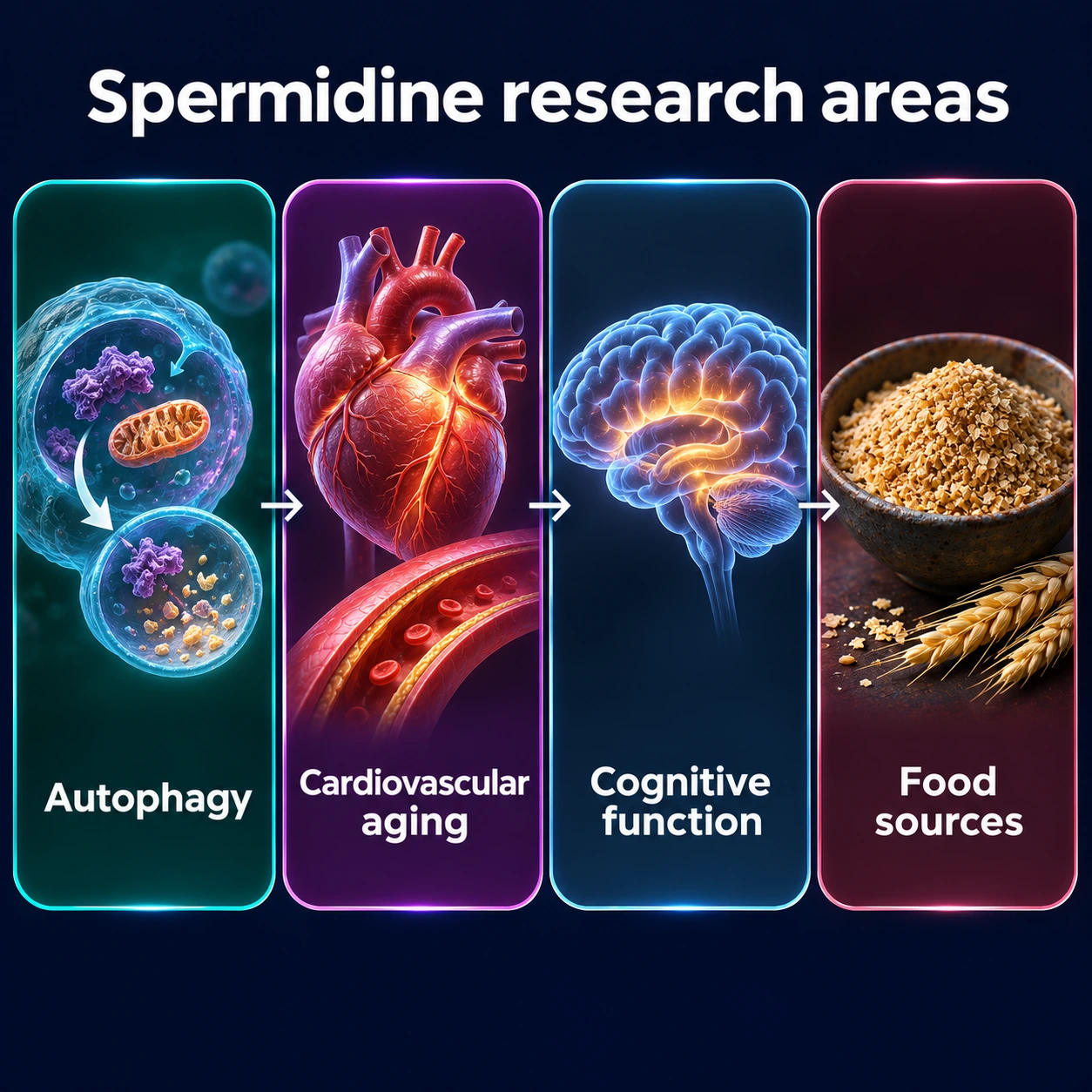
Spermidine is a small polyamine that the body synthesizes endogenously, that the gut microbiome contributes to, and that is delivered to tissues by every meal in proportion to the quantity of fresh, fermented, and germinated food on the plate. Its name goes back to semen: in 1678 Antonie van Leeuwenhoek reported crystals in human seminal fluid that were later shown to be spermine phosphate, and spermidine, the related triamine, was isolated later (Bachrach 2010; Pegg 2018). Its modern era began in 2009 with the Eisenberg, Madeo, and Kroemer paper in Nature Cell Biology showing that spermidine extends lifespan in yeast, flies, worms, and human immune cells by inducing autophagy, linked in ageing yeast to inhibition of histone acetyltransferases; in 2015 Pietrocola and colleagues identified the acetyltransferase EP300 (E1A-binding protein p300) as one that spermidine inhibits — a mechanistic target of rapamycin-independent route to the same downstream “cellular housekeeping” that caloric restriction and rapamycin produce. Subsequent observational data from the Bruneck Study (Kiechl 2018), validated in the SAPHIR Study, linked higher dietary spermidine intake to lower all-cause mortality, the 12-month SmartAge trial tested memory in older adults with subjective cognitive decline and found no difference from placebo, and Eisenberg's 2016 Nature Medicine paper demonstrated that spermidine improved cardiac function and extended lifespan in aged mice. The four benefit pages below walk through the autophagy mechanism (hypusinated eIF5A, EP300, EAT1 yeast model), the cardiovascular aging dossier, the cognitive function evidence, and the practical question of food sources versus supplementation.
Deep-Dive Articles
Autophagy Induction
The Eisenberg-Madeo-Kroemer 2009 Nature Cell Biology paper that identified spermidine as an autophagy inducer in yeast (the EAT1 screen), flies, worms, and human cells. The EP300 acetyltransferase inhibition mechanism, the hypusinated eIF5A connection, mechanistic target of rapamycin-independent autophagy distinct from rapamycin's pathway, and why a small molecule the body already makes can re-trigger a process that fades with age.
Read the deep dive →Cardiovascular Aging
The Eisenberg 2016 Nature Medicine mouse paper showing reduced cardiac hypertrophy, improved diastolic function, and extended lifespan in aged mice on dietary spermidine. The Kiechl 2018 Bruneck Study cohort linking the top third of spermidine intake to lower all-cause mortality (15.1 versus 40.5 deaths per 1,000 person-years in the bottom third), ventricular function biomarkers, mitochondrial preservation, and the practical question of whether human cardiovascular benefit is achievable through wheat germ and fermented food rather than purified supplementation.
Read the deep dive →Cognitive Function
The Wirth 2018 pilot trial and the 12-month SmartAge trial (no difference from placebo in memory) in older adults with subjective cognitive decline, the neuroprotective animal model evidence (hippocampal autophagy, tau and amyloid clearance), the Schwarz 2020 brain-scan study linking higher dietary spermidine to larger hippocampal volume and thicker cortex in 137 older adults, and the honest framing that human cognitive efficacy data remains preliminary but mechanistically plausible.
Read the deep dive →Food Sources and Dosing
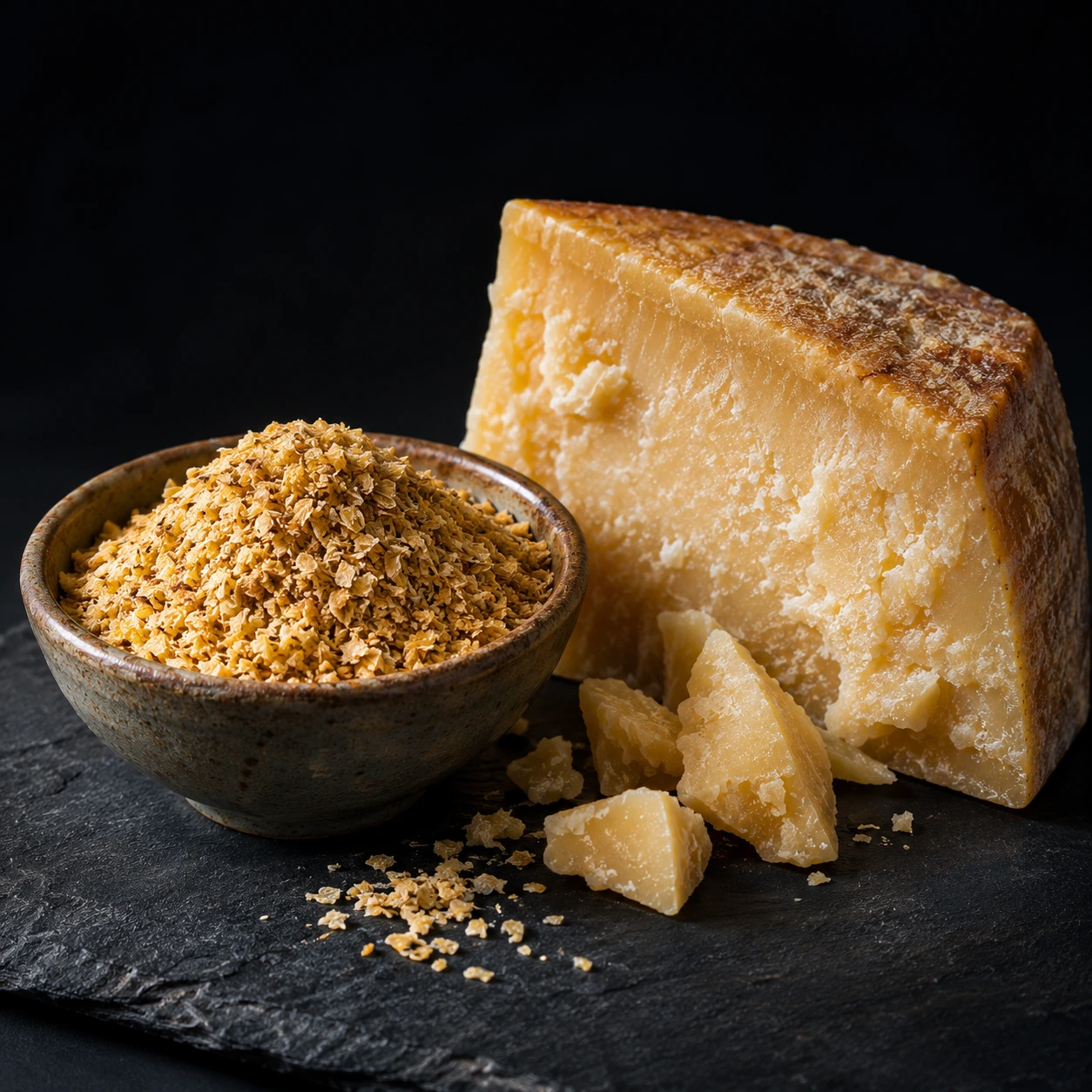
The richest dietary sources — wheat germ (~243 mg/kg), natto (~117 mg/kg), aged cheese (spermidine content varies widely between studies), mushrooms, soybeans, peas, and mature corn. Measured intakes from food, the wheat-germ-extract supplements (1 mg per ~250 mg dose), the polyamine-rich Mediterranean diet pattern, and the doses used in human trials of foods and supplements.
Read the deep dive →Table of Contents
- Deep-Dive Articles
- Why Spermidine Produces Effects Across So Many Systems
- Research Papers: Autophagy Induction
- Research Papers: Cardiovascular Aging
- Research Papers: Cognitive Function
- Research Papers: Food Sources, Dosing, Pharmacokinetics
- Research Papers: Cross-Cutting (Mechanism, Safety, Longevity)
- External Authoritative Resources
- Connections
- Featured Videos
Why Spermidine Produces Effects Across So Many Systems
Spermidine is a triamine — three nitrogen atoms strung along a small flexible carbon chain — that is found in essentially every living cell on Earth. Polyamines (spermidine, spermine, and the precursor putrescine) are not exotic plant or microbial alkaloids but rather core eukaryotic biochemistry, required for ribosome assembly, mRNA translation, DNA stability, and chromatin organization. The body synthesizes spermidine from the amino acid arginine via the ornithine decarboxylase pathway, the gut microbiome supplies additional spermidine to the colonic mucosa, and dietary spermidine is absorbed across the small intestinal epithelium and distributed by plasma to all tissues. The reason spermidine produces benefits across multiple organ systems — rather than fitting neatly into a single “antioxidant” or “anti-inflammatory” bucket — is that it is a master regulator of two ancient and broadly distributed cellular maintenance processes.
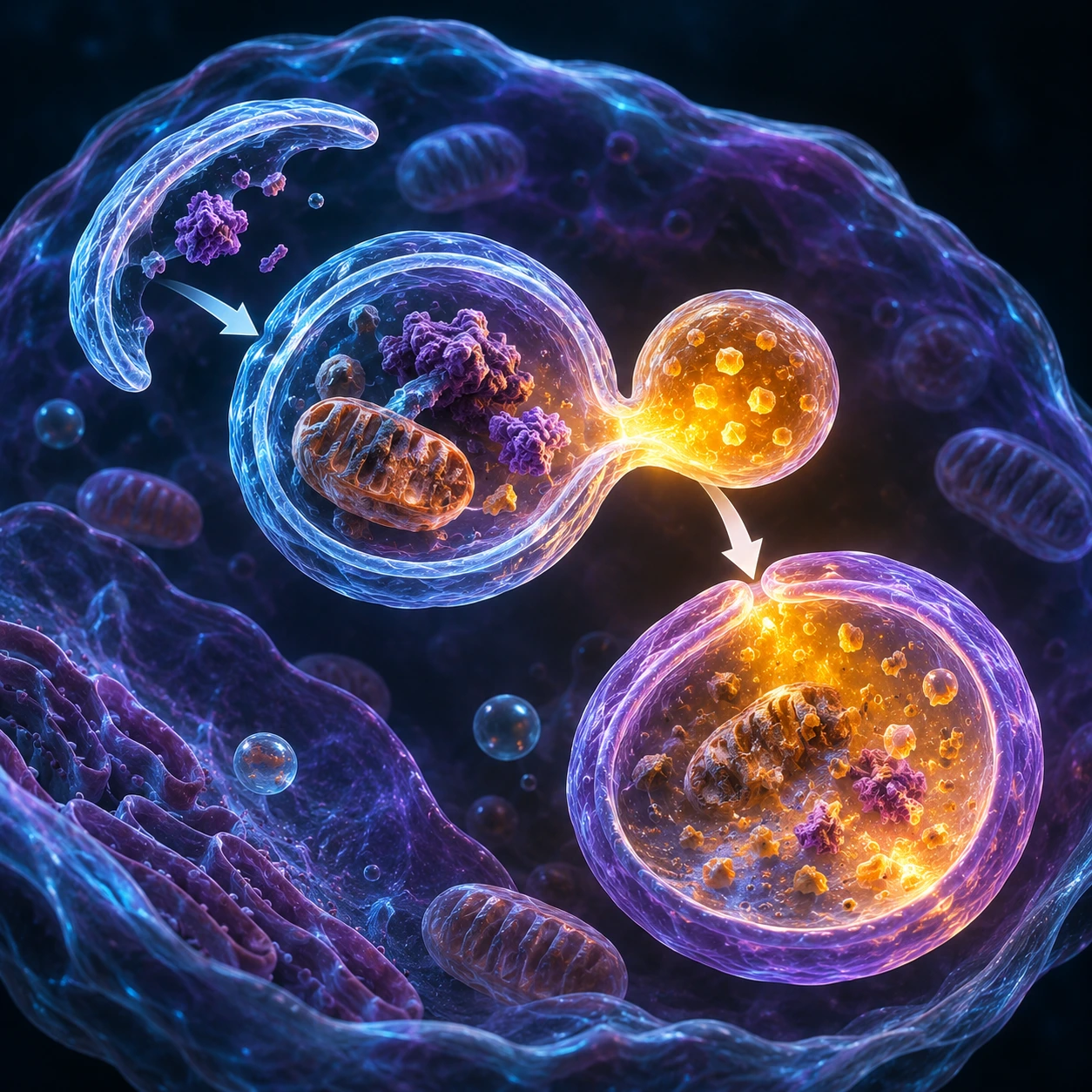
- Autophagy induction (the dominant mechanism) — spermidine inhibits EP300, an acetyltransferase that adds inhibitory acetyl groups to ATG (autophagy-related) gene-encoded proteins. With EP300 inhibited, the ATG machinery is deacetylated and active, and autophagy — the lysosomal degradation pathway that recycles damaged organelles, misfolded proteins, and aggregated material — runs more vigorously. In human-cell work by Pietrocola and colleagues (2015), EP300 was one of only two of 43 acetyltransferases whose knockdown both switched on autophagy and inhibited mammalian target of rapamycin complex 1 (mTORC1), and spermidine inhibited EP300 in a test tube — cell and test-tube results, not human trials. This is the same downstream process that caloric restriction, rapamycin, and exercise all converge on, but through a different upstream switch (mechanistic target of rapamycin-independent rather than mechanistic target of rapamycin-dependent). This drives the core anti-aging effect and is the mechanism behind the Eisenberg 2009 yeast/fly/worm lifespan extension and the Eisenberg 2016 mouse cardiac results.
- Hypusinated eIF5A and translation fidelity — spermidine is the unique substrate for a remarkable post-translational modification called hypusination, in which spermidine's aminobutyl chain is transferred to a specific lysine residue (Lys50) of eukaryotic initiation factor 5A (eIF5A) to create the rare amino acid hypusine. Hypusinated eIF5A is essential for translation of proteins with stretches of consecutive proline residues, which include many mitochondrial, autophagy, and chromatin-regulator proteins. Without spermidine, this modification fails, the proteome shifts, and mitochondrial and autophagy capacity both decline — one of the molecular fingerprints of aging.
- Mitochondrial preservation and biogenesis — via the hypusinated-eIF5A pathway and independent effects on peroxisome proliferator-activated receptor gamma coactivator 1-alpha (PGC-1α) signaling, spermidine maintains mitochondrial number, membrane potential, and oxidative capacity. The aged heart loses approximately 30% of its mitochondrial functional capacity by the eighth decade of life in humans; spermidine's mitochondrial-preserving effect is a major contributor to the cardiac and vascular benefits in animal models and observational cohorts.
- Cardioprotection through diastolic function — the aged left ventricle stiffens, fills less effectively during diastole, and produces the clinical syndrome of heart failure with preserved ejection fraction (HFpEF). The Eisenberg 2016 mouse data showed that dietary spermidine improved the elasticity of heart-muscle cells, coinciding with increased titin phosphorylation, preserved diastolic function, and reduced cardiac hypertrophy. The same paper reported that, in humans, higher dietary spermidine assessed from food questionnaires correlated with lower blood pressure and a lower incidence of cardiovascular disease. In the Kiechl 2018 Bruneck cohort (829 adults aged 45-84, followed 1995-2015, 341 deaths), all-cause mortality fell across thirds of increasing spermidine intake, from 40.5 to 23.7 to 15.1 deaths per 1,000 person-years; each 1-standard-deviation higher intake carried a hazard ratio of 0.74 (0.76 after fuller adjustment), and the gap between the top and bottom thirds was similar to that of being 5.7 years younger. These are associations in observational data, not proof that spermidine caused the difference.
- Neuronal autophagy and proteostasis — neurons are post-mitotic and cannot dilute damaged proteins by cell division, so they depend critically on autophagy for protein quality control. Failure of neuronal autophagy is mechanistically central to Alzheimer's, Parkinson's, Huntington's, and amyotrophic lateral sclerosis (ALS). Spermidine's autophagy-inducing effect is the rationale for the SmartAge trial and the broader cognitive-function dossier.
- Immune-cell rejuvenation — T cells lose autophagic capacity with age, leading to impaired vaccine response and increased infection susceptibility in the elderly (immunosenescence). Spermidine restores autophagy in aged T cells, restores memory CD8+ T cell responses to influenza vaccine in mouse models, and is being explored as an immune-rejuvenation agent in older adults.
The practical complication is dose. In a US study that built a polyamine database for a food questionnaire and tested it in 165 people, average spermidine intake was about 55 micromoles a day (54,697 nmol/day), with green peas the largest single contributor (Zoumas-Morse 2007). Foods rich in spermidine include natto (fermented soybeans), wheat germ, aged hard cheese and cooked mushrooms. The human trials used a spermidine-rich wheat-germ extract at 1.2 mg spermidine a day for 3 months (a safety trial in 30 older adults, Schwarz 2018) and 0.9 mg a day for 12 months (SmartAge, Schwarz 2022). In a 2023 crossover trial, 15 mg a day of spermidine for 5 days in 12 healthy adults did not raise spermidine in blood plasma or saliva; it raised spermine instead, suggesting that spermidine is converted before it reaches the blood, and the authors judged doses under 15 mg a day unlikely to have short-term effects (Senekowitsch 2023). A 2024 randomized trial gave 37 healthy men aged 50-70 a high-purity spermidine supplement at 40 mg a day for up to 28 days: it found no changes in clinical, lipid, chemistry or blood-count safety tests, no product-related side effects, and no substantial change in blood or urine polyamine levels; the trial was run by employees of, and funded by, the supplement's maker (Keohane 2024). The Madeo group and others have argued that long-term safety appears favorable given that all human populations have eaten polyamines at varying intakes throughout history, and given the absence of acute toxicity in published trials, but the broader safety database is still smaller than for older nutritional interventions. Food Sources and Dosing covers food amounts in detail.
Research Papers: Autophagy Induction
- Eisenberg T, Knauer H, Schauer A, et al. (2009). Induction of autophagy by spermidine promotes longevity. Nature Cell Biology. — PubMed PMID: 19801973
- Madeo F, Eisenberg T, Pietrocola F, Kroemer G (2018). Spermidine in health and disease. Science. — PubMed PMID: 29371440
- Pietrocola F, Lachkar S, Enot DP, et al. (2015). Spermidine induces autophagy by inhibiting the acetyltransferase EP300. Cell Death & Differentiation. — PubMed PMID: 25526088
- Bachrach U (2010). The early history of polyamine research. Plant Physiology and Biochemistry. — PubMed PMID: 20219382
- Pegg AE (2018). Introduction to the Thematic Minireview Series: Sixty plus years of polyamine research. Journal of Biological Chemistry. — PubMed PMID: 30377254
- Hypusinated eIF5A and translation of proline-rich proteins — PubMed: eIF5A hypusination
- Spermidine and mTOR-independent autophagy distinct from rapamycin — PubMed: mTOR-independent autophagy
- EAT1 yeast screen and the original autophagy discovery — PubMed: EAT1 yeast screen
- Spermidine extends lifespan in Caenorhabditis elegans and Drosophila — PubMed: Spermidine in C. elegans & flies
- Spermidine and mitophagy (selective mitochondrial autophagy) — PubMed: Spermidine and mitophagy
- Polyamines and ribosome assembly / translation fidelity — PubMed: Polyamines and translation
- Spermidine, Tat-Beclin peptide, and convergent autophagy mechanisms — PubMed: Spermidine and Beclin
Research Papers: Cardiovascular Aging
- Eisenberg T, Abdellatif M, Schroeder S, et al. (2016). Cardioprotection and lifespan extension by the natural polyamine spermidine. Nature Medicine. — PubMed PMID: 27841876
- Kiechl S, Pechlaner R, Willeit P, et al. (2018). Higher spermidine intake is linked to lower mortality: a prospective population-based study. American Journal of Clinical Nutrition (Bruneck Study, validated in the SAPHIR Study). — PubMed PMID: 29955838
- Spermidine and diastolic dysfunction in aged mouse heart — PubMed: Spermidine and diastolic function
- Spermidine and cardiac hypertrophy reduction — PubMed: Spermidine and cardiac hypertrophy
- Polyamine intake and blood pressure outcomes — PubMed: Polyamine and blood pressure
- Spermidine and endothelial function preservation — PubMed: Spermidine and endothelium
- Spermidine and atherosclerosis progression in mouse models — PubMed: Spermidine and atherosclerosis
- Polyamines in cardiac mitochondrial biogenesis — PubMed: Polyamines and PGC-1α
- Heart failure with preserved ejection fraction (HFpEF) and aging biology — PubMed: HFpEF and aging
- Polyamine intake in Mediterranean diet pattern — PubMed: Mediterranean polyamines
Research Papers: Cognitive Function
The largest human trial so far, SmartAge, gave 100 adults aged 60-90 with subjective cognitive decline (self-reported memory worries) either 0.9 mg spermidine a day from a wheat-germ extract or a placebo for 12 months. It found no difference from placebo in memory (the main outcome) or in biomarkers; exploratory analyses hinted at effects on verbal memory and inflammation that the authors say need testing at higher doses (Schwarz 2022). Smaller Austrian nursing-home studies of people with dementia reported Mini-Mental State Examination (MMSE) gains with a higher spermidine dose: in a 3-month double-blind study of 85 people aged 60-96 in 6 nursing homes, people with mild dementia in the higher-dose group gained 2.23 MMSE points, while the lower-dose group stayed level or declined (Pekar 2021); in a one-year follow-up, 45 residents given 3.3 mg spermidine a day in their diet improved by a mean of 5 MMSE points from baseline, with no placebo group described in the abstract (Pekar 2024).
- Wirth M, Benson G, Schwarz C, et al. (2018). The effect of spermidine on memory performance in older adults at risk for dementia: a randomized controlled trial. Cortex (Phase IIa pilot trial, 30 people, that preceded SmartAge). — PubMed PMID: 30388439
- Schwarz C, Stekovic S, Wirth M, et al. (2018). Safety and tolerability of spermidine supplementation in mice and older adults with subjective cognitive decline. Aging. — PubMed PMID: 29315079
- Schwarz C, Benson GS, Horn N, et al. (2022). Effects of Spermidine Supplementation on Cognition and Biomarkers in Older Adults With Subjective Cognitive Decline: A Randomized Clinical Trial. JAMA Network Open. — PubMed PMID: 35616942
- Schwarz C, Horn N, Benson G, et al. (2020). Spermidine intake is associated with cortical thickness and hippocampal volume in older adults. NeuroImage. — PubMed PMID: 32629145
- Pekar T, Bruckner K, Pauschenwein-Frantsich S, et al. (2021). The positive effect of spermidine in older adults suffering from dementia: First results of a 3-month trial. Wiener klinische Wochenschrift. — PubMed PMID: 33211152
- Pekar T, Wendzel A, Jarisch R (2024). The positive effect of spermidine in older adults suffering from dementia after 1 year. Wiener klinische Wochenschrift. — PubMed PMID: 37284840
- Schroeder S, Hofer SJ, Zimmermann A, et al. (2021). Dietary spermidine improves cognitive function. Cell Reports. — PubMed PMID: 33852843
- Spermidine and hippocampal autophagy in Alzheimer's mouse models — PubMed: Spermidine hippocampal autophagy
- Spermidine and tau protein clearance — PubMed: Spermidine and tau clearance
- Spermidine and amyloid beta plaque burden in animal models — PubMed: Spermidine and amyloid beta
- Polyamine intake and incident dementia in elderly cohort — PubMed: Polyamine intake and dementia
- Spermidine and brain-derived neurotrophic factor (BDNF) — PubMed: Spermidine and BDNF
- Spermidine and Parkinson's disease alpha-synuclein clearance — PubMed: Spermidine and α-synuclein
- Spermidine and synaptic plasticity in aging — PubMed: Spermidine and synaptic plasticity
Research Papers: Food Sources, Dosing, Pharmacokinetics
- Atiya Ali M, Poortvliet E, Stromberg R, Yngve A (2011). Polyamines in foods: development of a food database. Food & Nutrition Research (matured Swedish cheese measured 1.2 mg/kg spermidine; cheese values varied considerably between studies). — PubMed PMID: 21249159
- Nishimura K, Shiina R, Kashiwagi K, Igarashi K (2006). Decrease in polyamines with aging and their ingestion from food and drink. Journal of Biochemistry (ageing data in mice). — PubMed PMID: 16428322
- Zoumas-Morse C, Rock CL, Quintana EL, et al. (2007). Development of a polyamine database for assessing dietary intake. Journal of the American Dietetic Association. — PubMed PMID: 17524725
- Senekowitsch S, Wietkamp E, Grimm M, et al. (2023). High-Dose Spermidine Supplementation Does Not Increase Spermidine Levels in Blood Plasma and Saliva of Healthy Adults: A Randomized Placebo-Controlled Pharmacokinetic and Metabolomic Study. Nutrients. — PubMed PMID: 37111071
- Keohane P, Everett JR, Pereira R, et al. (2024). Supplementation of spermidine at 40 mg/day has minimal effects on circulating polyamines: An exploratory double-blind randomized controlled trial in older men. Nutrition Research. — PubMed PMID: 39405978
- Wheat germ as a concentrated dietary spermidine source — PubMed: Wheat germ spermidine content
- Natto (fermented soybean) polyamine content — PubMed: Natto polyamine content
- Aged cheese polyamine content — PubMed: Aged cheese polyamines
- Spermidine pharmacokinetics in humans — PubMed: Spermidine pharmacokinetics
- Gut microbiome contribution to colonic spermidine levels — PubMed: Microbiome and polyamines
- Wheat germ extract supplementation in clinical trials — PubMed: Wheat germ extract trials
- Polyamine intake and Japanese centenarian dietary patterns — PubMed: Japanese centenarian polyamines
- Mushroom polyamine content (shiitake, porcini, button) — PubMed: Mushroom polyamines
Research Papers: Cross-Cutting (Mechanism, Safety, Longevity)
- Hofer SJ, Liang Y, Zimmermann A, et al. (2021). Spermidine-induced hypusination preserves mitochondrial and cognitive function during aging. Autophagy. — PubMed PMID: 34105442
- Polyamines and chromatin organization — PubMed: Polyamines and chromatin
- Spermidine and immune-cell rejuvenation in aged T cells — PubMed: Spermidine and T cells
- Polyamines and cancer cell metabolism — the complexity caveat — PubMed: Polyamines in cancer
- Caloric restriction, autophagy, and longevity overlap — PubMed: CR/autophagy/longevity
- Polyamine biosynthesis and the ornithine decarboxylase pathway — PubMed: Polyamine biosynthesis
- Spermine, spermidine, putrescine — the polyamine family overview — PubMed: Polyamine family overview
- Polyamines and acrolein — the oxidation caveat — PubMed: Polyamines and acrolein
- Long-term safety of dietary spermidine supplementation — PubMed: Spermidine long-term safety
- Polyamines and exercise-induced longevity signaling — PubMed: Polyamines and exercise
External Authoritative Resources
- PubMed — All research on spermidine, autophagy, and longevity (~6,000+ papers)
- ClinicalTrials.gov — All active spermidine trials
- JAMA Network Open — SmartAge trial primary report (Schwarz 2022, open access)
- University of Graz — Frank Madeo Laboratory (foundational spermidine research)
- FoodPolyamines — Database of polyamine content in foods
Connections
- Spermidine (Main Page)
- Spermidine Autophagy Induction
- Spermidine Cardiovascular Aging
- Spermidine Cognitive Function
- Spermidine Food Sources and Dosing
- Fisetin
- Quercetin
- Longevity Protocols
- Fasting
- Rapamycin
- Nicotinamide Adenine Dinucleotide and Nicotinamide Mononucleotide
- Oxidative Stress
- Alzheimer's Disease
- Heart Failure
- Mushrooms
- History