Hydroxytyrosol
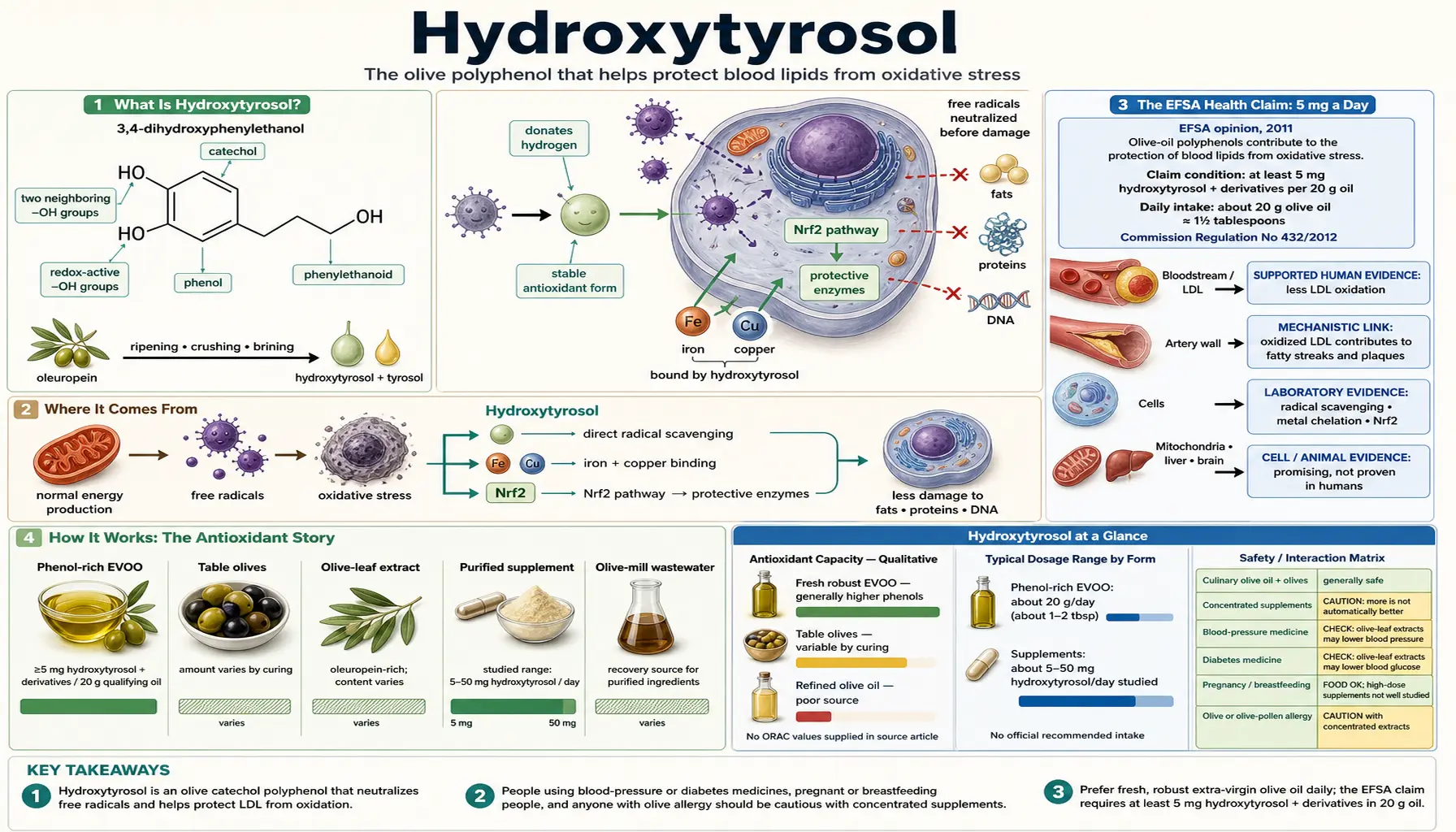
Hydroxytyrosol is the star polyphenol of the olive. It is the small, powerful antioxidant molecule that gives good extra-virgin olive oil its faint peppery bite, and it is the compound that European food regulators singled out when they allowed olive oil to carry an official health claim. You will find it in the oil, in the fruit, and in especially high amounts in olive leaves and in the watery waste left over when olives are pressed. This page explains, in plain language, what hydroxytyrosol is, where it comes from, and what the science actually shows. The honest summary up front: the human evidence for heart and blood-lipid benefits from olive-oil polyphenols is genuinely good, while the more exciting claims about metabolism, aging, and the brain are still mostly based on cell and animal studies. We will keep those two categories clearly separated so you can judge for yourself.
Table of Contents
- What Is Hydroxytyrosol?
- Where It Comes From
- The EFSA Health Claim: 5 mg a Day
- How It Works: The Antioxidant Story
- Heart Health and the Mediterranean Diet
- Calming Inflammation
- Early Signals: Metabolism and the Brain
- Getting It Into Your Body
- Forms, Foods, and Dosing
- Safety and Cautions
- The Bottom Line
- Research Papers
- Connections
- Featured Videos
What Is Hydroxytyrosol?
Hydroxytyrosol is a natural compound in a family called phenols (more specifically, phenylethanoids). Its full chemical name is a mouthful — 3,4-dihydroxyphenylethanol — but the key idea is simple. It is a small molecule that carries two neighboring hydroxyl (–OH) groups on a ring, a chemical arrangement known as a catechol. That little two-hydroxyl motif is what makes it such an effective antioxidant, because it can neutralize aggressive, unstable molecules by handing over its hydrogen atoms without becoming very reactive itself.
In the olive, hydroxytyrosol does not usually float around freely. Most of it starts life locked inside a larger, bitter molecule called oleuropein. As olives ripen, are crushed for oil, or ferment in brine, natural enzymes and simple chemistry break oleuropein apart and release free hydroxytyrosol along with a close cousin called tyrosol. This is why aged olive oil and cured table olives are less bitter than fresh, unprocessed olives: the bitter parent compound has been broken down, and the smaller phenols are what remain. When you read about “olive oil polyphenols,” hydroxytyrosol, tyrosol, and oleuropein are usually the main characters being discussed.
Where It Comes From
Hydroxytyrosol is almost entirely an olive-tree story. The richest and most talked-about dietary sources are these:
- Extra-virgin olive oil (EVOO). Good-quality, freshly pressed extra-virgin oil is the classic source. The polyphenol content varies enormously — by olive variety, ripeness, region, how the oil was pressed, and how it was stored. A robust, slightly bitter, throat-catching oil is generally higher in these phenols than a mild, buttery one. Refined ordinary olive oil has most of the phenols stripped out during processing, so it is a poor source.
- Table olives. Whole cured olives contain hydroxytyrosol, and the exact amount depends heavily on the curing method (Greek-style dry-cured, brine-cured, or lye-treated Spanish-style all differ).
- Olive-leaf extract. Olive leaves are unusually rich in oleuropein, the parent compound, and are a common raw material for concentrated supplements. See our companion page on Olive Leaf.
- Olive-mill wastewater. This is the surprising one. When olives are pressed, a large volume of dark, bitter wastewater is produced, and much of the fruit's water-soluble hydroxytyrosol ends up in it rather than in the oil. Historically this was a disposal headache for olive mills. Today it is prized: manufacturers recover and purify hydroxytyrosol from this wastewater to make food-grade supplements and ingredients, turning an environmental problem into a valuable product.
Because the free-hydroxytyrosol content of any given bottle of oil or jar of olives can range from very low to quite high, food labels rarely tell you how much you are getting. That uncertainty is exactly the problem the European health claim was designed to solve.
The EFSA Health Claim: 5 mg a Day
In 2011 the European Food Safety Authority (EFSA), the EU's scientific advisory body on food, reviewed the evidence and issued a formal opinion on olive-oil polyphenols. It concluded that a cause-and-effect relationship had been established between eating these polyphenols and the protection of blood lipids (LDL cholesterol) from oxidative damage. This was a notable step, because EFSA is famously strict and has rejected the large majority of proposed food health claims.
The claim was later written into EU law (Commission Regulation No 432/2012) with precise conditions. In plain terms:
- The approved statement is that olive-oil polyphenols contribute to the protection of blood lipids from oxidative stress.
- An oil may carry the claim only if it provides at least 5 mg of hydroxytyrosol and its derivatives (this includes the oleuropein complex and tyrosol) per 20 grams of oil.
- The benefit is stated to be obtained with a daily intake of about 20 grams of olive oil — roughly one and a half tablespoons.
So the widely quoted “5 mg a day” figure is really a threshold: consume enough good-quality, phenol-rich olive oil to get at least 5 mg of hydroxytyrosol and its relatives daily, and the LDL-protection benefit is considered supported. It is worth being clear about what the claim does not say. It is specifically about protecting LDL particles from oxidation — a meaningful step in how heart disease develops — and not a broad promise that olive oil cures heart disease, lowers cholesterol dramatically, or treats any illness. Within its narrow, carefully worded limits, though, it is one of the best-substantiated food claims in Europe.
How It Works: The Antioxidant Story
To understand why hydroxytyrosol matters, it helps to know what “oxidative damage” means. Your body constantly produces reactive molecules called free radicals as a normal byproduct of turning food into energy. In healthy amounts they are useful, but when they build up faster than your defenses can handle, they start damaging fats, proteins, and DNA. This imbalance is called oxidative stress.
LDL cholesterol particles are especially vulnerable. When the fats inside an LDL particle get oxidized, that oxidized LDL is far more likely to be swallowed up by immune cells in an artery wall, forming the fatty streaks that eventually become plaques. Slowing LDL oxidation is therefore a plausible way to slow one of the earliest steps of heart disease.
Hydroxytyrosol helps in a few complementary ways:
- Direct radical scavenging. Its catechol structure lets it donate hydrogen atoms to quench free radicals, essentially taking the hit so your LDL fats do not have to.
- Metal chelation. It can bind loose iron and copper ions that would otherwise catalyze the chain reactions of fat oxidation.
- Boosting your own defenses. Beyond acting as a sacrificial antioxidant, laboratory research suggests hydroxytyrosol nudges cells to make more of their own protective enzymes (such as those governed by the Nrf2 pathway, which switches on the body's built-in antioxidant machinery). This “teach a cell to fish” effect may matter more than its direct scavenging, since the amount circulating in your blood is modest.
Human feeding trials support the real-world relevance of this. In controlled studies, oils richer in these phenols reduced markers of LDL oxidation more than phenol-poor oils — the exact finding that underpins the EFSA claim.
Heart Health and the Mediterranean Diet
Hydroxytyrosol cannot be separated from the broader story of the Mediterranean diet, in which olive oil is the primary fat. Two landmark lines of human research anchor this section.
The first is the EUROLIVE study, a carefully controlled European crossover trial in which healthy men consumed olive oils that were identical except for their polyphenol content. The higher-phenol oils raised HDL (“good”) cholesterol modestly and lowered markers of oxidative damage to blood lipids in a dose-dependent way — more phenols, more benefit. This trial is the clearest human demonstration that it is the polyphenols, not just the fat, doing part of the work.
The second is PREDIMED, a large Spanish randomized trial in thousands of older adults at high cardiovascular risk. People assigned to a Mediterranean diet supplemented with extra-virgin olive oil (or with nuts) had fewer major cardiovascular events — heart attacks, strokes, and cardiovascular deaths — than those told to simply reduce dietary fat. (The trial was re-analyzed and re-published in 2018 after some randomization issues were found in a subset of participants; the main conclusion held up.)
A fair reading is this: extra-virgin olive oil, eaten as part of a whole dietary pattern rich in vegetables, legumes, fish, and nuts, is associated with real cardiovascular benefit, and its polyphenols — hydroxytyrosol chief among them — are a credible part of the reason. What we cannot yet say is exactly how much of PREDIMED's benefit came from hydroxytyrosol specifically versus the oil's healthy fats, the nuts, the vegetables, or the pattern as a whole. The diet works; isolating one molecule's share of the credit is harder.
Calming Inflammation
Chronic, low-grade inflammation is a common thread running through heart disease, diabetes, arthritis, and many other long-term conditions. Olive-oil phenols have a mild anti-inflammatory reputation, and there is a memorable piece of chemistry behind it: the throat-catching sting you feel from a robust extra-virgin oil comes partly from a related phenol called oleocanthal, which acts on the same inflammatory enzymes (COX-1 and COX-2) that ibuprofen does — though far more gently and at the tiny doses found in food.
Hydroxytyrosol itself has been shown in laboratory and some human studies to lower the production of inflammatory signaling molecules and to dampen the activity of a master inflammatory switch inside cells called NF-κB. In practical terms, the anti-inflammatory effect of a diet rich in olive polyphenols is best thought of as modest and cumulative — a gentle background nudge over years, not a fast-acting anti-inflammatory drug. It is one more plausible reason the Mediterranean pattern is linked with better long-term health, but it should not be oversold as a treatment for any inflammatory disease.
Early Signals: Metabolism and the Brain
This is the section where honesty matters most, because it is where the internet gets most excited and the evidence is thinnest. A great deal of research on hydroxytyrosol and blood sugar, weight, fatty liver, aging, and brain health comes from cell cultures and animal experiments, not from robust human trials.
Metabolism. In laboratory and animal models, hydroxytyrosol appears to improve how cells handle glucose, protects the tiny energy factories inside cells (mitochondria), and reduces fat buildup in the liver. Human data are limited but not absent: one small randomized, placebo-controlled crossover trial of a hydroxytyrosol-based formulation reported changes in body composition and in the activity of certain metabolic genes. That is encouraging and worth following, but a single small trial is a starting point, not a conclusion.
The brain. Because hydroxytyrosol is a small molecule that can reach the brain and because it protects mitochondria, researchers have studied it in animal models of Parkinson's, Alzheimer's, and general cognitive aging, with promising results. Those findings are genuinely interesting and are a legitimate reason for continued research. They are not, however, evidence that taking hydroxytyrosol supplements will protect a human brain or prevent dementia. No well-powered human trial has shown that yet.
The takeaway: treat metabolic and neuroprotective claims as hypotheses under investigation. Enjoy olive oil for its well-established heart and lipid benefits, and regard everything beyond that as a bonus that may or may not pan out.
Getting It Into Your Body
An antioxidant is only useful if your body can actually absorb it, and here hydroxytyrosol does relatively well. Human studies show it is efficiently absorbed — in some measurements the great majority of a dose consumed in olive oil is taken up — through both the small intestine and the colon. Interestingly, it is absorbed better from the oil itself than from a plain water solution, one reason the food matrix matters and a purified powder in water is not automatically equivalent to oil.
The catch is that hydroxytyrosol is heavily metabolized almost as soon as it is absorbed. Your gut wall and liver rapidly attach chemical tags to it (through processes called glucuronidation, sulfation, and methylation) and convert much of it into related compounds. As a result, the amount of free hydroxytyrosol circulating in your blood at any moment is small and short-lived; it is mostly cleared through the urine within hours as these conjugated forms. Some of those metabolites may still be biologically active, and the parent compound acts on the gut lining directly before absorption, so “low blood levels” does not mean “no effect.” But it does mean hydroxytyrosol works best as a regular dietary habit — a little every day — rather than as an occasional large dose.
Forms, Foods, and Dosing
There are two sensible ways to get hydroxytyrosol, and for most people the first is the better one.
- Food first: extra-virgin olive oil. Aim for a genuine, robust extra-virgin oil and use it liberally as your main cooking and finishing fat — on salads, vegetables, bread, and fish. Roughly 20 grams a day (about 1–2 tablespoons) of a phenol-rich oil is the intake tied to the EFSA lipid-protection claim, and it comes packaged with the oil's healthy monounsaturated fats and its other phenols. Look for oils that taste peppery and slightly bitter, are sold in dark bottles, and list a recent harvest date; heat, light, and age all degrade the phenols. See our page on Olive Oil for choosing and storing tips.
- Supplements. Purified hydroxytyrosol capsules and olive-leaf extracts (which supply oleuropein) are sold widely. Studied supplement doses vary a great deal, commonly in the range of about 5 to 50 mg of hydroxytyrosol per day, with some research using more. There is no official recommended intake, and supplements are not regulated as tightly as medicines, so quality and actual content vary between brands.
Our honest recommendation is to prioritize good olive oil as a daily habit, and to view supplements as an optional extra for people who cannot use much oil or who want a standardized dose. If you do choose a supplement, favor reputable brands that state the hydroxytyrosol content clearly, and start at the lower end.
Safety and Cautions
Hydroxytyrosol has a reassuring safety record. It has been a normal part of the human diet for as long as people have eaten olives and olive oil, and toxicity studies in animals show it is well tolerated even at doses far higher than anyone would get from food. Regulators in Europe assessed purified hydroxytyrosol as a novel food ingredient and considered it safe at the intake levels proposed for foods and supplements.
A few sensible cautions still apply:
- Supplements are more concentrated than food. The safety data are strongest for dietary amounts from olive oil and olives. Very high-dose extracts are a different matter, and more is not automatically better.
- Blood pressure and blood sugar. Olive-leaf extracts in particular may lower blood pressure and blood glucose modestly. If you take medication for hypertension or diabetes, mention any concentrated supplement to your doctor so doses can be watched.
- Pregnancy and breastfeeding. Culinary olive oil and olives are perfectly fine and encouraged. High-dose supplements have not been well studied in pregnancy, so it is reasonable to stick to food amounts.
- Allergy. True olive allergy is uncommon but exists; anyone with a known olive or olive-pollen allergy should be cautious with concentrated extracts.
None of this changes the core message: for the overwhelming majority of people, getting hydroxytyrosol the way humans always have — from real olive oil and olives — is both safe and beneficial.
The Bottom Line
Hydroxytyrosol is a rare case where a single food compound earned a hard-won official health claim on solid human evidence. The well-established part is real and worth acting on: the polyphenols in good extra-virgin olive oil help protect your blood cholesterol from oxidative damage, at a realistic daily amount of oil, as part of a Mediterranean-style way of eating. The exciting-but-unproven part — metabolic, anti-aging, and brain benefits — is a legitimate research frontier, not a reason to buy expensive supplements today. Eat a robust, fresh extra-virgin olive oil every day, enjoy your olives, and you are already getting hydroxytyrosol the best way there is.
Research Papers
- EFSA Panel on Dietetic Products, Nutrition and Allergies (NDA). Scientific Opinion on the substantiation of health claims related to polyphenols in olive and protection of LDL particles from oxidative damage. EFSA Journal. 2011;9(4):2033. doi:10.2903/j.efsa.2011.2033 — the regulatory opinion that established the LDL-protection health claim.
- Covas MI, Nyyssönen K, Poulsen HE, et al. The effect of polyphenols in olive oil on heart disease risk factors: a randomized trial (EUROLIVE). Annals of Internal Medicine. 2006;145(5):333–341. doi:10.7326/0003-4819-145-5-200609050-00006 — landmark human crossover trial showing higher-phenol oils raise HDL and cut LDL oxidation, dose-dependently.
- Estruch R, Ros E, Salas-Salvadó J, et al. Primary prevention of cardiovascular disease with a Mediterranean diet supplemented with extra-virgin olive oil or nuts. New England Journal of Medicine. 2018;378(25):e34. doi:10.1056/NEJMoa1800389 — the re-analyzed PREDIMED trial linking an EVOO-rich Mediterranean diet to fewer cardiovascular events.
- Bulotta S, Celano M, Lepore SM, et al. Beneficial effects of the olive oil phenolic components oleuropein and hydroxytyrosol: focus on protection against cardiovascular and metabolic diseases. Journal of Translational Medicine. 2014;12:219. doi:10.1186/s12967-014-0219-9 — broad review of the cardiovascular and metabolic mechanisms.
- Vissers MN, Zock PL, Katan MB. Bioavailability and antioxidant effects of olive oil phenols in humans: a review. European Journal of Clinical Nutrition. 2004;58(6):955–965. doi:10.1038/sj.ejcn.1601917 — a careful, skeptical look at how much is actually absorbed and used.
- Robles-Almazan M, Pulido-Moran M, Moreno-Fernandez J, et al. Hydroxytyrosol: bioavailability, toxicity, and clinical applications. Food Research International. 2018;105:654–667. doi:10.1016/j.foodres.2017.11.053 — comprehensive review spanning absorption, safety, and potential uses.
- Martín-Peláez S, Covas MI, Fitó M, et al. Health effects of olive oil polyphenols: recent advances and possibilities for the use of health claims. Molecular Nutrition & Food Research. 2013;57(5):760–771. doi:10.1002/mnfr.201200421 — puts the EFSA claim in scientific context.
- Echeverría F, Ortiz M, Valenzuela R, et al. Hydroxytyrosol and cytoprotection: a projection for clinical interventions. International Journal of Molecular Sciences. 2017;18(5):930. doi:10.3390/ijms18050930 — reviews cell-protective and mitochondrial mechanisms.
- Hu T, He X, Jiang J, et al. Hydroxytyrosol and its potential therapeutic effects. Journal of Agricultural and Food Chemistry. 2014;62(7):1449–1455. doi:10.1021/jf405820v — concise overview of the reported biological activities.
- Colica C, Di Renzo L, Trombetta D, et al. Antioxidant effects of a hydroxytyrosol-based pharmaceutical formulation on body composition, metabolic state, and gene expression: a randomized, double-blind, placebo-controlled crossover trial. Oxidative Medicine and Cellular Longevity. 2017;2017:2473495. doi:10.1155/2017/2473495 — one of the few controlled human trials of hydroxytyrosol on metabolic outcomes.
- Granados-Principal S, Quiles JL, Ramirez-Tortosa CL, et al. Hydroxytyrosol: from laboratory investigations to future clinical trials. Nutrition Reviews. 2010;68(4):191–206. doi:10.1111/j.1753-4887.2010.00278.x — a candid review of the gap between preclinical promise and human proof.
- Saibandith B, Spencer JPE, Rowland IR, et al. Olive polyphenols and the metabolic syndrome. Molecules. 2017;22(7):1082. doi:10.3390/molecules22071082 — weighs the metabolic-syndrome evidence, including its limits.
Connections
- Fake Olive Oil — Why refining and ageing strip out the phenol this page is about
- Olive Oil
- Olive Oil Polyphenols and Oleocanthal
- Olive Leaf
- Mediterranean Diet
- Vitamin E
- Vitamin C
- Ferulic Acid
- Quercetin
- EGCG (Green Tea)
- Resveratrol
- Olive Leaf: Antioxidant & Anti-Aging
- All Antioxidants
- Olive Leaf for Cardiovascular Health and Blood Pressure — the captopril-comparison trial and the ACE-inhibition mechanism.