Vitamin K2 and Arterial Calcification Prevention
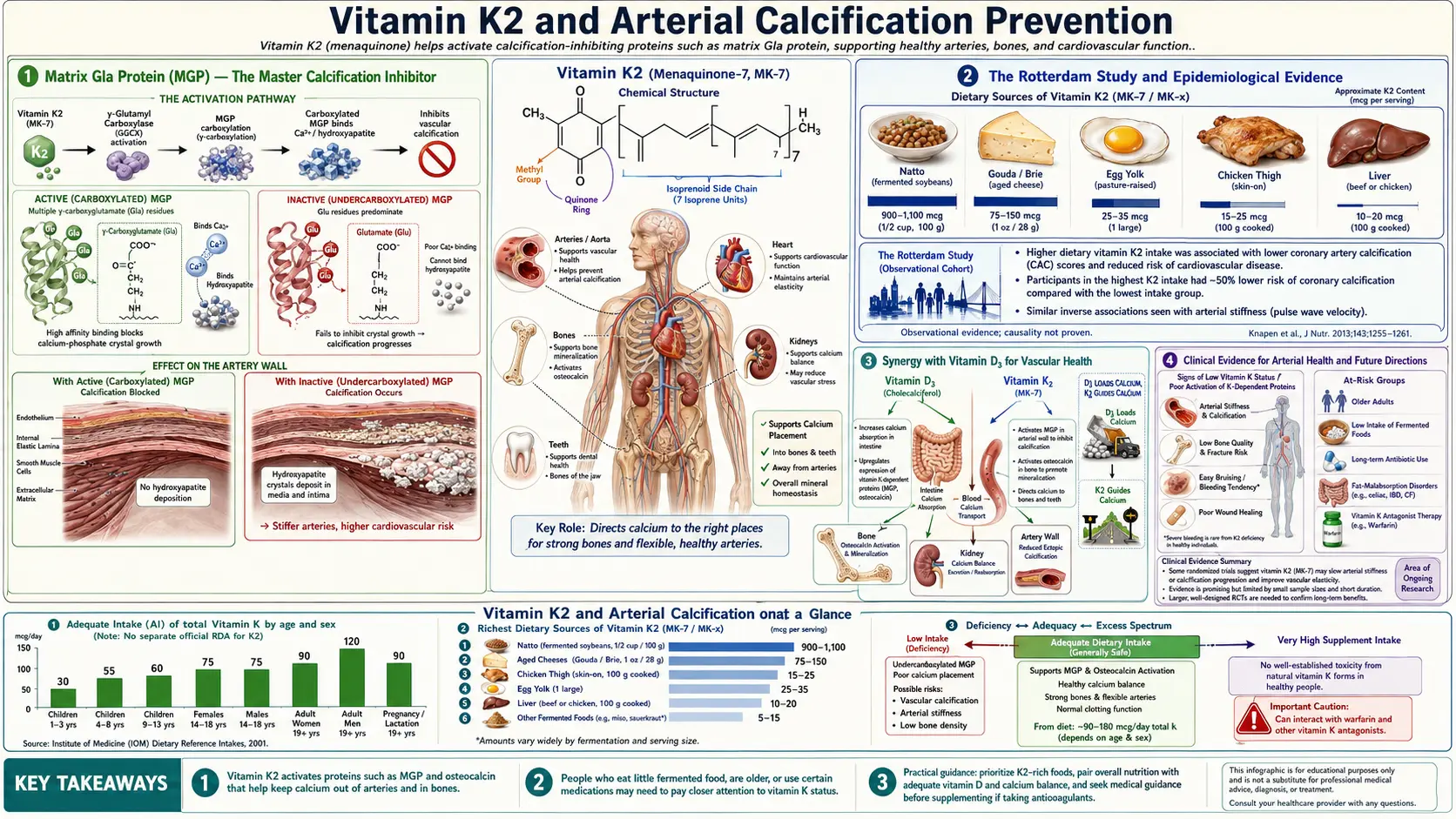
Arterial calcification — the deposition of calcium mineral in the walls of arteries — is generally regarded as an independent risk factor for cardiovascular disease and death (Schurgers 2007). It is not simply a passive result of ageing: when mice lacking Matrix Gla Protein (MGP) died of arterial calcification, the researchers concluded that calcification must be actively inhibited in soft tissues (Luo 1997). MGP is a potent inhibitor of arterial calcification whose activity depends on vitamin K (Schurgers 2007), because its calcium-binding activity is regulated by vitamin K-dependent carboxylation (Linus Pauling Institute). This page sets out what the cohort studies found about vitamin K2 (the menaquinones) and arterial disease, how the inactive form of MGP is used as a marker, and what the randomized trials found — several of which were neutral — together with the animal studies the idea grew from.
Table of Contents
- Matrix Gla Protein (MGP) — The Vitamin K-Dependent Calcification Inhibitor
- Vascular Smooth Muscle Cells and MGP
- The Rotterdam Study and Epidemiological Evidence
- dp-ucMGP as a Cardiovascular Biomarker
- The Calcium Paradox — Bones vs. Arteries
- Vitamin D and MGP: Laboratory and Animal Findings
- Statins and Coronary Calcification
- Clinical Trials of Vitamin K and Vascular Calcification
- Cautions & Contraindications
- Key Research Papers
- Connections
- Featured Videos
1. Matrix Gla Protein (MGP) — The Vitamin K-Dependent Calcification Inhibitor
MGP is a mineral-binding protein of the extracellular matrix, made by vascular smooth muscle cells and by chondrocytes (cartilage cells) (Luo 1997). A 2008 review describes it as generally accepted to be a potent inhibitor of arterial calcification, although its mechanism at the molecular level is not completely understood (Schurgers 2008).
- Two modifications: MGP's calcium-binding activity is regulated by two post-translational modifications — the vitamin K-dependent carboxylation of up to five glutamate (Glu) residues into gamma-carboxyglutamate (Gla), and the phosphorylation of serine residues (Linus Pauling Institute). Carboxylation is thought to affect the binding of calcium ions, and phosphorylation the release of MGP from cells; because both can be incomplete, several MGP species circulate in the blood (Cranenburg 2010).
- Proposed mechanisms: Calcification prevention by MGP has been described as involving several mechanisms, including binding to calcium crystals and inhibition of bone morphogenetic proteins (BMPs), which promote ectopic bone formation (Linus Pauling Institute). In cell experiments MGP bound BMP-2; intermediate amounts of MGP strongly inhibited BMP-2 activity, while low and high amounts enhanced it (Zebboudj 2002).
- The knockout mouse: Mice lacking MGP developed to term but died within two months of arterial calcification that led to blood-vessel rupture; cartilage-like cells were seen in the affected arteries, and the mice also showed inappropriate calcification of cartilage, short stature, osteopenia and fractures (Luo 1997). The authors described MGP as the first inhibitor of calcification of arteries and cartilage characterized in a living animal.
- In humans: Defects in the MGP gene have been linked to Keutel syndrome, a rare inherited condition marked by abnormal cartilage calcification and narrowing of the pulmonary artery (Linus Pauling Institute).
- Forms of MGP in blood: Assays distinguish several circulating species. The assay measuring the non-phosphorylated, non-carboxylated form (dp-ucMGP) was particularly sensitive to vitamin K supplementation and to vitamin K antagonist treatment, and its authors judged it suited to assessing vascular vitamin K status (Cranenburg 2010).
2. Vascular Smooth Muscle Cells and MGP
Vascular smooth muscle cells (VSMCs) in the artery wall synthesize and secrete MGP (Linus Pauling Institute).
- Bone-like change in the artery wall: In MGP knockout mice, VSMCs convert into bone-like cells and extensive vessel calcification leads to large-vessel rupture and premature death (Linus Pauling Institute; Luo 1997).
- BMP-2 signalling: In cell experiments, inhibitory amounts of MGP abolished BMP-2 receptor binding and decreased activation of Smad1, part of the BMP signalling system; the authors concluded that MGP is a BMP-2 regulatory protein (Zebboudj 2002).
- Warfarin in rats: Rats given enough warfarin to block the carboxylation of MGP developed massive focal calcification of the artery media when young and growing, less when older, and none as 10-month-old adults; susceptibility tracked higher serum phosphate (Price 2000). The MGP that accumulated at calcification sites was not carboxylated.
- Local vitamin K status: In rats with warfarin-induced calcification, staining with MGP antibodies demonstrated local vitamin K deficiency at the sites of calcification (Schurgers 2007).
- Gas6: Gas6, another vitamin K-dependent protein, has been involved in phagocytosis, cell adhesion, cell proliferation and protection against apoptosis, and has been linked to atherosclerosis among other conditions (Linus Pauling Institute). Its specific role in arterial calcification was not addressed by the sources reviewed for this page.
3. The Rotterdam Study and Epidemiological Evidence
The Rotterdam Study examined dietary vitamin K1 and K2 intake separately against coronary heart disease, mortality and aortic calcification. All of the studies in this section are observational: they show associations, not cause and effect.
- Study design: The analysis included 4,807 participants of the population-based Rotterdam Study with dietary data and no history of myocardial infarction at baseline (1990–1993), followed until 1 January 2000. Risks were compared across thirds (tertiles) of energy-adjusted vitamin K intake, adjusted for age, sex, BMI, smoking, diabetes, education and dietary factors (Geleijnse 2004).
- Key findings (Geleijnse 2004): Compared with the lowest third of menaquinone (K2) intake, the relative risk of coronary heart disease mortality was 0.73 (95% CI 0.45–1.17) in the middle third and 0.43 (0.24–0.77) in the top third. Menaquinone intake was also inversely related to all-cause mortality (RR 0.91, 0.75–1.09, and 0.74, 0.59–0.92) and to severe aortic calcification (odds ratio 0.71, 0.50–1.00, and 0.48, 0.32–0.71). The middle-third estimates were not statistically significant.
- Vitamin K1: Phylloquinone (K1) intake was not related to any of the outcomes (Geleijnse 2004).
- Prospect-EPIC, coronary heart disease: In 16,057 Dutch women aged 49–70 and free of cardiovascular disease at baseline, followed for a mean 8.1 years (480 incident cases), the hazard ratio for coronary heart disease was 0.91 (95% CI 0.85–1.00) per 10 mcg/day of vitamin K2 intake; the association was mainly due to MK-7, MK-8 and MK-9, and vitamin K1 intake was not significantly related to coronary heart disease (Gast 2009).
- Coronary calcification, cross-sectional: Among 564 postmenopausal women, 62% had coronary calcification. The highest versus lowest quartile of menaquinone intake was associated with less coronary calcification (RR 0.80, 0.65–0.98), while phylloquinone intake was not (RR 1.17, 0.96–1.42) (Beulens 2009).
- Limitations: Intakes were estimated from food-frequency questionnaires (Beulens 2009; Gast 2009). Associations in observational studies can reflect other differences between the people compared, even after adjustment; the randomized trials in section 8 test the question directly.
4. dp-ucMGP as a Cardiovascular Biomarker
Dephospho-uncarboxylated Matrix Gla Protein (dp-ucMGP) is the inactive circulating form of MGP, used in research as a marker of vascular vitamin K status (Cranenburg 2010).
- What it measures: dp-ucMGP is MGP that is neither phosphorylated nor carboxylated. In assay comparisons it was particularly sensitive to vitamin K supplementation and to vitamin K antagonists (Cranenburg 2010).
- Association with vascular disease: In 107 patients at different stages of chronic kidney disease, dp-ucMGP rose progressively with CKD stage (significantly from stage 4) and was positively and independently associated with the aortic calcification score; a crude association with mortality was lost after adjustment for age and a propensity score (Schurgers 2010). In 577 older adults, cardiovascular disease risk was two- to three-fold greater in the highest versus lowest third of dp-ucMGP, and in people with coronary artery disease or stroke cardiovascular and all-cause mortality were nearly doubled in the highest versus lowest quarter (as summarized by the Linus Pauling Institute). In women in the arterial-stiffness trial, baseline dp-ucMGP was associated with intima-media thickness, carotid diameter and carotid-femoral pulse wave velocity (Knapen 2015).
- Response to supplementation: MK-7 at 180 mcg/day for three years lowered dp-ucMGP by 50% compared with placebo in postmenopausal women (Knapen 2015). In 200 haemodialysis patients, MK-7 at 360, 720 or 1,080 mcg three times a week for 8 weeks lowered dp-ucMGP by 17, 33 and 46% (Caluwé 2014). A 2019 meta-analysis found that vitamin K supplementation reduced dp-ucMGP by 44.7% (95% CI −65.1 to −24.3) (Lees 2019).
- Levels in the population: In 896 samples from healthy volunteers, dp-ucMGP levels increased gradually from the age of 40; people with more pronounced vitamin K deficiency showed the largest responses to MK-7 (Theuwissen 2014).
- Assays: MGP was measured with two commercially available competitive assays and two newer sandwich assays, and major differences were found between them (Cranenburg 2010). dp-ucMGP is a research marker; a lower value after supplementation shows a change in vitamin K status, not by itself a change in calcification (see section 8).
- Chronic kidney disease: Haemodialysis patients have high levels of inactive MGP, possibly related to a low dietary vitamin K intake (Caluwé 2014), and the trials in this group are described in section 8.
5. The Calcium Paradox — Bones vs. Arteries
"Calcium paradox" is a name used for the observation that bone loss and arterial calcification often occur in the same people. Whether vitamin K links the two is a hypothesis under study, not an established finding.
- The observation: In the Framingham Heart Study, 364 women and 190 men had spine and hand radiographs about 25 years apart. Women with the greatest bone loss showed the most severe progression of abdominal aortic calcification (P = 0.01); no association was seen in men (Kiel 2001). The authors concluded that the two processes may be related.
- The vitamin K hypothesis: Vitamin K-dependent proteins act in both tissues — osteocalcin in bone (covered on the bone-health page) and MGP in the vessel wall. A 2019 review notes that vitamin K-dependent processes play a role in calcium homeostasis in both bone and vascular tissue and that it is "tempting to speculate" that vitamin K supplementation might protect against potentially untoward effects of calcium supplementation (Wasilewski 2019).
- Calcium supplements and cardiovascular events: A 2011 reanalysis of the Women's Health Initiative calcium and vitamin D trial with a meta-analysis of placebo-controlled trials found that calcium or calcium plus vitamin D increased the risk of myocardial infarction (RR 1.24, 95% CI 1.07–1.45) and of myocardial infarction or stroke (RR 1.15, 1.03–1.27); the authors concluded that calcium supplements with or without vitamin D modestly increase the risk of cardiovascular events (Bolland 2011). That analysis did not involve vitamin K.
- What has been tested: No trial among the sources reviewed here tested whether adding vitamin K changes the cardiovascular effect of calcium supplements. One trial of MK-7 combined with vitamin D in men with aortic valve calcification found no effect on calcification (Diederichsen 2022; section 8).
6. Vitamin D and MGP: Laboratory and Animal Findings
The idea that vitamins D and K interact in the artery wall comes from cell and animal work.
- Vitamin D raises MGP production in cells: In a rat osteosarcoma (bone-tumour) cell line, the active hormone 1,25-dihydroxyvitamin D3 increased MGP messenger RNA within 4 hours and MGP secretion 15-fold by 24 hours (Fraser 1988).
- High-dose vitamin D in rats: High doses of vitamin D are known to cause calcification of the artery media in rats within 3 to 4 days. Giving warfarin at the same time sharply increased that calcification; the effect of vitamin D dose on calcification paralleled its effect on serum calcium, and the authors explained the warfarin synergy by inhibition of MGP as a calcification inhibitor (Price 2000).
- In humans: The one large trial that combined the two — 720 mcg MK-7 plus 25 mcg vitamin D daily for two years in men with aortic valve calcification — found no effect on aortic valve, aortic or coronary calcification compared with placebo (Diederichsen 2022). Whether the cell and rat findings apply to people taking ordinary vitamin D doses has not been established by these studies.
7. Statins and Coronary Calcification
Statin use matters when coronary calcium scores are read as an outcome.
- Statins and calcium in plaque: In a post-hoc analysis of 8 randomized trials using serial intravascular ultrasound, high-intensity statin therapy was associated with regression of coronary atheroma volume, and coronary calcium indices increased in all groups, with a relation to statin intensity. The authors concluded that, independent of their plaque-regressive effects, statins promote coronary atheroma calcification, which may be one way statins stabilize plaque (Puri 2015).
- Why it matters for the vitamin K trials: A rising coronary calcium score can therefore reflect different processes. The VitaK-CAC investigators found that the increase in calcium score correlated with the number of non-calcified plaques that became partially calcified, and stated that the clinical significance of their result for plaque stability remains to be determined (Vossen 2026).
- Interaction: None of the vitamin K trials summarized on this page was designed to test an interaction between vitamin K and statins.
8. Clinical Trials of Vitamin K and Vascular Calcification
The randomized trials are small to medium-sized and their results are mixed: some found slower progression of a measure, several found no difference, and most measured imaging or blood markers rather than heart attacks or deaths.
- Arterial stiffness (Knapen 2015): 244 healthy postmenopausal women received 180 mcg/day MK-7 (n = 120) or placebo (n = 124) for three years. Carotid-femoral pulse wave velocity and the Stiffness Index β decreased significantly in the MK-7 group as a whole; several local carotid measures improved only in women whose baseline Stiffness Index β was above the median of 10.8. MK-7 lowered dp-ucMGP by 50% but did not change markers of inflammation or endothelial dysfunction.
- Warfarin-induced calcification in rats (Schurgers 2007): After rats developed arterial calcification on a warfarin diet, a high-vitamin K diet (K1 or K2) for 6 weeks lowered arterial calcium content by about 50% and restored arterial distensibility, while calcification progressed on a normal vitamin K dose. The authors described it as the first study in rats showing such calcification to be reversible by high vitamin K intake. This was an animal study.
- Aortic valve, vitamin K1 (Brandenburg 2017): Published as a research letter titled "Slower progress of aortic valve calcification with vitamin K supplementation". As described by the later Danish trial team, this was a smaller German open-label trial in patients with aortic stenosis in which 12 months of 2 mg/day vitamin K1 (phytomenadione) led to slower progression of aortic valve calcification volume on CT; that team noted a 27% dropout rate with no intention-to-treat analyses presented (Diederichsen 2022). A correction to the letter was published in 2020. This trial used vitamin K1, not K2.
- Aortic valve, MK-7 plus vitamin D (AVADEC; Lindholt 2018 protocol, Diederichsen 2022 results): 365 men (mean age 71) with an aortic valve calcium score above 300 were randomized to 720 mcg MK-7 plus 25 mcg vitamin D daily or placebo for 24 months. The valve calcium score rose by 275 and 292 units respectively, a difference that was not significant (P = 0.64). Valve area, jet velocity, and aortic and coronary calcification also did not differ, nor did valve surgery, deaths or cardiovascular events; dp-ucMGP fell with treatment. The authors concluded that the supplementation did not influence progression of aortic valve calcification.
- Bicuspid aortic valve (BASIK2; Peeters 2018): A randomized, placebo-controlled trial design of 360 mcg/day MK-7 in 44 people with a bicuspid aortic valve and mild-to-moderate calcific aortic stenosis, followed for 18 months, with change in 18F-sodium fluoride PET/MR uptake at 6 months as the primary endpoint. No results paper was found in PubMed when this page was checked.
- Coronary calcium in coronary artery disease (VitaK-CAC; Vossen 2015 protocol, Vossen 2026 results): Patients with symptomatic coronary artery disease and a coronary calcium score of 50–400 were randomized to 360 mcg/day MK-7 or placebo for two years (85 received MK-7 and 82 placebo). Median calcium scores rose from 145 to 214 units with placebo and from 135 to 184 with MK-7; the difference between groups was significant (P = .02), with a similar result for calcium mass. The authors concluded that MK-7 may slow calcification in non-calcified plaques and that the clinical significance for plaque stability remains to be determined.
- Type 2 diabetes (Zwakenberg 2019): 68 people with type 2 diabetes and cardiovascular disease received 360 mcg/day MK-7 or placebo for 6 months. Active calcification on 18F-sodium fluoride PET tended to increase in the MK-7 group (P = 0.06, not significant), and calcification mass on CT did not differ (P = 0.18); dp-ucMGP fell. The authors called for more research into the interpretation of the PET signal.
- Haemodialysis, vitamin K1 (VitaVasK; Saritas 2022): In an open-label trial of haemodialysis patients with existing coronary calcification, 5 mg vitamin K1 three times weekly was compared with standard care. Of 60 patients randomized, 20 dropped out for reasons unrelated to vitamin K1, leaving 17 in the vitamin K1 group and 23 controls; the trial was stopped early because of slow recruitment. At 18 months thoracic aortic calcification progression was 56% lower with vitamin K1 (p = .039), and coronary calcification progression was 68% lower (P = .072, not significant); uncarboxylated MGP fell by 69%.
- Haemodialysis, vitamin K1 (iPACK-HD; Holden 2023): A pilot trial in 86 haemodialysis patients compared 10 mg phylloquinone three times weekly with placebo for 12 months. The feasibility targets were met and dp-ucMGP fell by 86%, but there was no difference in coronary calcification progression between the groups.
- Older adults, vitamin K1 (Shea 2009): 388 healthy older men and postmenopausal women received a multivitamin with or without 500 mcg/day phylloquinone for three years. In the intention-to-treat analysis coronary calcium progression did not differ; among participants at least 85% adherent there was less progression with phylloquinone (P = 0.03), and among those with existing coronary calcium progression was 6% less (P = 0.04). The authors described these data as hypothesis-generating. A later analysis of the Multi-Ethnic Study of Atherosclerosis found that low serum vitamin K1 was not significantly associated with extreme coronary calcium progression overall, but was in people taking blood-pressure medication (Shea 2013).
- Pooled evidence: A 2019 meta-analysis of 13 controlled trials (2,162 participants) found that vitamin K supplementation reduced vascular calcification (−9.1%, 95% CI −17.7 to −0.5) but not vascular stiffness, with conclusions limited by small numbers of studies and substantial heterogeneity (Lees 2019). A 2015 Cochrane review of vitamin K for the primary prevention of cardiovascular disease found only one small 3-month trial (60 participants), which reported no cardiovascular events and no effect on blood pressure or lipids (Hartley 2015).
- Safety in the trials: No adverse events were reported in the diabetes trial (Zwakenberg 2019), no treatment-related adverse events in VitaVasK (Saritas 2022), and no significant adverse effects in VitaK-CAC (Vossen 2026). In the haemodialysis dose-finding study, dropouts were mainly due to gastrointestinal side effects related to the unpleasant smell of the tablets (Caluwé 2014). No tolerable upper intake level has been established for vitamin K (Linus Pauling Institute).
Cautions & Contraindications
- Vitamin K antagonists (warfarin-type anticoagulants): Warfarin works by blocking the recycling of vitamin K (Linus Pauling Institute). In 18 healthy volunteers anticoagulated with acenocoumarol, MK-7 at 10 and 20 mcg/day was judged to cause a clinically relevant lowering of the INR in at least 40% and 60% of subjects respectively, and 45 mcg/day lowered the group mean INR by about 40%; the authors concluded that MK-7 supplements need to be avoided in patients receiving vitamin K antagonist therapy (Theuwissen 2013). The Linus Pauling Institute reports that experts advise a reasonably constant dietary vitamin K intake for people taking vitamin K antagonists. The AVADEC trial excluded people taking vitamin K antagonists (Lindholt 2018).
- Established calcification: The human trials measured whether calcification progressed more slowly, not whether existing calcification regressed. Regression has been shown in rats (Schurgers 2007); in men with substantial aortic valve calcification, MK-7 plus vitamin D did not change progression (Diederichsen 2022).
- Cis and trans MK-7: MK-7 can exist as several cis/trans isomers, and a 2020 review states that only the all-trans form is biologically significant (Lal 2020). In laboratory tests, cis MK-7 showed a small carboxylation activity, less than trans MK-7 (Cirilli 2022). An analysis of MK-7 supplements in oil capsules and tablets identified eleven cis/trans isomers; the all-trans MK-7 content was lower than the isomeric forms and often lower than the label declared, and the impurities were most likely formed during chemical synthesis (Szterk 2018). The MK-7 vs MK-4 page covers this in more detail.
- Questions about supplements: Decisions about vitamin K supplements, particularly alongside anticoagulants, belong with a clinician.
Key Research Papers
- Geleijnse JM, Vermeer C, Grobbee DE, Schurgers LJ, Knapen MHJ, van der Meer IM, Hofman A, Witteman JCM (2004). Dietary intake of menaquinone is associated with a reduced risk of coronary heart disease: the Rotterdam Study. Journal of Nutrition 134(11): 3100–3105. — doi:10.1093/jn/134.11.3100
- Luo G, Ducy P, McKee MD, Pinero GJ, Loyer E, Behringer RR, Karsenty G (1997). Spontaneous calcification of arteries and cartilage in mice lacking matrix GLA protein. Nature 386(6620): 78–81. — doi:10.1038/386078a0
- Knapen MHJ, Braam LAJLM, Drummen NE, Bekers O, Hoeks APG, Vermeer C (2015). Menaquinone-7 supplementation improves arterial stiffness in healthy postmenopausal women: a double-blind randomised clinical trial. Thrombosis and Haemostasis 113(5): 1135–1144. — doi:10.1160/TH14-08-0675
- Beulens JWJ, Bots ML, Atsma F, Bartelink ML, Prokop M, Geleijnse JM, Witteman JCM, Grobbee DE, van der Schouw YT (2009). High dietary menaquinone intake is associated with reduced coronary calcification. Atherosclerosis 203(2): 489–493. — doi:10.1016/j.atherosclerosis.2008.07.010
- Schurgers LJ, Spronk HMH, Soute BAM, Schiffers PM, DeMey JGR, Vermeer C (2007). Regression of warfarin-induced medial elastocalcinosis by high intake of vitamin K in rats. Blood 109(7): 2823–2831. — doi:10.1182/blood-2006-07-035345
- Cranenburg ECM, Koos R, Schurgers LJ, Magdeleyns EJ, Schoonbrood THM, Landewe RBM, Brandenburg VM, Bekers O, Vermeer C (2010). Characterisation and potential diagnostic value of circulating matrix Gla protein (MGP) species. Thrombosis and Haemostasis 104(4): 811–822. — doi:10.1160/TH09-11-0786
- Caluwe R, Vandecasteele S, Van Vlem B, Vermeer C, De Vriese AS (2014). Vitamin K2 supplementation in haemodialysis patients: a randomized dose-finding study. Nephrology Dialysis Transplantation 29(7): 1385–1390. — doi:10.1093/ndt/gft464
- Schurgers LJ, Barreto DV, Barreto FC, Liabeuf S, Renard C, Magdeleyns EJ, Vermeer C, Choukroun G, Massy ZA (2010). The circulating inactive form of matrix gla protein is a surrogate marker for vascular calcification in chronic kidney disease: a preliminary report. Clinical Journal of the American Society of Nephrology 5(4): 568–575. — doi:10.2215/CJN.07081009
- Brandenburg VM, Reinartz S, Kaesler N, Krüger T, Dirrichs T, Kramann R, Peeters F, Floege J, Keszei A, Marx N, Schurgers LJ, Koos R (2017). Slower progress of aortic valve calcification with vitamin K supplementation: results from a prospective interventional proof-of-concept study. Circulation 135(21): 2081–2083. — doi:10.1161/CIRCULATIONAHA.116.027011 (Research letter; correction published 2020, PubMed PMID: 31958241.)
- Shea MK, Booth SL, Miller ME, Burke GL, Chen H, Cushman M, Tracy RP, Kritchevsky SB (2013). Association between circulating vitamin K1 and coronary calcium progression in community-dwelling adults: the Multi-Ethnic Study of Atherosclerosis. American Journal of Clinical Nutrition 98(1): 197–208. — doi:10.3945/ajcn.112.056101
- Lees JS, Chapman FA, Witham MD, Jardine AG, Mark PB (2019). Vitamin K status, supplementation and vascular disease: a systematic review and meta-analysis. Heart 105(12): 938–945. — doi:10.1136/heartjnl-2018-313955
- Vossen LM, Schurgers LJ, van Varik BJ, Kietselaer BLJH, Vermeer C, Meeder JG, Rahel BM, van Cauteren YJM, Hoffland GA, Rennenberg RJ, Reesink KD, de Leeuw PW, Kroon AA (2015). Menaquinone-7 supplementation to reduce vascular calcification in patients with coronary artery disease: rationale and study protocol (VitaK-CAC trial). Nutrients 7(11): 8905–8915. — doi:10.3390/nu7115443
- Theuwissen E, Magdeleyns EJ, Braam LAJLM, Teunissen KJ, Knapen MHJ, Binnekamp IAG, van Summeren MJH, Vermeer C (2014). Vitamin K status in healthy volunteers. Food & Function 5(2): 229–234. — doi:10.1039/c3fo60464k
- Hartley L, Clar C, Ghannam O, Flowers N, Stranges S, Rees K (2015). Vitamin K for the primary prevention of cardiovascular disease. Cochrane Database of Systematic Reviews (9): CD011148. — doi:10.1002/14651858.CD011148.pub2
- Gast GC, de Roos NM, Sluijs I, Bots ML, Beulens JW, Geleijnse JM, Witteman JC, Grobbee DE, Peeters PH, van der Schouw YT (2009). A high menaquinone intake reduces the incidence of coronary heart disease. Nutrition, Metabolism and Cardiovascular Diseases 19(7): 504–510. — PubMed PMID: 19179058
- Diederichsen ACP, Lindholt JS, Möller S, Øvrehus KA, Auscher S, Lambrechtsen J, Hosbond SE, Alan DH, Urbonaviciene G, Becker SW, Fredgart MH, Hasific S, Folkestad L, Gerke O, Rasmussen LM, Møller JE, Mickley H, Dahl JS (2022). Vitamin K2 and D in patients with aortic valve calcification: a randomized double-blinded clinical trial. Circulation 145(18): 1387–1397. — PubMed PMID: 35465686
- Lindholt JS, Frandsen NE, Fredgart MH, Øvrehus KA, Dahl JS, Møller JE, Folkestad L, Urbonaviciene G, Becker SW, Lambrechtsen J, Auscher S, Hosbond S, Alan DH, Rasmussen LM, Gerke O, Mickley H, Diederichsen A (2018). Effects of menaquinone-7 supplementation in patients with aortic valve calcification: study protocol for a randomised controlled trial. BMJ Open 8(8): e022019. — PubMed PMID: 30139903
- Peeters FECM, van Mourik MJW, Meex SJR, Bucerius J, Schalla SM, Gerretsen SC, Mihl C, Dweck MR, Schurgers LJ, Wildberger JE, Crijns HJGM, Kietselaer BLJH (2018). Bicuspid aortic valve stenosis and the effect of vitamin K2 on calcification using 18F-sodium fluoride positron emission tomography/magnetic resonance: the BASIK2 rationale and trial design. Nutrients 10(4): 386. — PubMed PMID: 29561783
- Vossen LM, de Leeuw PW, Schurgers LJ, Heuts S, Adriaans BP, de Haan C, van Varik BJ, Kroon AA (2026). Two years of menaquinone-7 supplementation and coronary artery calcification: a randomized clinical trial. JAMA Cardiology 11(8): 719–726. — PubMed PMID: 42268593
- Zwakenberg SR, de Jong PA, Bartstra JW, van Asperen R, Westerink J, de Valk H, Slart RHJA, Luurtsema G, Wolterink JM, de Borst GJ, van Herwaarden JA, van de Ree MA, Schurgers LJ, van der Schouw YT, Beulens JWJ (2019). The effect of menaquinone-7 supplementation on vascular calcification in patients with diabetes: a randomized, double-blind, placebo-controlled trial. American Journal of Clinical Nutrition 110(4): 883–890. — PubMed PMID: 31387121
- Saritas T, Reinartz S, Krüger T, Ketteler M, Liangos O, Labriola L, Stenvinkel P, Kopp C, Westenfeld R, Evenepoel P, Siepmann R, Wied S, Hilgers RD, Schurgers L, Floege J; VitaVasK Investigators (2022). Vitamin K1 and progression of cardiovascular calcifications in hemodialysis patients: the VitaVasK randomized controlled trial. Clinical Kidney Journal 15(12): 2300–2311. — PubMed PMID: 37216675
- Holden RM, Booth SL, Zimmerman D, Moist L, Norman PA, Day AG, Menard A, Fu X, Shea MK, Babiolakis CS, Nolan R, Turner ME, Ward E, Kaufmann M, Adams MA, Heyland DK (2023). Inhibit progression of coronary artery calcification with vitamin K in hemodialysis patients (the iPACK-HD study): a randomized, placebo-controlled multi-center, pilot trial. Nephrology Dialysis Transplantation 38(3): 746–756. — PubMed PMID: 35641194
- Shea MK, O'Donnell CJ, Hoffmann U, Dallal GE, Dawson-Hughes B, Ordovas JM, Price PA, Williamson MK, Booth SL (2009). Vitamin K supplementation and progression of coronary artery calcium in older men and women. American Journal of Clinical Nutrition 89(6): 1799–1807. — PubMed PMID: 19386744
- Schurgers LJ, Cranenburg EC, Vermeer C (2008). Matrix Gla-protein: the calcification inhibitor in need of vitamin K. Thrombosis and Haemostasis 100(4): 593–603. — PubMed PMID: 18841280
- Zebboudj AF, Imura M, Boström K (2002). Matrix GLA protein, a regulatory protein for bone morphogenetic protein-2. Journal of Biological Chemistry 277(6): 4388–4394. — PubMed PMID: 11741887
- Price PA, Faus SA, Williamson MK (2000). Warfarin-induced artery calcification is accelerated by growth and vitamin D. Arteriosclerosis, Thrombosis, and Vascular Biology 20(2): 317–327. — PubMed PMID: 10669626
- Fraser JD, Otawara Y, Price PA (1988). 1,25-Dihydroxyvitamin D3 stimulates the synthesis of matrix gamma-carboxyglutamic acid protein by osteosarcoma cells. Mutually exclusive expression of vitamin K-dependent bone proteins by clonal osteoblastic cell lines. Journal of Biological Chemistry 263(2): 911–916. — PubMed PMID: 3257212
- Kiel DP, Kauppila LI, Cupples LA, Hannan MT, O'Donnell CJ, Wilson PW (2001). Bone loss and the progression of abdominal aortic calcification over a 25 year period: the Framingham Heart Study. Calcified Tissue International 68(5): 271–276. — PubMed PMID: 11683533
- Wasilewski GB, Vervloet MG, Schurgers LJ (2019). The bone-vasculature axis: calcium supplementation and the role of vitamin K. Frontiers in Cardiovascular Medicine 6: 6. — PubMed PMID: 30805347
- Bolland MJ, Grey A, Avenell A, Gamble GD, Reid IR (2011). Calcium supplements with or without vitamin D and risk of cardiovascular events: reanalysis of the Women's Health Initiative limited access dataset and meta-analysis. BMJ 342: d2040. — PubMed PMID: 21505219
- Puri R, Nicholls SJ, Shao M, Kataoka Y, Uno K, Kapadia SR, Tuzcu EM, Nissen SE (2015). Impact of statins on serial coronary calcification during atheroma progression and regression. Journal of the American College of Cardiology 65(13): 1273–1282. — PubMed PMID: 25835438
- Theuwissen E, Teunissen KJ, Spronk HM, Hamulyák K, Ten Cate H, Shearer MJ, Vermeer C, Schurgers LJ (2013). Effect of low-dose supplements of menaquinone-7 (vitamin K2) on the stability of oral anticoagulant treatment: dose-response relationship in healthy volunteers. Journal of Thrombosis and Haemostasis 11(6): 1085–1092. — PubMed PMID: 23530987
- Lal N, Berenjian A (2020). Cis and trans isomers of the vitamin menaquinone-7: which one is biologically significant? Applied Microbiology and Biotechnology 104(7): 2765–2776. — PubMed PMID: 32009201
- Cirilli I, Orlando P, Silvestri S, Marcheggiani F, Dludla PV, Kaesler N, Tiano L (2022). Carboxylative efficacy of trans and cis MK7 and comparison with other vitamin K isomers. BioFactors 48(5): 1129–1136. — PubMed PMID: 35583412
- Szterk A, Bus K, Zmysłowski A, Ofiara K (2018). Analysis of menaquinone-7 content and impurities in oil and non-oil dietary supplements. Molecules 23(5): 1056. — PubMed PMID: 29724016
- Linus Pauling Institute Micronutrient Information Center. Vitamin K. Oregon State University. — lpi.oregonstate.edu/mic/vitamins/vitamin-K
PubMed Topic Searches
- PubMed: Vitamin K2 and arterial calcification
- PubMed: Matrix Gla Protein and vascular calcification
- PubMed: MK-7 and cardiovascular outcomes
- PubMed: dp-ucMGP biomarker and CV risk
- PubMed: Rotterdam Study K2 and CHD
- PubMed: K2 and arterial stiffness (PWV)
- PubMed: Warfarin and vascular calcification
- PubMed: K2 in CKD calcification
- PubMed: CAC score and Vitamin K
- PubMed: The calcium paradox and K2
- PubMed: D3 + K2 and vascular calcification
- PubMed: Aortic valve calcification and K2
- PubMed: VitaK-CAC trial
- PubMed: Knapen postmenopausal stiffness trial
Connections
- All Vitamins
- Vitamin K (Main Page)
- Vitamin K Benefits Hub
- K2 and Bone Health
- MK-7 vs MK-4
- K2 and Insulin Sensitivity
- Vitamin K and Blood Clotting
- Vitamin D3
- Vitamin D3 and Bone Health
- Vitamin E
- Vitamin E and Heart Health
- Calcium
- Magnesium
- Magnesium and Heart Health
- Cardiovascular Disease
- Hypertension
- Coronary Artery Disease
- Heart Failure
- Osteoporosis
- Chronic Kidney Disease
- Fermented Foods
- Natto
- Deficiency
- Toxicity
- History
- Sources