Longevity Protocols: Evidence-Based Strategies for Healthy Aging

Table of Contents
- Overview: The Science of Extending Healthspan
- The Hallmarks of Aging
- Blue Zones and Centenarian Research
- Caloric Restriction and Fasting
- NAD+ and NMN/NR Supplementation
- Resveratrol and Sirtuin Activation
- Metformin and Rapamycin
- Senolytics: Clearing Senescent Cells
- Telomeres and Telomerase Research
- Mitochondrial Health
- Peptide Therapies
- Hormone Therapies
- Exercise Protocols for Longevity
- Sleep Architecture and Longevity
- Stress Resilience and Cortisol Management
- Anti-Inflammatory Diet
- Supplements Studied for Longevity
- Biomarkers Used in Longevity Research
- Emerging Research
- Key Research Papers
- Connections
- Featured Videos
1. Overview: The Science of Extending Healthspan
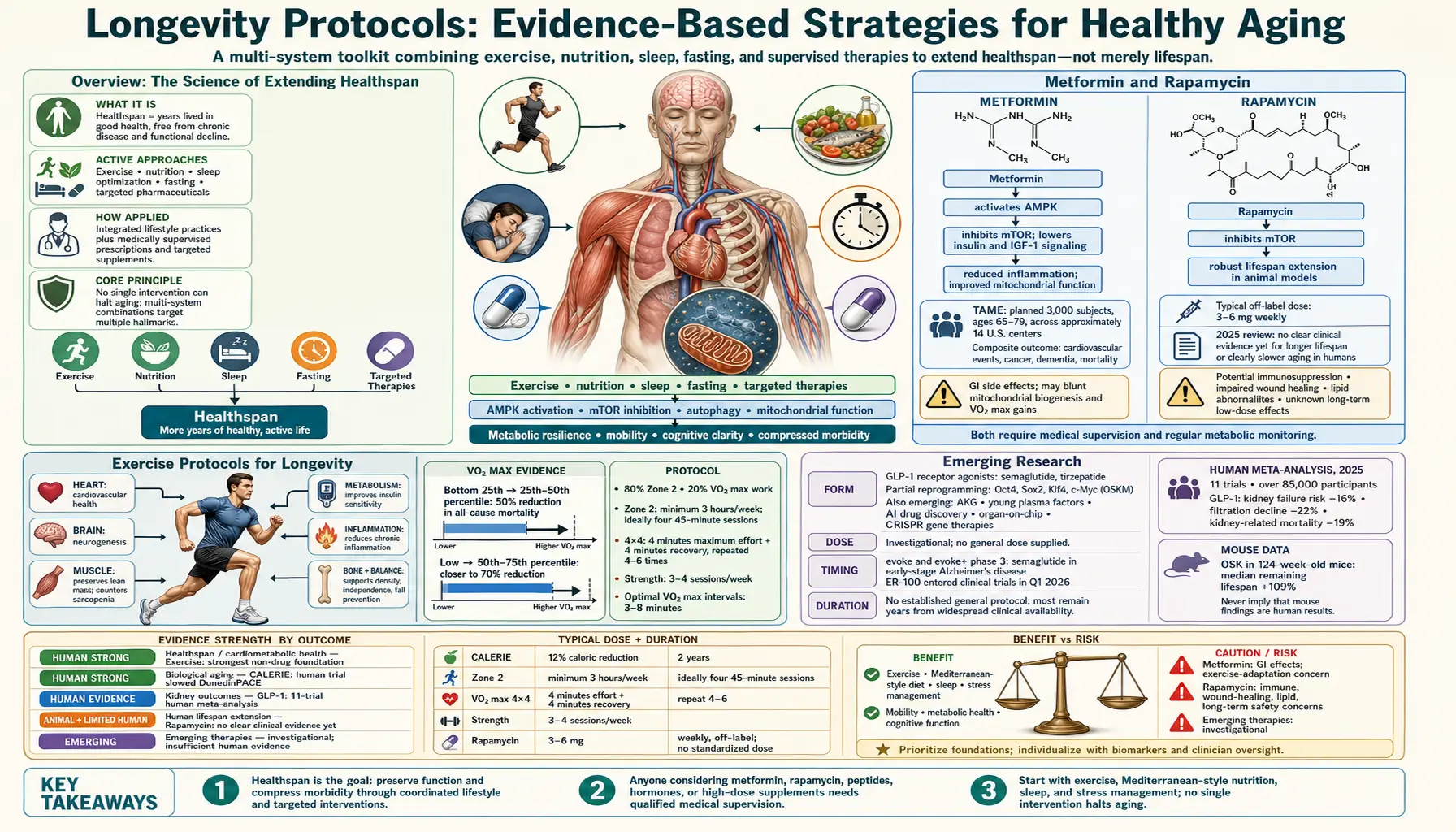
Longevity research increasingly focuses on healthspan — the number of years lived in good health, free from chronic disease and functional decline — rather than lifespan alone. A goal often stated in the field is to "compress morbidity": to shorten the period of illness and disability at the end of life.
The field draws on molecular biology, gerontology, endocrinology, nutrition science and exercise physiology. Research on the biology of aging has produced candidate interventions — drugs such as rapamycin and metformin, and lifestyle approaches such as caloric restriction, fasting, exercise and sleep. For most of them the evidence is much stronger in animals than in people, and a growing number are now being tested in human trials, most of them small and short and measuring biomarkers rather than disease or survival.
This page summarizes what research reports about the approaches most often grouped under the label "longevity protocols". Regimens described by named researchers and authors are reported as theirs; doses mentioned are those used in trials or described by the person named, not instructions. No intervention has been shown to halt human aging, and for most of these approaches no trial has measured an effect on human lifespan. Decisions about medicines and supplements belong with a clinician.
2. The Hallmarks of Aging
In 2013, Carlos López-Otín and colleagues published a paper in Cell describing nine hallmarks of aging — biological processes that change with time and are proposed to drive the aging phenotype. The same group expanded the list to twelve in 2023. The framework is widely used to organize longevity research and to classify candidate interventions.
The twelve hallmarks are: genomic instability (accumulation of DNA damage), telomere attrition (shortening of chromosome end-caps), epigenetic alterations (changes in gene regulation without changes in DNA sequence), loss of proteostasis (decline in protein quality control), disabled macroautophagy (impaired cellular recycling), deregulated nutrient sensing (changes in the mTOR, AMPK, insulin/IGF-1 and sirtuin pathways), mitochondrial dysfunction, cellular senescence (accumulation of non-dividing cells that secrete inflammatory factors), stem cell exhaustion (reduced regenerative capacity), altered intercellular communication (changes in hormonal, neural and immune signalling between cells), chronic inflammation (the low-grade inflammation often called "inflammaging") and dysbiosis (changes in the gut microbiome).
The hallmarks are described as interconnected. For example, mitochondrial dysfunction generates reactive oxygen species that can damage DNA, DNA damage can trigger cellular senescence, and senescent cells release inflammatory signals that can impair stem cell function. Researchers in the field have argued that interventions acting on several hallmarks at once may be needed. A 2025 study in Nature Medicine estimated the biological age of 11 organs from 2,916 plasma proteins in 44,498 UK Biobank participants; youthful brain and immune-system profiles were associated with lower mortality (hazard ratios 0.60 and 0.58, and 0.44 when both were youthful), and the authors pointed to the brain and immune system as key targets for longevity interventions.
3. Blue Zones and Centenarian Research
Blue Zones are regions reported to have exceptionally high concentrations of centenarians, often in good health. The concept was popularized by author Dan Buettner, whose list of five regions is Okinawa, Japan; Sardinia, Italy; the Nicoya Peninsula, Costa Rica; Ikaria, Greece; and Loma Linda, California. A 2025 review by demographers Michel Poulain and Anne Herm states that four Blue Zones have been validated — Okinawa, Sardinia, Nicoya and Ikaria — with Martinique "recently emerging as the fifth". Their criteria use strict age-validation procedures and require an area to show a longevity level at least 50% higher than the national average.
Buettner describes nine lifestyle characteristics shared by these populations, which he calls the Power 9: natural daily movement (rather than structured exercise), a sense of purpose, stress-reduction routines, eating until about 80% full (the Okinawan practice of hara hachi bu), a plant-predominant diet, moderate alcohol intake (particularly wine with meals), belonging to a faith-based community, close family ties, and supportive social circles. The 2025 Poulain and Herm review likewise highlights diet, physical activity, social support and environment as core longevity factors.
The Blue Zone data have also drawn criticism. A 2024 demographic analysis of Okinawa by Poulain and Herm found that the population divides into generations born before World War II, which have a highly favourable mortality pattern, and those born after, whose mortality is higher than in mainland Japan; in 2002 Okinawa fell from 4th to 26th among Japan's 47 prefectures in male life expectancy. The authors called for in-depth validation of the ages of the oldest residents. A 2019 preprint by Saul Newman (not peer-reviewed) argued that records of extreme age show patterns of clerical error and pension fraud: in the United States the introduction of birth certificates was associated with a 69–82% fall in supercentenarian records, and the designated Blue Zones of Sardinia, Okinawa and Ikaria corresponded to regions with low incomes and low literacy. The 2025 Poulain and Herm review acknowledges criticism of data reliability, particularly the accuracy of centenarians' ages.
4. Caloric Restriction and Fasting
Caloric restriction (CR) — reducing energy intake without malnutrition — is one of the most extensively studied longevity interventions and increases lifespan in many species in laboratory studies. In rhesus monkeys, two long-running studies begun in the late 1980s reached different conclusions about survival; a 2017 joint analysis of both concluded that the health benefits of CR are conserved in monkeys and attributed the differences partly to study design. At the molecular level, CR is described as inhibiting the mTOR (mechanistic target of rapamycin) growth pathway, activating AMPK (AMP-activated protein kinase, the cell's energy sensor) and increasing autophagy, the cellular process that recycles damaged proteins and organelles.
In humans, the CALERIE trial (Comprehensive Assessment of Long-term Effects of Reducing Intake of Energy) randomized 218 non-obese adults aged 21–51 to a two-year intervention designed to achieve 25% CR, or to their usual diet. The CR group achieved 11.7% CR and maintained a 10.4% weight loss; it had larger decreases in cardiometabolic risk factors, a larger fall in the inflammatory marker TNF-α at 24 months, and no adverse effects on quality of life. A 2023 post hoc analysis of blood samples found that the intervention slowed the pace of aging measured by the DunedinPACE DNA-methylation algorithm but did not significantly change biological-age estimates from other clocks, including PhenoAge and GrimAge; the authors described the effect sizes as small.
Intermittent fasting and time-restricted eating (for example, eating within an 8-hour window) are studied as patterns that may be easier to maintain than continuous CR; a 2016 review by Valter Longo and Satchidananda Panda discusses fasting, circadian rhythms and time-restricted feeding in relation to healthy lifespan. During fasting, insulin falls and the body shifts toward fat oxidation and ketone production. Longo's group also developed a fasting-mimicking diet (FMD), low in calories, sugars and protein. In a 2017 trial, 100 generally healthy adults were randomized to their usual diet or to the FMD for 5 consecutive days per month for 3 months; three FMD cycles reduced body weight, trunk and total body fat, blood pressure and IGF-1, with no serious adverse effects reported.
5. NAD+ and NMN/NR Supplementation
Nicotinamide adenine dinucleotide (NAD+) is a coenzyme found in every living cell, involved in mitochondrial energy production, DNA repair, sirtuin activity and many other enzymatic reactions. In rodents, obesity and aging impair NAD+ biosynthesis, and this decline is proposed to contribute to several hallmarks of aging, including mitochondrial dysfunction and genomic instability. Raising NAD+ levels with precursor molecules is therefore an active area of longevity research.
The two most studied NAD+ precursors sold as supplements are nicotinamide mononucleotide (NMN) and nicotinamide riboside (NR). Harvard geneticist David Sinclair, in his 2019 book Lifespan, describes taking 1 gram of NMN each morning together with 1 gram of resveratrol mixed into yogurt, and metformin. He describes NMN as supplying the NAD+ "fuel" that sirtuin enzymes need while resveratrol activates them. This is his personal regimen; it has not been tested as a combination in a clinical trial.
Human trials of NAD+ precursors have been small and short and have measured NAD+ levels and physiological markers rather than aging or lifespan. In a 10-week randomized trial in postmenopausal women with prediabetes who were overweight or obese, NMN increased muscle insulin sensitivity and insulin signalling, which did not change with placebo. In a 6-week trial in 48 amateur runners given 300, 600 or 1,200 mg of NMN daily or placebo, oxygen uptake and power at ventilatory thresholds increased more in the 600 and 1,200 mg groups than with placebo, but VO2 max did not change in any group. In healthy older men given 250 mg of NMN daily for 6 or 12 weeks, blood NAD+ rose; gait speed and left-hand grip showed nominally significant improvements, with no effect on body composition. A 2 × 6-week crossover trial of NR in healthy middle-aged and older adults found it well tolerated and effective at stimulating NAD+ metabolism, and the authors suggested future trials of blood pressure and arterial stiffness. Long-term safety data in people are limited.
6. Resveratrol and Sirtuin Activation
Resveratrol is a polyphenol found in red grape skins, blueberries, peanuts and Japanese knotweed. It gained attention as a proposed explanation for the "French Paradox" — the observation that French populations drinking red wine had relatively low cardiovascular disease rates despite a high intake of dietary fat. Resveratrol was reported to activate SIRT1, the most studied of the sirtuins, a family of NAD+-dependent deacetylase enzymes that remove acetyl groups from histones and other proteins and so regulate gene expression, DNA repair and stress resistance. A 2010 study found that resveratrol and several synthetic "sirtuin activators" activated SIRT1 only in assays using a substrate carrying a fluorescent tag, not with native substrates, and concluded that they are not direct SIRT1 activators.
The seven mammalian sirtuins (SIRT1–SIRT7) are involved in mitochondrial biogenesis, autophagy, inflammation, insulin signalling and circadian rhythm. SIRT1 has been proposed as a key mediator of pathways downstream of caloric restriction; in laboratory studies it suppresses NF-κB inflammatory signalling and interacts with PGC-1α, a regulator of mitochondrial function. SIRT3 acts in mitochondria, and SIRT6 has been linked to telomere integrity and genome stability.
In mice fed a high-calorie diet, resveratrol improved health and survival (Baur and colleagues, 2006). Human results have been less consistent. In a randomized placebo-controlled trial, 24 obese but otherwise healthy men took high-dose resveratrol or placebo for 4 weeks; insulin sensitivity, blood pressure, energy expenditure, fat content and inflammatory and metabolic markers did not change, and the authors wrote that the lack of effect "disagrees with persuasive data obtained from rodent models". Resveratrol has low oral bioavailability. Pterostilbene (a methylated analogue of resveratrol), fisetin and quercetin are other plant compounds studied in this area.
7. Metformin and Rapamycin
Metformin is the most commonly prescribed glucose-lowering drug worldwide. Because of benefits in model organisms and mechanistic links to the hallmarks of aging — it activates AMPK, inhibits mTOR signalling and lowers insulin and IGF-1 signalling — it has been proposed as a drug to target aging itself. Early interest was driven partly by an observational finding that people with type 2 diabetes treated with metformin survived as long as or longer than people without diabetes. A 2022 study of Danish national registers, including twin pairs, did not reproduce this: metformin monotherapy for type 2 diabetes was associated with higher mortality than no diabetes (adjusted incidence rate ratio 1.32 in singletons and 1.64 in discordant twins). A 2025 review by the same group describes "an emerging uncertainty in the anti-aging potential of metformin". The TAME (Targeting Aging with Metformin) trial, led by Nir Barzilai of the Albert Einstein College of Medicine, was designed — as its organizers described in 2016 — to enroll 3,000 people aged 65–79 at about 14 U.S. centres and measure time to a new composite outcome including cardiovascular events, cancer, dementia and death. Its organizers describe it as a model for testing drugs that target aging. As of 2026, no TAME results have been published.
Rapamycin (sirolimus) is an mTOR inhibitor used as an immunosuppressant in transplant medicine. A 2014 paper stated that mTOR inhibition "extends life span in all species studied to date"; in genetically heterogeneous mice, rapamycin fed from 600 days of age extended median and maximal lifespan in both sexes (by 14% in females and 9% in males, measured at the age of 90% mortality). In older human volunteers, the related drug everolimus enhanced the response to influenza vaccination by about 20%. The PEARL trial (Participatory Evaluation of Aging with Rapamycin for Longevity), a 48-week randomized placebo-controlled trial in healthy adults, tested 5 mg or 10 mg of compounded rapamycin once weekly: adverse events were similar across groups, its primary outcome (visceral fat) did not change, and lean tissue mass and self-reported pain improved in women taking 10 mg; the authors are employees and shareholders of the company that ran it. A 2024 systematic review of 19 human studies found improvements in some immune, cardiovascular and skin measures, no significant effects on endocrine, muscular or neurological measures, and increased infections and rises in cholesterol and triglycerides in people with aging-related diseases.
Both drugs carry caveats reported in trials. In a 12-week trial in 53 older adults doing aerobic exercise training, metformin attenuated the training-induced improvements in whole-body insulin sensitivity and VO2 max and abolished the increase in muscle mitochondrial respiration. Rapamycin is a prescription immunosuppressant; low-dose off-label use has no standardized dose, and its long-term safety in healthy people has not been established. Both drugs are prescription medicines.
8. Senolytics: Clearing Senescent Cells
Cellular senescence — a permanent halt to cell division in response to DNA damage, telomere shortening or oncogenic stress — is one of the twelve hallmarks of aging. Senescence also acts as a tumour-suppressor mechanism, preventing damaged cells from replicating. Senescent cells accumulate with age and release a mixture of inflammatory cytokines, proteases and growth factors called the senescence-associated secretory phenotype (SASP), which is proposed to drive inflammation and dysfunction in surrounding tissue. Senolytics are compounds designed to selectively eliminate senescent cells, and they are an active area of research.
The most studied combination is dasatinib plus quercetin (D+Q), developed by Mayo Clinic researchers including James Kirkland and Tamar Tchkonia. In an open-label pilot study in 9 people with diabetic kidney disease, 3 days of dasatinib 100 mg and quercetin 1,000 mg reduced senescent-cell markers in fat tissue within 11 days, as well as senescent cells in skin and circulating SASP factors. In an open-label phase 1 study in 5 people with early Alzheimer's disease treated for 12 weeks, dasatinib was detected in the cerebrospinal fluid of 4 participants and quercetin was not; treatment was well tolerated and cognitive and brain-imaging measures did not change. In a 2025 single-arm pilot study, 12 older adults at risk of Alzheimer's disease took dasatinib 100 mg and quercetin 1,250 mg for two days every two weeks for 12 weeks; there were no serious adverse events related to the treatment, and mean cognitive test (MoCA) scores rose non-significantly by 1.0 point, with the authors noting that there was no control group. A study of DNA-methylation clocks in 19 people taking D+Q for 6 months found significant increases in epigenetic age acceleration on first-generation and mitotic clocks and a decrease in telomere length, with no differences on newer clocks; when fisetin was added (DQF) in a later 6-month phase, the increases were not significant.
Fisetin is a flavonoid found in strawberries, apples and persimmons. In a 2018 study, fisetin was the most potent senolytic of 10 flavonoids tested in senescent mouse and human cells; given to mice late in life, it reduced senescence markers and age-related pathology and extended median and maximum lifespan. These lifespan results come from mice. Senescent cells also have roles in tumour suppression and tissue repair, so the effects of removing them in people remain an open question.
9. Telomeres and Telomerase Research
Telomeres are repetitive DNA sequences (TTAGGG in humans) that cap the ends of chromosomes and protect them during cell division. They shorten with repeated cell divisions, and when they become critically short, cells enter senescence or die. The enzyme telomerase can rebuild telomeres; it is largely inactive in most adult body cells but active in stem cells, some immune cells and most cancer cells.
Elizabeth Blackburn, who shared the 2009 Nobel Prize for work on telomeres, and health psychologist Elissa Epel have reviewed telomere biology as a contributory and interactive factor in aging and disease risk. In a 2004 study of healthy premenopausal women, psychological stress was associated with higher oxidative stress, lower telomerase activity and shorter telomeres in immune cells; women with the highest perceived stress had telomeres shorter on average by the equivalent of at least one decade of additional aging compared with low-stress women. In a 2008 pilot study without a control group, 30 men with low-risk prostate cancer made comprehensive lifestyle changes (diet, exercise, stress management and social support) for 3 months; in the 24 with enough samples, immune-cell telomerase activity rose from 8.05 to 10.38 standard units, and the authors reported this as an association rather than proof of cause.
Compounds derived from astragalus root (such as cycloastragenol and astragaloside IV) are studied as telomerase activators. In a randomized, double-blind, placebo-controlled study of a commercial astragalus-derived supplement in 117 cytomegalovirus-positive adults aged 53–87, the low-dose group gained telomere length over 12 months (530 ± 180 base pairs) while the placebo group lost length (290 ± 100 base pairs); the high dose showed a non-significant trend. The study was funded by the product's maker, and several authors were its employees or consultants. The peptide Epithalon (see the peptide section) is also studied for telomerase activation. Because telomerase is active in most cancers, researchers have raised the theoretical concern that activating it could favour the growth of pre-malignant cells.
10. Mitochondrial Health
Mitochondria produce most of the cell's energy through oxidative phosphorylation. Mitochondrial dysfunction, one of the twelve hallmarks of aging, involves reduced ATP production, more reactive oxygen species (ROS), impaired calcium handling and release of signals that promote cell death. Age-related decline in mitochondrial function is linked in research to sarcopenia, neurodegeneration, cardiovascular disease, insulin resistance and fatigue.
Coenzyme Q10 (CoQ10) carries electrons from Complexes I and II to Complex III in the electron transport chain; its reduced form (ubiquinol) acts as a lipid-soluble antioxidant in mitochondrial membranes. In the Q-SYMBIO trial, 420 patients with moderate to severe heart failure received CoQ10 100 mg three times daily or placebo for two years on top of standard therapy; short-term endpoints did not change, but major adverse cardiovascular events occurred in 15% versus 26% of patients, with lower cardiovascular and all-cause mortality in the CoQ10 group. Pyrroloquinoline quinone (PQQ) is studied for mitochondrial biogenesis: in mouse liver cells, PQQ increased mitochondrial content and respiration through CREB phosphorylation and PGC-1α expression, and rodents fed diets lacking PQQ have reduced mitochondrial content.
Mitophagy — the selective recycling of damaged mitochondria — is also studied. Urolithin A is a metabolite made by gut bacteria from ellagitannins (found in pomegranates and walnuts) and stimulates mitophagy in animal studies. In a 4-month randomized trial in 66 adults aged 65–90 taking 1,000 mg of urolithin A daily or placebo, the primary outcomes — 6-minute walk distance and maximal muscle ATP production — did not improve significantly compared with placebo; the secondary outcome of muscle endurance in a hand and a leg muscle improved, and some plasma acylcarnitines, ceramides and C-reactive protein fell. Other compounds discussed in this area include alpha-lipoic acid (an antioxidant active in both water and fat), acetyl-L-carnitine (involved in transporting fatty acids into mitochondria for oxidation) and the NAD+ precursors NMN and NR, which supply the NAD+ used by the electron transport chain and by the mitochondrial sirtuins SIRT3 and SIRT5.
11. Peptide Therapies
Peptide therapy uses short chains of amino acids intended to act on specific biological pathways. Many peptides discussed in longevity circles sit in a regulatory gray zone between research chemicals, compounded prescriptions and approved drugs, and human trial data for most of them are sparse.
BPC-157 (Body Protection Compound-157) is a 15-amino-acid peptide whose sequence derives from a protein in human gastric juice. In animal studies it has been reported to speed the healing of tendons, ligaments, muscle, nerve and gut lining, through effects on nitric oxide, growth-factor signalling and blood-vessel formation. It is used for muscle and tendon injuries despite few published human studies. BPC-157 is not FDA-approved and is on the World Anti-Doping Agency's prohibited list. A 2025 pilot study gave intravenous BPC-157 (10 mg, then 20 mg the next day) to 2 adults who had received it before; no measurable effects on tested heart, liver, kidney, thyroid or blood-glucose markers and no side effects were reported. No evidence-based human dose has been established.
Epithalon (also spelled Epitalon) is a synthetic tetrapeptide (Ala-Glu-Asp-Gly) developed by Russian gerontologist Vladimir Khavinson, based on research on epithalamin, an extract of the pineal gland; Khavinson and Vladimir Anisimov summarized 35 years of this "peptide regulation of aging" research in 2009. In a 2003 laboratory study by Khavinson's group, adding Epithalon to telomerase-negative human fetal fibroblasts induced telomerase activity and telomere elongation. Most published Epithalon research comes from this group, and large independent human trials are lacking. Other peptides discussed in the longevity space include GHK-Cu (a copper-binding peptide studied in laboratory research on collagen synthesis and wound healing), thymosin alpha-1 (an immune-modulating peptide) and MOTS-c, a 16-amino-acid peptide encoded in mitochondrial DNA that, in mice, prevented age-dependent and high-fat-diet-induced insulin resistance and diet-induced obesity.
12. Hormone Therapies
Hormone levels change predictably with age. In the Massachusetts Male Aging Study, which followed men aged 40–70 at baseline for 7–10 years, total testosterone declined by 1.6% per year and bioavailable testosterone by 2–3% per year within individuals; DHEA, DHEA sulfate and cortisol also declined. Women experience falls in estrogen and progesterone around menopause. Growth hormone (GH) and its mediator insulin-like growth factor 1 (IGF-1) also decline with age, a change termed somatopause. These shifts are associated with sarcopenia, osteoporosis, increased body fat and changes in libido and immune function.
For testosterone replacement therapy (TRT), the TRAVERSE trial randomized middle-aged and older men with hypogonadism and pre-existing or high risk of cardiovascular disease to testosterone gel or placebo: major adverse cardiac events occurred in 7.0% versus 7.3% (hazard ratio 0.96), meeting the trial's non-inferiority criterion, while atrial fibrillation, acute kidney injury and pulmonary embolism were more frequent with testosterone. In a 2-year trial in older men with low DHEA sulfate and bioavailable testosterone, low-dose testosterone produced a slight increase in fat-free mass and in femoral-neck bone density, but the authors concluded that neither testosterone nor DHEA had physiologically relevant benefits on body composition, physical performance, insulin sensitivity or quality of life. For women, the Women's Health Initiative trials (27,347 postmenopausal women aged 50–79) found that conjugated equine estrogens with or without medroxyprogesterone acetate, taken for a median of 5.6 or 7.2 years, were not associated with all-cause, cardiovascular or cancer mortality over 18 years of follow-up; in age-group comparisons, the ratio of hazard ratios for younger (50–59) versus older (70–79) women was 0.61 during the treatment phase. Age differences of this kind underlie the "timing hypothesis", which proposes that effects depend on how soon after menopause therapy begins.
Growth hormone therapy is debated in longevity medicine. Reduced GH/IGF-1 signalling extends lifespan in several animal models, and in a study of 184 people in their nineties, women with IGF-1 levels below the median survived significantly longer than women above it; this was not seen in men, but in both sexes with a history of cancer lower IGF-1 predicted longer survival. Some practitioners use growth hormone secretagogues (compounds that stimulate the body's own GH release, such as ipamorelin and tesamorelin) rather than GH itself. DHEA is sold as a supplement in the United States; in the 2-year trial above, it raised DHEA sulfate levels in older men and women without physiologically relevant benefits, though women taking it had an increase in bone density at the wrist. Hormone therapies are prescription treatments with risks reported in trials such as TRAVERSE.
13. Exercise Protocols for Longevity
Exercise affects cardiovascular and metabolic health, muscle mass, insulin sensitivity and inflammation, and is studied in relation to nearly every hallmark of aging. Physician Peter Attia, author of Outlive: The Science and Art of Longevity (2023), describes VO2 max (maximal oxygen uptake) as one of the strongest predictors of lifespan. Among the studies behind this view is a 2018 cohort of 122,007 patients who had treadmill exercise testing at one U.S. medical centre and were followed for a median of 8.4 years. Risk-adjusted all-cause mortality fell as cardiorespiratory fitness rose, with no observed upper limit: compared with the lowest-fitness group, the "elite" group had an adjusted hazard ratio of 0.20, and below-average versus above-average fitness carried a hazard ratio of 1.41 — comparable to or greater than smoking, diabetes or coronary artery disease in the same analysis.
Attia's exercise framework has four pillars: stability, strength, aerobic efficiency (Zone 2) and peak aerobic output (VO2 max). He describes Zone 2 as the highest output that can be sustained while blood lactate stays below about 2 millimoles per litre — roughly the intensity at which a conversation is possible with some effort — and describes about three hours a week of it, for example four 45-minute sessions. For VO2 max he describes the 4×4 interval format: four minutes at a hard sustainable effort followed by four minutes of easy recovery, repeated four to six times. These are his descriptions, not trial-tested doses for longevity.
Resistance training is studied for sarcopenia (age-related loss of muscle), bone density, metabolic health and functional independence. Grip strength is used as a simple marker in research: in the PURE study of 139,691 adults in 17 countries followed for a median of 4 years, each 5 kg lower grip strength was associated with higher all-cause mortality (hazard ratio 1.16), and grip strength predicted all-cause and cardiovascular death better than systolic blood pressure. Attia also describes stability and balance training as the most neglected of his pillars; falls are a leading cause of injury in older adults.
14. Sleep Architecture and Longevity
Sleep is an active biological process involved in cellular repair, immune function, memory consolidation, hormone regulation and metabolism. Sleep architecture refers to the cycle of sleep stages: light sleep (N1 and N2), slow-wave deep sleep (N3) and REM (rapid eye movement) sleep. Sleep architecture changes with age, including a decline in deep sleep, and poorer sleep is associated in research with higher disease risk.
Deep sleep has drawn attention because of the glymphatic system, a pathway by which cerebrospinal fluid exchanges with fluid between brain cells and carries away waste products. In a 2013 study in live mice, natural sleep or anaesthesia was associated with a 60% increase in the space between brain cells, a striking increase in fluid exchange and faster clearance of beta-amyloid, the protein that accumulates in Alzheimer's disease. A 2020 review by Maiken Nedergaard and Steven Goldman proposed glymphatic failure as a final common pathway to dementia. These clearance findings come mainly from animal studies.
A 2015 consensus statement of the American Academy of Sleep Medicine and the Sleep Research Society recommends 7 or more hours of sleep per night for adults. Commonly cited sleep-hygiene guidance includes a consistent sleep-wake schedule, a cool, dark bedroom, limiting screens before bed, and limiting caffeine and alcohol in the hours before sleep. Closed-loop auditory stimulation — precisely timed sounds delivered during sleep to enhance slow oscillations — is an experimental technique reviewed in 2023. Dual orexin receptor antagonists (DORAs) are a class of prescription sleep medicines that work by blocking wake-promoting orexin signalling rather than by sedation through GABA receptors. Consumer sleep trackers estimate sleep stages from movement and heart-rate data.
15. Stress Resilience and Cortisol Management
Chronic psychological stress is studied as an accelerator of biological aging. Its main hormonal mediator is cortisol, which in short bursts mobilizes energy and modulates inflammation. Persistently elevated cortisol is associated with suppressed immune function, raised blood glucose, visceral fat gain, impaired hippocampal function and disrupted sleep. In the 2004 study by Epel, Blackburn and colleagues, healthy premenopausal women with the highest perceived stress had telomeres shorter by the equivalent of at least a decade of additional aging compared with women reporting low stress.
Several stress-reduction practices have been tested. In a remote randomized trial, one month of daily 5-minute breathing exercises — cyclic sighing (prolonged exhalations), box breathing, or cyclic hyperventilation with breath retention — was compared with 5 minutes of mindfulness meditation; breathwork, especially exhale-focused cyclic sighing, produced greater improvement in mood and a greater reduction in breathing rate than meditation. Cold-water immersion triggers a strong sympathetic response: in a 2000 study, one-hour head-out immersion of young men in 14°C water raised plasma noradrenaline by 530% and dopamine by 250% and raised metabolic rate by 350%, while cortisol did not increase. Effects of cold exposure on aging have not been established in human trials.
Adaptogenic herbs are also studied for stress. In a 60-day randomized, placebo-controlled trial in 64 adults with a history of chronic stress, an ashwagandha (Withania somnifera) root extract taken as 300 mg twice daily reduced scores on stress-assessment scales and serum cortisol compared with placebo. Rhodiola rosea and holy basil (tulsi) are other herbs studied as adaptogens. Social connection is a consistent theme of Blue Zones research: a 2015 meta-analysis found that social isolation, loneliness and living alone were associated with a 29%, 26% and 32% increased likelihood of death respectively, an influence the authors described as comparable to well-established mortality risk factors.
16. Anti-Inflammatory Diet
Chronic low-grade inflammation — "inflammaging" — is associated with cardiovascular disease, cancer, neurodegeneration and diabetes. The Mediterranean dietary pattern is among the most studied dietary patterns in this area. In the PREDIMED trial, 7,447 Spanish adults aged 55–80 at high cardiovascular risk were assigned to a Mediterranean diet supplemented with extra-virgin olive oil, a Mediterranean diet supplemented with mixed nuts, or a control diet (advice to reduce dietary fat); the hazard ratio for major cardiovascular events was 0.69 with olive oil and 0.72 with nuts compared with control. The original 2013 report was withdrawn after protocol deviations in randomization were found, and the trial was reanalysed and republished in 2018. A 2021 review proposed that the Mediterranean diet as a whole, or its individual elements, may positively influence each of the nine hallmarks of aging in the 2013 framework.
Descriptions of an anti-inflammatory, Mediterranean-style pattern typically include: abundant vegetables and leafy greens (polyphenols, fibre and micronutrients); fatty fish such as salmon, sardines and mackerel (sources of the omega-3 fatty acids EPA and DHA); extra-virgin olive oil as the main fat, which contains oleocanthal, a compound that inhibits the same cyclooxygenase enzymes as ibuprofen; berries and deeply coloured fruits (anthocyanins and other flavonoids); nuts and seeds such as walnuts, almonds and flaxseeds; legumes (fibre, resistant starch and plant protein); and fermented foods such as kimchi, sauerkraut, kefir and yogurt. In a 17-week randomized study (18 people per group), a diet high in fermented foods steadily increased gut-microbiome diversity and decreased inflammatory markers. Green tea and matcha provide EGCG, a catechin studied for anti-inflammatory effects.
Research also examines foods associated with poorer outcomes. Refined sugars and processed carbohydrates raise blood glucose and insulin and contribute to glycation (damage to proteins by sugar molecules). Seed oils high in omega-6 fatty acids (soybean, corn and sunflower oil, for example) are argued by some longevity writers to promote inflammation by shifting the omega-6 to omega-3 ratio; this claim is contested. Ultra-processed foods made up 57.9% of energy intake in a nationally representative U.S. survey (NHANES 2009–2010) and supplied 89.7% of the energy from added sugars. Advanced glycation end products (AGEs) form during high-temperature cooking such as frying, grilling and broiling and activate the inflammatory RAGE receptor; lower-temperature methods such as steaming, poaching and slow cooking produce fewer of them.
17. Supplements Studied for Longevity
Many supplements are discussed in longevity circles, and several named authors describe their own regimens, which are reported here as theirs. Large randomized trials of some of the most common supplements in people not selected for deficiency did not find the hoped-for effects on major disease outcomes; for most others, no long-term trial of aging outcomes exists.
NMN: trials have used 250 mg daily (older men, 6–12 weeks) and 300–1,200 mg daily (runners, 6 weeks); Sinclair describes taking 1 gram each morning. Resveratrol: Sinclair describes taking 1 gram daily with yogurt; a 4-week high-dose trial in obese men found no metabolic effect. Omega-3 fatty acids: in the VITAL trial of 25,871 U.S. adults (men 50 and older, women 55 and older) followed for a median of 5.3 years, 1 g daily of marine omega-3s did not lower the incidence of major cardiovascular events (hazard ratio 0.92) or invasive cancer, although total myocardial infarction was lower (hazard ratio 0.72, a secondary end point). Vitamin D3: in the same trial, 2,000 IU daily did not lower the incidence of invasive cancer (hazard ratio 0.96) or major cardiovascular events (0.97), and death from any cause did not differ (0.99). Magnesium is a cofactor for hundreds of enzyme systems and is studied for sleep and insulin sensitivity.
Vitamin K2 (MK-7) is proposed to help direct calcium into bone and away from artery walls. CoQ10 was given at 100 mg three times daily in the Q-SYMBIO heart-failure trial (see the mitochondrial section). Spermidine, a polyamine found in wheat germ and aged cheese, induces autophagy in laboratory studies; in the 12-month SmartAge trial in 100 older adults with subjective cognitive decline, 0.9 mg daily of a wheat-germ spermidine supplement did not change memory or biomarkers compared with placebo. Creatine monohydrate is studied for muscle strength and brain energy metabolism, and collagen peptides for skin and joints. Berberine, a plant alkaloid that activates AMPK, is promoted by some as an alternative to metformin; it has not been tested in long-term trials of aging outcomes.
18. Biomarkers Used in Longevity Research
Researchers and longevity practitioners use biomarkers to estimate metabolic health and biological age and to judge whether an intervention changes them. Standard laboratory reference ranges and guideline thresholds are set by clinical bodies; some longevity practitioners describe tighter personal targets, which are not guideline thresholds.
Metabolic markers commonly measured include fasting insulin, fasting glucose, HbA1c, HOMA-IR (calculated from fasting glucose and insulin as an index of insulin resistance) and the triglyceride-to-HDL ratio. Inflammatory markers include hs-CRP (high-sensitivity C-reactive protein), homocysteine, IL-6 and TNF-α; ferritin reflects iron stores and also rises with inflammation. A hormonal panel may include free and total testosterone, estradiol, DHEA-S, free T3/T4, TSH and IGF-1.
Epigenetic clocks (such as the Horvath clock, GrimAge and DunedinPACE) estimate biological age from DNA methylation patterns. Different clocks can disagree: in CALERIE, caloric restriction slowed DunedinPACE but did not significantly change PhenoAge or GrimAge, and in the dasatinib-plus-quercetin study first-generation clocks moved toward older age while newer clocks did not change. Plasma-protein "organ clocks" are a newer approach (see the hallmarks section). Telomere length testing gives a snapshot of cellular aging but varies between measurements. ApoB (apolipoprotein B) and Lp(a) (lipoprotein(a), a largely genetically determined cardiovascular risk factor) are lipid markers; the 2019 European Society of Cardiology/European Atherosclerosis Society dyslipidaemia guidelines address both, and suggest measuring Lp(a) at least once in each adult's lifetime. Functional measures — VO2 max, grip strength, DEXA body composition (lean mass and visceral fat) and continuous glucose monitor (CGM) data — measure physiological reserve directly.
19. Emerging Research
GLP-1 receptor agonists — drugs developed for type 2 diabetes and obesity, such as semaglutide and tirzepatide — are discussed as possible gerotherapeutics, and a 2025 commentary in the British Journal of Clinical Pharmacology presents them as a blueprint for drugs that act across many organ systems. A 2025 meta-analysis in Lancet Diabetes & Endocrinology of 11 trials with 85,373 participants found that, in people with type 2 diabetes, GLP-1 receptor agonists reduced a composite kidney outcome by 18%, kidney failure by 16%, major cardiovascular events by 13% and death from any cause by 12% compared with placebo, while discontinuation because of adverse events was more common. A post hoc analysis of a 32-week randomized trial in 84 adults with HIV-associated lipohypertrophy found that semaglutide slowed several DNA-methylation measures of aging (for example, DunedinPACE was 9% slower); the authors noted the post hoc design, modest sample size and HIV-specific population. In the phase 3 evoke and evoke+ trials (3,808 people with early Alzheimer's disease), oral semaglutide 14 mg did not slow decline on the primary dementia rating scale at 104 weeks compared with placebo, and the trials were discontinued.
Partial reprogramming is among the most experimental approaches. In 2006, Shinya Yamanaka showed that four transcription factors — Oct4, Sox2, Klf4 and c-Myc (OSKM) — can reprogram adult cells to a pluripotent stem-cell state. Partial reprogramming applies these factors briefly to reset epigenetic marks without fully changing cell identity. In 2016, short-term cyclic OSKM expression improved cellular and physiological hallmarks of aging and prolonged lifespan in a mouse model of premature aging. In a 2024 study, gene-therapy delivery of an inducible OSK system to 124-week-old male mice extended median remaining lifespan by 109% compared with controls and improved frailty scores; the work was done by employees of the company developing the approach. A partial-reprogramming gene therapy for glaucoma and non-arteritic anterior ischaemic optic neuropathy began a first-in-human safety study in 2026 (ClinicalTrials.gov NCT07290244). Chemical approaches using small molecules instead of genetic factors are also being studied.
Other areas of research include alpha-ketoglutarate (AKG), a Krebs-cycle metabolite that, given as a calcium salt to mice, reduced frailty, lowered inflammatory cytokines and extended lifespan; young plasma and parabiosis-derived factors such as GDF11 and klotho, where findings have conflicted — a 2015 study reported that earlier claims about GDF11 were not reproducible and that GDF11 inhibited muscle regeneration in mice; AI-assisted drug discovery for new geroprotective compounds; organ-on-chip testing systems; and CRISPR-based gene therapies. Most of these remain at the laboratory or early-trial stage, and none has been shown to extend human lifespan.
Key Research Papers
- Lopez-Otin, C., et al. "The Hallmarks of Aging." Cell, 153(6), 1194-1217, 2013. — doi:10.1016/j.cell.2013.05.039
- Lopez-Otin, C., et al. "Hallmarks of Aging: An Expanding Universe." Cell, 186(2), 243-278, 2023. — doi:10.1016/j.cell.2022.11.001
- Buettner, D., and Skemp, S. "Blue Zones: Lessons From the World's Longest Lived." American Journal of Lifestyle Medicine, 10(5), 318-321, 2016. — doi:10.1177/1559827616637066
- Poulain, M., and Herm, A. "Blue Zone, a Demographic Concept and Beyond." American Journal of Lifestyle Medicine, 2025 (online ahead of print). — PubMed PMID: 40452754
- Ravussin, E., et al. "A 2-Year Randomized Controlled Trial of Human Caloric Restriction: Feasibility and Effects on Predictors of Health Span and Longevity." Journal of Gerontology: Medical Sciences, 70(9), 1097-1104, 2015. — doi:10.1093/gerona/glv057
- Waziry, R., et al. "Effect of Long-term Caloric Restriction on DNA Methylation Measures of Biological Aging in Healthy Adults from the CALERIE Trial." Nature Aging, 3, 248-257, 2023. — doi:10.1038/s43587-022-00357-y
- Yoshino, M., et al. "Nicotinamide Mononucleotide Increases Muscle Insulin Sensitivity in Prediabetic Women." Science, 372(6547), 1224-1229, 2021. — doi:10.1126/science.abe9985
- Sinclair, D.A., and LaPlante, M.D. Lifespan: Why We Age — and Why We Don't Have To. Atria Books, 2019.
- Baur, J.A., et al. "Resveratrol Improves Health and Survival of Mice on a High-Calorie Diet." Nature, 444, 337-342, 2006. — doi:10.1038/nature05354
- Barzilai, N., et al. "Metformin as a Tool to Target Aging." Cell Metabolism, 23(6), 1060-1065, 2016. — doi:10.1016/j.cmet.2016.05.011
- Mannick, J.B., et al. "mTOR Inhibition Improves Immune Function in the Elderly." Science Translational Medicine, 6(268), 2014. — doi:10.1126/scitranslmed.3009892
- Harrison, D.E., et al. "Rapamycin Fed Late in Life Extends Lifespan in Genetically Heterogeneous Mice." Nature, 460, 392-395, 2009. — doi:10.1038/nature08221
- Kirkland, J.L., and Tchkonia, T. "Senolytic Drugs: From Discovery to Translation." Journal of Internal Medicine, 288(5), 518-536, 2020. — doi:10.1111/joim.13141
- Yousefzadeh, M.J., et al. "Fisetin is a Senotherapeutic that Extends Health and Lifespan." EBioMedicine, 36, 18-28, 2018. — doi:10.1016/j.ebiom.2018.09.015
- Blackburn, E.H., and Epel, E.S. The Telomere Effect: A Revolutionary Approach to Living Younger, Healthier, Longer. Grand Central Publishing, 2017.
- Ornish, D., et al. "Increased Telomerase Activity and Comprehensive Lifestyle Changes: A Pilot Study." The Lancet Oncology, 9(11), 1048-1057, 2008. — doi:10.1016/S1470-2045(08)70234-1
- Liu, S., et al. "Effect of Urolithin A Supplementation on Muscle Endurance and Mitochondrial Health in Older Adults: A Randomized Clinical Trial." JAMA Network Open, 5(1), e2144279, 2022. — PubMed PMID: 35050355
- Khavinson, V.Kh., and Anisimov, V.N. "Peptide Regulation of Aging: 35-Year Research Experience." Bulletin of Experimental Biology and Medicine, 148(1), 94-98, 2009. — PubMed PMID: 19902107
- Attia, P. Outlive: The Science and Art of Longevity. Harmony Books, 2023.
- Nedergaard, M., and Goldman, S.A. "Glymphatic Failure as a Final Common Pathway to Dementia." Science, 370(6512), 50-56, 2020. — doi:10.1126/science.abb8739
- Blackburn, E.H., et al. "Human Telomere Biology: A Contributory and Interactive Factor in Aging, Disease Risks, and Protection." Science, 350(6265), 1193-1198, 2015. — doi:10.1126/science.aab3389
- Longo, V.D., and Panda, S. "Fasting, Circadian Rhythms, and Time-Restricted Feeding in Healthy Lifespan." Cell Metabolism, 23(6), 1048-1059, 2016. — doi:10.1016/j.cmet.2016.06.001
- Ocampo, A., et al. "In Vivo Amelioration of Age-Associated Hallmarks by Partial Reprogramming." Cell, 167(7), 1719-1733, 2016. — doi:10.1016/j.cell.2016.11.052
- Longo, V.D., et al. "Interventions to Slow Aging in Humans: Are We Ready?" Aging Cell, 14(4), 497-510, 2015. — doi:10.1111/acel.12338
- Kern, C.C., et al. "Beyond GLP-1s: The Blueprint for Systemic Therapeutics That Will Reshape Aging and Medicine." British Journal of Clinical Pharmacology, 91(12), 3309-3314, 2025. — PubMed PMID: 41088721
- Newman, S.J. "Supercentenarian and Remarkable Age Records Exhibit Patterns Indicative of Clerical Errors and Pension Fraud." bioRxiv preprint (not peer-reviewed), 2019. — doi:10.1101/704080
- Poulain, M., and Herm, A. "Exceptional longevity in Okinawa: Demographic trends since 1975." J Intern Med, 295(4), 387-399, 2024. — PubMed PMID: 38221516
- Mattison, J.A., et al. "Caloric restriction improves health and survival of rhesus monkeys." Nat Commun, 8, 14063, 2017. — PubMed PMID: 28094793
- Wei, M., et al. "Fasting-mimicking diet and markers/risk factors for aging, diabetes, cancer, and cardiovascular disease." Sci Transl Med, 9(377), eaai8700, 2017. — PubMed PMID: 28202779
- Martens, C.R., et al. "Chronic nicotinamide riboside supplementation is well-tolerated and elevates NAD(+) in healthy middle-aged and older adults." Nat Commun, 9(1), 1286, 2018. — PubMed PMID: 29599478
- Liao, B., et al. "Nicotinamide mononucleotide supplementation enhances aerobic capacity in amateur runners: a randomized, double-blind study." J Int Soc Sports Nutr, 18(1), 54, 2021. — PubMed PMID: 34238308
- Igarashi, M., et al. "Chronic nicotinamide mononucleotide supplementation elevates blood nicotinamide adenine dinucleotide levels and alters muscle function in healthy older men." NPJ Aging, 8(1), 5, 2022. — PubMed PMID: 35927255
- Poulsen, M.M., et al. "High-dose resveratrol supplementation in obese men: an investigator-initiated, randomized, placebo-controlled clinical trial of substrate metabolism, insulin sensitivity, and body composition." Diabetes, 62(4), 1186-95, 2013. — PubMed PMID: 23193181
- Pacholec, M., et al. "SRT1720, SRT2183, SRT1460, and resveratrol are not direct activators of SIRT1." J Biol Chem, 285(11), 8340-51, 2010. — PubMed PMID: 20061378
- Keys, M.T., et al. "Reassessing the evidence of a survival advantage in Type 2 diabetes treated with metformin compared with controls without diabetes: a retrospective cohort study." Int J Epidemiol, 51(6), 1886-1898, 2022. — PubMed PMID: 36287641
- Keys, M.T., et al. "Emerging uncertainty on the anti-aging potential of metformin." Ageing Res Rev, 111, 102817, 2025. — PubMed PMID: 40582648
- Konopka, A.R., et al. "Metformin inhibits mitochondrial adaptations to aerobic exercise training in older adults." Aging Cell, 18(1), e12880, 2019. — PubMed PMID: 30548390
- Moel, M., et al. "Influence of rapamycin on safety and healthspan metrics after one year: PEARL trial results." Aging (Albany NY), 17(4), 908-936, 2025. — PubMed PMID: 40188830
- Lee, D.J.W., et al. "Targeting ageing with rapamycin and its derivatives in humans: a systematic review." Lancet Healthy Longev, 5(2), e152-e162, 2024. — PubMed PMID: 38310895
- Hickson, L.J., et al. "Senolytics decrease senescent cells in humans: Preliminary report from a clinical trial of Dasatinib plus Quercetin in individuals with diabetic kidney disease." EBioMedicine, 47, 446-456, 2019. — PubMed PMID: 31542391
- Gonzales, M.M., et al. "Senolytic therapy in mild Alzheimer's disease: a phase 1 feasibility trial." Nat Med, 29(10), 2481-2488, 2023. — PubMed PMID: 37679434
- Millar, C.L., et al. "A pilot study of senolytics to improve cognition and mobility in older adults at risk for Alzheimer's disease." EBioMedicine, 113, 105612, 2025. — PubMed PMID: 40010154
- Lee, E., et al. "Exploring the effects of Dasatinib, Quercetin, and Fisetin on DNA methylation clocks: a longitudinal study on senolytic interventions." Aging (Albany NY), 16(4), 3088-3106, 2024. — PubMed PMID: 38393697
- Epel, E.S., et al. "Accelerated telomere shortening in response to life stress." Proc Natl Acad Sci U S A, 101(49), 17312-5, 2004. — PubMed PMID: 15574496
- Salvador, L., et al. "A Natural Product Telomerase Activator Lengthens Telomeres in Humans: A Randomized, Double Blind, and Placebo Controlled Study." Rejuvenation Res, 19(6), 478-484, 2016. — PubMed PMID: 26950204
- Mortensen, S.A., et al. "The effect of coenzyme Q10 on morbidity and mortality in chronic heart failure: results from Q-SYMBIO: a randomized double-blind trial." JACC Heart Fail, 2(6), 641-9, 2014. — PubMed PMID: 25282031
- Chowanadisai, W., et al. "Pyrroloquinoline quinone stimulates mitochondrial biogenesis through cAMP response element-binding protein phosphorylation and increased PGC-1alpha expression." J Biol Chem, 285(1), 142-52, 2010. — PubMed PMID: 19861415
- Lee, E., and Burgess, K. "Safety of Intravenous Infusion of BPC157 in Humans: A Pilot Study." Altern Ther Health Med, 31(5), 20-24, 2025. — PubMed PMID: 40131143
- Khavinson, V.Kh., et al. "Epithalon peptide induces telomerase activity and telomere elongation in human somatic cells." Bull Exp Biol Med, 135(6), 590-2, 2003. — PubMed PMID: 12937682
- Lee, C., et al. "The mitochondrial-derived peptide MOTS-c promotes metabolic homeostasis and reduces obesity and insulin resistance." Cell Metab, 21(3), 443-54, 2015. — PubMed PMID: 25738459
- Feldman, H.A., et al. "Age trends in the level of serum testosterone and other hormones in middle-aged men: longitudinal results from the Massachusetts male aging study." J Clin Endocrinol Metab, 87(2), 589-98, 2002. — PubMed PMID: 11836290
- Lincoff, A.M., et al. "Cardiovascular Safety of Testosterone-Replacement Therapy." N Engl J Med, 389(2), 107-117, 2023. — PubMed PMID: 37326322
- Nair, K.S., et al. "DHEA in elderly women and DHEA or testosterone in elderly men." N Engl J Med, 355(16), 1647-59, 2006. — PubMed PMID: 17050889
- Manson, J.E., et al. "Menopausal Hormone Therapy and Long-term All-Cause and Cause-Specific Mortality: The Women's Health Initiative Randomized Trials." JAMA, 318(10), 927-938, 2017. — PubMed PMID: 28898378
- Milman, S., et al. "Low insulin-like growth factor-1 level predicts survival in humans with exceptional longevity." Aging Cell, 13(4), 769-71, 2014. — PubMed PMID: 24618355
- Mandsager, K., et al. "Association of Cardiorespiratory Fitness With Long-term Mortality Among Adults Undergoing Exercise Treadmill Testing." JAMA Netw Open, 1(6), e183605, 2018. — PubMed PMID: 30646252
- Leong, D.P., et al. "Prognostic value of grip strength: findings from the Prospective Urban Rural Epidemiology (PURE) study." Lancet, 386, 266-73, 2015. — PubMed PMID: 25982160
- Xie, L., et al. "Sleep drives metabolite clearance from the adult brain." Science, 342, 373-7, 2013. — PubMed PMID: 24136970
- Watson, N.F., et al. "Recommended Amount of Sleep for a Healthy Adult: A Joint Consensus Statement of the American Academy of Sleep Medicine and Sleep Research Society." Sleep, 38(6), 843-4, 2015. — PubMed PMID: 26039963
- Esfahani, M.J., et al. "Closed-loop auditory stimulation of sleep slow oscillations: Basic principles and best practices." Neurosci Biobehav Rev, 153, 105379, 2023. — PubMed PMID: 37660843
- Chandrasekhar, K., et al. "A prospective, randomized double-blind, placebo-controlled study of safety and efficacy of a high-concentration full-spectrum extract of ashwagandha root in reducing stress and anxiety in adults." Indian J Psychol Med, 34(3), 255-62, 2012. — PubMed PMID: 23439798
- Srámek, P., et al. "Human physiological responses to immersion into water of different temperatures." Eur J Appl Physiol, 81(5), 436-42, 2000. — PubMed PMID: 10751106
- Balban, M.Y., et al. "Brief structured respiration practices enhance mood and reduce physiological arousal." Cell Rep Med, 4(1), 100895, 2023. — PubMed PMID: 36630953
- Holt-Lunstad, J., et al. "Loneliness and social isolation as risk factors for mortality: a meta-analytic review." Perspect Psychol Sci, 10(2), 227-37, 2015. — PubMed PMID: 25910392
- Estruch, R., et al. "Primary Prevention of Cardiovascular Disease with a Mediterranean Diet Supplemented with Extra-Virgin Olive Oil or Nuts." N Engl J Med, 378(25), e34, 2018. — PubMed PMID: 29897866
- Shannon, O.M., et al. "Mediterranean diet and the hallmarks of ageing." Eur J Clin Nutr, 75(8), 1176-1192, 2021. — PubMed PMID: 33514872
- Beauchamp, G.K., et al. "Phytochemistry: ibuprofen-like activity in extra-virgin olive oil." Nature, 437, 45-6, 2005. — PubMed PMID: 16136122
- Wastyk, H.C., et al. "Gut-microbiota-targeted diets modulate human immune status." Cell, 184(16), 4137-4153.e14, 2021. — PubMed PMID: 34256014
- Martínez Steele, E., et al. "Ultra-processed foods and added sugars in the US diet: evidence from a nationally representative cross-sectional study." BMJ Open, 6(3), e009892, 2016. — PubMed PMID: 26962035
- Manson, J.E., et al. "Marine n-3 Fatty Acids and Prevention of Cardiovascular Disease and Cancer." N Engl J Med, 380(1), 23-32, 2019. — PubMed PMID: 30415637
- Manson, J.E., et al. "Vitamin D Supplements and Prevention of Cancer and Cardiovascular Disease." N Engl J Med, 380(1), 33-44, 2019. — PubMed PMID: 30415629
- Schwarz, C., et al. "Effects of Spermidine Supplementation on Cognition and Biomarkers in Older Adults With Subjective Cognitive Decline: A Randomized Clinical Trial." JAMA Netw Open, 5(5), e2213875, 2022. — PubMed PMID: 35616942
- Mach, F., et al. "2019 ESC/EAS Guidelines for the management of dyslipidaemias: lipid modification to reduce cardiovascular risk." Eur Heart J, 41(1), 111-188, 2020. — PubMed PMID: 31504418
- Oh, H.S., et al. "Plasma proteomics links brain and immune system aging with healthspan and longevity." Nat Med, 31(8), 2703-2711, 2025. — PubMed PMID: 40634782
- Badve, S.V., et al. "Effects of GLP-1 receptor agonists on kidney and cardiovascular disease outcomes: a meta-analysis of randomised controlled trials." Lancet Diabetes Endocrinol, 13(1), 15-28, 2025. — PubMed PMID: 39608381
- Corley, M.J., et al. "Semaglutide slows epigenetic aging in a randomized trial of HIV-associated lipohypertrophy." Nat Commun, 17(1), 6606, 2026. — PubMed PMID: 42156721
- Cummings, J.L., et al. "Efficacy and safety of oral semaglutide 14 mg (flexible dose) in early-stage symptomatic Alzheimer's disease (evoke and evoke+): two phase 3, randomised, placebo-controlled trials." Lancet, 407(10544), 2167-2179, 2026. — PubMed PMID: 41865758
- Macip, C.C., et al. "Gene Therapy-Mediated Partial Reprogramming Extends Lifespan and Reverses Age-Related Changes in Aged Mice." Cell Reprogram, 26(1), 24-32, 2024. — PubMed PMID: 38381405
- Asadi Shahmirzadi, A., et al. "Alpha-Ketoglutarate, an Endogenous Metabolite, Extends Lifespan and Compresses Morbidity in Aging Mice." Cell Metab, 32(3), 447-456.e6, 2020. — PubMed PMID: 32877690
- Egerman, M.A., et al. "GDF11 Increases with Age and Inhibits Skeletal Muscle Regeneration." Cell Metab, 22(1), 164-74, 2015. — PubMed PMID: 26001423
PubMed Topic Searches
Selected PubMed topic searches relevant to the hallmarks of aging, caloric restriction, senolytics, and interventions studied for extension of healthspan and lifespan.
- PubMed: Hallmarks of aging
- PubMed: Caloric restriction and lifespan
- PubMed: Rapamycin, mTOR, and aging
- PubMed: Metformin and longevity (TAME trial)
- PubMed: Senolytics and cellular senescence
- PubMed: NAD+, nicotinamide riboside, and aging
- PubMed: Autophagy, fasting, and longevity
- PubMed: Telomere length and aging
- PubMed: Exercise and mitochondrial biogenesis
- PubMed: Epigenetic clock and biological age
- PubMed: Resveratrol, sirtuins, and aging
- PubMed: Blue Zones, centenarians, and diet
Connections
- All Remedies
- Rapamycin
- Fasting
- NAD and NMN
- Methylene Blue
- Stress Management
- Magnesium
- Creatine
- Sleep Hygiene
- Japanese Knotweed
- Turmeric
- NAC
- Quercetin
- Fisetin
- Berberine
- Alzheimer's Disease
- Insulin Resistance
- Oxidative Stress
- Glutathione
- Blackburn, Greider & Szostak — the telomere Nobel, with commercial biological-age tests audited
- Covered in depth on its own page: Metformin
Featured Videos