⚠ Evidence warning: Clinical trials or other evidence do not support the claims that several magnesium trials showed benefit for cramps in people with documented magnesium insufficiency, that the evidence for pregnancy leg cramps is more consistently positive, and that the largest training effects were in athletes with low magnesium or heavy training. This page keeps it as a report of what people, websites or other media say.
Magnesium Glycinate for Muscle Relaxation
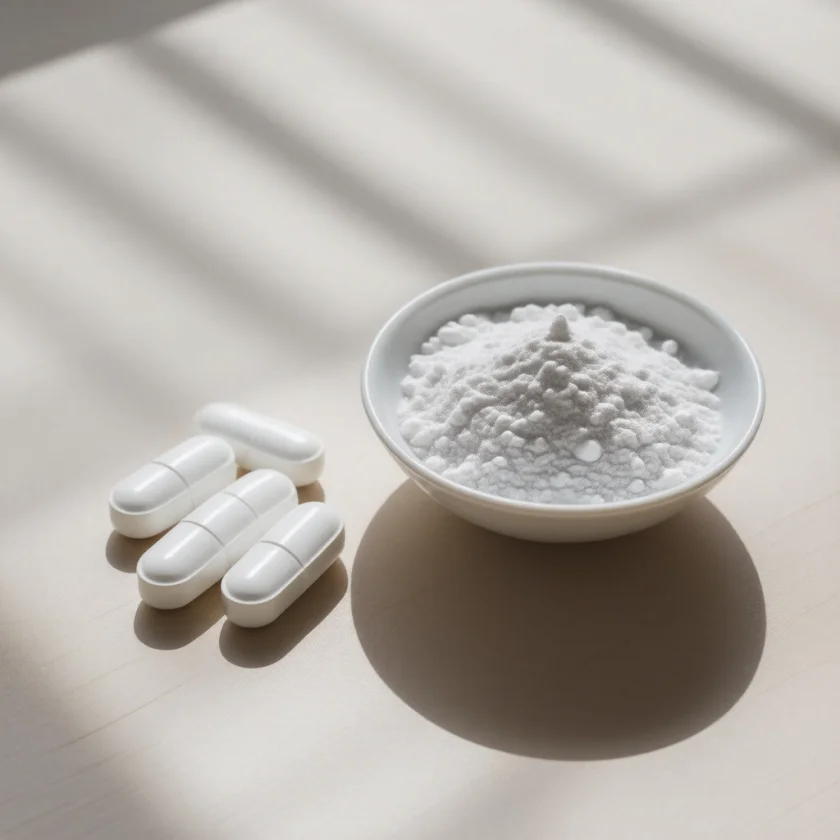

Magnesium is the body's natural calcium antagonist, and that single molecular property is the reason it has been the original-recipe muscle relaxant since the 1930s — long before the mechanism was mapped. Magnesium competes with calcium for binding sites on the sarcoplasmic reticulum (the intracellular calcium-storage organelle inside every muscle fiber), on troponin (the gating protein that exposes actin to myosin during contraction), and on voltage-gated calcium channels at the neuromuscular junction. In magnesium deficiency, the unopposed calcium signal leaves muscles in a perpetual low-grade twitch state — nocturnal leg cramps, restless legs, fibromyalgia tender points, and the persistent neck-and-shoulder tension that many adults misattribute to "stress" all share this molecular substrate. Practitioners favor magnesium glycinate for chronic muscle-relaxation applications because the bisglycinate chelate delivers reliable tissue magnesium without the laxative effect that limits the dose of citrate and oxide, and because the glycine component provides additional spinal-cord inhibition that further dampens motor-neuron excitability. This page walks through the contraction-relaxation cycle, the cramp pharmacology, the specific clinical applications (nocturnal leg cramps, RLS, fibromyalgia, training-induced tension, pregnancy cramps), and the doses used in trials and in reported practice for each.
Interactive Visualization Magnesium — the mineral that makes adenosine triphosphate (ATP) work Bare adenosine triphosphate is useless and enzymes reject it. Watch magnesium clamp the phosphates and switch it on, plug the N-methyl-D-aspartate (NMDA) channel, and let a cramping muscle finally let go. Launch →
Table of Contents
- The Muscle Contraction-Relaxation Cycle
- Magnesium as Physiological Calcium Antagonist
- Why Glycinate Is Preferred Over Oxide and Citrate
- Nocturnal Leg Cramps
- Restless Legs Syndrome
- Fibromyalgia and Chronic Tender Points
- Training-Induced Muscle Tension and Recovery
- Pregnancy-Related Leg Cramps
- Chronic Neck, Shoulder, and Jaw Tension
- Doses Used in Trials and Reported Practice
- Cautions and When to Look for Other Causes
- Key Research Papers
- Connections
- Featured Videos
The Muscle Contraction-Relaxation Cycle
Every voluntary muscle contraction begins with an electrical signal from a motor neuron arriving at the neuromuscular junction. Acetylcholine release triggers depolarization of the muscle fiber, which propagates along the sarcolemma (the muscle cell membrane) and into the T-tubule system. At specialized junctions called triads, this depolarization signal opens calcium channels on the sarcoplasmic reticulum (SR), releasing stored calcium into the cytoplasm of the muscle fiber.
The cytoplasmic calcium then binds to troponin C, a regulatory protein on the actin thin filament. This binding shifts the position of tropomyosin (another regulatory protein) and exposes the myosin-binding sites on actin. Myosin heads, energized by adenosine triphosphate, attach to actin and pull the thin filaments inward, shortening the sarcomere — the molecular basis of contraction. Each adenosine triphosphate hydrolysis cycle produces one "stroke" of the myosin head; many cycles occur per second during sustained contraction.
Relaxation requires the calcium to be actively pumped back into the SR by the SERCA (sarco/endoplasmic reticulum Ca-ATPase) pump, which is itself adenosine triphosphate-dependent. As cytoplasmic calcium falls, troponin releases it, tropomyosin re-blocks the actin binding sites, and the muscle relaxes. The entire contraction-relaxation cycle is therefore fundamentally a calcium-on, calcium-off process.
Magnesium participates at multiple points: it is required as the Mg2+ counter-ion stabilizing the phosphate groups of adenosine triphosphate (so every adenosine triphosphate-dependent step needs magnesium), it competes with calcium for binding to troponin, it modulates SR calcium release through ryanodine receptor regulation, and it serves as an obligate cofactor for the SERCA pump that performs relaxation. Adequate magnesium status means contraction releases the right amount of calcium, the calcium binds and unbinds appropriately, and the SERCA pump efficiently restores resting cytoplasmic calcium. Magnesium deficiency disrupts all four of these steps simultaneously.
Magnesium as Physiological Calcium Antagonist
The framing of magnesium as the body's "physiological calcium antagonist" captures the essence of its muscle-relaxant effect. The metaphor is precise: at every cellular point where calcium drives an excitatory or contractile process, magnesium provides the opposing damping signal. In neurons, magnesium plugs the N-methyl-D-aspartate glutamate receptor and prevents calcium-driven excitotoxicity. In muscle, magnesium competes with calcium at troponin and modulates SR calcium release. In blood vessels, magnesium relaxes vascular smooth muscle through similar calcium-antagonism mechanisms, lowering blood pressure. In the heart, magnesium stabilizes electrical conduction by buffering excitable calcium signaling.
The clinical parallel is the calcium channel blocker drug class (amlodipine, nifedipine, diltiazem). These prescription drugs treat hypertension and angina by blocking L-type calcium channels in vascular smooth muscle, reducing calcium influx, and producing vasodilation. Magnesium does qualitatively the same thing through a gentler, physiological mechanism at the same channels. The 2024 umbrella meta-analysis of magnesium supplementation for hypertension (Alharran and colleagues; 10 earlier reviews covering 8,610 people) found average reductions of 1.25 mmHg systolic and 1.40 mmHg diastolic with magnesium supplementation — a smaller effect than a full pharmaceutical calcium channel blocker. At doses of 400 mg a day or more the reductions were larger, about 6.4 mmHg systolic and 3.7 mmHg diastolic.
For skeletal muscle specifically, the calcium-antagonism mechanism explains why magnesium deficiency manifests as cramps, fasciculations (visible muscle twitches), and chronic low-grade tension — all of these are calcium-driven excitatory states that magnesium normally dampens. When the magnesium signal weakens, the calcium signal dominates by default, and muscles enter the over-contracted state that produces the cramp.
The threshold matters: total serum magnesium is a poor indicator because 99% of body magnesium is intracellular. A patient can have normal serum magnesium and still be intracellularly deficient. The Workinger 2018 review in Nutrients on "challenges in the diagnosis of magnesium status" lays out this issue in detail. For cramps, restless legs, or chronic muscle tension with no obvious other cause, practitioners describe trying magnesium glycinate for 4-8 weeks (300-400 mg of the compound twice daily) even when serum magnesium is "normal", because the serum value does not exclude intracellular deficiency.
Why Glycinate Is Preferred Over Oxide and Citrate
For muscle-relaxation applications specifically, the choice of magnesium form is more consequential than for some other indications because the muscle effects require sustained intracellular tissue concentrations achieved through weeks-to-months of consistent dosing, and that consistency is only possible with a form that doesn't cause gastrointestinal disruption.
- Magnesium oxide is the most-commonly-sold form (high elemental magnesium per gram of compound, cheap to manufacture) but has only ~4% fractional absorption. The 96% that doesn't absorb sits in the gut lumen and acts as an osmotic laxative. For muscle applications, this combination — tiny actual magnesium delivery plus reliable diarrhea at any meaningful dose — makes oxide a poor fit for muscle use in practitioners' experience, and loose stools are a common reason people give for stopping it.
- Magnesium citrate has substantially better absorption (~30%) but still acts as an osmotic laxative at the 300-400 mg/day doses needed for sustained muscle effect. Some patients tolerate citrate well; many do not. For those with even modestly sensitive guts, citrate at sustained therapeutic dose produces loose stools that limit consistent use.
- Magnesium glycinate (bisglycinate chelate) has the highest fractional absorption (~80%) and is absorbed through amino-acid transport pathways rather than relying on osmotic-driven paracellular transport. The 20% that doesn't absorb is gentle on the gut (free glycine is rapidly absorbed downstream). Practitioners report that people take 300-400 mg twice daily for months without gastrointestinal (GI) side effects, which is the kind of steady use the muscle-relaxation effect depends on.
- Magnesium malate is the other form practitioners use for muscle applications, particularly in fibromyalgia, where the malate component supports cellular energy production. Comparable tolerability to glycinate. Slightly different mechanism profile (malate enters the Krebs cycle as a substrate; glycine acts as an inhibitory neurotransmitter and collagen building block).
- Magnesium L-threonate costs more and contains less elemental magnesium per dose, which practitioners describe as making it impractical for skeletal muscle applications. Threonate's proposed advantage is brain magnesium delivery, which does not bear on a calf cramp.
The bottom line for muscle applications: practitioners favor magnesium glycinate because chronic muscle tension and cramp prevention involve daily use over months, and glycinate (and malate) are the forms they describe as tolerated at that dose without the side effects that interrupt steady use.
Nocturnal Leg Cramps
Nocturnal leg cramps affect up to 60% of adults at some point and become more common with age, with up to 33% of adults over 50 reporting at least weekly episodes. The typical pattern is a sudden, involuntary, painful contraction of the calf or foot muscles, lasting seconds to minutes, often waking the sleeper. The mechanism is not fully understood and likely involves multiple contributors: dehydration, electrolyte depletion (sodium, potassium, magnesium, calcium), peripheral nerve hyperexcitability, sustained shortened muscle position during sleep, and circulatory changes.
The clinical trial evidence for magnesium specifically is weak. The Garrison et al. 2020 Cochrane review (11 trials, 735 people) found that for ordinary night cramps, mostly in older adults, magnesium made little difference: across 5 trials with 307 people, cramps fell by only 0.18 a week more than on placebo, a difference that was not statistically significant (moderate-certainty evidence), and the share of people whose cramps fell by a quarter or more was the same on magnesium and placebo (high-certainty evidence). Stomach and bowel side effects such as diarrhoea occurred in 11% to 37% of people on magnesium in different trials, against 10% to 14% on placebo. The reviewers concluded that magnesium is unlikely to give older adults a clinically meaningful reduction in cramps, and that for pregnancy cramps the trials conflict. However, several individual trials showed benefit, particularly in subgroups with documented magnesium insufficiency, and the trials largely used magnesium oxide (poorly absorbed) or magnesium citrate (laxative at sustained doses) rather than highly bioavailable forms.
A 2026 Finnish randomised trial (Kuusipalo and colleagues) enrolled 121 adults aged 50 to 85 who had at least two leg cramps a week and gave them knee-high compression stockings, magnesium hydrochloride, or placebo pills daily for 4 weeks. At week 8, cramps had fallen by 1.43 a week more with the stockings than with placebo, while magnesium did not differ from placebo (difference 0.20 cramps a week, P = 0.929). Four people stopped the stockings because of side effects, and no serious side effects were reported.
Practitioners report that magnesium glycinate — specifically — reduces cramps in a substantial share of their patients within 2-4 weeks of consistent use, particularly when other potential contributors (dehydration, sodium-potassium imbalance, statin-related muscle pain) are addressed at the same time. Some practitioners attribute the gap between the trial results and their own experience to the form of magnesium used in the trials; that is their opinion, and the Cochrane review does not draw that conclusion.
In practitioners' descriptions, the people most likely to respond are middle-aged or older adults with cramps multiple nights per week, no obvious other cause (statin use, diuretic use, advanced kidney disease, alcohol excess), and improvement of cramps within 2-4 weeks of starting 300-400 mg of magnesium glycinate at bedtime. Practitioners consider that people who don't respond within 8 weeks at the highest tolerated dose probably have a cramp mechanism that magnesium does not reach (most likely peripheral nerve hyperexcitability not corrected by magnesium repletion).
A bedtime routine practitioners describe: 300-400 mg of magnesium glycinate compound 30-60 minutes before bed, along with steady fluids through the day (a large drink at bedtime can cause night-time urination), enough dietary salt, and gentle calf stretching before bed. Quinine, formerly the standard treatment, has been removed from the US market for this indication due to serious adverse effects.
Restless Legs Syndrome
Restless legs syndrome (RLS, also known as Willis-Ekbom disease) is a sensorimotor disorder characterized by an irresistible urge to move the legs, typically worse in the evening and at rest, partially relieved by movement. RLS affects approximately 5-10% of adults and has well-documented associations with iron deficiency, pregnancy, end-stage renal disease, and several medications (notably some antidepressants and dopamine-blocking antiemetics).
Magnesium glycinate addresses a different RLS subgroup than iron repletion does. For RLS associated with iron deficiency (ferritin < 75 ng/mL is a common threshold), iron supplementation is first-line and produces the largest effect. For RLS without iron deficiency — particularly RLS associated with chronic stress, magnesium-depleting medications (diuretics, proton pump inhibitors (PPIs)), or documented low magnesium status — practitioners report substantial symptom reduction with magnesium glycinate.
The Hornyak et al. 1998 open pilot study (no placebo group) in Sleep studied magnesium for periodic leg movements of sleep (PLMS) and RLS-related insomnia: 10 patients received about 300 mg (12.4 mmol) of oral magnesium in the evening for 4-6 weeks. Leg movements with arousals fell from 17 to 7 per hour of sleep, sleep efficiency improved from 75% to 85%, and 7 of the 10 rated their sleep or symptoms as improved. The study was small and had no placebo group, and the authors called for placebo-controlled studies; it served as a proof-of-concept for magnesium in the PLMS/RLS spectrum.
A 2019 systematic review (Marshall and colleagues) looked for every study of magnesium for restless legs or periodic limb movements and found only eight with usable data: one randomised placebo-controlled trial, three case series and four single-case reports. The one randomised trial found no significant effect, though it may have been too small to detect one, and the reviewers concluded that it is not clear whether magnesium helps restless legs or periodic limb movements, or in which groups of people any benefit might be seen.
The mechanism likely operates through several converging effects: dopaminergic modulation (magnesium-dopamine interactions are well-documented), gamma-aminobutyric acid-A potentiation (reducing the sensorimotor hyperexcitability that drives the urge to move), N-methyl-D-aspartate blockade (reducing glutamate-mediated central sensitization), and the glycine component's direct inhibition of spinal cord motor neurons.
The sequence practitioners describe for RLS: ferritin (the iron-store blood test) comes first, with iron given when it is below 75 ng/mL (ferrous bisglycinate is a form people tolerate well); the medication list is then checked for drugs that aggravate RLS; then magnesium glycinate at 300-400 mg of compound at bedtime is tried for 4-6 weeks. For moderate-to-severe RLS that doesn't respond to nutritional measures, dopamine agonists or alpha-2-delta ligands (gabapentin, pregabalin) are the drug classes used next.
Fibromyalgia and Chronic Tender Points
Fibromyalgia is a chronic widespread pain syndrome characterized by tender points at multiple specific anatomical locations, fatigue, sleep disruption, cognitive complaints ("fibro fog"), and prominent autonomic symptoms. The pathophysiology is incompletely understood but involves central sensitization of pain processing, often with documented abnormalities in hypothalamic-pituitary-adrenal-axis function, autonomic balance, and pain-gating circuits.
Magnesium status in fibromyalgia has been studied in several small trials, with most showing somewhat lower magnesium levels (serum, intracellular RBC, hair) in fibromyalgia patients compared to healthy controls. The Bagis et al. 2013 study in Rheumatology International divided 60 premenopausal women with fibromyalgia into three groups of 20 — magnesium citrate (300 mg/day), amitriptyline (10 mg/day), or both — for 8 weeks. The women with fibromyalgia had lower serum and red-cell magnesium than 20 healthy women. Magnesium citrate alone lowered the tender point count, the tender point index, the fibromyalgia impact questionnaire score and the Beck depression score; the authors wrote that it was effective only on tender points and the intensity of fibromyalgia. The combination improved every measure except numbness. The abstract does not report the result for amitriptyline alone.
Practitioners generally favor magnesium glycinate over citrate in fibromyalgia for two reasons: tolerability (fibromyalgia patients often have comorbid irritable bowel syndrome (IBS), where the citrate-induced loose stools are particularly unwelcome), and the additional benefit of the glycine component on the sleep disruption that is a near-universal fibromyalgia feature. Magnesium malate is the other reasonable choice, and is specifically supported in fibromyalgia by the rationale that malate enters the Krebs cycle and supports the cellular energy production that fibromyalgia patients describe as impaired.
A regimen practitioners describe for fibromyalgia: 300-400 mg of magnesium glycinate compound at bedtime, sometimes with 600-1200 mg of magnesium malate divided through the day, alongside sleep habits, graded gentle aerobic exercise, and drug treatment where it is used (duloxetine, milnacipran, low-dose amitriptyline and pregabalin are the drugs commonly listed as first-line). Magnesium alone is rarely curative in established fibromyalgia; practitioners use it as an adjunct and report that it can reduce the pain-medication burden.
Training-Induced Muscle Tension and Recovery
Intense physical training depletes magnesium through several mechanisms: increased adenosine triphosphate turnover requires more magnesium as the adenosine triphosphate counter-ion, sweat losses include magnesium, urinary excretion increases under sustained physical stress, and the increased oxidative stress of intense training consumes additional magnesium in antioxidant defense pathways. Athletes and regular exercisers may require 10-20% more dietary magnesium than sedentary individuals, yet many athletes' diets fall short of even the standard sedentary Recommended Dietary Allowance (RDA).
The Tarsitano et al. 2024 systematic review in Journal of Translational Medicine looked at magnesium supplementation and muscle soreness in physically active people across different types of training. Only 4 studies met its criteria. In those studies, magnesium supplementation reduced muscle soreness, improved performance and recovery, and had a protective effect on muscle damage. The authors suggested that people doing intense exercise have a magnesium requirement 10-20% higher than sedentary people, taken in capsules 2 hours before training. The largest effects were seen in athletes who had documented baseline magnesium insufficiency or who were in heavy training blocks with high magnesium turnover.
For training applications, practitioners describe magnesium glycinate at 300-400 mg compound in the evening as serving three functions: it replenishes training-depleted magnesium stores, it supports the deep sleep stages during which growth hormone release peaks and tissue repair is most active, and it provides the glycine that serves as a building block for collagen repair in the tendons and connective tissue stressed during exercise. The combination of effects makes glycinate particularly well-suited to recovery-focused supplementation.
Athletes specifically benefit from the glycine half of the chelate for an additional reason: collagen synthesis depends critically on glycine availability (one in every three amino acids in collagen is glycine), and the standard endogenous glycine production rate barely matches the body's collagen demand under normal conditions. Heavy training increases collagen turnover in tendons, ligaments, and the extracellular matrix of muscle, increasing the marginal value of supplemental glycine. The Meléndez-Hevia 2009 paper in Journal of Biosciences calculated that the body makes about 3 g of glycine a day and food supplies 1.5-3 g, which may fall about 10 g a day short of what a 70 kg adult needs for all uses including collagen, and argued that glycine is a semi-essential amino acid worth taking as a supplement.
Some endurance athletes specifically combine magnesium glycinate with additional pure glycine powder (5-10 g/day, often dissolved in pre-workout fluid or pre-bed water) for the connective-tissue-repair effect. Athletes who use the combination report that it is well tolerated and that they have fewer tendon problems.
Pregnancy-Related Leg Cramps
Pregnancy-related leg cramps affect approximately 30-50% of pregnant women, with the highest incidence in the second and third trimesters. The mechanism is multifactorial: pregnancy increases magnesium requirements (the developing fetus accumulates magnesium throughout gestation), pregnancy alters calcium-magnesium balance with fluctuating estrogen and progesterone, the gravid uterus impairs venous return from the legs, and the increased body weight changes mechanical loading on muscles.
Unlike the mixed evidence for non-pregnancy cramps, the evidence for magnesium in pregnancy-related leg cramps is more consistently positive.
The evidence for magnesium in pregnancy-related leg cramps is mixed. The Supakatisant and Phupong 2015 randomised, double-blind, placebo-controlled trial gave 86 pregnant women (14-34 weeks, with cramps at least twice a week) either 300 mg a day of magnesium bisglycinate chelate or placebo for 4 weeks; 80 finished. A halving of cramp frequency was reported by 86.0% of women on magnesium against 60.5% on placebo, and a halving of cramp intensity by 69.8% against 48.8%, with no difference in side effects such as nausea and diarrhoea. This trial used the glycinate (bisglycinate) form. The Kovács et al. 1988 double-blind trial gave 985 pregnant women magnesium aspartate (15 mmol a day) or placebo and reported fewer premature births, fewer small-for-date babies and fewer cases of EPH gestosis (swelling, protein in the urine and high blood pressure in pregnancy) with magnesium; its abstract does not report on leg cramps.
The 2020 Cochrane review of treatments for leg cramps in pregnancy (Luo and colleagues; 8 small studies, 576 women) found the results for oral magnesium inconsistent: some measures favored magnesium and others showed little or no difference. Because the trials measured cramps in different ways, the results could not be pooled, the certainty of the evidence was low or very low, and the reviewers concluded that it is unclear whether any of the treatments they studied is effective for leg cramps in pregnancy. The 2020 Cochrane review of magnesium for all muscle cramps (Garrison and colleagues) likewise described the pregnancy trials as conflicting.
Practitioners favor magnesium glycinate in pregnancy for several reasons: excellent tolerability matters even more in pregnancy when many women have pregnancy-related gastrointestinal symptoms (nausea, constipation), there is no concern about laxative-induced fluid loss that might affect amniotic fluid status, the glycine component is the same amino acid that the body naturally uses in high quantities for connective tissue building during pregnancy, and the gentle accumulation effect supports the building-and-maintaining tissue magnesium status throughout the pregnancy rather than just acute repletion.
The trial dose was 300 mg a day of magnesium bisglycinate chelate for 4 weeks. Practitioners describe 200-400 mg of magnesium glycinate compound at bedtime from the second trimester through delivery, taken alongside prenatal vitamins. The Institute of Medicine's upper limit for magnesium from supplements in pregnancy is the same as for other adults, 350 mg of magnesium a day. Magnesium crosses the placenta in moderate amounts and is generally considered beneficial for the developing fetus. In the rare situations where intravenous magnesium is given at delivery (severe preeclampsia, preterm labor), magnesium already taken by mouth adds to the total amount in the body.
Chronic Neck, Shoulder, and Jaw Tension
The complaint of chronic tension in the neck, shoulders, upper back, or jaw — often described as "carrying my stress in my shoulders" — is one of the most common reasons adults present for massage therapy, chiropractic care, or physical therapy. The pattern is bilateral, persistent, often worse with stress and computer work, and typically not associated with specific injury or structural pathology.
The pathophysiology involves sustained sympathetic nervous system tone driving low-grade tonic contraction of postural muscles, particularly the trapezius, levator scapulae, sternocleidomastoid, and masseter. The contraction is below the threshold of conscious awareness but persistent enough to produce metabolic waste accumulation, fascial tension, and the dull aching pain that patients describe. Stress is the obvious upstream driver, but the muscle-level mechanism is the calcium-driven sustained contraction that magnesium normally dampens.
Magnesium glycinate addresses this complaint through the combined mechanism of gamma-aminobutyric acid-A potentiation (reducing the central drive to motor neurons), N-methyl-D-aspartate blockade (reducing central sensitization), hypothalamic-pituitary-adrenal-axis dampening (reducing the cortisol-driven sympathetic tone), and direct calcium antagonism at the muscle fiber level (allowing the tonic contraction to relax). The glycine component adds spinal cord motor neuron inhibition through Renshaw cell circuits.
Practitioners describe this pattern: people with chronic neck-shoulder tension typically report noticeable softening within 1-2 weeks of starting 300-400 mg of magnesium glycinate twice daily, with maximum effect by 4-6 weeks. The effect is most pronounced when magnesium glycinate is combined with appropriate downstream interventions — postural correction, regular movement breaks during desk work, sleep optimization, stress management. In practitioners' experience, magnesium alone against bad ergonomics and chronic stress produces underwhelming results, while magnesium plus attention to the upstream contributors produces durable improvement.
The jaw-specific (TMJ-related) version of this complaint deserves separate mention. Bruxism (nighttime tooth grinding) is a common and often-unrecognized source of jaw and temple tension. Practitioners report that magnesium glycinate at bedtime reduces nighttime muscle activity, including bruxism frequency, in many patients. A properly fitted occlusal splint from a dentist is the standard treatment for bruxism; practitioners use magnesium glycinate as a nutritional adjunct aimed at muscle tone.
Doses Used in Trials and Reported Practice
Doses used in the studies above and doses practitioners describe for adults with normal kidney function (amounts are milligrams of the magnesium glycinate compound unless stated otherwise):
- For nocturnal cramps — practitioners describe 300-400 mg of magnesium glycinate compound at bedtime as a single dose, judged over 2-4 weeks, sometimes raised to 400-600 mg at bedtime when improvement is partial. The 2020 Cochrane review found little difference from placebo in older adults.
- For restless legs — the Hornyak pilot study used about 300 mg (12.4 mmol) of magnesium in the evening for 4-6 weeks; practitioners describe 300-400 mg at bedtime for 4-6 weeks alongside iron repletion (ferritin > 75 ng/mL).
- For fibromyalgia — the Bagis study used 300 mg/day of magnesium citrate for 8 weeks; practitioners describe 300-400 mg of glycinate at bedtime, sometimes with 600-1200 mg of magnesium malate divided through the day.
- For chronic neck/shoulder tension — practitioners describe 300-400 mg of glycinate compound twice daily (morning and evening), judged over 4-6 weeks.
- For training-related muscle tension and recovery — practitioners describe 300-400 mg of glycinate at bedtime; some athletes add 5-10 g of pure glycine powder for collagen-synthesis support.
- For pregnancy leg cramps — the Supakatisant trial used 300 mg/day of magnesium bisglycinate chelate for 4 weeks; practitioners describe 200-400 mg of glycinate at bedtime from the second trimester.
- Electrolyte balance — practitioners pair magnesium with enough sodium, potassium (vegetables, fruits, dairy) and fluids through the day, and report incomplete results when an electrolyte imbalance persists.
- Upper limit — the Institute of Medicine (1997) set the Tolerable Upper Intake Level for magnesium from supplements and medicines (not from food) at 350 mg of magnesium a day for adults and children over 8, including in pregnancy, because magnesium from these sources can cause diarrhoea. The doses above are compound weights: 800 mg of magnesium glycinate compound contains about 112 mg of elemental magnesium. Higher doses may produce loose stools or drowsiness.
Cautions and When to Look for Other Causes
- Chronic kidney disease — magnesium is cleared by the kidneys. The Institute of Medicine notes that high blood magnesium (hypermagnesemia) occurs in people with impaired kidney function, most often when they also take magnesium from supplements or antacids. Reduced kidney function is commonly defined as an estimated glomerular filtration rate (eGFR) < 60.
- Statin-associated muscle complaints — some statin users develop muscle pain or cramps that are statin-driven rather than magnesium-deficiency-driven. The two can coexist. When symptoms started shortly after a statin was begun and don't respond to magnesium, the options discussed for statin muscle complaints are coenzyme Q10 (CoQ10) supplementation or a change of statin.
- Diuretic-related cramps — loop diuretics (furosemide, bumetanide) and thiazides (HCTZ, chlorthalidone) deplete magnesium and potassium. Magnesium replacement is commonly used; the dose needed can be higher, and serum magnesium levels are used to monitor it.
- Cramps with neurological signs — weakness, sensory loss, asymmetry, or progressive worsening are signs of nerve disease rather than a magnesium-responsive cramp. Magnesium will not fix a radiculopathy, peripheral neuropathy, or motor neuron disease.
- Cramps with vascular signs — claudication-type pain (worse with walking, relieved by rest) suggests peripheral artery disease, which is a different problem than magnesium-responsive cramping.
- Acute cramp during exercise — the popular sports-cramp framing focuses on electrolytes; recent research suggests neuromuscular fatigue and altered motor control are at least as important. Adequate magnesium is part of the picture but not the whole picture; conditioning, pacing, and proper electrolyte balance through the activity also matter.
- Cramps in advanced liver disease — common, often refractory, and may need specific approaches (taurine, branched-chain amino acids, vitamin E) beyond magnesium repletion.
- Concomitant medication chelation — magnesium binds tetracyclines, fluoroquinolones, bisphosphonates, and levothyroxine in the gut and lowers their absorption; the spacing commonly given is 2-4 hours apart (4 hours for levothyroxine).
Key Research Papers
- Garrison SR et al. (2020). Magnesium for skeletal muscle cramps. Cochrane Database of Systematic Reviews. — PubMed PMID: 32956536
- Supakatisant C, Phupong V (2015). Oral magnesium for relief in pregnancy-induced leg cramps: a randomised controlled trial. Maternal & Child Nutrition. — PubMed PMID: 22909270
- Kovács L, Molnár BG, Huhn E, Bódis L (1988). [Magnesium substitution in pregnancy. A prospective, randomized double-blind study]. Geburtshilfe und Frauenheilkunde. — PubMed PMID: 3063587
- Luo L, Zhou K, Zhang J, Xu L, Yin W (2020). Interventions for leg cramps in pregnancy. Cochrane Database of Systematic Reviews. — PubMed PMID: 33275278
- Hornyak M et al. (1998). Magnesium therapy for periodic leg movements-related insomnia and restless legs syndrome: an open pilot study. Sleep. — PubMed PMID: 9703590
- Bagis S et al. (2013). Is magnesium citrate treatment effective on pain, clinical parameters and functional status in patients with fibromyalgia? Rheumatology International. — PubMed PMID: 22271372
- Tarsitano MG et al. (2024). Effects of magnesium supplementation on muscle soreness in different type of physical activities: a systematic review. Journal of Translational Medicine. — PubMed PMID: 38970118
- Workinger JL, Doyle RP, Bortz J (2018). Challenges in the diagnosis of magnesium status. Nutrients. — PubMed PMID: 30200431
- Roffe C et al. (2002). Randomised, cross-over, placebo controlled trial of magnesium citrate in the treatment of chronic persistent leg cramps. Medical Science Monitor. — PubMed PMID: 12011773
- Setaro L et al. (2014). Magnesium status and the physical performance of volleyball players. Journal of Sports Sciences. — PubMed PMID: 24015935
- Veronese N et al. (2014). Effect of oral magnesium supplementation on physical performance in healthy elderly women involved in a weekly exercise program. American Journal of Clinical Nutrition. — PubMed PMID: 25008857
- Meléndez-Hevia E et al. (2009). A weak link in metabolism: the metabolic capacity for glycine biosynthesis does not satisfy the need for collagen synthesis. Journal of Biosciences. — PubMed PMID: 20093739
- Kuusipalo A et al. (2026). Secondary prevention of leg cramps using compression stockings or magnesium supplements: a three-arm randomized clinical trial. Trials. — PubMed PMID: 41680812
- Marshall NS et al. (2019). Magnesium supplementation for the treatment of restless legs syndrome and periodic limb movement disorder: A systematic review. Sleep Medicine Reviews. — PubMed PMID: 31678660
- Alharran AM et al. (2024). Impact of Magnesium Supplementation on Blood Pressure: An Umbrella Meta-Analysis of Randomized Controlled Trials. Current Therapeutic Research, Clinical and Experimental. — PubMed PMID: 39280209
- Institute of Medicine (1997). Dietary Reference Intakes for Calcium, Phosphorus, Magnesium, Vitamin D, and Fluoride (chapter 6, Magnesium). Washington, DC: National Academies Press. — doi:10.17226/5776
- Quaranta S et al. (2007). Pilot study of the efficacy and safety of a modified-release magnesium 250 mg tablet for the treatment of premenstrual syndrome. Clinical Drug Investigation. — PubMed PMID: 17177579
PubMed Topic Searches
Connections
- All Minerals
- Magnesium: The Mineral That Makes Adenosine Triphosphate Work — interactive animation
- Magnesium Glycinate Overview
- Magnesium Glycinate Benefits Hub
- Magnesium Glycinate for Sleep
- Magnesium Glycinate for Anxiety
- Magnesium Glycinate Bioavailability
- Magnesium (Overview)
- Calcium (Magnesium's Counterpart)
- Potassium
- Glycine
- Cramp Prevention
- Fibromyalgia — magnesium status is often low in fibromyalgia, and glycinate is the best-tolerated form for tender points and sleep.
- Restless Legs Syndrome
- Anxiety
- Insomnia
- Stress Management
- History