⚠ Evidence warning: Clinical trials or other evidence do not support the claim that Chanca Piedra helps clear hepatitis B, protects the liver in fatty liver disease and helps recovery from drug-induced liver injury. This page keeps it as a report of what people, websites or other media say.
Chanca Piedra for Liver Protection
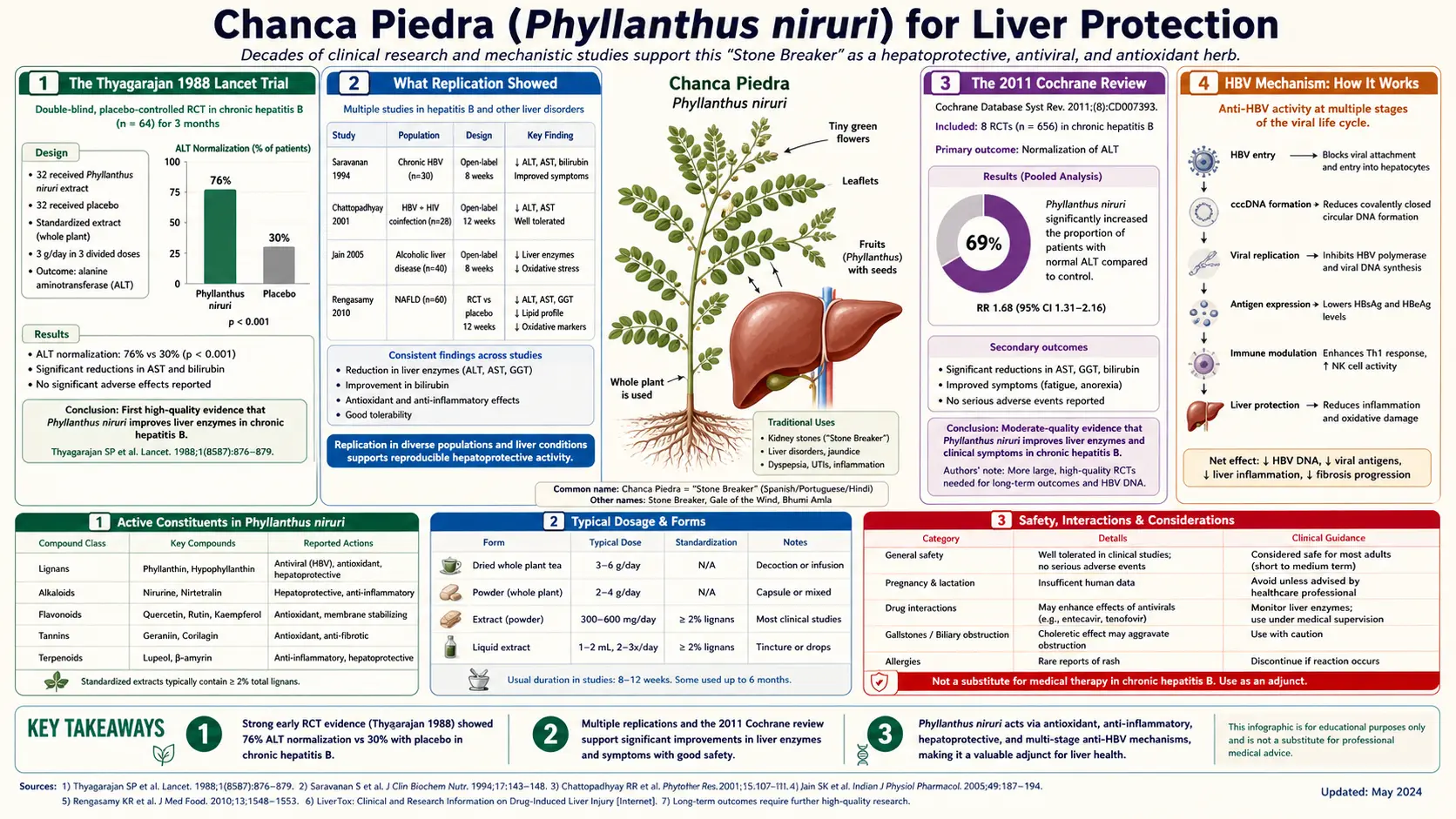
Chanca Piedra's second-most-famous use is liver protection, particularly chronic hepatitis B. The story begins with a 1988 Lancet paper that reported that 59% of hepatitis B virus (HBV) carriers given Phyllanthus amarus for 30 days had lost their surface antigen when tested 15–20 days after treatment ended. The number was eye-popping. It launched a generation of follow-up research that has filled in nuance, tempered expectations, and produced a 2011 Cochrane review whose careful conclusions still anchor clinical thinking today. This page covers the evidence honestly — what was shown, what was reproduced, what wasn't, and where Chanca Piedra reasonably fits in modern liver care.
Table of Contents
- The Thyagarajan 1988 Lancet Trial
- What Replication Showed
- The 2011 Cochrane Review
- Hepatitis B Virus Mechanism
- Which Species Has the Hepatitis B Virus Evidence
- Non-Viral Liver Disease (NAFLD, ALD, Drug-Induced)
- CYP450 and Drug-Metabolism Implications
- Comparison and Combination with Other Liver Herbs
- How Chanca Piedra Has Been Used for the Liver
- Key Research Papers
- Connections
- Featured Videos
The Thyagarajan 1988 Lancet Trial
Thyagarajan, Subramanian, Thirunalasundari et al., "Effect of Phyllanthus amarus on chronic carriers of hepatitis B virus," Lancet 1988;2(8614):764–6.
- Design: Preliminary study of chronic hepatitis B virus carriers: 37 treated with P. amarus and 23 placebo-treated controls
- Intervention: 200 mg powdered P. amarus three times daily for 30 days
- Outcome: 22 of 37 (59%) had lost hepatitis B surface antigen (HBsAg) when tested 15–20 days after the end of treatment, compared with 1 of 23 (4%) placebo-treated controls; some subjects were followed for up to 9 months, and in none had the surface antigen returned
Strengths: The endpoint — HBsAg loss — is biologically hard. The extract was a reasonably standardized surfactant-resistant tannin preparation. The protocol was clearly described.
Limitations: Small sample size, described by its authors as a preliminary study, blinding not described in its summary, no HBV-DNA measurement (polymerase chain reaction (PCR) was not yet routine in 1988), an unusually high clearance rate that puzzled subsequent investigators, never independently replicated at the same magnitude. The 59% number drove decades of follow-up research that mostly couldn't reach the original ceiling.
What Replication Showed
Indian, Chinese, and Brazilian replications through the 1990s and 2010s produced a more modest but more consistent picture:
- Alanine aminotransferase (ALT)/aspartate aminotransferase (AST) normalization — inconsistent; in a 2003 double-blind placebo-controlled trial of Phyllanthus urinaria, ALT returned to normal in 0%, 8.3% and 33.3% of the three dose groups and 0% on placebo, differences that were not statistically significant
- HBV-DNA reductions — in a minority of patients, modest in magnitude (typically 1–2 log reduction in some studies, none in others)
- Hepatitis B e-antigen (HBeAg) seroconversion — 10–30% in some arms (closer to spontaneous rates)
- HBsAg loss — well under 10% in most replication trials, far below the 1988 ceiling
The pattern is consistent with at most a modest antiviral effect rather than a "cure." Modern hepatitis B virus antivirals (tenofovir, entecavir) can suppress HBV-DNA below detection in nearly all patients but rarely produce HBsAg loss either. Chanca Piedra is a plausible adjunct to these drugs, not a replacement.
Placebo-controlled trials: Two double-blind placebo-controlled trials tested Phyllanthus for chronic hepatitis B. In Hong Kong (2003), Phyllanthus urinaria at 1, 2 or 3 g three times daily for 6 months did not lower viral DNA more than placebo, and the authors found "no demonstrable anti-viral effect". In Italy (2018), Phyllanthus niruri for 12 months in 50 people changed neither viral load nor surface antigen (no one cleared HBsAg), and the study was stopped because there was no apparent benefit. Neither trial reported serious side effects.
The 2011 Cochrane Review
Xia Y, Luo H, Liu JP, Gluud C. "Phyllanthus species for chronic hepatitis B virus infection." Cochrane Database of Systematic Reviews 2011;(4):CD008960.
- Studies included: 16 randomized trials, 1,326 patients
- Findings: The only placebo-controlled trial (42 participants) found no significant difference in HBeAg seroconversion. In the other 15 trials, Phyllanthus plus an antiviral drug (such as interferon alpha, lamivudine or adefovir) did better on serum HBV-DNA, HBeAg and HBeAg seroconversion than the same antiviral alone, but results varied widely between trials, and the HBV-DNA result did not hold up in trial sequential analysis (a check for chance findings). No trial reported deaths, quality of life or liver biopsy results.
- Conclusion: "There is no convincing evidence that phyllanthus compared with placebo benefits patients with chronic HBV infection." Phyllanthus plus an antiviral drug "may be better than the same antiviral drug alone", but the authors wrote that heterogeneity, systematic errors and random errors question the validity of the results.
The Cochrane authors flagged the heterogeneity problem — different Phyllanthus species, different doses, different extraction methods, different durations — that makes meta-analysis genuinely shaky. Whether there is a real effect at all remains uncertain.
Hepatitis B Virus Mechanism
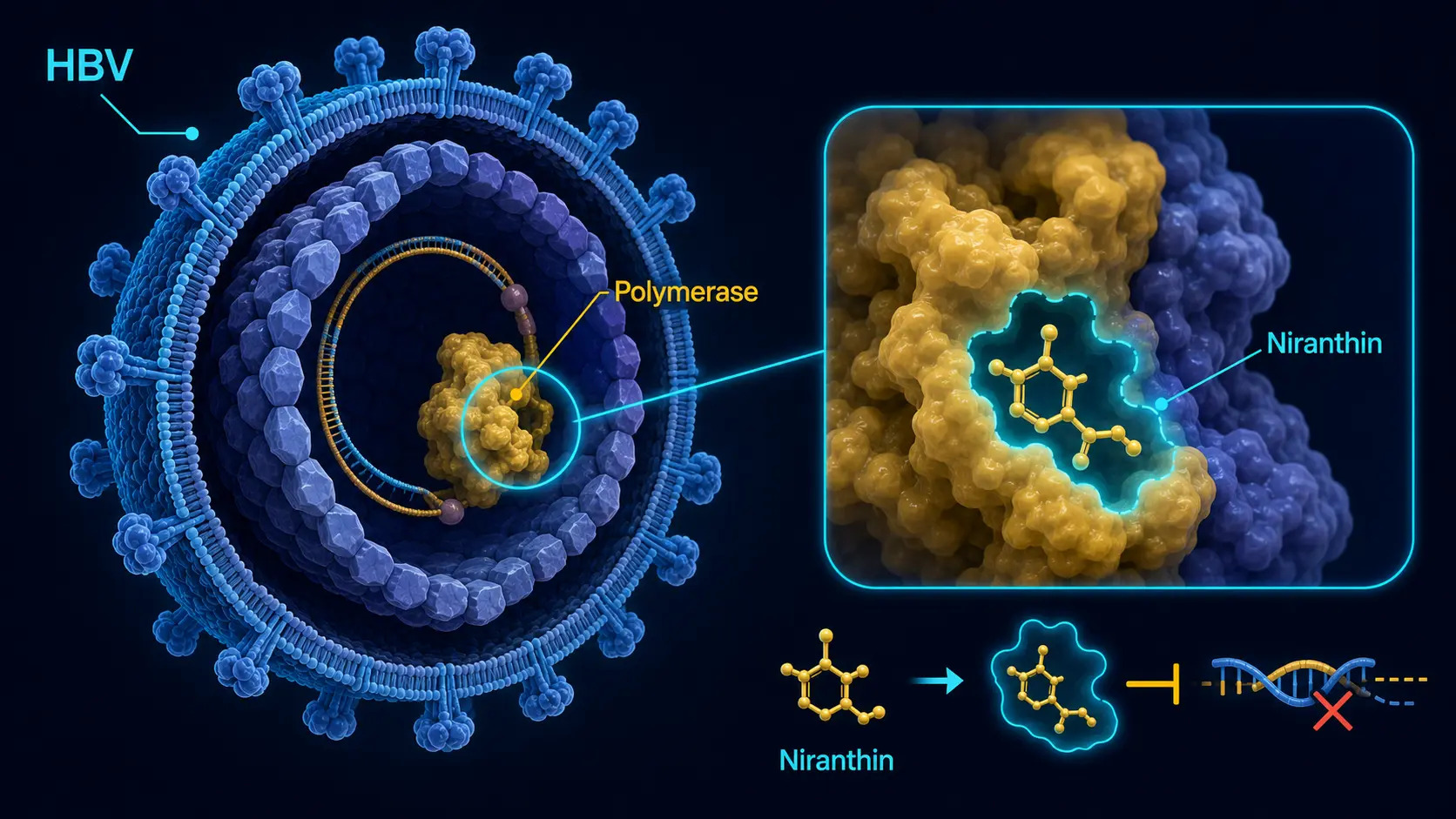
- Hepatitis B virus polymerase / reverse-transcriptase inhibition — Venkateswaran 1987 and Shead 1992 showed direct enzyme inhibition in cell-culture and duck-HBV models
- Geraniin and corilagin bind hepatitis B virus polymerase
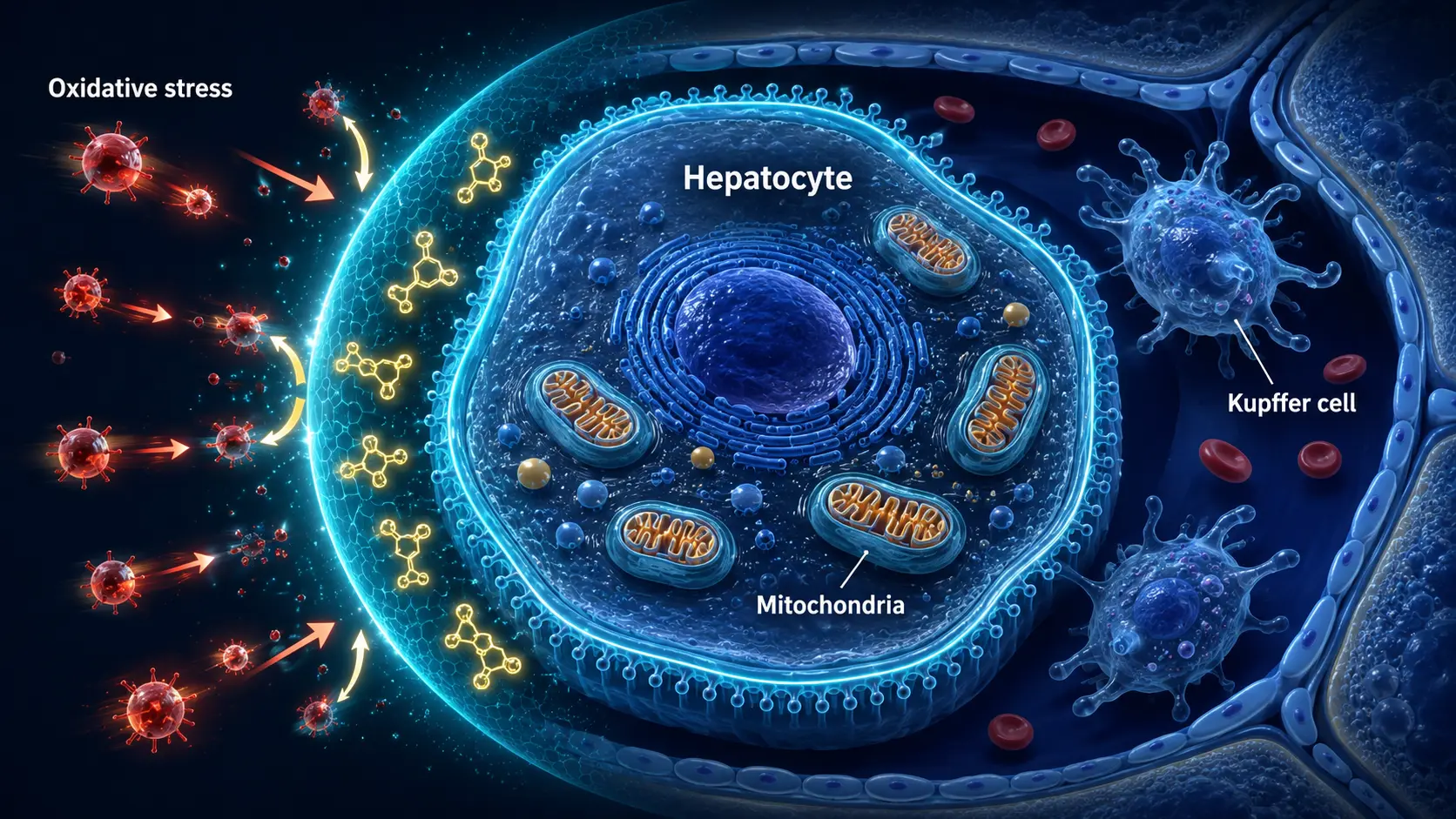
- Phyllanthin and hypophyllanthin show hepatocyte-protective antioxidant activity
- Niranthin inhibits HBeAg secretion in HepG2.2.15 cells
- Immune modulation — shifts Th1/Th2 balance, increases natural killer (NK) cell activity in animal models
The mechanism is multi-pronged and plausible. The clinical effect size is what's uncertain.
Which Species Has the Hepatitis B Virus Evidence
This matters more than supplement labels suggest. The strongest hepatitis B virus trial evidence is for Phyllanthus amarus, which descends directly from the Thyagarajan lineage. P. niruri — what's most often sold as "Chanca Piedra" — has overlapping phytochemistry but less direct hepatitis B virus trial data, and many older "P. niruri" papers were later taxonomically reclassified as P. amarus. P. urinaria shows the strongest in-vitro hepatitis B virus polymerase inhibition.
The 1988 trial used P. amarus; the later placebo-controlled trials used P. urinaria (2003) and P. niruri (2018). Products are sold labeled P. amarus or P. niruri (syn. amarus), some standardized to phyllanthin and hypophyllanthin. See the Species Comparison page.
Non-Viral Liver Disease (NAFLD, ALD, Drug-Induced)
Beyond hepatitis B, Phyllanthus has been studied for:
- Non-alcoholic fatty liver disease (NAFLD) — two placebo-controlled trials found no improvement in liver enzymes (details below)
- Anti-tuberculosis drug hepatotoxicity — in rats given isoniazid and rifampicin for 14 days, a P. niruri extract lowered bilirubin and aspartate aminotransferase and prevented liver-cell death (2025 study); no study in people was found
- Alcoholic liver injury — mostly animal data; modest human trials
The fatty-liver trials: The largest (226 adults in Malaysia, 3,000 mg a day of a standardized Phyllanthus niruri extract or placebo for 12 months) found no difference in liver fat (measured as the CAP score) or in liver enzymes, but a small improvement in liver stiffness (fibrosis score −0.64 kPa vs +0.10 kPa on placebo); no major adverse events were reported in either group. A 24-week trial in Hong Kong in 60 people with biopsy-proven fatty-liver inflammation (non-alcoholic steatohepatitis, NASH) found Phyllanthus urinaria no better than placebo on the liver-biopsy score, with no difference in alanine aminotransferase or aspartate aminotransferase.
None of these studies showed that Chanca Piedra cures fatty liver or can replace weight loss, alcohol reduction and metabolic-syndrome care.
CYP450 and Drug-Metabolism Implications
This is the practical safety issue. In human liver tissue tested in the lab (liver microsomes), P. amarus extracts inhibited the drug-clearing enzymes CYP1A2, CYP2D6, CYP2E1 and cytochrome P450 3A4 (CYP3A4); the effect on CYP1A2, CYP2D6 and CYP2E1 was weak. The plant's two main lignans, phyllanthin and hypophyllanthin, permanently switch off CYP3A4 (mechanism-based inhibition), the enzyme that clears many statins, transplant drugs and HIV drugs, which is why blood levels of those drugs could rise. In a separate lab study, P. amarus extracts also inhibited CYP2C9. These are lab findings, not measured interactions in people. The research raises a concern for people taking:
- Warfarin — CYP2C9 inhibition raises international normalized ratio (INR) risk
- Statins — cytochrome P450 3A4 inhibition raises plasma levels (atorvastatin, simvastatin most affected)
- Calcineurin inhibitors — tacrolimus, cyclosporine; narrow therapeutic window
- Human immunodeficiency virus (HIV) antiretrovirals — protease inhibitors particularly
- Tamoxifen — activation pathway
- Oral contraceptives — theoretical efficacy reduction
- Many calcium-channel blockers, certain anticonvulsants
Comparison and Combination with Other Liver Herbs
- Milk thistle (silymarin) — stronger non-alcoholic fatty liver disease/cirrhosis trial base, no antiviral claim.
- N-acetylcysteine (NAC) — superior for acetaminophen toxicity and oxidative liver injury; glutathione precursor
- Alpha-lipoic acid — diabetic/metabolic liver support
- Phyllanthus — the only herb in this group with a (contested) hepatitis B virus-specific antiviral signal
Combination protocols (Phyllanthus + silymarin + N-acetylcysteine) appear in clinical practice but lack head-to-head trials. There is no evidence that combining is better than the strongest single agent for any specific indication.
How Chanca Piedra Has Been Used for the Liver
Uses described for it:
- Chronic hepatitis B virus — alongside, not in place of, tenofovir or entecavir (the possible benefit in the Cochrane review was only in combination with an antiviral drug)
- Persistent alanine aminotransferase elevation despite lifestyle changes
- Recovery from anti-tuberculosis or other drug-induced hepatotoxicity (the anti-tuberculosis data are from rats)
- Non-alcoholic fatty liver disease as part of a broader metabolic intervention
Doses described: 500–1000 mg standardized P. amarus extract two or three times daily for 3–6 months. The placebo-controlled trials used 1–3 g of P. urinaria three times daily (2003) and 3,000 mg a day of a P. niruri extract (2023 fatty-liver trial).
Liver tests commonly followed: alanine aminotransferase, aspartate aminotransferase, gamma-glutamyl transferase (GGT) and HBV-DNA, at baseline, 3 months and 6 months
Warning signs: liver enzymes that rise rather than fall, new bruising or bleeding, and jaundice (yellowing of the skin or eyes); jaundice and unexplained bleeding are signs hospitals treat as urgent
Situations where caution is commonly listed: pregnancy, breastfeeding, blood thinners (anticoagulants) or immunosuppressants (see the CYP450 section), and the 2 weeks before surgery. Chanca Piedra has not been shown to replace prescribed antiviral drugs: on its own, it showed no antiviral effect in the placebo-controlled trials.
Key Research Papers
- Thyagarajan SP, Subramanian S, Thirunalasundari T, et al. Effect of Phyllanthus amarus on chronic carriers of hepatitis B virus. Lancet 1988;2(8614):764–6. — PubMed PMID: 2901611
- Xia Y, Luo H, Liu JP, Gluud C. Phyllanthus species for chronic hepatitis B virus infection. Cochrane Database Syst Rev 2011;(4):CD008960. — PubMed PMID: 21491412
- Venkateswaran PS, Millman I, Blumberg BS. Effects of an extract from Phyllanthus niruri on hepatitis B and woodchuck hepatitis viruses. PNAS 1987;84:274–8. — PubMed PMID: 3467354
- Shead A, Vickery K, Pajkos A, et al. Effects of Phyllanthus plant extracts on duck hepatitis B virus in vitro and in vivo. Antiviral Res 1992;18:127–38. — PubMed PMID: 1416905
- Liu J, Lin H, McIntosh H. Genus Phyllanthus for chronic hepatitis B virus infection: a systematic review. Journal of Viral Hepatitis 2001;8(5):358–66. — PubMed PMID: 11555193
- Chan HL, Sung JJ, Fong WF, et al. Double-blinded placebo-controlled study of Phyllanthus urinaris for the treatment of chronic hepatitis B. Aliment Pharmacol Ther 2003;18(3):339–45. — PubMed PMID: 12895219
- Baiguera C, Boschetti A, Raffetti E, et al. Phyllanthus niruri versus placebo for chronic hepatitis B virus infection: a randomized controlled trial. Complement Med Res 2018;25(6):376–382. — PubMed PMID: 30372693
- Abu Hassan MR, Hj Md Said R, Zainuddin Z, et al. Effects of one-year supplementation with Phyllanthus niruri on fibrosis score and metabolic markers in patients with non-alcoholic fatty liver disease: a randomized, double-blind, placebo-controlled trial. Heliyon 2023;9(6):e16652. — PubMed PMID: 37313177
- Wong VW, Wong GL, Chan AW, et al. Treatment of non-alcoholic steatohepatitis with Phyllanthus urinaria: a randomized trial. J Gastroenterol Hepatol 2013;28(1):57–62. — PubMed PMID: 23034128
- Taesotikul T, Dumrongsakulchai W, Wattanachai N, et al. Inhibitory effects of Phyllanthus amarus and its major lignans on human microsomal cytochrome P450 activities: evidence for CYP3A4 mechanism-based inhibition. Drug Metab Pharmacokinet 2011;26(2):154–61. — PubMed PMID: 21178301
- Appiah-Opong R, Commandeur JN, Axson C, Vermeulen NP. Interactions between cytochromes P450, glutathione S-transferases and Ghanaian medicinal plants. Food Chem Toxicol 2008;46(12):3598–603. — PubMed PMID: 18822337
- P E SK, Mishra A, Mandal S, et al. Hepatoprotective potential of Phyllanthus niruri and Andrographis paniculata in isoniazid-rifampicin induced hepatotoxicity in rats. Indian J Tuberc 2025;72(2):189–193. — PubMed PMID: 40518209
PubMed Topic Searches
Connections
- All Herbs
- Chanca Piedra Benefits Hub
- Chanca Piedra Overview
- Kidney Stones
- Uric Acid and Gout
- Blood Sugar
- Phyllanthus Species Comparison
- Active Compounds
- Safety and Drug Interactions
- Chanca Piedra: Liver Protection and Hepatitis B — hepatitis B virus-specific antiviral mechanism, niranthin vs nucleoside analogs, trial evidence on HBsAg/HBV-DNA, and adjunctive use with entecavir/tenofovir.
- Hepatitis B
- Hepatitis
- Liver Disease
- Cirrhosis
- Non-Alcoholic Fatty Liver Disease
- Milk Thistle
- N-Acetylcysteine
- Liver Cleansing
- Gamma-Glutamyl Transferase
- Comprehensive Metabolic Panel
- History