⚠ Evidence warning: Clinical trials or other evidence do not support the claim that lion's mane gives gastric and gut barrier support in people, that it helps ulcerative colitis and Crohn's disease, and that the benefit pages below cover the conditions where it produces the largest clinical effect. This page keeps it as a report of what people, websites or other media say.
Lion's Mane Mushroom — Benefits Deep Dive
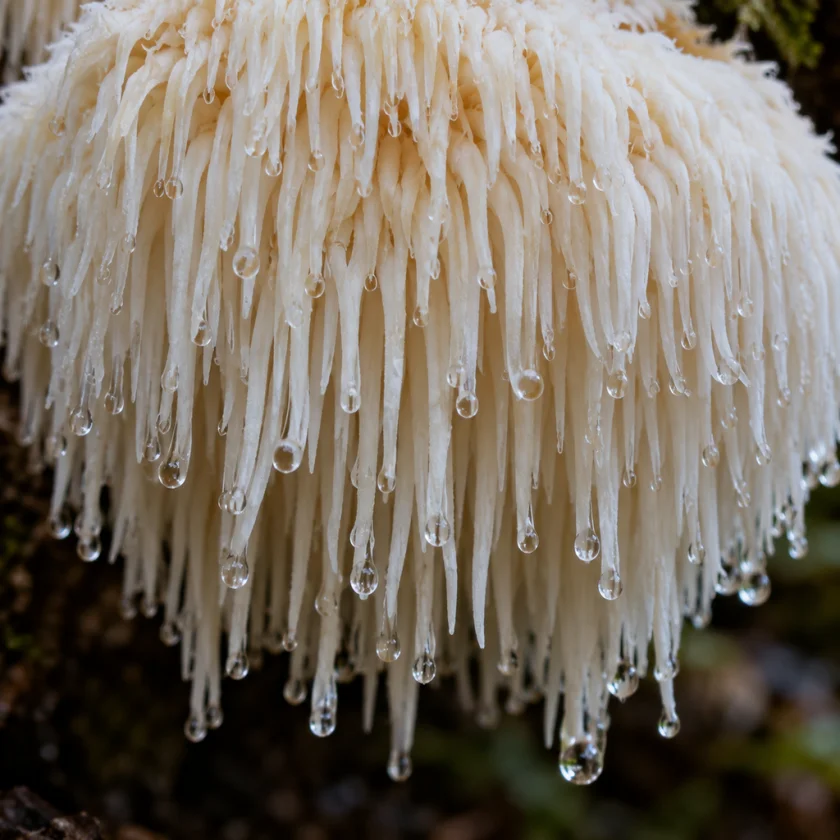
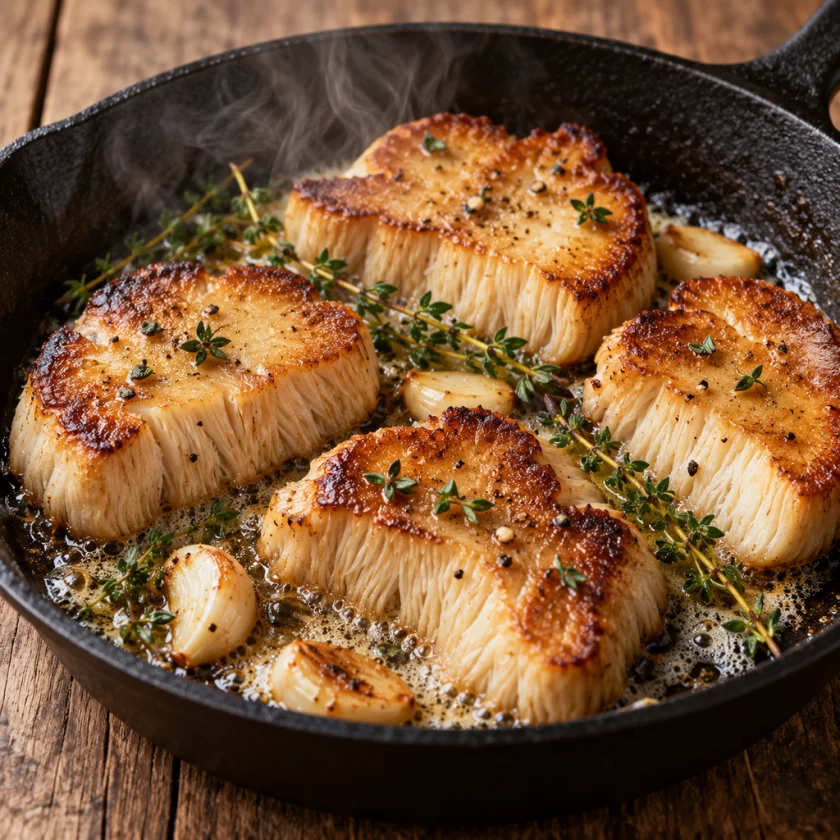
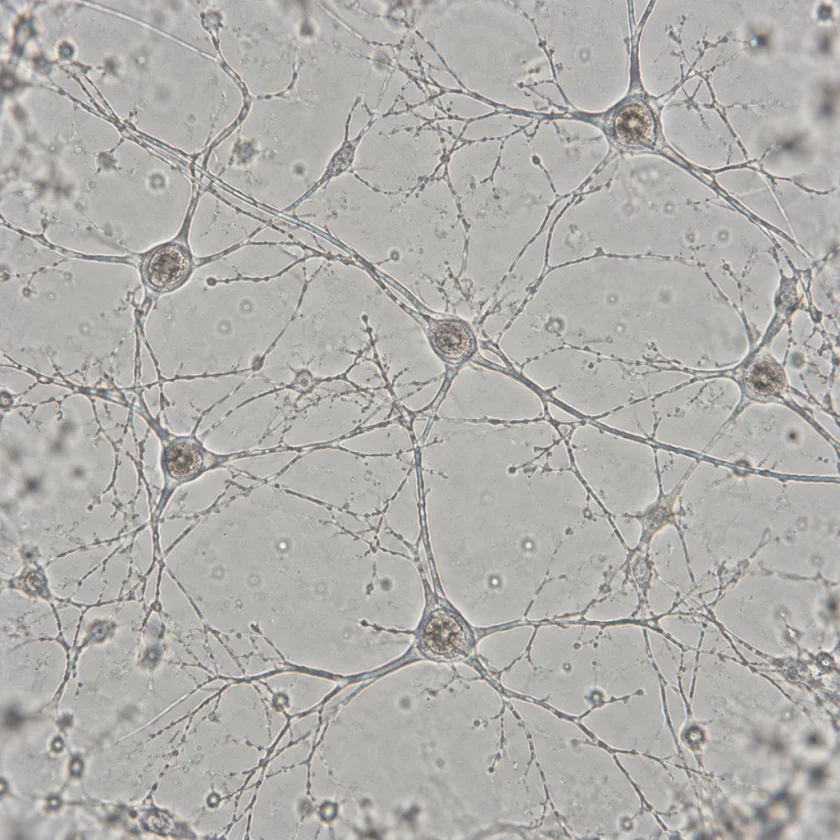
Lion's Mane (Hericium erinaceus) is the white, cascading "pom-pom" mushroom that grows on hardwood trees across the temperate Northern Hemisphere and is the best-studied mushroom for stimulating Nerve Growth Factor (NGF), though not the only one: diterpenoids (scabronines A and G) from the mushroom Sarcodon scabrosus increased NGF production by human astrocytoma cells in the laboratory (Obara 1999), and a 2015 review lists Ganoderma lucidum, Sarcodon species, Pleurotus giganteus, Grifola frondosa and others with effects including NGF synthesis, mostly from in vitro evidence (Phan 2015). The seminal 1991 report by Japanese chemist Hirokazu Kawagishi and colleagues of hericenones C, D and E in the fruit body (hericenones F, G and H followed in a separate 1992 paper), and the 1994 isolation of erinacines A, B and C from mycelium, established Lion's Mane as the first dietary mushroom with a defined neurotrophic mechanism. A critical distinction runs through every benefit page below: fruit body and mycelium contain different compounds. Hericenones (fruit body) are not thought to cross the blood-brain barrier directly; erinacine A (mycelium) has been shown to reach the brain in rats (Tsai 2021). Lion's Mane has been used for centuries in Chinese and Japanese traditional medicine as a brain tonic and digestive remedy; small human trials report improved cognitive scores in mild cognitive impairment (Mori 2009) and lower depression and complaint scores in 30 women (Nagano 2010), while protection of the stomach lining has been shown in rats (Wong 2013). Four benefit pages below explore the conditions where Lion's Mane produces the largest clinical effect.
Deep-Dive Articles
Nerve Growth Factor
The Kawagishi 1991 discovery of hericenones C, D and E in the fruit body (F, G and H followed in 1992) and the 1994 isolation of erinacines A, B and C from mycelium. Erinacine A (molecular weight 432.5) and the rat study showing it reaches the brain. The role of NGF in cholinergic basal forebrain neuron survival — the exact neurons that degenerate in Alzheimer's disease. The fruit body vs mycelium compound difference.
Read the deep dive →Cognitive Function
The pivotal Mori 2009 double-blind placebo-controlled 16-week trial in 30 Japanese adults aged 50 to 80 with mild cognitive impairment (two groups of 15) — HDS-R cognitive scores improved progressively at weeks 8, 12, and 16 in the Lion's Mane group and decreased significantly 4 weeks after supplementation stopped. The Saitsu 2019 12-week fruit-body trial. The 49-week erinacine A-enriched mycelium pilot in mild Alzheimer's disease, and a pilot in healthy young adults. The "smart mushroom" / "study mushroom" tradition in East Asia. Dose-response and the practical question of which preparation produces measurable benefit.
Read the deep dive →Mood & Depression
The Nagano 2010 trial in 30 women showing reduced Center for Epidemiologic Studies Depression scale and Indefinite Complaints Index scores after 4 weeks of Lion's Mane cookies. A 2018 mouse study (Chiu 2018) and the Vigna 2019 study in people with overweight or obesity. The mechanism: brain-derived neurotrophic factor (BDNF) upregulation, hippocampal neurogenesis, and reduction of microglial neuroinflammation that contemporary research increasingly implicates in major depression.
Read the deep dive →Gut Health
The Wong 2013 ethanol-induced gastric ulcer rat model showing significant ulcer-area reduction with Lion's Mane extract. Beta-glucan immune signaling through Dectin-1 on intestinal macrophages and dendritic cells. Microbiome modulation via prebiotic polysaccharides. Traditional Chinese medicine use for gastritis and the modern small pilot data in ulcerative colitis and Crohn's disease. The gut-brain axis bridge that links Lion's Mane's digestive and cognitive effects.
Read the deep dive →Table of Contents
- Deep-Dive Articles
- Why Lion's Mane Produces Effects
- Research Papers: Nerve Growth Factor & Erinacines
- Research Papers: Cognitive Function
- Research Papers: Mood & Depression
- Research Papers: Gut Health & Immune
- Research Papers: Cross-Cutting (Mechanism, Safety, Forms)
- External Authoritative Resources
- Connections
- Featured Videos
Why Lion's Mane Produces Effects
Lion's Mane is the best-studied edible mushroom for stimulating Nerve Growth Factor (NGF) and Brain-Derived Neurotrophic Factor (BDNF); other mushroom species also raise NGF in laboratory studies (Obara 1999; Phan 2015). The combined upregulation of these two neurotrophins, along with documented reduction of neuroinflammation and stimulation of hippocampal neurogenesis, explains why benefits ripple across cognitive, mood, gut, and neuropathic-pain conditions that on the surface look unrelated. Each maps to a distinct compound family found in a specific part of the mushroom.
- Hericenones (fruit body) — Kawagishi and colleagues described hericenones C, D and E in 1991 and hericenones F, G and H in a separate 1992 paper in Phytochemistry, all from the white above-ground fruit body. These aromatic compounds stimulate NGF synthesis in mouse astroglial cells in vitro. They are thought to be too large to cross the blood-brain barrier efficiently intact; they are not polar but very fat-soluble (PubChem lists hericenone C at a molecular weight of 570.8 with a calculated fat-solubility score, XLogP, of 11.2). One hypothesis, not yet tested, is that they act peripherally on enteric and other autonomic neurons and indirectly support central NGF tone via vagal-mediated signaling and reduction of systemic inflammation. They are proposed as the source of the cognitive effects observed when fruit-body extracts (Mori 2009 used 96% fruit body) are administered orally.
- Erinacines (mycelium) — Kawagishi 1994 isolated erinacine A from the underground mycelium — the root-like vegetative network — together with erinacines B and C, followed by further erinacines in later years. Erinacine A is a cyathane-type diterpene with a molecular weight of 432.5 and a calculated fat-solubility score (XLogP) of 2 (PubChem). In rats given an oral mycelium extract, erinacine A was detected in the brain 1 hour after dosing and reached its peak at 8 hours; the authors concluded that it crosses the blood-brain barrier by passive diffusion (Tsai 2021). Once central, it directly stimulates NGF synthesis in basal forebrain cholinergic neurons — the exact population that progressively dies in Alzheimer's disease.
- Beta-glucan polysaccharides — the fungal cell wall is rich in (1,3)/(1,6)-beta-glucans that signal through the Dectin-1 receptor on intestinal macrophages and dendritic cells. This drives a modulatory immune effect distinct from the NGF/BDNF effect: improvement in gut barrier integrity, balanced T-helper 17 / regulatory T-cell (Th17/Treg) differentiation, and a prebiotic effect on the microbiome.
- Brain-derived neurotrophic factor upregulation and hippocampal neurogenesis — animal studies of Lion's Mane consistently show increased hippocampal brain-derived neurotrophic factor mRNA and protein and increased adult neurogenesis in the dentate gyrus. This has been proposed as the mechanism behind the antidepressant-like effects seen in a 2018 mouse study of erinacine A-enriched mycelium in mice under repeated restraint stress (Chiu 2018); the authors of the Nagano 2010 human trial suggest their results point to a mechanism different from NGF enhancement.
- Reduction of neuroinflammation — Lion's Mane extracts reduce microglial activation, tumor necrosis factor-alpha, interleukin-1-beta, and interleukin-6 (IL-6) in animal models of neurodegeneration. Chronic low-grade neuroinflammation is increasingly implicated in both Alzheimer's disease and treatment-resistant depression, so this mechanism is bidirectionally relevant to the cognitive and mood findings.
The fruit body vs mycelium distinction: hericenones are concentrated in the fruit body and erinacines in the mycelium. Mycelium-on-grain powder is mycelium grown on rice or oat substrate with the entire mass (including the grain) ground and sold as Lion's Mane powder; it contains the grain's starch, has low hericenone content (because it is mycelium, not fruit body) and variable erinacine content (because it depends on whether erinacines are produced in the grain substrate). Mycelium extracts without grain contain the erinacines, the compound family shown to reach the brain in rats. The human trials used different preparations: Mori 2009 used tablets of 96% Yamabushitake dry powder, Saitsu 2019 used supplements containing the fruiting body, and the 49-week pilot in mild Alzheimer's disease (Li 2020) used erinacine A-enriched mycelium capsules.
Research Papers: Nerve Growth Factor & Erinacines
- Kawagishi H et al. (1991). Hericenones C, D and E, stimulators of nerve growth factor (NGF)-synthesis, from the mushroom Hericium erinaceum. Tetrahedron Letters 32(35):4561-4564 — doi:10.1016/0040-4039(91)80039-9
- Kawagishi H et al. (1992). Chromans, hericenones F, G and H from the mushroom Hericium erinaceum. Phytochemistry 32(1):175-178 — doi:10.1016/0031-9422(92)80127-z
- Kawagishi H et al. (1994). Erinacines A, B and C, strong stimulators of nerve growth factor (NGF)-synthesis, from the mycelia of Hericium erinaceum. Tetrahedron Letters 35(10):1569-1572 — doi:10.1016/s0040-4039(00)76760-8
- Tsai PC, Wu YK, Hu JH, et al. (2021). Preclinical bioavailability, tissue distribution, and protein binding studies of erinacine A, a bioactive compound from Hericium erinaceus mycelia using validated LC-MS/MS method. Molecules 26(15):4510 — PubMed PMID: 34361662
- Obara Y, Nakahata N, Kita T, et al. (1999). Stimulation of neurotrophic factor secretion from 1321N1 human astrocytoma cells by novel diterpenoids, scabronines A and G. European Journal of Pharmacology 370(1):79-84 — PubMed PMID: 10323283
- Phan CW, David P, Naidu M, Wong KH, Sabaratnam V (2015). Therapeutic potential of culinary-medicinal mushrooms for the management of neurodegenerative diseases: diversity, metabolite, and mechanism. Critical Reviews in Biotechnology 35(3):355-68 — PubMed PMID: 24654802
- Mori K et al. (2008). Nerve growth factor-inducing activity of Hericium erinaceus in 1321N1 human astrocytoma cells — PubMed: Mori 2008 astrocytoma NGF
- Erinacine A protection against MPTP-induced Parkinsonian neurodegeneration (animal model) — PubMed: Erinacine A and MPTP
- Cholinergic basal forebrain neurons and NGF dependence — PubMed: Cholinergic neurons and NGF
- Hericium erinaceus fruit body vs mycelium compound composition comparison — PubMed: Fruit body vs mycelium
- NGF deficiency and Alzheimer's disease cholinergic neuron loss — PubMed: NGF and Alzheimer's
- Cyathane diterpenes and biosynthesis in Hericium erinaceus mycelium — PubMed: Cyathane diterpenes
- Lion's Mane neurite outgrowth in PC12 cells in vitro — PubMed: PC12 neurite outgrowth
Research Papers: Cognitive Function
- Mori K et al. (2009). Improving effects of the mushroom Yamabushitake (Hericium erinaceus) on mild cognitive impairment: a double-blind placebo-controlled clinical trial. Phytotherapy Research 23(3):367-72 — PubMed PMID: 18844328
- Saitsu Y et al. (2019). Improvement of cognitive functions by oral intake of Hericium erinaceus. Biomedical Research 40(4):125-131 — PubMed PMID: 31413233
- Lion's Mane and HDS-R (Hasegawa Dementia Scale-Revised) cognitive outcomes — PubMed: HDS-R and Lion's Mane
- Hericium erinaceus and Alzheimer's amyloid-beta pathology in animal models — PubMed: Amyloid-beta and Lion's Mane
- Tsai-Teng T et al. (2016). Erinacine A-enriched Hericium erinaceus mycelium ameliorates Alzheimer's disease-related pathologies in APPswe/PS1dE9 transgenic mice. Journal of Biomedical Science 23(1):49 — PubMed PMID: 27350344
- Lion's Mane and short-term recognition memory in mice (Mori 2011) — PubMed: Recognition memory
- Acetylcholine and cognitive function in mild cognitive impairment — PubMed: Acetylcholine and MCI
- Hippocampal neurogenesis and adult cognitive function — PubMed: Adult hippocampal neurogenesis
- Mild cognitive impairment to Alzheimer's disease conversion rate — PubMed: MCI to AD conversion
- Lion's Mane and spatial memory in scopolamine-induced amnesia model — PubMed: Scopolamine spatial memory
- Li IC, Chang HH, Lin CH, et al. (2020). Prevention of early Alzheimer's disease by erinacine A-enriched Hericium erinaceus mycelia pilot double-blind placebo-controlled study. Frontiers in Aging Neuroscience 12:155 — PubMed PMID: 32581767
- Docherty S, Doughty FL, Smith EF (2023). The acute and chronic effects of Lion's Mane mushroom supplementation on cognitive function, stress and mood in young adults: a double-blind, parallel groups, pilot study. Nutrients 15(22):4842 — PubMed PMID: 38004235
What the human trials found. In the Mori 2009 trial, 30 Japanese men and women aged 50 to 80 with mild cognitive impairment were randomized into two groups of 15; the Lion's Mane group took four 250 mg tablets containing 96% Yamabushitake dry powder three times a day for 16 weeks. Scores on the Revised Hasegawa Dementia Scale (HDS-R) were significantly higher than with placebo at weeks 8, 12 and 16, and decreased significantly 4 weeks after the tablets were stopped. In the Saitsu 2019 trial of fruiting-body supplements for 12 weeks, only the Mini-Mental State Examination (MMSE) improved; the Benton visual retention test and a verbal paired-associate learning test did not. A 49-week double-blind pilot in mild Alzheimer's disease (Li 2020) gave three 350 mg capsules a day of erinacine A-enriched mycelium (5 mg/g erinacine A) or placebo: the placebo group's Cognitive Abilities Screening Instrument (CASI) score fell significantly, the treated group's MMSE score improved significantly, and the groups differed significantly on Instrumental Activities of Daily Living (IADL) scores; four people dropped out because of abdominal discomfort, nausea and skin rash. In 41 healthy adults aged 18 to 45 (Docherty 2023), a single 1.8 g dose made people quicker on the Stroop task 60 minutes later (p = 0.005), but after 28 days there was only a trend towards reduced subjective stress (p = 0.051), and the authors also report null and limited negative findings. In that small pilot, effects in healthy young adults were limited.
Research Papers: Mood & Depression
- Nagano M et al. (2010). Reduction of depression and anxiety by 4 weeks Hericium erinaceus intake. Biomedical Research 31(4):231-7 — PubMed PMID: 20834180
- Chiu CH et al. (2018). Erinacine A-enriched Hericium erinaceus mycelium produces antidepressant-like effects through modulating BDNF/PI3K/Akt/GSK-3β signaling in mice. International Journal of Molecular Sciences 19(2):341 — PubMed PMID: 29364170
- BDNF (Brain-Derived Neurotrophic Factor) and depression mechanism — PubMed: BDNF and depression
- Neuroinflammation in major depressive disorder — PubMed: Neuroinflammation and depression
- Hippocampal neurogenesis and antidepressant action — PubMed: Neurogenesis and antidepressants
- Vigna L, Morelli F, Agnelli GM, et al. (2019). Hericium erinaceus improves mood and sleep disorders in patients affected by overweight or obesity: could circulating pro-BDNF and BDNF be potential biomarkers? Evidence-Based Complementary and Alternative Medicine 2019:7861297 — PubMed PMID: 31118969
- Microglial activation and treatment-resistant depression — PubMed: Microglia and depression
- Adult neurogenesis as antidepressant target (Santarelli et al. 2003) — PubMed: Santarelli 2003
- Menopausal depression and complementary interventions — PubMed: Menopausal mood
- Hericium and stress-induced anxiety in mice (forced swim, elevated plus maze) — PubMed: Stress-induced anxiety models
What the human studies found. In Nagano 2010, 30 women were randomly assigned to Lion's Mane cookies or placebo cookies for 4 weeks; depression (CES-D) and Indefinite Complaints Index scores after Lion's Mane were significantly lower than before, and the differences from the placebo group were significant for two complaint items (“insentive” and “palpitatio”). In Vigna 2019, 77 volunteers with overweight or obesity on a low-calorie diet, recruited because they had a mood or sleep disorder or binge eating, took oral Hericium erinaceus for 8 weeks; depression, anxiety and sleep disorders decreased, and circulating pro-BDNF rose without a significant change in BDNF. Chiu 2018 was a study in mice, not people.
Research Papers: Gut Health & Immune
- Wong JY, Abdulla MA, Raman J, et al. (2013). Gastroprotective effects of Lion's Mane mushroom Hericium erinaceus (Bull.:Fr.) Pers. (Aphyllophoromycetideae) extract against ethanol-induced ulcer in rats. Evidence-Based Complementary and Alternative Medicine 2013:492976 — PubMed PMID: 24302966
- Hericium erinaceus polysaccharides and ulcerative colitis pilot — PubMed: UC and Lion's Mane
- Beta-glucan and Dectin-1 immune receptor signaling — PubMed: Beta-glucan Dectin-1
- Lion's Mane and gut microbiome modulation — PubMed: Microbiome modulation
- Hericium erinaceus and Helicobacter pylori inhibition — PubMed: H. pylori and Lion's Mane
- Fungal beta-glucans and innate immune training — PubMed: Trained immunity
- Gut-brain axis and dietary mushrooms — PubMed: Gut-brain axis and mushrooms
- Hericium erinaceus and inflammatory bowel disease animal model — PubMed: IBD animal model
- Mushroom polysaccharides and Th17/Treg balance — PubMed: Th17/Treg balance
- Traditional Chinese medicine use of Hericium for digestive complaints — PubMed: TCM digestive use
Research Papers: Cross-Cutting (Mechanism, Safety, Forms)
- Wong KH, Naidu M, David P, et al. (2011). Peripheral nerve regeneration following crush injury to rat peroneal nerve by aqueous extract of medicinal mushroom Hericium erinaceus (Bull.: Fr) Pers. (Aphyllophoromycetideae). Evidence-Based Complementary and Alternative Medicine 2011:580752 — PubMed PMID: 21941586
- Hericium erinaceus systematic review of clinical and preclinical evidence — PubMed: Systematic review
- Standardization of mushroom extracts — ethanolic vs hot-water extraction — PubMed: Extraction standardization
- Mycelium-on-grain quality and adulteration in commercial mushroom supplements — PubMed: Mycelium-on-grain quality
- Lion's Mane safety, tolerability, and adverse events in human trials — PubMed: Safety and tolerability
- Hericium erinaceus contact dermatitis case reports — PubMed: Contact dermatitis
- Mushroom culture and bioactive metabolite production conditions — PubMed: Culture conditions
- NGF, BDNF, and adult neurogenesis review — PubMed: Neurotrophin review
- Functional mushrooms and human cognition review — PubMed: Functional mushrooms review
- Hericium erinaceus and lipid metabolism / cardiovascular markers — PubMed: Metabolic markers
External Authoritative Resources
- PubMed — All research on Hericium erinaceus (~1,000+ papers)
- PubMed — All research on Lion's Mane mushroom
- Memorial Sloan Kettering — Lion's Mane Mushroom (About Herbs) — oncology-focused safety and evidence review
- NCBI Bookshelf (LiverTox) — Lion’s Mane
- Wikipedia — Hericium erinaceus — taxonomy, ecology, and culinary use
Connections
- Lion's Mane (Main Page)
- Lion's Mane for Nerve Growth Factor
- Lion's Mane for Cognitive Function
- Lion's Mane for Mood & Depression
- Lion's Mane for Gut Health
- Reishi Mushroom
- Turkey Tail Mushroom
- Chaga Mushroom
- Alzheimer's Disease
- Parkinson's Disease
- Peripheral Neuropathy
- Depression
- Anxiety
- Dementia
- Gut-Brain Axis
- Omega-3 Fatty Acids
- Ashwagandha
- History