Sorrel Safety: Oxalates and Kidney Risk
The plant on this page is garden sorrel, Rumex acetosa, along with French sorrel (Rumex scutatus), sheep's sorrel (Rumex acetosella) and wood sorrel (Oxalis species) — all of which are oxalate-rich. None of this page applies to Hibiscus sabdariffa, the plant behind Caribbean sorrel drink, which is not notably high in oxalate and has its own separate cautions on the Hibiscus dosing and cautions page. If you are unsure which plant you have, read Which Sorrel Do You Mean? first.
This is the most important page in this section, and it exists because the oxalate issue is routinely understated. Most writing about sorrel mentions oxalate in one hedged sentence near the end and moves on. That is not proportionate. Garden sorrel sits among the highest-oxalate foods that people actually eat; the medical literature contains documented cases of severe and fatal acute oxalate poisoning from large ingestions of sorrel leaf; and dietary oxalate is an established contributor to calcium-oxalate kidney stones. At the same time, panic is not warranted either: a few leaves in a salad or a spoonful of purée on fish is not the hazard, and this page is careful about the difference. The whole question is quantity, pattern, and who you are.
Table of Contents
- What Oxalate Is and What It Does in the Body
- How Much Oxalate Is in Sorrel
- Calibrating Against Spinach, Rhubarb and Chard
- Calcium-Oxalate Kidney Stones
- Acute Oxalate Nephropathy
- The Documented Poisoning Cases
- The Two Intake Patterns That Actually Matter
- Who the Research Raises Concerns For
- Pairing with Calcium: The Single Most Useful Habit
- Cooking and Discarding the Water: What It Does and Does Not Do
- Hydration, Vitamin C and Other Modifiers
- Supplements, Teas and Juices: The Worst Delivery Methods
- Warning Signs That Hospitals Treat as Urgent
- Perspective: What This Page Is Not Saying
- Key Research Papers
- Safety Note and Disclaimer
- Connections
- Featured Videos
What Oxalate Is and What It Does in the Body
Oxalic acid is a small, very strong organic acid. Its salts are oxalates. Many plants make it, some as a defense against grazing, some as a way of managing excess calcium, and in sorrel and its relatives it accumulates to unusual levels. It is what makes sorrel taste sour. The plant's sourness and the plant's hazard are the same molecule — there is no way to have one without the other.
Two forms matter, and the distinction is the crux of every practical point on this page:
- Soluble oxalate — oxalic acid and its sodium and potassium salts, which dissolve in water. This is the form that is absorbed from the gut, and therefore the form that reaches the kidney. Sorrel's oxalate is largely of this type, which is precisely why it is more concerning than a leaf whose oxalate is mostly insoluble.
- Insoluble oxalate — principally calcium oxalate, which does not dissolve, is not absorbed, and passes through you. Insoluble oxalate is essentially inert from the gut's point of view.
In the body, oxalate has no useful function. Humans cannot break it down; there is no human enzyme for it. It is a dead-end metabolite that must be excreted, and it leaves almost entirely through the kidneys. That single fact explains everything that follows.
What happens along the way:
- In the gut, soluble oxalate meets whatever calcium is present in the same meal. Where they meet, they bind into insoluble calcium oxalate and are excreted in the stool. Any oxalate that does not find calcium is available for absorption across the gut wall.
- In the blood, absorbed oxalate circulates briefly at low concentration, doing nothing in particular.
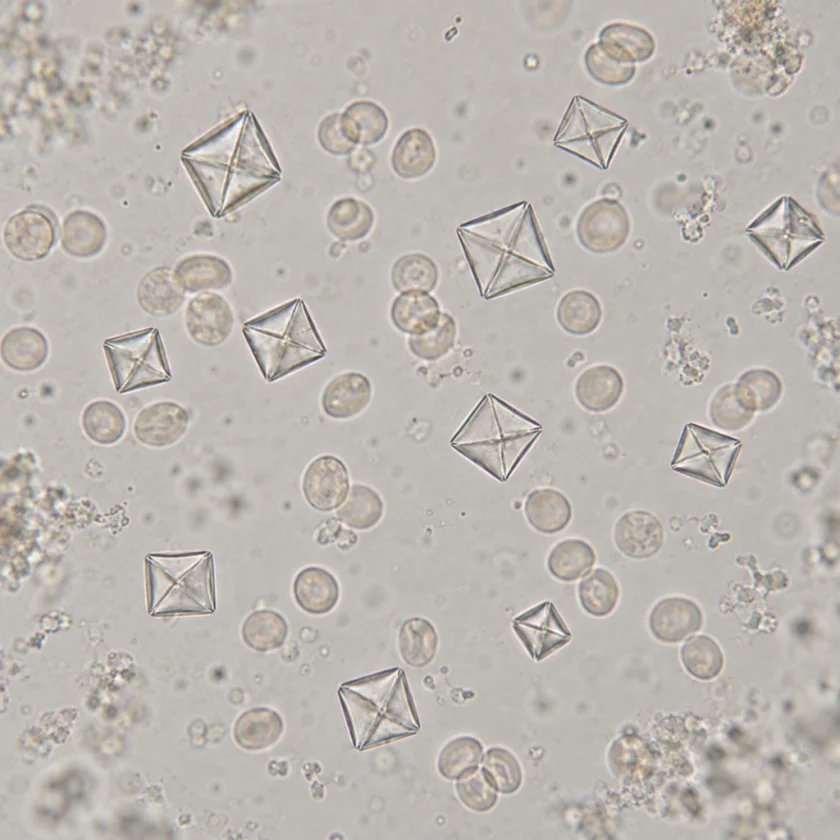
- In the kidney, it is filtered and concentrated into the urine. Urine is a solution perpetually on the edge of precipitating its solutes, and calcium oxalate is one of the least soluble things in it. When urinary oxalate rises, calcium oxalate can crystallize — in the urinary tract as a stone, or, at extreme concentrations, inside the kidney tubules themselves as oxalate nephropathy.
A separate mechanism, relevant to nutrition rather than to kidneys: because oxalate binds calcium, iron and to a lesser extent magnesium in the gut, a high-oxalate leaf is a poor mineral source regardless of what its label says. That is covered on Nutrients and Culinary Use and, in more depth for a food most people know, on Spinach: Iron Absorption and Oxalates.
How Much Oxalate Is in Sorrel
Tier: analytical food-composition measurements, with genuine variability between studies.
Sorrel is consistently placed at the high end of measured leafy vegetables. Analytical work on the Polygonaceae — the family containing sorrel, the docks and rhubarb — notably the 2006 Food Chemistry study by Siener and colleagues, and the broader food-oxalate review by Noonan and Savage (1999), report Rumex leaf oxalate in the range of several hundred milligrams to over one thousand milligrams per 100 grams of fresh leaf, with a large share of it in the soluble form.
Three honest caveats about those numbers:
- The spread between studies is wide, and it is real, not sloppy. Leaf oxalate varies with species, cultivar, leaf age, season, soil, nitrogen availability and time since harvest. Older leaves generally carry more. Massey's 2007 review in the Journal of the American Dietetic Association is specifically about why published oxalate values disagree with each other and why they should be read as ranges.
- Total oxalate overstates the risk; soluble oxalate is the number to want. Many published figures are totals. Where studies separate them — as Savage and colleagues did in 2000 — the soluble fraction is what predicts absorption.
- You cannot use these numbers to compute a personal safe dose. Absorption varies severalfold between individuals, depending on gut transit, gut flora (some bacteria degrade oxalate), the calcium content of the meal, and kidney function. Anyone who offers you a precise gram threshold for sorrel is over-reaching.
For orientation: dietetic practice commonly calls a food "high oxalate" at somewhere above 50 mg per serving, and a prescribed low-oxalate diet often aims at a total of 50 to 100 mg per day from all sources. At the values above, a single 50 g portion of sorrel can exceed an entire day's low-oxalate allowance several times over. That is the sentence that matters if you have been put on such a diet.
Calibrating Against Spinach, Rhubarb and Chard
Numbers in isolation do not help most readers. Comparison does. Sorrel belongs in the same category as a small group of foods many people already know to be careful with:
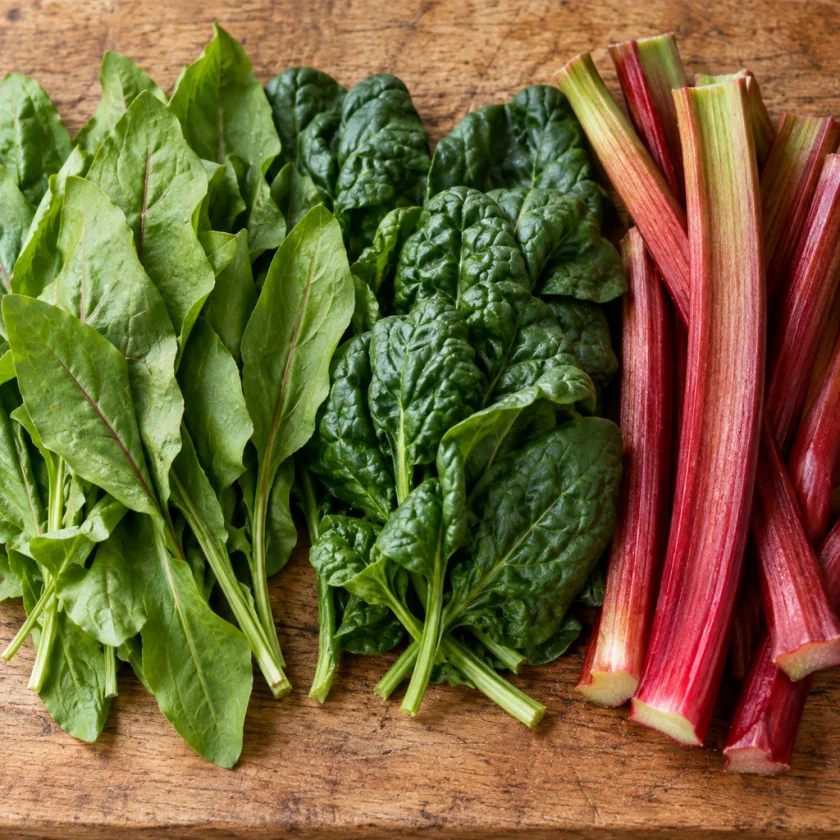
- Spinach — the reference high-oxalate leaf, commonly measured in the several-hundred to roughly one-thousand milligrams per 100 g range. If you already know "spinach is high in oxalate," then sorrel is in that same tier, and by some measurements higher. This is the single most useful comparison on the page.
- Rhubarb — sorrel's close relative in the same family. Rhubarb stalks are high; rhubarb leaves are higher still and are the classic "do not eat this" example in every food-safety text. Sorrel leaf is chemically doing what a rhubarb leaf does, at a level that permits culinary use but demands respect.
- Beet greens and Swiss chard — also high-oxalate leaves, and worth counting if you eat them in the same period as sorrel. Oxalate risk is cumulative across the diet; no single food is assessed alone.
- Beets — the root is moderately high, and beet greens higher.
- Kale — the useful contrast. Kale is often lumped in with spinach but is genuinely much lower in oxalate. For dark-leafy-green nutrition with a far smaller oxalate load, kale is the usual comparison, not more sorrel.
The practical upshot: sorrel belongs on any list of foods to limit that includes spinach and rhubarb, yet it is often missing from such lists, because it is uncommon enough to be omitted from many patient handouts.
Calcium-Oxalate Kidney Stones
Tier: established. Large prospective cohort evidence.
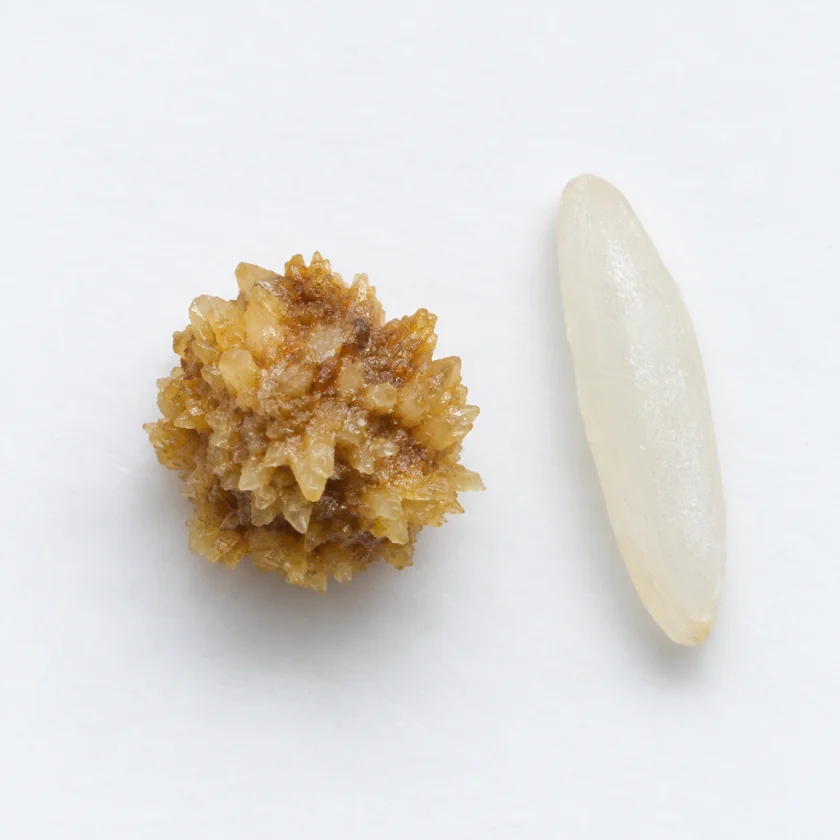
Calcium-oxalate stones are the commonest type of kidney stone by a wide margin. They form when urine becomes supersaturated with calcium and oxalate and crystals nucleate and grow. Passing one is, by widespread report, among the more severe pains in clinical medicine, and having formed one substantially raises the chance of forming another.
Dietary oxalate is one contributor among several — urine volume, urinary calcium, citrate, uric acid, and genetics all matter, and for most stone formers dietary oxalate is not the dominant factor. But it is a real and modifiable one. The 2007 Journal of the American Society of Nephrology analysis by Taylor and Curhan followed three large cohorts (45,985 men, 92,872 older women and 101,824 younger women, none with a stone history at the start; 4,605 new stones) and found a modest association: people in the highest fifth of oxalate intake had a relative risk of 1.22 (men) and 1.21 (older women) compared with the lowest fifth, with no association in younger women. Spinach supplied more than 40% of the oxalate eaten. Risk was higher in men with lower dietary calcium, but this interaction was not statistically significant (P = 0.08), and the authors concluded that the data do not implicate dietary oxalate as a major risk factor for kidney stones. The calcium point below rests mainly on the dietary calcium research described next.
There is also a counterintuitive finding that is now standard clinical teaching, and it is worth stating because it corrects an error many patients are still making. Curhan and colleagues, in Annals of Internal Medicine in 1997 and in related cohort work, found that higher dietary calcium was associated with lower stone risk — the opposite of the intuitive "stones contain calcium, so eat less calcium" reasoning. The explanation is the gut: calcium eaten with oxalate binds it before it can be absorbed. Cutting dietary calcium leaves more oxalate free to absorb and makes stones more likely, not less. In the 1997 study, 91,731 women with no stone history were followed for 12 years: those in the highest fifth of dietary calcium had a relative risk of 0.65 compared with the lowest fifth, while women taking calcium supplements had a relative risk of 1.20; in 67% of supplement users the calcium was not taken with a meal or was taken with meals probably low in oxalate. Women with the highest fluid intake had a relative risk of 0.61. The authors note that other factors in dairy foods, the main source of dietary calcium, could also explain part of the lower risk. Restricting calcium to prevent stones runs against this evidence.
What this means for sorrel specifically:
- If you have never had a stone and have normal kidneys, culinary sorrel is a minor contributor to a diet-wide oxalate total, and the cohort data above do not point to dietary oxalate as a major stone risk.
- If you have formed a calcium-oxalate stone, sorrel is one of the highest-oxalate foods people eat, it is often missing from patient food lists, and a normal portion can exceed a whole day's low-oxalate allowance.
- If you have been given a formal low-oxalate diet, a normal sorrel portion can use up the whole daily allowance.
Acute Oxalate Nephropathy
Tier: established, from case reports and case series. Rare, but severe.
A stone is oxalate crystallizing in the urinary space. Oxalate nephropathy is oxalate crystallizing inside the kidney tissue — within the tubules themselves — where it causes direct injury, inflammation, and acute loss of kidney function. It is a different and more serious event than a stone, it can arrive over days, and it does not always fully reverse.
How serious that can be is shown by a 2024 Mayo Clinic series of 113 patients with secondary oxalate nephropathy (kidney injury from oxalate crystals not caused by an inherited disorder), found in 0.97% of the clinic's kidney biopsies over 22 years. In 60% the cause was a gut condition that raises oxalate absorption (most often Roux-en-Y gastric bypass), in 23% eating too much oxalate or substances the body turns into oxalate (most often vitamin C), and in 17% no cause was found. After a median of 36 months, 27% had recovered kidney function, 54% had reached kidney failure and 29% had died. Most patients also had other kidney disease, most often from diabetes, which worsened the outlook (Nasr 2024).
It requires an extreme oxalate load, and the case literature describes a consistent set of circumstances:
- Very large ingestions of oxalate-rich plant material. The 2013 American Journal of Medicine report by Getting and colleagues, "Oxalate nephropathy due to 'juicing'," describes acute kidney failure after heavy consumption of oxalate-rich fruit and vegetable juices — juicing being an efficient way to consume the oxalate of several kilograms of leaf without the bulk that would normally stop you. The patient already had chronic kidney disease. The same paper reviewed 65 Mayo Clinic patients (1985–2010) with kidney failure and oxalate crystals on kidney biopsy; the three cases presumed to be caused by diet, including this one, all occurred in people with chronic kidney disease.
- Pre-existing reduced kidney function, which lowers the threshold considerably. A load that healthy kidneys clear can overwhelm impaired ones.
- Dehydration, which concentrates the urine and favors crystallization.
- Other predisposing factors including certain gut conditions that increase oxalate absorption, such as fat malabsorption after some kinds of bowel surgery, and rare inherited disorders of oxalate metabolism.
Sorrel is a plausible vehicle for this because it combines high soluble oxalate with a culinary tradition — leaf-heavy soup — that permits genuinely large single servings. This is the mechanism that connects a pleasant spring dish to the case reports in the next section.
The Documented Poisoning Cases
Tier: human case reports and forensic review. Real, and reported here proportionately.
The medical literature contains documented cases of severe and fatal acute oxalic-acid poisoning following ingestion of large quantities of sorrel. The best-known is a 1989 report in The Lancet by Farré and colleagues, titled "Fatal oxalic acid poisoning from sorrel soup," describing a death after consumption of soup made with a very large amount of sorrel leaf. Sanz and Reig's 1992 review in The American Journal of Forensic Medicine and Pathology, "Clinical and pathological findings in fatal plant oxalosis," collects fatal plant-oxalate poisonings including sorrel and describes the pattern of kidney and tissue damage found at autopsy.
Proportion matters here, in both directions, and this page will not shade it either way.
What these cases do establish:
- Sorrel is capable of causing acute, life-threatening oxalate toxicity in a human being. This is not theoretical extrapolation from a chemical assay; it is a documented outcome.
- The vehicle was an ordinary traditional dish, not a supplement or an extract. "It's just food" is not a safety argument at sufficient quantity.
- Severe cases involve kidney injury, and the toxicology literature also describes gut corrosion, low blood calcium, and cardiac effects at very high oxalic-acid exposures.
What these cases do not establish:
- That normal culinary use is dangerous. It is not. These are rare events at the extreme tail of intake, and the reported ingestions involved leaf quantities in the hundreds of grams — on the order of half a kilogram of sorrel in a single preparation in the reported soup case — not a garnish or a sauce.
- A precise lethal threshold. Toxicology references give estimates for acutely lethal oxalic-acid doses in adults, but these are uncertain, individual susceptibility varies, and case reports rarely permit exact reconstruction of what was consumed. Anyone quoting you a confident gram-for-gram lethal dose of sorrel is guessing. That uncertainty is why this page describes intake patterns rather than a numeric limit.
- That children and adults face the same risk. Body size matters, and a quantity that is a large meal for an adult is a much larger exposure for a small child.
The correct reading, and the one this page is built on: a garnish or a normal culinary portion is not the hazard. A large bowl of leaf-heavy sorrel soup as a repeated main dish, or foraged bulk eating, is the pattern of concern.
The Two Intake Patterns That Actually Matter
Rather than a milligram target, the case literature points to two shapes of risky consumption. Almost every problem case fits one of them.
Pattern one: the large single serving
Leaf-heavy sorrel soup, a sorrel-based purée eaten as a vegetable rather than a seasoning, a bulk foraged salad, or a green juice containing a lot of sorrel or wood sorrel. This is the acute-toxicity pattern. In traditional cooking sorrel is a seasoning, not a vegetable serving, diluted with potato, grain and dairy; the documented poisonings involved very large amounts of the leaf.
Pattern two: the small repeated dose
A daily cup of sorrel leaf tea, a habitual green smoothie, a "cleanse," or several high-oxalate foods eaten together every day — sorrel plus spinach plus chard plus beet greens plus almonds. This is the stone-formation pattern, and it is the one people do not notice, because nothing happens for years. What counts here is the diet-wide total: oxalate is cumulative, and sorrel goes into the same daily total as everything else on the list.
Two patterns that are not of concern: a few leaves in a salad, and a spoonful of sorrel purée on fish. If that is your sorrel habit and your kidneys are healthy, this page is background reading rather than a warning.
Who the Research Raises Concerns For
The groups with the clearest concern
- Anyone with a history of calcium-oxalate kidney stones, or told they are a "stone former." The most clear-cut group. The risk of a repeat stone is high and the food is entirely optional. See Kidney Stones.
- Anyone with chronic kidney disease or otherwise reduced kidney function. Impaired kidneys clear oxalate less efficiently, so blood and urinary oxalate run higher for the same intake, and the margin before crystallization is narrower. Kidney function tests show where a person's kidney function stands.
- Anyone prescribed a low-oxalate diet for any reason. A normal sorrel portion can exceed the entire daily allowance.
- Anyone with primary hyperoxaluria or another inherited disorder of oxalate handling. Rare, but for these patients dietary oxalate control is central.
- Anyone with fat malabsorption or a history of bowel resection or bariatric surgery of the malabsorptive type. Unabsorbed fat binds calcium in the gut, leaving oxalate free to absorb — a condition called enteric hyperoxaluria that can raise oxalate absorption several-fold. High-oxalate foods are a genuine hazard in this group and it is under-recognised.
- Small children, for whom an adult-sized portion is a much larger exposure per kilogram of body weight. A large bowl of sorrel soup is a far bigger dose for a toddler than for an adult.
The groups with a smaller concern
- Anyone with gout. Gout is a urate problem rather than an oxalate one, so the mechanism is different, but gout and kidney stones travel together, urate stones and calcium-oxalate stones share risk factors, and gout patients are frequently dehydrated.
- Anyone taking high-dose vitamin C supplements. Ascorbate is metabolized in part to oxalate, so gram-level vitamin C supplementation adds to your oxalate load. Combining high-dose supplemental vitamin C with a high-oxalate diet adds two oxalate sources together; this does not apply to vitamin C from food (see the cohort figures below).
- Anyone who is frequently dehydrated — by climate, by occupation, by endurance exercise, or simply by not drinking. Concentrated urine is the permissive condition for crystallization.
- Pregnancy and breastfeeding. Culinary amounts of sorrel in food are generally regarded as acceptable, but there are no safety data for medicinal or high-dose sorrel preparations.
- Anyone taking medication that affects kidney function or urinary chemistry — including some diuretics and topiramate.
For everyone else
Healthy adults with normal kidney function, eating sorrel as a flavoring in ordinary culinary amounts, are not the group the research raises concern for. Traditionally, sorrel soup is a seasonal spring dish finished with dairy, not a daily staple.
Pairing with Calcium: The Single Most Useful Habit
Tier: established mechanism, supported by prospective cohort evidence.
The habit with the most support is also the oldest one in sorrel cooking: sorrel eaten in the same meal as a calcium source.
The mechanism is straightforward and happens in the gut, before absorption. Soluble oxalate and dietary calcium combine to form insoluble calcium oxalate, which cannot be absorbed and leaves in the stool. Oxalate bound in the intestine never reaches your kidney. The corollary is the important part: the timing matters — the binding happens only when the calcium is in the same meal, not hours later. A calcium supplement at bedtime does nothing for the sorrel you ate at lunch.
Same-meal calcium sources that are also sorrel's traditional partners:
- Cream or sour cream stirred into sorrel soup — the classic, and it was always doing this job.
- Butter for wilting the leaves, which also carries the carotenoids.
- Cheese grated over a sorrel-dressed dish.
- Yogurt as a finishing spoonful, or in a cold sorrel soup.
- Milk in the soup base.
- Small bony fish such as sardines, if you happen to be pairing sorrel with fish anyway.
And the point worth repeating because so many patients get it backwards: cutting dietary calcium in an attempt to avoid stones runs against the cohort evidence (highest against lowest dietary calcium: relative risk 0.65 in the 1997 Nurses' Health Study). Low calcium intake leaves oxalate free to absorb and raises stone risk; in these cohorts, dietary calcium eaten with food was linked with fewer stones.
Cooking and Discarding the Water: What It Does and Does Not Do
Tier: established from controlled food-science studies. Partially effective — and the honesty about "partially" is the point.
Boiling leafy greens and discarding the cooking water removes a meaningful fraction of soluble oxalate, because soluble oxalate does exactly what its name says and leaches into the water. Controlled comparisons of cooking methods — Chai and Liebman's 2005 study in the Journal of Agricultural and Food Chemistry, and Savage and colleagues in 2000 separating soluble from insoluble oxalate before and after cooking — quantify this across vegetables. In Chai and Liebman's tests on nine vegetables, boiling cut soluble oxalate by 30-87% and steaming by 5-53%, while baking (tested only on potatoes) removed none; about 100% of the oxalate lost was found in the cooking water. Boiling is the most effective method; steaming removes less; baking, frying and microwaving remove little or nothing, because there is no water to carry the oxalate away.
Now the honest limits, because this technique is routinely oversold:
- It reduces; it does not eliminate. A substantial fraction of the oxalate remains in the leaf even after vigorous boiling and draining. A boiled high-oxalate leaf is a lower-oxalate food, not a low-oxalate food.
- It only works if you actually throw the water away. This is the catch that makes it nearly useless for sorrel's main dish. In sorrel soup the water is the soup — the leached oxalate is right there in the bowl. Getting the benefit means blanching the leaves separately, discarding that first water, and then building the soup, which most recipes do not do and which costs flavor and vitamin C.
- It costs nutrients. Vitamin C and potassium leach out with the oxalate. The same preparation cannot both keep the most vitamin C and remove the most oxalate.
- It does not make sorrel suitable for someone on a low-oxalate diet. Blanched sorrel is lower in oxalate but still a high-oxalate food.
In practice: for a small flavoring amount, the quantity is too small for blanching to matter, and it would cost the herb its point. For a leaf-heavy soup or a large portion, blanching in plenty of water and discarding it removes a meaningful share of the soluble oxalate, and a dairy finish adds a second, independent reduction.
Hydration, Vitamin C and Other Modifiers
- Fluid intake is the most powerful single lever on stone risk and it is not specific to sorrel. Dilute urine cannot supersaturate. High fluid intake is first-line advice for every stone former (in the 1997 Nurses' Health Study, the highest fluid intake carried a relative risk of 0.61), and it is what makes an occasional high-oxalate meal much safer.
- High-dose supplemental vitamin C adds oxalate. Ascorbate is partially metabolized to oxalate, so gram-level supplements raise urinary oxalate. Food vitamin C, at the levels in an actual vegetable, is not the issue. In large Harvard cohorts (156,735 women and 40,536 men followed for about 11 years, 6,245 new stones), vitamin C supplements of 1,000 mg a day or more were linked to more kidney stones in men (hazard ratio 1.19) but not in women, and vitamin C from food was not linked to stones in either sex (Ferraro 2016). High-dose vitamin C on top of a high-oxalate diet stacks two sources.
- Gut bacteria degrade some oxalate. Certain gut organisms, notably Oxalobacter formigenes, metabolize oxalate in the intestine, and people who lack them absorb more. Antibiotic use can deplete them. This is an active research area rather than something you can currently act on, but it is part of why individual absorption varies so much.
- Magnesium and citrate in the urine inhibit crystallization. This is why potassium citrate is a standard prescription for recurrent stone formers, and part of why magnesium and citrus intake come up in stone prevention. Potassium citrate is a prescription treatment; sorrel's own magnesium content is not a reason to eat more sorrel.
- Cumulative diet, not single foods. Your kidney sees a daily oxalate total. Sorrel plus spinach plus chard plus beet greens plus almonds plus a lot of black tea is a very different day from sorrel alone.
Supplements, Teas and Juices: The Worst Delivery Methods
Everything above assumes sorrel as food. Three non-food preparations carry specific risks, because each defeats one of the natural protections:
- Concentrated leaf extracts and capsules. Concentration retains oxalate and destroys vitamin C, so you get the hazard without the one real nutrient. There is no demonstrated benefit to offset it.
- Strong leaf infusions and "cleanse" teas. Soluble oxalate is water-soluble by definition, so a tea is an efficient extraction of exactly the fraction that gets absorbed — delivered in water, often on an empty stomach, without any calcium to bind it. A folk-diuretic or detox tea is close to the worst possible way to consume a Rumex, and it is aimed at the organ that pays the price. See Traditional and Digestive Uses for the history of this tradition and its risks.
- Green juices and smoothies. Juicing removes the bulk that would otherwise limit how much leaf you can eat, so a glass can represent an enormous quantity of raw leaf, uncooked and unpaired with calcium. This is the exact scenario in the published oxalate-nephropathy report. Low-oxalate greens such as kale carry a far smaller oxalate load in a juice than sorrel, spinach or chard.
Also worth knowing: some commercial herbal tea blends contain sheep's sorrel and rhubarb root, both oxalate-bearing, and are taken as a daily tea — combining the tea problem with the repeated-dose pattern, often in people whose kidneys are already under strain from illness or treatment.
Warning Signs That Hospitals Treat as Urgent
After eating a large quantity of sorrel or another oxalate-rich plant, these are signs that hospitals treat as urgent:
- Severe abdominal pain, persistent vomiting, or burning in the mouth and throat.
- A marked drop in how much you are urinating, or no urine at all.
- Severe pain in the flank or side radiating to the groin — classic stone pain — particularly with fever, which suggests infection alongside obstruction and is an emergency.
- Blood in the urine.
- Muscle twitching, tingling around the mouth, cramps or spasms — possible signs of falling blood calcium, which oxalate binds.
- Confusion, marked weakness, or collapse.
What plant, how much, and when is the key information for the clinician. "I ate a large bowl of sorrel soup" is clinically meaningful information that a doctor may not think to ask about, and acute oxalate nephropathy is easy to miss without the dietary history. Poison-control services answer exactly this kind of question.
Non-urgent but worth a conversation: for people who eat high-oxalate foods regularly, kidney function tests show whether the kidneys are clearing waste normally — see Kidney Function Tests. If you have had one stone, a 24-hour urine collection measuring oxalate, calcium, citrate and volume is the standard way to find out whether dietary oxalate is actually your problem, and it converts guesswork into a number.
Perspective: What This Page Is Not Saying
Having been direct about the risk, it would be dishonest to leave a false impression. So, plainly:
- This page is not saying sorrel is poisonous. It is a traditional food eaten by millions of people for centuries. The overwhelming majority of sorrel eaten has done no harm at all.
- It is not saying the bunch in your refrigerator is dangerous. A few leaves in a salad, a sauce for fish, a spoonful of purée through potatoes — with healthy kidneys, this is ordinary culinary use.
- It is not singling sorrel out unfairly. Spinach, rhubarb, chard and beet greens are in the same category and are eaten in far greater volume. Sorrel gets its own page because it is eaten as soup, which permits unusually large single servings, and because its high-oxalate status is much less widely known than spinach's.
- It is saying the risk is real, quantity-dependent, and concentrated in identifiable groups of people — and that those groups deserve to be told clearly rather than in a hedged sentence at the bottom of a recipe.
The one-sentence version: in the research and case reports, the risk comes from large or repeated amounts and is greatest for people with kidney-stone history or reduced kidney function, while sorrel used as a seasoning, eaten with dairy and with plenty of fluid, is the traditional low-risk pattern.
Key Research Papers
Each entry names the real paper and ends with its PubMed or DOI link; the last three entries are PubMed topic searches.
- Farré M, Xirgu J, Salgado A, Peracaula R, Reig R, Sanz P. "Fatal oxalic acid poisoning from sorrel soup." The Lancet, 1989. The anchoring case report: a death from acute oxalic-acid poisoning after ingestion of soup made with a very large quantity of sorrel leaf. Tier: human case report. 2(8678-8679):1524. PubMed PMID: 2574796
- Sanz P, Reig R. "Clinical and pathological findings in fatal plant oxalosis: a review." The American Journal of Forensic Medicine and Pathology, 1992. Forensic review of fatal poisonings from oxalate-rich plants including sorrel, with the tissue findings at autopsy. Tier: case-series review. 13(4):342-5. PubMed PMID: 1288268
- Getting JE, Gregoire JR, Phul A, Kasten MJ. "Oxalate nephropathy due to 'juicing': case report and review." The American Journal of Medicine, 2013. Acute kidney failure from oxalate crystals after heavy consumption of oxalate-rich fruit and vegetable juices in a patient who already had chronic kidney disease, with a review of 65 Mayo Clinic biopsy cases — the modern version of the bulk-ingestion pattern. Tier: case report with review. 126(9):768-72. PubMed PMID: 23830537
- Taylor EN, Curhan GC. "Oxalate intake and the risk for nephrolithiasis." Journal of the American Society of Nephrology, 2007. Prospective cohort analysis of dietary oxalate against new kidney stones in people with no stone history; modest associations in men and older women, a non-significant calcium interaction in men (P = 0.08), and the conclusion that dietary oxalate is not a major risk factor. Tier: prospective cohort. 18(7):2198-204. PubMed PMID: 17538185
- Curhan GC, Willett WC, Speizer FE, Spiegelman D, Stampfer MJ. "Comparison of dietary calcium with supplemental calcium and other nutrients as factors affecting the risk for kidney stones in women." Annals of Internal Medicine, 1997. The counterintuitive and now-standard finding that dietary calcium eaten with food is associated with lower stone risk — the basis for pairing sorrel with dairy rather than restricting calcium. Tier: prospective cohort. 126(7):497-504. PubMed PMID: 9092314
- Siener R, Hönow R, Seidler A, Voss S, Hesse A. "Oxalate contents of species of the Polygonaceae, Amaranthaceae and Chenopodiaceae families." Food Chemistry, 2006. Direct measurement across sorrel's own plant family and its high-oxalate neighbours — the analytical basis for the figures on this page. Tier: analytical food-composition study. 98(2):220-224. doi:10.1016/j.foodchem.2005.05.059
- Holmes RP, Kennedy M. "Estimation of the oxalate content of foods and daily oxalate intake." Kidney International, 2000. A methods paper comparing two laboratory techniques for measuring food oxalate; its daily-intake estimate comes from food records of five people (152 ± 83 mg a day, range 44 to 352 mg). Tier: analytical methods study. 57(4):1662-7. PubMed PMID: 10760101
- Noonan SC, Savage GP. "Oxalate content of foods and its effect on humans." Asia Pacific Journal of Clinical Nutrition, 1999. Review of dietary oxalate, its distribution across plant foods, and its effects on mineral absorption and stone risk. Tier: review. 8(1):64-74. PubMed PMID: 24393738
- Massey LK. "Food oxalate: factors affecting measurement, biological variation, and bioavailability." Journal of the American Dietetic Association, 2007. Why published oxalate values disagree, and why what you eat alongside a food changes how much oxalate you absorb. The reason this page gives ranges rather than a single number. Tier: review. 107(7):1191-4. PubMed PMID: 17604750
- Chai W, Liebman M. "Effect of different cooking methods on vegetable oxalate content." Journal of Agricultural and Food Chemistry, 2005. Controlled comparison of boiling, steaming and other methods — the evidence behind blanching and discarding the water, and behind the honest statement that it reduces rather than eliminates. Tier: controlled laboratory food study. 53(8):3027-30. PubMed PMID: 15826055
- Savage GP, Vanhanen L, Mason SM, Ross AB. "Effect of cooking on the soluble and insoluble oxalate content of some New Zealand foods." Journal of Food Composition and Analysis, 2000. Separates soluble from insoluble oxalate before and after cooking — the distinction that determines what is actually absorbed. Tier: analytical food study. 13(3):201-206. doi:10.1006/jfca.2000.0879
- Holmes RP, Assimos DG. "The impact of dietary oxalate on kidney stone formation." Urological Research, 2004. Sets out how much of urinary oxalate is dietary versus endogenous, which is what determines how much dietary change can achieve for an individual stone former. Tier: review. 32(5):311-6. PubMed PMID: 15221245
- Nasr SH, Valeri AM, Said SM, Sethi S, Nath KA, Lieske JC, Bu L. "Clinicopathologic Characteristics, Etiologies, and Outcome of Secondary Oxalate Nephropathy." Mayo Clinic Proceedings, 2024. 113 Mayo Clinic patients, 2001–2023: 60% enteric hyperoxaluria, 23% excess oxalate or oxalate-precursor intake (most often vitamin C); after a median 36 months, 27% recovered kidney function and 54% reached kidney failure. Tier: retrospective case series. 99(4):593-606. PubMed PMID: 38310502
- Ferraro PM, Curhan GC, Gambaro G, Taylor EN. "Total, Dietary, and Supplemental Vitamin C Intake and Risk of Incident Kidney Stones." American Journal of Kidney Diseases, 2016. Supplemental vitamin C of 1,000 mg a day or more linked to more stones in men, not women; food vitamin C not linked to stones. Tier: prospective cohort. 67(3):400-7. PubMed PMID: 26463139
- Topic search — enteric hyperoxaluria after bariatric surgery or fat malabsorption. Why unabsorbed fat raises oxalate absorption several-fold, and why high-oxalate foods matter most for this group. Tier: clinical literature. PubMed search: enteric hyperoxaluria fat malabsorption
- Topic search — ascorbic acid supplementation and urinary oxalate. The evidence on high-dose vitamin C as an additional oxalate source. Tier: mixed clinical and metabolic studies. PubMed search: ascorbic acid supplementation urinary oxalate
- Topic search — Oxalobacter formigenes, gut flora and oxalate degradation. Why identical diets produce different urinary oxalate in different people. Tier: preliminary and mechanistic. PubMed search: Oxalobacter formigenes oxalate degradation
External Resources
- National Institute of Diabetes and Digestive and Kidney Diseases (NIDDK) — authoritative patient information on kidney stones, chronic kidney disease and diet.
- National Kidney Foundation — practical patient guidance on oxalate, calcium and stone prevention.
- American Urological Association — professional guidelines on the medical management of kidney stones.
- USDA FoodData Central — food composition data; note that oxalate is not a standard field in most food databases, which is part of why oxalate figures are harder to find than vitamins.
- PubMed — the primary literature behind everything above.
Safety Note and Disclaimer
This page is educational and is not medical advice, and it cannot substitute for an assessment of your own kidneys. Garden, French and sheep's sorrel and wood sorrel are high-oxalate plants. Culinary amounts are safe for most healthy adults with normal kidney function; large leaf-heavy portions, repeated daily intake, concentrated teas, extracts and green juices are not, and documented human poisonings — including fatalities — have followed very large ingestions. The research raises the clearest concern for people with a history of calcium-oxalate kidney stones, chronic kidney disease, primary hyperoxaluria, fat malabsorption or prior malabsorptive bowel surgery, gout, or a prescribed low-oxalate diet; for them, a normal sorrel portion can exceed a whole day's low-oxalate allowance. Restricting dietary calcium to prevent stones runs against the evidence, which points the other way. Severe abdominal pain, vomiting, flank pain, blood in the urine or a marked fall in urine output after a large sorrel meal are signs that hospitals treat as urgent, and exactly what and how much was eaten is the key information for the clinician.
Connections
- All Herbs
- Sorrel — the main topic page for Rumex acetosa.
- Which Sorrel Do You Mean? — four plants, one name, and different risk profiles.
- Sorrel: Nutrients and Culinary Use — the nutrient side, with realistic portions.
- Sorrel: Traditional and Digestive Uses — why the folk diuretic and cleanse traditions are the wrong ones to revive.
- Kidney Stones — calcium-oxalate stones, symptoms, and prevention.
- Kidney Disease — why reduced kidney function changes the whole calculation.
- Kidney Function Tests — how to find out where you stand before making sorrel a habit.
- Gout — a different crystal, overlapping risk factors, and a reason for caution.
- Calcium — the mineral that binds oxalate in the gut; do not restrict it to prevent stones.
- Vitamin C — high-dose supplements add to your oxalate load.
- Spinach: Iron Absorption and Oxalates — the same chemistry in a food most readers know.
- Kale: Oxalates and Cooking — the low-oxalate dark green to use instead.
- Rhubarb — sorrel's relative and the classic high-oxalate warning case.
- Swiss Chard — another high-oxalate leaf that adds to the same daily total.
- Chanca Piedra: Kidney Stone Protocol — a herb approached from the stone-prevention side, with its own evidence review.
- Interactive: Kidney Stone Formation — an animated look at how supersaturated urine crystallizes.
- Hibiscus: Brewing, Dosing and Cautions — the separate safety conversation for the other "sorrel."